
Water Damage Restoration in Boston, MA
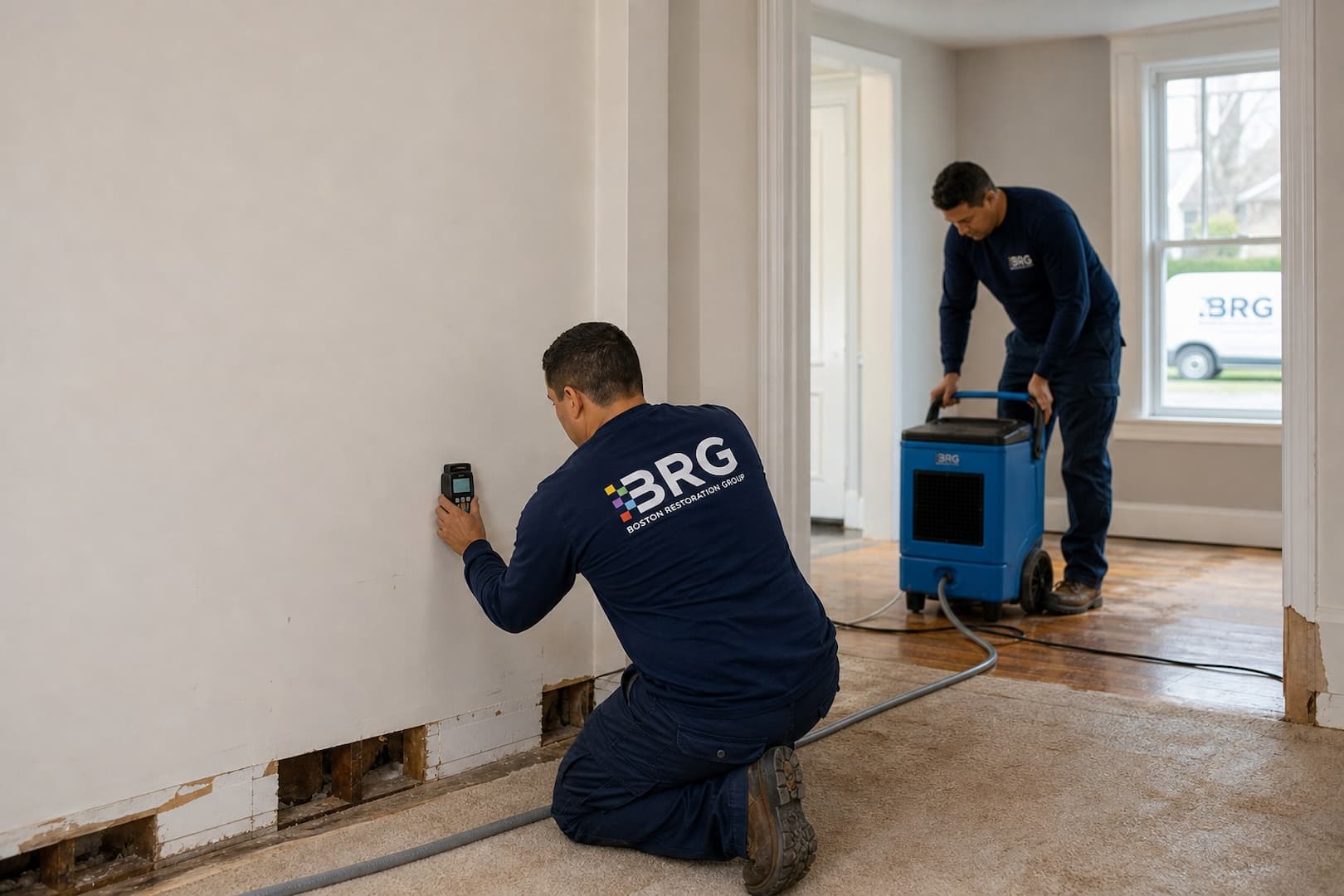
BRG responds to water in homes, apartments, managed buildings, and commercial spaces across Greater Boston. The crew traces the loss beyond the visible puddle, removes accessible water, protects unaffected areas, and uses material readings to guide drying and repairs.
- Extraction and moisture mapping
- Structural drying and monitoring
- Contents and finish protection
- Mitigation through repair planning
Emergency response
Call any time to describe the source, affected areas, safety concerns, and access.
Measured drying
Moisture readings and material behavior guide the equipment plan.
One accountable scope
The file follows the project from first conditions through the repair handoff.
Certified specialists
BRG technicians are trained and certified for professional restoration work.
What to do before anyone starts drying
A useful response begins with a few plain facts: where the water came from, whether it is still moving, what it touched, and what hazards are in the way.
Stop or isolate the source
Use a known shutoff only when it is safe. Plumbing, roofing, appliance, sprinkler, or building-envelope work may require another trade.
Stay clear of electricity
Water near panels, outlets, appliances, fixtures, or mechanical systems needs an electrical safety decision before entry.
Protect unaffected space
Limit foot traffic through wet rooms. Do not carry dripping contents across dry finishes without a route and floor protection.
Preserve useful evidence
Photograph the source, water line, affected rooms, and damaged contents before cleanup changes the scene, if it is safe to do so.
Water follows assemblies, not room labels
A leak in one room may wet the ceiling below, move along a pipe chase, spread beneath flooring, or collect inside an exterior wall. A moisture map connects those areas so the scope is based on the building rather than the first visible stain.
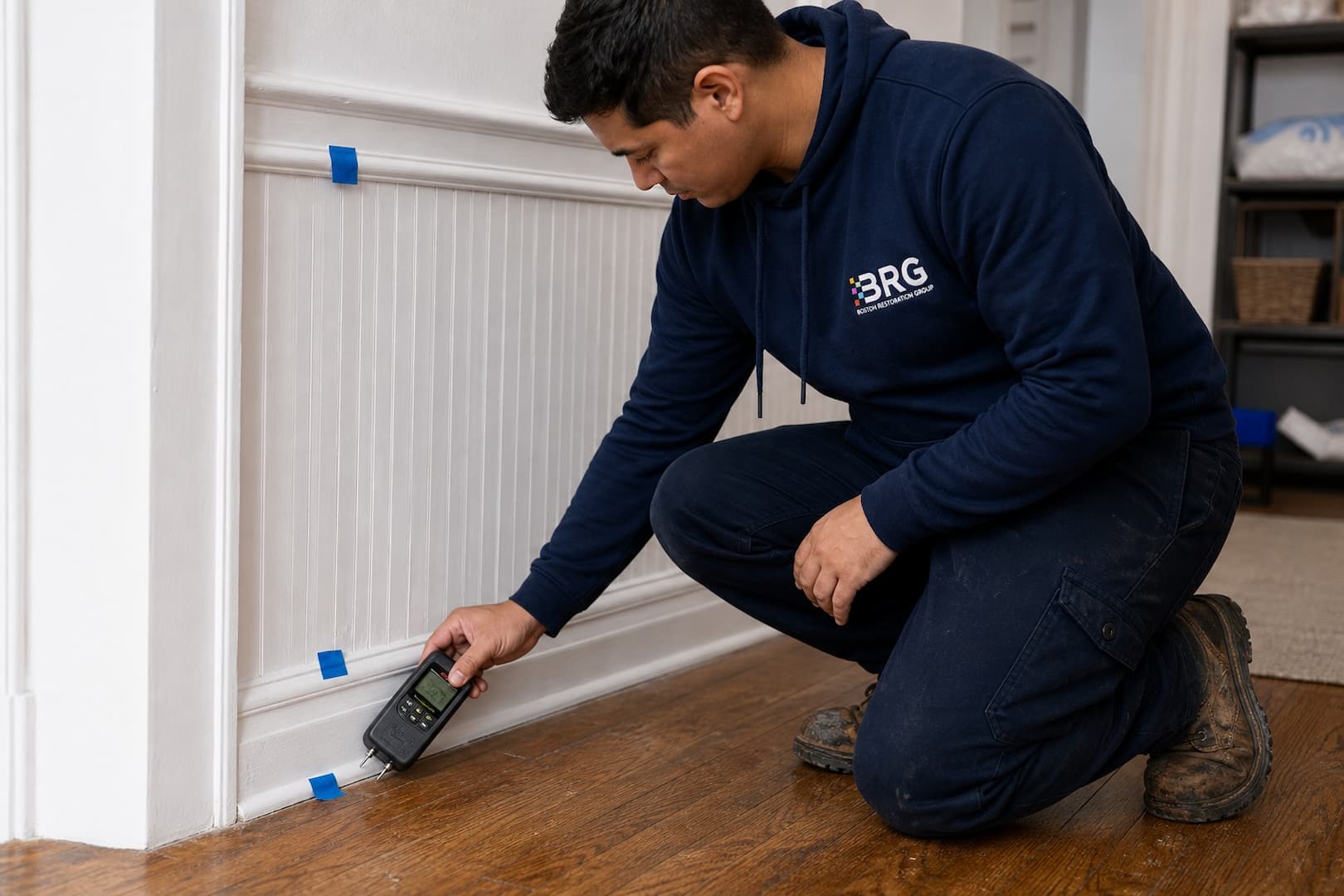
BRG compares affected materials with practical dry reference areas. The crew looks at surface condition, construction, insulation, vapor barriers, floor layers, cabinetry, and access. Readings are one part of the decision; contamination and physical damage matter too.
- Drywall and plaster walls or ceilings
- Wood, laminate, resilient, tile, and carpeted floors
- Insulation, framing, subfloor, and sheathing
- Cabinets, built-ins, contents, and stored materials
- Mechanical rooms, shafts, and common building areas
How BRG moves a water loss from emergency to repair
The exact order can change when new damage is uncovered. The checkpoints remain visible to the owner.
Assess and stabilize
BRG records the source, hazards, rooms, material conditions, and immediate steps needed to limit additional damage.
Extract and contain
Accessible water is removed. Clean areas, travel routes, and contents receive protection suited to the property.
Set the material scope
The team explains what can remain, what needs access, and what is unlikely to dry or clean reliably.
Dry and monitor
Air movers, dehumidifiers, and targeted systems are placed for the actual assemblies. Progress readings drive changes.
Clean, document, and repair
The final mitigation record identifies completed work and the drywall, flooring, paint, trim, cabinetry, or other repairs that remain.
Airflow releases moisture; dehumidification removes it from the air
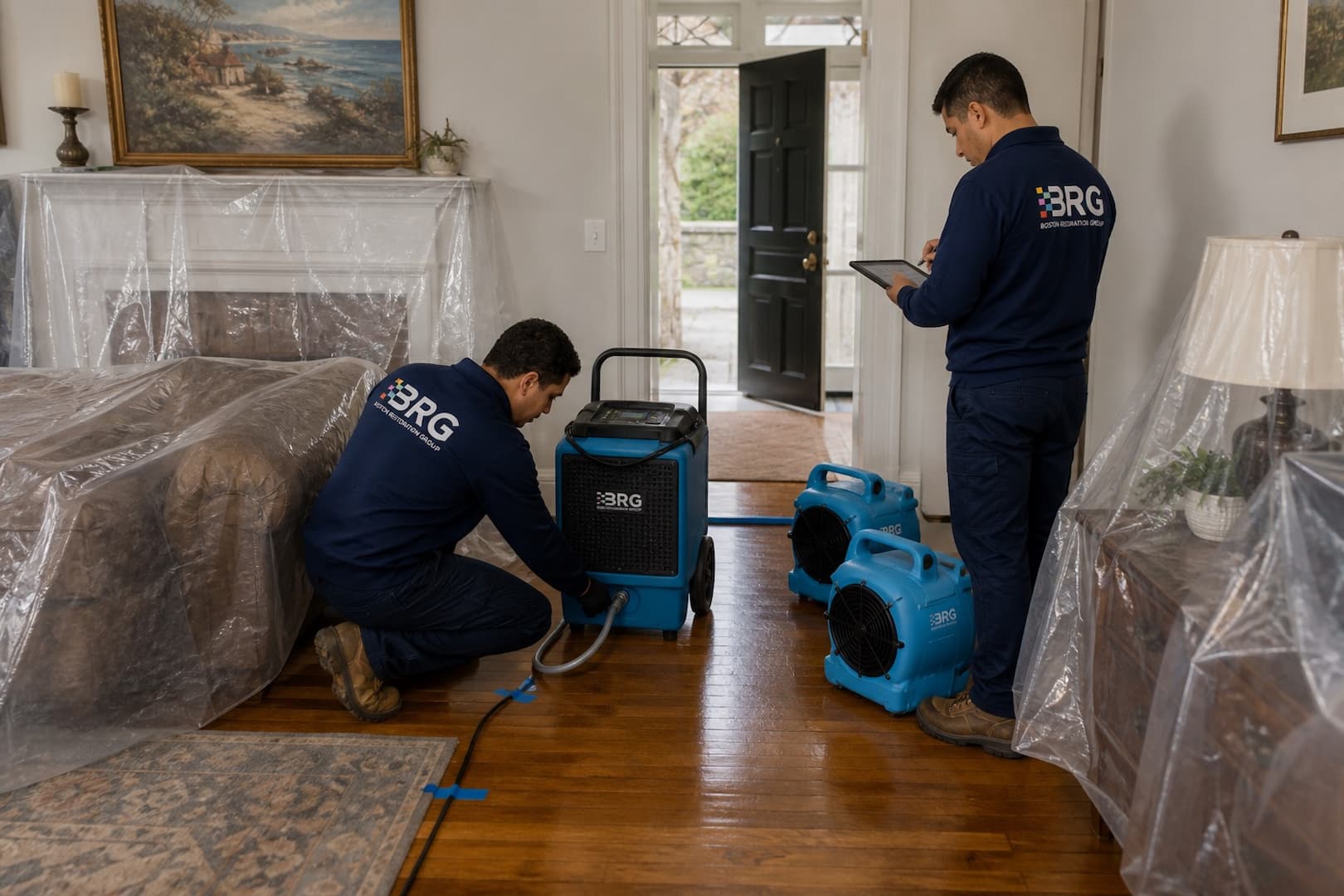
Blowing air into a room without controlling humidity can move moisture but fail to remove it from the building. Running a dehumidifier without exposing wet surfaces can leave water trapped in a cavity. BRG balances access, airflow, temperature, humidity control, and the wet material itself.
Equipment is not left on a ritual schedule. The team rechecks materials, moves air movers, changes containment openings, adjusts dehumidification, or recommends additional access when the readings and assembly behavior support that change.
A dry surface is not always a dry assembly
Wood, insulation, subfloor, and the back of wall finishes may lag behind the face of the material. BRG documents the points used to judge progress.
The building stays part of the plan
Restoration work often happens around families, tenants, pets, neighbors, building staff, and shared systems. BRG accounts for those constraints in the scope.
| Property condition | What changes in the plan | Useful information to provide |
|---|---|---|
| Occupied home | Room access, contents protection, noise, pets, and safe routes | Who is home, where occupants can stay, and any mobility or health constraints |
| Apartment or condominium | Units above and below, common areas, association contacts, and building shutoffs | Manager, owner, tenant, and emergency contact information |
| Finished basement | Below-grade entry, stored contents, mechanical equipment, and layered finishes | Sump status, prior water events, utilities, and deepest water level |
| Older Boston-area building | Plaster, multiple finish layers, narrow access, concealed chases, and lead-safe planning | Approximate building age, previous repairs, and access limitations |
| Home office or rental property | Continuity, sensitive equipment, tenant communication, and documentation needs | Operating priorities, lease or management contacts, and claim information |
Documentation should explain the work after the equipment is gone
BRG can provide photographs, affected-area notes, moisture information, equipment records, removal details, and an itemized scope. Those records help owners, property managers, adjusters, and repair trades understand the same project.
What the crew saw at the start and as assemblies were opened.
What was extracted, protected, removed, cleaned, and dried.
What remains for reconstruction, specialty trades, or owner decisions.
Water damage restoration questions
Good answers depend on the source, materials, contamination, and access. These are the questions BRG uses to frame the first conversation.
How quickly should I call after water damage?
Call as soon as you discover the loss, especially if water is active, crossing floors, near electricity, or affecting occupied units. Early information helps coordinate source control and inspection.
Can BRG dry the property without removing materials?
Sometimes. The decision depends on contamination, physical damage, insulation, vapor barriers, finish layers, and whether the wet surfaces can be reached. Selective access may be more reliable than either no removal or broad demolition.
Does BRG provide reconstruction?
BRG plans the project from mitigation into the repair scope and can discuss the work included for the property. Some licensed or specialty trades may be coordinated separately depending on the building and damage.
Do you work with insurance companies?
BRG prepares project documentation and estimates and can communicate about the scope. The policyholder and insurance carrier remain responsible for coverage and payment decisions.
How do you know when materials are dry?
The team compares progress readings, material condition, assembly behavior, and practical dry reference areas. A room feeling dry is not the only measure.
Do all BRG technicians hold restoration certifications?
Yes. BRG staff members working on restoration projects are certified specialists, and the company can provide current qualification information for the project team on request.
Talk with BRG about the source, rooms, and next safe step
For an active emergency, call. For a scheduled assessment, send the address, source, affected rooms, approximate start time, and best access contact.
617-202-3772- Tell the team whether the water is still running or entering.
- Mention electricity, ceilings, stairs, tenants, pets, or mechanical equipment.
- Describe what has already been moved, pumped, or opened.
Request water damage restoration
A clear description helps BRG plan the crew, meters, extraction tools, and drying equipment.