
Residential Specialty Restoration Services
Some property losses combine unusual materials, sensitive contents, restricted access, odor, contamination, or several causes at once. BRG turns the condition into a bounded scope: who may enter, what must be protected, which specialists are needed, what can be restored, and what remains for repair.
- Complex and mixed-cause losses
- Contents and specialty-material planning
- Controlled access and privacy
- Certified restoration specialists
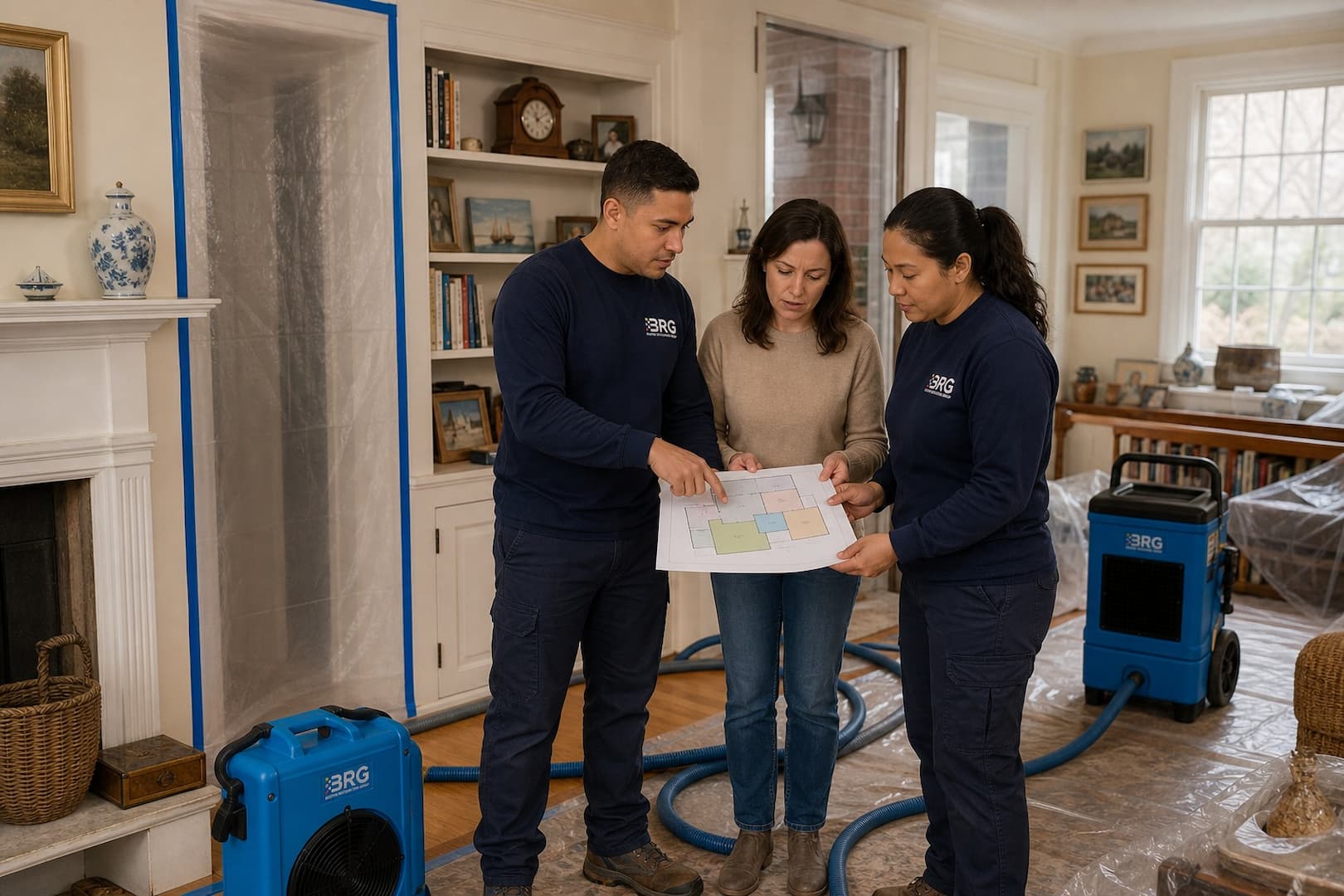
Define the assignment
A useful scope states the property problem and desired handoff rather than relying on a broad specialty label.
Set limits early
Utilities, structural issues, hazardous materials, active pests, authority, and licensed trades are identified.
Protect what remains
Contents, finishes, occupied rooms, neighbors, routes, and private information shape the controls.
Record every decision
Owner approvals separate cleaning candidates, specialist referrals, removal, storage, and repairs.
Use a specialty scope when the usual service label leaves important work undefined
The project may still include water, mold, fire, odor, or cleaning methods, but the coordination problem is broader.
Mixed materials and contents
Built-ins, antiques, documents, collections, electronics, instruments, stone, woodwork, or layered assemblies may require separate decisions and specialists.
Difficult access or occupancy
Historic finishes, narrow stairs, attached units, vulnerable occupants, pets, privacy, security, or limited staging can control how the work is sequenced.
Several conditions at once
A leak may combine microbial growth, odor, damaged contents, appliance failure, and a repair that belongs to another trade.
Phased cleanup and recovery
Large contents volume, owner decisions, estate matters, vacancy, or partial room use may require checkpoints rather than one continuous removal.
The crew should know what is not authorized as clearly as what is
BRG begins with the event history, property use, access, utilities, occupants, contents priorities, materials, hazards, third-party requirements, and intended endpoint. That endpoint might be a cleaned room, a documented contents inventory, an exposed and dry assembly, temporary stabilization, or a repair-ready handoff.
Items outside ordinary restoration may require an engineer, electrician, plumber, roofer, HVAC specialist, hazardous-material professional, pest or wildlife contractor, conservator, electronics or textile specialist, locksmith, mover, or public authority. BRG identifies those boundaries instead of representing every concern as an in-house restoration task.
Specialty does not mean unbounded
The estimate should still identify rooms, tasks, quantities or decision rules, protections, exclusions, records, and change approval.
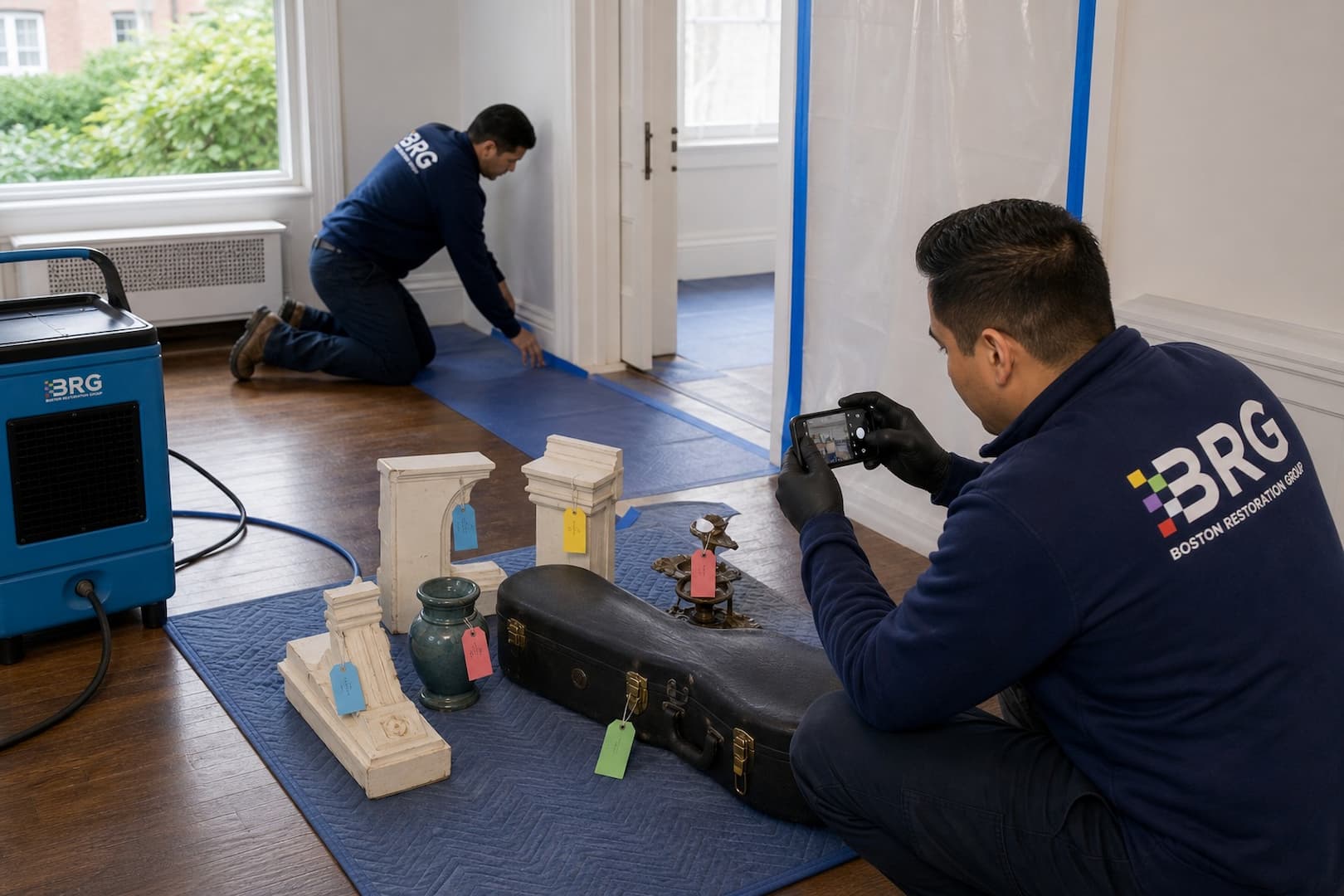
A nonstandard job becomes manageable when decisions are staged
The sequence creates points where the owner can approve the next level of access, handling, or removal.
Initial condition and authority
BRG documents who controls the property, what happened, hazards, access, privacy, occupants, utilities, and any official release.
Protection and priority inventory
Routes and retained areas are protected. Immediate-use, high-value, sentimental, confidential, and specialty contents are flagged.
Pilot area or first phase
A representative area can test access, cleaning, material response, time, equipment, and documentation before broader work.
Controlled production with change points
Hidden conditions and owner decisions are photographed and priced or approved before the scope expands.
Specialist and repair handoff
Completed restoration, stored or referred contents, unresolved conditions, and permanent repairs are separated in the final record.
Value, urgency, condition, and cleanability are different questions
A low-cost item may be irreplaceable; a high-cost item may need a conservator before ordinary handling.
| Decision group | Examples | Record and action |
|---|---|---|
| Immediate access | Medication, keys, identity documents, work devices, essential clothing | Locate and release safely when authorized; note condition and who received the item |
| Sentimental or irreplaceable | Photographs, family papers, handmade items, heirlooms | Pause automatic disposal; document condition and obtain owner direction or specialty review |
| Specialist evaluation | Art, antiques, electronics, instruments, collections, delicate textiles | Protect, photograph, and refer before ordinary cleaning changes the condition |
| Standard restoration candidate | Durable furniture, household goods, washable hard contents | Choose on-site cleaning, controlled movement, or off-site process based on exposure and use |
| Non-salvage decision | Severely damaged, contaminated, structurally failed, or inaccessible-to-clean items | Document the reason and obtain authorization consistent with the project and claim process |
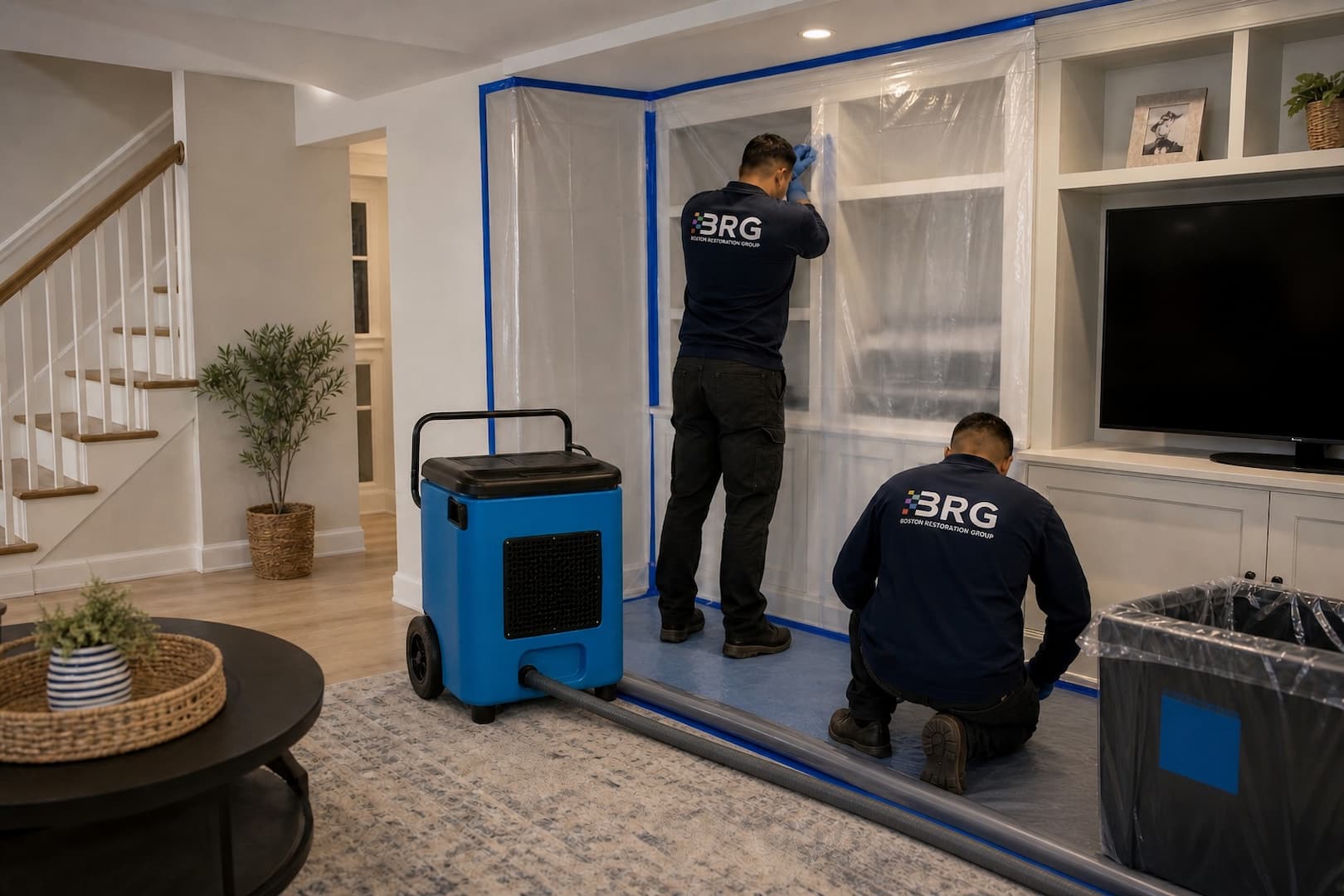
The home is not only a worksite
Photographs should support the restoration decision without capturing unrelated private documents, people, or rooms. Daily updates can state where the crew worked, which areas remain closed, equipment status, decisions due, and the next access window.
BRG plans routes, barriers, floor protection, contents staging, dust and air controls, work hours, pets, children, neighbors, and essential room use. If safe separation is not practical, the owner receives the facts needed to decide on temporary occupancy with the relevant advisors.
The final record should be useful even when several specialists remain
BRG identifies the rooms and conditions addressed, protection, contents actions, material work, equipment, readings where relevant, referrals, owner decisions, exclusions, and repairs. Insurance and reimbursement decisions remain with the carrier.
The exact cleaning, removal, drying, protection, or documentation BRG performed.
Specialty items, licensed systems, hazardous materials, or structural questions.
Surfaces, assemblies, finishes, fixtures, and contents not returned to final condition.
Specialty restoration questions
Describe the condition and desired endpoint instead of trying to choose a service label on your own.
What qualifies as a specialty restoration project?
A project may fit when ordinary water, fire, mold, or weather scope leaves important contents, material, access, privacy, hazard, or multi-trade decisions undefined. BRG can route a clearer single-category request to that service instead.
Can BRG restore every kind of valuable item?
No contractor should make that claim. BRG identifies and protects specialty items, documents condition, and refers conservators or other qualified specialists when ordinary restoration handling is not appropriate.
Can work be divided into phases?
Yes, when safety and source conditions allow it. Phasing can create approval points for access, contents, removal, cleaning tests, specialist review, and repair release.
Will BRG remove hazardous materials?
The material and jurisdiction determine the required specialist. Suspected asbestos, lead, chemicals, explosives, drugs, fuel, structural hazards, or other regulated conditions may require testing, authority, or a separate qualified contractor.
Does BRG protect private information?
Project documentation is planned around authorized contacts and restoration needs. Sensitive documents, occupants, unrelated rooms, and personal event details should not be collected or distributed unnecessarily.
Request a specialty restoration assessment
Send the address, event history, affected areas, materials or contents of concern, occupants, access, utilities, hazards, prior work, specialists already involved, and the handoff you need.
617-202-3772- Identify irreplaceable, confidential, regulated, or immediate-use contents.
- Mention suspected asbestos, lead, chemicals, sharps, pests, structural movement, or authority restrictions.
- Name the person authorized to approve handling, removal, and scope changes.
Describe the condition, not just the category
A project lead will determine whether specialty or a source-specific service is the better fit.