
Carpet Water Damage Cleanup and Drying in Boston, MA
Water can pass through carpet into cushion, tack strip, adhesive, subfloor, wall bases, and the room below. BRG identifies the source and water condition, extracts accessible water, evaluates each layer, protects contents, and monitors the floor system so “dry to the touch” is not mistaken for a completed restoration.
- Carpet and cushion extraction
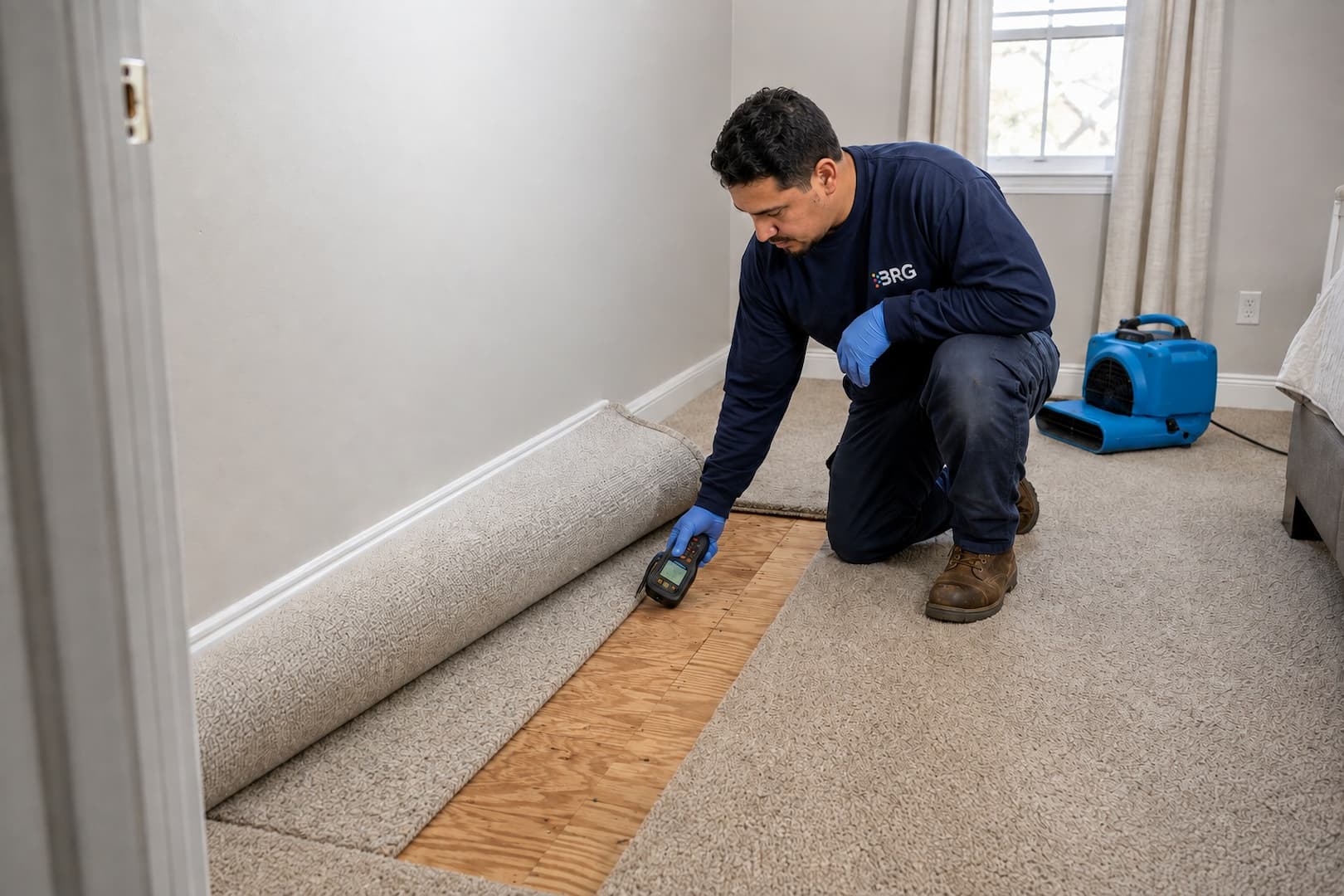
- Subfloor and wall-base moisture mapping
- Cleaning, drying, and replacement decisions
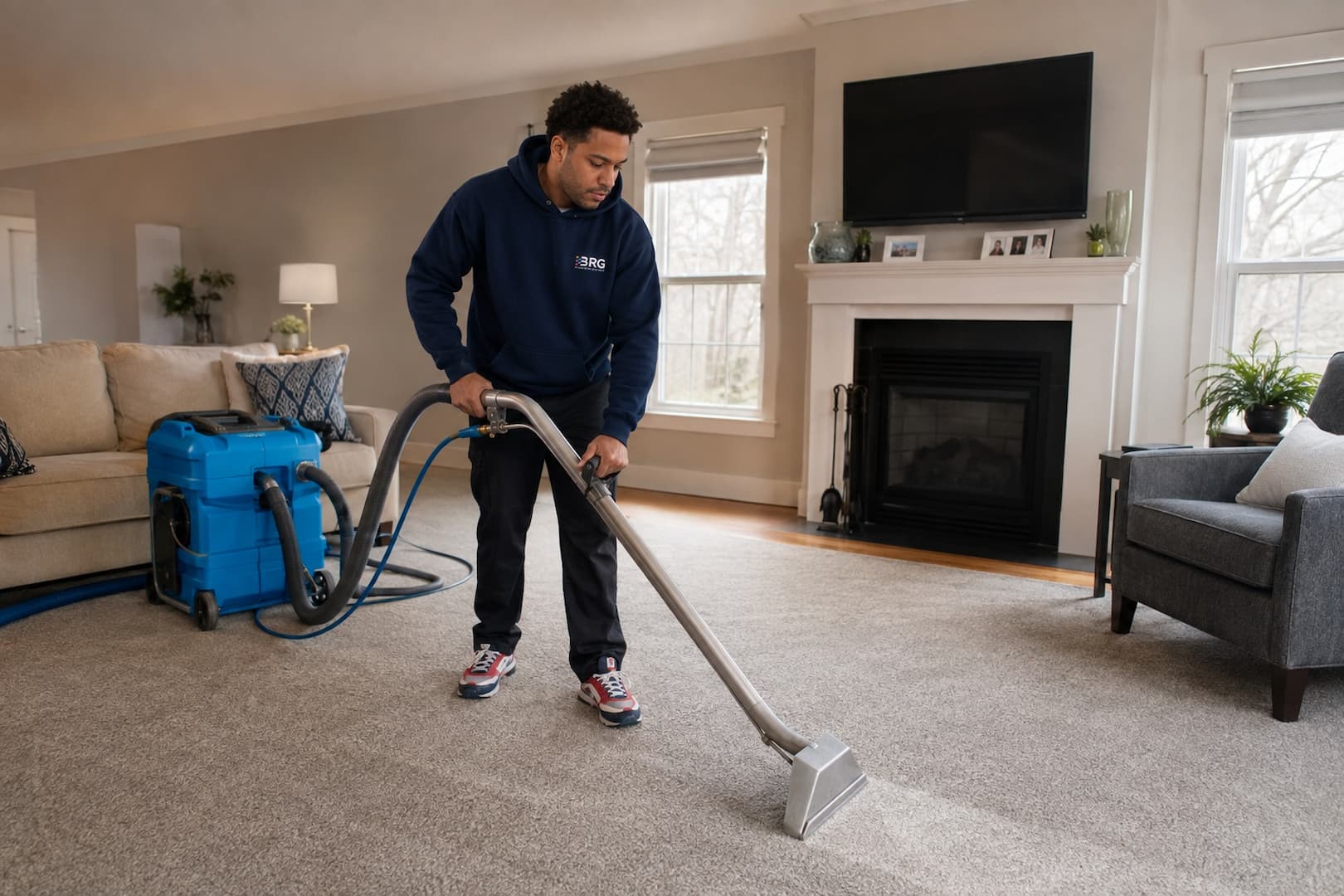
Clean supply water, rain, groundwater, drain water, and sewage require different carpet decisions.
Cushion, tack strip, adhesive, wood or concrete substrate, and baseboards can stay wet.
Wet furniture, metal feet, wood stain, and transferred soil can permanently mark carpet.
Carpet feel alone does not verify cushion, subfloor, or wall-base drying.
What was in the water and what did it contact?
A clean water release addressed quickly may allow carpet cleaning and drying when the backing, cushion, seams, tack strip, substrate, and surrounding materials remain sound. Sewage, drain backup, outside floodwater, long exposure, odor, delamination, dye transfer, or unsanitary contents can make porous layers unsuitable for retention.
Source and duration
Record whether the water came from a supply, appliance, roof, groundwater, drain, or sewage system and how long the carpet may have remained wet.
Carpet construction and installation
Fiber, backing, glue-down or stretch-in installation, seams, cushion, tile format, and manufacturer limits affect the method.
Substrate and adjacent materials
Wood, concrete, gypsum-based underlayment, baseboards, drywall, cabinets, and the ceiling below require their own moisture checks.
Carpet, cushion, and subfloor do not share one drying clock
Surface extraction can remove a large volume from the carpet while water remains in cushion or at the substrate. A concrete slab, wood subfloor, adhesive, and gypsum-based topping release and respond to moisture differently. Wall edges and tack strip can also retain water where normal foot traffic never reveals it.
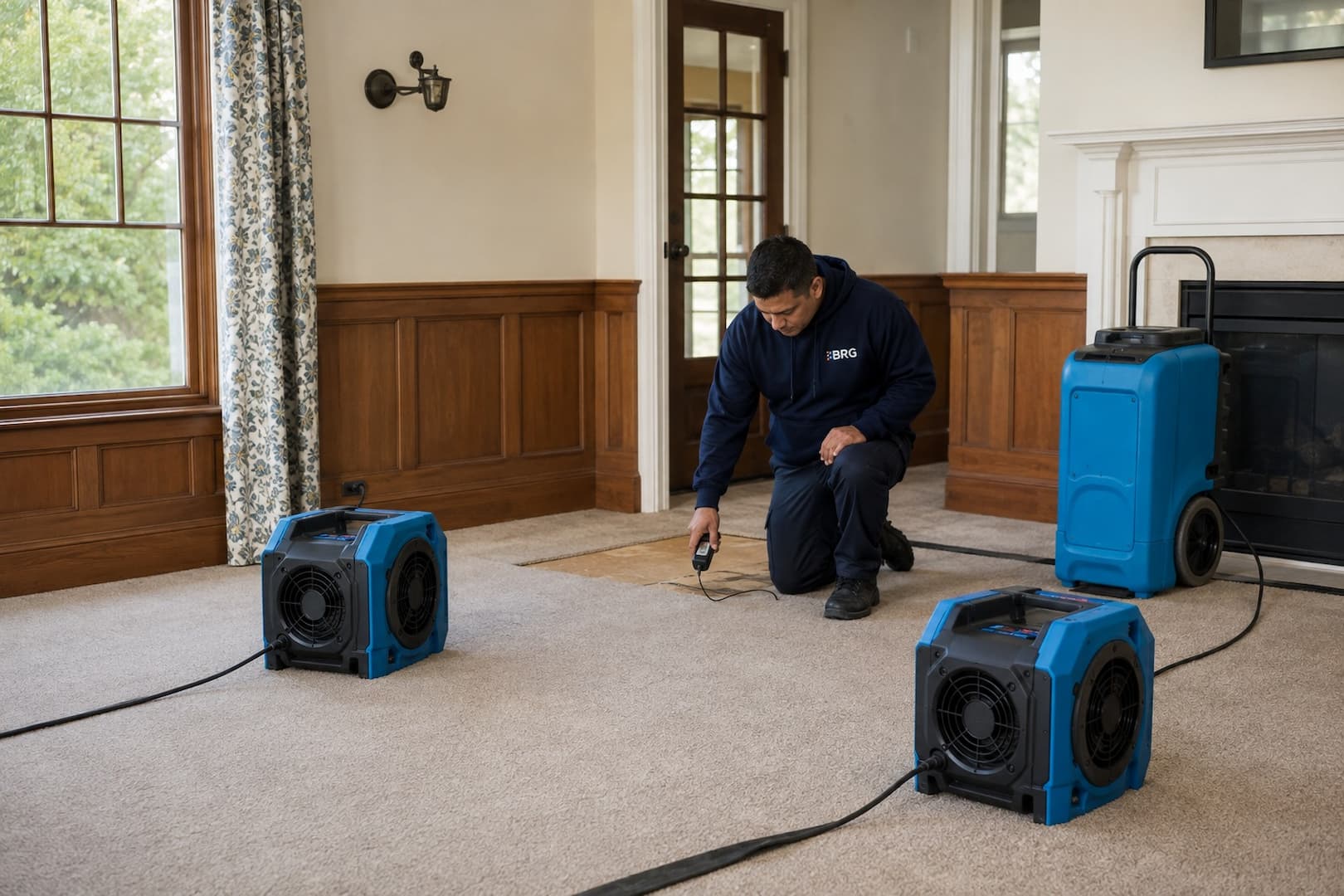
BRG uses edge access and readings where appropriate to inspect the layers without pulling more carpet than the question requires. When carpet can remain, controlled extraction, cleaning, air movement, and dehumidification are planned around the complete floor and room assembly.
- Check seams, thresholds, perimeter, and low points
- Inspect wall base and contents contact
- Record delamination, shrinkage, staining, odor, and dye transfer
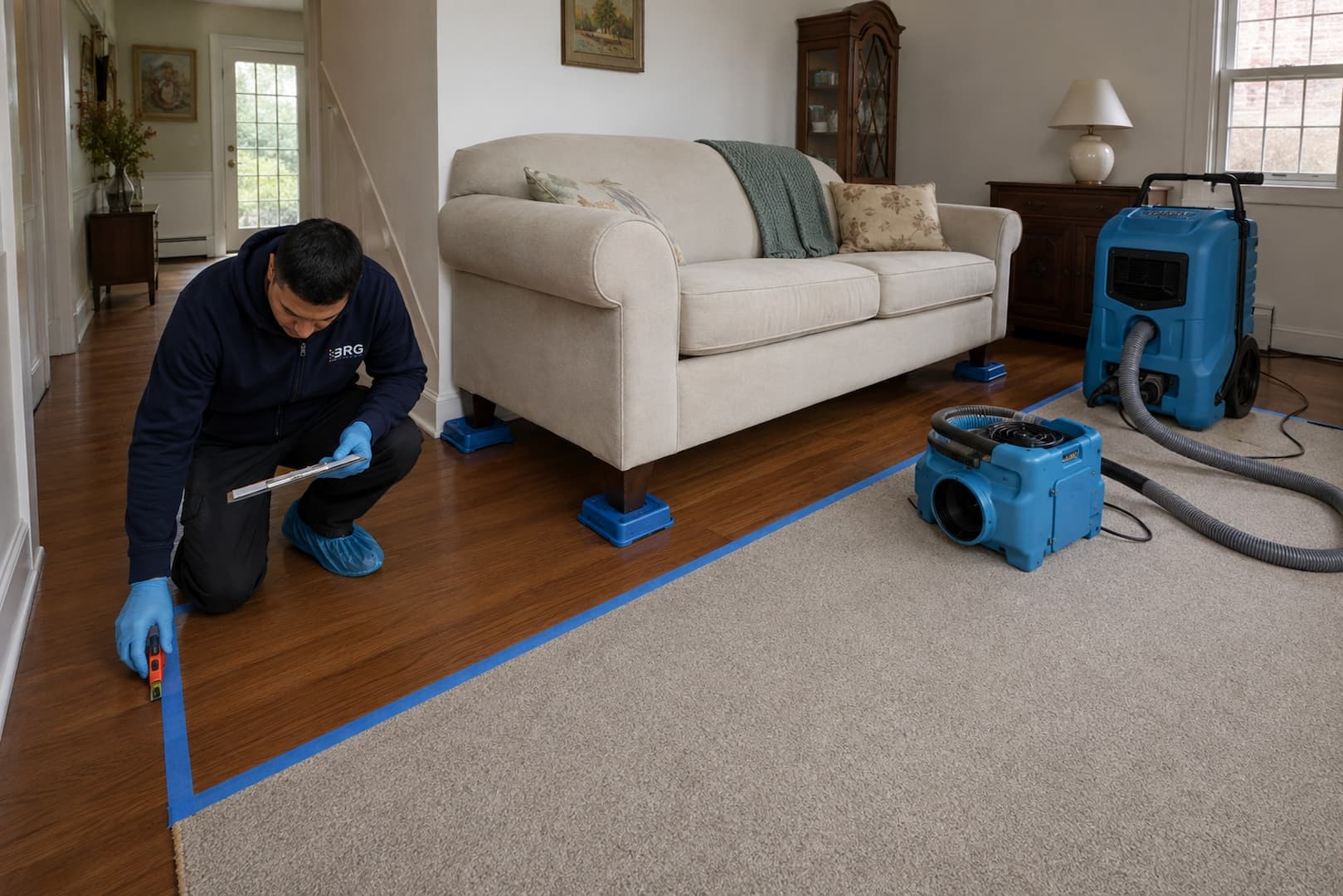
Contents handling and equipment placement are part of carpet restoration
Furniture is moved or blocked according to material and stability; equipment should not create trip hazards or leave wet shadowed areas.
Carpet decisions are made layer by layer
These are assessment factors, not automatic outcomes.
| Layer | Conditions that may support retention | Conditions that may support removal or replacement |
|---|---|---|
| Carpet face and backing | Known source, prompt response, sound backing and seams, cleanable surface, no permanent staining | Unsanitary exposure, delamination, odor reservoir, permanent dye or finish damage, inability to clean |
| Cushion | Compatible material, limited clean-water exposure, accessible extraction and verified drying | Contamination, compression, breakdown, prolonged saturation, trapped debris, impractical verification |
| Tack strip and edge | Sound wood, cleanable condition, controlled access, no corrosion or contamination | Splitting, heavy contamination, rust transfer, inaccessible wet wall edge, installation damage |
| Subfloor or slab | Sound material, source corrected, measured drying progress, appropriate future finish plan | Swelling, delamination, gypsum damage, contamination, coating or adhesive failure, unresolved moisture |
From source control to a floor ready for use or replacement
Drying duration is based on layers, humidity, access, and measured progress—not on when the pile first feels comfortable to walk on.
Assess source and safe access
Confirm electricity, water condition, affected rooms, contents, installation type, and source repair.
Extract and stabilize contents
Remove accessible water, move or protect furniture, and keep wet traffic out of dry space.
Inspect carpet layers and perimeter
Evaluate face, backing, cushion, seams, tack strip, substrate, baseboards, and walls.
Clean and dry retained materials
Use source-appropriate cleaning, repeat extraction as needed, and position equipment for the full assembly.
Verify or prepare replacement
Document material readings and condition, reinstall or reset retained carpet, or define the removal and finish-repair boundary.
A carpet-loss file should answer three different questions
The source, floor assembly, and completion status should not be collapsed into one line item.
What reached the carpet?
Source, water condition, timing, rooms, contents, soil, residue, and source repair.
What stayed wet?
Carpet, cushion, tack strip, adhesive, subfloor or slab, wall base, and readings.
What was retained or replaced?
Extraction, cleaning, equipment, monitoring, seams, reset, removal, and repair needs.
Confirm dry layers and stable carpet—not just a dry walking surface
Furniture reset, seam work, stretching, adhesive cure, floor repair, or carpet replacement should follow the material and installation plan. Wet items should not be placed back against walls or over an unverified floor.
- Check furniture feet and transferred stains
- Keep equipment routes and exits clear
- Document carpet or flooring contractor work after mitigation
Carpet water-damage questions
The answer depends on source, layer construction, condition, and ability to verify drying.
Can wet carpet always be saved if extraction starts quickly?
No. Prompt action helps, but water condition, carpet construction, backing, cushion, substrate, staining, odor, delamination, and manufacturer requirements still matter.
Does carpet cushion have to be removed?
Not in every clean-water loss. Cushion material, saturation, contamination, access, condition, and ability to extract and verify drying guide the decision.
Why lift a carpet edge?
Limited edge access can allow inspection and readings at the backing, cushion, tack strip, subfloor, and wall base. It should be done carefully to avoid unnecessary installation damage.
Can fans dry carpet after sewage or outside flooding?
Air movement before contaminated material is controlled can spread unsanitary residue. The water condition and removal or cleaning scope must be established first.
When can furniture go back?
After carpet and underlying materials meet the project’s drying condition, the installation is stable, and furniture feet or bases will not transfer stain, moisture, or rust.
Request carpet water damage cleanup and drying
Tell BRG the source, timing, rooms, carpet type if known, visible water, odor or residue, affected furniture, and whether water reached wall bases or the level below.
617-202-3772- Keep foot traffic out of wet carpet and dry rooms separate
- Do not use a household vacuum or unapproved fans
- Mention sewage, groundwater, detergent, dyes, and wet furniture
Request Carpet-Drying Help
Source and floor-layer details help the crew prepare appropriate extraction and controls.