
Commercial Specialty Restoration Services in Greater Boston
Some commercial losses involve regulated areas, sensitive inventory, specialty finishes, records, persistent odor, unusual residues, public access, or equipment that a general cleanup sequence cannot address. BRG defines the restoration boundary, brings in the right qualified parties, protects operations, and keeps responsibilities visible in one practical project record.
- Unusual materials and sensitive contents
- Controlled cleaning and selective removal
- Specialist and vendor coordination
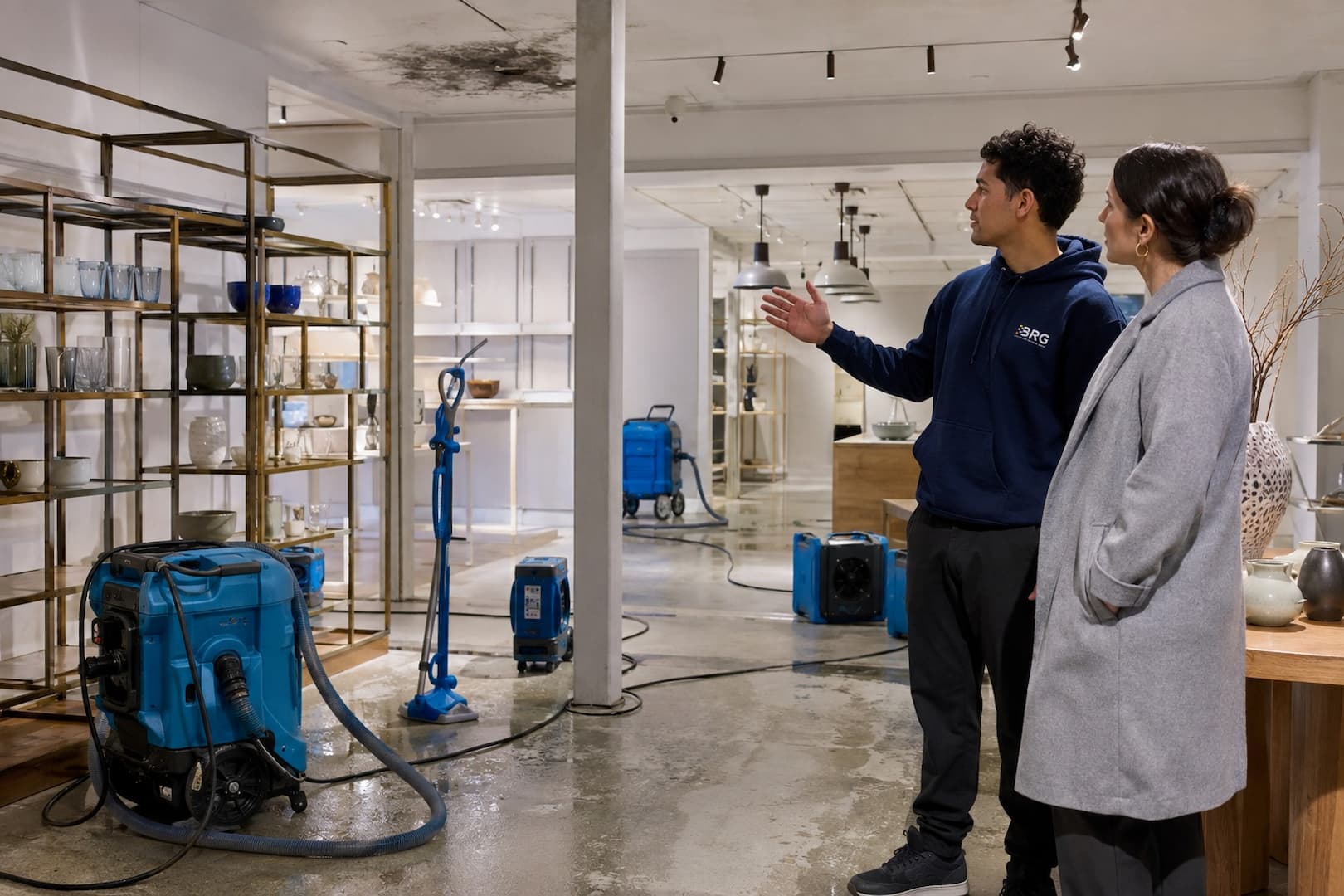
Material, residue, use, occupancy, and access determine the work—not a broad specialty label.
Engineers, hygienists, conservators, equipment firms, and licensed trades retain their professional roles.
Routes, containment, security, privacy, and work hours are built into the plan.
Items, areas, approvals, specialty vendors, and remaining repairs stay attributable.
“Specialty” describes the need for judgment, not one predetermined service
A sensitive loss may involve artwork, documents, electronics, medical or laboratory space, food areas, odor, corrosive residue, unusual finishes, regulated material, secure inventory, or a combination. BRG first identifies what is affected, why ordinary methods may be unsuitable, and which decisions sit outside a restoration contractor’s authority.
Can the material be safely handled?
Ownership, fragility, contamination, evidence, data, security, and manufacturer requirements may restrict movement or cleaning.
Who defines the method?
A consultant, conservator, manufacturer, engineer, industrial hygienist, or licensed trade may need to test, specify, or approve work.
What must keep operating?
Critical rooms, tenants, public areas, deliveries, privacy, and service schedules determine zones and work hours.
Security, separation, and traceability shape the jobsite
Specialty restoration often succeeds or fails at the interfaces between people, items, and work zones.
Named people and routes
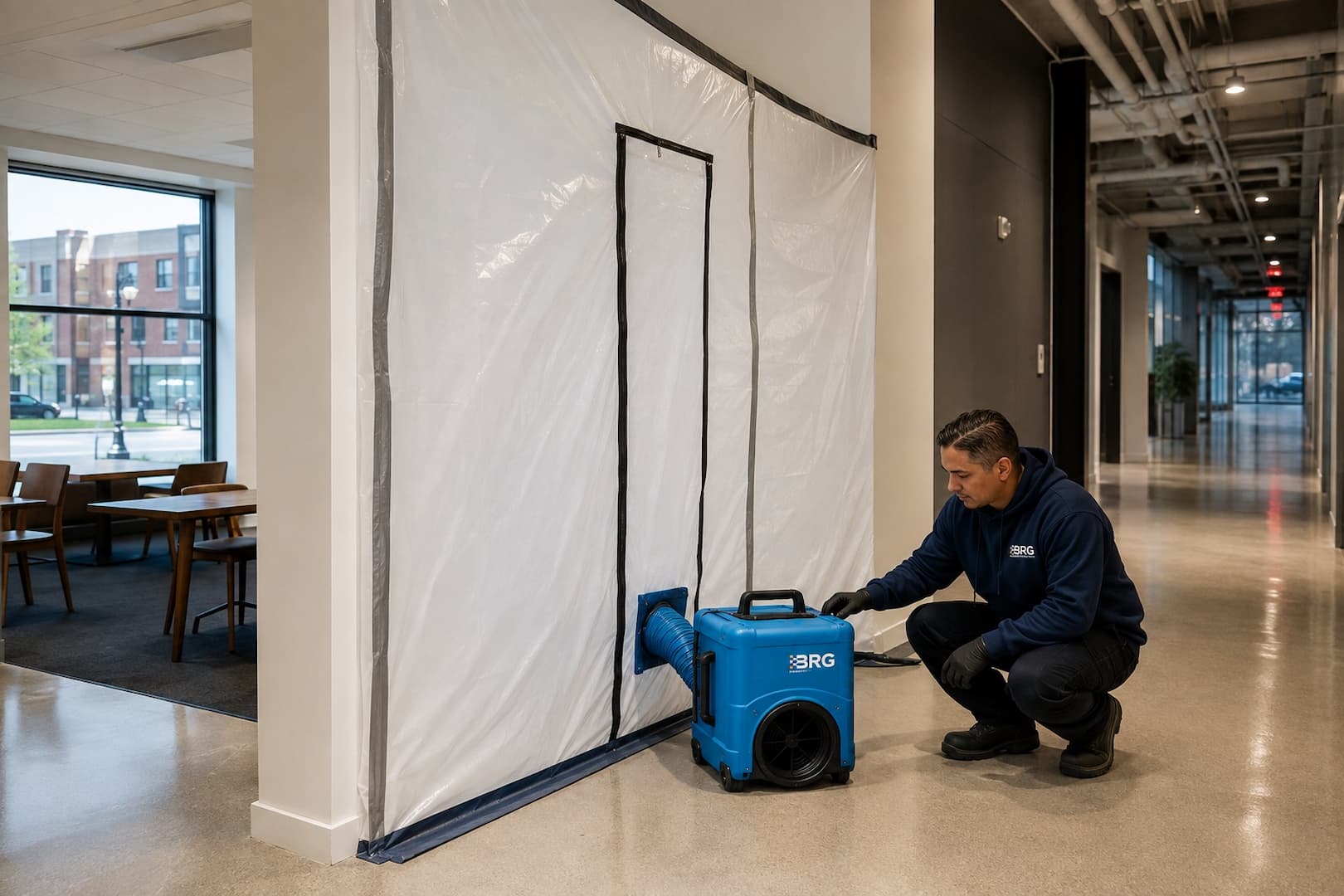
Set escorts, keys, floor protection, loading paths, clean storage, work hours, and areas that remain off limits.
Identity and condition
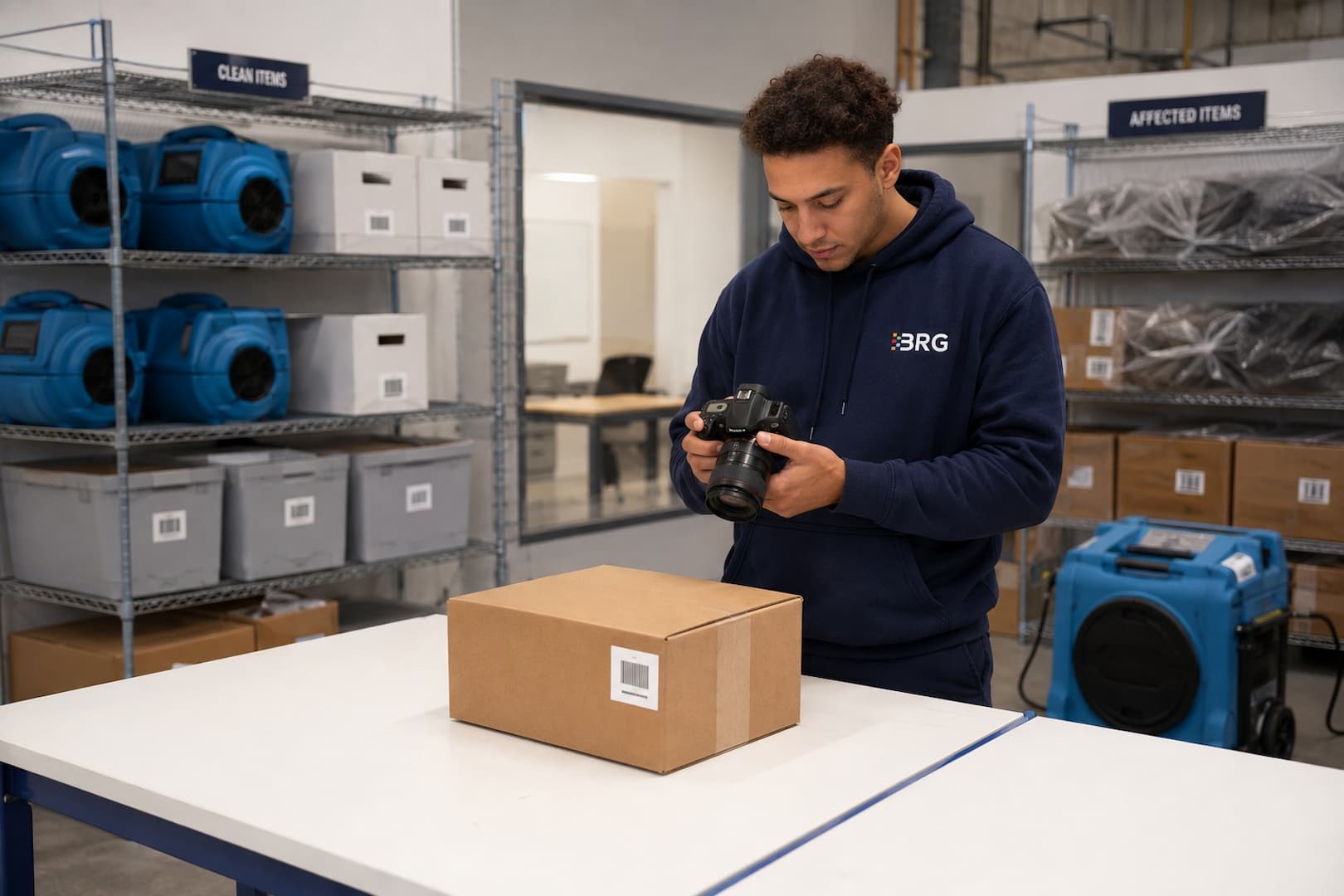
Photograph, label, group, and record handling without exposing confidential information or confusing ownership.
Test before production
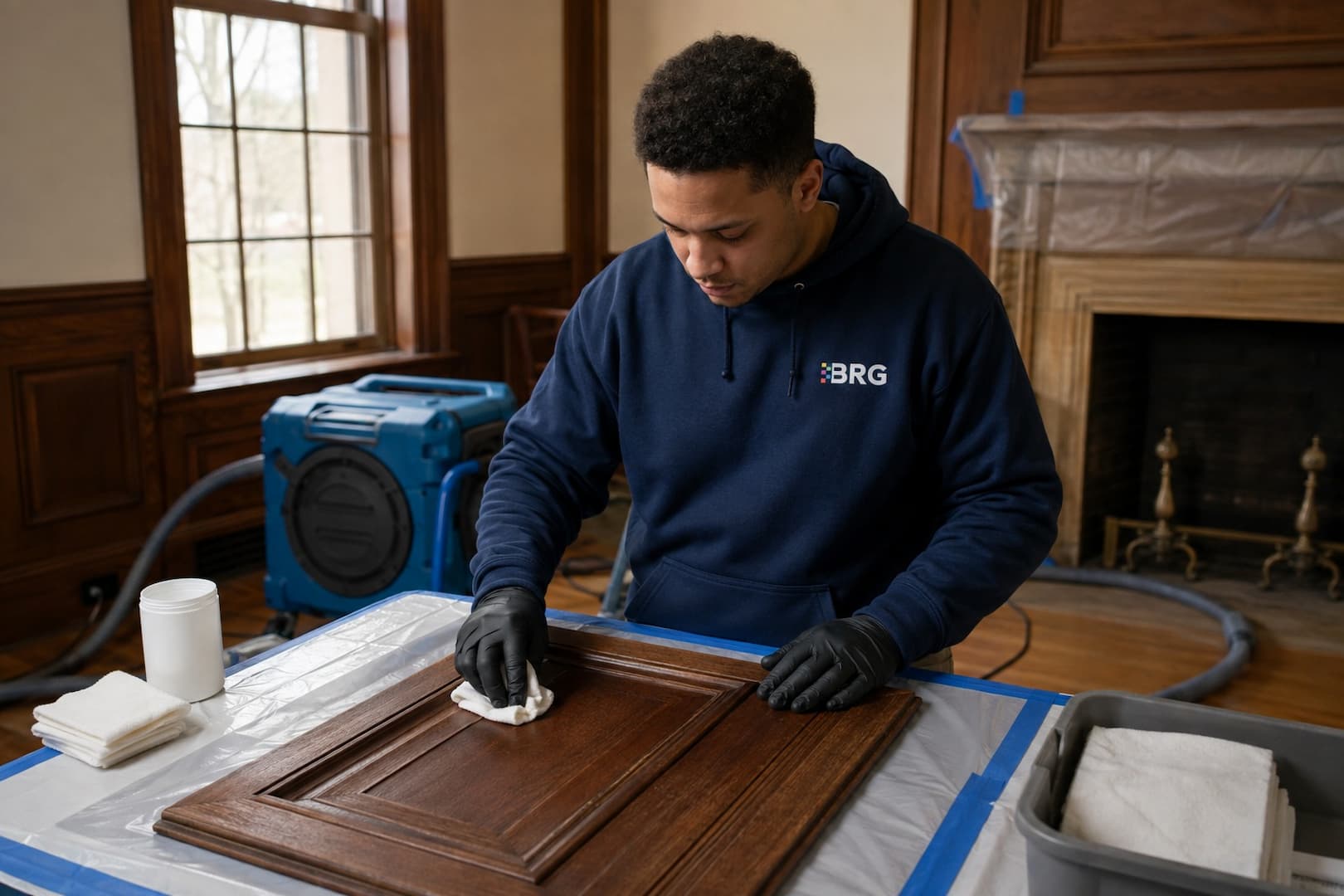
Representative cleaning, odor, drying, or removal trials help reveal finish response and limitations.
Inventory is not the same as salvage
A list can show that an item exists; it does not determine whether the item is safe to handle, functionally recoverable, economically practical to restore, or appropriate for an ordinary restoration method. The owner, insurer, manufacturer, or specialty evaluator may each contribute a different decision.
BRG can organize items by location and condition, protect them from ongoing exposure, document movement, create clean and affected staging areas, and coordinate specialty review. Sensitive data, evidence, high-value items, and regulated contents receive property-approved handling rules.
- Agree on naming, photography, and approval before movement
- Keep unsalvageable status separate from ordinary cleaning status
- Record which vendor has each item and the next decision required
Small controlled trials prevent large irreversible mistakes
A cleaning method and a work-zone design should be proven against the real finish, residue, occupancy, and access conditions.
How BRG coordinates a specialty restoration project
The steps are intentionally decision-based. The right specialist may change after a material, system, residue, or authority requirement is identified.
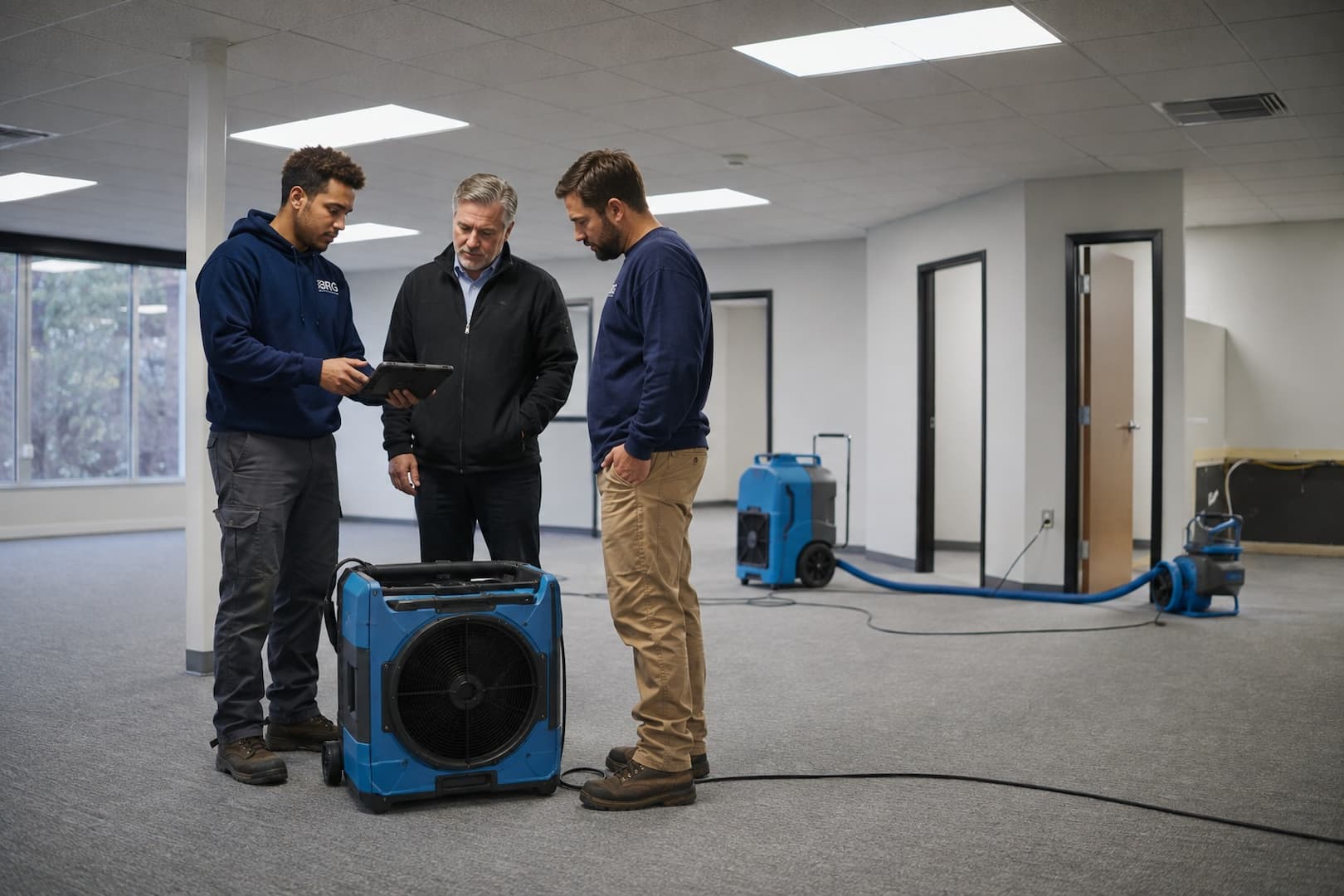
Define affected property and constraints
Record rooms, items, residue or moisture, operations, access, privacy, security, and authority restrictions.
Assign decision roles
Identify what BRG can perform and what requires an owner, consultant, conservator, engineer, manufacturer, or licensed trade.
Protect and test
Stabilize conditions, establish zones, protect unaffected property, and run approved representative method tests.
Execute and track
Clean, dry, remove, pack, or coordinate by item and area while documenting changes and approvals.
Close each open handoff
Record completed restoration, item disposition, vendor status, environmental or technical review, and reconstruction still needed.
A specialty project record should show who decided what
BRG structures the file around areas, items, methods, approvals, vendors, and remaining work. That traceability helps owners and managers review progress without treating restoration, professional evaluation, insurance coverage, and permanent repair as one undifferentiated promise.
- Area and item condition records
- Test results and approved methods
- Specialist, vendor, and repair responsibilities
Commercial specialty restoration questions
The best first answer is often a clear boundary and the right next expert.
What makes a restoration project “specialty”?
The term applies when material, contamination, security, value, use, occupancy, equipment, regulation, or access requires methods and coordination beyond a routine room cleanup.
Does BRG restore art, electronics, machinery, or medical devices directly?
BRG can stabilize the environment, document exposure, protect items, and coordinate handling. A qualified conservator, electronics firm, machinery specialist, manufacturer, or medical-equipment provider may need to perform or approve item-specific work.
Can work be performed outside business hours?
Often it can be scheduled around operations, but security, access, noise, building systems, supervision, and property rules must be confirmed.
How are confidential records or secure inventory handled?
The property should define authorization, photography limits, escorts, storage, and chain-of-custody requirements before handling. BRG incorporates those rules into the work plan.
Will one vendor manage every part of the loss?
Complex projects commonly involve several responsible professionals. BRG can coordinate restoration interfaces, but each specialist remains accountable for work within that party’s scope.
Request a commercial specialty restoration review
Tell BRG about the property use, affected materials or contents, source or residue, operating constraints, privacy or security requirements, and any consultant, manufacturer, or authority already involved.
617-202-3772- Identify items or rooms that cannot be moved or shut down
- Mention regulated, sensitive, high-value, or evidence-related property
- Share access windows, escorts, and documentation requirements
Request a Specialty-Service Call
A concise description helps BRG identify the right restoration and referral path.