
Burst and Leaking Pipe Restoration in Boston
Once the water is shut off, the building can still be wet inside floors, walls, ceilings, and insulation. BRG follows the water path, removes accessible water, sets a drying plan, and records what needs to be opened, retained, or repaired.
- Frozen and split pipes
- Supply-line and appliance leaks
- Moisture mapping
- Drying through repair planning
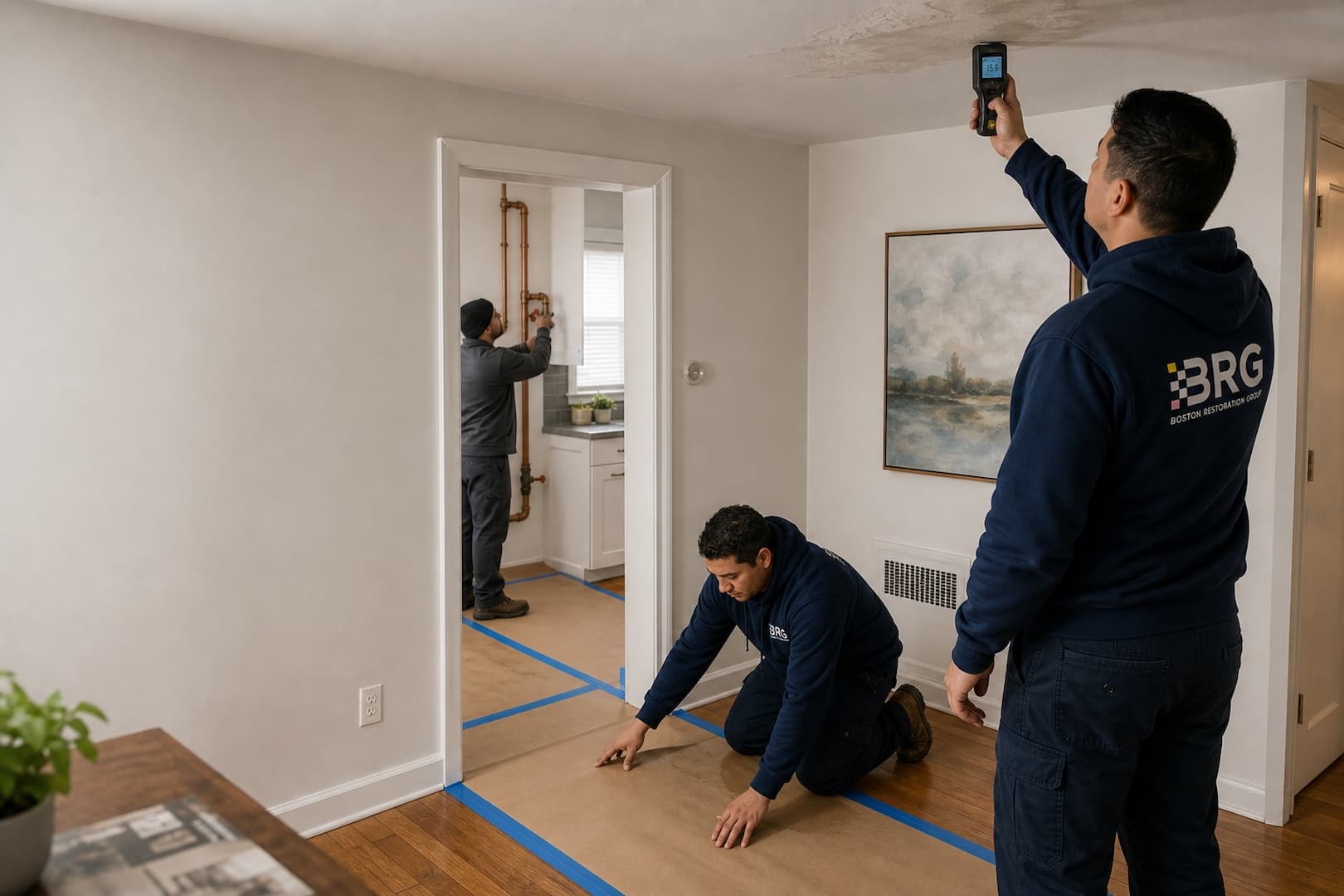
Trace the travel path
Water rarely stops at the first stain; gravity and connected assemblies determine the scope.
Call while conditions are active
BRG can plan the visit while the plumber or building staff isolates the source.
Compare readings
Affected materials are compared with dry reference areas rather than judged by touch.
Separate mitigation from repair
The handoff states what is dry, what was removed, and what still needs reconstruction.
Four actions can limit the spread without making the building less safe
A burst pipe is first a plumbing event, then a water-damage event. Do only what the conditions allow.
Shut off the water
Use the local fixture valve or main shutoff if it is accessible and you know how to operate it. If not, call a plumber or building manager.
Respect electrical hazards
Do not enter water near panels, outlets, appliances, or fallen fixtures. An electrician may need to make the area safe.
Move only dry, reachable contents
Do not carry soaked items through the building without a route. Lift dry furniture from the edge of the wet area when it is safe.
Record the source and timing
Photos, the shutoff time, the affected floors, and any earlier leak signs help BRG understand the likely travel path.
The stain is a clue, not the boundary
A second-floor supply line may wet the room where it failed, the floor system below it, a wall chase, and the ceiling on the first floor. Finished surfaces can look intact while insulation, subfloor, or the back of drywall remains wet.
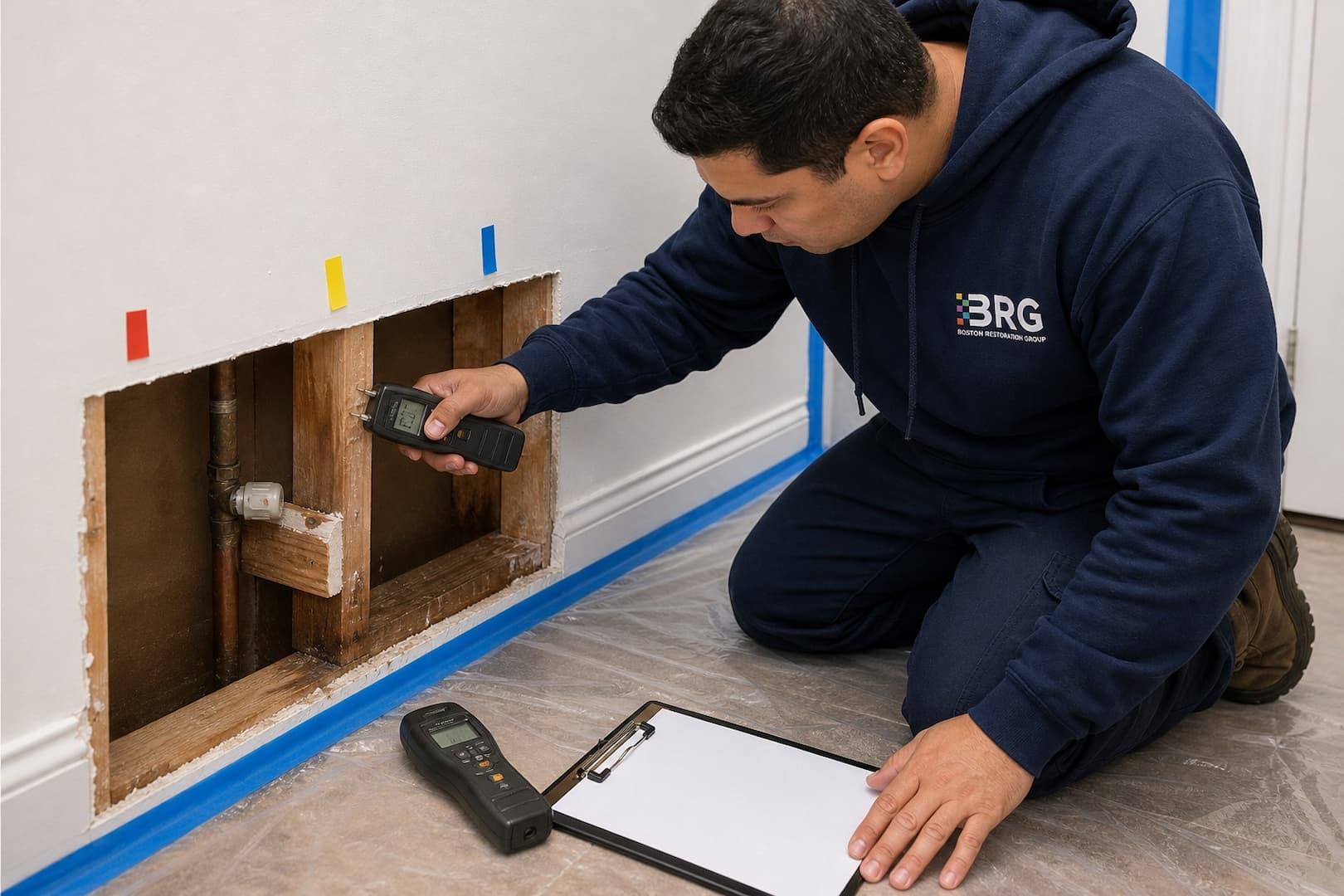
BRG maps the loss room by room. The crew uses visible conditions, moisture readings, construction details, and dry comparison areas to decide where access is necessary. Small openings or selective removal may reveal a wet cavity; wholesale demolition is not the starting assumption.
Who fixes the pipe?
A licensed plumber or the appropriate building trade repairs the failed plumbing. BRG coordinates the restoration sequence around that source work and handles the agreed water-damage scope.
A burst-pipe project has checkpoints, not a fixed calendar
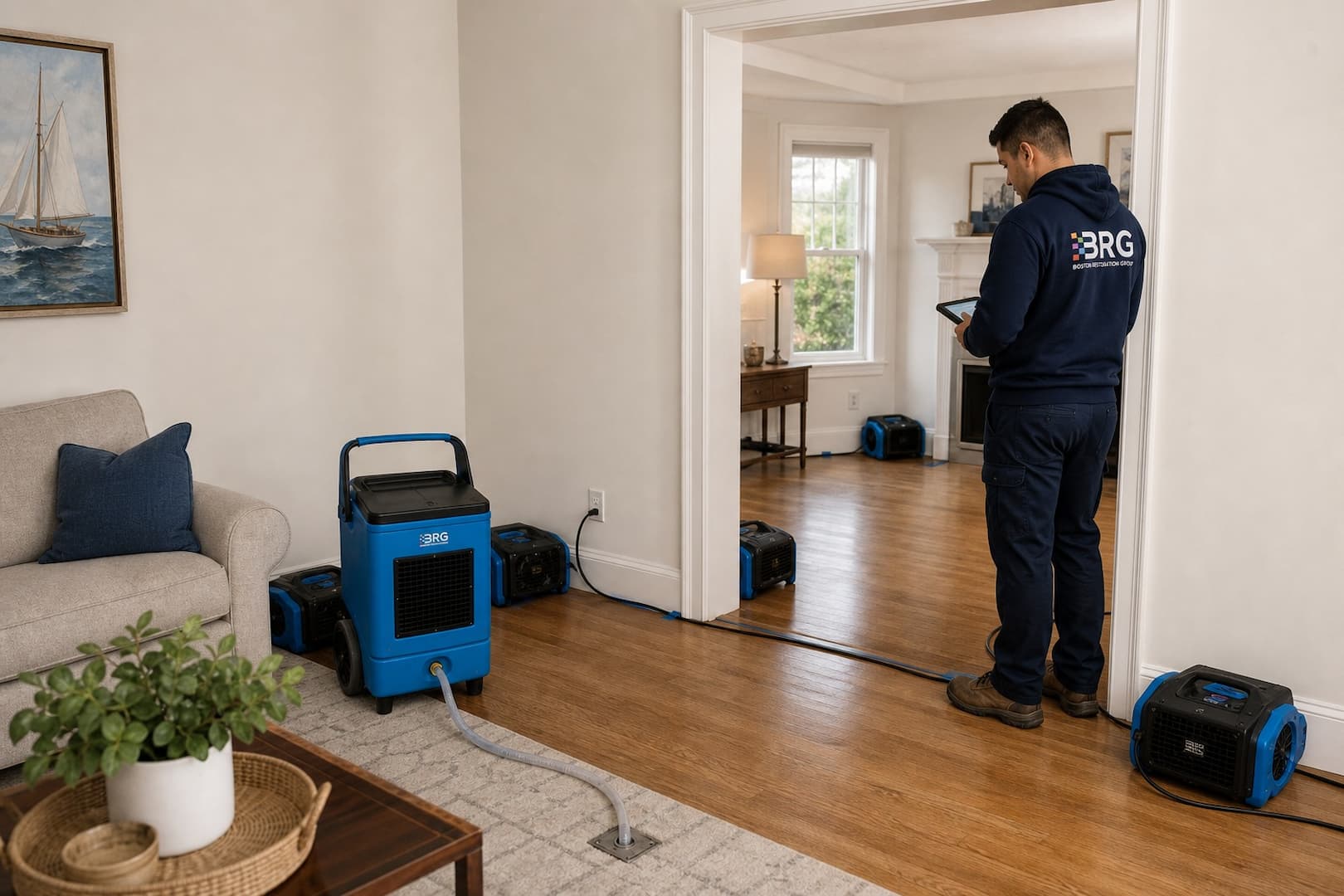
Drying time depends on the materials, amount of water, assembly depth, weather, and access. The crew changes equipment when readings show a reason to change it.
Confirm source control
BRG records whether the leak is active, temporarily isolated, or fully repaired and notes any areas that remain inaccessible.
Extract and protect
Accessible water is removed. Finished rooms, stairs, and unaffected travel paths receive protection appropriate to the job.
Map and expose
Readings define the wet boundary. Materials that block drying or cannot be saved are addressed under the approved scope.
Dry and monitor
Air movement and dehumidification target the exposed wet materials. Readings guide repositioning, removal, or continuation of equipment.
Release areas for repair
The final record separates completed mitigation from drywall, paint, flooring, trim, cabinetry, or other repair work still needed.
The restoration scope should preserve evidence about the failure
Frozen pipes, failed fittings, pinhole leaks, washing-machine hoses, refrigerator supply lines, hydronic lines, and loose connections leave different clues. Throwing away the failed part or opening everything before photographs are taken can erase information that the owner, plumber, insurer, or manufacturer may need.
When practical, keep the failed component, photograph its location, and note whether heat, occupancy, or recent work changed before the loss. BRG documents property conditions but does not assign legal responsibility for the failure.
- Frozen exterior-wall or crawl-space piping
- Bathroom and kitchen supply lines
- Heating and sprinkler lines
- Appliance connectors and drain hoses
- Slow leaks discovered after staining or odor
A useful file follows the water and the work
BRG can provide an itemized scope, photographs, room notes, moisture readings, equipment information, and material-removal details. The carrier determines whether the plumbing repair, resulting water damage, and reconstruction are covered.
What failed, when it was found, and how the source was isolated.
Where water traveled and which assemblies were affected.
What remains after mitigation is complete.
What owners ask after a pipe breaks
The first answers depend on source control, safety, and how far the water traveled.
Should I call a plumber or a restoration company first?
If water is still flowing, source control comes first. A plumber or building staff may need to isolate and repair the pipe while BRG plans extraction, moisture mapping, and drying.
Do wet walls always have to be removed?
No. The decision depends on material, insulation, contamination, damage, access, and whether the assembly can dry predictably. BRG uses readings and construction details rather than removing every wet finish by default.
How long will drying take?
There is no reliable universal number. Drying changes with the volume of water, material depth, weather, access, and equipment setup. Progress readings are more useful than a preset calendar.
Can BRG help document the insurance claim?
BRG can document observed conditions and completed work with photographs, readings, scope notes, and estimates. The policyholder and carrier handle coverage decisions.
What if the leak was slow and hidden?
Hidden leaks often require a broader investigation of staining, material condition, odor, and moisture. The scope may also involve mold assessment if growth is visible or suspected.
Request a burst-pipe water damage assessment
Tell BRG which pipe or fixture failed, whether the water is off, which floors or rooms show damage, and whether a plumber has already attended.
617-202-3772- Include the property address and best access point.
- Mention electrical panels, tenant units, finished basements, or concealed rooms in the water path.
- Keep the failed fitting or pipe section if another party may need to inspect it.
Describe the leak and affected rooms
The team will use those details to plan extraction, inspection, and equipment.