
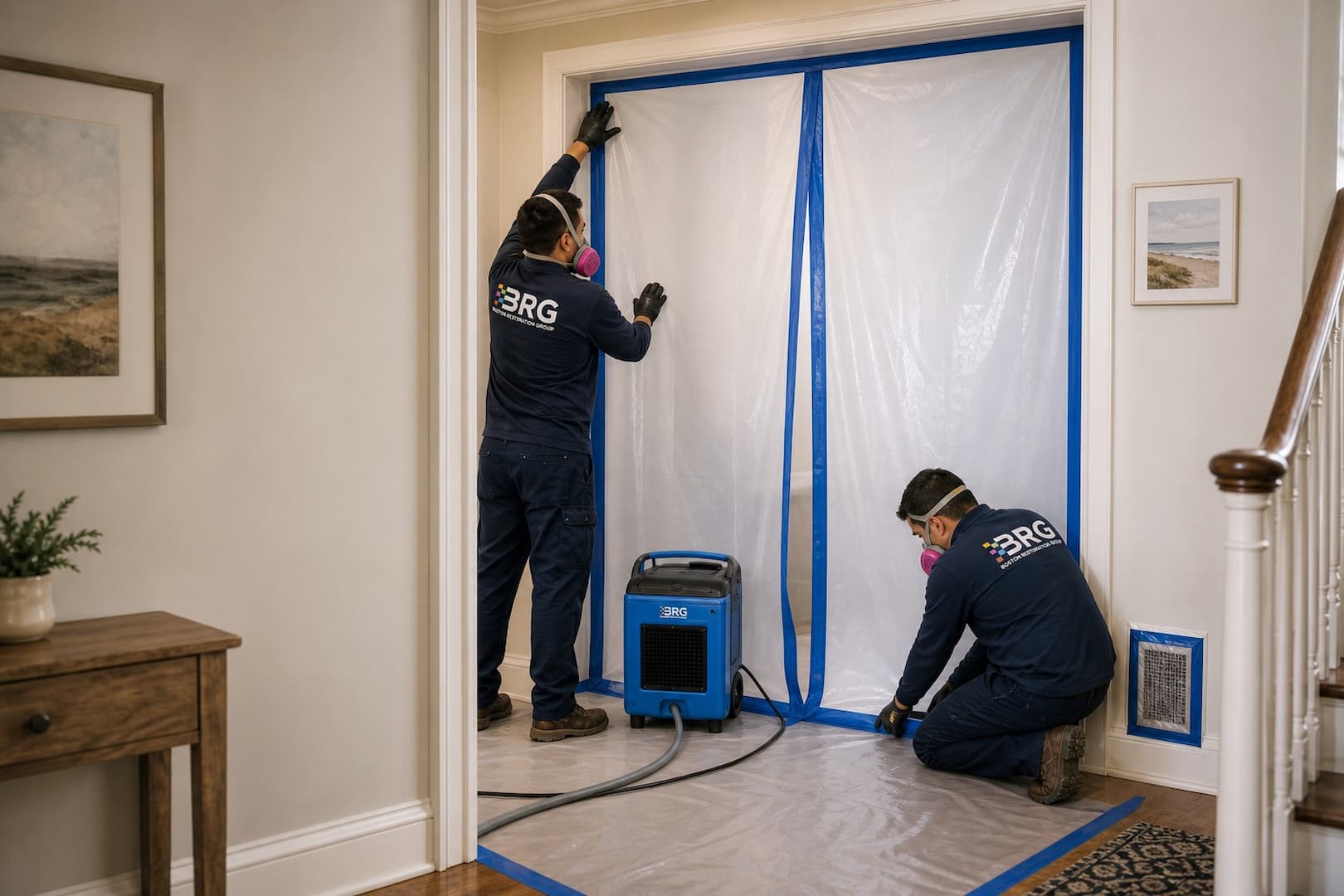
Mold Removal and Remediation in Boston
Mold remediation is not a coat of paint or a fogging treatment. BRG defines the moisture condition and work boundary, separates the affected zone, makes material-by-material removal and cleaning decisions, and leaves a documented path to source correction and repairs.
Source before finish
Leaks, condensation, humidity, drainage, or ventilation must be corrected for remediation to remain durable.
Boundary before demolition
Visible growth, hidden pathways, material condition, and access define the controlled work zone.
Method by material
Drywall, insulation, framing, masonry, flooring, and contents do not receive the same treatment.
Verification by agreement
Visual, moisture, cleaning, and any sampling criteria should be set before work begins.
If the source remains active, the cleanup is unfinished before it starts
A roof or plumbing leak, wet basement, unvented bathroom, cold-surface condensation, air leakage, or high indoor humidity can sustain growth in different assemblies. Cleaning the visible side of drywall does not correct wet insulation behind it. Replacing trim will not solve water entering through a wall.
BRG records the known source, current material readings, extent of visible or confirmed growth, and work another trade must complete. A plumber, roofer, HVAC contractor, drainage specialist, electrician, or building-envelope professional may need to act before, during, or after remediation.
The EPA's mold remediation guidance likewise centers the moisture problem, project planning, PPE, containment, cleanup, and checking for recurring moisture.
Removal is selective; cleaning is not merely cosmetic
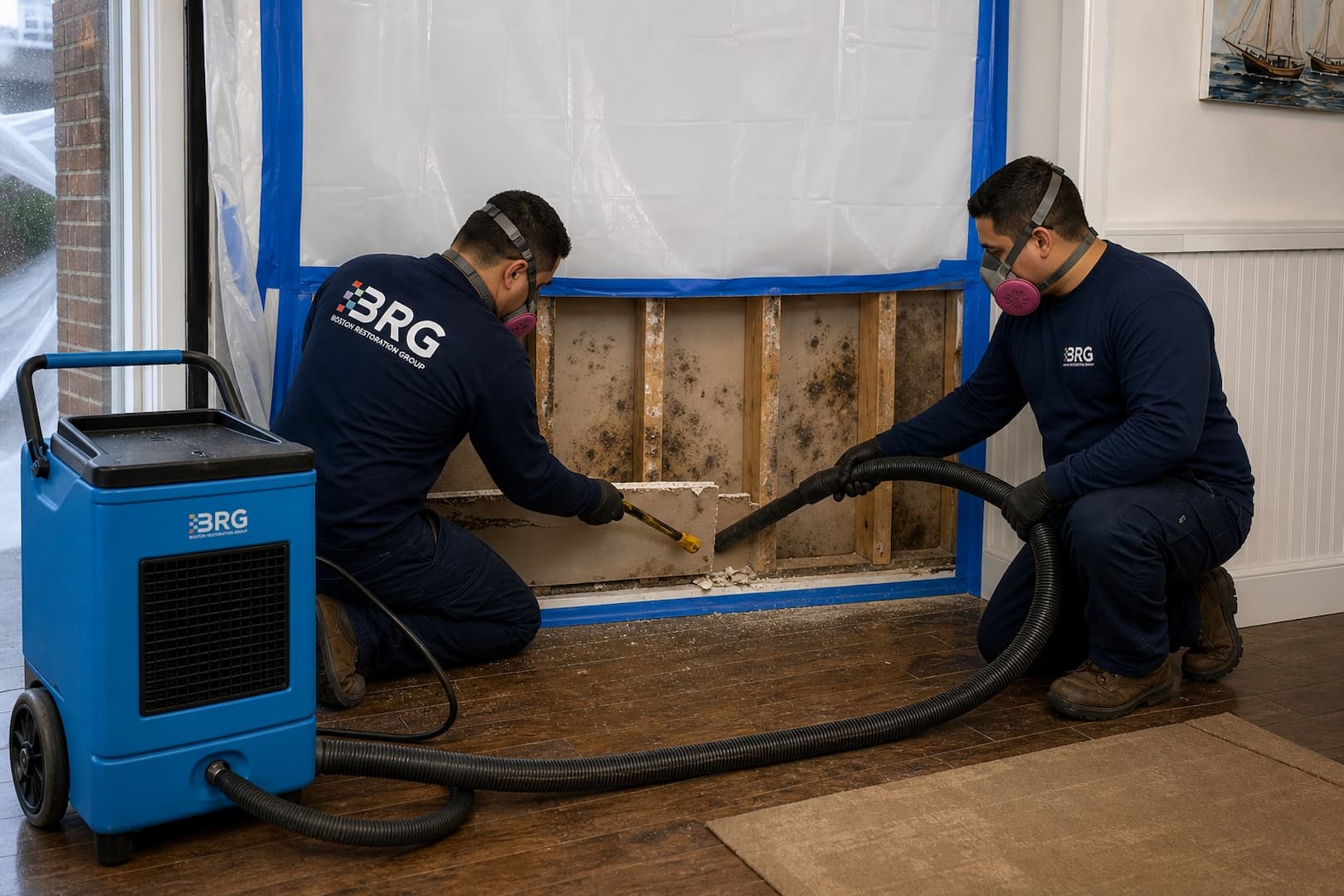
Porosity, condition, depth, finish, accessibility, and the ability to correct moisture determine the direction.
| Material | BRG evaluates | Typical project question |
|---|---|---|
| Drywall, ceiling tile, insulation, carpet pad | Growth, absorption, damage, hidden faces, and cleaning access | Can the affected thickness be cleaned and dried, or should the documented portion be removed? |
| Wood framing and sheathing | Surface condition, depth, structural integrity, coatings, fasteners, and moisture | Can reachable surfaces be HEPA-cleaned and detail-cleaned while the assembly dries? |
| Concrete, masonry, tile, and other hard surfaces | Coatings, joints, efflorescence, soil, surface growth, and water path | What cleaning method reaches the affected surface without confusing salts or dirt with mold? |
| Cabinetry, millwork, and flooring | Veneers, composite cores, seams, underside access, finish, swelling, and value | Can the full affected area be accessed and retained, or does selective removal produce a more reliable result? |
| Contents and textiles | Material, condition, use, sentimental value, contamination, and specialist needs | Clean in place, move to a controlled process, specialty refer, or document a disposal decision? |
Containment stays in place until the work-zone criteria are met
The controls fit the size, location, occupancy, and material disturbance rather than a one-size room count.
Scope and source status
BRG confirms the affected boundary, access, occupied areas, HVAC concerns, source work, contents, materials, and agreed completion criteria.
Protection and containment
Travel paths, floors, contents, doors, and openings are protected. Barriers and HEPA-filtered air control are set for the planned disturbance.
Controlled material removal
Unsuitable porous materials are removed under containment. Work does not expand beyond the scope without documenting the new condition.
Detailed cleaning and drying
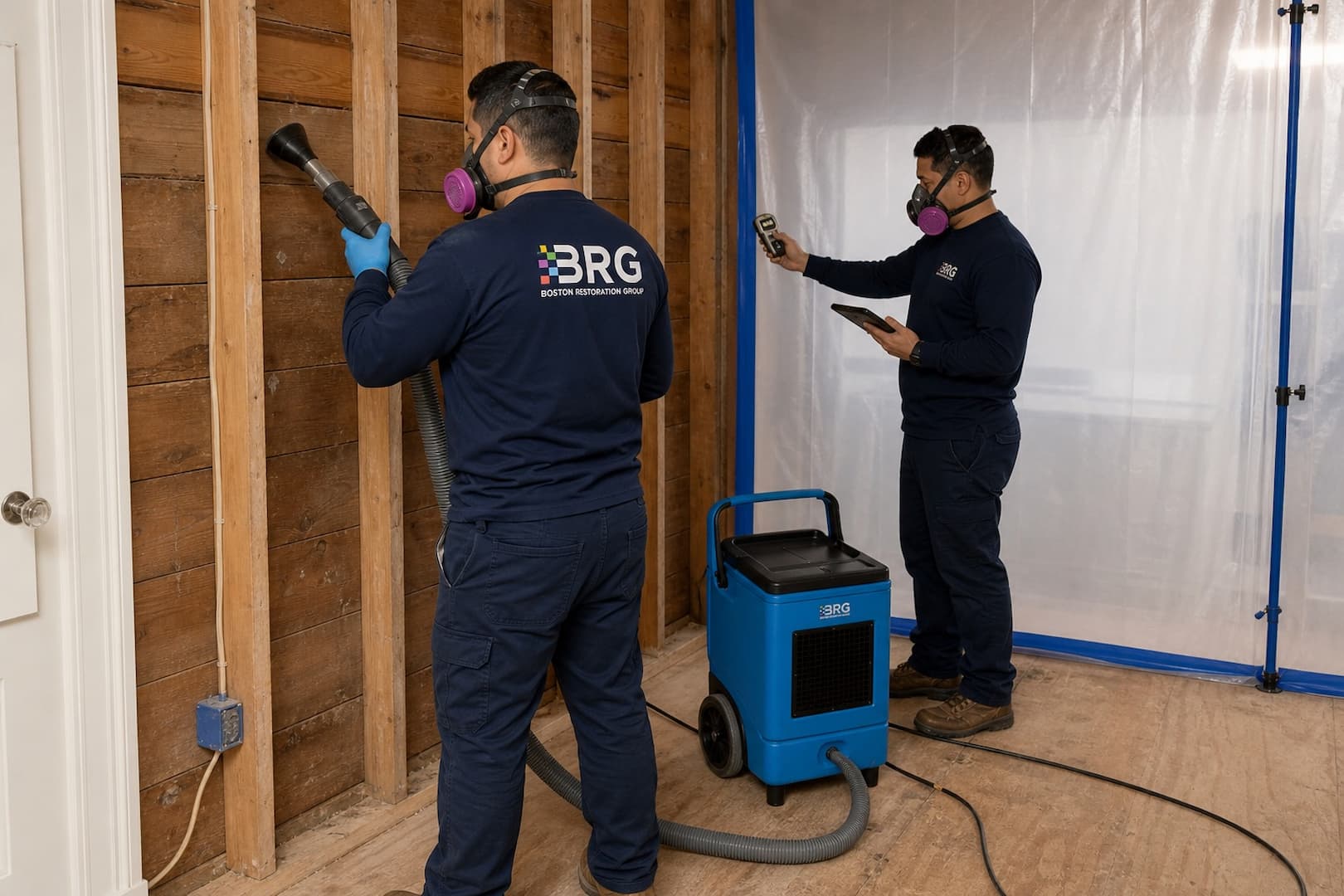
Retained surfaces receive HEPA vacuuming and material-appropriate cleaning. Drying targets the underlying moisture condition.
Review and repair handoff
BRG documents the cleaned boundary, moisture condition, removed materials, remaining source work, verification, and reconstruction needs.
The project should finish with a defined condition, not a perfume or a promise
Completion criteria may include source correction, no visible dust or debris in the work area, no visible mold on retained cleaned surfaces, acceptable material moisture, and any pre-agreed independent evaluation or sampling. No contractor can promise that a normal building contains zero mold spores.
If the owner wants independent post-remediation verification, the protocol and responsible assessor should be chosen before the cleanup. That avoids changing the rules after materials are removed and keeps the verifier separate when the project requires it.
- Ask what will be visible at the final walkthrough.
- Confirm how hidden discoveries change the scope.
- Keep source repair invoices with the remediation record.
- Do not close walls until required review and drying are complete.
The assigned team should be able to explain its controls
All BRG employees are certified restoration specialists. BRG can identify the project lead, containment plan, equipment, PPE, material methods, waste route, cleaning sequence, documentation, and verification arrangement for the specific home.
Access, HVAC, pets, children, exits, contents, and daily communication are addressed.
New hidden conditions are photographed and approved before scope expansion.
Retained, removed, dry, unresolved, and reconstruction items remain distinct.
Residential mold remediation questions
A photograph helps, but the scope also needs source, material, access, occupancy, and moisture information.
Can mold be painted over?
Paint does not remove growth, damaged material, dust, or the moisture condition. The substrate must be assessed, cleaned or removed as appropriate, dried, and prepared before finish work.
Do you need to remove every wall?
No. BRG defines the affected boundary using visible conditions, moisture, construction, history, and access. Selective openings or removal should answer a documented need, and new hidden conditions trigger a scope review.
Will mold ever return after remediation?
Growth can recur if moisture returns. Durable work requires leak, humidity, condensation, drainage, ventilation, or other source correction in addition to cleanup.
Can we stay home during the work?
That depends on the affected rooms, containment, access, HVAC, household sensitivities, children, pets, noise, dust, and whether essential spaces remain usable. BRG explains the work-zone conditions so the owner can decide with relevant advisors.
Does insurance cover mold remediation?
Coverage varies with the cause, timing, policy language, endorsements, limits, exclusions, and maintenance history. BRG documents observed conditions and work; the carrier decides coverage.
Can BRG guarantee zero mold spores?
No. Mold spores exist naturally. Completion is evaluated against the agreed source, visual, cleaning, moisture, and any independent verification criteria, not an impossible zero-spore promise.
Request residential mold remediation in Greater Boston
Send the address, affected rooms, visible area, leak or humidity history, odor, prior cleaning, occupants, HVAC concerns, and any inspection or laboratory report.
617-202-3772- Do not sand, scrape, vacuum, or demolish the area before containment planning.
- Mention asthma, allergies, or medical concerns as occupancy information; consult a healthcare professional for medical advice.
- Tell BRG whether you want independent post-remediation review.
Describe the material and moisture problem
The source history and room use are as important as a close-up photo.