
Appliance Failure Water Damage Restoration in Greater Boston
A dishwasher, refrigerator, washing machine, or water heater can release water behind cabinets, under flooring, and into the level below before the failure is obvious. BRG follows that path, removes accessible water, protects unaffected rooms, and uses material readings to define the drying plan.
- Supply-line, drain, seal, and overflow losses
- Moisture mapping beyond the visible puddle
- Certified restoration specialists
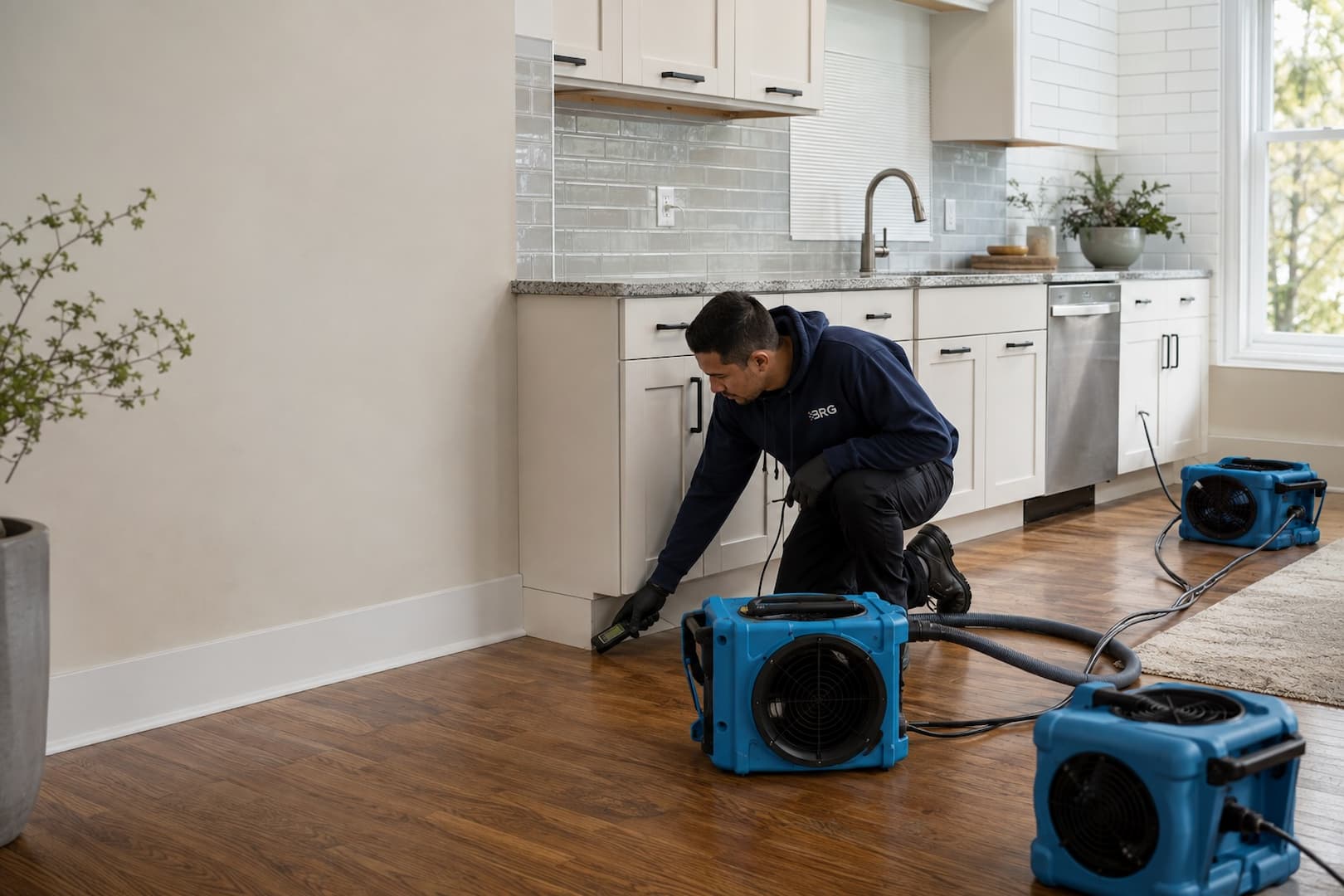
Shut off the appliance or water supply only when it can be reached without electrical or slip hazards.
Toe-kicks, wall cavities, flooring seams, and ceilings below can hold water out of view.
Cabinetry, subfloor, finish flooring, drywall, and insulation do not respond the same way.
The failed appliance part and resulting property damage are documented as distinct issues.
The puddle rarely marks the full boundary
Water from an appliance follows seams, penetrations, fasteners, and gravity. It may run under a floating floor, wick into a cabinet end panel, pass through a pipe opening, or collect on the ceiling below. Drying only the area that feels wet at the surface can leave moisture inside an assembly.
BRG begins with the appliance location, the reported timing, and the rooms above, beside, and below it. Non-invasive readings establish a comparison with unaffected materials. When conditions support it, targeted access is considered rather than broad, assumption-driven removal.
- Photograph the source area before equipment changes the scene
- Check cabinet toe-kicks, underlayment, subfloor, baseboards, and the level below
- Record whether the leak is active, isolated, or awaiting an appliance or plumbing repair
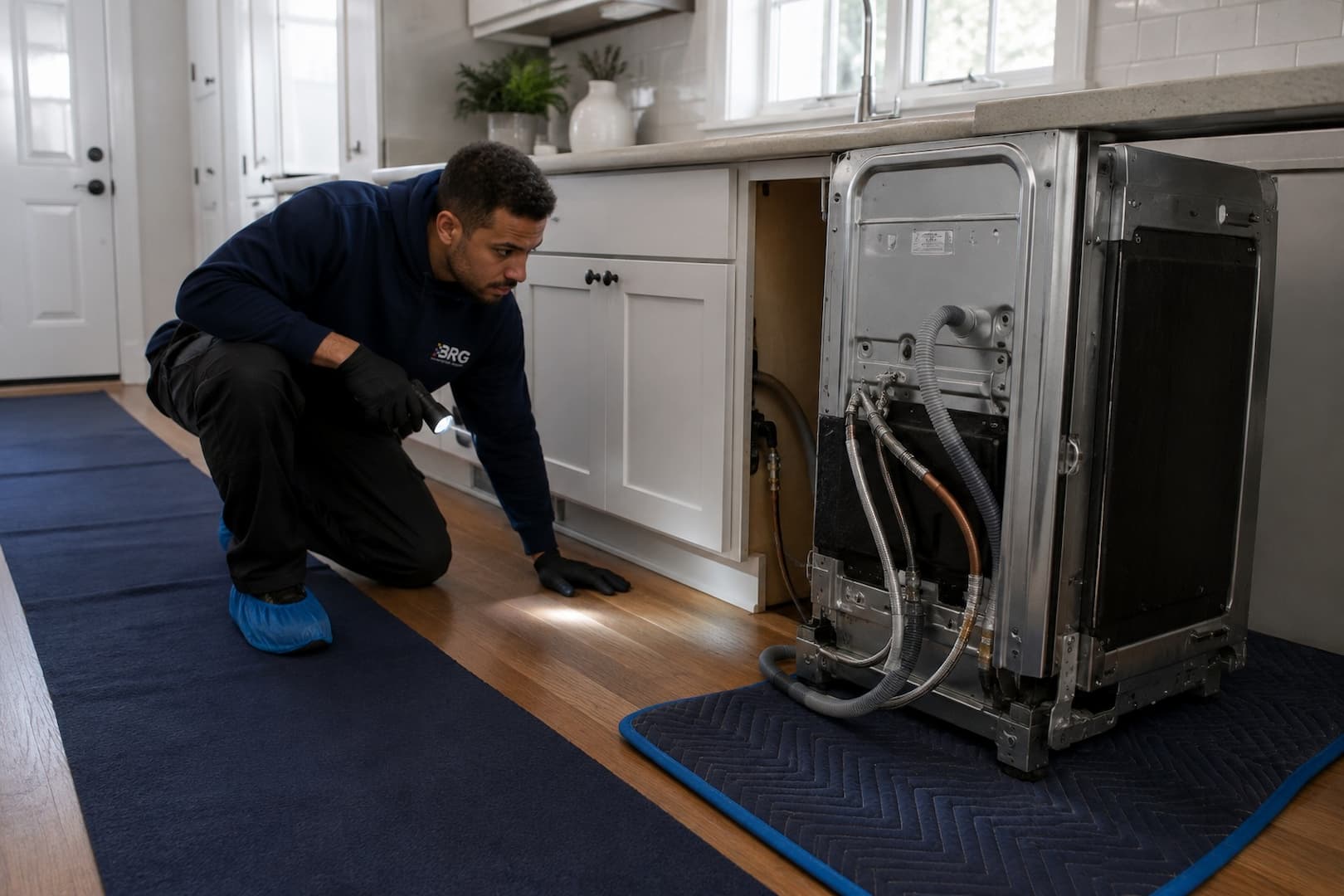
Common appliance losses and where water tends to travel
The equipment may be familiar, but the likely wet materials change with its location and failure point.
Door, drain, or supply release
Water can enter the cabinet recess, toe-kick void, flooring edge, and subfloor before spreading across the visible kitchen.
Ice-maker line or drain issue
A slow leak can remain behind the unit, affecting wallboard, trim, flooring, and the cabinet panel beside it.
Washer hose or overflow
A rapid discharge can cross a laundry room, enter the hallway, and move through floor penetrations to the story below.
Tank or connection loss
The release may affect a utility room, stored contents, wall bases, and adjacent occupied space; hot water adds a safety concern.
What can stay depends on condition, not appearance alone
A clean-looking finish may be bonded to a wet layer beneath it. Conversely, a damp material is not automatically a demolition candidate. The decision considers the water condition, exposure time, porosity, swelling, delamination, finish damage, access, and whether the assembly can be dried and verified.
Cabinet boxes and toe-kicks
Solid wood, plywood, MDF, and particleboard react differently. Swelling, loss of strength, trapped moisture, and finish separation guide the scope.
Wood, laminate, and resilient flooring
The crew checks seams, transitions, underlayment, and subfloor. Cupping, edge swell, adhesive condition, and access affect the drying choice.
Drywall, insulation, and ceilings below
Readings and visual evidence identify where water migrated. Contaminated, collapsed, or inaccessible wet material may require controlled removal.
From failed appliance to dry, documented rooms
The sequence can change when the source is still active, water reached an electrical component, or the appliance cannot be moved safely. BRG explains those dependencies before disruptive work proceeds.
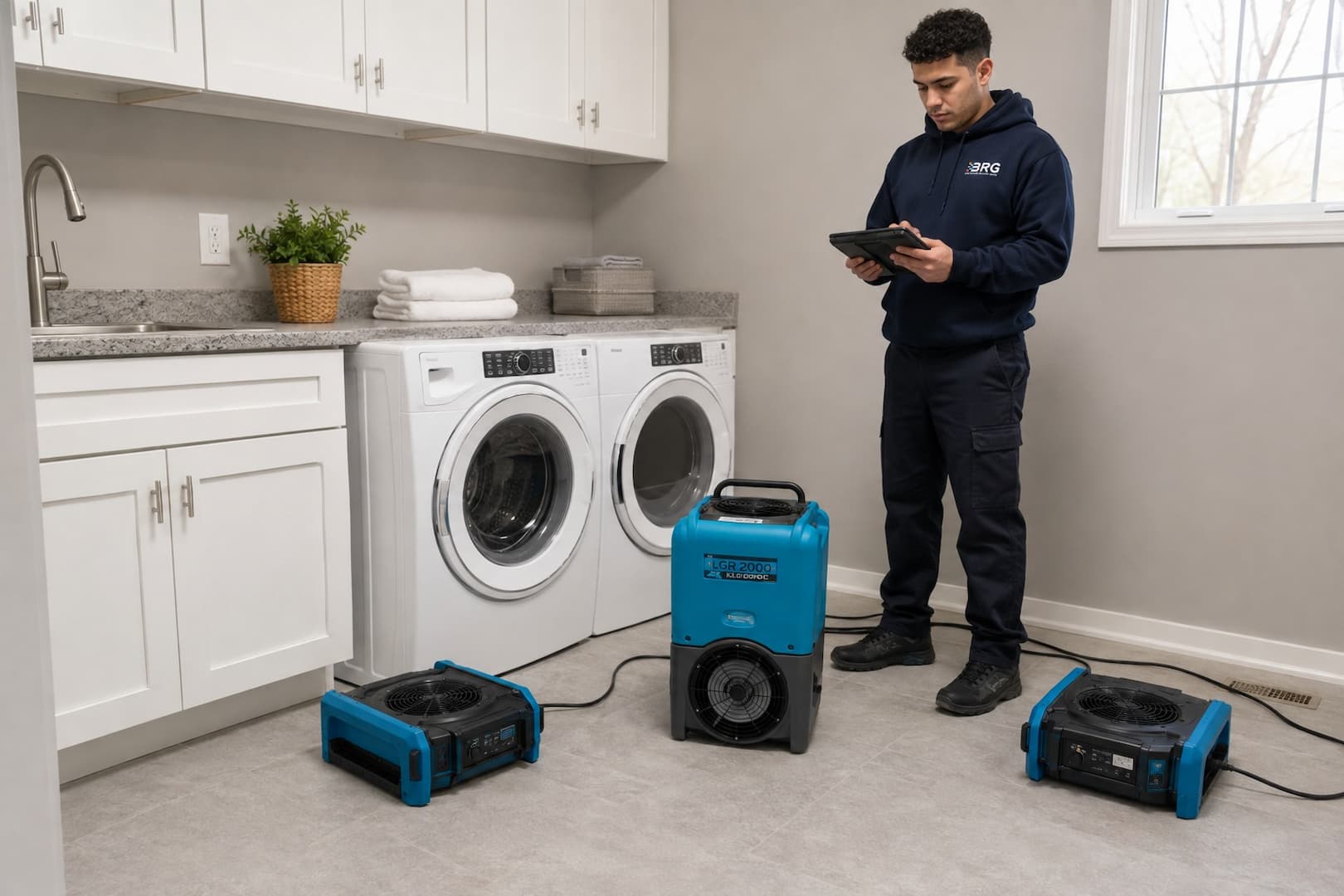
Assess the source and make the area safe
The technician confirms whether water is still moving, identifies immediate hazards, and determines which trade must complete the source repair.
Extract and protect
Accessible water is removed while unaffected flooring, contents, and travel paths are protected from avoidable disturbance.
Map wet materials
Readings define affected rooms and assemblies, including cabinet bases, wall bottoms, flooring layers, and ceilings below.
Create drying access
Equipment and selective access are matched to the material. Items that cannot be safely dried are documented for the approved scope.
Monitor and hand off repairs
Progress readings show whether the plan is working. The completion record distinguishes mitigation work from appliance, finish, and reconstruction work still needed.
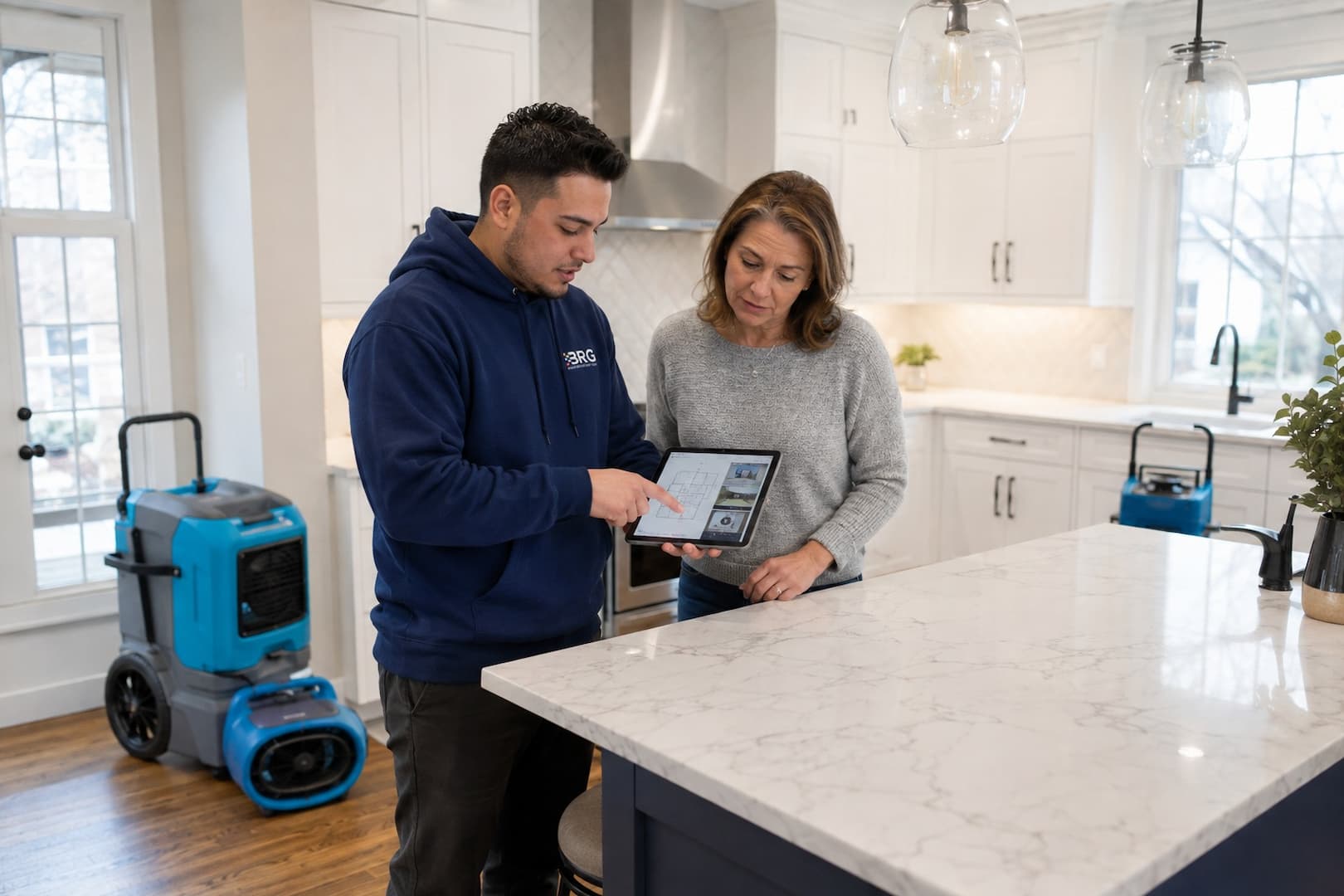
Clear documentation connects the source, rooms, and repair needs
An appliance loss often involves separate decisions: who corrects the failed component, which materials need emergency attention, and what finish work follows. BRG records the reported cause, source status, moisture boundary, equipment, material removal, and progress so those decisions are not blended into one vague description.
When an insurance claim is involved, the carrier decides coverage. BRG can provide photographs, readings, room notes, and an itemized restoration scope, answer reasonable project questions, and coordinate site access without promising an outcome the policy controls.
Small actions can reduce spread—only when they are safe
Keep people and pets out of the wet area. Move dry, lightweight contents away from the edge of the loss. Do not operate the appliance, use a household vacuum on water, lift glued flooring, or run fans when the water source or electrical condition is uncertain.
- Know the appliance location and when the leak was first noticed
- Mention water on the level below or inside cabinets
- Report unusual odor, residue, heat, or electrical concerns
Questions after an appliance leak
The right scope depends on the water path, materials, and source status—not on the appliance name alone.
Should I pull the appliance out before BRG arrives?
Only if it is designed to move easily and doing so creates no water, gas, electrical, or lifting hazard. Built-in units and appliances connected to hard piping are better left for the appropriate technician.
Can cabinets dry without being removed?
Sometimes. Material type, swelling, finish condition, water category, access, and moisture behind the cabinet determine whether in-place drying is reasonable.
Why check the room below when the floor looks dry?
Water can pass through seams and penetrations and collect in the ceiling assembly below. Surface appearance does not show moisture inside the floor-ceiling system.
Does BRG replace the failed appliance or hose?
BRG restores the property damage. Appliance, plumbing, gas, and electrical repairs may require the relevant qualified trade; the project record identifies that boundary.
Will an appliance leak be covered by insurance?
Coverage depends on the policy, cause, timing, exclusions, and carrier review. BRG documents observed conditions and completed restoration work but does not decide coverage.
Start with the source, rooms, and water path
For active water or a rapidly spreading loss, call. For a non-emergency assessment, send the appliance type, property address, source status, rooms involved, and whether water reached cabinetry, flooring, or the level below.
617-202-3772- Share whether the water is still running or the source has been isolated
- Mention electrical, hot-water, or ceiling concerns before entry
- Include access instructions for apartments or managed buildings
Request Appliance-Loss Help
A few specific details help the restoration team prepare for the affected materials.