
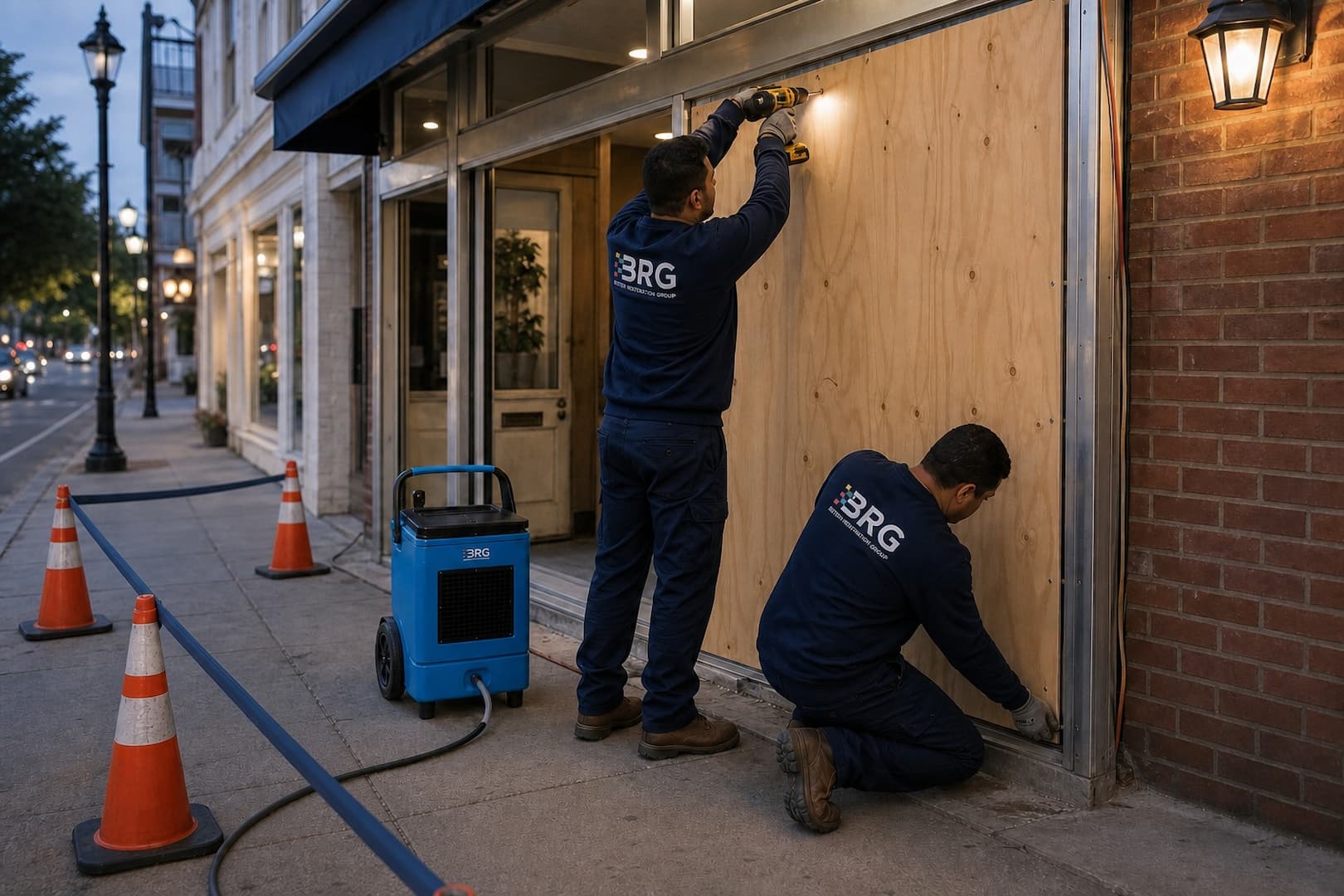
Emergency Board-Up Services in Boston
A damaged opening leaves the building exposed to weather, entry, animals, and falling material. BRG controls the immediate area, measures the opening, installs temporary protection that fits the condition, and records what permanent repair is still required.
- Residential and commercial openings
- Windows, doors, roofs, and wall breaches
- Temporary weather protection
- Photo-documented handoff
Make the approach safe
Glass, unstable trim, utilities, traffic, and falling material are addressed before panels are carried into place.
Fit the actual opening
Window, door, storefront, and roof damage require different attachment and weather-control details.
Protect without hiding damage
Temporary work should preserve the information an adjuster and repair contractor need to see.
Define the next trade
The record separates emergency protection from glazing, roofing, framing, masonry, or finish repairs.
Tell BRG what is open, what is unstable, and who controls the property
The first conversation is about access and hazards, not a generic square-foot price.
What created the opening?
Fire department access, wind, tree impact, a break-in, vehicle damage, or failed glass changes the debris and structural concerns.
Is the building released?
Fire, police, utility, or building officials may need to release the area before a restoration crew can alter it.
What is below and around it?
Sidewalks, parked vehicles, tenants, merchandise, electrical service, and neighboring units affect the work zone.
Who can authorize work?
An owner or authorized manager should approve access, temporary attachment, locks, and the contact for follow-up repairs.
Board-up is not one plywood detail repeated everywhere
A single broken sash may allow an interior-secured panel that limits fasteners in exterior finishes. A damaged storefront may need a larger framed panel and a safe pedestrian route. A door opening must account for access control. A roof or wall breach needs temporary weather protection shaped around drainage, not simply covered flat.
BRG measures the remaining frame, identifies sound attachment points, removes only loose material that prevents safe protection, and selects a temporary assembly for the opening. The goal is to limit entry and weather while avoiding unnecessary damage to materials that may remain repairable.
- Photographs show the opening before temporary work.
- Panels are marked for the project without posting private loss information.
- Access doors and keys are assigned to the authorized contact.
- Temporary work remains a temporary measure and requires inspection after severe weather.
Do not enter to measure it yourself
Stay away from hanging glass, leaning walls, damaged roofs, downed wires, smoke residue, and standing water. A phone photo taken from a safe public or interior position may be enough for dispatch planning.
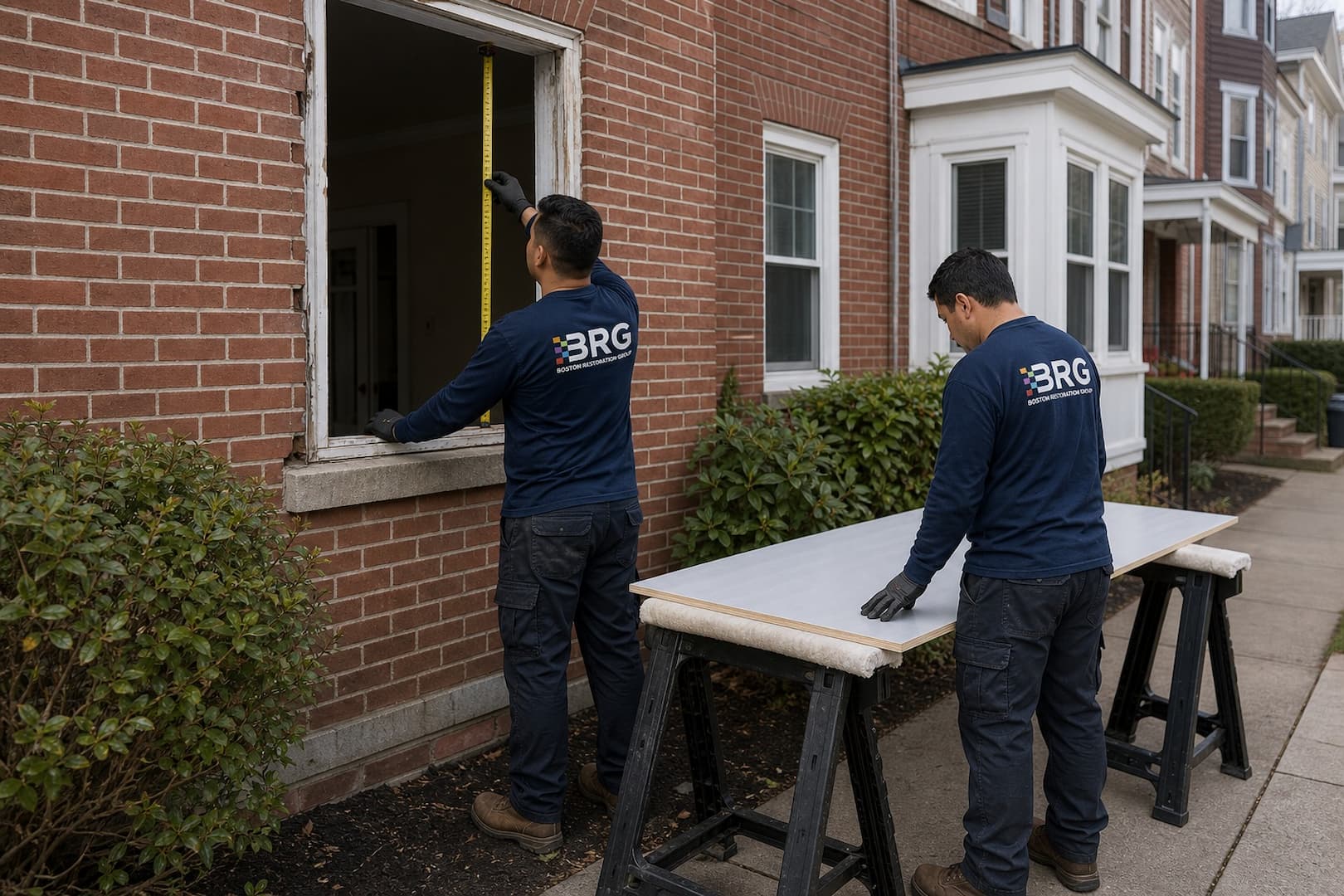
A board-up visit has five accountable checkpoints
The crew records what was found and what the temporary protection can and cannot do.
Release and hazard check
BRG confirms authority to work and checks the approach for glass, structural movement, utilities, traffic, and restricted areas.
Conditions and measurements
The opening, frame, adjacent finishes, contents, and water entry are photographed before panels are fabricated.
Debris control and protection
Loose material within the approved scope is controlled. Nearby floors, displays, landscaping, or occupied areas receive practical protection.
Temporary enclosure
Panels, framing, fasteners, barriers, or weather membrane are installed for the documented opening and accessible attachment points.
Security and repair handoff
The owner receives the protected-area record, access information, limitations, and the permanent trades or restoration work still needed.
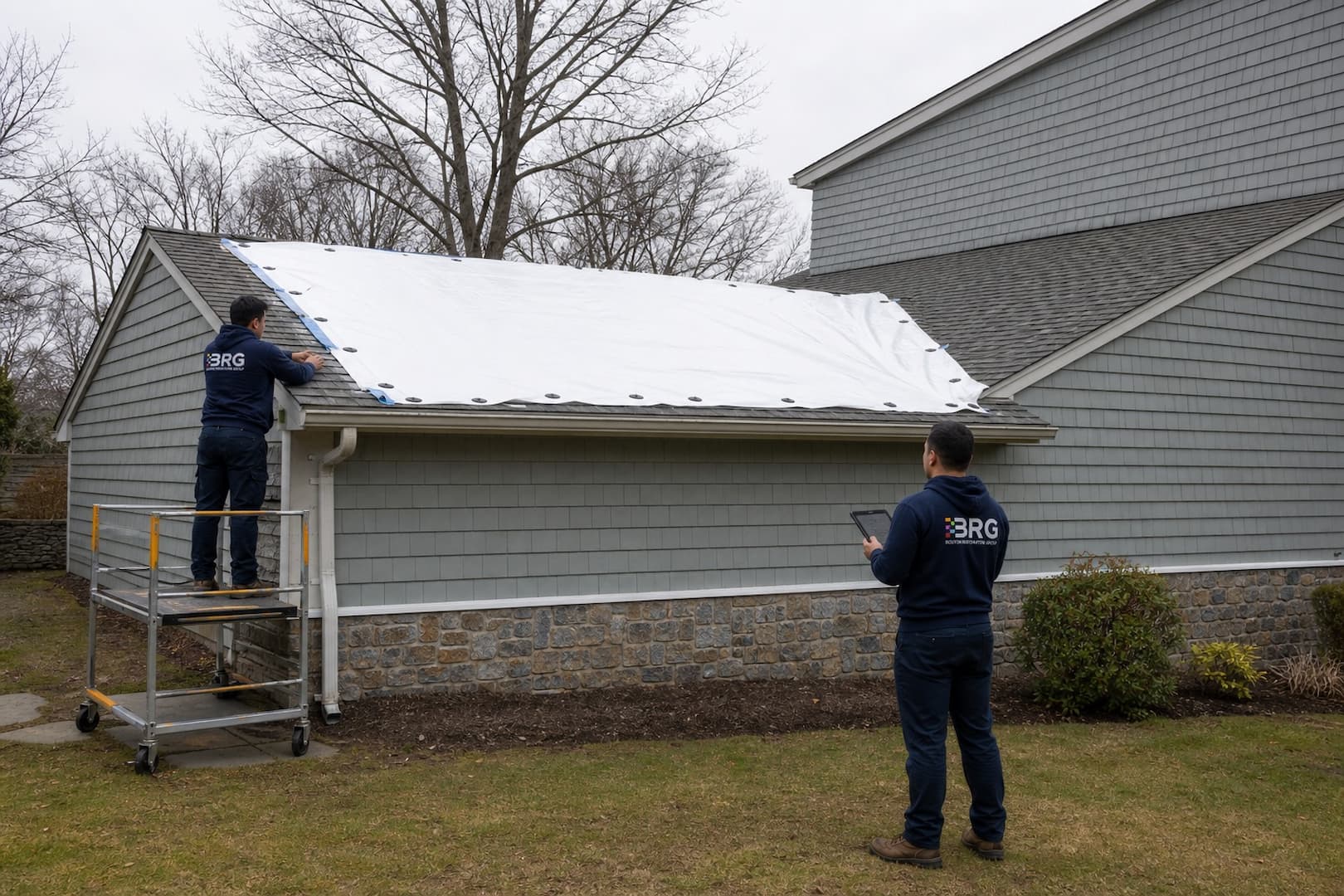
An exposed opening often reveals a second loss inside
Wind-driven rain may have reached insulation and wall cavities. Firefighting may leave water below the opening. A vehicle impact can affect framing and finishes beyond the visible break. Board-up stops additional exposure; it does not remove trapped moisture, soot, or hidden structural damage.
BRG can connect the emergency enclosure to the appropriate water, fire, weather, contents, or reconstruction scope. When an engineer, electrician, roofer, glazier, mason, or security contractor is needed, that boundary is identified rather than blurred into the board-up invoice.
The handoff should make permanent repair easier
BRG can provide opening photographs, dimensions, temporary materials, attachment notes, observed interior damage, access details, and recommended next coordination. Insurance coverage and reimbursement remain carrier decisions.
The loss is recorded before panels conceal the damaged opening.
Materials and protected openings are listed for inspection and removal.
Glazing, roofing, framing, finishes, security, and moisture work stay visible.
Emergency board-up questions
The opening type, building status, hazards, and authority to enter determine the first visit.
Can BRG board a property before the fire department or police release it?
No. The controlling authority must release the relevant area before BRG can alter the scene or remove loose material.
Will board-up make the building weatherproof?
Temporary protection is intended to reduce additional exposure, but it is not a permanent roof, wall, door, or glazing assembly. Severe weather and changing structural conditions can exceed a temporary enclosure.
Can a damaged door remain usable?
Sometimes controlled access can be preserved, but security, frame damage, fire egress, and attachment conditions decide whether that is appropriate. The authorized owner or manager receives the access plan.
Does BRG replace the window or roof during the emergency visit?
The emergency visit focuses on safe temporary protection. Permanent glazing, roofing, framing, masonry, security, and finish work are scoped separately.
What should I send with the request?
Send the address, opening type, cause, approximate size, building-release status, access contact, and a photo taken only from a safe location.
Request emergency board-up in Greater Boston
Call for an active exposure. Tell BRG whether the property is residential or commercial, what authority is on scene, and whether rain, fire, impact, or unlawful entry caused the opening.
617-202-3772- Do not stand below damaged glass, masonry, siding, or roof edges.
- Mention tenants, public sidewalks, animals, alarms, and access-control needs.
- Identify the person who can approve temporary attachment and receive keys.
Describe the exposed opening
A short, factual message helps BRG plan materials and safe access.