
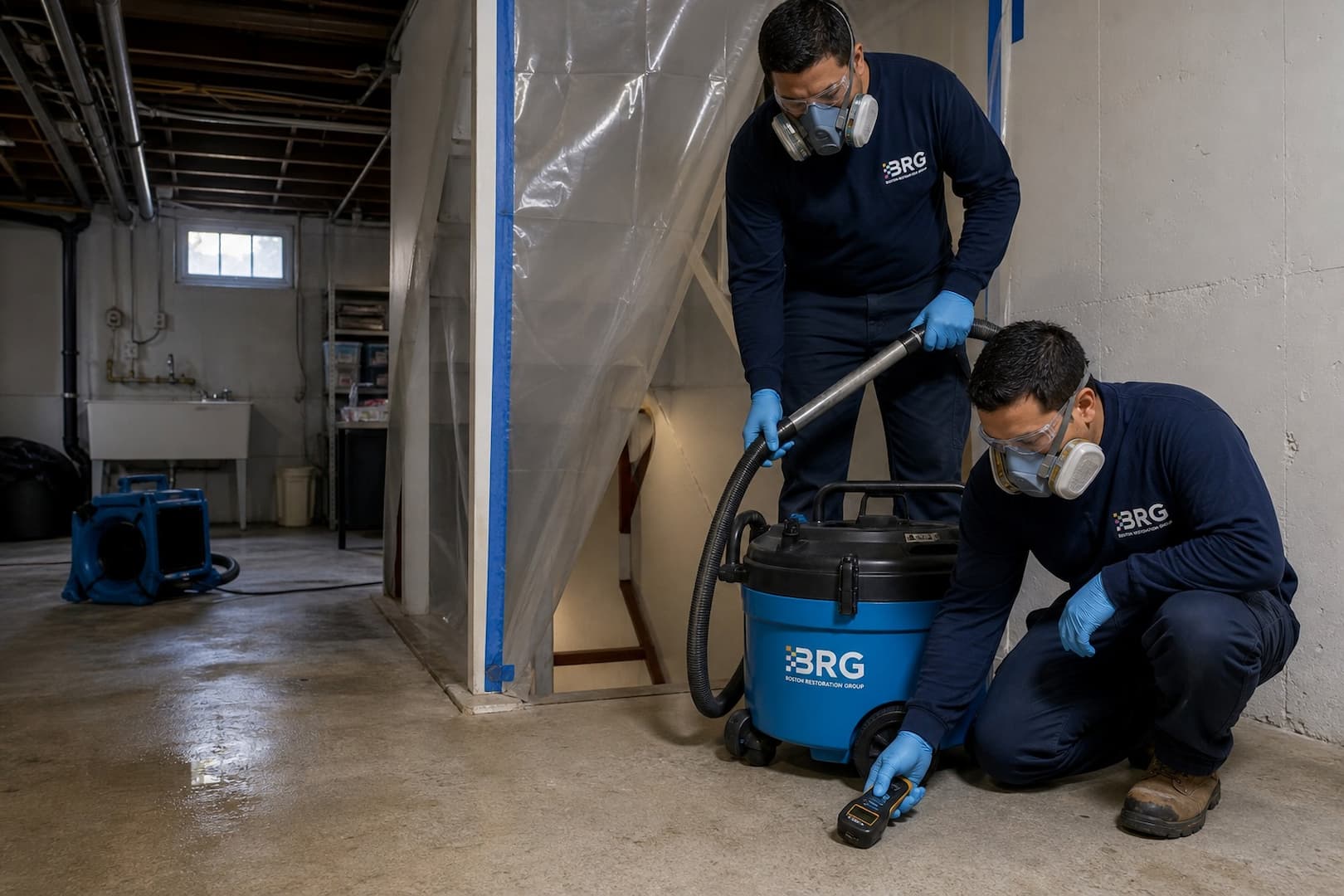
Black Water Cleanup in Boston, MA
Black water can carry sewage, chemicals, soil, or other contaminants into a building. BRG controls access, identifies the affected boundary, removes water and unsalvageable materials, then cleans and dries the structure under a documented scope.
Control the source
Plumbing, sewer, groundwater, or another source must be stopped or isolated before cleanup can hold.
Separate the work zone
Access routes and affected rooms are defined before contaminated materials move through the property.
Remove what cannot be saved
Material decisions depend on porosity, exposure, condition, and whether a surface can be reached and cleaned.
Verify the handoff
The project record identifies what was removed, cleaned, dried, and left for repair.
Black water is a contamination problem before it is a drying problem
A wet floor does not reveal the whole scope. Contaminated water can run beneath baseboards, into wall cavities, under floating floors, and around mechanical equipment. Walking through the area may carry residue into rooms that were not affected at the start.
BRG begins by finding the source and tracing the boundary. The crew records visible conditions, checks nearby materials, and plans a route for equipment and debris. Clean parts of the building stay outside that route whenever the property layout allows it.
- Do not use a household vacuum or shop vacuum on contaminated water.
- Keep children, pets, tenants, and unprotected staff away from the affected area.
- If water may have reached electrical equipment, do not enter until the hazard is addressed.
- Tell BRG whether the source involved a sewer, septic system, floodwater, or an unknown discharge.
Not every dark puddle is “black water”
The classification depends on the source and contamination risk, not color. BRG documents the source information available at the property and sets the cleanup scope around actual exposure.
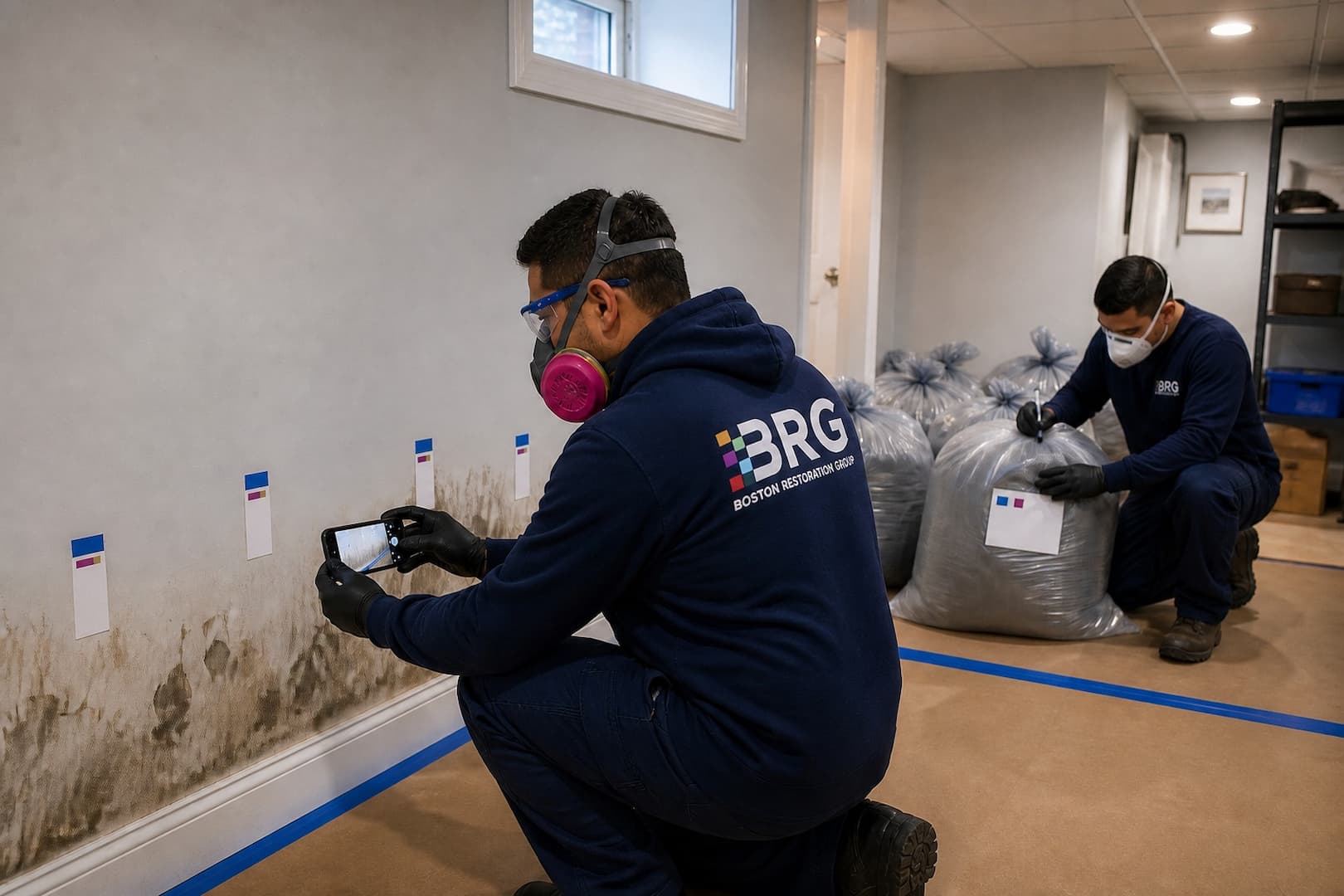
What can be cleaned, and what usually needs removal?
The answer changes by material. A sealed, accessible surface behaves differently from carpet pad, fiberglass insulation, or composite flooring that has absorbed contaminated water.
| Material or area | What BRG evaluates | Likely direction |
|---|---|---|
| Concrete, tile, and other hard surfaces | Cracks, joints, coatings, reachability, and remaining residue | Remove soil and residue, clean the accessible surface, then dry and document it. |
| Drywall, insulation, carpet pad, and other porous finishes | Depth of contact, absorption, construction, and ability to clean the full thickness | Contaminated portions often require controlled removal rather than surface treatment. |
| Wood framing and subfloor | Surface condition, joints, fasteners, moisture readings, and access | Expose as needed, clean reachable surfaces, dry the assembly, and monitor the readings. |
| Furniture and contents | Material, value, condition, contamination path, and whether cleaning is practical | Separate salvageable items from disposal decisions; document uncertain items before moving them. |
| HVAC and mechanical areas | Whether water or residue entered equipment, ducts, returns, or service spaces | Pause normal operation when appropriate and involve the relevant mechanical specialist. |
The work moves from dirty to clean, not back and forth
A defined sequence limits cross-contamination and gives the owner a record of each decision.
Source and hazard review
The crew confirms what happened, checks access and utilities, photographs the loss, and marks the initial affected boundary.
Containment and extraction
BRG protects travel paths, isolates the work area when needed, and removes accessible liquid with equipment selected for contaminated water.
Selective material removal
Unsuitable porous materials are removed under the agreed scope. The crew does not open unrelated assemblies simply to make the job look larger.
Cleaning and drying
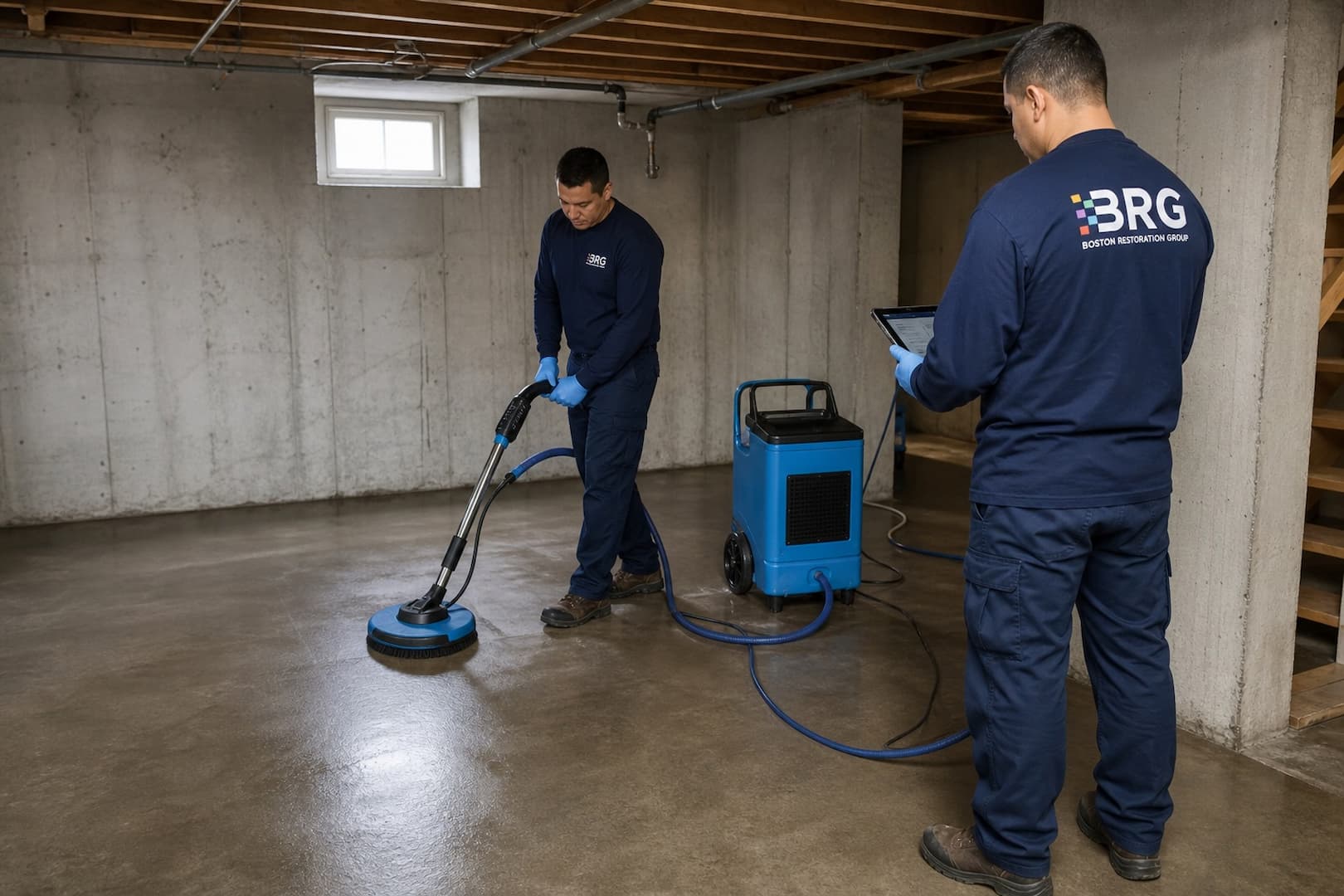
Reachable structural surfaces are cleaned. Drying equipment is placed after the contamination load has been reduced, then adjusted as conditions change.
Records and repair handoff
Photos, moisture information, removed-material notes, and remaining repair items give the owner and other project participants a usable handoff.
Sewer, septic, and outdoor floodwater losses overlap, but they are not identical jobs
A municipal sewer backup may require a plumber or utility to clear the line. A septic backup points to an on-site system that may need pumping or repair before indoor cleanup can proceed. Outdoor floodwater adds soil and unknown contaminants and may affect several building elevations at once.
BRG handles the property cleanup and restoration scope. When the source requires a plumber, septic contractor, electrician, HVAC specialist, or municipal response, the crew identifies that boundary early. Cleanup cannot compensate for an active source.
BRG documents the loss; the insurance carrier decides coverage
The project file may include photographs, affected-room notes, moisture readings, removed-material details, equipment records, and an itemized scope. Coverage, deductibles, limits, and exclusions remain decisions for the policyholder and carrier.
Rooms, assemblies, and contents connected to the loss are identified.
Removed and retained materials are separated in the scope.
Readings and equipment changes show how the structure responded.
Black water cleanup questions from property owners
A short phone call can establish whether the area should remain closed and which trade must address the source first.
Can I clean black water with bleach?
Bleach alone does not remove standing water, absorbed contamination, or damaged porous material. Mixing chemicals can also create a hazard. Keep the area closed and have the source and affected materials assessed.
Does every contaminated item have to be discarded?
No. Decisions depend on the item, porosity, exposure, condition, value, and whether the contaminated surfaces can be reached and cleaned. BRG documents uncertain contents before disposal decisions are made.
When can drying equipment be installed?
Drying follows extraction, soil removal, and the necessary cleaning or material removal. Moving air across an uncontrolled contaminated area can spread residue, so the sequence matters.
Will BRG deal with the sewer or septic repair?
BRG handles the building cleanup and restoration scope. A plumber, septic contractor, utility, or other specialist may need to stop and correct the source.
Is black water cleanup covered by insurance?
Coverage depends on the policy, source, endorsements, exclusions, and maintenance history. BRG can document the observed loss and work performed; the carrier decides coverage.
Request black water cleanup in Greater Boston
Call if contaminated water is active or the source is unknown. For a non-emergency assessment, send the address, rooms affected, approximate start time, and what you know about the source.
617-202-3772- Mention any electrical, HVAC, tenant, child, pet, or access concern.
- Do not move wet contents into clean rooms before the containment route is planned.
- Photograph the visible loss from a safe location if you can do so without entering.
Tell BRG what happened
A few factual details help the team plan the first visit.