
Refrigerator Leak Cleanup in Boston, MA
A refrigerator leak may remain hidden behind the unit until flooring swells, a cabinet panel changes color, or a ceiling below stains. BRG traces water from the supply line, ice-maker, drain, or pan area into wall bases, floor layers, adjacent cabinets, and lower levels—then builds a drying and repair plan around the materials actually affected.
- Ice-maker and supply-line water damage
- Kitchen floor and cabinet assessment
- Hidden moisture below and behind the unit
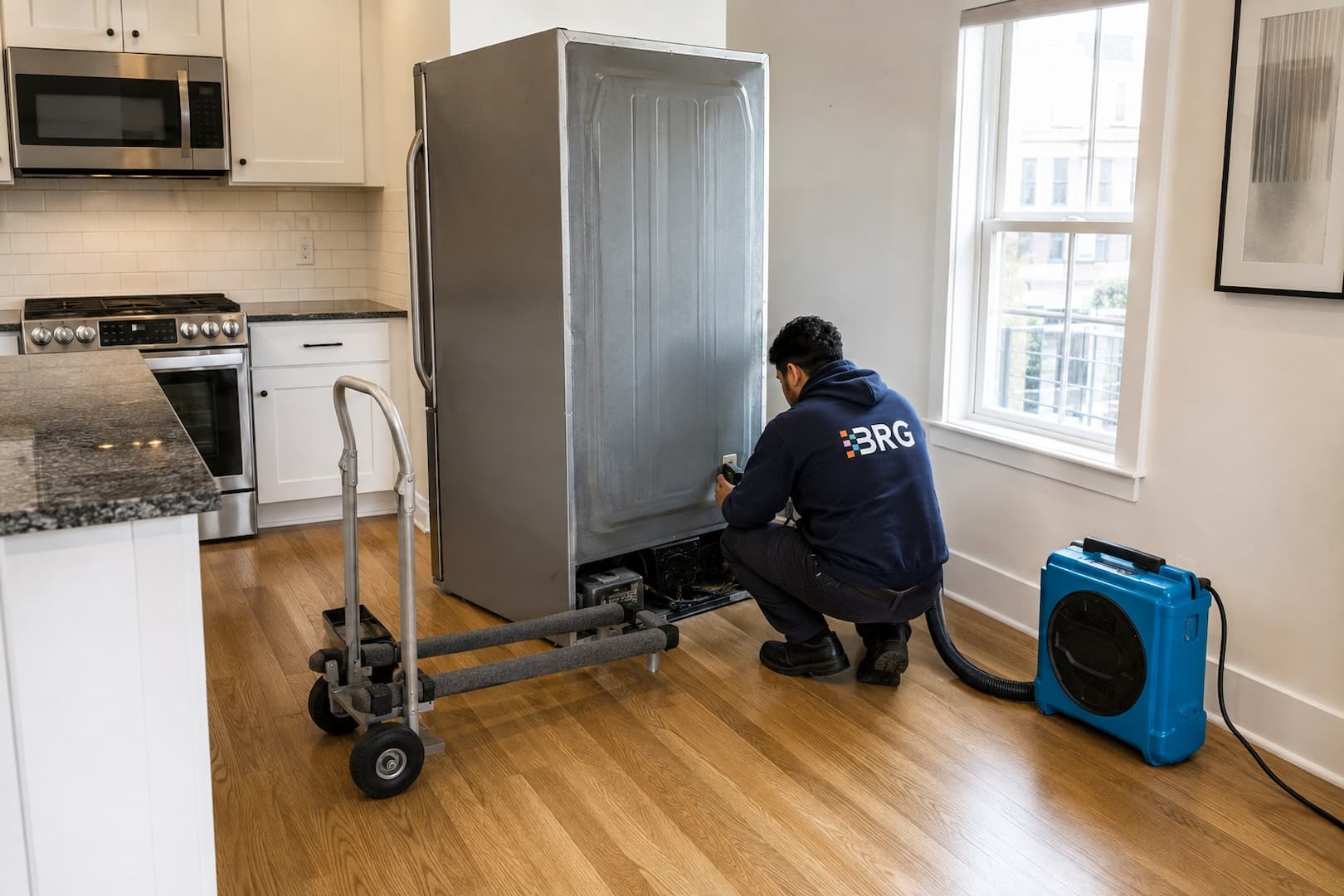
Large units can damage flooring, strain connections, or create an electrical and lifting hazard.
An appliance or plumbing technician should identify and correct the failure.
Water can move beneath wood, laminate, resilient flooring, and fixed cabinets.
Pipe and floor penetrations can carry a small leak into another room.
The appliance recess concentrates water around walls, cabinets, and floor seams
An ice-maker connector may spray, a drain may clog, a pan may overflow, or condensation may form around an insulation or door issue. Because the unit covers the source, repeated wetting can continue without a visible puddle.
Once the appliance can be moved safely and the source is controlled, BRG checks the wall surface, base plate area, cabinet end panels, toe-kicks, floor transitions, underlayment indicators, and the ceiling below. The result is a moisture boundary—not an assumption that every kitchen finish must be removed.
- Photograph the connection and appliance recess
- Protect flooring during appliance movement
- Compare readings with dry kitchen and adjacent-room materials
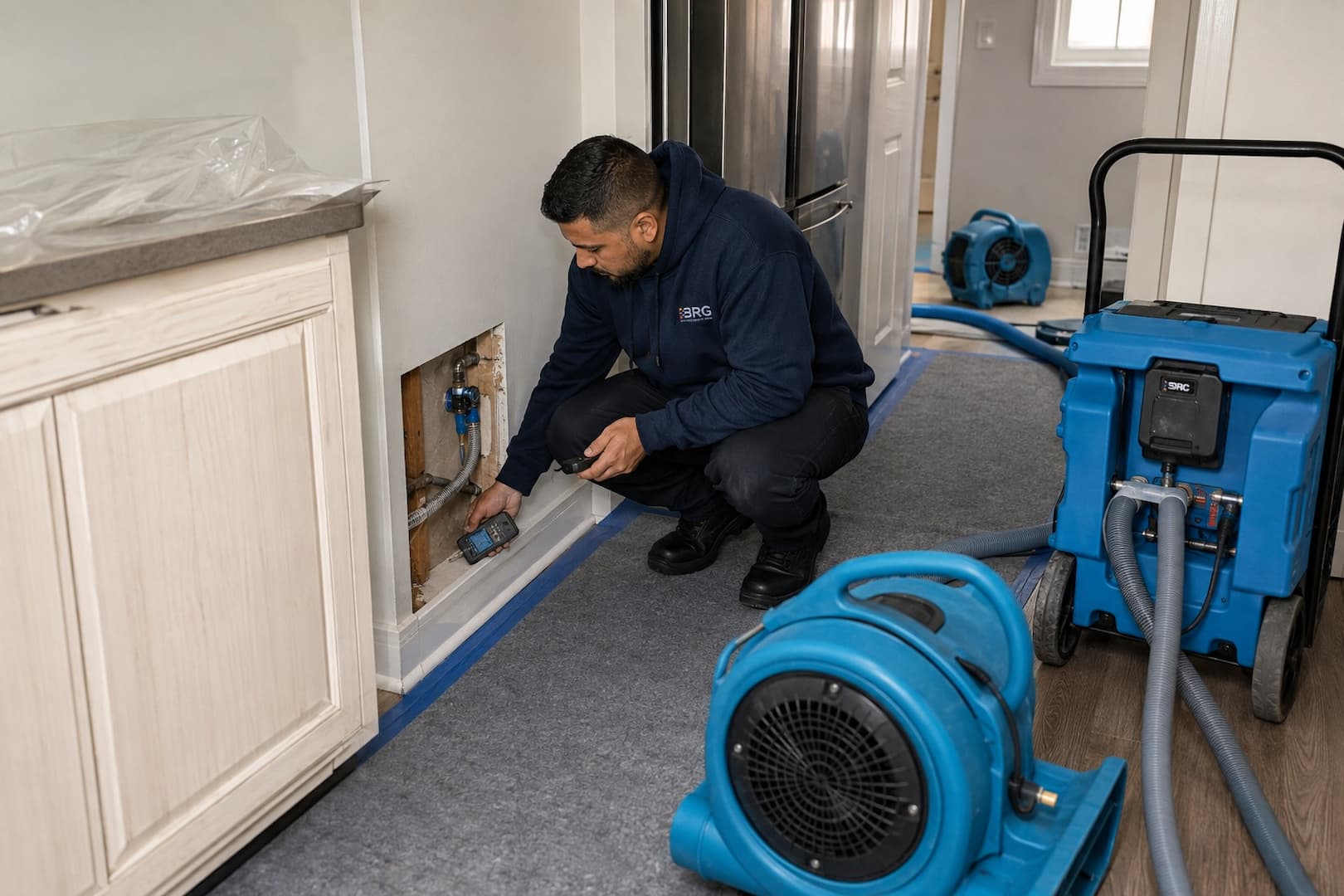
Hidden duration and floor construction change what can be saved
The same leak can leave very different damage under tile, wood, laminate, or resilient flooring.
Hardwood or engineered wood
Evaluate
Board shape, finish, moisture gradient, subfloor, cabinet constraints, and measured response over time.
Laminate or floating floor
Evaluate
Edge swell, trapped water beneath planks, underlayment, transitions, and ability to access the wet layer.
Cabinet end and toe-kick
Evaluate
Particleboard swelling, veneer or finish separation, cavity moisture, and whether components can be detached cleanly.
Wall and ceiling below
Evaluate
Repeated wetting, insulation, staining, growth, electrical penetrations, and safe drying access.
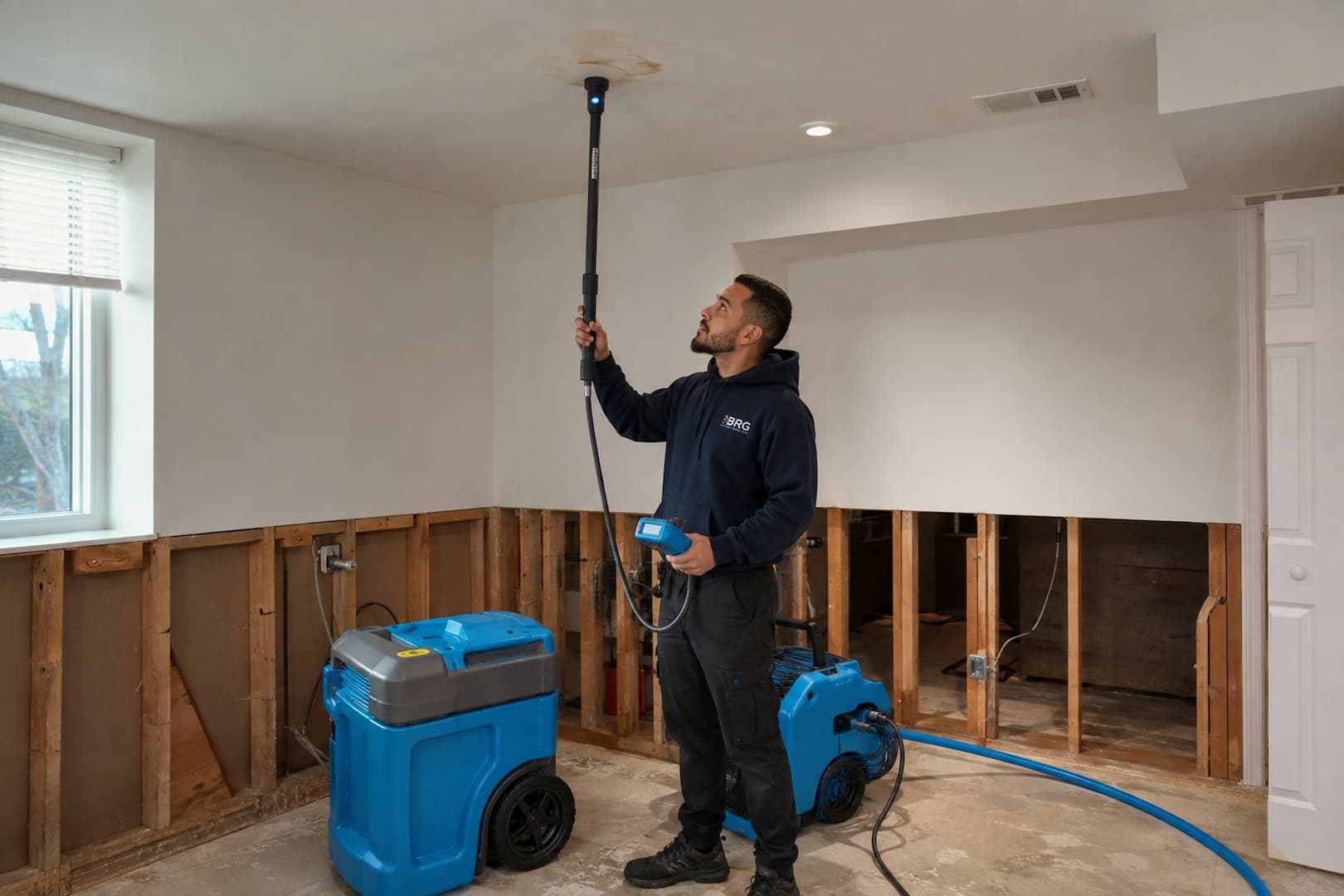
A slow refrigerator leak can reveal itself on another level first
The downstairs ceiling check helps connect a subtle appliance source to the complete building path.
Avoid creating a new line break or floor injury
Turn off a known accessible refrigerator supply only if it can be reached safely. Do not rock a heavy unit, pull against a connected line, scrape finished flooring, or work around wet electrical connections. An appliance technician or plumber may need to isolate and move the unit.
Supply or ice-maker leak
Preserve the failed connector and repair information when practical; a pressurized release may extend well beyond the recess.
Drain or pan issue
Report odor, residue, food spoilage, or repeated overflow because cleaning needs may differ.
Condensation or door problem
An appliance professional should evaluate seals, temperatures, drains, and insulation before the building repair closes the area.
Create access, follow moisture, and preserve the finished kitchen
The plan changes if the source was long hidden, cabinetry traps moisture, flooring has lost integrity, or the refrigerator cannot be safely removed.
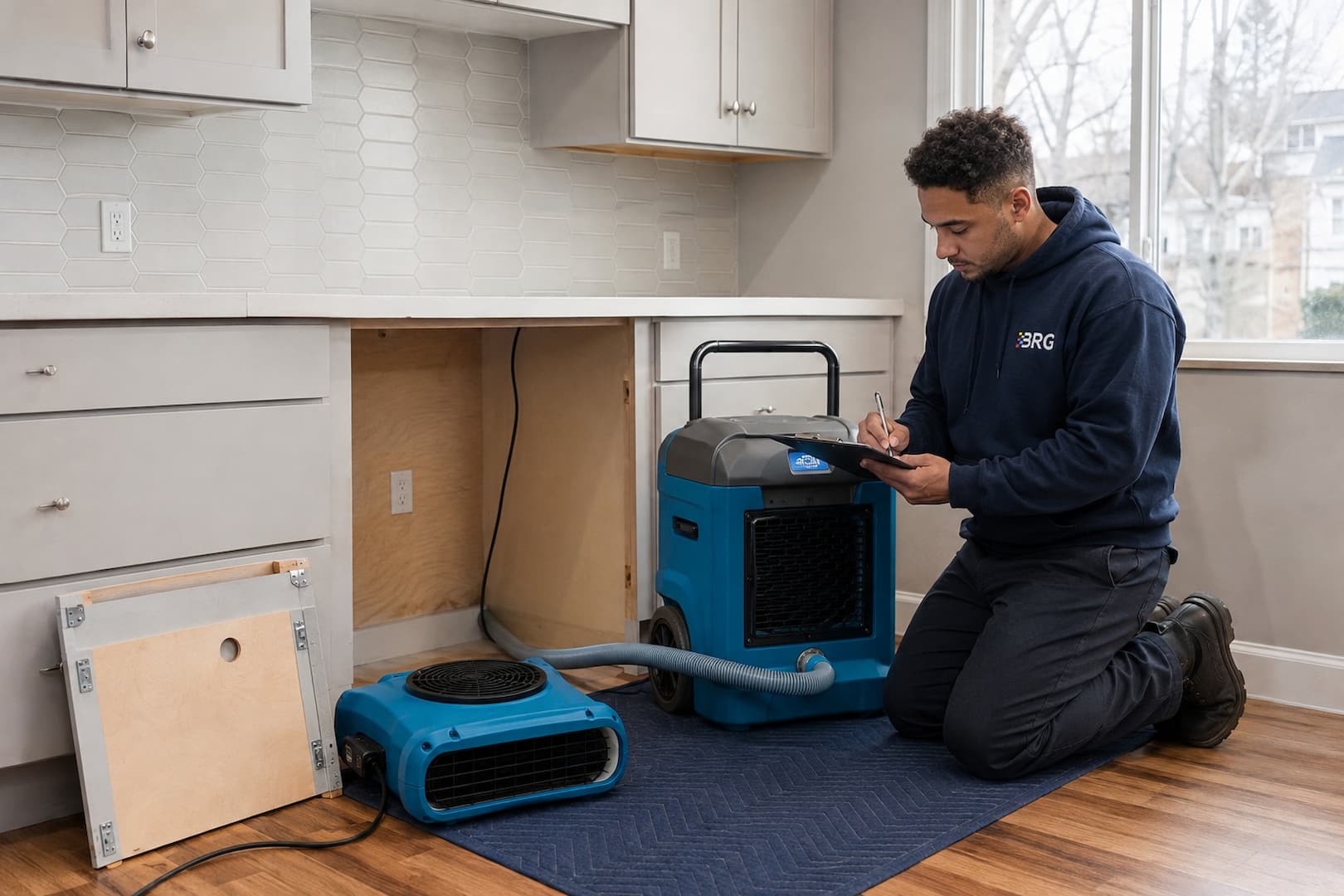
Control and document the appliance source
Confirm line, drain, pan, or condensation findings and whether the unit is disconnected or safe to operate.
Move and protect as required
Use suitable appliance handling and floor protection to reach the recess without expanding damage.
Map the kitchen and level below
Check wall, cabinet, toe-kick, flooring, subfloor indicators, transitions, and the ceiling beneath.
Dry retained material or remove failed layers
Match access and equipment to the assembly and document swelling, delamination, contamination, or concealed growth.
Verify before reset and repair
Confirm source correction and material progress before reinstalling the refrigerator or closing finish work.
Record appliance access, hidden moisture, and finish decisions
The source and the kitchen restoration should remain connected but distinct.
Failure and repair
Supply, ice-maker, drain, pan, seal, or condensation finding; technician action and operating status.
Affected layers
Recess, cabinets, walls, flooring, transitions, lower ceiling, contents, and moisture readings.
Reset and repair needs
Drying, selective removal, appliance reset, cabinet or floor work, and finish restoration.
Confirm both the source and the concealed material condition
Resetting the unit too early can hide a recurring connection problem or block drying access. The appliance or plumbing professional confirms the repair; BRG confirms the restoration status of affected building materials.
- Photograph the repaired connection
- Protect the floor during reset
- Recheck for leakage under operating conditions as directed by the appliance professional
Refrigerator leak cleanup questions
A hidden appliance source calls for careful movement and layer-by-layer inspection.
Who should move the refrigerator?
It depends on size, built-in panels, connections, floor protection, and access. A qualified appliance professional or mover may be needed; the unit should not be forced.
Can a refrigerator leak damage the ceiling below?
Yes. Water can pass through floor seams and line penetrations and travel within the floor-ceiling assembly.
Does swollen laminate dry back to normal?
Often edge or core swelling is permanent, but the full floor decision depends on affected area, plank system, underlayment, transitions, and subfloor condition.
Can cabinets dry without removal?
Sometimes. Cabinet material, swelling, toe-kick access, wall moisture, water condition, and measurable progress determine the approach.
Should the refrigerator be used after the leak?
The appliance professional should determine safe operation and confirm the source repair. If the unit blocks restoration access, it may need to remain disconnected or relocated temporarily.
Request refrigerator leak cleanup
Share whether the source is an ice-maker line, supply, drain, pan, or unknown; whether the unit has been moved or repaired; and which cabinets, floors, walls, or rooms below show changes.
617-202-3772- Do not pull a heavy connected refrigerator across wet flooring
- Mention odor, repeated staining, swollen planks, or a ceiling mark below
- Provide condo, elevator, parking, and appliance-access requirements
Request Refrigerator-Leak Help
The leak history and kitchen materials help the crew prepare.