
Ice Dam Water Damage Cleanup in Boston
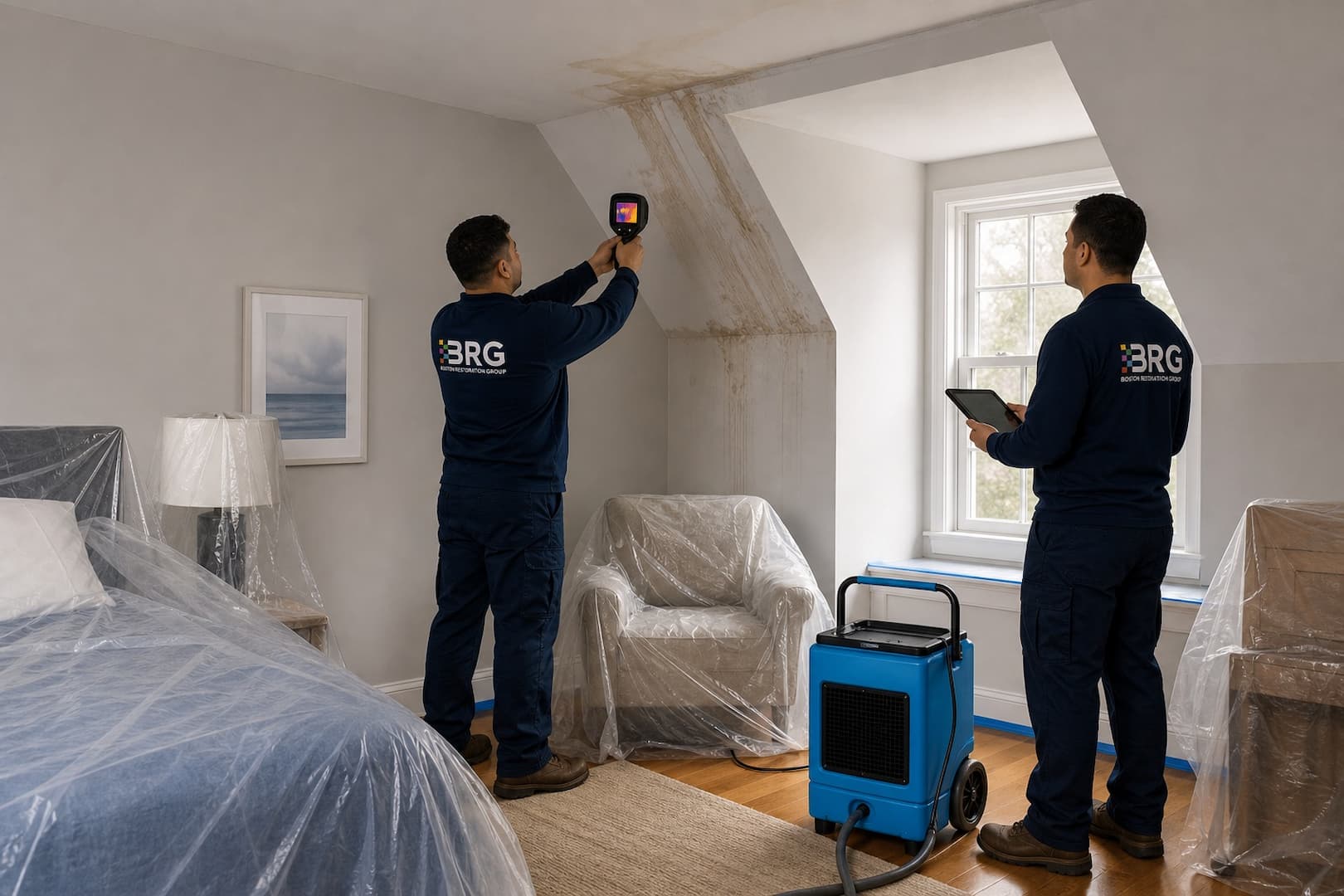
Once meltwater crosses the roof assembly, the visible drip may be several feet from the entry point. BRG maps the path through insulation, ceilings, walls, trim, and floors; protects the occupied space; and builds a drying and repair plan around the materials that are actually wet.
- Ceiling and wall moisture mapping
- Controlled material access
- Contents and floor protection
- Drying and repair records
Relieve roof-side water
Interior drying cannot succeed while meltwater continues to enter behind roofing or flashing.
Map beyond the stain
Insulation, framing bays, and connected finishes can stay wet outside the visible edge.
Open only for a reason
Access decisions should answer a moisture, contamination, or drying question.
Dry to measured goals
Readings from affected and dry comparison areas guide equipment changes and release.
Protect people first, then protect reachable contents
Do not turn a ceiling leak into an electrical or collapse hazard.
Avoid wet fixtures and outlets
Keep away from wet electrical devices, ceiling lights, fans, and service equipment. Contact an electrician or utility when needed.
Do not puncture a bulge
A sagging ceiling can release water and material without warning. Leave the room if finishes are moving, cracking, or heavily loaded.
Move only safe, dry items
Relocate reachable contents outside the drip path. Do not work under unstable plaster, drywall, or trim.
Record the timing
Note outside temperature, snow or rain, when dripping started, and whether it changes with thawing. These clues help trace the path.
Water can enter at the eave and appear at a window, wall, or light opening
Backed-up meltwater may cross a roof underlayment, follow sheathing or rafters, wet compressed insulation, enter a wall cavity, and emerge at a seam or penetration. Older plaster, layered finishes, sloped ceilings, knee walls, and finished attic spaces add hidden routes.
BRG compares visible staining with meter readings, thermal patterns, construction layout, and unaffected reference materials. The crew may inspect from an attic or knee wall before making a finished-surface opening. A camera image is a lead; direct material readings and physical access confirm the drying scope.
Roof removal and interior cleanup are connected but separate
Ice dam removal relieves the exterior obstruction. This page covers the resulting interior water damage, moisture, material, and repair decisions.
The drying plan begins after entry is controlled
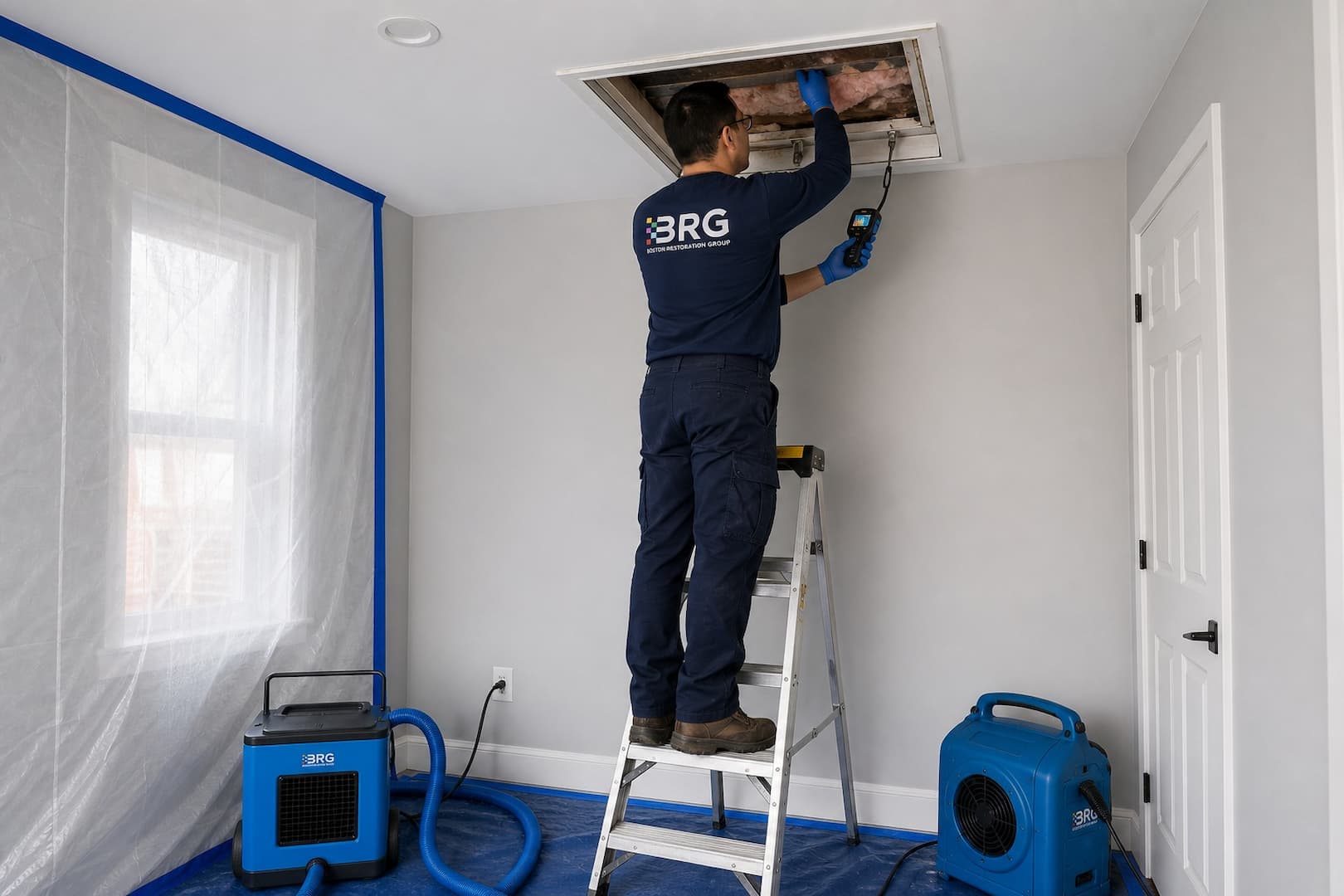
Active roof entry, wet insulation, low-permeance finishes, and cold assemblies can change the sequence.
Confirm roof-side status
BRG records whether drainage has been restored, temporary protection is in place, or a roofer still needs to stop entry.
Protect and map the room
Contents and floors are protected or relocated. Visible damage and moisture boundaries are documented by elevation and assembly.
Create controlled access
Wet insulation and materials that block inspection or drying are addressed under the approved scope, with dust control suited to the building.
Dry and monitor
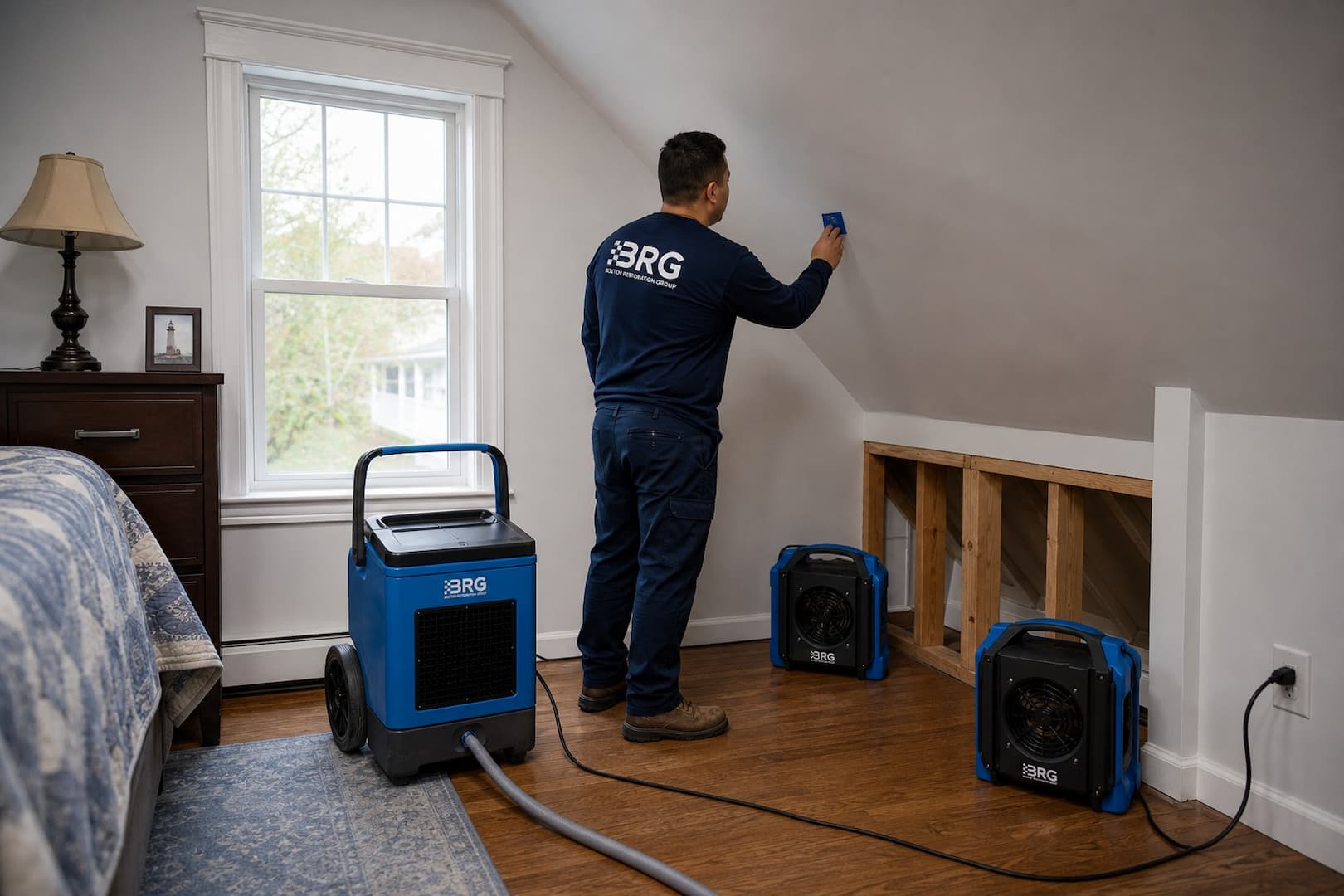
Air movement and dehumidification target exposed materials. Readings guide equipment placement instead of a preset number of days.
Plan repairs and recurrence review
The handoff identifies ceiling, wall, trim, paint, insulation, and floor repairs plus roof or attic items for the appropriate trade.
Cold-weather water losses behave differently inside each assembly
The same roof leak may leave one finish cleanable and another too wet or damaged to retain.
| Assembly | What BRG checks | Possible direction |
|---|---|---|
| Drywall or plaster ceiling | Sagging, bond, fasteners, staining, wet backing, and access to insulation | Support and protect the room; retain, access, or remove affected portions based on condition |
| Fiberglass, cellulose, or other insulation | Saturation, compression, contamination, drying access, and thermal position | Expose and evaluate; wet or compromised insulation may require replacement |
| Roof decking and framing | Readings, staining, delamination, fasteners, ventilation, and reachability | Dry exposed surfaces and refer structural or roofing concerns |
| Wall cavities and trim | Water path, baseboard seams, vapor-retarding finishes, and floor transition | Open selectively when readings and construction show trapped moisture |
| Flooring and contents below | Drip path, finish response, seams, padding, furniture contact, and time | Extract or protect, separate contents decisions, and extend the map below the ceiling loss |
Dry is not the same as repaired, and a stain is not the moisture reading
BRG documents the mitigation condition: what was wet, what was removed, what was retained, how readings changed, and which areas were released. Repairs may still include insulation, drywall or plaster, compound, paint, trim, flooring, cabinetry, and roof or attic corrections.
Water marks may remain after materials reach the drying goal. Conversely, a surface can look clean while the assembly remains wet. The record keeps cosmetic repair decisions separate from moisture verification.
- Keep photos of the first visible stain and later changes.
- List affected contents before moving or discarding them.
- Ask the roofer to record the suspected entry and corrective work.
- Keep carrier coverage decisions separate from the restoration measurements.
Ice dam leak cleanup questions
The first priority is source control and a safe room; the final scope follows the actual moisture path.
Can BRG dry the room before the ice dam is removed?
The team can protect the interior and begin assessment, but a lasting drying plan requires the active entry to be controlled. Roof-side removal or repair may need to occur first or in coordination.
Does a small ceiling stain require demolition?
Not automatically. BRG considers material condition, moisture readings, insulation, access, finish layers, and the ability to dry the assembly. Openings are made for a documented reason.
How long will drying take in winter?
There is no responsible fixed duration before the materials and conditions are assessed. Assembly depth, insulation, temperature, airflow, access, and continuing entry all affect progress.
Can you remove the water stain?
Stain treatment is part of finish repair after the assembly is dry and the source is corrected. Drying verification and cosmetic repair are separate decisions.
Will insurance cover an ice dam loss?
Coverage varies by policy, cause, maintenance conditions, endorsements, deductibles, and exclusions. BRG documents observed damage and work; the carrier decides coverage.
Request ice dam water damage cleanup
Call for active dripping, sagging finishes, or water near electrical equipment. Send the address, affected rooms, first leak time, roof-side work status, and safe photos.
617-202-3772- Do not puncture a bulging ceiling or approach wet fixtures.
- Tell BRG whether an attic or knee wall is accessible.
- Mention plaster, specialty finishes, built-ins, or valuable contents in the affected path.
Describe the interior leak
The room, ceiling location, timing, and roof status are enough to begin.