
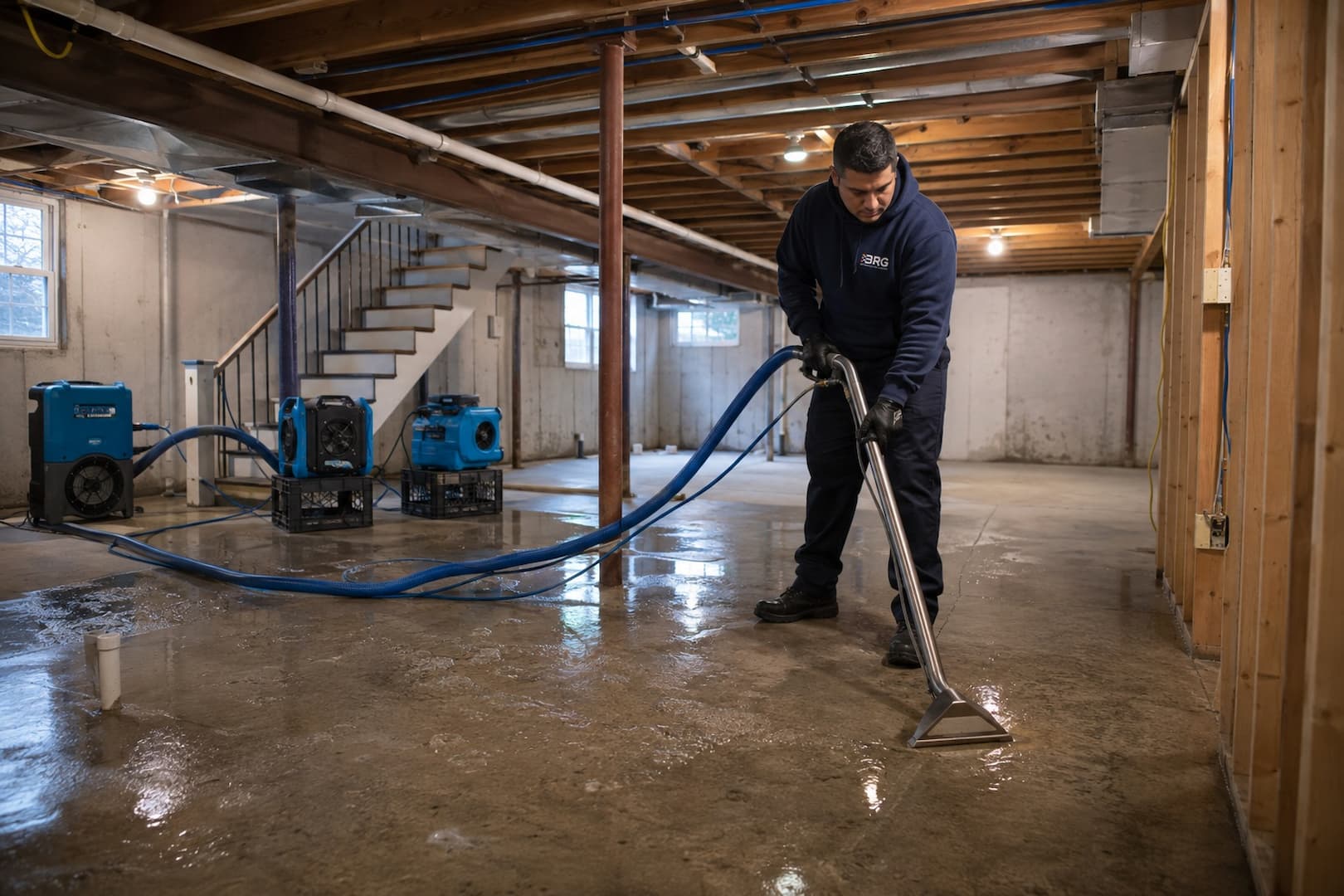
Emergency Standing Water Removal in Boston, MA
Standing water is an immediate slip, electrical, material, and possible contamination concern. BRG’s certified restoration specialists first identify the source and safe work boundary, then extract accessible water, protect unaffected areas, and trace moisture into flooring, wall bases, contents, and the level below.
- Emergency extraction for homes and businesses
- Water-source and contamination review
- Moisture mapping after removal
Stay out when water may contact outlets, equipment, electrical rooms, or an energized system.
Supply water, rain, groundwater, and sewage do not receive the same handling.
Commercial extraction reduces bulk water before assembly drying begins.
Subfloor, wall cavities, insulation, cabinets, and ceilings may retain moisture after the floor looks clear.
Standing water should not be treated as automatically clean or electrically safe
Leave the area if there is sewage, fuel or chemical residue, active flooding, a sagging ceiling, damaged structure, gas odor, or water near energized equipment. Contact 911, the utility, building management, or the responsible trade for the immediate hazard. BRG begins restoration after a safe route and source condition can be established.
Stop the source only if safe
Use a known shutoff only when it is accessible without crossing water or approaching an electrical hazard.
Keep occupants and pets out
Foot traffic can spread water and residue into dry rooms and exposes people to slip, sharp-object, and contamination risks.
Report the route
Tell BRG whether water came from a supply, appliance, roof, foundation, drain, sump, sprinkler, or an unknown location.
The removed volume does not describe the full water damage
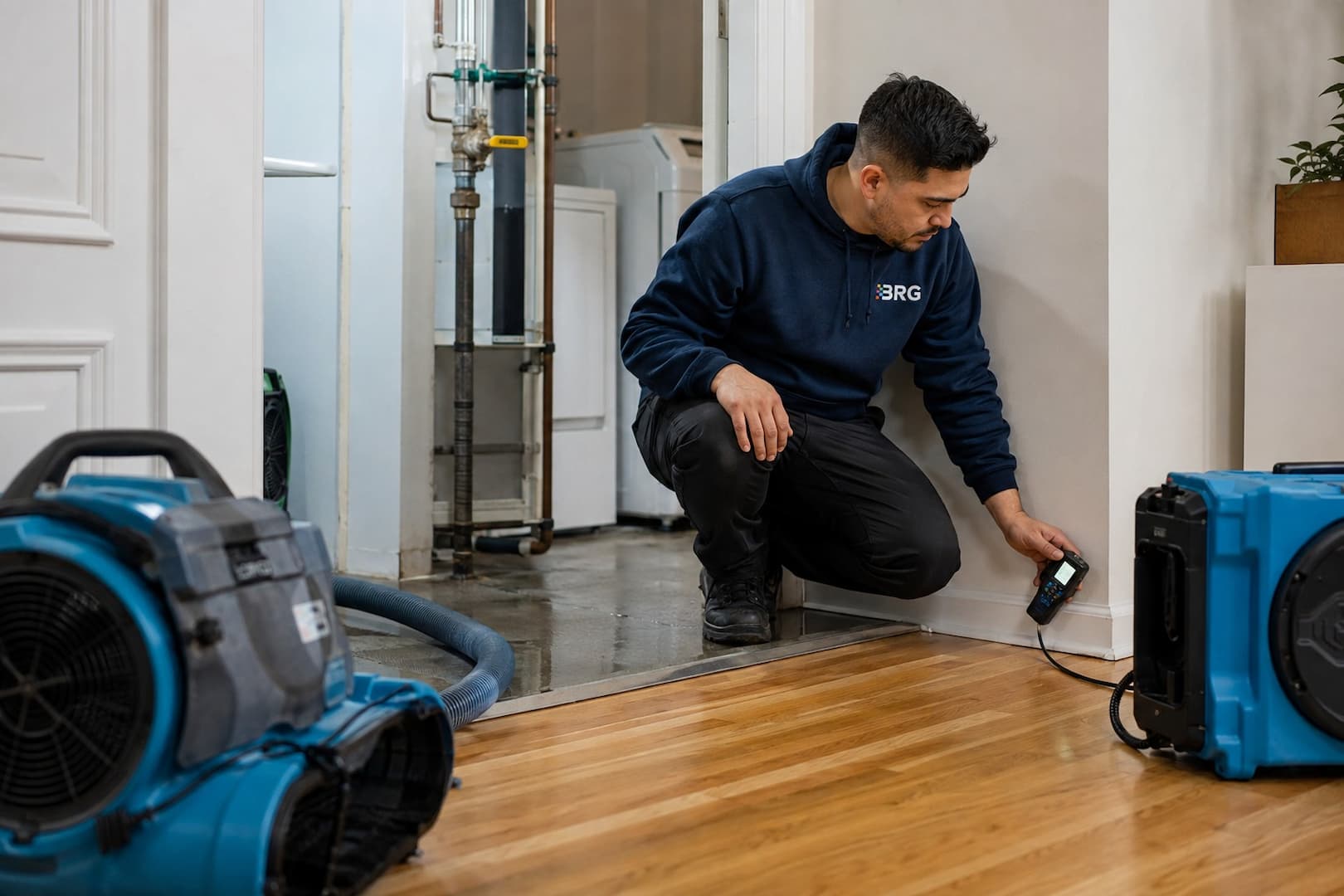
Bulk extraction addresses water that equipment can reach. It does not reveal moisture beneath floating flooring, behind baseboards, inside insulated walls, under cabinets, or in the ceiling below. Water depth, duration, material layers, temperature, and source all affect the next decision.
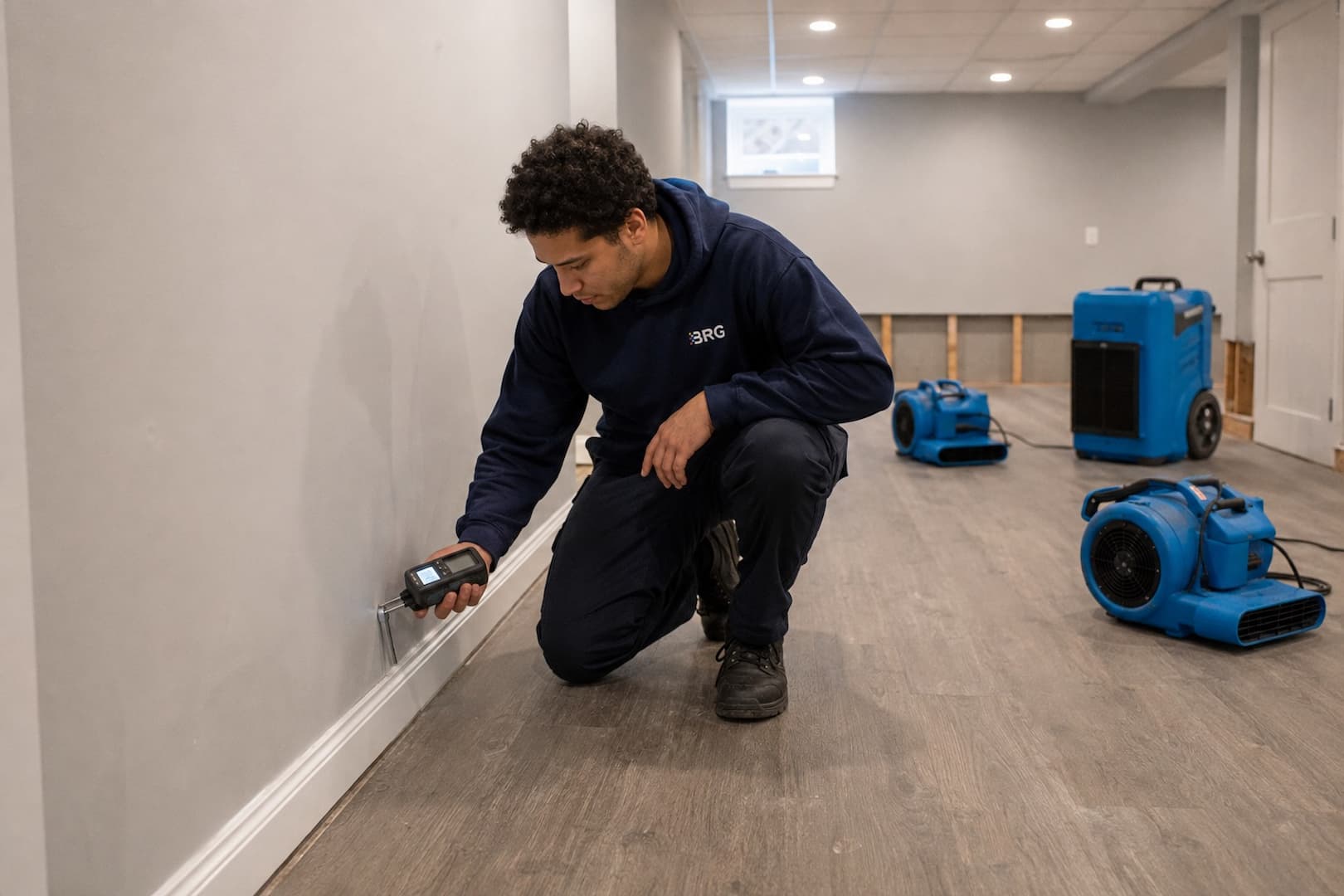
BRG compares affected readings with appropriate unaffected materials, follows transitions and penetrations, and records which areas require drying access, cleaning, selective removal, or further investigation.
- Photograph the original water line and affected contents when safe
- Check rooms beside and below the visible water
- Record what the water contacted before extraction
Four conditions determine what happens next
A material is evaluated in the context of the water, time, construction, and ability to verify drying.
Water source and contact
Handling condition
Sewage or outside floodwater can introduce contamination that changes protective equipment, cleaning, and porous-material decisions.
Floor assembly
Hidden layer
Carpet cushion, underlayment, subfloor, seams, adhesives, and sleeper systems may retain water after surface extraction.
Wall and cabinet bases
Wicking path
Drywall, insulation, trim, MDF, and toe-kicks can absorb water above the visible line or trap it behind finishes.
Contents and use
Occupancy impact
Furniture, records, inventory, electronics, and stored items need triage by exposure, material, cleanability, and value.
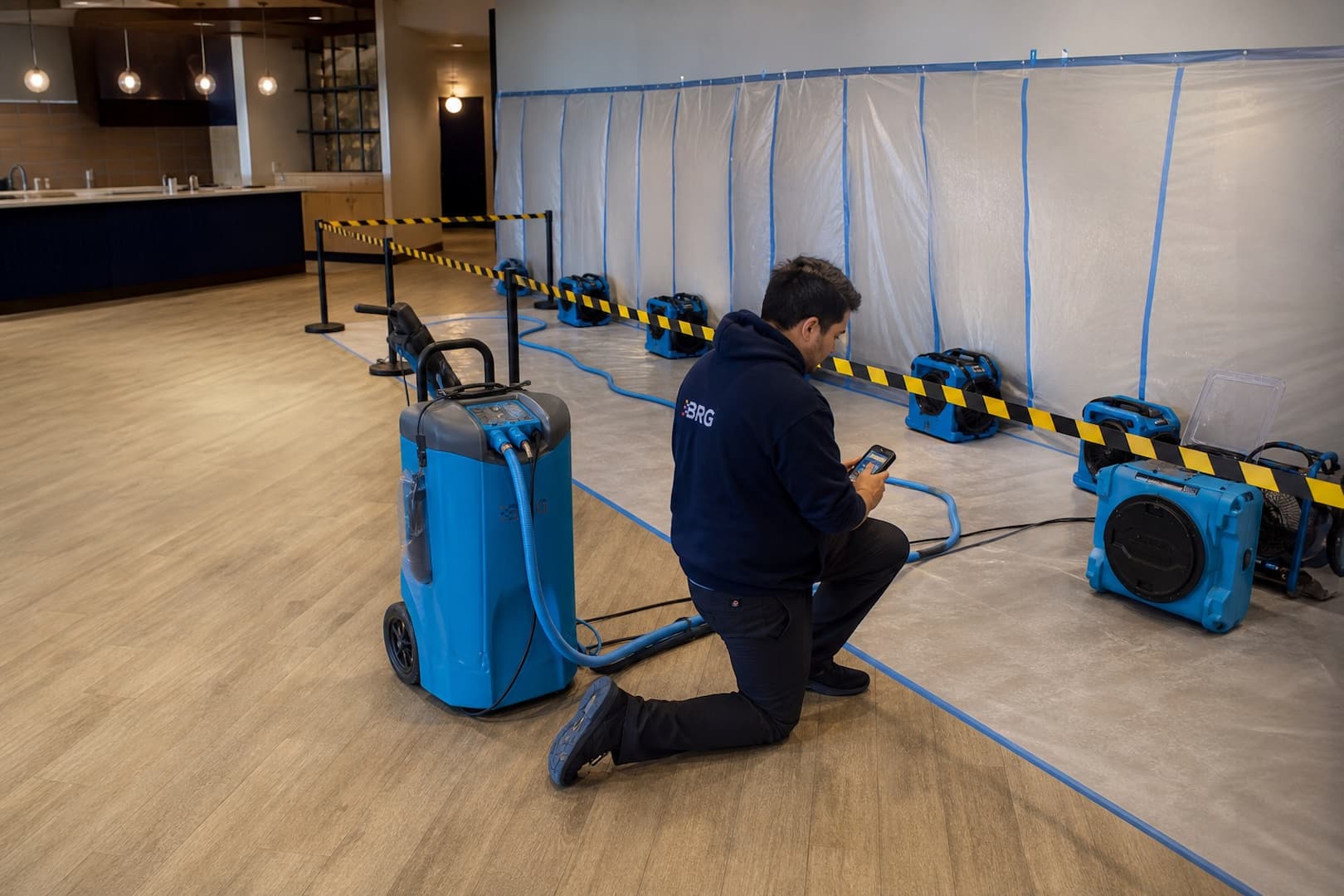
Dry access and wet equipment zones should remain separate
A clear route reduces slips, cross-contact, and disruption while the remaining materials are monitored.
How BRG moves from standing water to a dry, repair-ready area
The sequence changes when the source is active, contamination is present, utilities are affected, or water reached inaccessible construction.
Assess source, hazards, and water condition
Confirm safe access, source status, affected rooms, utilities, occupants, and likely contamination.
Extract accessible water
Remove bulk water with equipment suited to depth, surface, route, and disposal requirements.
Map affected materials
Inspect flooring, wall bases, cabinets, contents, cavities, and lower levels to define the wet boundary.
Clean, create access, and dry
Apply source-appropriate cleaning and selective access, then direct air movement and dehumidification at retained wet materials.
Monitor and document the handoff
Readings show progress and the final record identifies retained material, removal, and repairs still required.
Document source, reach, and restoration as separate facts
Specific records are easier for owners, managers, and insurers to review than a generic “water removed” note.
What released the water
Reported cause, shutoff or repair status, discovery time, and the trade responsible for correction.
Where the water traveled
Rooms, levels, assemblies, contents, water condition, readings, and access limits.
What remains after extraction
Cleaning, equipment, selective removal, monitoring, temporary controls, and repair items.
Describe the source before describing the square footage
The source helps the team anticipate contamination, utilities, rooms below, and the right extraction setup. An approximate depth and room count are useful, but safety and water route come first.
- Source known, stopped, or still active
- Water near power, ceilings, drains, or stored chemicals
- Basement, unit, floor, and access details
Standing water removal questions
Depth alone does not determine safety, contamination, or drying needs.
Can I use a shop vacuum to remove standing water?
Do not use ordinary electrical equipment in or near water. Commercial extraction is selected around electrical safety, water condition, depth, surfaces, and disposal needs.
Is water from rain considered clean?
Rain entering directly through a roof differs from water that traveled across soil, streets, drains, or contaminated surfaces. The route and contacts determine handling.
Why is drying needed after all visible water is gone?
Porous and layered materials can retain moisture after the surface is clear. Readings help determine whether retained assemblies are actually progressing toward dry conditions.
Will every wet wall or floor be removed?
No. Source, contamination, material integrity, finish, access, and ability to dry and verify determine whether a material can remain.
How quickly should standing water be addressed?
As soon as safe access and source control allow. Ongoing exposure increases spread and material deterioration, but immediate life-safety and utility hazards take priority.
Request emergency standing water removal
Call with the Boston-area property address, likely source, source status, approximate water depth, affected rooms or floors, and any electrical, sewage, structural, or access concern.
617-202-3772- Do not walk through water to reach a shutoff
- Keep children, pets, staff, and tenants away
- Mention drains, sump pits, chemicals, and water on the level below
Request Water Removal Help
A few clear facts help the crew prepare before arrival.