
AC Condensate Drain Line Leak Cleanup in Boston, MA
A blocked condensate line, failed pump, cracked pan, poor pitch, or disconnected fitting can release repeated small volumes above ceilings or inside mechanical closets. BRG traces the moisture beyond the stain, assesses materials affected by delayed discovery, and dries or removes them after an HVAC professional corrects the source.
- Condensate pan, pump, and drain-related damage
- Ceiling, wall, and closet moisture mapping
- Delayed-discovery and microbial-condition awareness
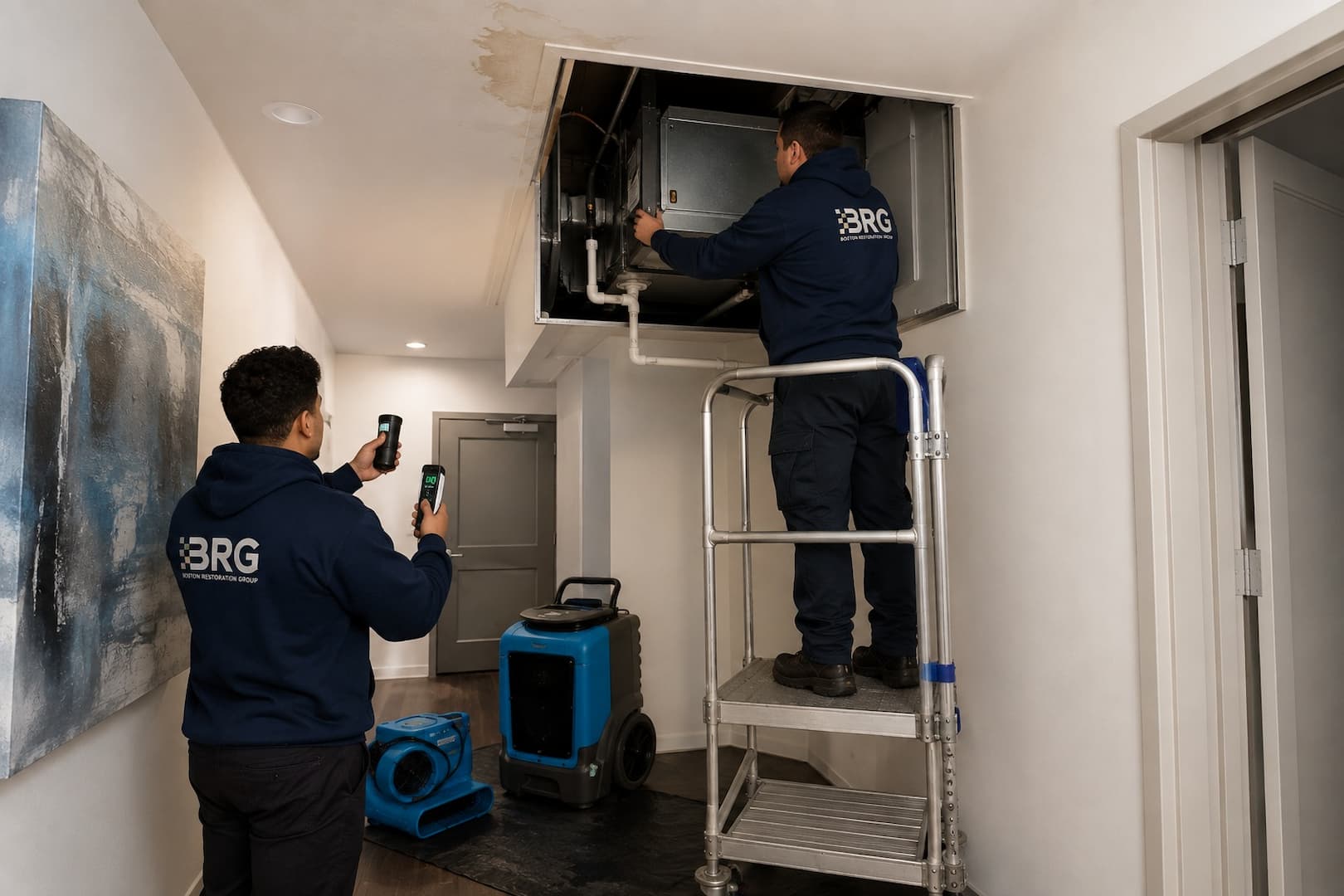
A qualified HVAC professional should correct the drain, pan, pump, or equipment condition.
Condensate can run along line insulation, framing, ducts, and ceiling surfaces.
Soft drywall, odor, staining, or growth may indicate more than a one-time clean-water event.
Mechanical closets and ceiling plenums can restrict air movement and access.
Condensate can travel away from the failed drain before it becomes visible
Water may overflow a pan, follow an uninsulated or poorly pitched line, drip from a pump connection, or condense on a cold surface. It can move along duct wrap, piping, framing, and the top of drywall before staining a ceiling far from the source.
BRG pairs the HVAC professional’s source finding with moisture checks in the equipment closet, platform, insulation, ceiling, wall, and room below. That connection helps distinguish what needs mechanical repair from what needs restoration.
- Record whether the unit is off, repaired, or safe to operate
- Inspect insulation and materials under the equipment
- Follow the ceiling stain in both directions

A recurring drip can create a different material condition than a sudden spill
Duration, temperature, dust, insulation, and limited airflow can make a small source consequential.
Ceiling drywall
Look for
Softness, staining, loss of fastener support, multiple wetting rings, and moisture beyond the visible mark.
Insulation and duct wrap
Look for
Compression, trapped moisture, damaged vapor facing, dust loading, and access for removal or drying.
Closet and platform materials
Look for
Swelling, delamination, corrosion staining, growth, and repeated overflow lines.
Wall cavities below
Look for
Water at top plates, wicking, hidden finishes, electrical penetrations, and floor-level migration.
Separate equipment safety, moisture, and environmental questions
If water is near electrical equipment, the ceiling is sagging, or the air handler appears unsafe, keep the area closed and contact the responsible professional. Visible growth, strong odor, or a long leak history may require containment or environmental direction before materials are disturbed.
HVAC condition
The HVAC contractor identifies the failed drain component and whether the system can operate during drying.
Building condition
BRG maps wet finishes and insulation, protects the room, and determines restoration access.
Environmental condition
Observed growth or an uncertain concealed area may justify a controlled remediation scope or independent consultant.
From equipment repair to verified dry assemblies
Turning the unit back on before the drain repair is confirmed can re-wet the area and invalidate drying progress.
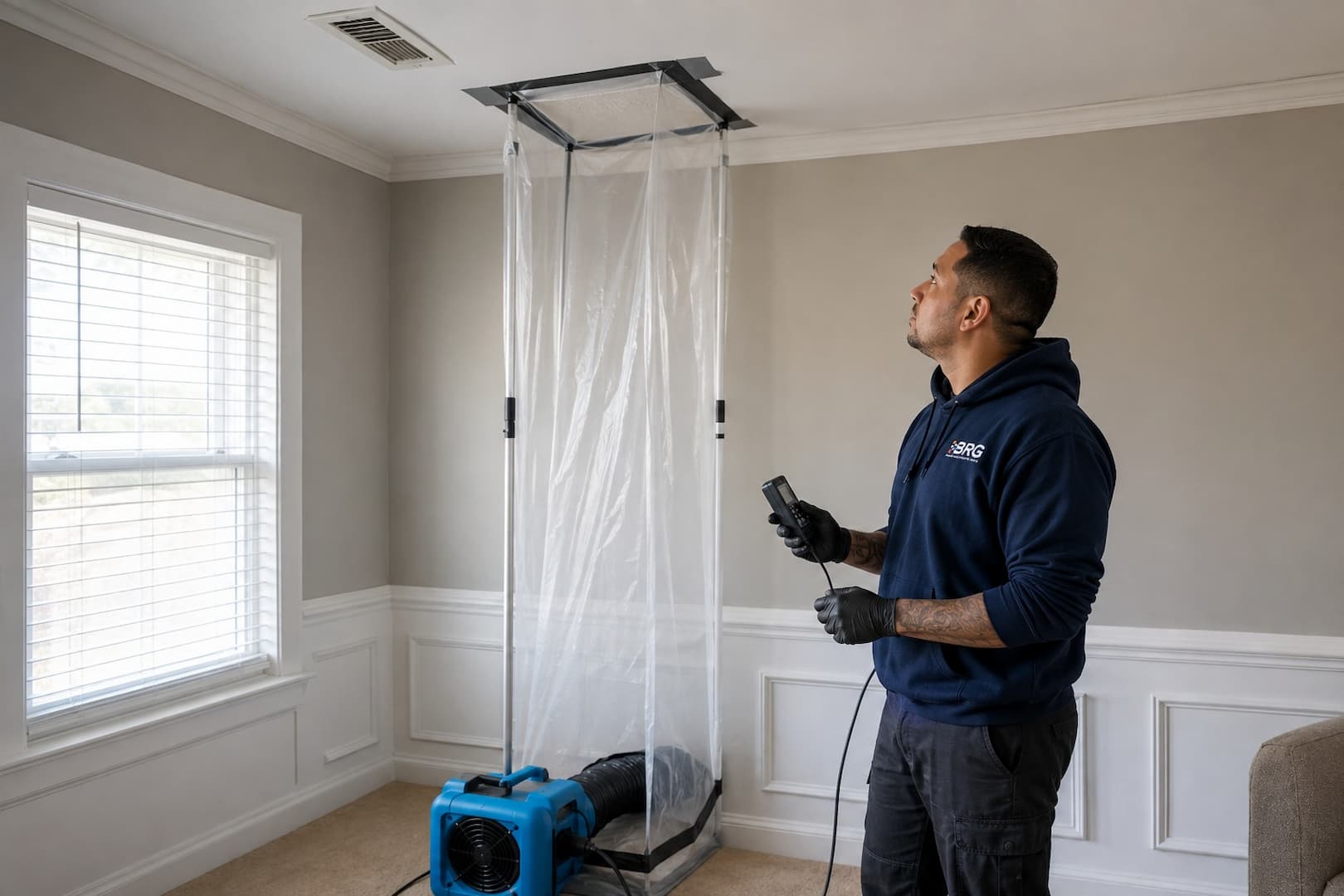
Confirm HVAC source correction
Record the pan, pump, line, fitting, insulation, or equipment issue and operating status.
Protect the room and inspect safely
Control the area below ceilings, move contents, and establish safe access around equipment and electricity.
Map concealed and visible moisture
Check the platform, closet, insulation, ceiling, wall path, and floor or room below.
Remove affected material or create drying access
Use a defined scope based on integrity, duration, environmental condition, and ability to verify drying.
Monitor after system operation resumes
Confirm the source remains controlled and material readings continue in the right direction.
Targeted access reveals the assembly without unnecessary ceiling removal
When justified, a measured access point can show insulation, framing, and the actual drying route beneath the repaired source.

Useful records show why the ceiling became wet
A stain photograph alone cannot explain a recurring HVAC loss.
HVAC source finding
Drain, pan, pump, pitch, insulation, repair, and operating status from the responsible trade.
Moisture and material condition
Closet, platform, insulation, ceiling, wall, room below, odor, growth, and readings.
Access, drying, and repair
Materials removed or retained, equipment, monitoring, and finish work remaining.
Confirm drainage under real operating conditions
After repair, the HVAC professional may need to verify condensate flow, pan condition, float switches, pump operation, insulation, and discharge location. BRG monitors the building materials; it does not certify mechanical performance.
- Keep filters and service access available
- Report a recurring stain or shutdown promptly
- Do not close repaired finishes until moisture and source are resolved
AC condensate leak cleanup questions
The stain, drain repair, and wet assembly are three separate parts of the answer.
Can BRG repair the AC condensate line?
An HVAC professional should diagnose and repair the mechanical drain, pump, pan, insulation, or equipment condition. BRG restores the resulting building damage.
Why is the stain not directly below the air handler?
Condensate can travel along piping, framing, duct insulation, and the top of drywall before finding a seam or low point.
Does a small stain mean the damage is small?
Not necessarily. Repeated slow wetting can affect insulation and hidden surfaces beyond the visible ring. Moisture readings and access history clarify the extent.
Can the ceiling dry without removal?
It depends on integrity, insulation, duration, access, coatings, environmental condition, and measurable progress. A small controlled access may be enough in some assemblies.
Should the AC remain off during restoration?
The HVAC professional determines safe operation. Source correction must prevent re-wetting, while temperature and humidity needs are coordinated with the drying plan.
Request AC condensate leak cleanup
Share the unit location, stain or leak location, HVAC operating status, repair status, affected rooms, odor or visible growth, and whether water is near electrical or sagging materials.
617-202-3772- Keep people out from beneath a soft or sagging ceiling
- Do not operate unsafe or repeatedly overflowing equipment
- Include attic, closet, ceiling, and unit-access instructions
Request Condensate-Leak Help
The equipment location and leak history help us prepare the building assessment.