
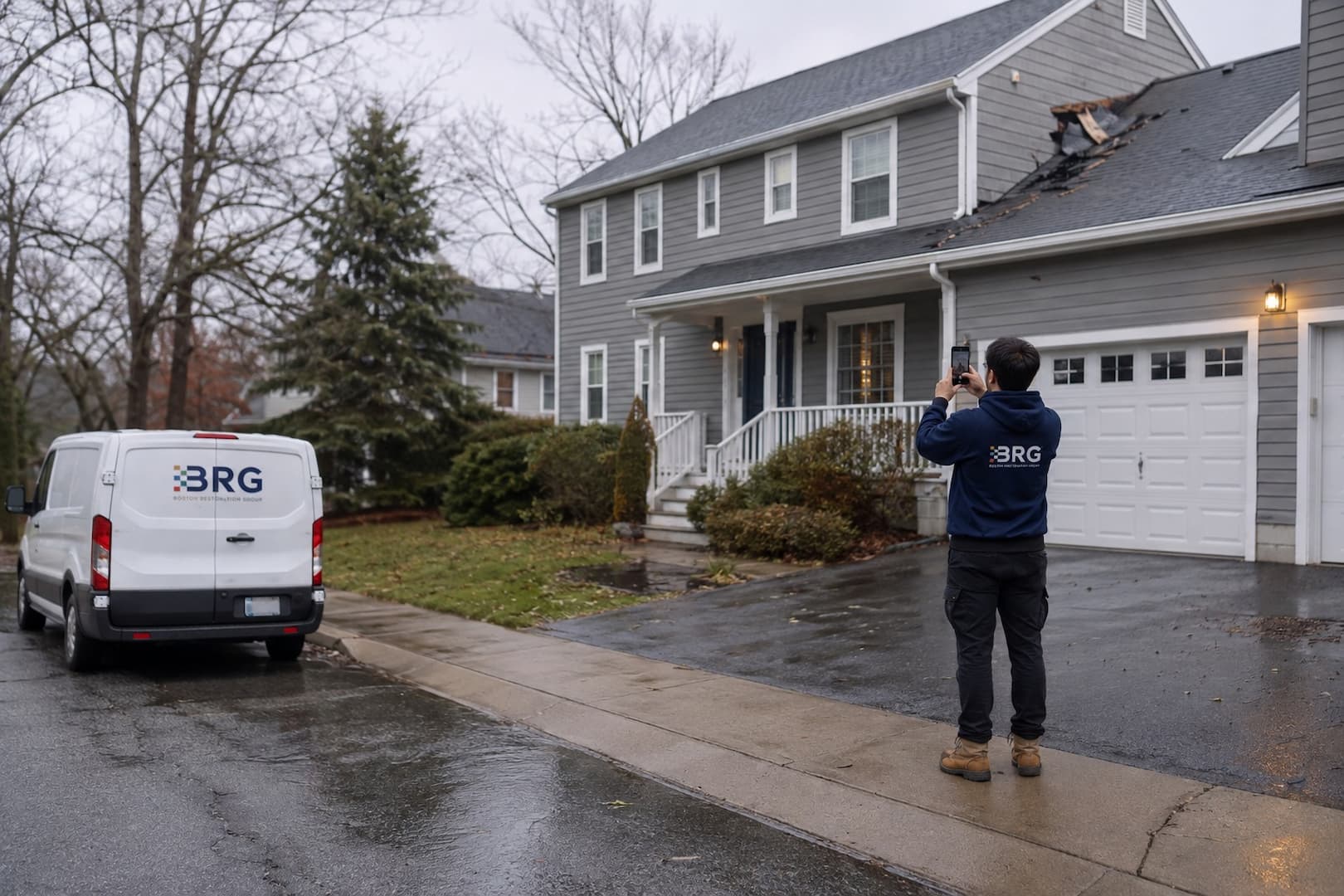
Storm Damage Restoration in Greater Boston
A storm may open the roof, drive water behind siding, break glass, load a ceiling, flood a lower level, and interrupt power in the same event. BRG helps property owners move from safety and temporary protection to moisture control, cleanup, and a documented repair handoff.
- Residential and commercial storm response
- Temporary protection and water mitigation
- Certified restoration specialists
Downed lines, trees, collapse, gas, and floodwater require the appropriate emergency authority.
Openings and roof areas receive temporary protection when access and conditions allow.
Wind-driven water can travel through layered roof, wall, and window assemblies.
Emergency coverings, drying, and debris work are documented separately from reconstruction.
Storm damage can remain dangerous after the weather passes
Do not approach downed lines, leaning trees, active flooding, unstable masonry, displaced roofs, sagging ceilings, or standing water near energized systems. Call 911, the utility, fire department, building official, or another responsible authority for the hazard. BRG enters after the scene and work area are safe for restoration activity.
Exterior hazards
Branches, roofing, siding, signs, glass, and temporary coverings can shift in wind. Ground observation is safer than climbing to investigate.
Interior hazards
Water can load ceilings, reach electrical systems, loosen finishes, and conceal structural movement.
Floodwater and backups
Water entering from the ground or drainage system may carry contamination and requires different controls than clean rainwater.
Four storm pathways BRG checks
The visible exterior defect is only one part of the assessment.
Shingles, flashing, and penetrations
Rain can move along underlayment, decking, rafters, insulation, and ceiling surfaces away from the entry point.
Windows, doors, and storefronts
Failed seals, broken glazing, and wind pressure can wet trim, wall cavities, flooring, and contents.
Drainage and lower levels
Surface water, sump failure, foundation seepage, and sewer backup are identified because cleanup controls differ.
Impact and loading
Tree strikes, ice, snow, and wind may require an engineer, building official, roofer, or other qualified professional.
Protect the opening without disguising the repair need
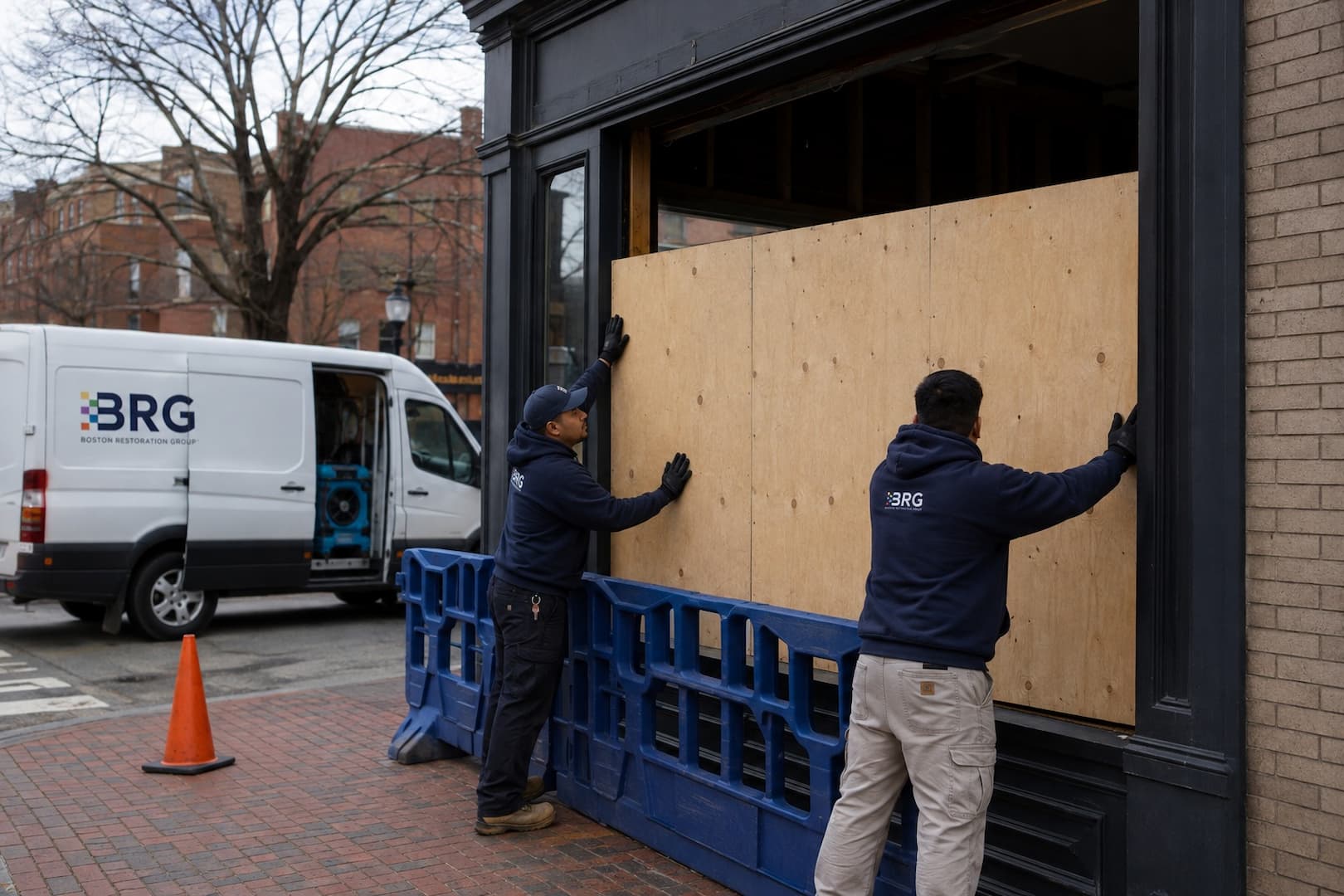
A fitted board-up or roof covering can reduce additional rain entry and unauthorized access. The method should avoid unsafe roof exposure, preserve emergency egress, and shed water away from sound assemblies rather than trapping it.
BRG records the location, dimensions, installation, date, and known limitations of temporary protection. Severe weather can loosen coverings, so the property representative should arrange inspection after conditions change and keep people away from the protected opening.
- Do not climb onto a wet, icy, or visibly damaged roof
- Keep temporary materials clear of vents, flues, and required exits
- Plan permanent roofing, glazing, siding, or framing repair with the appropriate trade
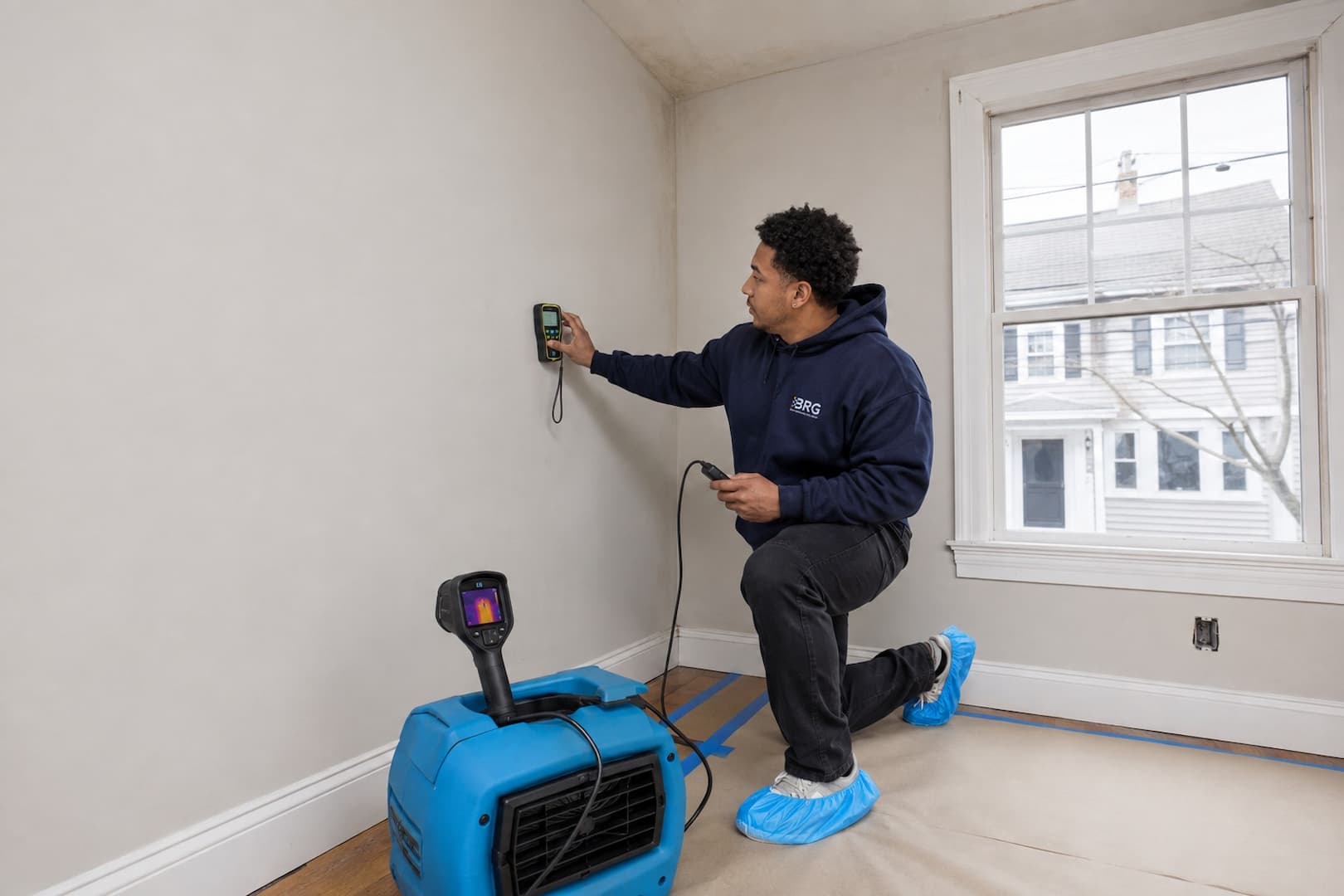
Trace wet materials above, beside, and below the obvious damage
Moisture mapping connects exterior exposure to interior assemblies and helps prevent a cosmetic patch over a wet system.
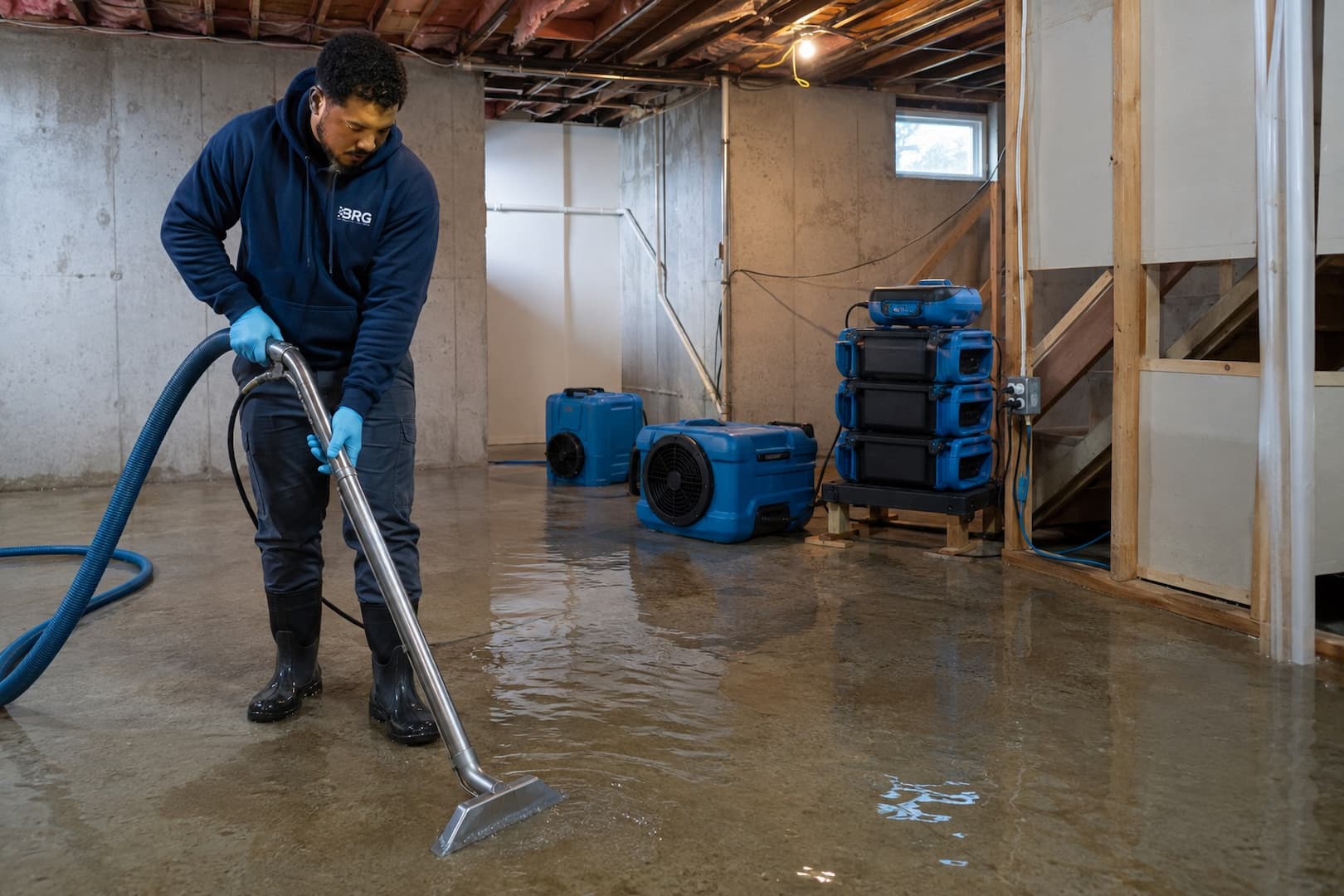
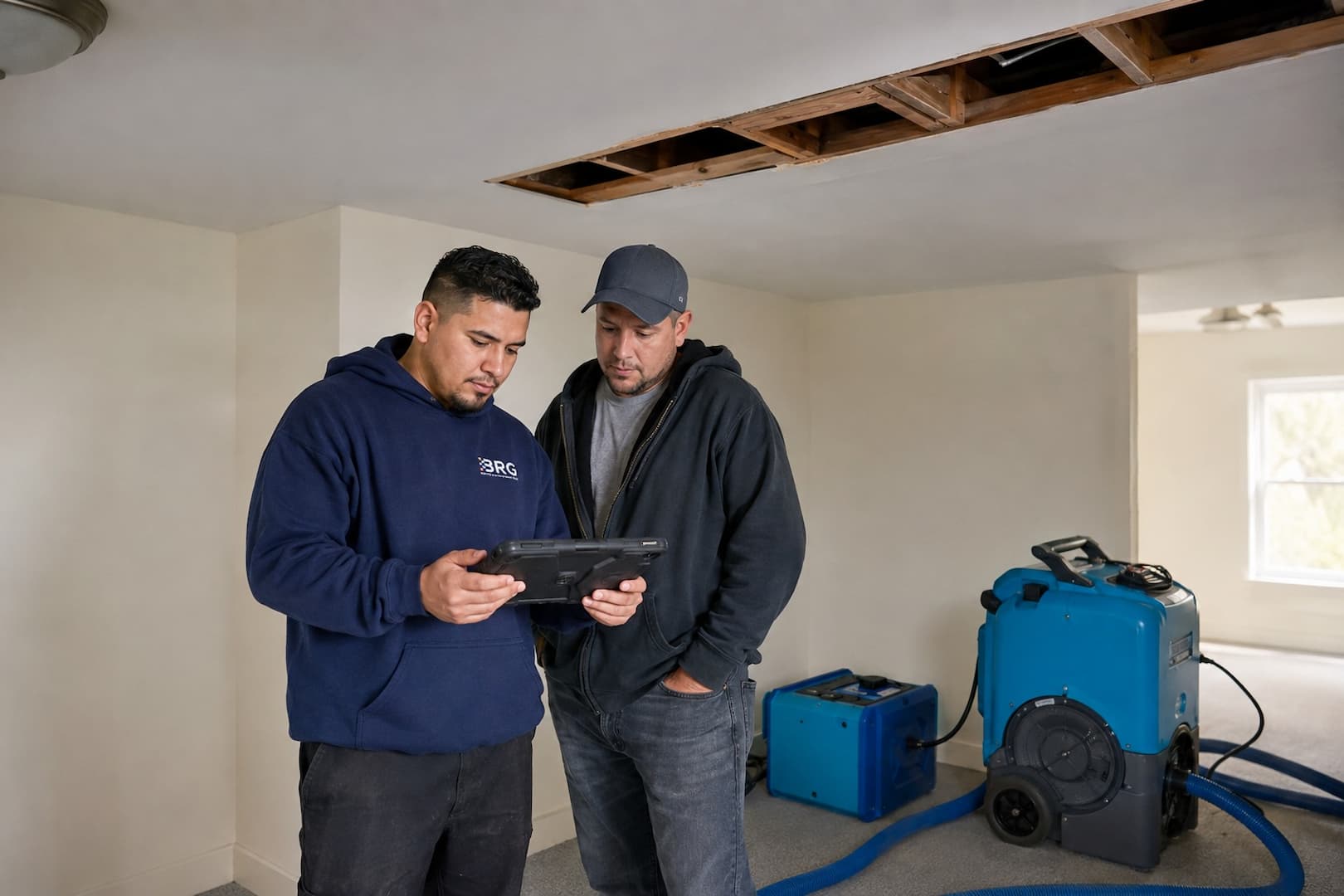
From weather release to repair-ready documentation
Not every property needs every step. The sequence is adjusted for occupancy, contamination, structural restrictions, continued weather, and the actual materials involved.
Confirm access and hazards
Record authority restrictions, utilities, structural concerns, floodwater conditions, exterior hazards, and safe entry routes.
Stabilize exposed areas
Provide appropriate temporary protection, barriers, contents covering, and accessible water control.
Map and remove moisture
Extract standing water, inspect connected rooms and assemblies, and establish drying or selective removal based on material condition.
Clean and manage debris
Separate storm debris, damaged building materials, and potentially contaminated items using controls appropriate to the loss.
Verify and hand off
Progress information and final records identify stabilized areas, retained material, removed material, temporary measures, and repairs still open.
Show the event, the water path, and the work
Photographs of exterior conditions, interior damage, temporary protection, moisture readings, equipment, debris, and selective removal can help explain the loss. BRG provides restoration records and an itemized scope when applicable. The insurer determines coverage under the policy.
- Photograph damage from a safe location before temporary work
- Keep emergency invoices and trade reports
- Distinguish pre-existing conditions from storm-related observations when known
Storm restoration questions
Conditions can change quickly, so safe access and continued weather always affect the plan.
Can BRG install a roof tarp during an active storm?
Roof work depends on wind, rain, ice, slope, structural condition, lighting, and safe access. The crew will not enter an unsafe roof area; ground-level protection or work after conditions improve may be necessary.
Why is the ceiling wet far from the missing shingle?
Water can run along decking, framing, fasteners, insulation, and ceiling surfaces before appearing. The interior stain may not sit directly below the exterior entry.
Is stormwater considered contaminated?
It depends on its route. Clean rain entering through a roof is different from surface floodwater, drain backup, or sewage. The observed source and materials contacted determine controls.
Should I remove fallen debris myself?
Avoid debris connected to structural damage, electrical hazards, sharp glass, trees under tension, contaminated water, or unstable building materials. Wait for the appropriate authority or qualified crew.
Does BRG complete the permanent roof or structural repair?
The emergency restoration scope can include protection, water mitigation, cleanup, and documentation. Permanent roof, glazing, structural, electrical, or other repairs may be completed by the appropriate qualified contractor under a separate approved scope.
Request storm damage restoration help
Call after emergency hazards are reported to the appropriate authority. Tell BRG what the storm affected, whether the building is open to weather, where water is visible, and which areas cannot be entered.
617-202-3772- Mention downed lines, trees, gas, active flooding, or structural restrictions first
- Share roof, window, basement, and ceiling observations
- Provide gate, tenant, loading, or building-management access details
Request a Storm-Damage Call
Send the property address, current conditions, and the safest way to reach you.