
Air Duct Cleaning and Restoration in Boston, MA
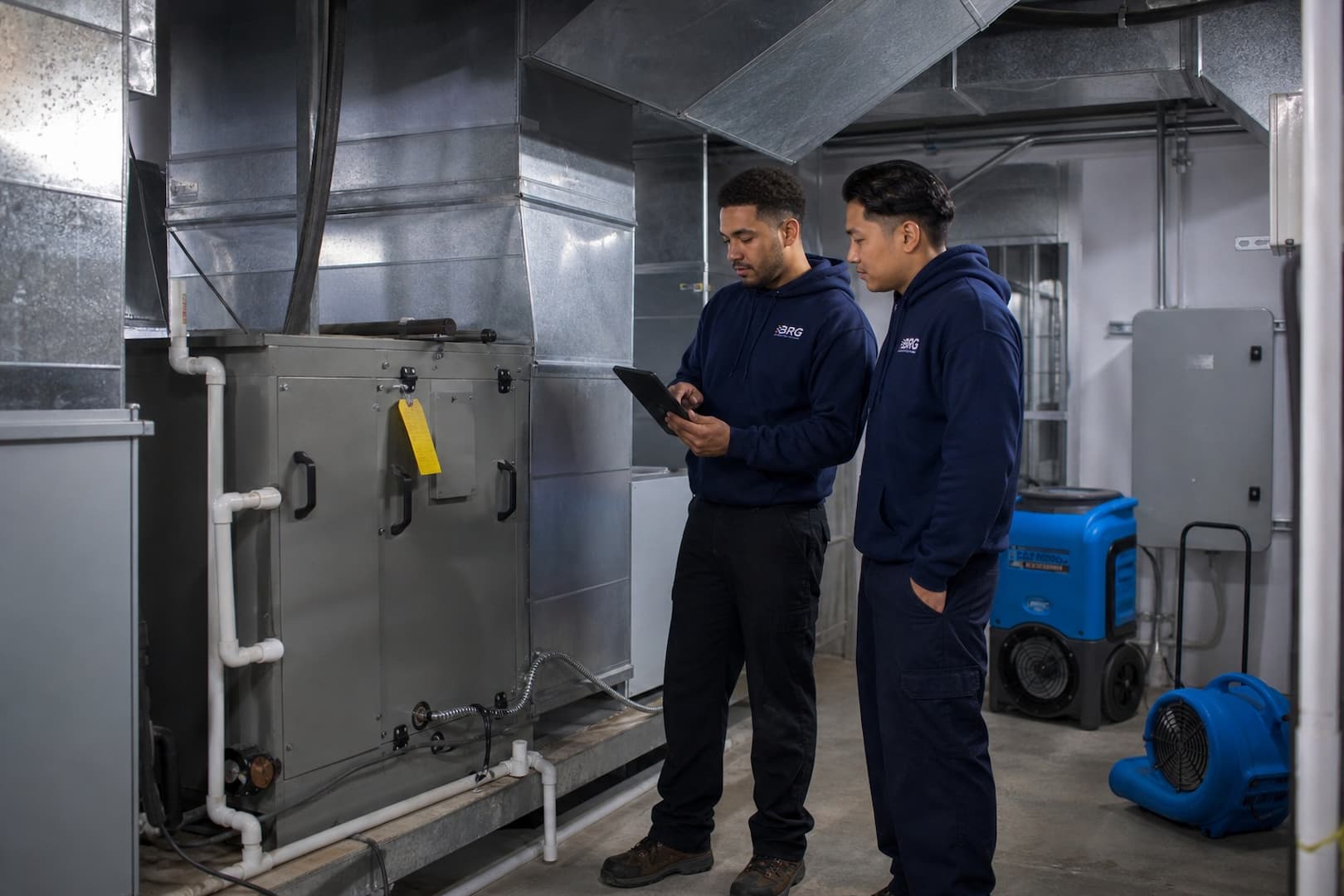
Smoke, construction dust, water, microbial growth, debris, or a contamination event can affect an HVAC system differently. BRG helps define what entered the system, which components and zones are involved, what must be corrected before cleaning, and when an HVAC professional, environmental consultant, or specialized duct-cleaning firm should lead part of the work.
Fire residue, dust, water, growth, debris, and odor do not share one cleaning protocol.
Returns, supplies, filters, coils, drain pans, plenums, and lined ducts need separate observation.
Operation, repair, balancing, controls, and equipment safety belong to the HVAC professional.
Before-and-after records should describe inspected and cleaned components without claiming invisible certainty.
The event defines the inspection question
A useful scope is tied to evidence and components, not a fear-based whole-system assumption.
Smoke and soot pathway
Determine whether equipment operated, which zones communicated, and where residue is visible at returns, filters, air handler, or ducts.
Condensation or direct wetting
Correct drain, pan, insulation, roof, or plumbing moisture before cleaning or replacing affected HVAC materials.
Dust and debris entry
Review protection failures, return openings, filter loading, equipment operation, and accessible deposits after work.
Defined contamination concern
Use inspection and, when appropriate, independent consultant direction to set containment, cleaning, and verification.
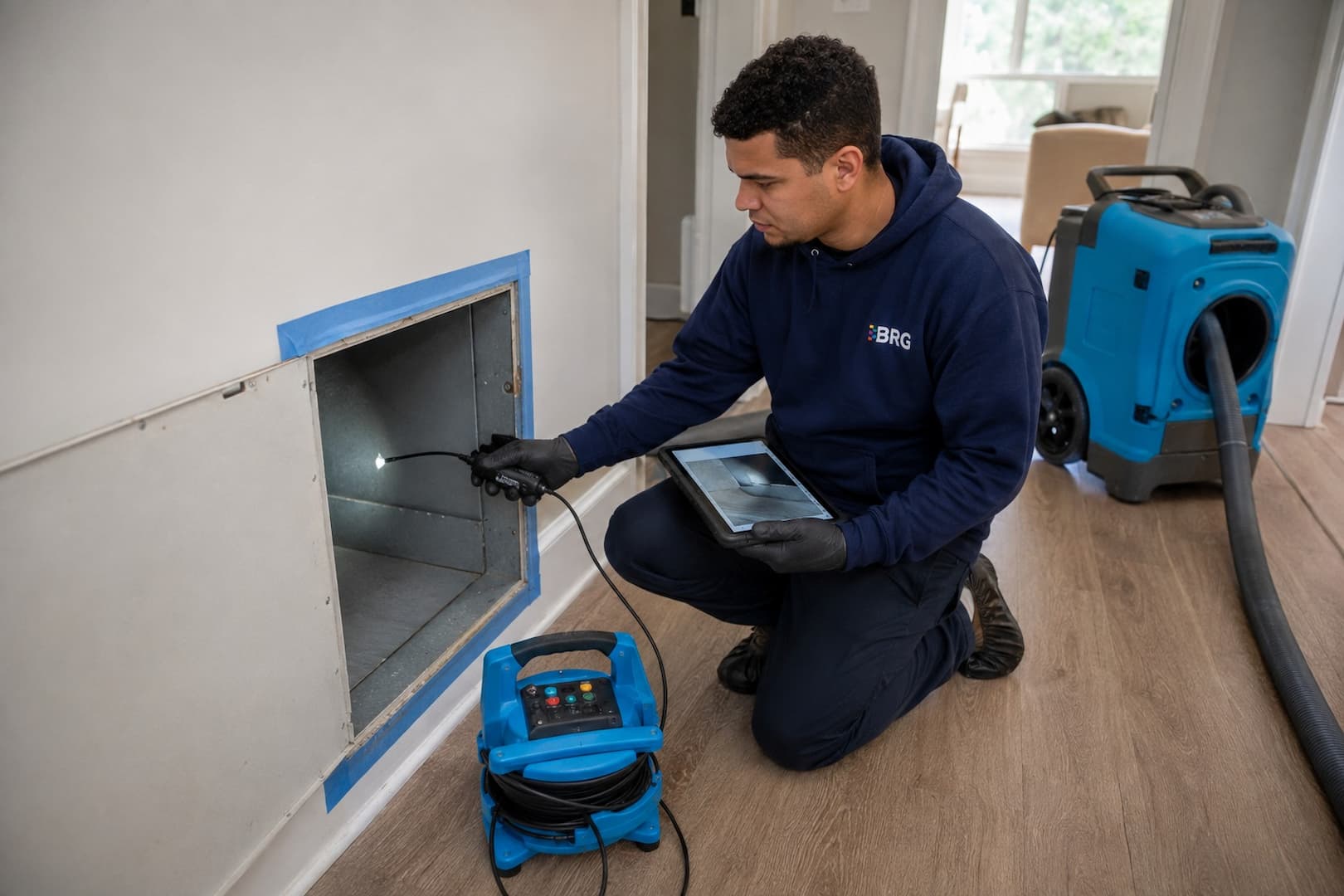
A register photograph does not describe the entire HVAC system
Supply and return grilles, boots, trunks, branches, lined duct, plenums, filters, coils, blower compartments, drain pans, humidifiers, and controls have different materials and access. Some can be cleaned; damaged porous lining or insulation may need replacement; mechanical work belongs to the HVAC trade.
BRG connects the property-damage event to accessible system observations and building zones. If the question requires internal inspection, specialized cleaning, sampling, or system performance testing, the appropriate qualified provider is brought into the plan.
- Document system operating status during the event
- Identify served zones and shared return pathways
- Inspect filters and accessible components before assuming full distribution
Component material and use determine the treatment path
Bare metal can often be physically cleaned when accessible and sound. Porous internal lining, flexible duct, wet insulation, corroded components, sensitive facilities, or specialized equipment may require replacement, manufacturer direction, consultant input, or an HVAC specialist.
Accessible bare-metal duct
Evidence, deposit, accessibility, sealing, agitation, capture, and post-cleaning observation guide the scope.
Porous lining and insulation
Moisture, growth, smoke adsorption, deterioration, cleanability, and manufacturer limitations shape retain-or-replace decisions.
Air handler and controls
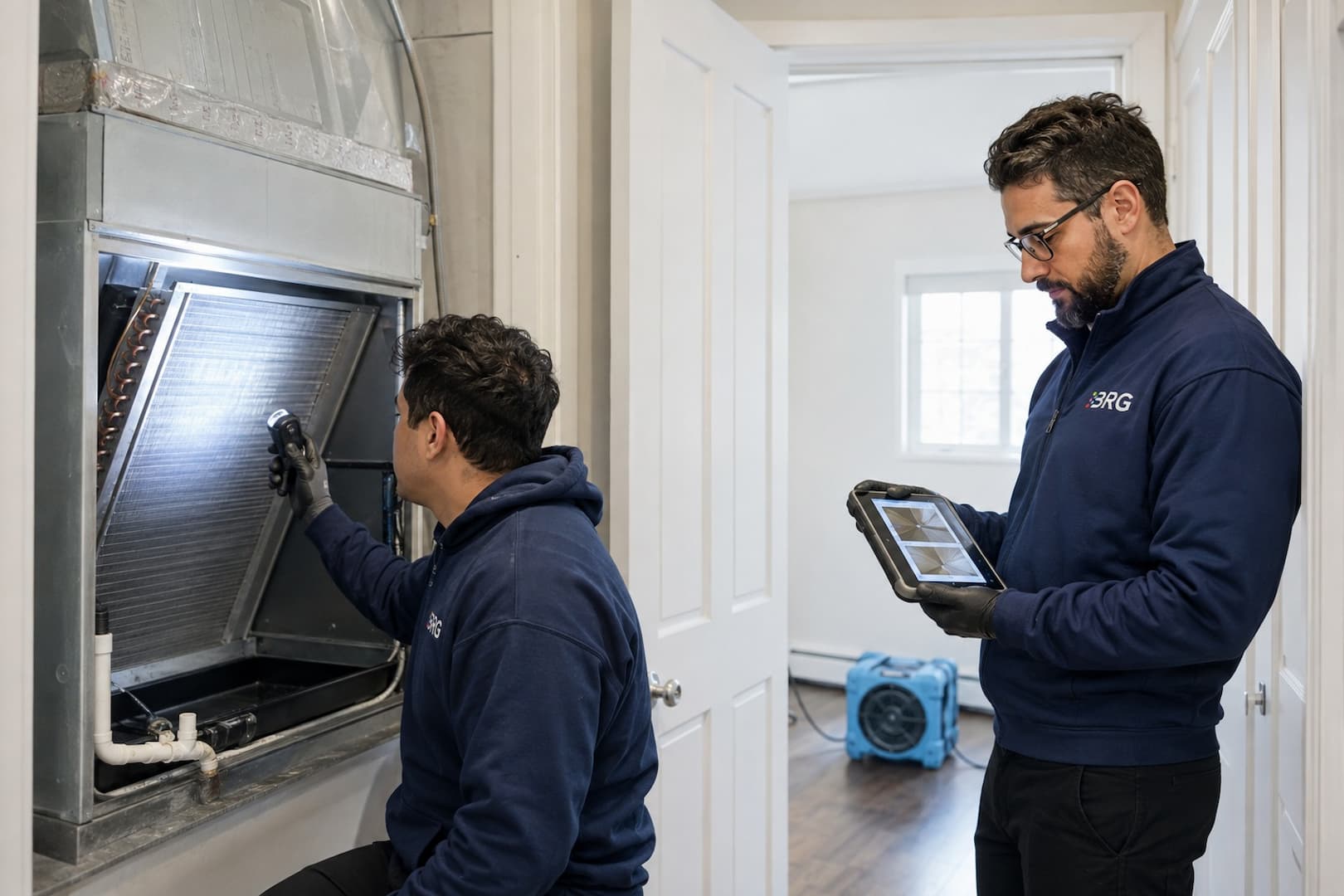
Coils, blower, pan, heat exchanger, electrical controls, filters, and operation are inspected or serviced by the appropriate HVAC professional.
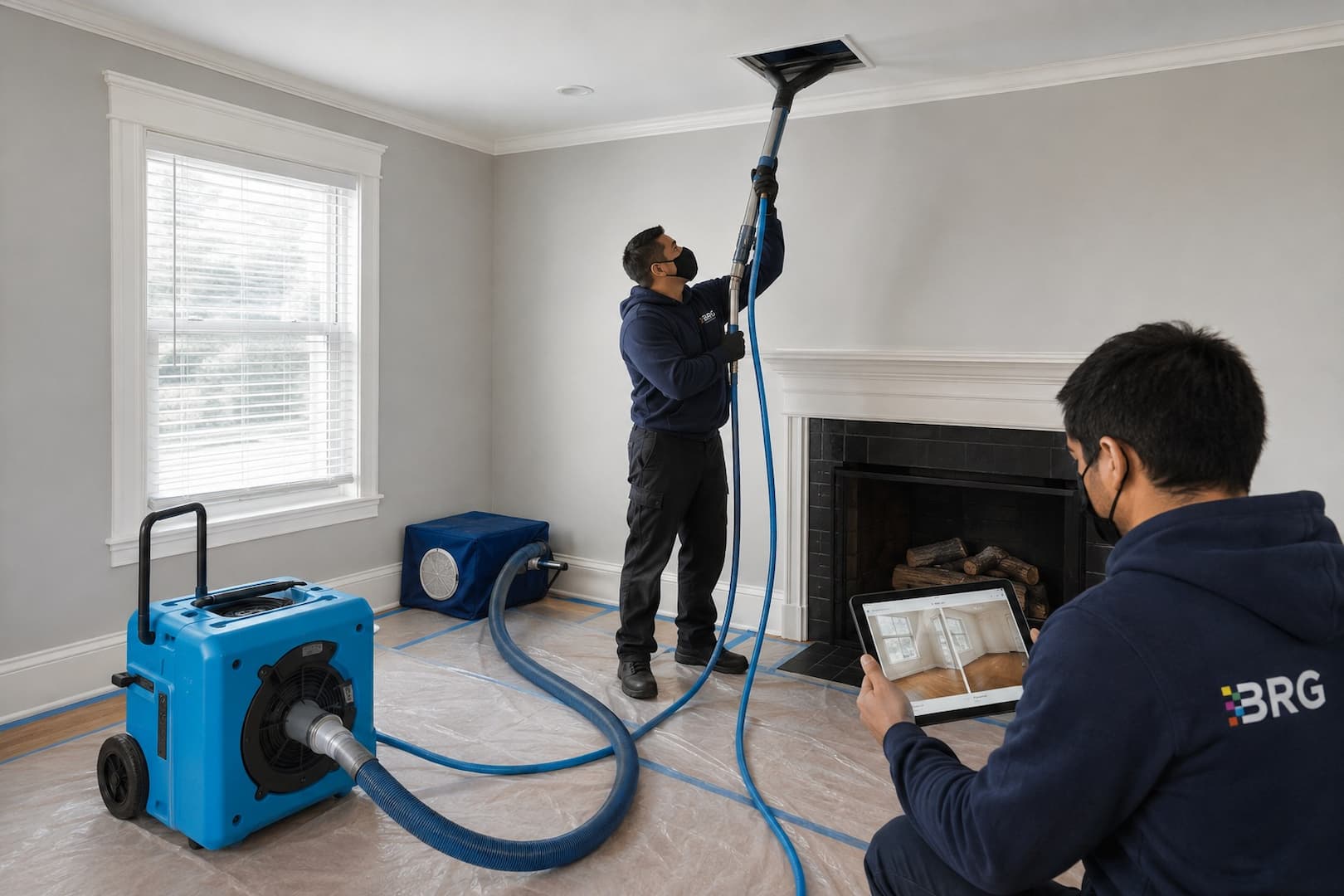
Capture debris at the source and keep mechanical authority clear
Negative-air cleaning and equipment inspection are coordinated so debris is contained and the system is operated only by qualified personnel.
From source correction to documented system return
Not every event requires whole-system cleaning. The scope follows the affected zones and evidence found.
Define event, system, and occupied zones
Record source, equipment operation, timing, shared returns, building use, sensitive occupants, and access.
Correct moisture or contamination source
Repair HVAC, roof, plumbing, fire, or construction conditions before cleaning proceeds.
Inspect and set component scope
Review accessible returns, supplies, filters, air handler, plenums, lining, and representative duct paths.
Clean, replace, or refer by component
Use contained mechanical cleaning where suitable and assign HVAC, environmental, or specialty work explicitly.
Document condition and operation handoff
Record accessed components, methods, filters, replacement, limitations, and HVAC recommissioning status.
Avoid promising that every hidden surface is “sanitized”
A credible record names the event, system zones, accessible components, observed conditions, work performed, replaced material, filters, photographs, and limitations. HVAC performance, environmental interpretation, and insurance coverage remain within the responsible party’s role.
- Before-and-after accessible component records
- Cleaning equipment and capture method
- HVAC repair and recommissioning documentation
Air duct cleaning and restoration questions
The source, system design, component material, and evidence determine whether and where cleaning is needed.
Does visible dust at a register mean all ducts need cleaning?
No. A register is one accessible point. Filter condition, equipment operation, return pathways, component inspection, event history, and representative internal observations provide better scope evidence.
Can lined ductwork be cleaned after mold or smoke?
Sometimes, but porosity, deterioration, moisture, residue depth, access, manufacturer limitations, and independent protocol can make replacement more appropriate.
Should the HVAC system run during cleanup?
The HVAC professional and restoration plan determine operating status. Running it can spread residue or disrupt containment, while temperature and humidity control may also be important.
Does BRG repair HVAC equipment?
BRG handles related restoration and can coordinate inspection. A qualified HVAC professional repairs, services, tests, balances, and recommissions mechanical equipment.
Is spraying disinfectant into ducts enough?
No. Products must be appropriate and label-compliant, and chemical application does not replace source correction and physical removal of debris. Some duct materials or systems should not receive such treatment.
Request air duct cleaning and restoration review
Share whether the concern follows fire, smoke, construction, water, odor, mold, or another event; which HVAC zones served the area; whether equipment operated; and what an HVAC or environmental professional has found.
617-202-3772- Do not run unsafe or visibly contaminated equipment
- Mention shared systems, sensitive occupancies, and lined duct
- Provide mechanical-room and roof access requirements
Request a Duct-Restoration Call
The event and system layout help us identify the right inspection path.