
Dishwasher Overflow Cleanup in Boston, MA
Kitchen water cleanup with cabinet-base drying and moisture control where leaks love to hide.
Dishwasher overflows feel “contained” until you realize where the water actually goes: under toe-kicks, behind cabinet bases, and into seams at the edge of the floor. Kitchens are built with tight gaps and layered materials—great for design, bad for moisture.
Boston Restoration Group handles dishwasher overflow cleanup with targeted extraction and drying built around cabinet edges and floor transitions. We focus on preventing the delayed problems people hate most: swelling at bases, soft flooring seams, and a lingering musty smell that shows up after everything “looks dry.”
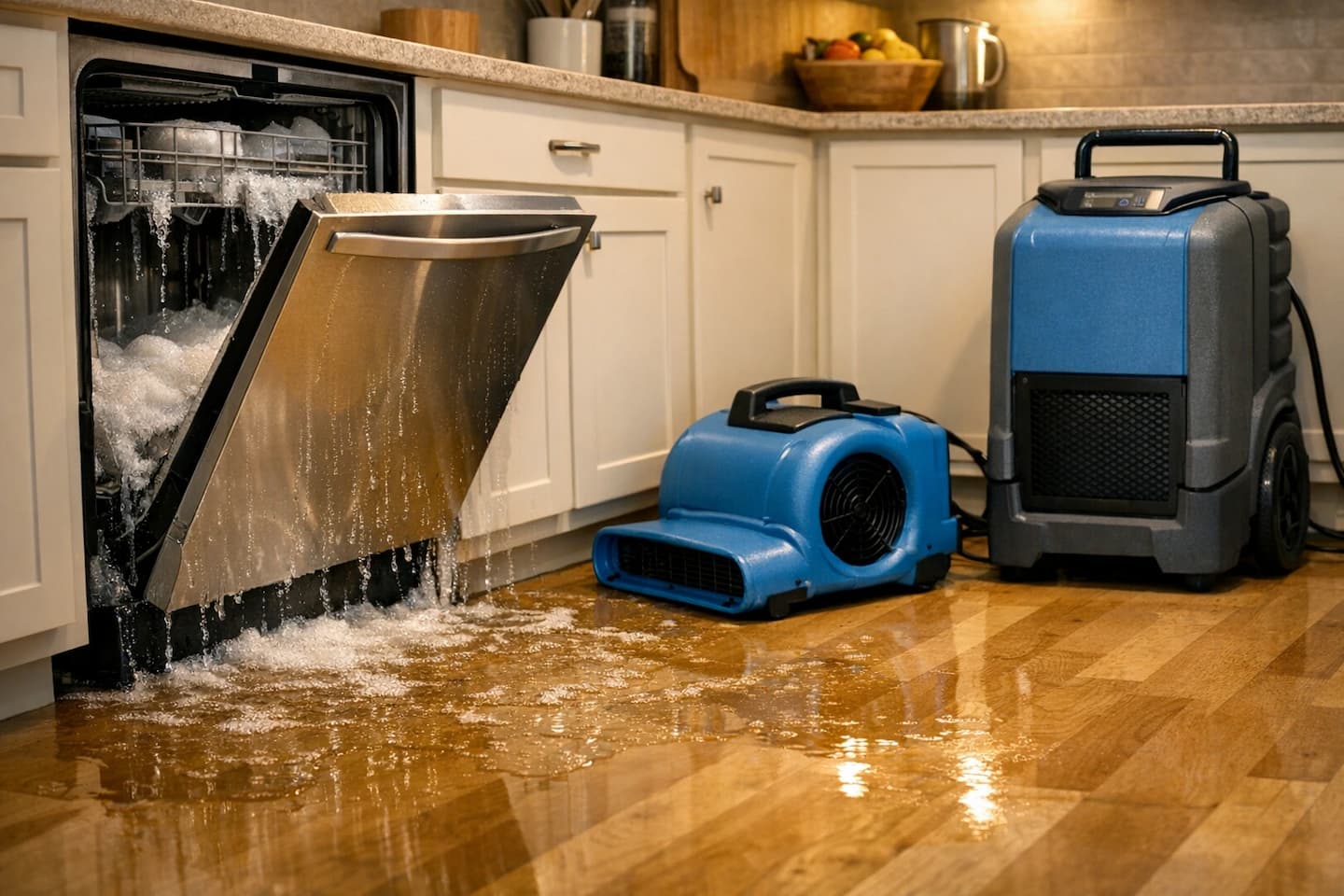
Why kitchens trap water (and why that matters)
Cabinet bases hold moisture longer
Toe-kicks and cabinet bases have limited airflow, so water can sit in a hidden pocket even after the surface looks fine. That’s where swelling and odor tend to start.
- Delamination risk at cabinet base edges
- Hidden dampness behind toe-kicks
- Moisture that keeps re-humidifying the room
Floor seams are weak points
Most kitchens have transitions or seams—tile to wood, vinyl to subfloor, thresholds. Water migrates into those joints and can cause lifting or warping later.
- Swelling at seams and edges
- Baseboard wicking along walls
- Odor development if moisture stays trapped
What we inspect and how we dry it
Our approach is to verify where moisture is holding, then build a drying setup that targets cabinet bases and floor edges without turning your kitchen into a construction zone.
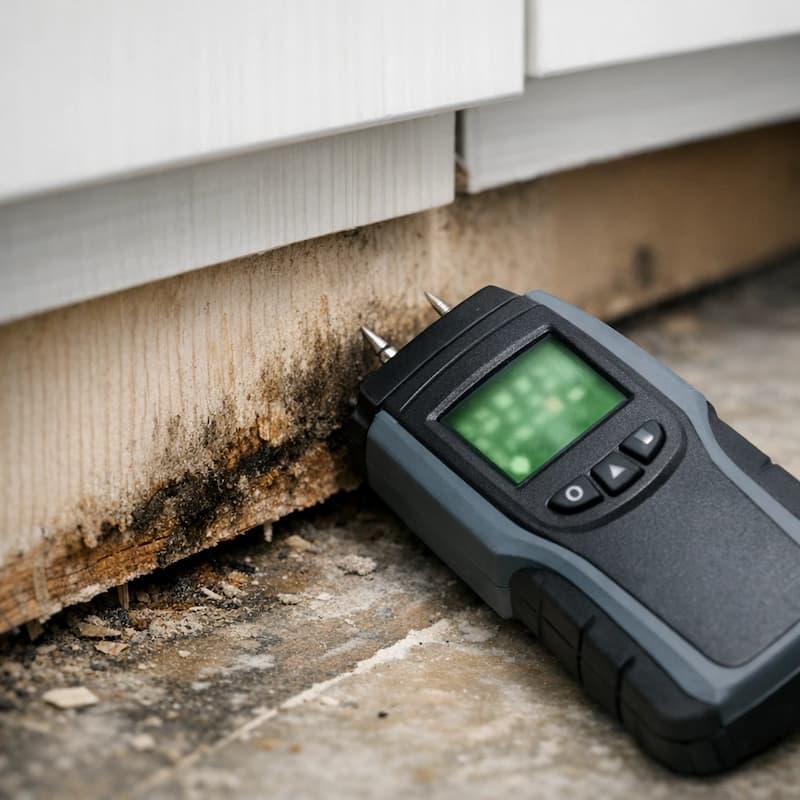
Cabinet-base verification
We check the toe-kick zone and cabinet bases first. That’s often where “invisible” water sits, quietly swelling wood and raising humidity in the room.
- Readings along cabinet bases and wall edges
- Targeted extraction in pooling zones
- Attention to seams near thresholds and appliances
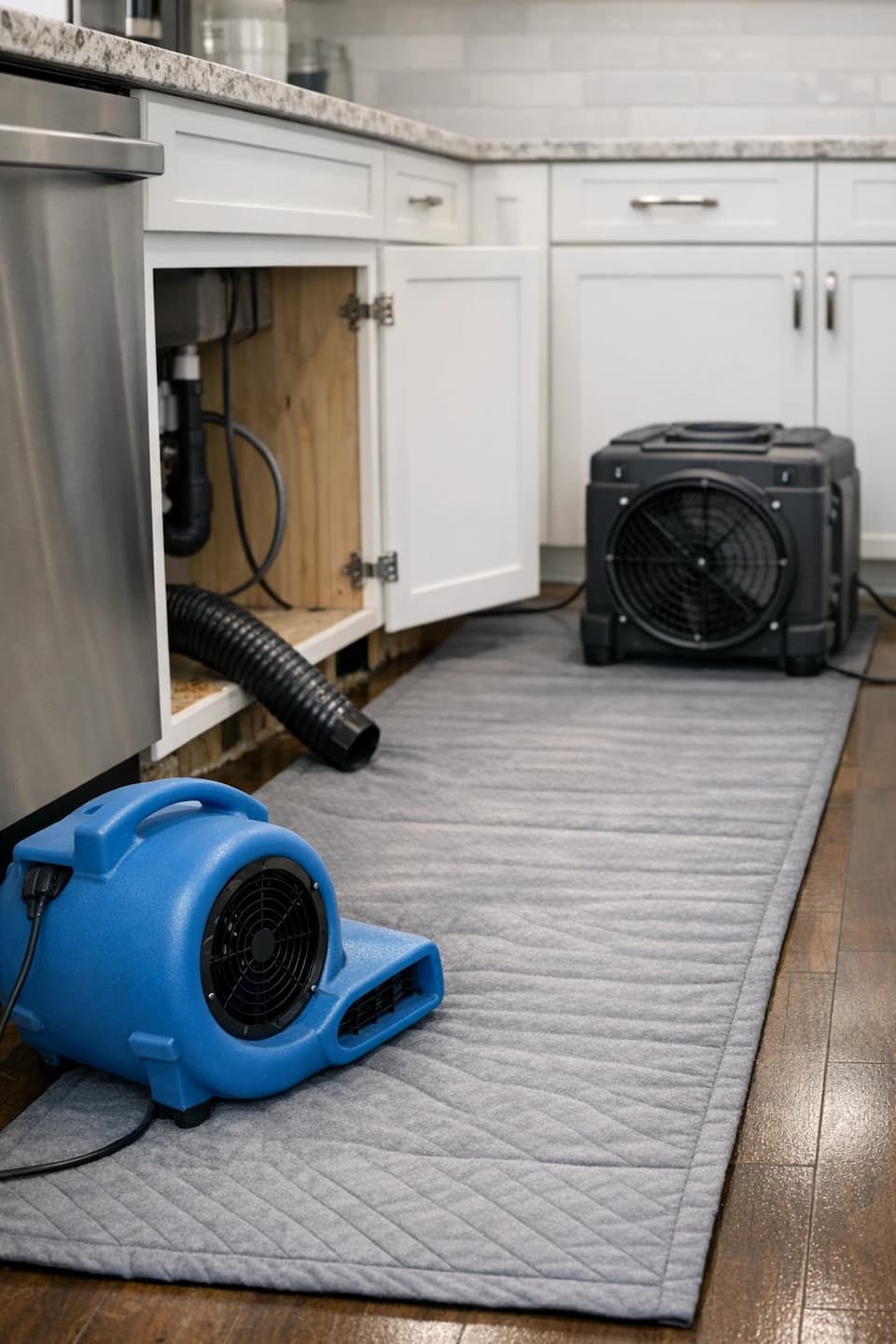
Toe-kick drying that looks “normal”
We use directed airflow and humidity control to dry cabinet edges and floor transitions efficiently—without blasting the entire house with fans.
- Airflow aimed along cabinet bases and floor edges
- Humidity managed to keep drying progress steady
- Adjustments as readings improve
How we handle dishwasher overflow cleanup
Remove standing water and keep traffic paths clean so the kitchen remains safe and usable.
Toe-kicks, cabinet bases, and seams get checked to find where moisture is actually holding.
Airflow is directed along cabinetry and floor edges, paired with humidity control.
We monitor and refine so you’re not left with “almost dry” materials that swell later.
Our Advantages

Cabinet-aware drying
We prioritize toe-kicks and cabinet bases, because that’s where kitchen water damage quietly becomes expensive.
Floor seam protection
Transitions and seams are treated as high-priority zones to prevent lifting, warping, and delayed swelling.
Clean, quiet workflow
We keep equipment staging tidy and use floor protection where it helps—kitchens still feel livable.
Repair-ready outcome
We aim for a stable, documented finish so repairs and decisions are straightforward afterward.
FAQ
Do cabinets need to be removed after a dishwasher overflow?
Not always. It depends on how far water traveled and whether cabinet bases can be dried and verified. We help evaluate it realistically.
Why does the kitchen still smell after mopping?
Mopping removes surface water, but moisture can remain under toe-kicks or behind cabinet bases. Controlled drying and humidity management usually resolves it.
Should I keep the dishwasher pulled out?
If it’s safe, access helps inspection and drying. Just avoid stressing water lines or electrical connections.
Need dishwasher overflow cleanup in Boston?
Call BRG to remove water, dry cabinet bases correctly, and prevent delayed damage.