
Septic Backup Cleanup in a Basement
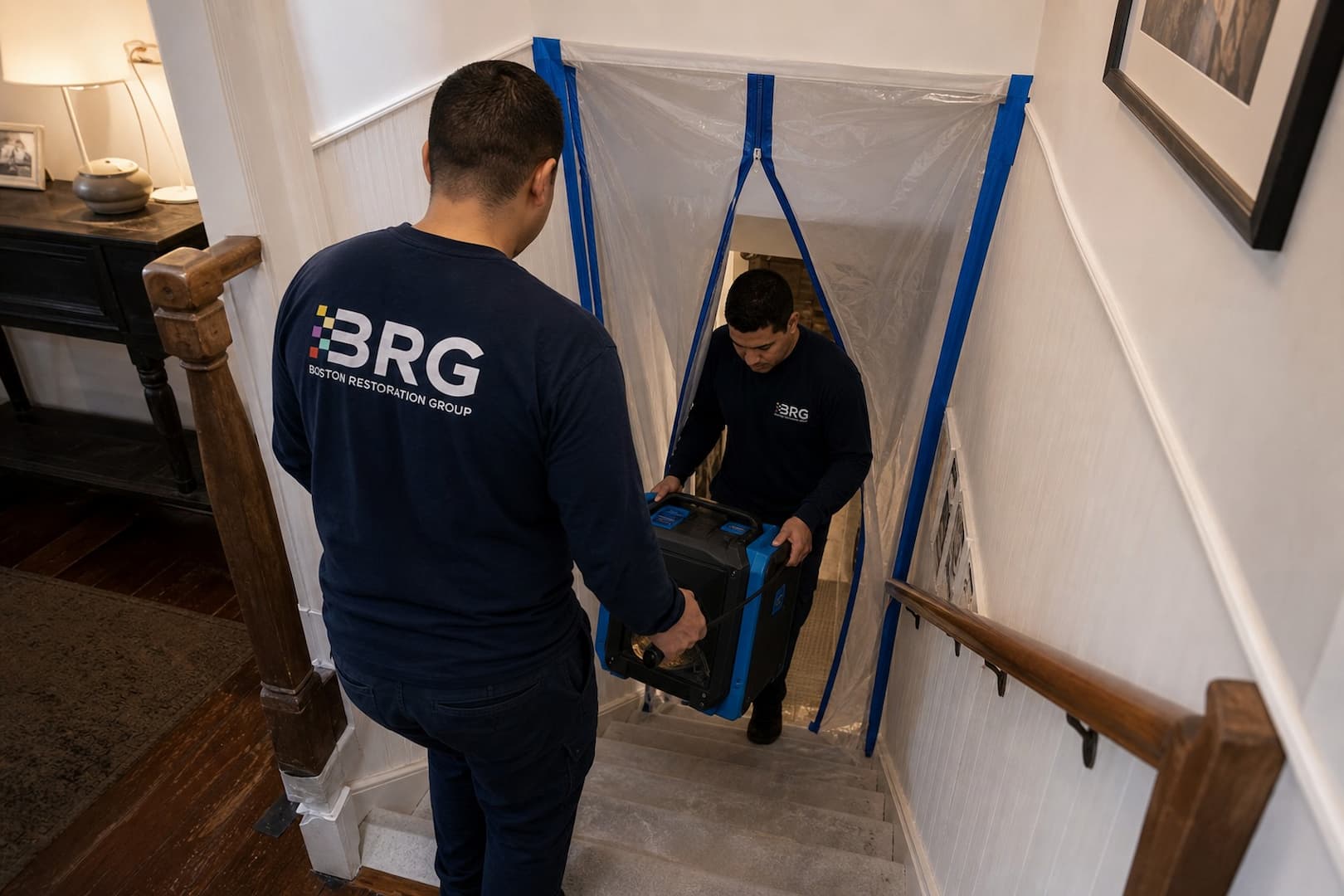
Basements combine the lowest drains in the building with stored contents, finished walls, mechanical equipment, narrow stairs, and limited routes outside. BRG builds the cleanup plan around those below-grade constraints while the septic contractor corrects the system source.
- Finished and unfinished basements
- Stair and contents protection
- Mechanical-area coordination
- Cleaning, drying, and repair planning
Lowest fixtures show trouble first
Floor drains, basement baths, laundry, and ejector systems may reveal a septic backup before upper floors.
Everything leaves by one route
Equipment, debris, and contents must move upstairs without spreading contamination.
Mechanical systems share the room
Furnaces, water heaters, pumps, panels, and stored chemicals need trade-specific review.
Contents multiply decisions
Boxes, textiles, furniture, tools, and keepsakes do not all receive the same answer.
The room may be one level; the loss rarely is
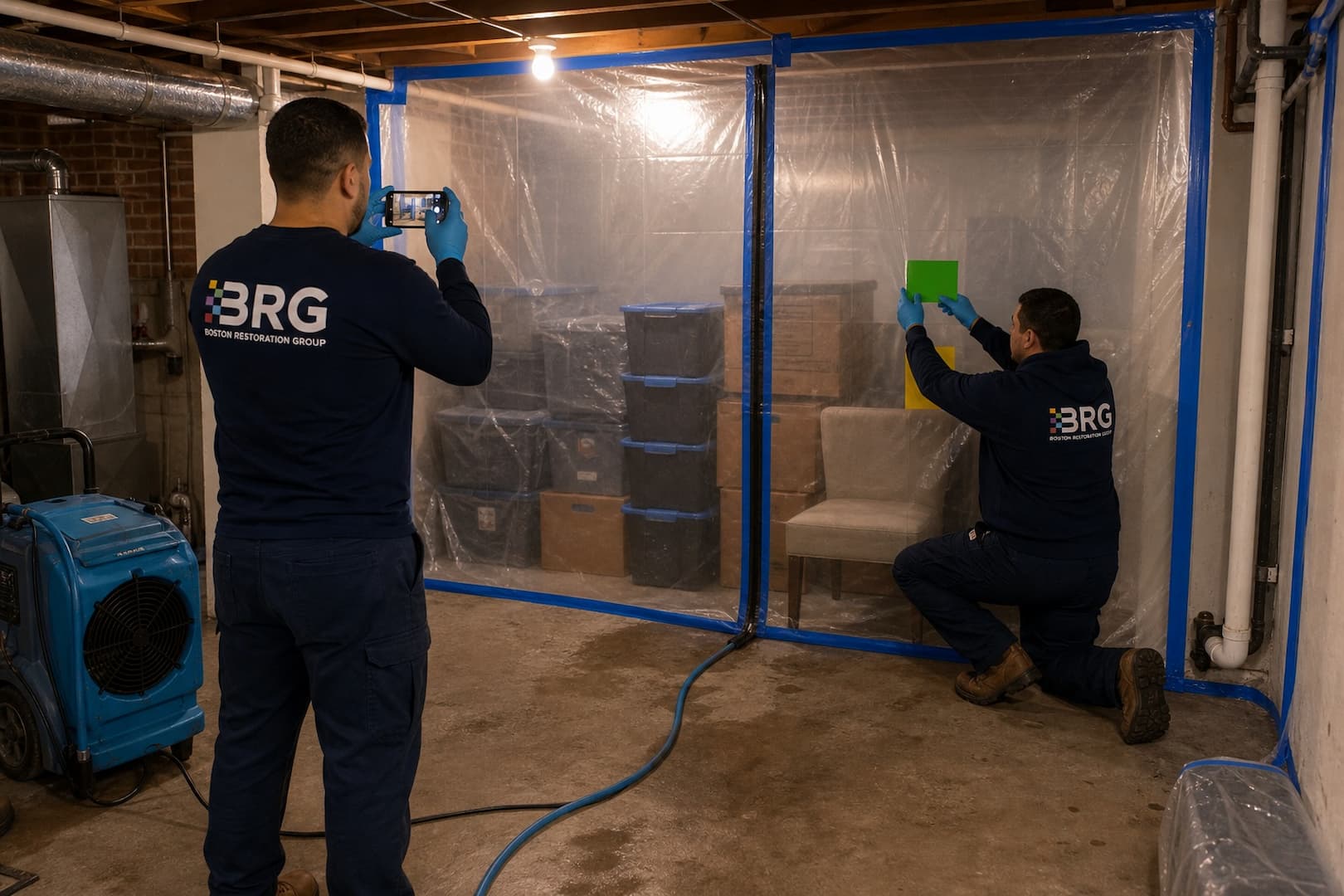
Contaminated water can spread under framed walls, behind finished panels, into carpet pad, beneath floating flooring, around sill plates, and through stored belongings on the floor. It may also reach a utility closet or drain connected to other fixtures.
BRG starts at the stair and works down. The route receives protection, the backup line is recorded, and contents are divided into unaffected, review, salvage, and disposal decisions. That sequence keeps the owner from carrying the problem upstairs one box at a time.
Do not use basement fixtures
Pause toilets, sinks, laundry, and showers throughout the property until the septic professional confirms the system can accept wastewater.
Four zones organize the work
Clear zones help owners understand why one corner is opened, another is cleaned, and a third is left untouched.
Entry and stair zone
Floor and hand-contact protection, equipment movement, debris exit, and separation from occupied rooms.
Primary backup zone
Visible water, residue, lowest drains, plumbing fixtures, and the highest contamination line.
Assembly zone
Lower walls, flooring layers, insulation, framing, cabinets, and cavities reached by wicking or hidden flow.
Contents and mechanical zone
Stored items, shelving, furnace, water heater, electrical equipment, pumps, and other specialty systems.
A controlled basement cleanup sequence
The plan may pause when a septic, plumbing, electrical, or HVAC specialist needs access. That pause is better than covering an unresolved condition.
Confirm septic source work
BRG records whether wastewater use has stopped and whether pumping, blockage clearing, or system repair is underway.
Protect the stair and isolate the basement
The crew establishes the movement route, containment, and clean staging area before extraction or debris removal.
Extract and divide contents
Accessible contaminated water is removed. Contents receive item- and material-specific decisions outside normal family handling.
Open, clean, and dry assemblies
Unsuitable finishes are selectively removed. Retained structure is cleaned and then dried under monitored conditions.
Coordinate mechanical and finish repairs
The record identifies affected equipment, utility specialists, wall and floor finishes, and the path back to use.
Restoration technicians do not certify furnaces, panels, or appliances
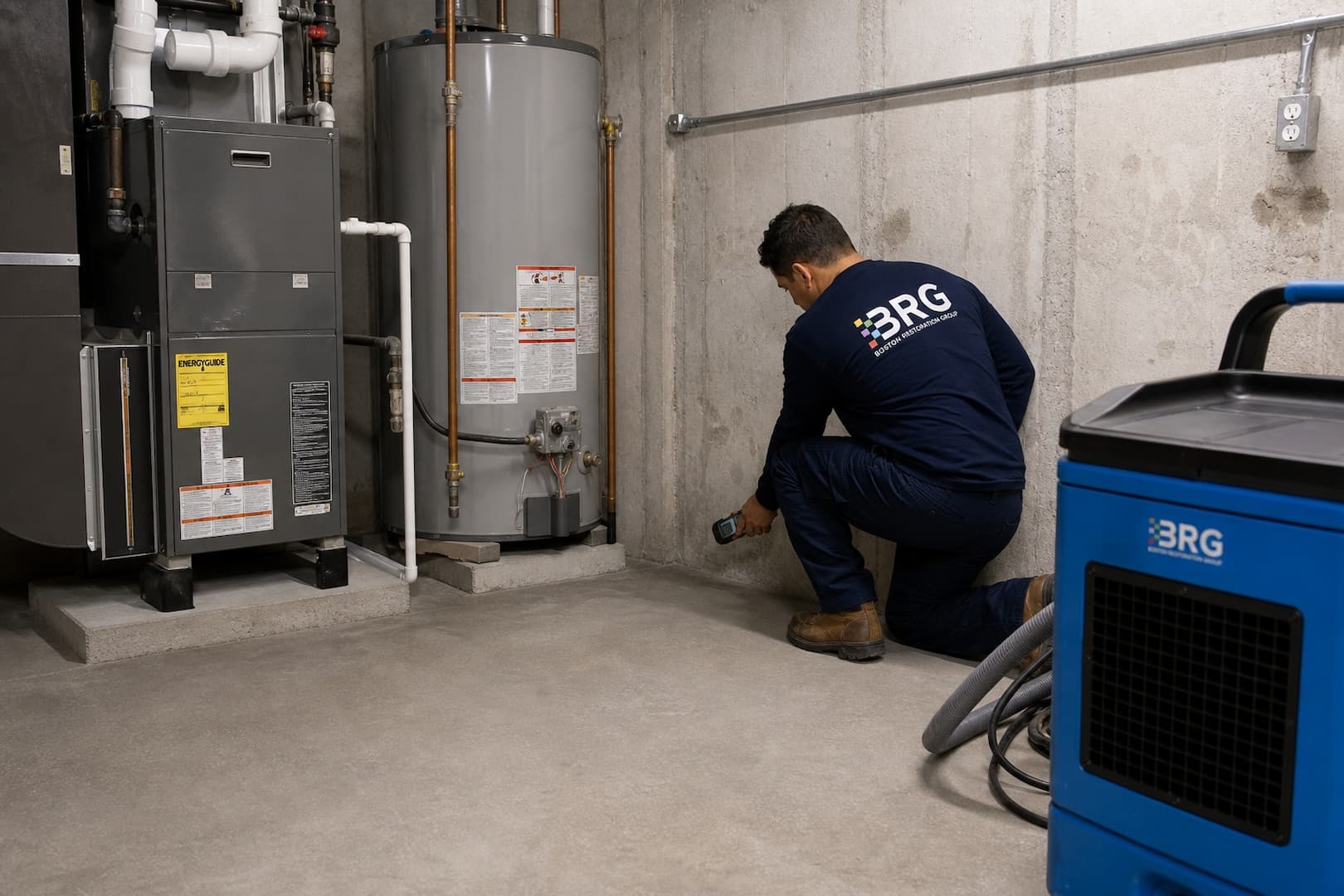
BRG can document whether contaminated water contacted the exterior, base, controls, wiring, insulation, or surrounding floor. The qualified electrician, HVAC contractor, plumber, or equipment technician decides whether a system can be serviced, repaired, or returned to operation.
The drying setup also respects combustion air, service clearances, drains, electrical loads, and access. Equipment is not packed around a furnace simply because that corner has an outlet.
- Do not restart wet mechanical equipment.
- Keep manufacturer labels and damaged components available for documentation.
- Tell BRG about oil, gas, chemicals, batteries, or other stored hazards.
- Identify sump pits, ejector pumps, and floor drains before work begins.
The cardboard box is often the least valuable part of what it holds
BRG documents the item inside, its exposure, and the practical cleaning path instead of treating storage containers as the only contents.
| Contents group | What matters | Practical handling |
|---|---|---|
| Plastic and metal tools or housewares | Surface access, joints, corrosion, and internal cavities | Separate, clean when practical, dry, and inspect before return. |
| Paper, books, photographs, and records | Direct contact, value, replaceability, and specialty-service options | Isolate and document promptly; do not spread wet paper across clean rooms. |
| Textiles and upholstered furniture | Absorption, backing, internal padding, seams, and contamination depth | Assess for specialty cleaning or disposal; surface treatment alone may be insufficient. |
| Electronics and powered equipment | Whether liquid reached controls, wiring, batteries, motors, or internal components | Do not energize; document and refer to the appropriate specialist. |
| Keepsakes and high-value items | Value, sentimental importance, material, condition, and restoration options | Photograph and discuss before any irreversible decision. |
The final record should separate septic, restoration, mechanical, and finish work
One invoice cannot explain every part of a basement septic loss. Keep the septic provider’s findings, BRG cleanup documentation, specialty-trade reports, contents inventory, and reconstruction scope together.
Septic provider documents pumping, line work, components, or system recommendations.
BRG documents the affected boundary, cleanup, drying, and material decisions.
Licensed or qualified trades address equipment and utilities.
Questions specific to a basement septic backup
Below-grade access, mechanical equipment, and stored contents often control the time and sequence more than the floor area does.
Can I carry undamaged boxes upstairs?
Items outside the affected boundary may be movable, but first plan a clean route and inspect box bottoms and nearby floor contact. Do not carry wet or uncertain containers through occupied rooms.
What happens to a furnace or water heater in the backup area?
BRG documents exposure and coordinates access. A qualified HVAC, plumbing, electrical, or equipment professional decides whether the system can be serviced or returned to operation.
Will the finished basement walls be removed?
Only affected and necessary sections should be opened under the approved scope. The decision depends on the contamination line, wicking, insulation, material, and ability to reach and clean the assembly.
Can the basement be dried before the septic tank is serviced?
Some emergency control may begin, but full cleanup and drying cannot remain successful if wastewater continues to enter. Source correction and indoor work should be coordinated.
How should keepsakes be handled?
Photograph and isolate important items before disposal decisions. Material, exposure, condition, value, and specialty-restoration options all matter.
Keep the stair closed and call BRG
Share the deepest water level, basement finishes, stored contents, mechanical equipment, affected drains, septic alarm status, and whether the system is being serviced.
617-202-3772- Do not restart furnaces, pumps, appliances, or electrical equipment that contacted water.
- Stop wastewater use until the septic professional advises otherwise.
- Tell BRG whether the basement is occupied, rented, or used for business.
Describe the basement
Details about access, finishes, utilities, and contents help BRG prepare the cleanup route.