
Commercial Mold Damage Remediation in Greater Boston
Mold in an office, school, retail space, association, or managed building is both a material problem and an occupancy-management problem. BRG’s certified restoration specialists define the affected work area, protect adjacent space, remove or clean materials under the approved scope, and document the moisture conditions that must be corrected.
- Moisture-source and affected-area review
- Containment for occupied properties
- Clear remediation and repair handoff
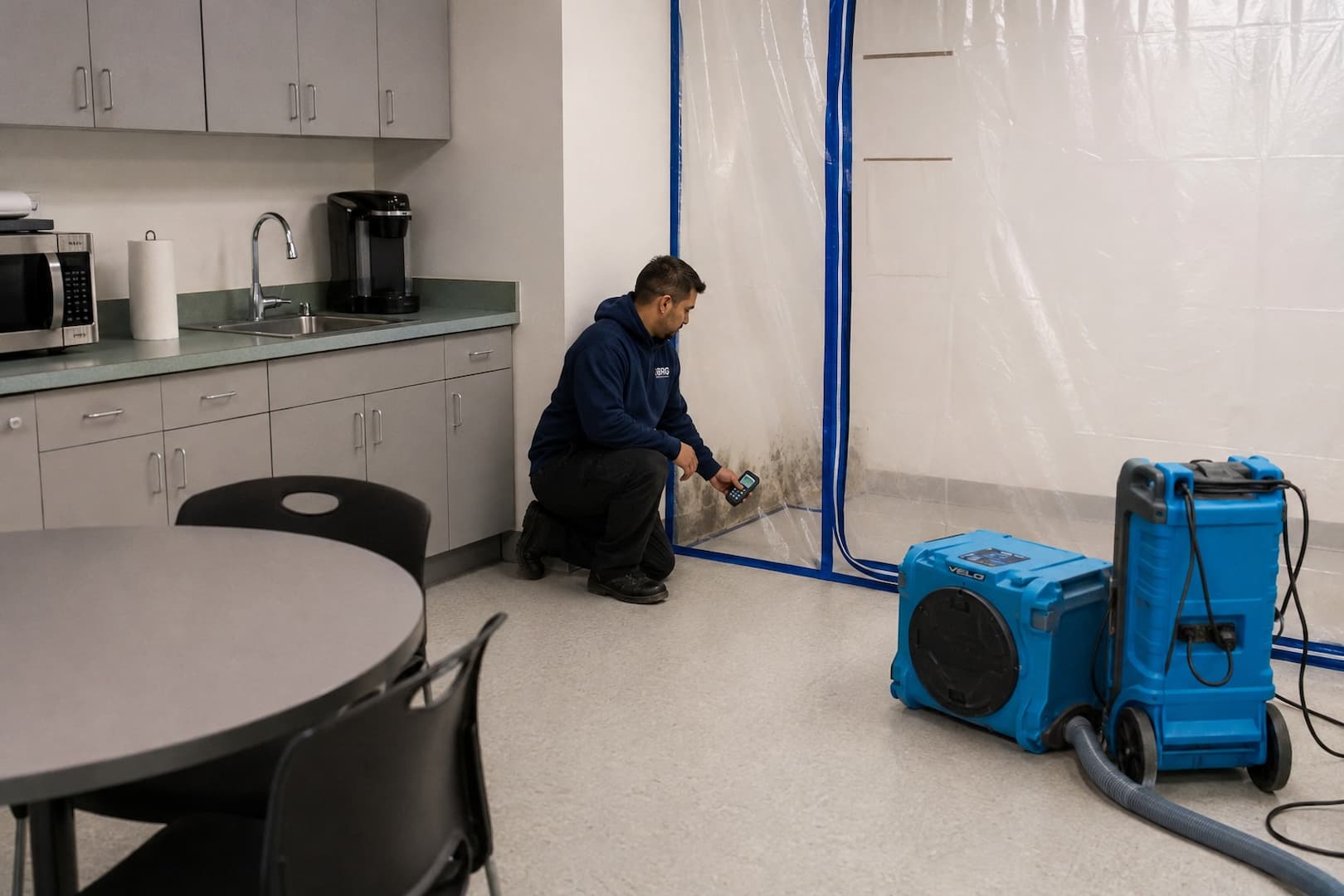
Leaks, condensation, humidity, wet materials, and building-envelope entry can sustain growth.
Inspection, history, materials, and readings guide the work area and need for specialist testing.
Access, pressure, dust, debris routes, and occupant communication are planned by zone.
The record identifies remediation work, source repairs, and finish restoration still required.
A remediation plan must address why the material stayed wet
Growth may follow a roof or plumbing leak, window entry, condensation at a cold surface, high indoor humidity, an HVAC condition, or materials that were never fully dried after an earlier event. Removing visible growth without correcting that moisture condition invites the same problem to return.
BRG reviews available history, visible conditions, material readings, building use, and access. When the extent is unclear, sensitive occupants are involved, or the property needs independent verification, an environmental consultant may be appropriate to define sampling or a remediation protocol.
- Repair or control the moisture source with the appropriate trade
- Keep occupants from disturbing suspect material
- Use testing to answer a defined question, not as a substitute for inspection
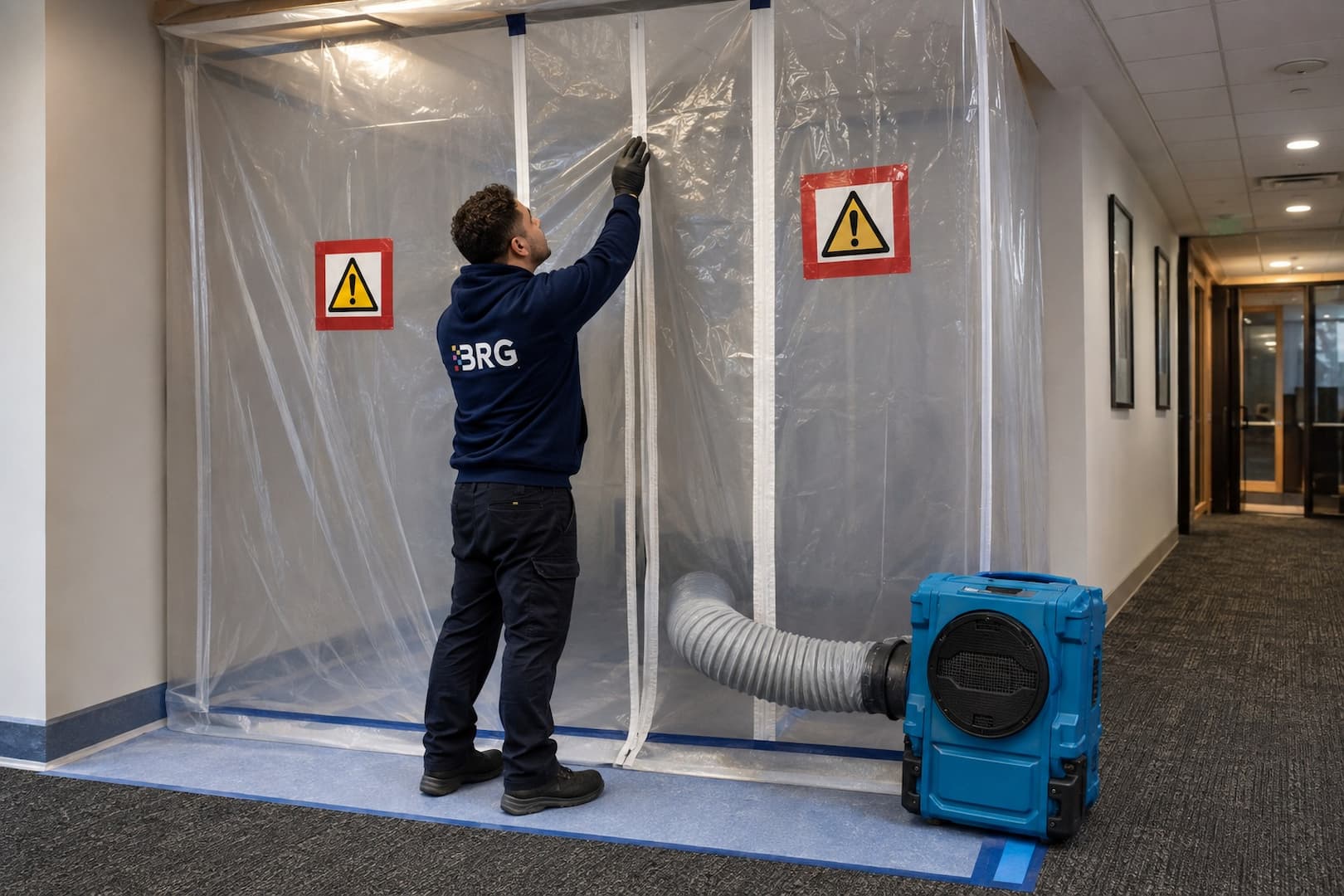
The route into and out of the work area matters
Containment is part of an operational plan, not a sheet of plastic placed without regard to the building.
Controlled access
The plan identifies who may enter, required protection, and how occupants stay away from the affected zone.
Containment and filtration
Barriers, pressure control, HEPA filtration, and cleaning methods are selected for the scope and building conditions.
Debris and equipment routes
Removed materials, tools, and personnel follow protected routes that avoid unnecessary contact with clean space.
Porosity, condition, and access shape the material decision
Hard, sound, cleanable materials may be retained after appropriate cleaning. Porous materials with embedded growth, loss of integrity, or inaccessible contamination often require controlled removal. Semi-porous assemblies need a condition-specific decision rather than an automatic answer.
Drywall and insulation
Affected porous layers are typically removed to a defined, accessible boundary when they cannot be effectively cleaned or dried.
Wood framing and structural materials
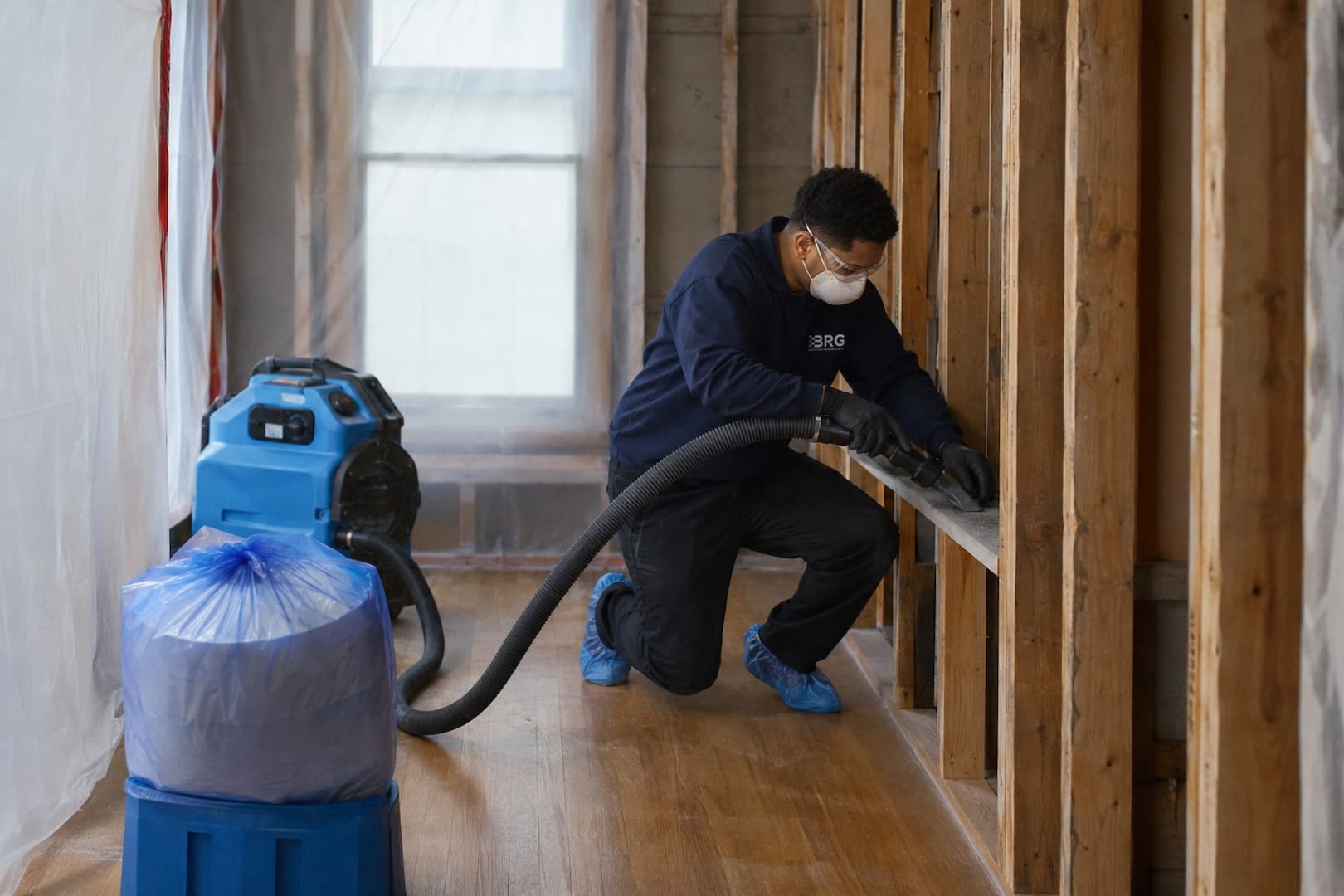
Sound material may be cleaned and dried when surface and access conditions allow; damage or deep involvement changes the repair need.
Furniture, inventory, and records
Use, material, value, exposure, cleanability, and business requirements determine on-site cleaning, specialty referral, or disposal.
Control the source, work area, and completion record
If an independent protocol or clearance is required, BRG follows that defined role and preserves the separation between remediation contractor and evaluator.

Confirm moisture and work boundaries
Review the source, affected materials, adjacent rooms, HVAC considerations, occupancy, and need for consultant direction.
Set containment and routes
Protect unaffected areas, establish controlled entry, plan pressure and filtration, and define debris handling.
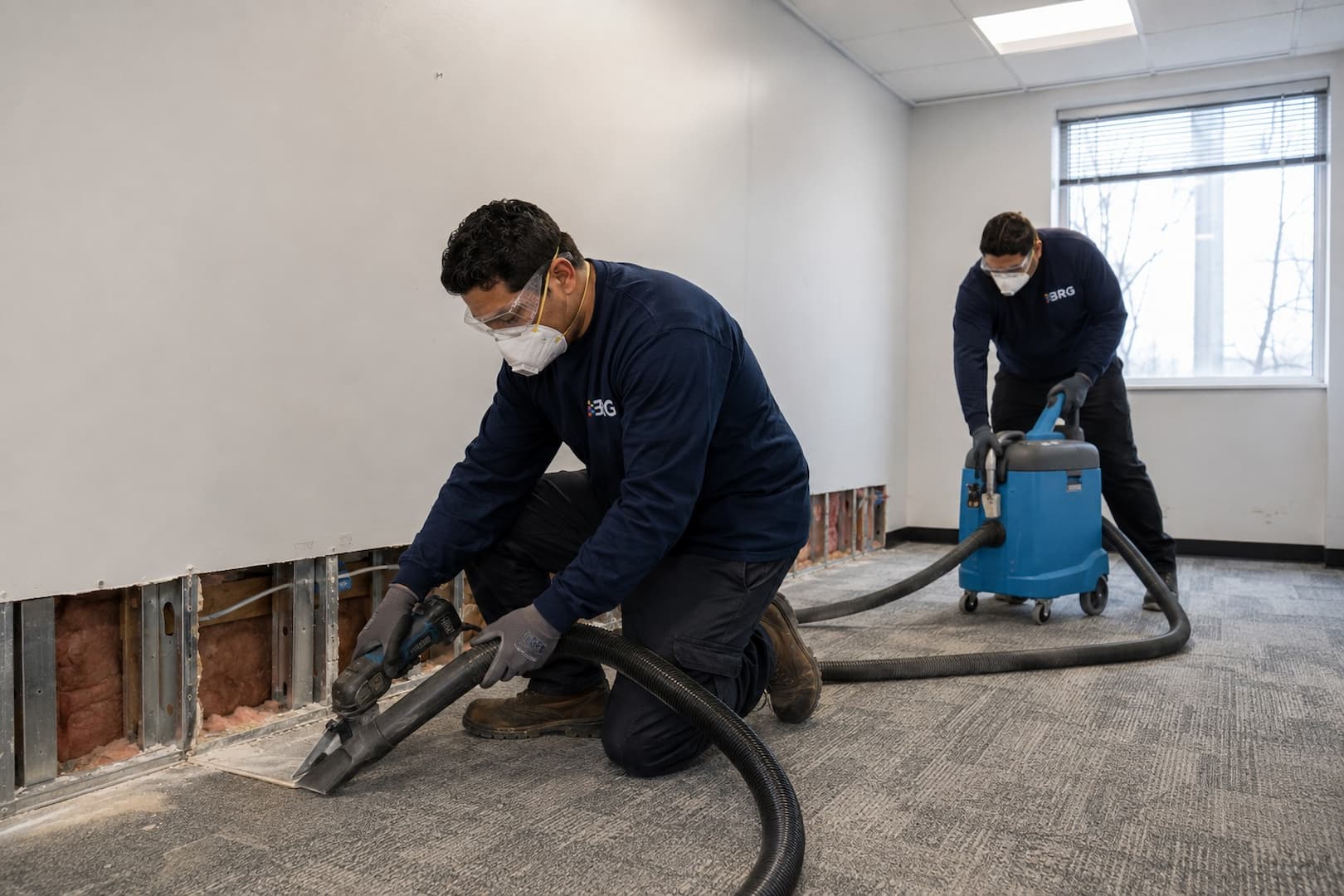
Remove and clean under control
Handle affected porous materials, clean retained surfaces, and keep dust and debris within the authorized work zone.
Dry and verify conditions
Address remaining moisture and record material conditions before finishes conceal the assembly.
Prepare for evaluation or repair
Document completed work, consultant or owner review requirements, source repairs, and reconstruction still needed.
Selective removal and detailed cleaning serve different material needs
A sound remediation plan avoids both cosmetic wiping and unnecessary whole-room demolition.
The final record connects source, scope, cleaning, drying, and repair
BRG records the authorized work area, containment, materials removed or retained, cleaning performed, moisture conditions, and the state of the space at handoff. Source correction, consultant clearance when specified, and finish reconstruction remain visible rather than disappearing inside a generic completion statement.
- Defined work and adjacent protection
- Moisture and material conditions at handoff
- Independent evaluation and repair items still open
Commercial mold remediation questions
Scope depends on moisture, materials, occupancy, and whether an independent protocol is required.
Does every commercial mold project require air testing?
No. Testing should answer a defined question. An environmental consultant may recommend it when the extent is unclear, sensitive occupancy or contractual requirements apply, or independent post-remediation verification is requested.
Can the business remain open during remediation?
Sometimes, if safe separation, access, HVAC, egress, noise, dust, and operational needs can be managed. The property team and applicable professionals decide occupancy based on the actual building.
Can mold be painted or sprayed over?
A coating does not correct moisture, remove contaminated porous material, or clean settled debris. Coatings, when specified, come after source control, removal or cleaning, and drying.
Who determines the remediation boundary?
The boundary can be based on inspection and restoration findings or an independent consultant’s protocol when the project requires one. Conditions found during controlled access may justify a documented scope change.
What happens after affected drywall is removed?
Remaining materials are cleaned and dried, the work is documented, and any specified evaluation is completed before reconstruction closes the assembly.
Request commercial mold remediation help
Tell BRG where growth or odor was found, what moisture event may be involved, whether the area is occupied, and whether an environmental report, lease requirement, or property protocol already exists.
617-202-3772- Do not disturb suspect material or aim fans at it
- Mention healthcare, childcare, food, laboratory, or other sensitive uses
- Share leak repairs, prior water events, and HVAC concerns
Request a Commercial Mold Call
Provide the property address, affected area, operating schedule, and best contact.