
Commercial Fire and Smoke Damage Restoration in Greater Boston
A commercial fire can leave water, soot, corrosive residue, odor, damaged finishes, exposed contents, and interrupted operations across areas that never burned. BRG’s certified restoration specialists help define the affected zones, protect salvageable property, test cleaning methods, and build a documented route toward safe repair and reopening decisions.
- Fire, smoke, soot, and suppression water
- Contents and occupied-space protection
- Phased commercial recovery
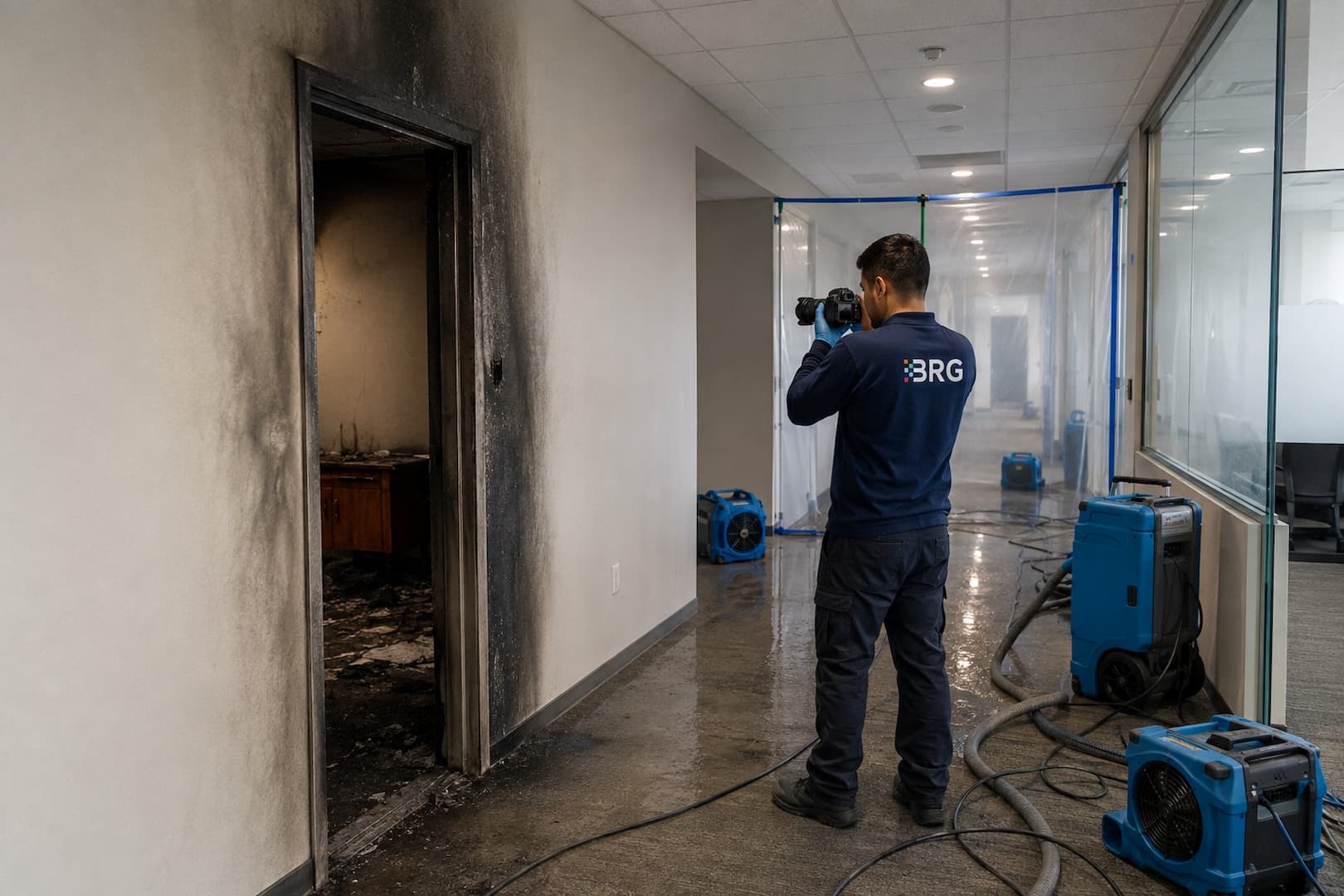
Fire officials, investigators, utilities, and building authorities control access before restoration.
Dry particles, oily deposits, protein residue, and extinguisher material need different methods.
Suppression water can wet ceilings, wall systems, floors, inventory, and lower levels.
Property and authority decisions should rely on the condition of each area, not a whole-building guess.
Several authorities may release different parts of the property at different times
The fire department may complete suppression while an investigator, utility, building official, engineer, or insurer still needs access or evidence preserved. BRG follows the restrictions communicated for the site. Cleaning, debris movement, and contents handling do not begin in a controlled area until the responsible party authorizes them.
Life safety and utilities
Fire, gas, electrical, structural, sprinkler, and alarm conditions are addressed by the responsible authority or qualified trade.
Investigation and evidence
The origin area and related items may need to remain undisturbed. Restoration boundaries follow written or clearly documented release conditions.
Restoration access
Once released, BRG can document residue, moisture, contents, finishes, and operational constraints by area.
Test the deposit, surface, and method before full cleaning
Smoke moves through door gaps, pressure differences, shafts, return paths, and open ceilings. The resulting deposit can be dry and loose, greasy, acidic, or mixed with water and extinguisher residue. A method that works on sealed metal may damage acoustic tile, unfinished wood, textiles, electronics, or a specialty finish.
BRG documents representative conditions and performs controlled method testing where appropriate. The scope considers residue type, surface porosity, heat damage, corrosion risk, odor reservoirs, access above ceilings, and whether an item can be cleaned in place or needs specialty handling.
- Avoid wiping soot before the surface and method are evaluated
- Separate HVAC distribution questions from ordinary room-surface cleaning
- Protect clean travel paths and unaffected tenant space
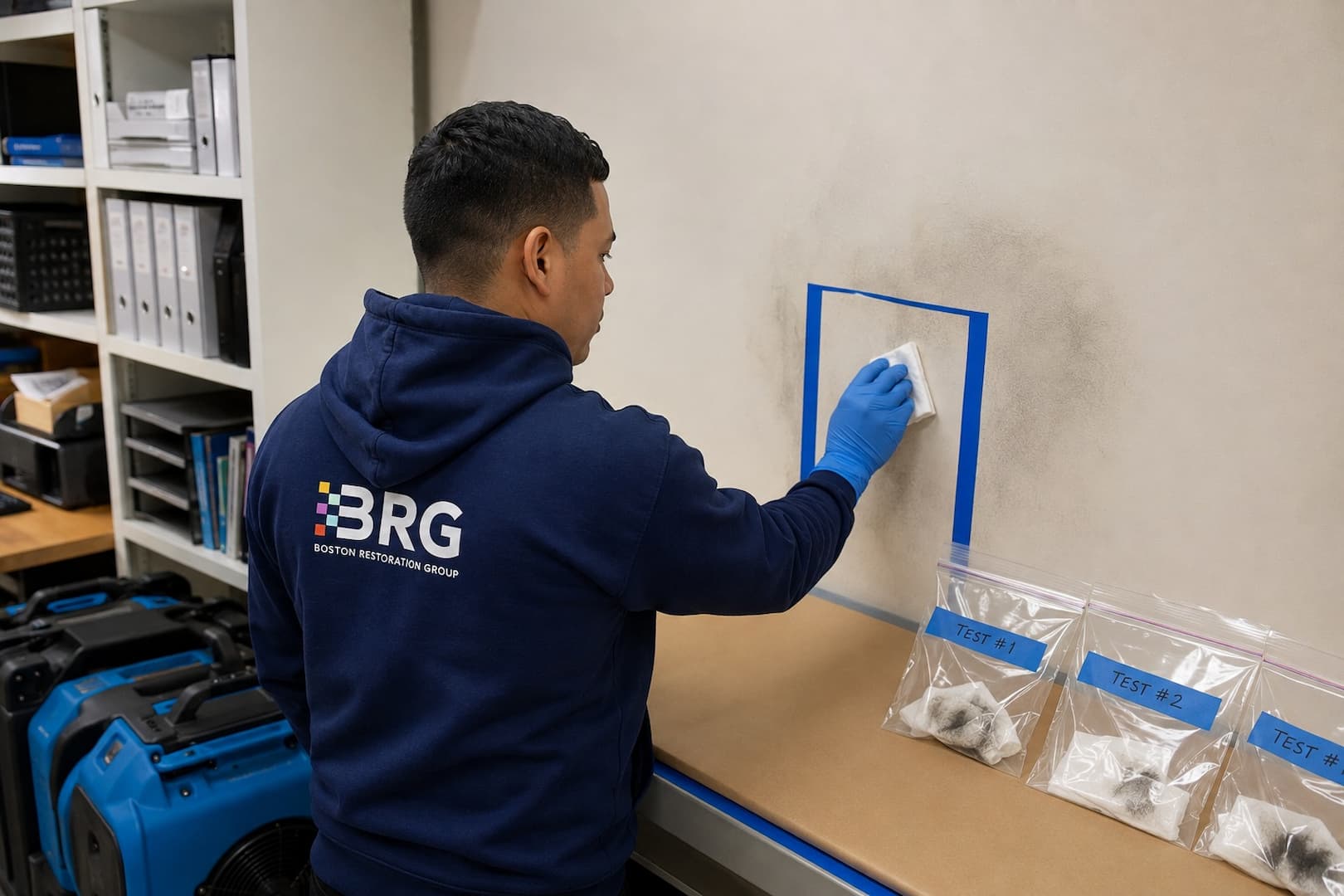
A commercial fire loss is more than a soot-cleaning job
Each workstream has its own safety, documentation, and operational dependencies.
Structure and enclosure
Damaged openings, roof areas, partitions, ceilings, and building systems may require temporary protection and qualified repair.
Suppression and firefighting water
Extraction, moisture mapping, selective access, and drying begin as soon as the released areas allow.
Inventory, records, and equipment
Items are triaged by exposure, material, use, value, sensitivity, and whether they require a specialist.
People and business functions
Tenant separation, customer routes, security, noise, air controls, and critical services shape the sequence.
Parallel work can shorten disruption without mixing clean and affected zones
Contents triage and suppression-water drying can proceed in separate released areas when routes, documentation, and controls are established.
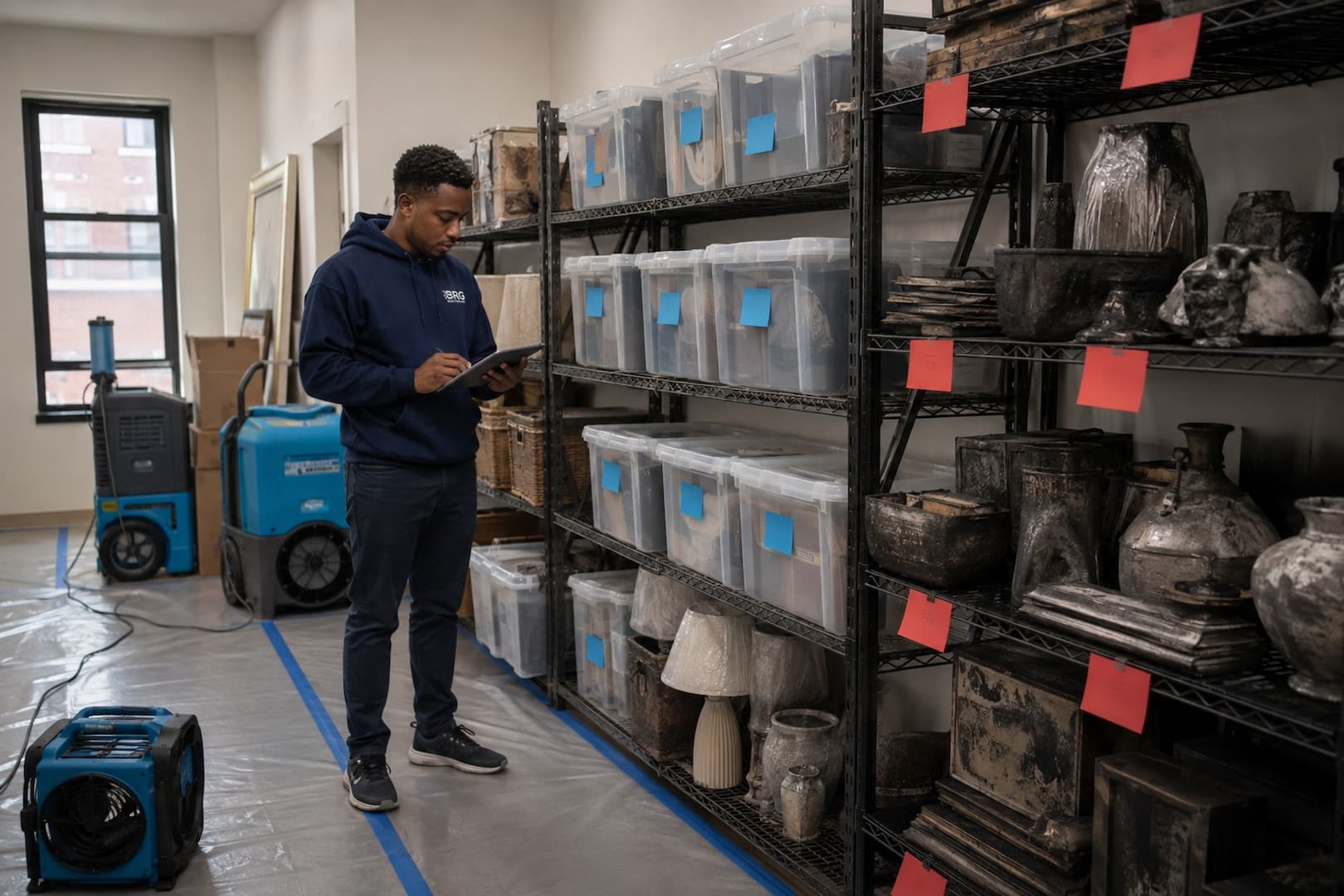
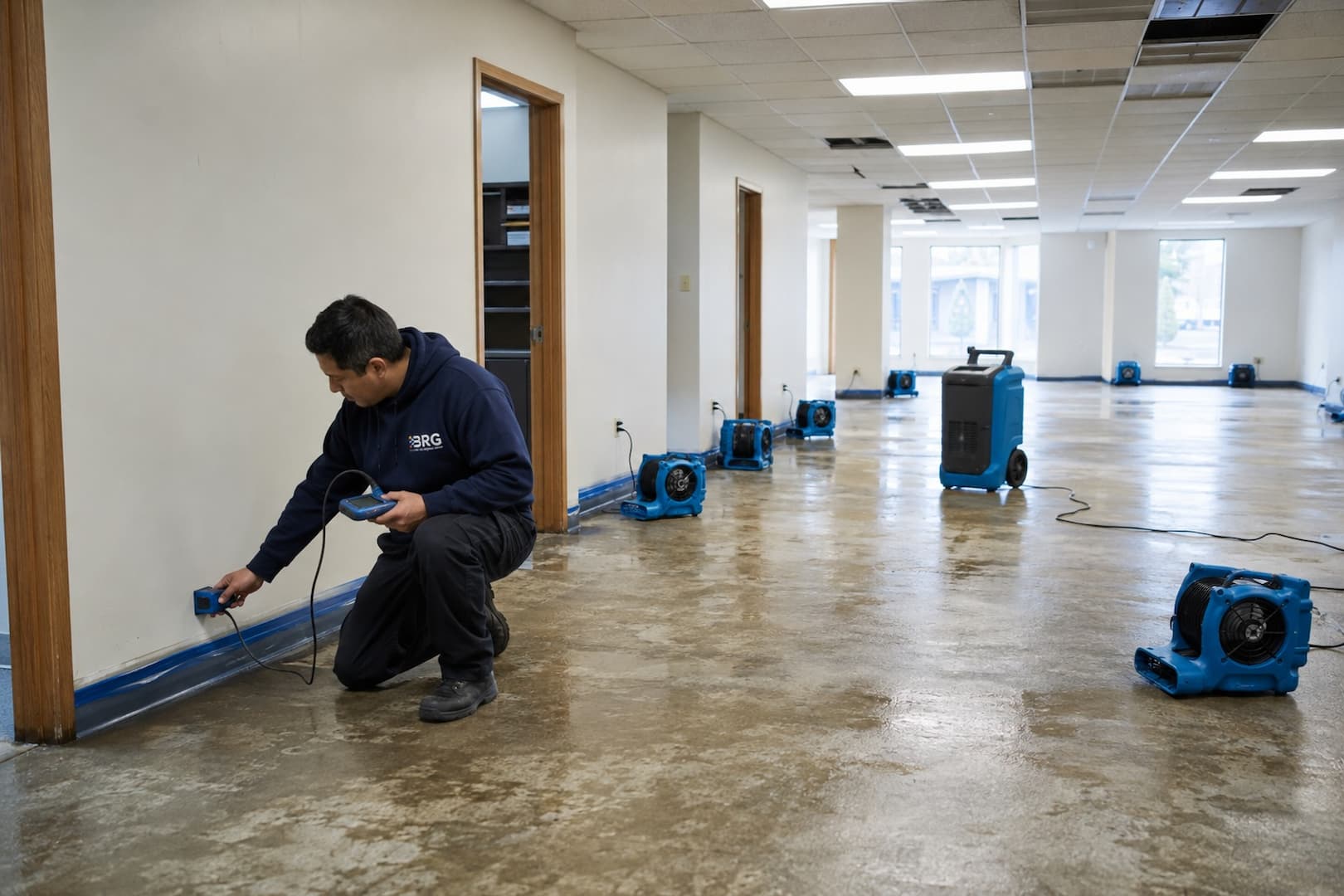
A phased route from release to repair
The project schedule follows authority access, laboratory or specialty needs, material response, tenant priorities, and approvals. No single cleaning sequence fits every commercial fire.
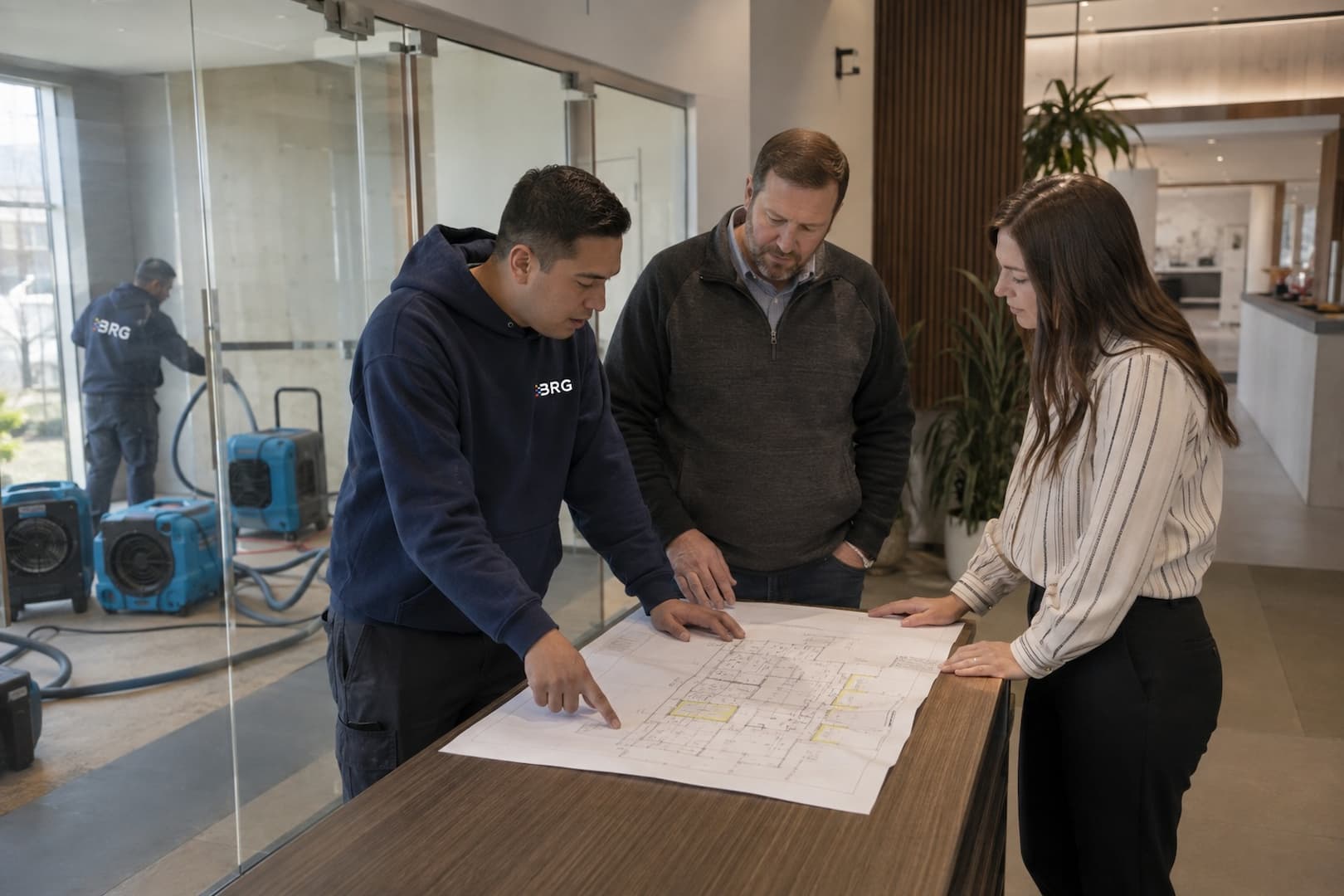
Confirm release and establish zones
Record restricted, affected, transition, and clean areas, together with access, utilities, occupancy, and evidence requirements.
Control water and exposure
Address suppression water, weather openings, unstable debris, contents at risk, and pathways that could spread residue.
Characterize residue and affected materials
Inspect building surfaces, concealed spaces, contents, HVAC concerns, and representative cleaning tests.
Clean, monitor, and communicate
Execute the authorized scope by zone, document completed areas, and issue progress information to named property contacts.
Verify the mitigation handoff
Identify material retained or removed, specialty items outstanding, odor status, temporary controls, and reconstruction requirements.
Report conditions by zone, not with a vague “done” label
BRG can provide photographs, surface and room notes, water-mitigation records, contents tracking, work completed, and remaining limitations. The owner, authorities, industrial hygienist or other consultant when required, and relevant building professionals determine occupancy or reopening within their roles.
- Areas released and work completed
- Systems or contents referred to specialists
- Repairs and authority actions still pending
Commercial fire restoration questions
The answer often depends on authority release, residue type, surface, and business use.
Can employees enter to collect computers or records?
Only if the responsible authority and property team have released the route and destination. Smoke, structural, electrical, water, and evidence hazards may remain after visible flames are out.
Can soot simply be painted over?
Painting does not remove corrosive residue, address adhesion, or eliminate an odor reservoir. Surfaces must be evaluated and cleaned, removed, sealed, or refinished according to condition and the repair specification.
Does BRG clean electronics and specialized equipment?
BRG can document exposure and coordinate handling. Electronics, machinery, medical devices, art, and other sensitive items may require a qualified specialty vendor or manufacturer guidance.
How are tenants kept separate from the work?
The plan can use controlled access, barriers, protected travel paths, work-hour limits, pressure or filtration controls where appropriate, signage, and property-managed communication. Feasibility depends on the building and released areas.
Who decides when the business can reopen?
The owner or operator makes business decisions subject to fire, building, health, utility, insurance, consultant, and other applicable requirements. BRG supplies restoration condition and completion information within its scope.
Request commercial fire and smoke restoration help
Share the property type, fire location, authority status, water conditions, affected operations, tenant needs, and the person authorized to discuss emergency restoration.
617-202-3772- Do not disturb the origin area or enter a restricted zone
- Mention sprinkler or firefighting water on other floors
- Identify critical inventory, records, systems, and operating hours
Request a Commercial Fire Call
Provide the safest contact and current access information for the property.