
Sewage Cleanup and Disinfection in Boston, MA
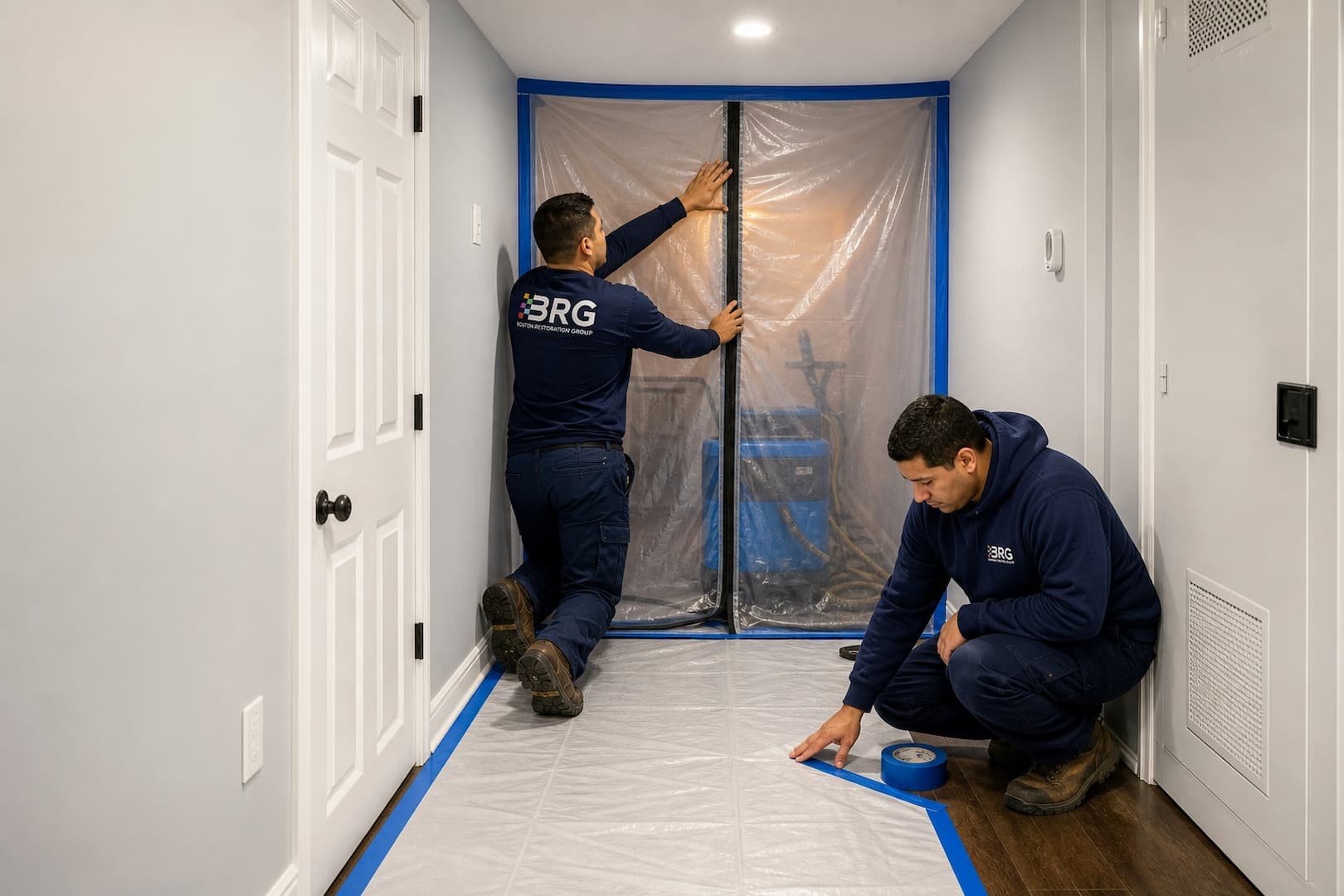
A sewer or drain backup can spread contamination under finishes and through normal travel paths. BRG separates the work zone, removes liquid and gross soil, evaluates porous materials, cleans accessible surfaces, and dries the retained structure after the contamination load is controlled.
Clear the line
A plumber, drain specialist, or building authority may need to correct the active source.
Remove bulk contamination
Extraction and gross-soil removal happen before detailed cleaning.
Evaluate porous materials
Surface spraying cannot clean contamination absorbed through carpet pad, gypsum, or insulation.
Dry the retained structure
Air movement begins after the work zone is suitable for drying.
The route through the building can spread the loss
Sewage on a basement floor is not confined if workers, occupants, pets, carts, or wet contents cross clean stairs and hallways. BRG plans entry, equipment placement, debris removal, and the route to the exterior before cleanup accelerates.
The crew records the source, depth, affected rooms, floor and wall finishes, utility locations, and any earlier pumping or chemical use. A plumber or drain contractor handles the blockage or failed line. BRG handles the agreed building cleanup and restoration scope.
- Do not flush fixtures or run appliances connected to the affected drain system.
- Do not operate normal fans across an uncontrolled sewage area.
- Do not mix bleach, ammonia, acids, or other household chemicals.
- Do not move wet cardboard, textiles, or furniture into clean rooms.
If the source may be septic
Tell BRG before dispatch. An on-site septic backup may require pumping, inspection, or repair of the system in addition to indoor cleanup.
Disinfection does not replace extraction or soil removal
A disinfectant label assumes the surface has been prepared as directed. Heavy residue, standing water, and damaged porous materials have to be addressed first.
Source confirmation and hazard review
The crew confirms whether the backup is active and notes electrical, structural, access, and mechanical-system concerns.
Containment and liquid removal
BRG defines the affected zone, protects travel paths, and extracts accessible contaminated water with appropriate equipment.
Gross-soil and material removal
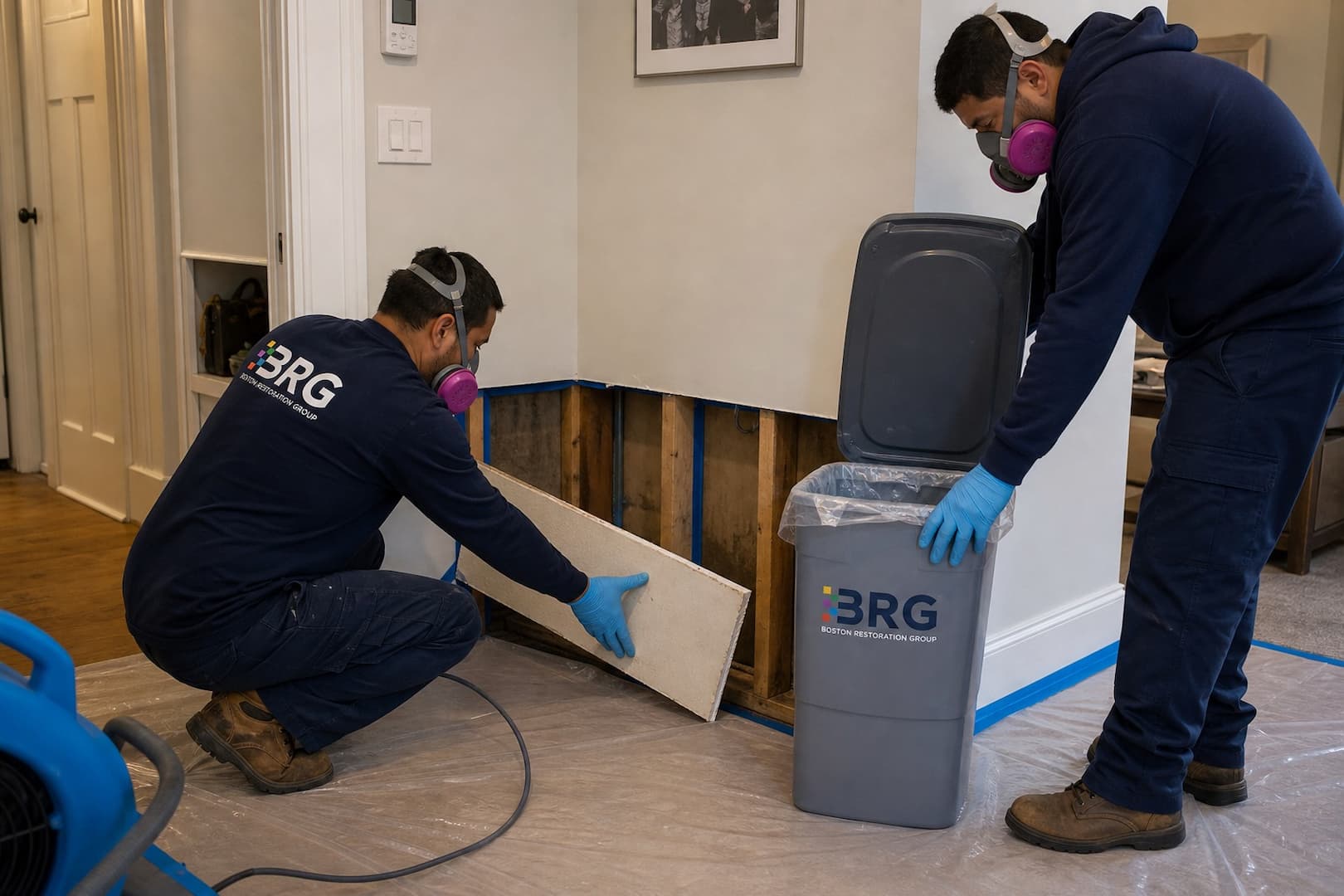
Loose debris and unsalvageable porous materials are removed under the approved scope so concealed surfaces can be reached.
Cleaning and disinfectant application
Reachable retained surfaces are cleaned. Products are applied according to their label, surface compatibility, and required contact conditions.
Drying, monitoring, and repair record
After contamination control, the remaining structure is dried. The final file separates completed cleanup from finish repairs.
The same backup can produce different outcomes in the same room
Concrete may be reachable and cleanable while the adjacent carpet pad, gypsum board, or fiberglass insulation is not. BRG documents those differences instead of applying one rule to the whole room.
| Area or material | Question that controls the decision | Typical scope direction |
|---|---|---|
| Concrete and ceramic tile | Can joints, cracks, edges, and the full contacted surface be reached? | Remove soil, clean, apply the selected product correctly, then dry. |
| Carpet and pad | What is the source, depth, duration, backing condition, and subfloor exposure? | Contaminated pad and carpet often require removal; the subfloor is then evaluated. |
| Drywall and insulation | Did the material absorb sewage or sit below the backup line? | Affected porous sections may need controlled removal to reach framing and cavities. |
| Wood framing and subfloor | Is the surface accessible, intact, and suitable for cleaning and drying? | Clean reachable structure, monitor moisture, and document physical damage. |
| Contents | Is every contacted surface accessible and is the item practical to restore? | Separate salvage, specialty-cleaning, and disposal decisions before items leave the zone. |
Odor, moisture, and hidden residue are separate checkpoints
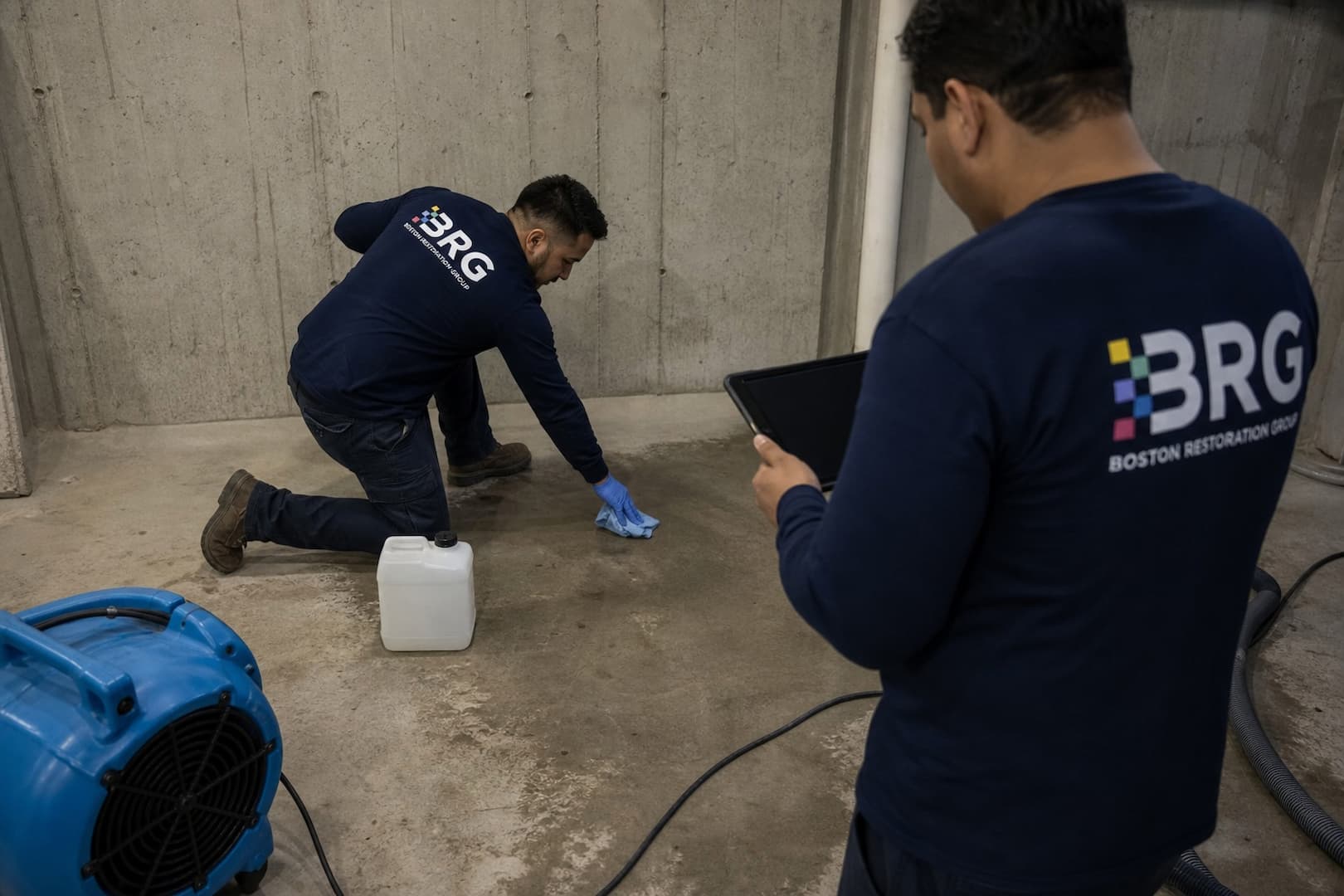
An odor may fall before the structure is dry. A floor may look clean while residue remains at a wall base or below a finish. BRG checks the cleaned boundary, opens only the access required by the scope, and monitors retained materials as they dry.
Odor treatment is not used to cover an unresolved source. If a drain, trap, ejector pump, sewer lateral, or mechanical component continues to release odor, that condition needs correction by the appropriate trade.
Write down what happened before the room changes
Photographs of the backup line, source area, affected rooms, contents, and building systems help establish the original condition. BRG adds the cleanup scope, material decisions, drying records, and repair handoff. The insurance carrier decides coverage.
Municipal sewer, building drain, fixture, ejector pump, or unknown line.
Rooms, finishes, contents, utilities, and travel paths contacted.
Extraction, removal, cleaning, drying, and outstanding repairs.
Sewage backup cleanup questions
The source must be stopped, the area kept closed, and the material exposure understood before a cleanup method is chosen.
Can I pour bleach on a sewage backup?
Do not mix or apply household chemicals to standing sewage. Bulk water and soil must be removed, affected materials evaluated, and any disinfectant used according to its label and surface requirements.
Who clears the blocked sewer line?
A plumber, drain specialist, utility, or building authority handles the active blockage or failed line. BRG handles the indoor cleanup and restoration work described in its scope.
Can sewage-contaminated carpet be saved?
Carpet and pad are porous, and the subfloor can also be affected. The decision depends on the source, exposure, backing, condition, and ability to clean the full material, but removal is often the practical direction.
When is the area safe to use again?
BRG releases areas based on completion of the agreed removal, cleaning, drying, and repair conditions. A room should not be reopened solely because the visible water or odor is gone.
Does insurance cover sewer backup cleanup?
Coverage varies and may depend on endorsements, source, maintenance, and policy wording. BRG provides project documentation; the carrier decides coverage.
Call BRG and keep the affected route closed
Tell the team whether the backup is active, which drains or fixtures are involved, the deepest level, affected rooms, and whether a plumber is on the way.
617-202-3772- Mention an ejector pump, floor drain, shared stack, or commercial kitchen.
- Report any contact with electrical or mechanical equipment.
- Do not carry wet belongings through unaffected rooms before the route is protected.
Request sewage cleanup
The property and source details help BRG plan PPE, containment, extraction, and material handling.