
Broken Water Supply Line Cleanup in Boston, MA
A failed toilet, sink, appliance, ice-maker, or fixture supply line may continue releasing water until the correct valve is closed. BRG responds to the resulting property damage: extracting water, following it through connected assemblies, protecting dry areas, and documenting what the plumber repaired versus what restoration still requires.
- Rapid clean-water extraction when confirmed
- Multi-room and multi-floor moisture mapping
- Certified restoration specialists
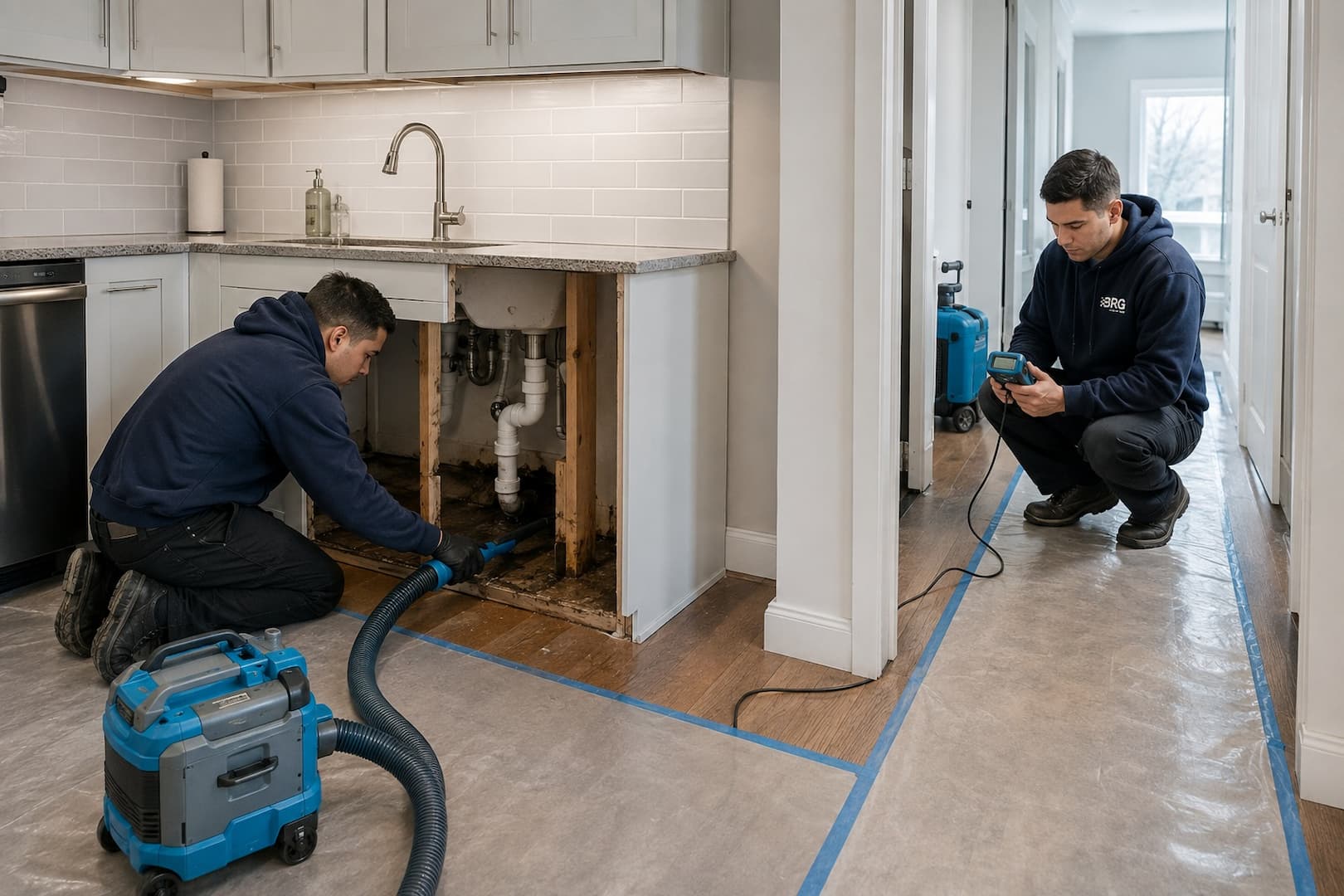
Use a known fixture or building shutoff only when it can be reached without crossing hazards.
BRG restores resulting damage; the appropriate trade repairs the line, valve, connector, or fixture.
Pressurized water can enter walls, chases, cabinets, floors, and ceilings below.
Early extraction can reduce spread while documentation preserves the incident picture.
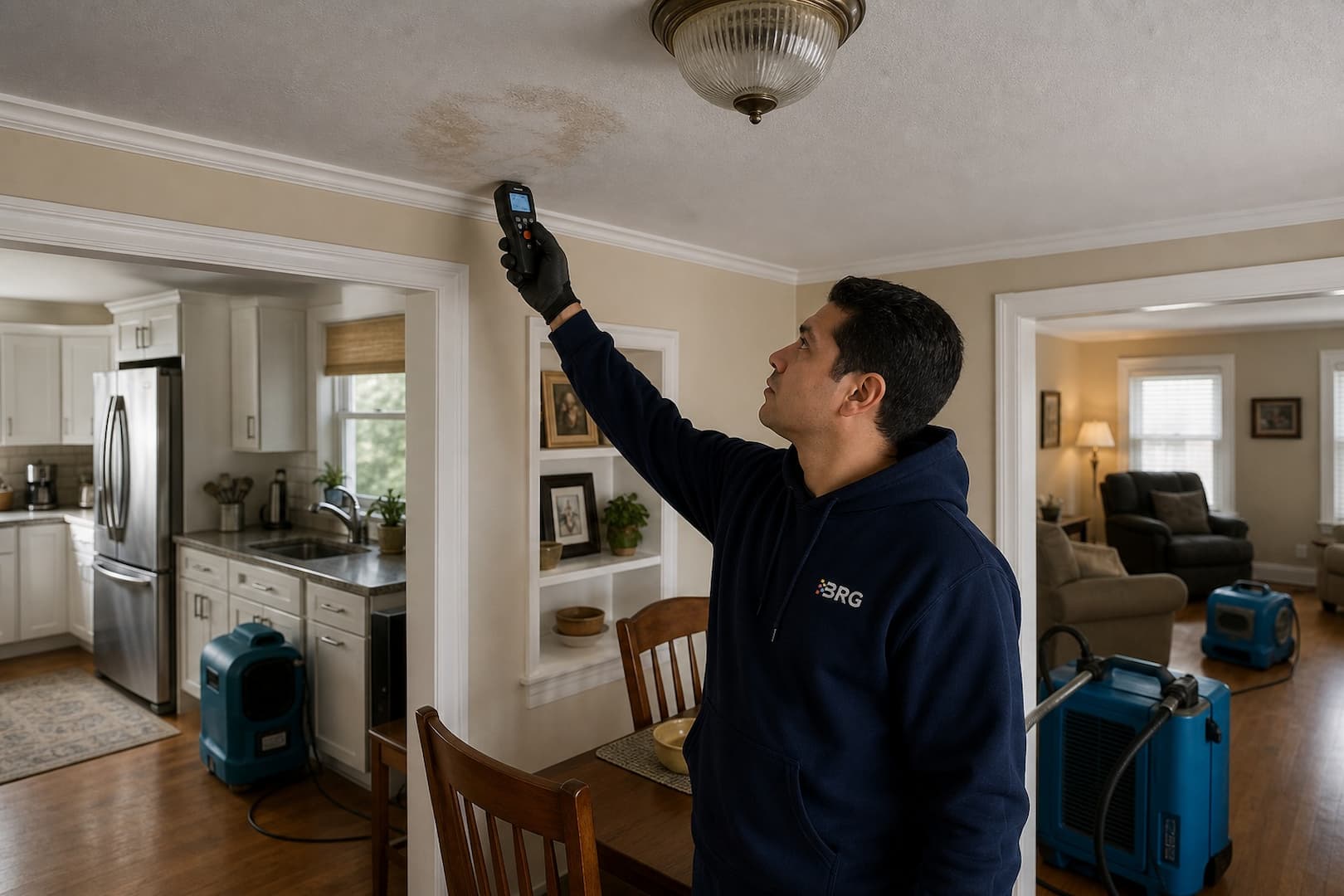
The fixture location is the start point—not the damage boundary
A supply line can spray into a cabinet, wall, or appliance recess before water reaches the visible floor. From there it follows seams, pipe holes, framing, and gravity. In apartments and multi-story homes, the ceiling below may show the first obvious sign.
BRG records the source location and checks connected rooms, built-ins, floor layers, wall bases, and levels below. The goal is to expose only what is needed for safe drying or removal, not to replace measurement with broad demolition.
- Check both sides of the source wall
- Inspect the floor-ceiling assembly below
- Note how long the line may have been releasing
Three details change the first response
A known clean domestic supply that was stopped quickly differs from a release that contacted a drain backup, contaminated fixture, chemicals, or long-hidden materials. Electrical and ceiling conditions can also restrict access.
Which line failed?
Identify the fixture or equipment, hot or cold side, flexible connector, valve, pipe, or unknown source without disturbing evidence.
Where did the water travel?
Report adjacent rooms, cabinets, closets, stairs, floors below, elevator or shaft areas, and unit boundaries.
What has already been repaired?
Share the plumber’s action, parts retained, source photographs, and any areas the trade could not access.
A clean handoff separates the plumbing repair from the water-damage work
The repair photo and the moisture map answer different questions and belong in the same incident chronology.
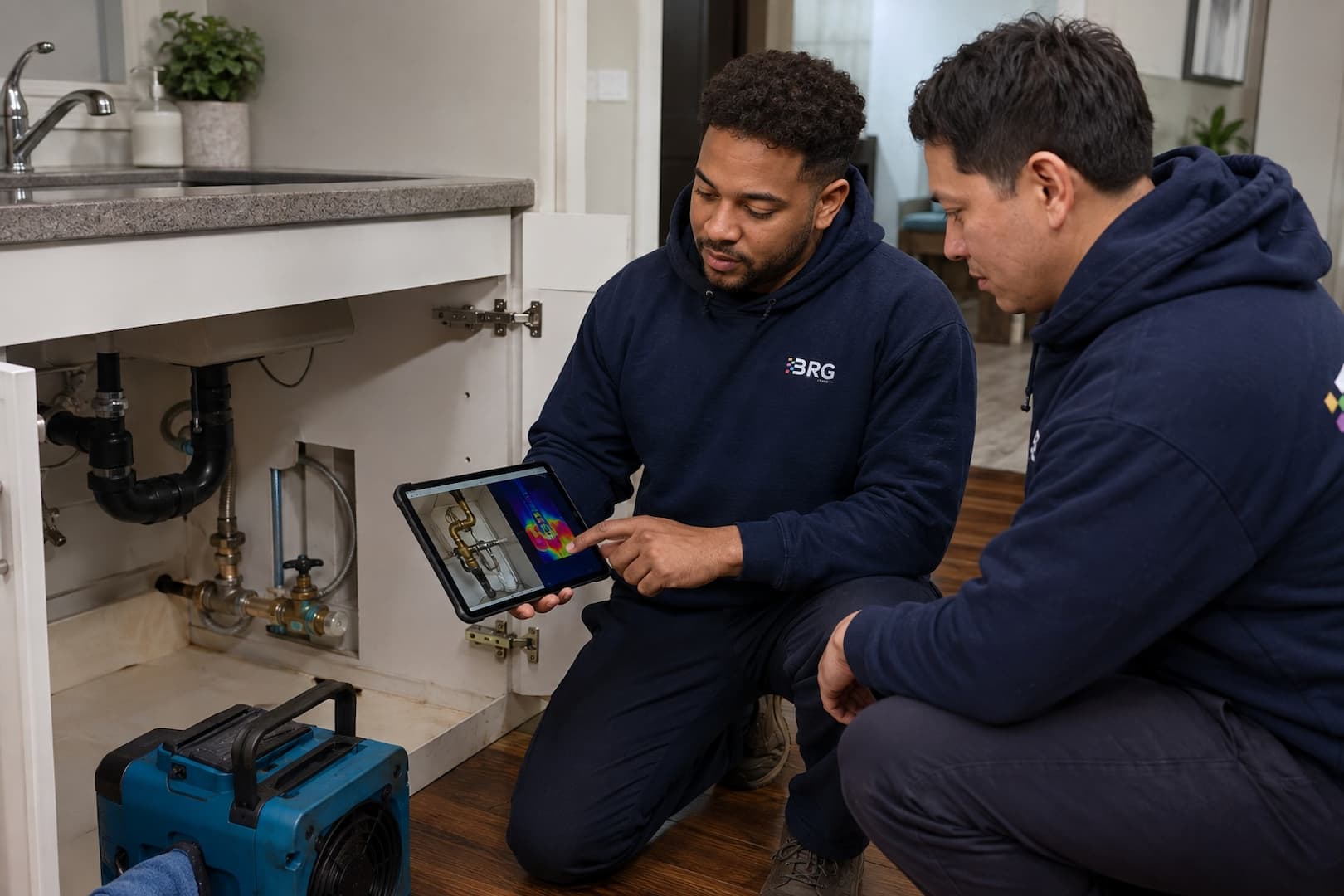
Pressurized water can affect materials on every side of the release
Material decisions depend on exposure, integrity, finish, access, and measured response.
Vanity or kitchen cabinetry
Check
Cabinet decks, side panels, toe-kicks, wall interfaces, and particleboard edges for trapped moisture and swelling.
Flooring and subfloor
Check
Seams, transitions, underlayment, adhesives, wood response, and water movement beneath fixed units.
Walls and insulation
Check
Pipe openings, base plates, insulation, both wall faces, and the height of capillary movement.
Ceilings below
Check
Moisture spread, insulation, lights and electrical, sagging, and safe controlled access requirements.
From shutoff to monitored drying
The exact sequence changes when a plumber needs access, water reached electrical components, or the affected assembly cannot be dried in place.
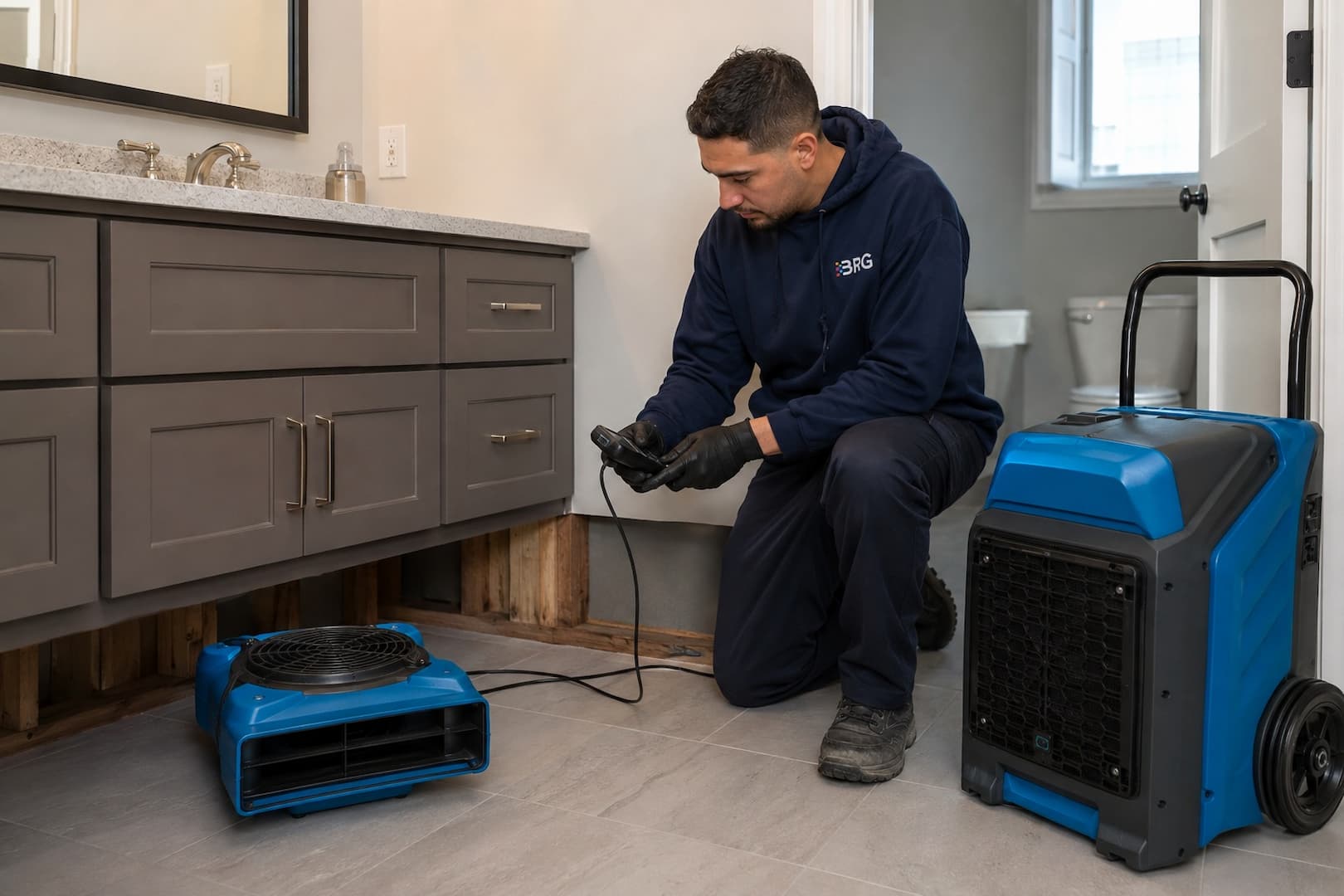
Confirm source isolation and safe entry
Record the failed location, repair status, utilities, water condition, and rooms or units involved.
Extract accessible water
Remove bulk water while protecting dry paths, cabinets, contents, and occupied areas.
Map the complete migration route
Use readings above, beside, and below the source to define wet material and comparison areas.
Open only where justified
Create drying access or remove unsalvageable material under the approved scope; direct equipment at the retained assembly.
Verify and prepare repairs
Track readings and identify finish, cabinet, flooring, drywall, paint, or trade work still needed.
Make the incident understandable without overstating coverage
BRG connects the failed supply location to the affected property and work performed.
Supply-line status
Reported failure, shutoff, plumber findings, repair date, and source photographs when available.
Rooms and layers
Affected cabinets, flooring, walls, ceilings, contents, readings, and safe-access limits.
Completed and remaining
Extraction, drying, removal, monitoring, and repair items separated from plumbing work.
Keep the failed connector or valve when practical
Ask the plumber or property manager whether the failed part should be retained for the owner, carrier, manufacturer, or another reviewer. Do not delay an essential repair solely to preserve a part when safety or continuing damage is at issue.
- Photograph the connection before and after repair
- Record when water was found and stopped
- Save trade invoices and findings
Broken supply-line cleanup questions
The source, water route, and material layers drive the scope.
Should I close the whole-building water main?
Use only a shutoff you know and can reach safely. In a managed building, contact maintenance or the responsible plumber. Do not enter water near electricity to reach a valve.
Is water from a supply line always clean?
A domestic supply may begin as clean water, but contact with fixtures, drains, chemicals, soil, or long-wet materials can change conditions. The actual route is evaluated.
Can the ceiling below dry without opening it?
Sometimes, depending on insulation, paint, assembly depth, wetness, access, lights or wiring, and measured progress. Readings and condition determine whether selective access is needed.
Who repairs the broken line?
A qualified plumber, appliance technician, or appropriate trade corrects the source. BRG handles the resulting building water damage and coordinates access.
What information is useful for an insurance claim?
Source and repair documentation, discovery timing, affected rooms, photographs, moisture records, extraction, equipment, material removal, and repair needs are useful. The carrier decides coverage.
Request broken supply-line water cleanup
Tell BRG which fixture or line failed, whether the water is stopped, which floors or units are affected, and whether a plumber or building engineer is on site.
617-202-3772- Mention hot water, electricity, ceilings, elevators, or multiple units
- Share source and repair photographs if available
- Provide management, tenant, loading, and after-hours access
Request Supply-Line Cleanup
The source status and affected levels help the team prepare.