
Hardwood and Laminate Water Damage Restoration in Boston, MA
Cupped boards, raised seams, dark edges, hollow areas, or swollen laminate can reveal moisture within and beneath the floor. BRG traces the water source, compares material readings, evaluates underlayment and subfloor access, and documents whether the assembly is drying, permanently damaged, or ready for a flooring repair decision.
- Hardwood, engineered wood, and laminate
- Moisture gradients and subfloor review
- Drying before refinishing or replacement
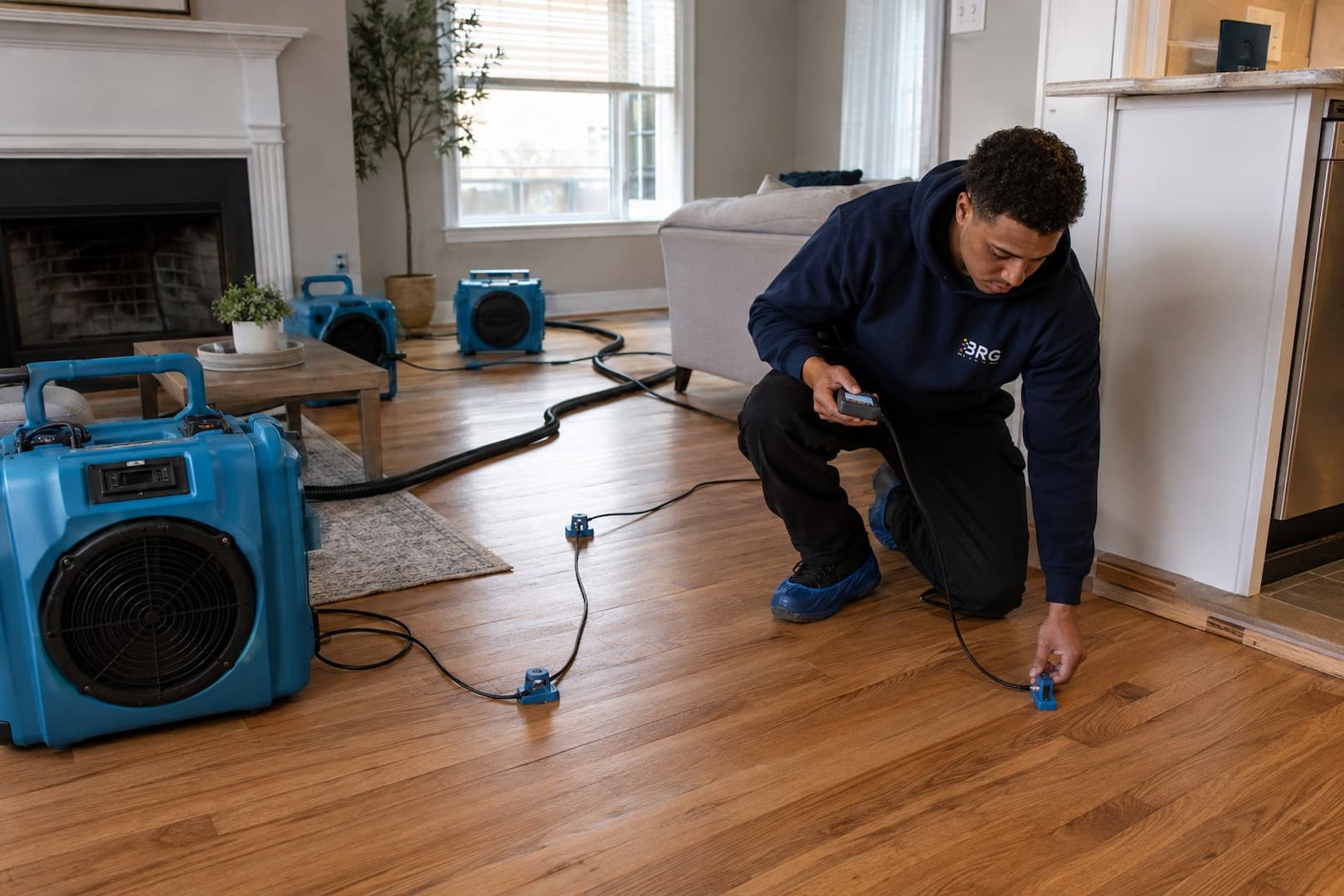
Board shape may change as the top and bottom of the material hold different moisture levels.
A wet fiberboard core often does not return to its original edge or locking geometry.
Floating floors and vapor layers may hide moisture from surface inspection.
Sanding, coating, or replacement should follow source control and a documented material plan.
A floor is read from affected area to dry comparison
One moisture reading cannot describe a room. BRG records a pattern across boards or planks and, when accessible, compares the floor covering with underlayment, subfloor, wall base, and unaffected materials of similar construction. The gradient helps show direction, boundaries, and whether conditions are changing.
Source timing, floor species or product, installation, finish, ambient humidity, basement or slab conditions, and heat all influence interpretation. The goal is not to promise that every board will flatten; it is to make the next drying or repair decision from observed material behavior.
- Record board or plank direction and transitions
- Check cabinets, walls, thresholds, and rooms below
- Use comparable dry materials as reference where appropriate
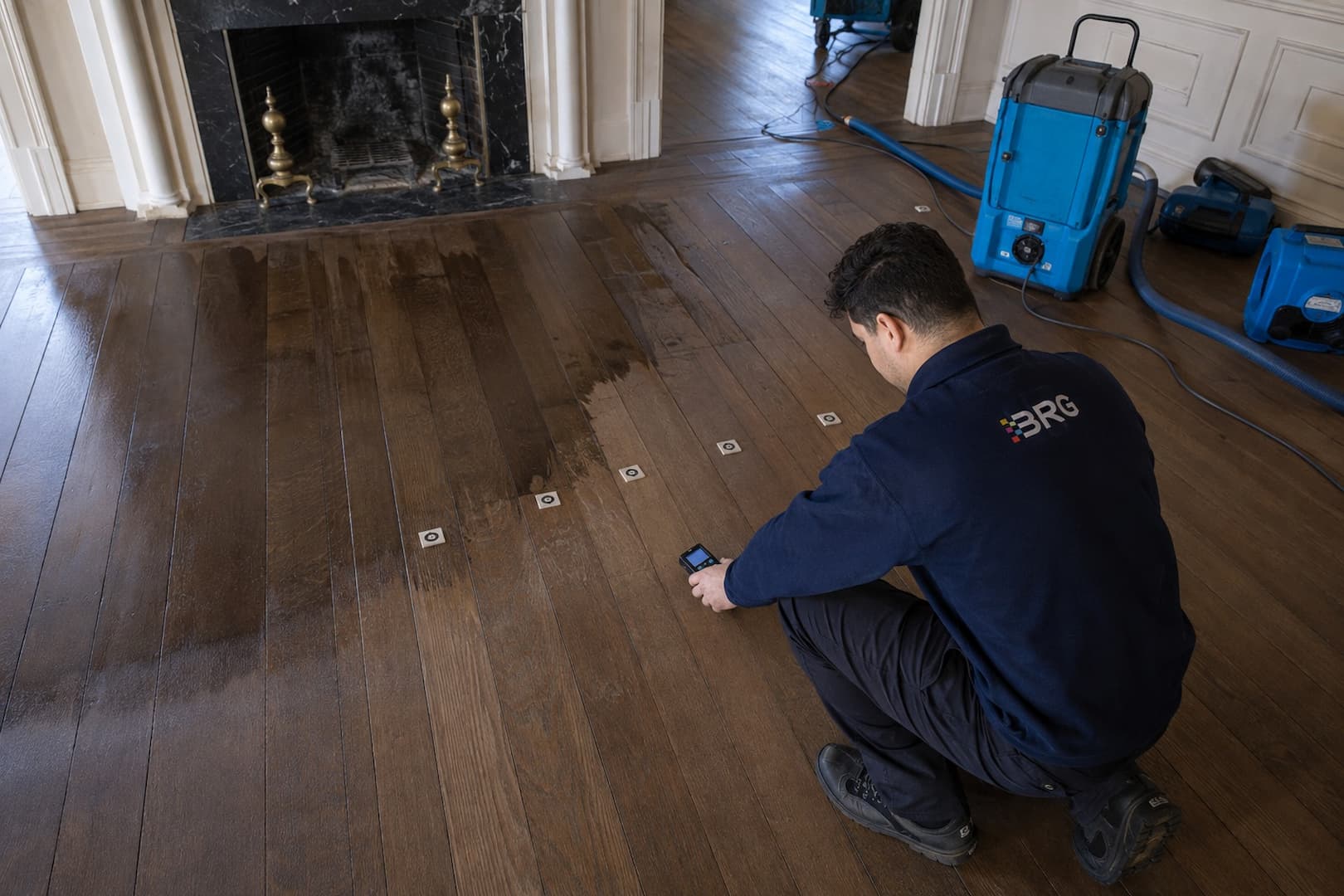
Hardwood, engineered wood, and laminate do not respond interchangeably
Product construction and installation affect both drying access and permanent damage.
Solid hardwood
Common signs
Cupping, crowning, gaps, finish whitening, staining, fastener effects, and moisture gradient through board thickness.
Engineered wood
Common signs
Veneer checking, layer separation, edge lift, adhesive issues, trapped moisture, and limited sanding thickness.
Laminate
Common signs
Swollen core, peaked edges, damaged locking joints, trapped underlayment, and pattern availability for replacement.
Subfloor or slab beneath
Common signs
Plywood or OSB swelling, gypsum underlayment damage, concrete moisture, adhesive changes, and vapor-layer constraints.
The surface shape and the hidden layers must tell the same story
A floor can be wet but still structurally sound, or appear nearly flat while an underlayment remains saturated. BRG documents both material readings and visible condition. The flooring contractor uses that information with product, finish, fastening, warranty, and repair feasibility to determine final appearance work.
Conditions that may support drying
Known source, suitable water condition, sound boards or planks, accessible assembly, no severe delamination, and measurable progress.
Conditions that may support replacement
Permanent core swelling, delamination, contamination, loss of bond or lock, substrate failure, severe staining, or inaccessible wet layers.
Conditions that require patience
Wood shape and moisture can continue to change after extraction. Refinishing decisions may wait for stabilization and flooring-professional review.
Layer inspection and wood-floor drying are different tools
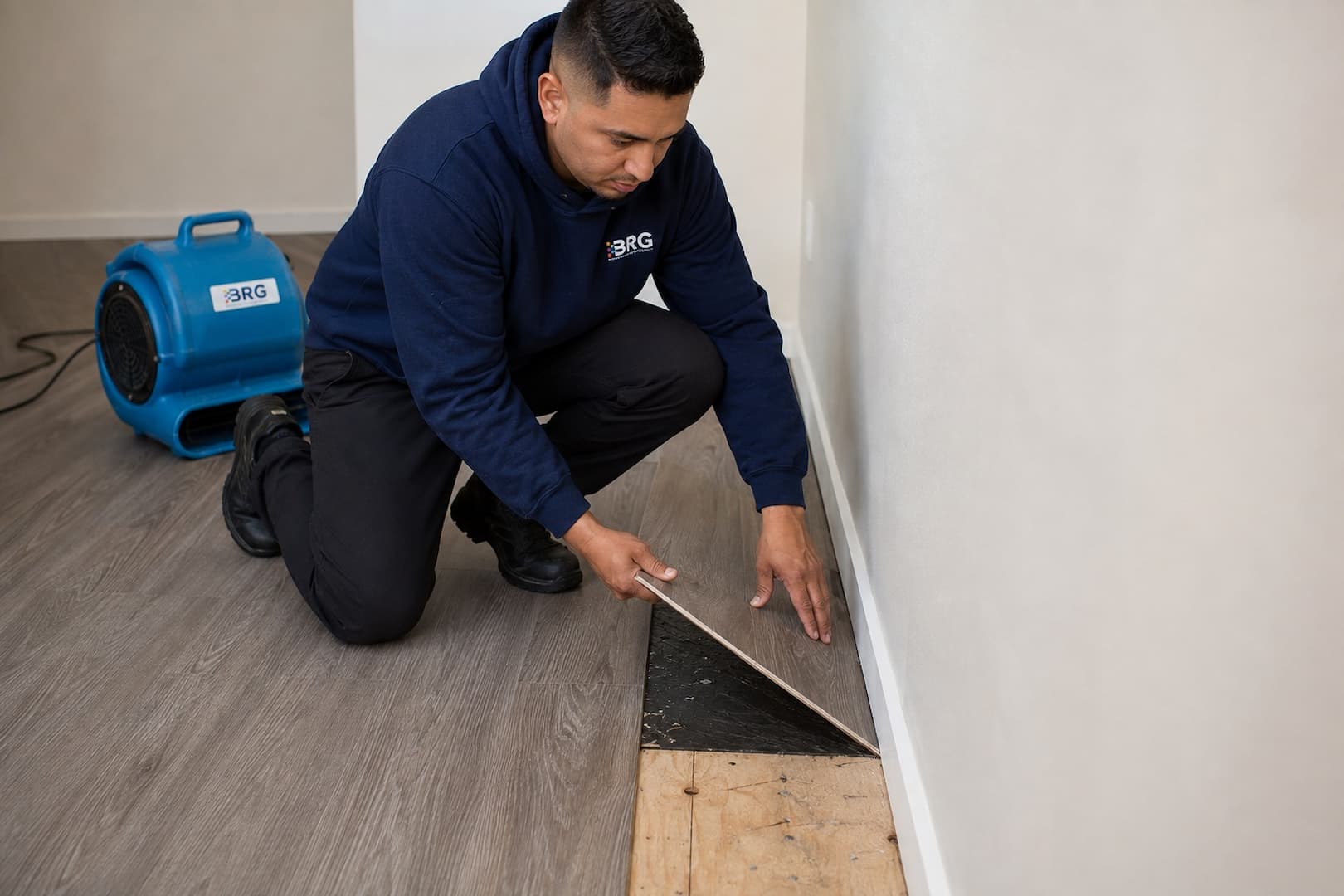
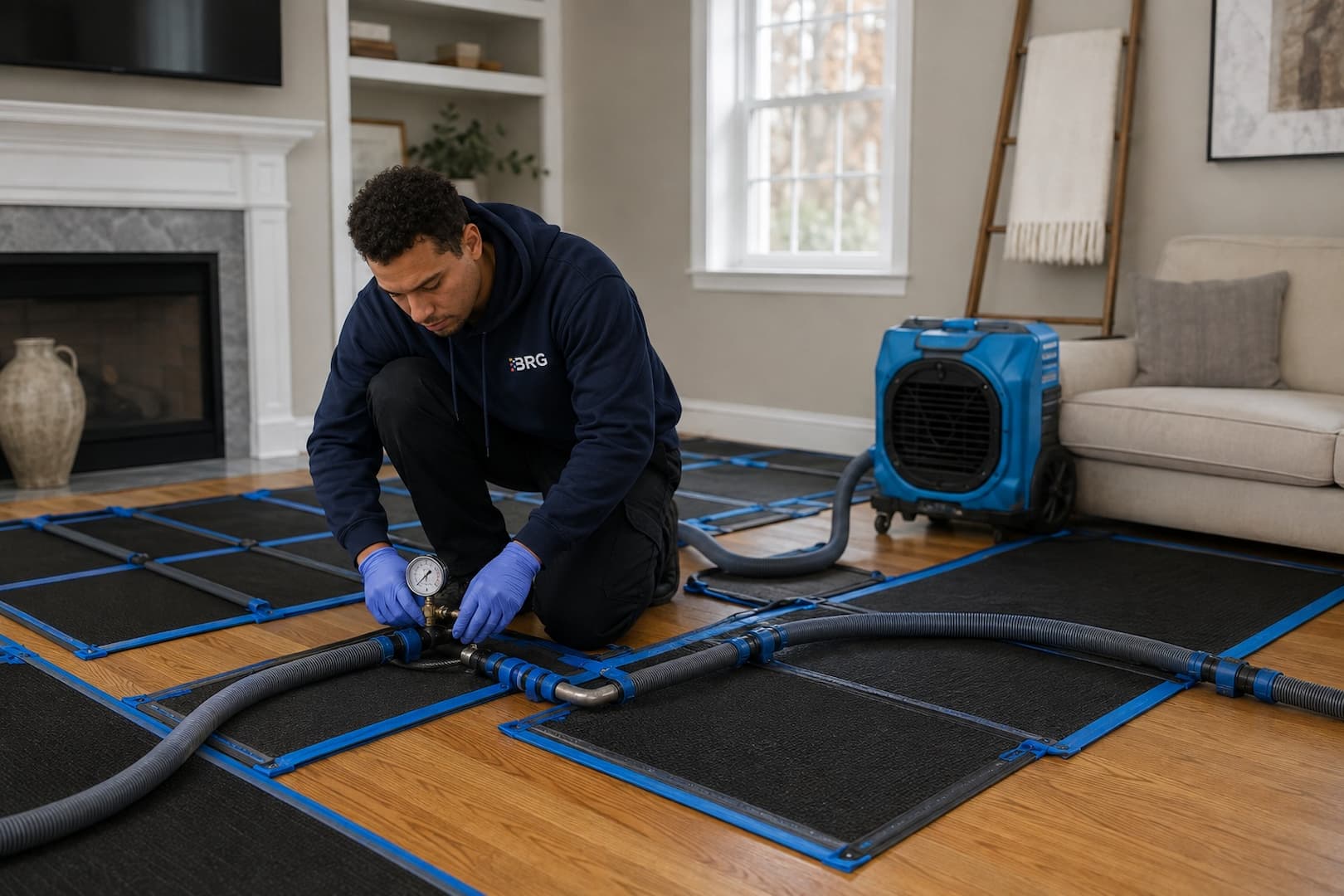
A lifted floating edge can reveal trapped water; a properly designed drying system can target retained hardwood. Neither method is automatic.
From source correction to a flooring-ready handoff
BRG restores the water-damaged assembly; a qualified flooring professional may perform board replacement, sanding, staining, coating, or manufacturer-specific repair.
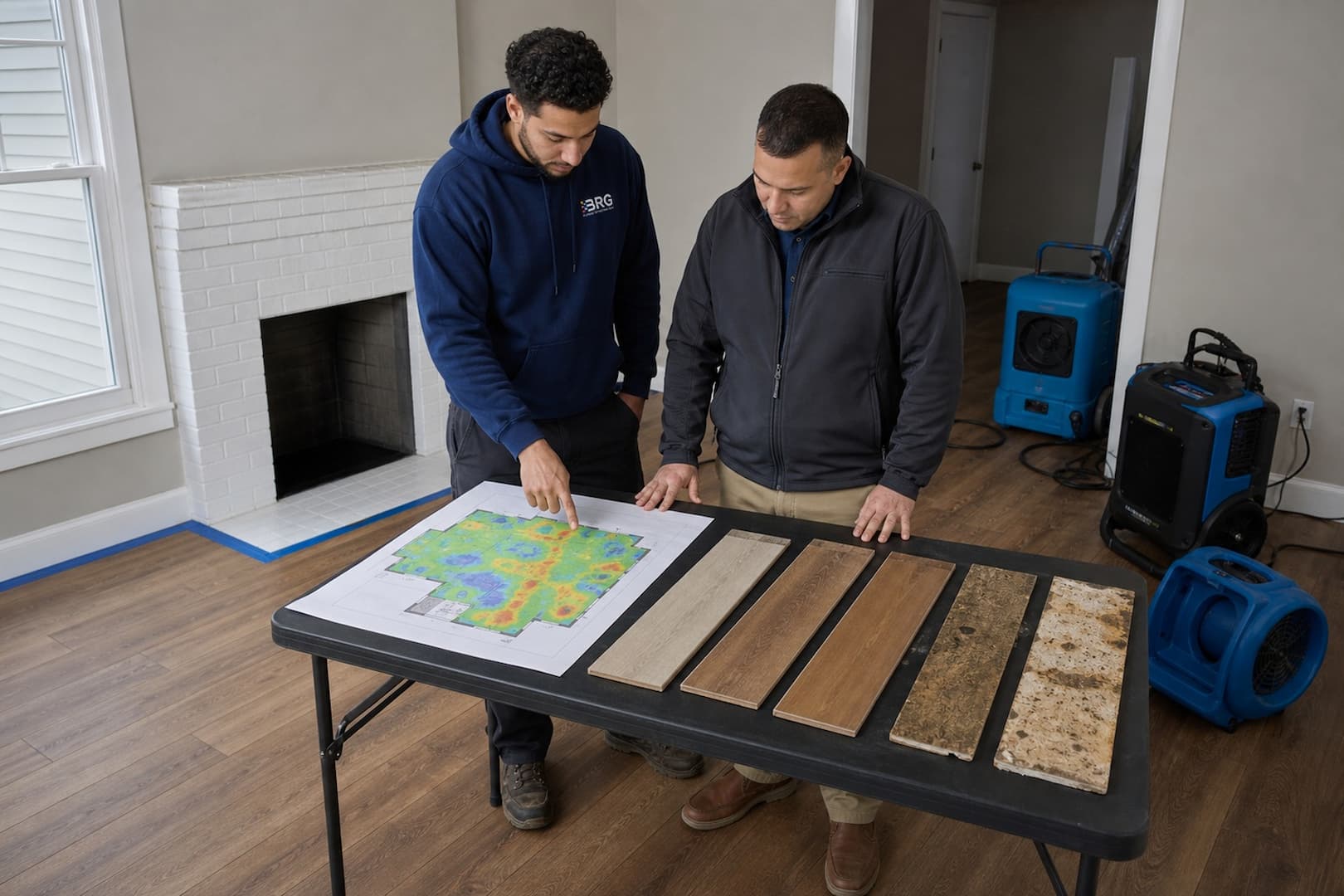
Confirm source and water condition
Record when and how water reached the floor, source repair, contamination, heat, rooms, and levels.
Extract and protect the finish
Remove accessible water using methods that avoid unnecessary scratches, finish damage, or movement through dry rooms.
Map surface and underlying layers
Establish moisture gradients and inspect wall edges, underlayment, substrate, transitions, and connected assemblies.
Dry or create selective access
Use equipment and access suited to retained materials; document permanent swelling, delamination, or failed layers.
Stabilize and hand off appearance repairs
Provide readings and condition records so the flooring contractor can plan reset, replacement, sanding, or refinishing.
Keep moisture, condition, and finish scope separate
That separation helps explain why a dry floor may still require appearance or product repair.
Where the water remained
Map, comparison areas, floor layers, wall edges, rooms below, ambient conditions, and trend.
How the product changed
Cupping, swelling, gaps, delamination, finish, staining, bond, lock, and substrate.
What the flooring trade decides
Board or plank replacement, sourcing, reset, sanding, stain, coating, transition, and warranty.
Define the replacement boundary and product reality
Matching species, grade, width, profile, color, locking system, lot, transition, and continuous-room installation can affect repair feasibility. BRG documents the water boundary; the flooring professional and property owner decide the final appearance scope.
- Preserve product boxes and purchase records when available
- Photograph transitions and continuous installations
- Do not discard loose sample pieces before repair review
Hardwood and laminate water-damage questions
Product construction and moisture trend matter more than a single visual sign.
Will cupped hardwood flatten after drying?
It may improve, but the outcome depends on species, cut, thickness, fastening, finish, severity, duration, substrate, and moisture balance. No responsible contractor can promise the final appearance before stabilization.
Can swollen laminate be dried back to normal?
A swollen fiberboard core often has permanent dimensional change. Drying the assembly is still necessary, but affected planks may require replacement.
Why check the subfloor when the top looks dry?
Underlayment and subfloor can retain water beneath a low surface reading. Trapped moisture can affect adhesives, wood-based panels, walls, and future finish installation.
Can BRG sand and refinish the floor immediately?
Refinishing should wait until the source is corrected and the floor moisture and shape are stable. A qualified flooring professional determines sanding and coating feasibility.
Does every wet wood floor need a mat-drying system?
No. Installation, finish, water condition, affected area, substrate, access, damage, and manufacturer considerations determine whether a specialized system is appropriate.
Request hardwood or laminate water damage restoration
Tell BRG the water source and timing, floor product if known, visible cupping or swelling, rooms and transitions affected, subfloor or level below, and whether source repair is complete.
617-202-3772- Do not sand, coat, or force raised planks flat
- Remove standing water only with safe suitable equipment
- Save product records, spare boards, and flooring contractor information
Request Floor Restoration Help
Product, installation, source, and visible changes guide the assessment.