
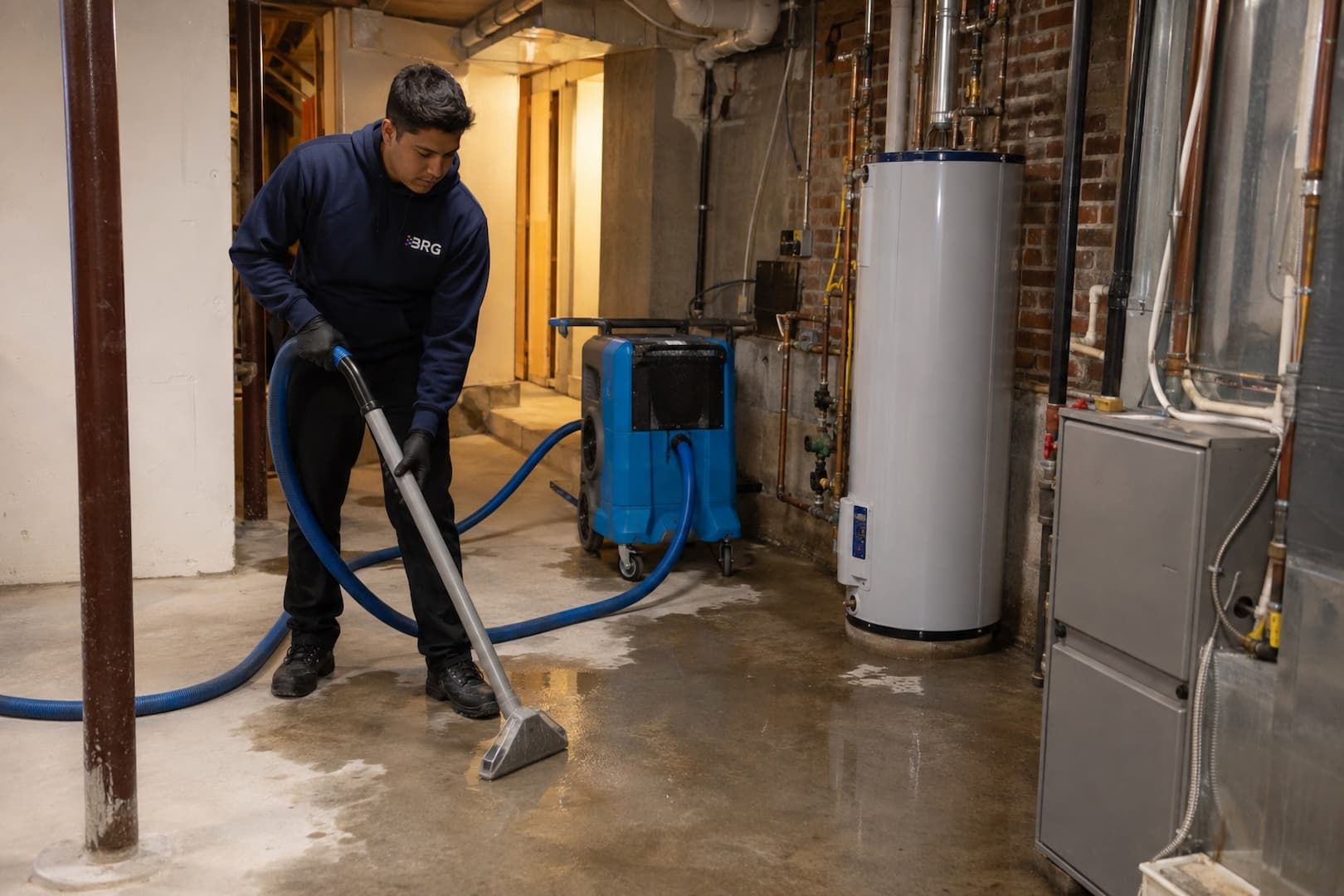
Water Heater Leak and Flood Cleanup in Boston, MA
A failed tank, connection, relief discharge, drain valve, pan, or nearby piping can release hot water into storage, finished basements, mechanical rooms, and adjacent units. BRG handles the resulting property damage after the water heater is made safe, with extraction, contents protection, moisture mapping, drying, and a clear repair handoff.
- Tank and connection water damage
- Utility-room and basement extraction
- Contents, wall-base, and floor drying
Do not approach spraying hot water, relief discharge, wet controls, or gas and electrical hazards.
The appropriate professional handles the heater, gas, venting, electrical, and plumbing connections.
Boxes, textiles, paper, chemicals, and equipment should not be moved through clean areas without triage.
Water can pass under partitions, through floor drains, or into finished wall systems.
Do not operate unfamiliar gas, electrical, or pressure controls
A leaking water heater may involve hot water, combustion gas, electricity, pressure, venting, or a relief device. If there is gas odor, steam, active spray, unusual noise, wet electrical equipment, or structural concern, leave the area and contact emergency services, the utility, or a qualified plumber as appropriate.
Tank or connection leak
Water can continue until supply is isolated and the stored tank volume is controlled by the plumber.
Relief-valve discharge
Do not cap or disable a relief device. A plumber must diagnose pressure, temperature, valve, and discharge conditions.
Drain or pan problem
A failed pan, blocked drain, or poorly routed discharge may spread water into finished rooms even when the heater leak is small.
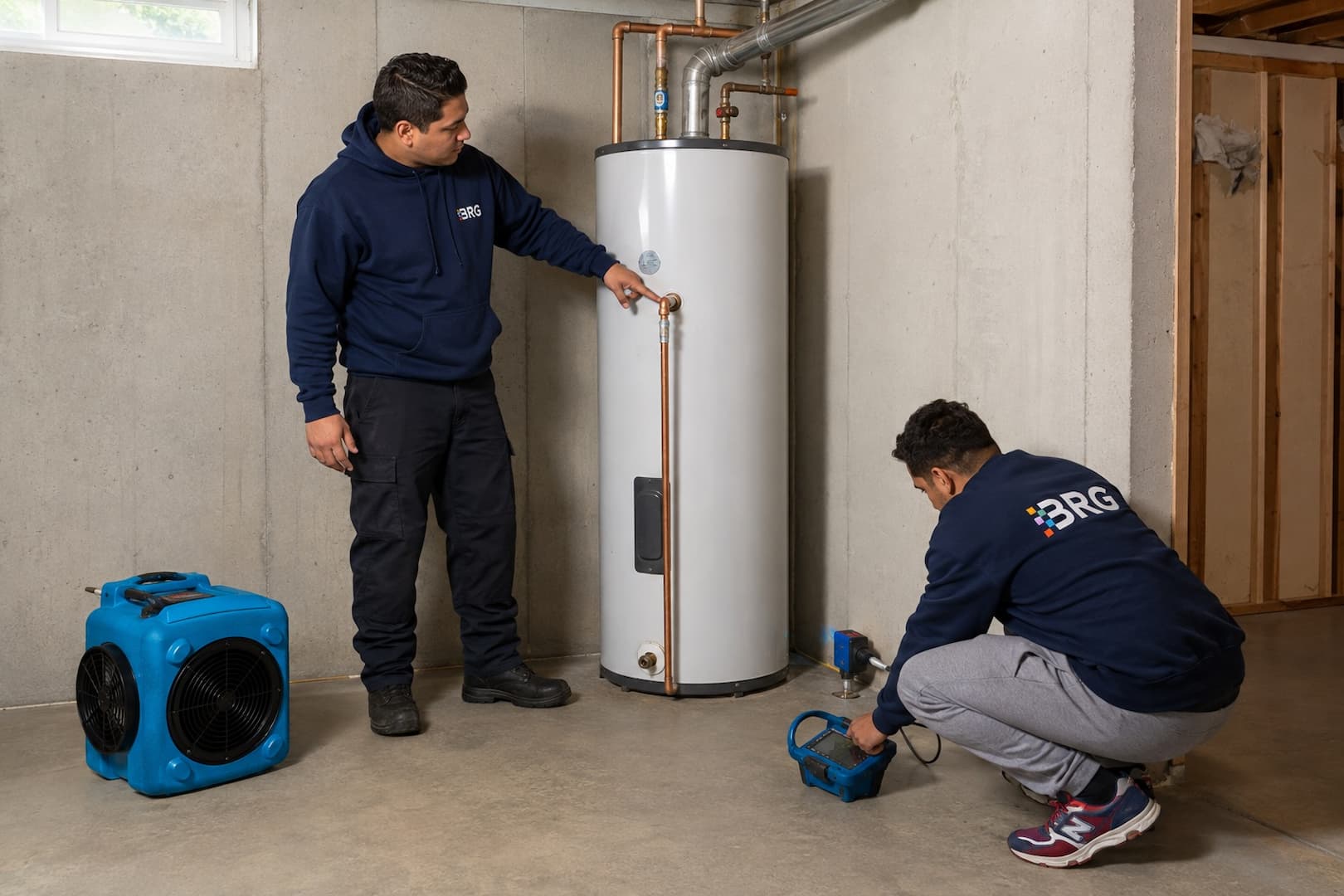
The plumber makes the heater safe; BRG follows the water through the building
Water can cross a concrete floor into stored contents, pass beneath framed partitions, wick into drywall, enter carpet and cushion, or move through a floor penetration to the level below. Hot water may accelerate finish and adhesive changes.
BRG documents the source area, pan and drain route, nearby utilities, contents, wall bases, floors, adjacent rooms, and lower levels. Equipment removal or replacement is coordinated so restoration access remains available.
- Keep clear of wet gas, electrical, and combustion equipment
- Record the old heater and failed connection before removal when safe
- Inspect behind the tank and under nearby stored contents
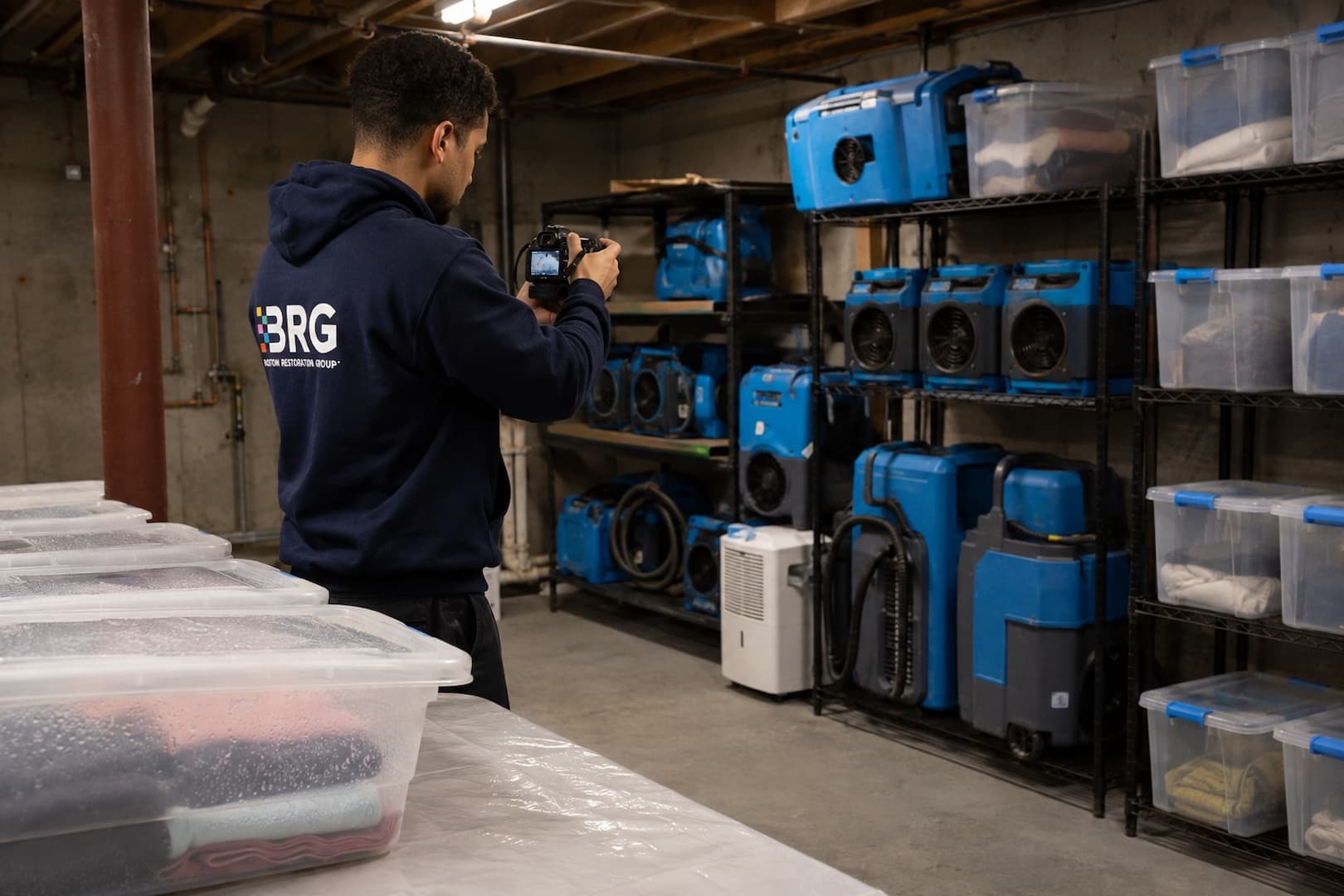
Storage can hold water against floors and walls
Triage creates access for extraction and keeps wet cardboard or textiles from spreading moisture into dry areas.
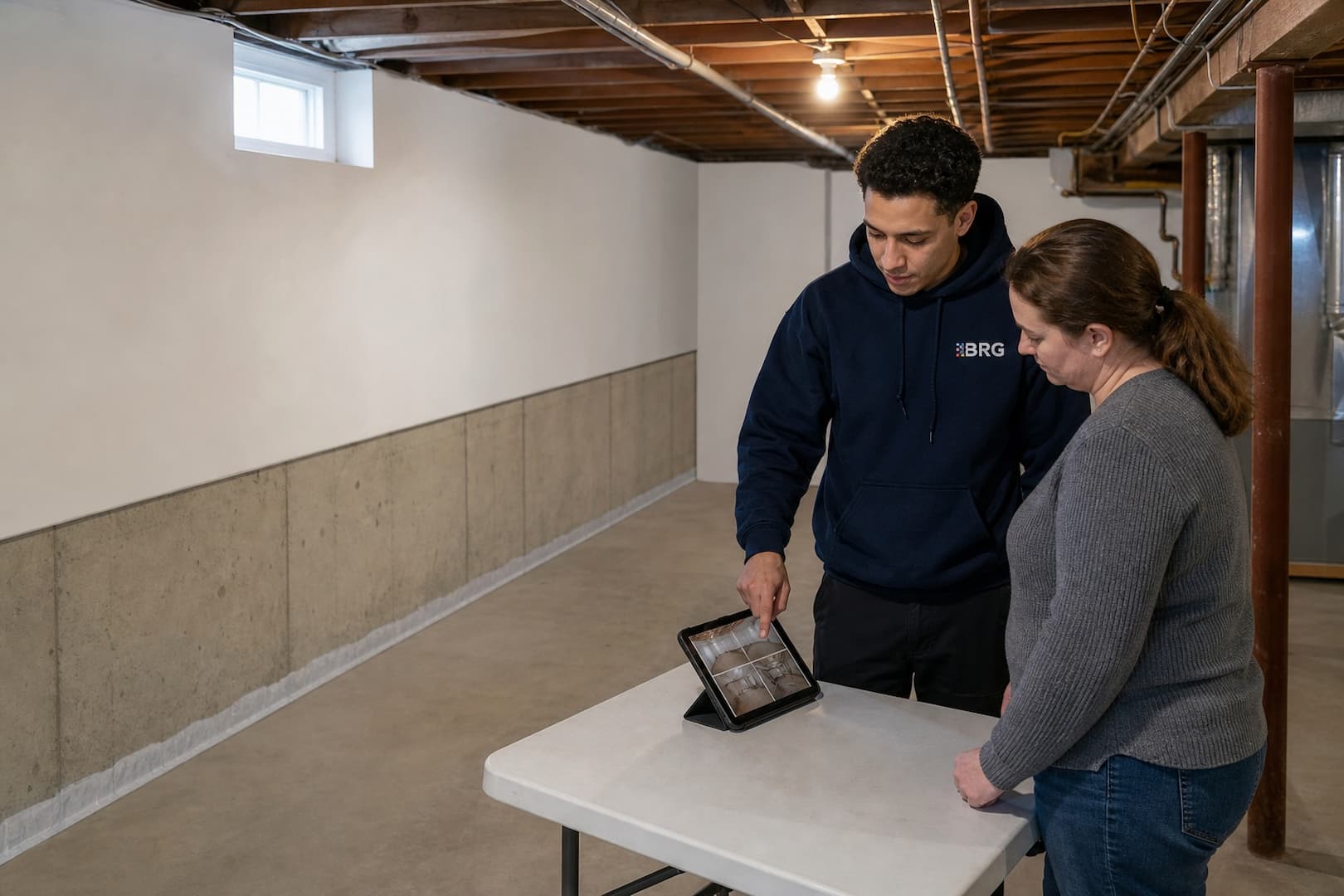
Evaluate what the hot-water release contacted
The substrate and storage pattern often matter as much as the tank volume.
Concrete and coatings
Check
Cracks, drains, low spots, coating bond, wall interfaces, and vapor movement after extraction.
Drywall and insulation
Check
Wicking, warm-water exposure, cavity access, contamination from stored materials, and drying response.
Carpet and finished flooring
Check
Cushion, backing, adhesives, underlayment, seams, edge damage, and subfloor where present.
Stored contents
Check
Cardboard, paper, textiles, electronics, chemicals, furniture, and owner priorities by exposure.
Make space for both plumbing and restoration
The replacement location must remain accessible while wet materials behind or beneath it are addressed. Sequence the work so the new unit does not block necessary drying or repair.
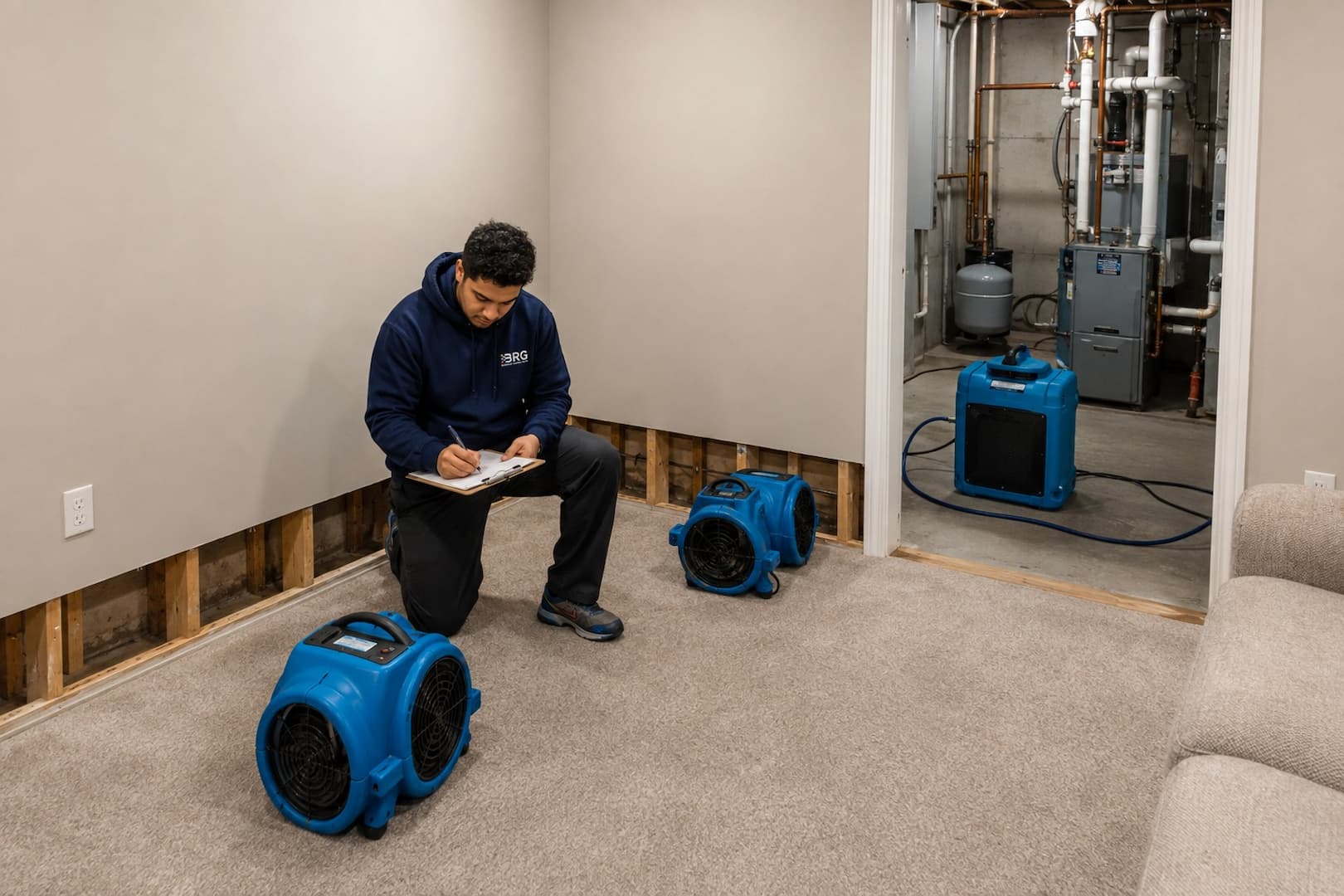
Obtain safe source control
Confirm heater, gas, electrical, pressure, vent, supply, and drain status with the plumber or utility.
Extract and establish contents access
Remove accessible water, protect dry routes, and triage items that block wet floors or walls.
Map adjacent and concealed materials
Check behind the unit, wall bases, partitions, floors, drains, rooms, and any level below.
Dry, clean, or remove by condition
Match methods to water route, substrate, stored contents, material integrity, and access.
Verify before final reset and finish repair
Document heater replacement, material progress, retained contents, removal, and reconstruction needs.
Show where the heater ended and the building damage began
This boundary keeps replacement, emergency cleanup, and finish repair from being blended.
Heater and plumbing status
Tank, valve, line, pan, drain, relief, plumber action, removal, replacement, and operating status.
Water and contents reach
Utility room, storage, walls, floors, adjacent areas, lower level, contents, and readings.
Mitigation and repair
Extraction, cleaning, drying, material removal, contents handling, and finish work outstanding.
Keep service clearances and restoration access open
A replacement heater should not cover wet finishes or block a necessary wall or floor repair. BRG and the plumber coordinate the work area while each remains responsible for its scope.
- Preserve required combustion and service clearances
- Do not store wet contents against the new unit
- Confirm pan and drain arrangements with the plumber
Water heater leak cleanup questions
Equipment safety and stored contents are central to the first response.
Should I shut off the water heater myself?
Only if you know the correct controls, are authorized, and can reach them without water, gas, electrical, heat, or pressure hazards. Otherwise call the plumber, utility, or emergency services as appropriate.
Can BRG replace the water heater?
A qualified plumber or appropriate licensed professional should isolate, remove, install, connect, vent, and test the heater. BRG handles resulting property damage.
Are wet cardboard boxes salvageable?
Cardboard loses strength quickly and can transfer moisture or residue. Contents are triaged by item, exposure, value, cleanability, and owner direction rather than given one universal answer.
Does concrete need drying?
Concrete is porous and can retain moisture, but the restoration goal and method depend on coatings, adjacent wall systems, future finishes, water route, and ambient conditions.
Can the new heater be installed before the room is dry?
Sometimes plumbing urgency requires an early replacement, but the placement should not trap wet material or block restoration. Coordinate access and clearances before installation.
Request water heater leak and flood cleanup
Tell BRG whether water is active or hot, the heater’s fuel type, plumber or utility status, water depth, affected rooms, stored contents, and any gas, electrical, pressure, or ceiling concern.
617-202-3772- Leave immediately and report gas odor or unsafe equipment
- Do not operate wet controls or cap a relief discharge
- Provide utility-room access and replacement timing
Request Water-Heater Cleanup
Safe equipment status and the water route help coordinate the response.