
Septic Backup Cleanup in Greater Boston
A septic backup is two connected jobs: the on-site wastewater system must be corrected, and the building must be cleaned and restored. BRG handles the affected property while the septic professional addresses pumping, blockage, component failure, or system condition.
- Source coordination
- Contaminated water extraction
- Porous-material assessment
- Cleaning, drying, and repair scope
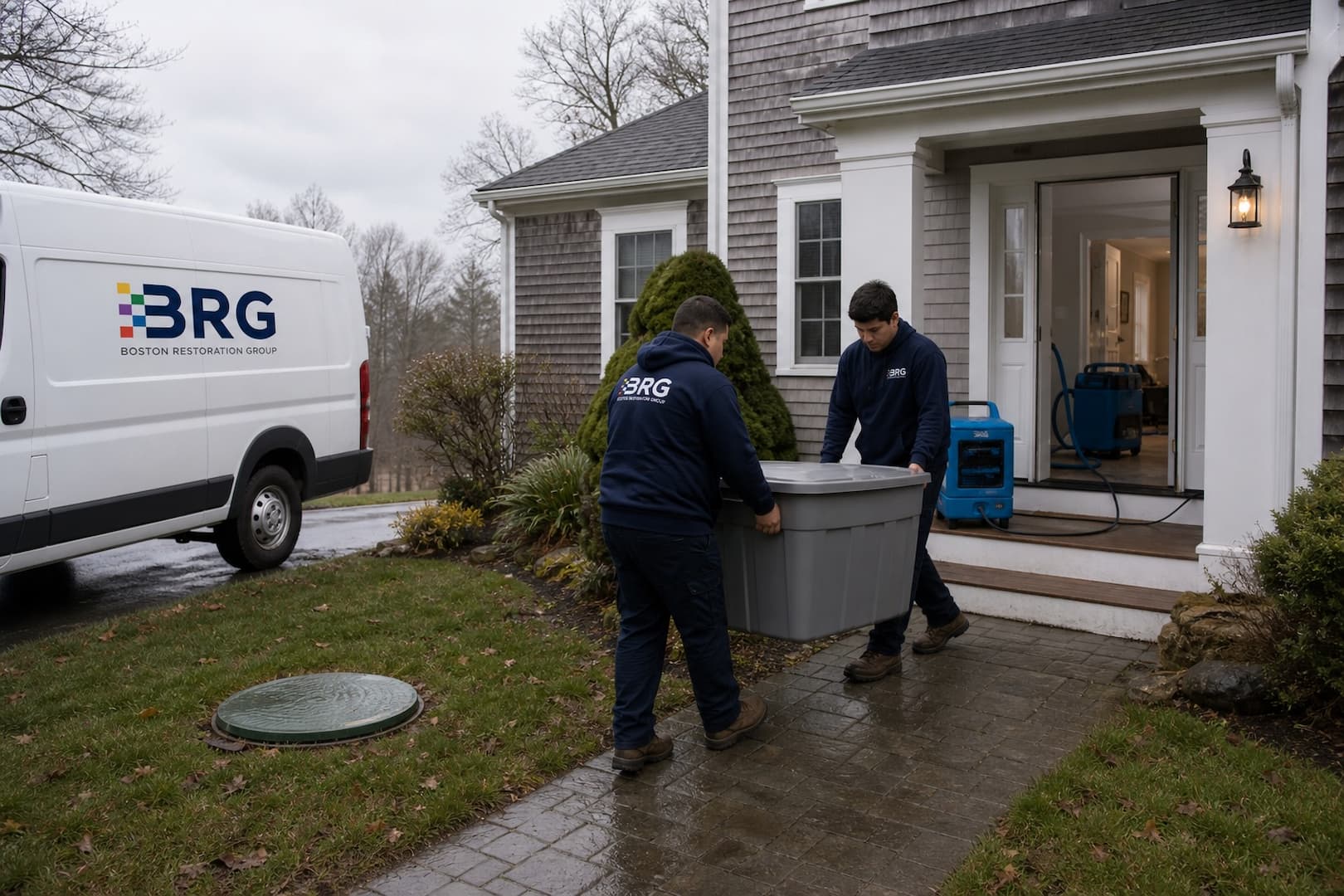
System problem
Tank level, line blockage, pump, alarm, distribution, or field condition belongs with the septic professional.
Building problem
Water, residue, porous finishes, contents, and structural drying belong in the restoration scope.
Re-entry decision
The affected area remains closed until cleanup and drying conditions support use.
Document both tracks
Keep septic invoices and findings with BRG photographs and restoration records.
Indoor cleanup cannot outrun an active septic source
Extraction may reduce the immediate water level, but the backup can return if the tank, line, pump, or field problem is unresolved.
Septic contractor
Evaluates pumping needs, blockages, pumps, alarms, distribution components, and system condition. This work stops or corrects the wastewater source.
BRG restoration crew
Controls the indoor work zone, extracts contaminated water, handles affected materials, cleans accessible surfaces, dries retained structure, and prepares the repair scope.
Property owner or manager
Provides system history, recent pumping or service records, occupancy information, access, insurance contacts, and authorization for material decisions.
The yard and the basement belong to the same loss
A septic backup may follow heavy water use, power loss, a failed pump, a blocked building sewer, a full tank, damaged piping, or problems in the disposal area. Indoor symptoms alone do not identify which condition caused it.
Tell BRG whether an alarm sounded, the system uses a pump, fixtures are gurgling, toilets or drains overflowed, recent pumping occurred, or wet ground appeared near the system. Those details help coordinate the cleanup without presenting BRG as the septic diagnostician.
Pause water use
Until the septic professional advises otherwise, avoid showers, laundry, dishwashers, flushing, and other wastewater-producing activity that can add to the backup.
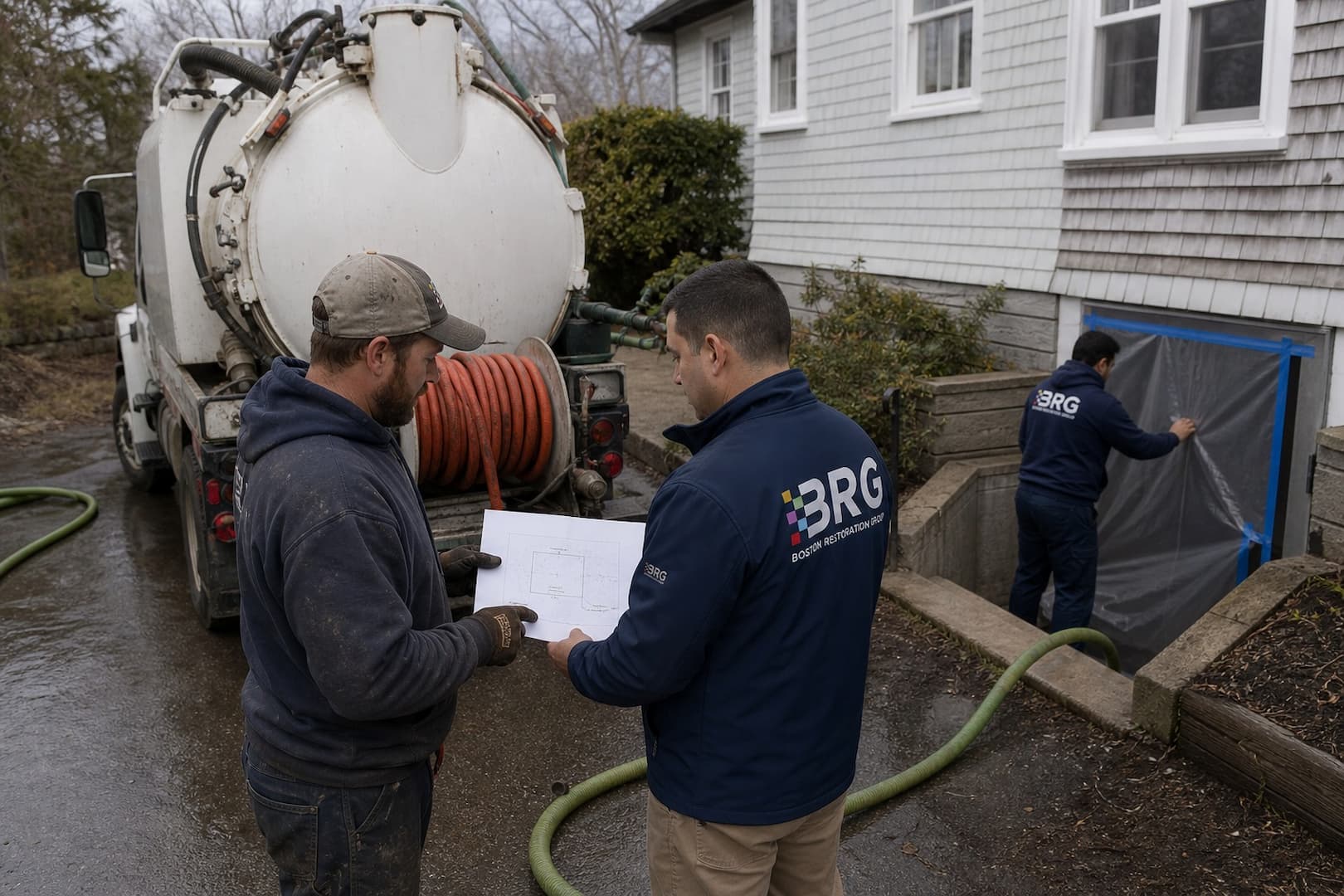
BRG treats the affected area as contaminated
The crew controls access and follows a sequence that reduces the contamination load before structural drying begins.
Record the backup and protect the route
The source area, water line, affected finishes, contents, utilities, and travel path are photographed and marked.
Extract water and remove gross soil
Appropriate equipment removes accessible liquid and residue while clean rooms remain outside the work route.
Evaluate porous materials and contents
Carpet, pad, drywall, insulation, composite trim, stored paper, and upholstered items receive material-specific decisions.
Clean reachable retained surfaces
Structural and hard surfaces are cleaned under the project scope before normal drying airflow is established.
Dry, document, and release for repair
Readings guide the drying plan. The final file states what was removed, retained, cleaned, and left for reconstruction.
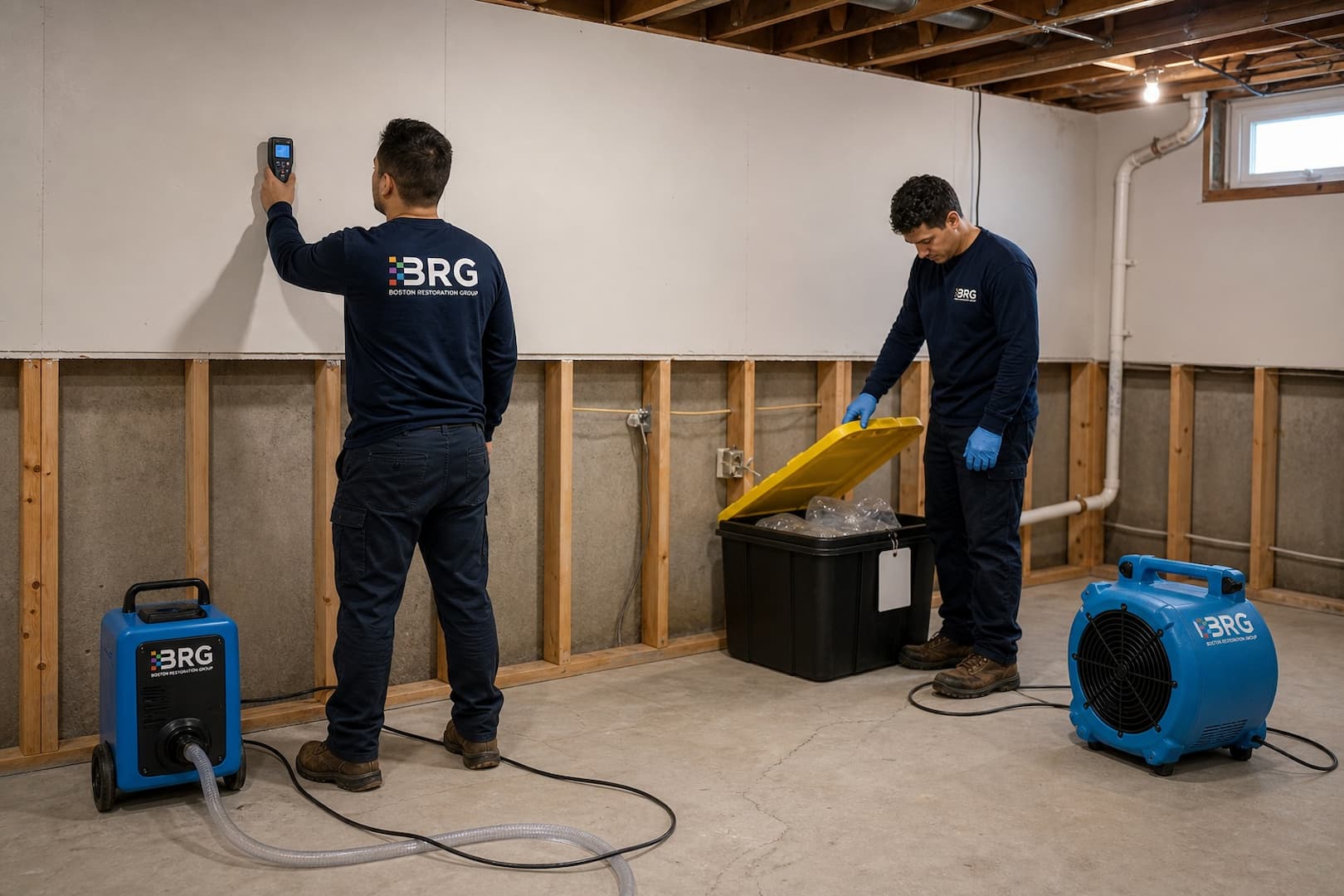
Do not lose the septic-service record or the indoor loss record
The septic company may document tank level, pumping, alarms, components, or repairs. BRG documents the indoor boundary, material exposure, cleanup actions, moisture conditions, and remaining repairs. Together, those records explain why the backup happened and what it affected.
Contents need their own inventory. A plastic storage tote may have a cleanable exterior while its paper contents do not. Furniture can combine sealed, unfinished, upholstered, and inaccessible surfaces in one item. BRG separates decisions instead of giving the whole basement a single answer.
- Photograph high-value or disputed contents before disposal.
- Keep the septic contractor’s invoice and findings.
- Note the backup time and any water use immediately before it.
- Tell BRG about prior backups or recurring odors.
Restoration records support a claim; they do not decide it
Insurance treatment of septic backups varies by policy, endorsement, cause, maintenance history, and damaged property. BRG can provide an itemized restoration scope and project documentation. The carrier makes the coverage decision.
Pumping, line clearing, component repair, and septic diagnosis.
Extraction, removal, cleaning, drying, and finish restoration.
Contents, upgrades, access, scheduling, and claim communication.
Septic backup restoration questions
BRG can explain the property scope. The septic professional should answer questions about system capacity, failure, repair, and future use.
Should the septic tank be pumped before cleanup?
The septic contractor should decide what the system needs. Indoor cleanup can be planned while source work is arranged, but active wastewater flow must be controlled.
Can I keep using water elsewhere in the house?
Avoid adding wastewater until the septic professional confirms the system can accept it. Laundry, showers, dishwashers, toilets, and sinks can worsen an active backup.
Does BRG repair the septic system?
No. BRG handles the indoor cleanup and restoration scope. Septic pumping, diagnosis, excavation, and component repair belong with qualified septic providers.
Can stored belongings be cleaned?
Some can. The decision depends on porosity, exposure, condition, access to all contacted surfaces, and value. BRG documents high-value and uncertain items separately.
How is the basement dried after cleanup?
After contaminated water, gross soil, and unsuitable materials are addressed, BRG uses airflow and dehumidification suited to the retained structure and monitors material readings.
Coordinate system correction and indoor cleanup now
Call BRG and a septic professional. Share the address, system type if known, whether an alarm sounded, where the backup appeared, and whether water use has stopped.
617-202-3772- Mention a pump chamber, ejector, basement bathroom, or finished lower level.
- Keep occupants and pets away from the affected route.
- Save septic-service records and photographs of the original condition.
Request septic backup cleanup
BRG will focus the first visit on the building, exposure, access, and restoration scope.