
Water Extraction Services in Boston, MA
Extraction removes water that equipment can physically recover from floors, carpet, cavities, and surfaces. BRG pairs that work with moisture mapping so the project does not stop while wet materials remain hidden.
- Standing water removal
- Carpet and hard-floor extraction
- Moisture checks after extraction
- Residential and commercial
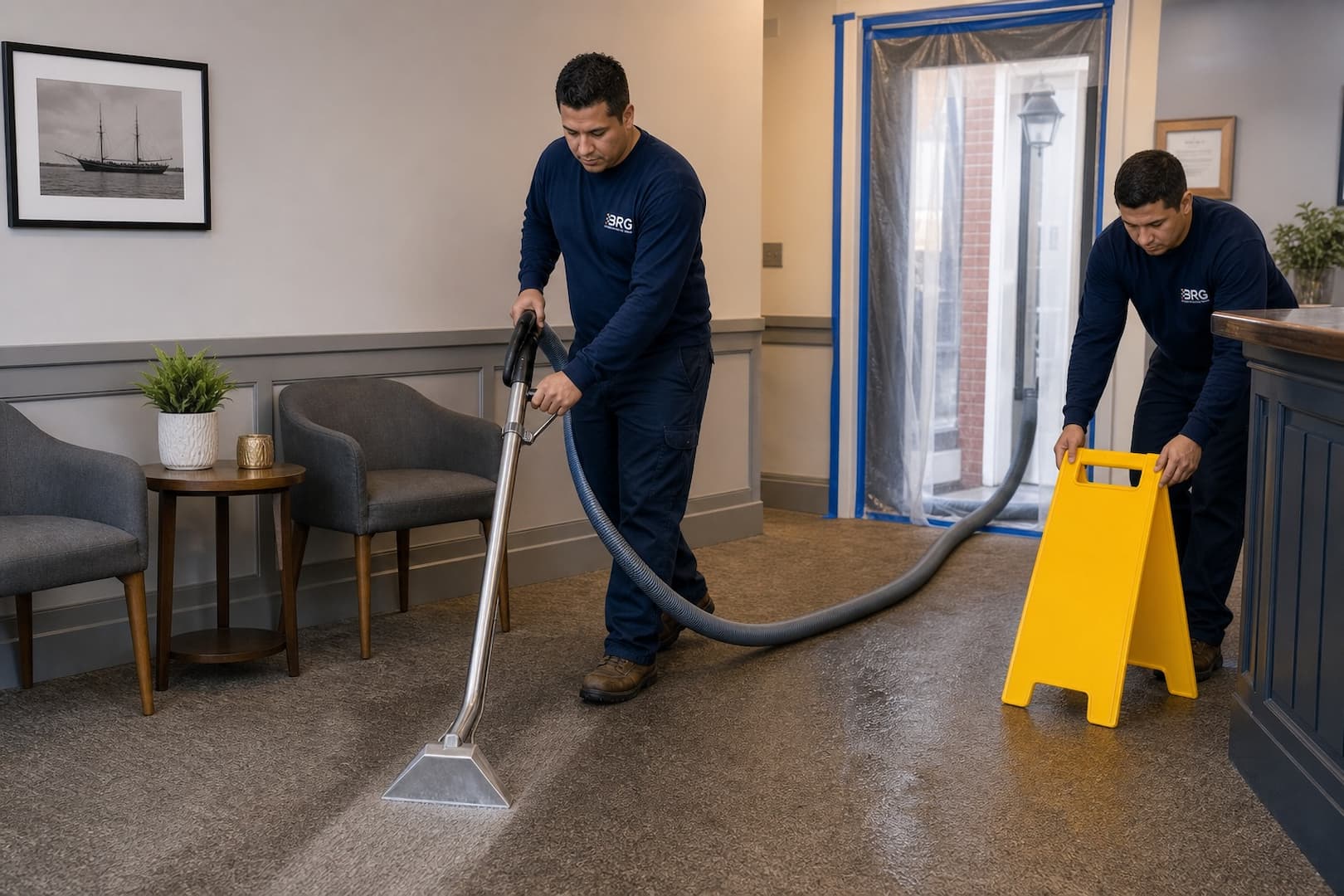
Reduce the water load
Mechanical removal gives structural drying less water to handle.
Follow the edges
Perimeters, seams, walls, cabinets, and transitions often hold water after the center looks clear.
Check below the surface
Subfloor and cavities are evaluated before equipment is selected.
Move into drying
Extraction ends when recoverable water is removed; monitoring continues.
Removing the puddle is the start, not the dry standard
Water extraction can recover a large portion of liquid before evaporation begins. That matters because dehumidifiers and air movers are less efficient when they are asked to handle water that a pump, wand, or specialty system could remove directly.
The extraction method depends on depth, surface, access, water source, and the condition of the material. BRG may use pumps for deeper water, surface tools for hard floors, weighted extraction for carpet, or targeted systems when water is held inside an assembly.
Active source?
A plumber, roofer, appliance technician, utility, or building staff may need to stop the incoming water. Extraction can begin around source control, but it cannot solve an ongoing leak by itself.
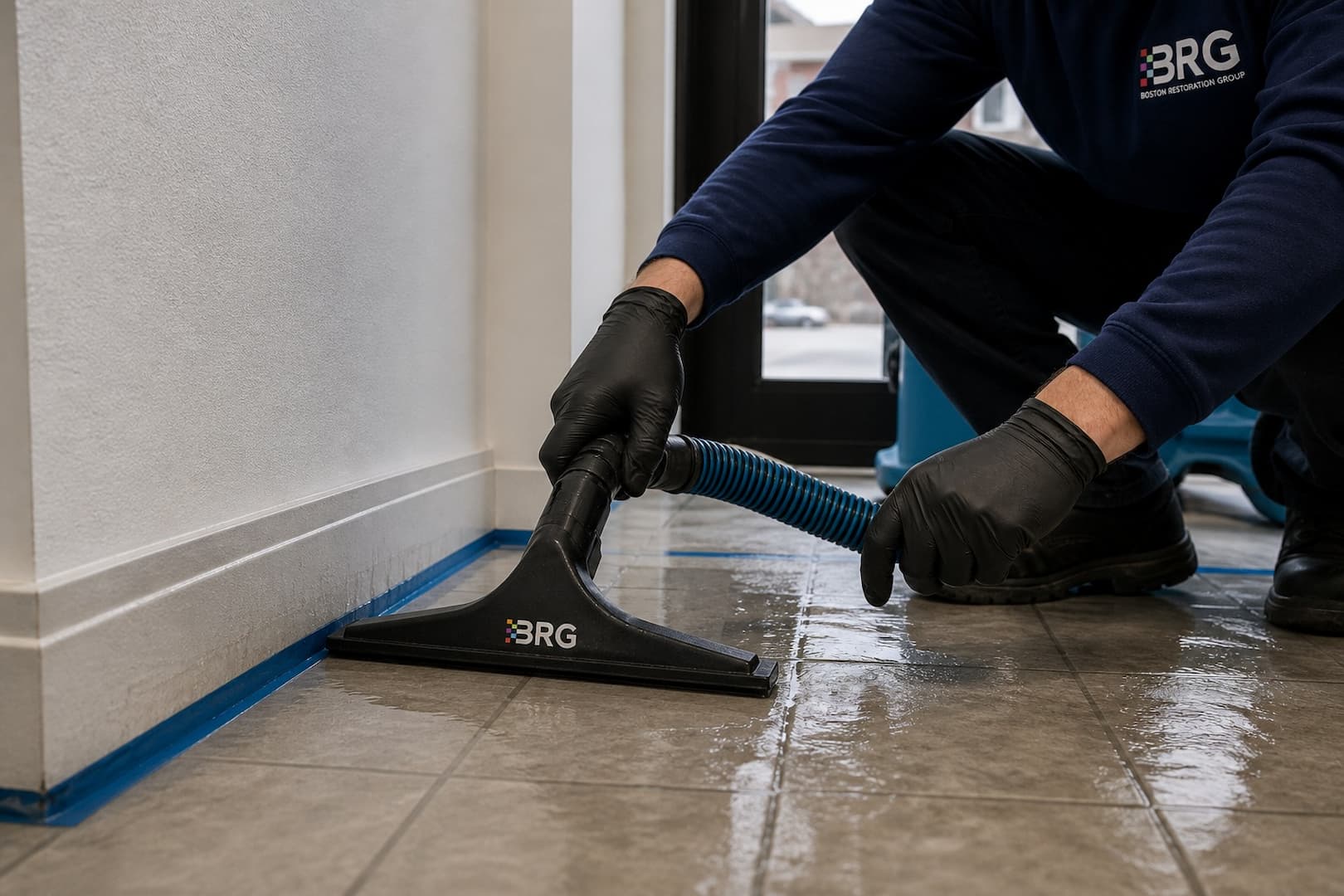
The tool should fit the surface and the water
Using the largest machine is not the same as using the right machine. BRG considers the route out of the building, the water source, and what sits beneath the visible finish.
| Condition | Extraction approach | What BRG checks next |
|---|---|---|
| Deep standing water | Submersible or high-volume removal where access and conditions allow | Floor transitions, lower walls, utilities, and materials below the former water line |
| Wet carpet and pad | Surface or weighted extraction based on condition and contamination | Pad, tack strip, subfloor, seams, and whether the carpet remains suitable to keep |
| Tile, concrete, and resilient floors | Squeegee or surface extraction with attention to edges and joints | Cracks, wall bases, underlayment, cabinets, and connected rooms |
| Wood flooring | Surface removal plus assessment for specialty mat or panel systems | Finish, board movement, subfloor, contamination, and whether controlled drying is reasonable |
| Cabinet and wall cavities | Targeted access or cavity extraction only when the assembly supports it | Wet insulation, backing, framing, toe kicks, and hidden travel paths |
The crew measures what the extraction tool cannot show
A surface may stop releasing water while the layer below it remains wet. BRG checks suspect materials and compares them with dry areas before moving into a drying plan.
Visible water, staining, swelling, delamination, and residue.
Affected materials compared with practical dry reference points.
What lies below, behind, or beside the extracted surface.
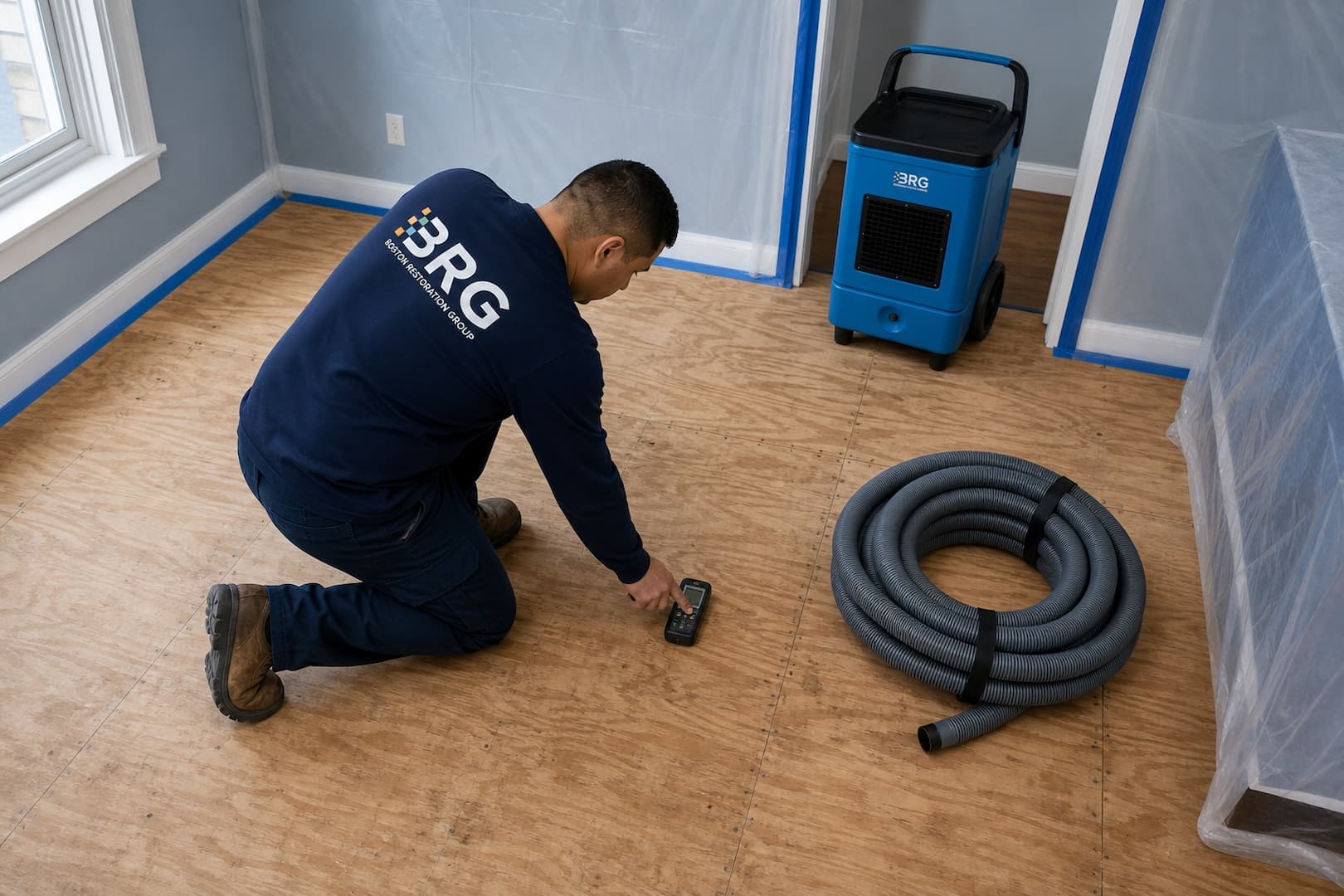
Extraction equipment leaves; drying equipment stays for a reason
Once recoverable water is removed, the project shifts from liquid removal to evaporation and humidity control. Air movers increase evaporation at wet surfaces. Dehumidifiers remove that moisture from the air. The setup is adjusted to the room volume, materials, openings, temperature, and progress readings.
BRG does not treat a standard equipment package as proof that a building is dry. The crew records where equipment was placed, what readings changed, and whether access or material removal altered the plan.
- Extract before relying on evaporation.
- Protect cords and hoses along occupied travel paths.
- Do not blow air across uncontrolled contaminated material.
- Recheck connected rooms and lower elevations.
The same service supports several different restoration jobs
Water extraction is a task within a larger response. The source and material condition determine which service page should lead the project.
Burst pipe and supply-line leaks
Clean-water release may cross floors and wall chases before the shutoff is reached.
Basement and storm water
Below-grade entry can involve sediment, contaminated water, mechanical equipment, and stored contents.
Sewage and septic backups
Contamination control and material removal must come before normal drying airflow.
Commercial water losses
Extraction planning must account for occupants, inventory, operating hours, and access routes.
Questions about emergency water extraction
Extraction is often urgent, but the method still needs to match the source, surface, and hazards.
Can I use a shop vacuum to remove the water?
A household or shop vacuum may create electrical and contamination risks and is not appropriate for every source. Do not use one on sewage, floodwater, or water near energized equipment.
Is extraction the same as water damage restoration?
No. Extraction is the removal of recoverable liquid. Restoration can also include source coordination, moisture mapping, material removal, cleaning, drying, monitoring, contents protection, and repairs.
Will extraction dry the subfloor?
It may remove water from the surface or carpet system, but subfloor and deeper assemblies can remain wet. BRG checks those materials and plans structural drying separately.
Can BRG extract water overnight or on weekends?
BRG offers 24/7 emergency response. Dispatch and access depend on the active call, property conditions, and information provided by the owner or manager.
What should I tell the dispatcher?
Provide the address, source, approximate depth, rooms affected, whether water is still entering, known electrical concerns, and the safest access point.
Call BRG for extraction and a moisture check
The team will ask about the source, depth, surface, affected rooms, utilities, and access before recommending the first response.
617-202-3772- Do not enter water near electricity or unstable materials.
- Tell BRG if the source is sewage, septic, outdoor floodwater, or unknown.
- If the source is a pipe, arrange shutoff or plumbing help at the same time.
Request water removal
Send enough detail for BRG to match the crew and equipment to the loss.