
Disinfection and Sanitizing Services in Boston, MA
A credible hygiene service begins by identifying the contamination event, affected surfaces, occupants, and cleanup objective. BRG’s certified restoration specialists establish the work boundary, remove visible soil and debris, apply suitable products according to label directions, respect contact time, and document what was treated without making medical or absolute “germ-free” claims.
- Event-specific cleaning and disinfection
- Surface and product compatibility review
- Occupied-space and reentry planning
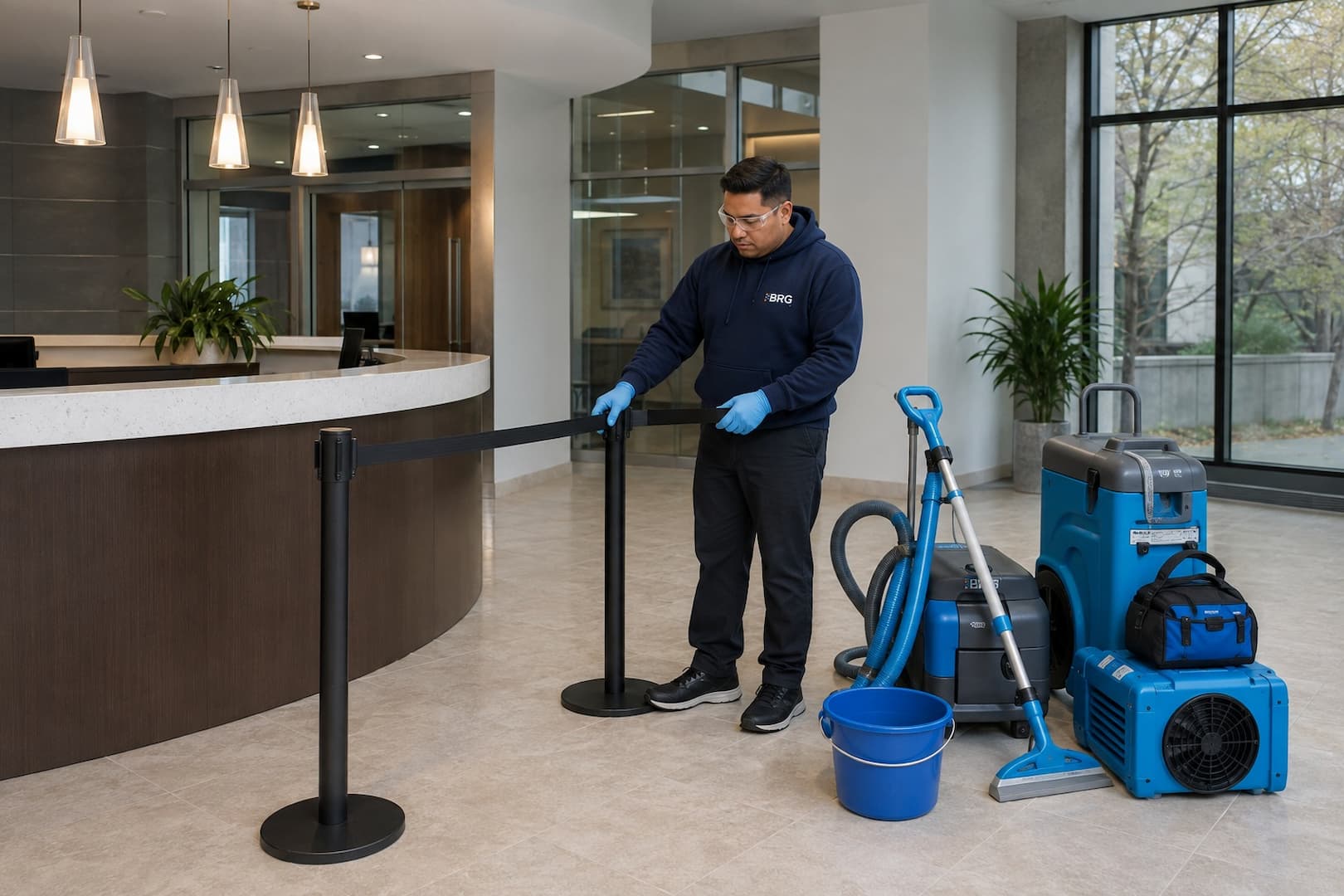
Dirt, organic material, and debris can interfere with a disinfectant reaching the surface.
Dilution, surface, dwell or contact time, ventilation, PPE, and reentry instructions must be followed.
Electronics, textiles, stone, wood, food-contact areas, and unfinished material need compatible methods.
A contractor can record process and scope but cannot promise a medically sterile environment.
“Sanitizing” is too broad until the event and surfaces are known
Routine janitorial cleaning, disinfection after a specific contamination, sewage restoration, trauma cleanup, food-service sanitation, healthcare environmental services, and regulated hazardous-material response are not interchangeable. BRG first identifies the source, area, material, occupancy, and authority requirements, then confirms whether the requested work fits its scope or needs a specialist.
What happened?
Identify bodily fluid, sewage, illness concern, high-touch occupancy, construction event, food spill, unknown residue, or preventive cleaning request.
What was contacted?
List hard nonporous surfaces, textiles, upholstery, unfinished materials, electronics, food-contact surfaces, HVAC components, and contents.
Who controls reentry?
Property management, employer, health department, healthcare advisor, school, food authority, or another responsible party may set additional requirements.
Physical cleaning gives disinfection a suitable surface
Visible soil, dust, grease, organic matter, and debris are removed with a method that avoids spreading contamination. Tools and cloths are managed so a cleaned surface is not immediately re-contaminated. Porous materials may require laundering, specialty cleaning, controlled removal, or replacement rather than a hard-surface wipe.
After cleaning, an appropriate product is applied only to compatible surfaces and allowed to remain wet for the label-specified contact time. Dilution, ventilation, temperature, personal protection, and reentry are not optional details.
- Work from defined clean areas toward affected areas
- Change cloths and tools according to the zone plan
- Keep products away from incompatible finishes and electronics
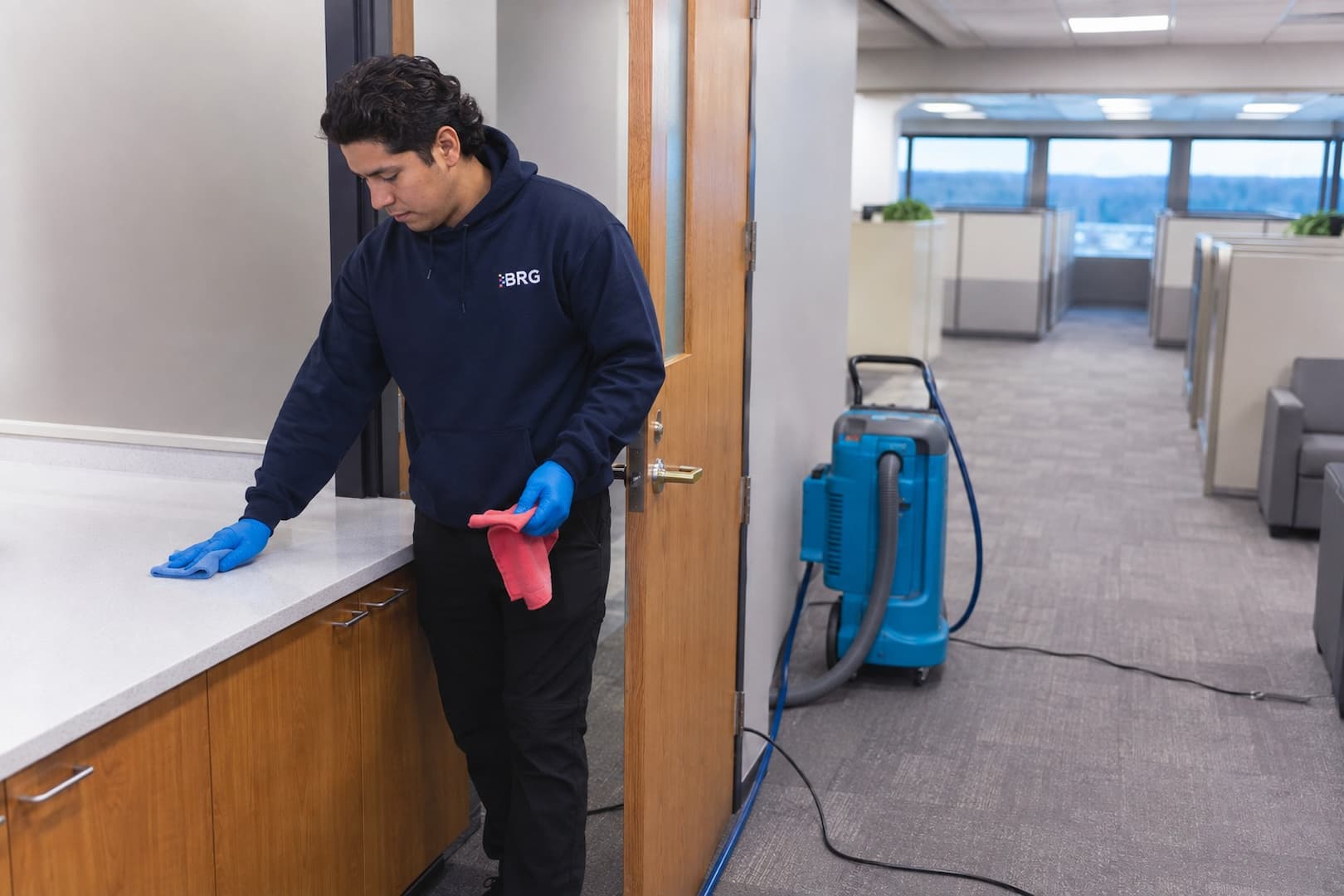
The same product does not belong on every material
Method selection protects both the hygiene objective and the property.
Hard nonporous surfaces
Typical approach
Clean soil, apply compatible disinfectant at correct concentration, maintain contact time, and follow rinse or reentry instructions.
Porous textiles and upholstery
Typical approach
Assess contamination, laundering or extraction suitability, drying, colorfastness, and whether removal or specialist handling is needed.
Electronics and controls
Typical approach
Use manufacturer guidance and controlled application; do not saturate switches, screens, outlets, or equipment.
Food-contact and sensitive finishes
Typical approach
Observe specific product approval, rinse requirements, corrosion, stone, wood, coating, and occupant-use constraints.
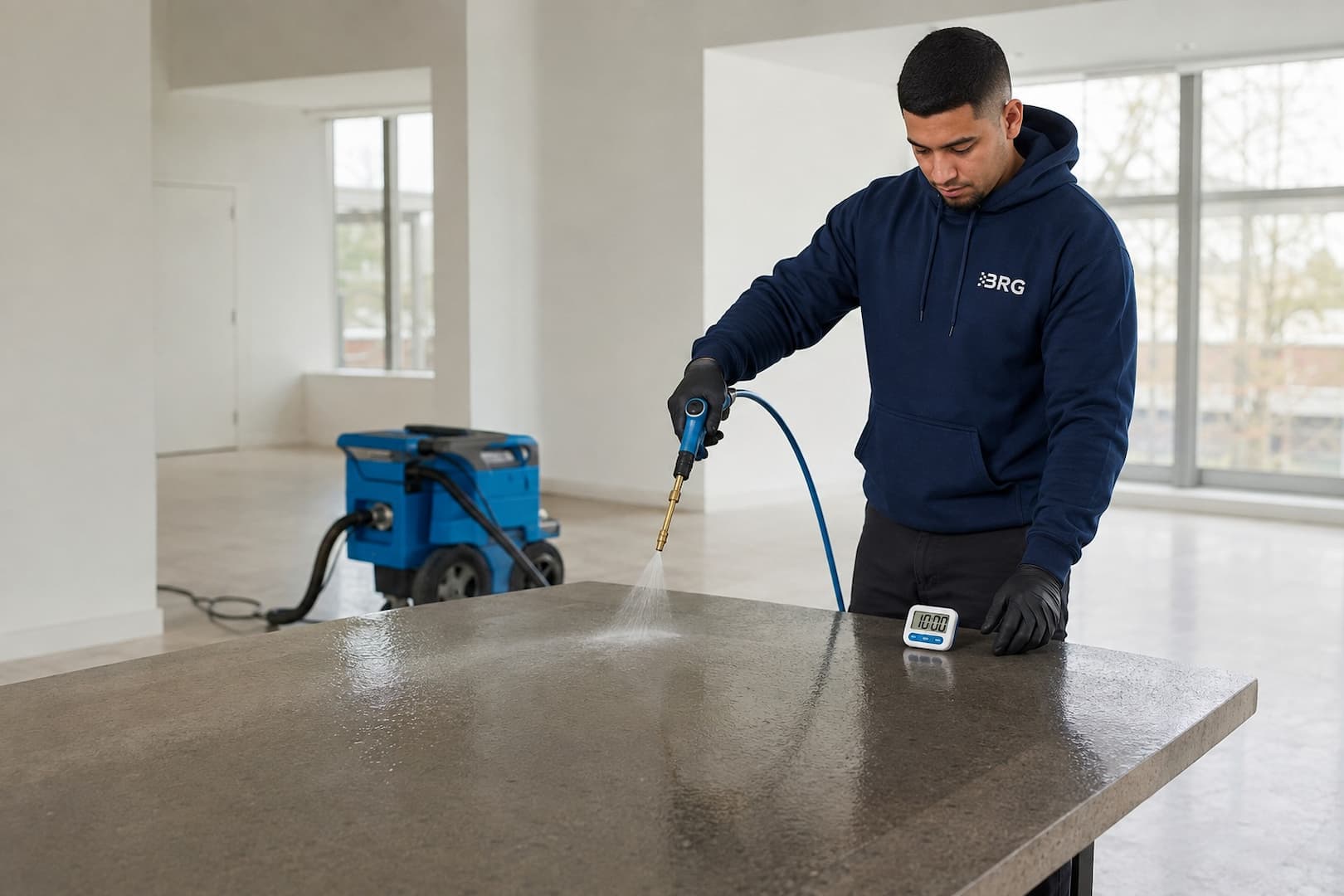
Contact time and reentry should be visible in the work plan
The property team receives a clear treated-area scope, product information, limitations, ventilation, and reentry conditions.
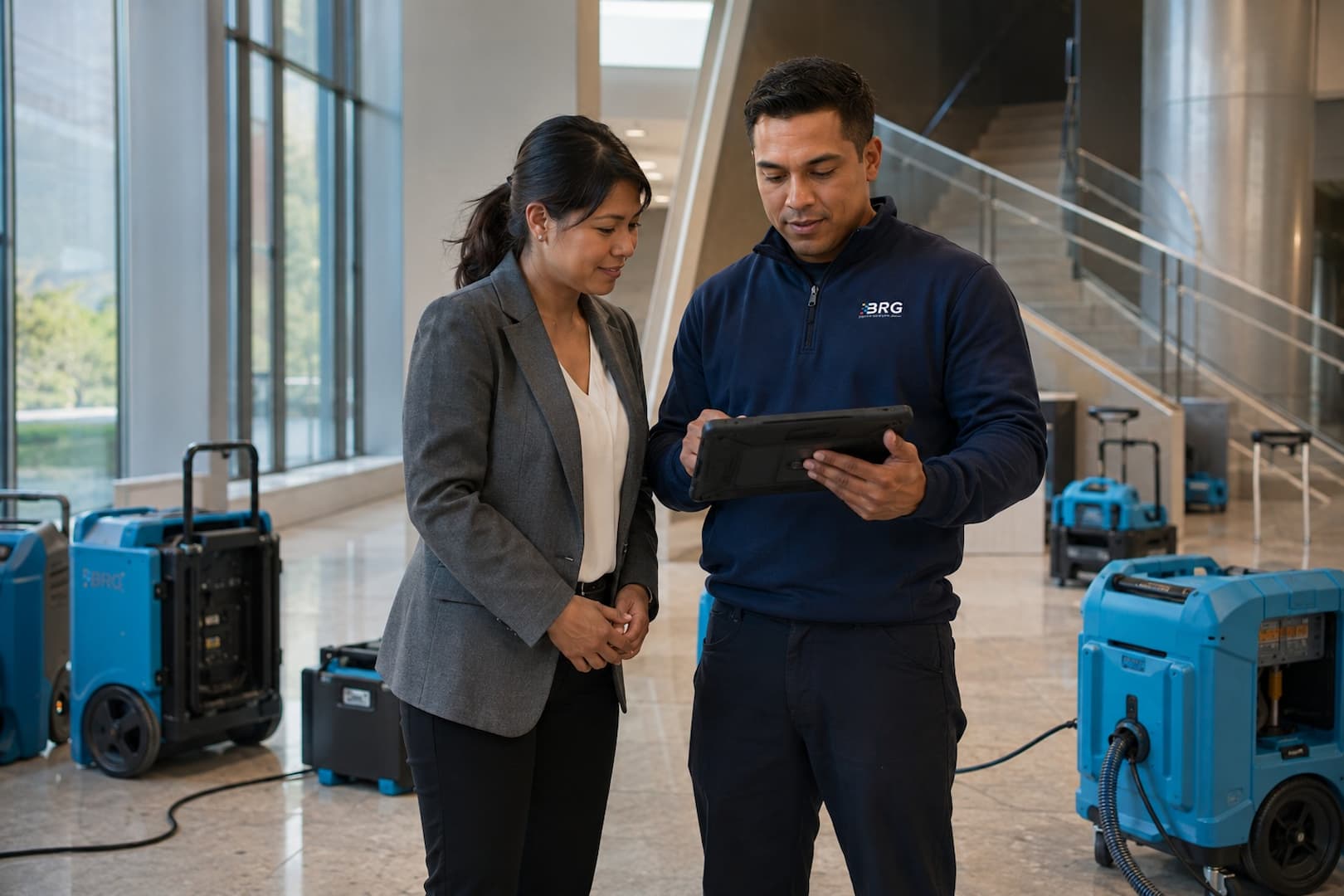
From contamination boundary to documented release
The process is adjusted for the property and event. Healthcare, food, trauma, regulated, or unknown hazards may require a different authority or specialist.
Identify event and responsible requirements
Record source, area, exposure route, occupants, affected surfaces, safety data, and authority or client criteria.
Establish zones and protect people
Set access, PPE, ventilation, clean and affected routes, contents movement, and reentry controls.
Remove soil and debris
Physically clean using surface-compatible methods while preventing cross-contact.
Apply product according to label
Use correct surface, concentration, method, contact time, temperature, ventilation, rinse, and disposal instructions.
Document treated areas and limitations
Record product, process, areas, time, exceptions, damaged materials, and any specialist or repair follow-up.
The record shows a controlled process—not an impossible certainty
BRG can document the defined area, contamination description, cleaning, product and label use, contact time, equipment, waste handling, and reentry information. Medical diagnosis, public-health clearance, sterility, and future exposure are outside a restoration contractor’s promise.
- Defined surfaces and exclusions
- Product and contact-time record
- Reentry and ongoing-cleaning responsibilities
Disinfection and sanitizing questions
The event, product label, surface, and occupancy determine the method.
What is the difference between cleaning and disinfecting?
Cleaning physically removes soil and debris. Disinfecting uses a suitable labeled product on a compatible surface after cleaning, following concentration and contact-time directions.
Can BRG certify that a property is germ-free?
No. BRG can document a defined cleaning and disinfection process. An ordinary property-cleaning contractor cannot promise sterility, medical safety, or protection from future exposure.
Can one disinfectant be used on every surface?
No. Product labels, porosity, finish, electronics, corrosion, food contact, colorfastness, and manufacturer instructions affect suitability.
Can occupants stay in the room during application?
The product label, method, ventilation, exposure route, and property rules determine occupancy and reentry. Work zones are normally controlled while treatment is underway.
Is fogging alone enough?
Usually not. Visible soil and contamination require physical cleaning or removal. Any aerosol or fog application must be label-authorized, surface-appropriate, and part of a defined plan—not a substitute for cleaning.
Request disinfection and sanitizing services
Tell BRG what occurred, when it occurred, which rooms and materials were contacted, who uses the area, what cleaning has already happened, and whether a health, food, school, employer, or property requirement applies.
617-202-3772- Do not mix or apply additional chemicals before assessment
- Keep occupants away from unknown residue or bodily fluids
- Share surface, ventilation, reentry, and operating constraints
Request a Disinfection Call
The event and surface list help us confirm scope and product needs.