
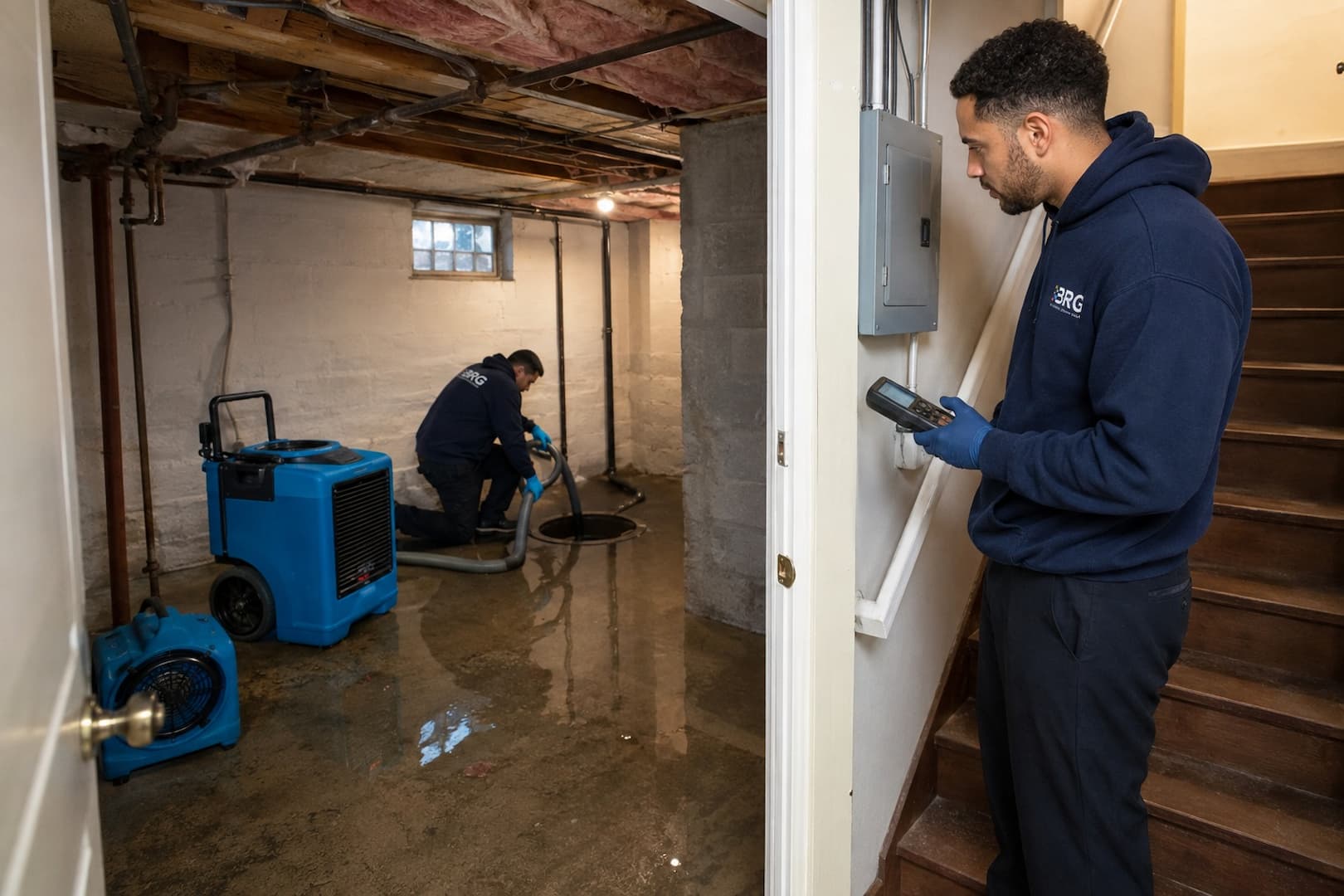
Sump Pump Backup Cleanup in Boston, MA
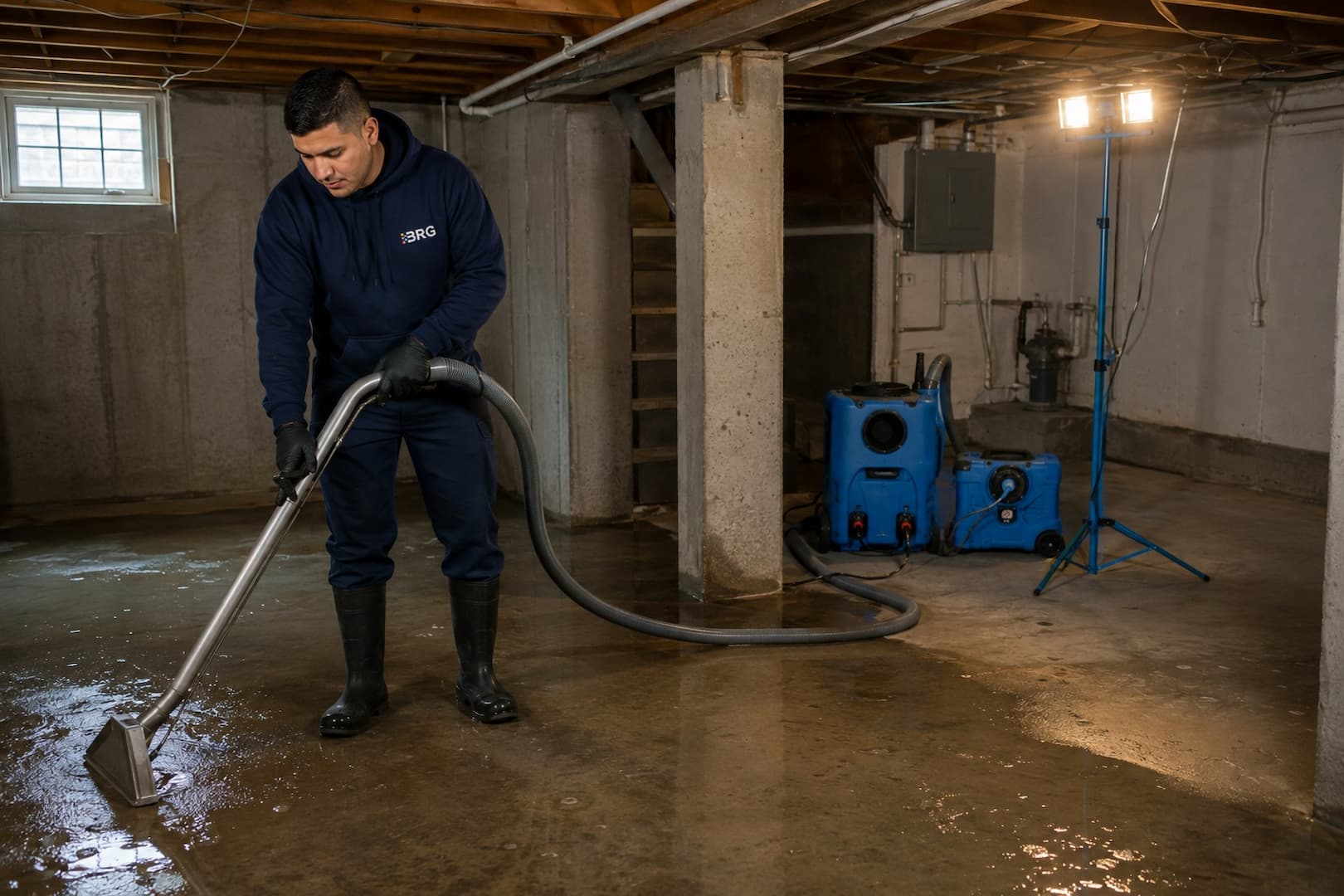
Basement water near a sump may result from pump failure, power loss, a stuck float, blocked discharge, overwhelmed drainage, groundwater entry, or a sewage-related backup. BRG establishes safe access and water condition, extracts accessible water, protects contents, and dries affected materials while the appropriate pump, plumbing, drainage, or electrical professional corrects the source.
Call the utility or electrician when water is near electrical systems or pump connections.
Pump, drainage, foundation, and sanitary backup conditions require different specialists and controls.
Water level, exterior groundwater, structure, access, and discharge route affect removal.
Cardboard, carpet, drywall, insulation, furniture, and stored items require early triage.
Water by a sump pit is not automatically a simple pump problem
Do not enter if water is near electrical panels, outlets, furnaces, boilers, appliances, or extension cords. Sewage odor, toilet or drain backup, fuel, chemicals, rapidly rising water, or structural movement changes the emergency response. Contact the appropriate utility, electrician, plumber, drainage contractor, fire department, or building professional before restoration entry.
Pump or power failure
A failed motor, switch, float, outlet, battery, or power supply needs qualified diagnosis before relying on the system.
Discharge or drainage issue
Blocked, frozen, disconnected, short-cycling, or poorly directed discharge can return water to the foundation.
Sewage or combined backup
Water emerging from drains or carrying sanitary residue requires contaminated-water controls beyond ordinary groundwater cleanup.
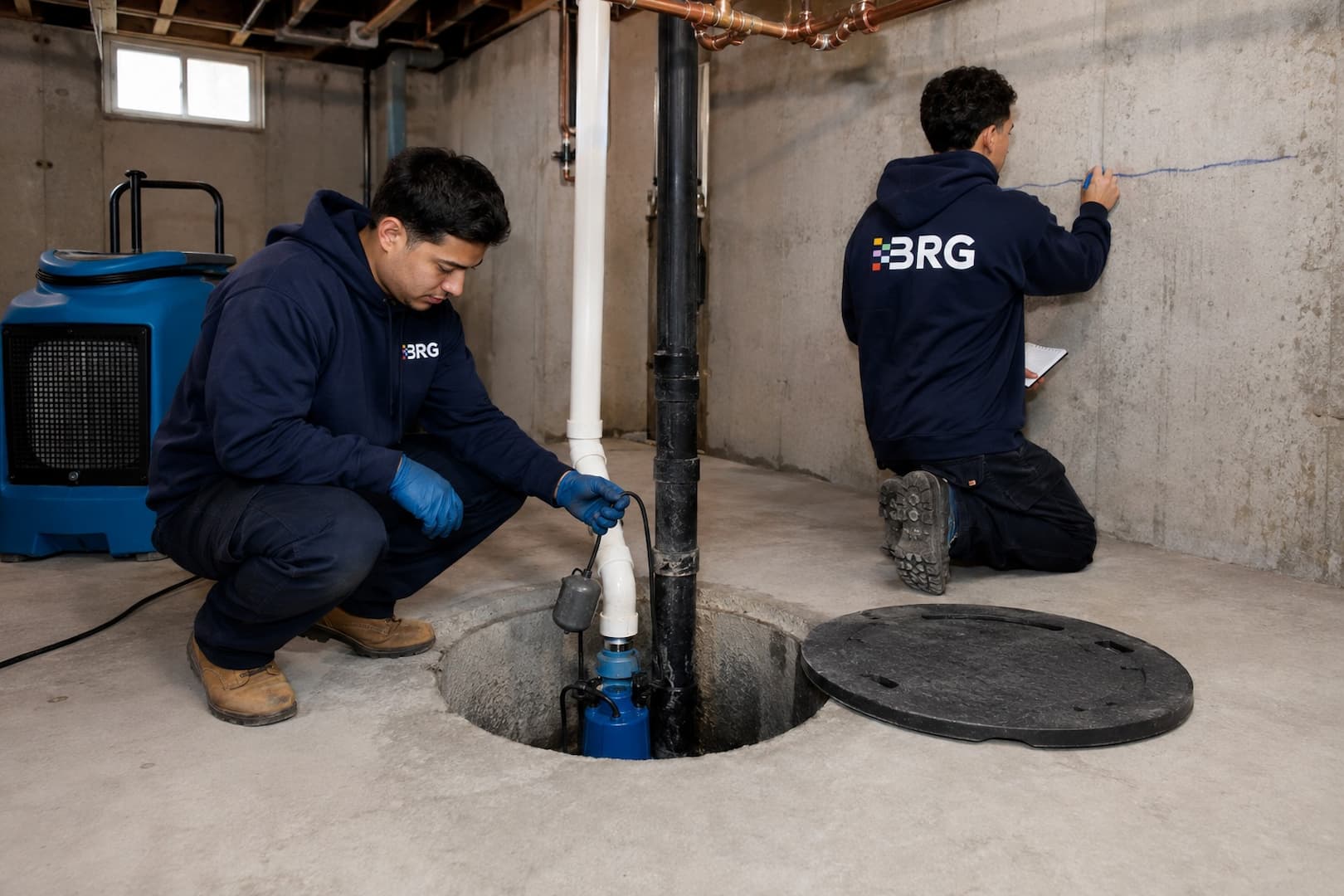
The pump, discharge, drainage, and groundwater level form one system
Replacing a pump may not solve an undersized pit, blocked discharge, exterior grading issue, footing-drain problem, power interruption, or inflow greater than the system can manage. Conversely, water at the lowest point may have entered elsewhere and only collected near the sump.
BRG documents water lines, entry clues, affected materials, contents, and room boundaries. The pump or drainage professional diagnoses the mechanical and site system. Restoration proceeds with a clear source status rather than an assumption based on where water settled.
- Record power loss and pump alarm history
- Photograph water lines and entry points from a safe location
- Share recent rain, snowmelt, frozen discharge, or drain behavior
Source and porosity change what can remain after extraction
Groundwater, surface entry, and sewage affect cleaning and removal differently.
Concrete and masonry
Evaluate
Water line, sediment, coatings, cracks, efflorescence, drainage, and drying goals for future finishes.
Drywall and insulation
Evaluate
Wicking, contamination, closed cavities, base plates, repeated events, and ability to clean or dry.
Carpet and flooring
Evaluate
Water source, cushion, adhesive, underlayment, floating layers, subfloor, and contamination.
Stored contents
Evaluate
Cardboard, paper, fabric, furniture, electronics, chemicals, and owner priorities by exposure.
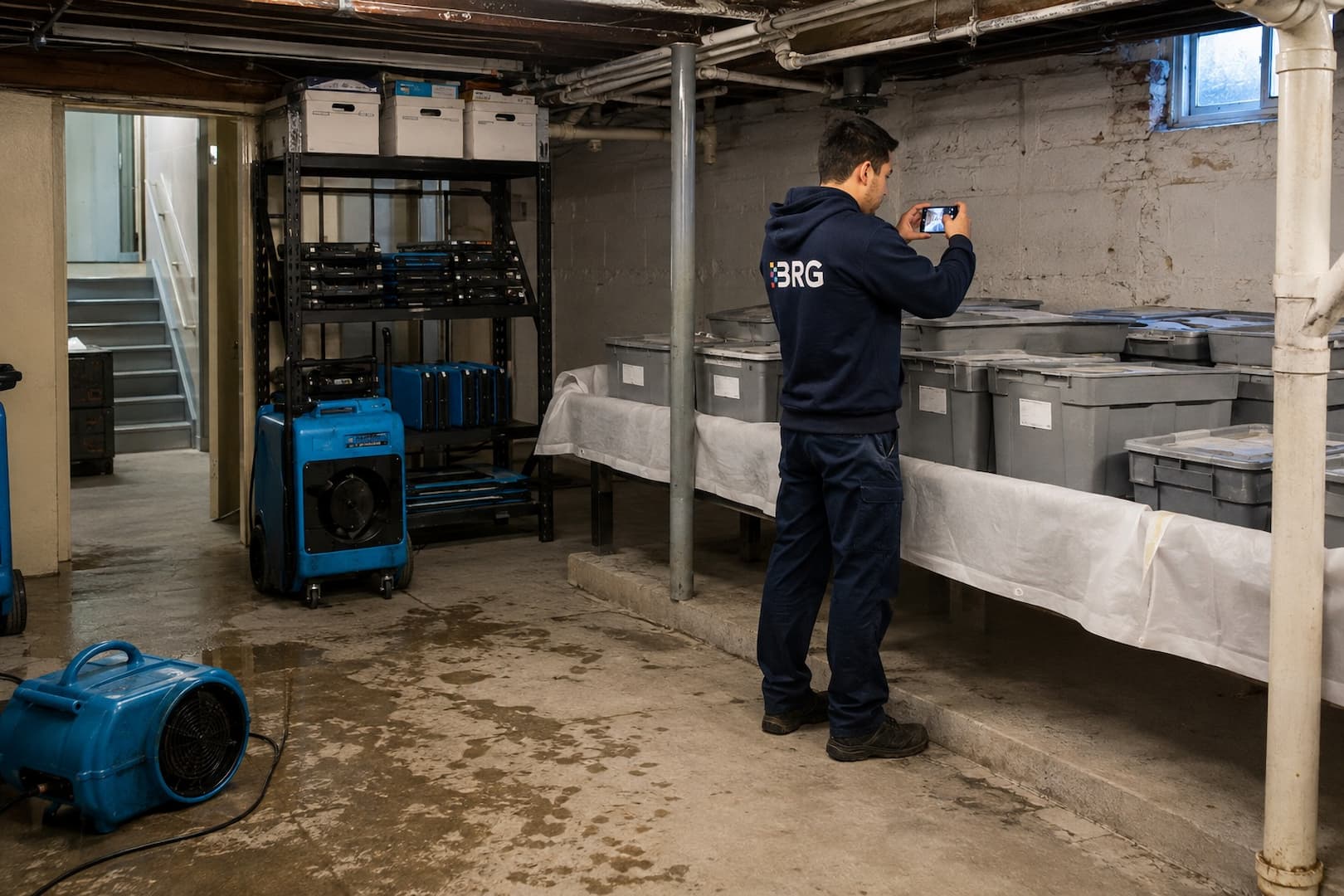
Contents movement and water extraction should follow one clean route
Organized triage prevents wet storage from blocking extraction or spreading water into dry rooms.
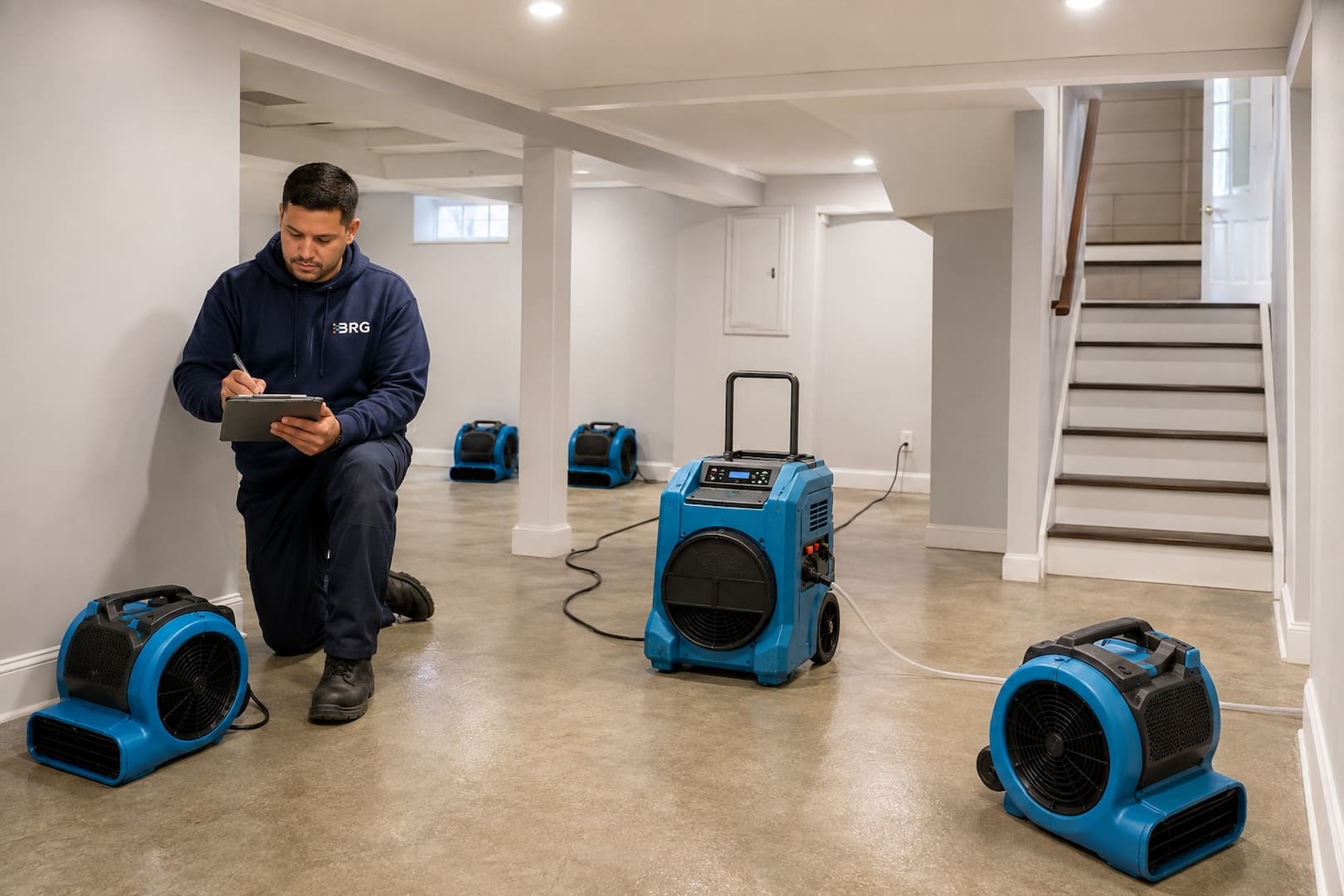
Restore the basement while the source system is corrected
Continued rain or groundwater can reintroduce water. Temporary pumping and monitoring may be part of stabilization until the permanent source solution is working.
Establish electrical and water safety
Record depth, source clues, sewage or chemical concerns, structure, utilities, and safe access.
Coordinate pump and drainage action
Have the responsible professional diagnose pump, power, float, pit, discharge, drains, and exterior water conditions.
Extract water and triage contents
Remove accessible water with a suitable discharge plan and separate wet, dry, and specialty items.
Clean, map, and dry materials
Apply source-appropriate cleaning, inspect wall and floor systems, and remove or dry materials by condition.
Verify and plan recurrence reduction
Document restoration completion while the property records pump, power, alarm, drainage, and repair actions.
Show why water entered, what it contacted, and what prevents recurrence
The lowest wet point does not explain the complete cause.
Pump and drainage findings
Power, pump, float, pit, discharge, drain, groundwater, weather, and repair status.
Depth and affected materials
Entry clues, water condition, rooms, walls, floors, contents, utilities, and readings.
Cleanup and future actions
Extraction, cleaning, drying, removal, contents decisions, and source improvements.
A working pump still needs power, discharge, and monitoring
The property’s pump professional can review capacity, check valves, discharge route, battery or generator options, alarms, pit condition, and maintenance. No single device eliminates all groundwater or drainage risk.
- Keep the pit and service area accessible
- Test and maintain the system as the manufacturer directs
- Review backup power and alarm notification appropriate to the property
Sump pump backup cleanup questions
The pump failure, water source, and basement materials each need an answer.
Can I reset or replace the sump pump myself?
Do not touch pump wiring or equipment while standing in water. A qualified pump, plumbing, or electrical professional should establish safe power and diagnose the system.
Is sump water considered clean?
Not automatically. Groundwater can carry soil and contaminants, while drain or sewage backup is a more serious contamination condition. The entry route and contacts are evaluated.
Can BRG pump out a deeply flooded basement immediately?
Extraction depends on electrical safety, water source, depth, structure, exterior groundwater, access, and discharge. Some conditions require a controlled site-specific plan.
Can basement drywall be dried in place?
Water source, wicking, insulation, cavity access, repeated exposure, integrity, and ability to clean and verify drying determine the scope.
How can another sump backup be prevented?
A pump or drainage professional can review capacity, power, alarms, check valves, discharge, pit, maintenance, and site drainage. The right measures depend on the property.
Request sump pump backup cleanup
Tell BRG the water depth, whether it is rising, pump and power status, recent weather, sewage or drain signs, utilities in the water, basement finishes, and affected contents.
617-202-3772- Do not enter water near electrical or mechanical equipment
- Mention odor, residue, fuel, chemicals, and structural concerns
- Provide basement access and pump or drainage contractor status
Request Sump-Backup Help
The source condition and basement layout guide safe response planning.