
Commercial Water Damage Restoration in Greater Boston
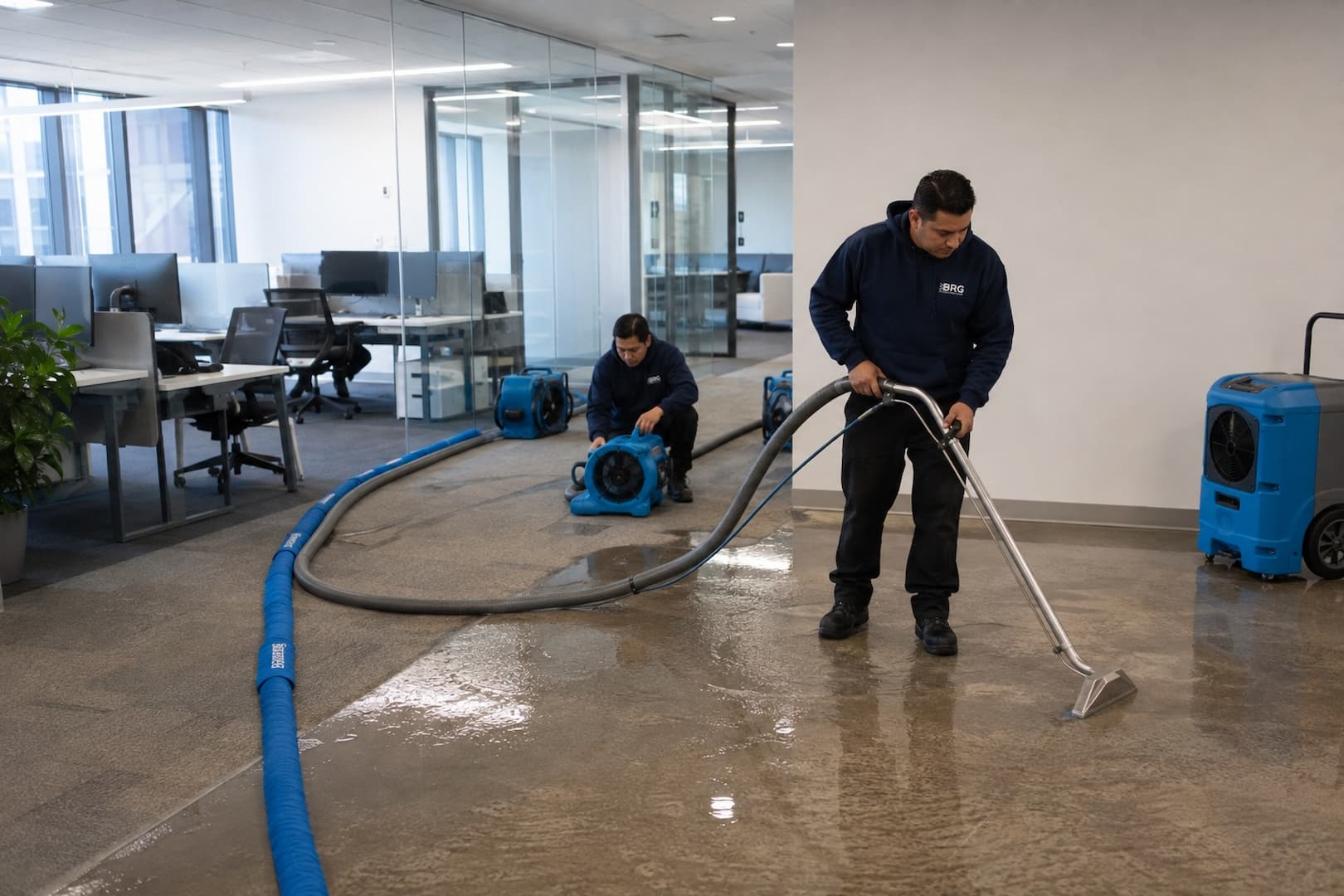
A burst pipe, sprinkler discharge, roof leak, equipment failure, or drain problem can cross suites, floors, ceilings, and operating zones quickly. BRG’s certified restoration specialists trace the source and water path, extract accessible water, protect unaffected areas, and monitor materials so owners and managers can make grounded repair and occupancy decisions.
- Commercial extraction and structural drying
- Floor, unit, and zone moisture records
- Operationally aware restoration planning
Record whether the water is active, isolated, repaired, or dependent on another trade.
Water can move through shafts, penetrations, floors, wall bases, and ceiling systems.
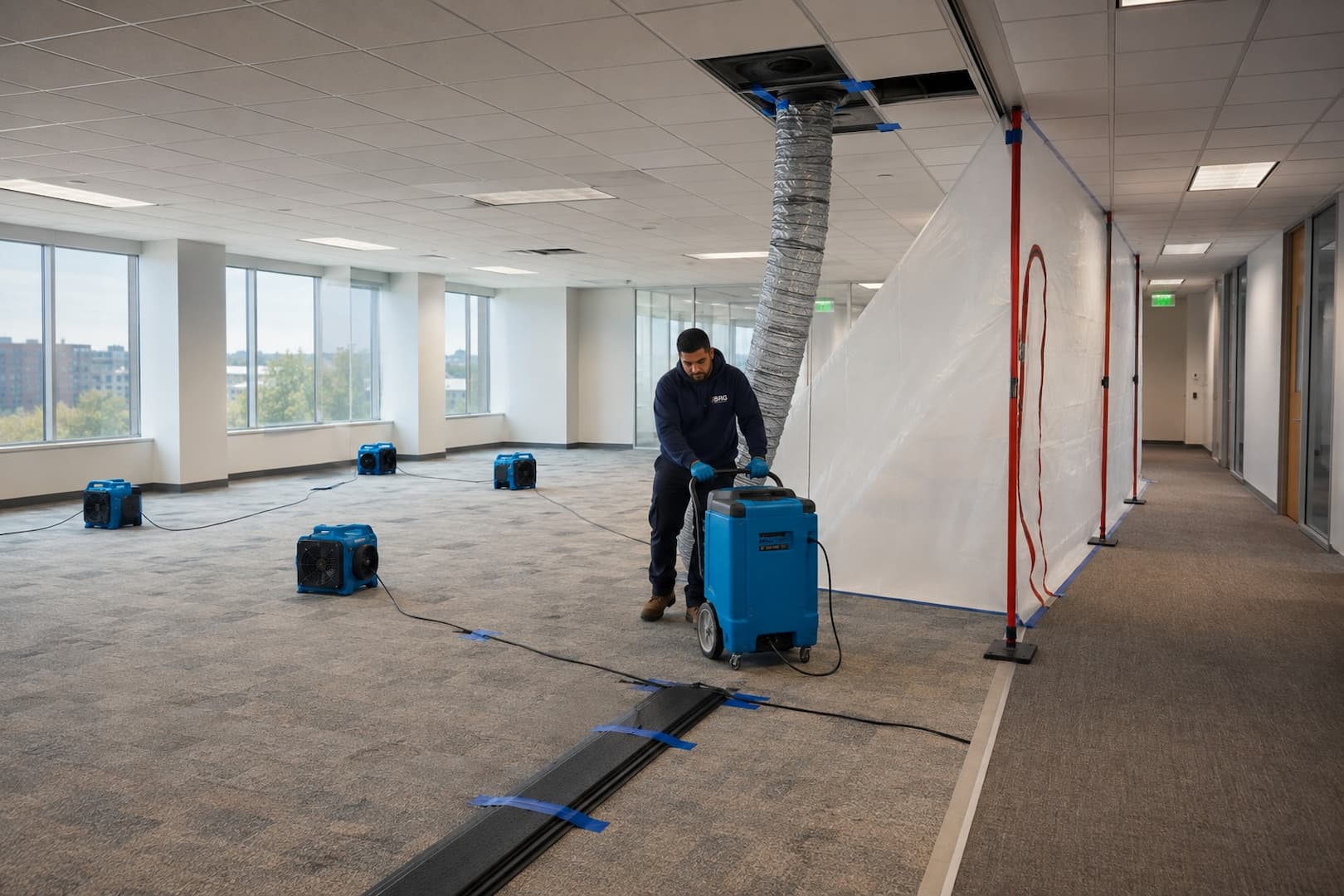
Equipment, hoses, noise, access, and debris routes are planned around occupancy and egress.
Material response—not an arbitrary calendar—supports equipment and drying decisions.
Commercial water follows construction and gravity across operating boundaries
Water released in one suite may spread under demising walls, travel down pipe and cable penetrations, collect above a ceiling, or appear several rooms away. Raised floors, insulated walls, resilient flooring, millwork, elevator lobbies, shafts, and acoustic systems complicate the visible picture.
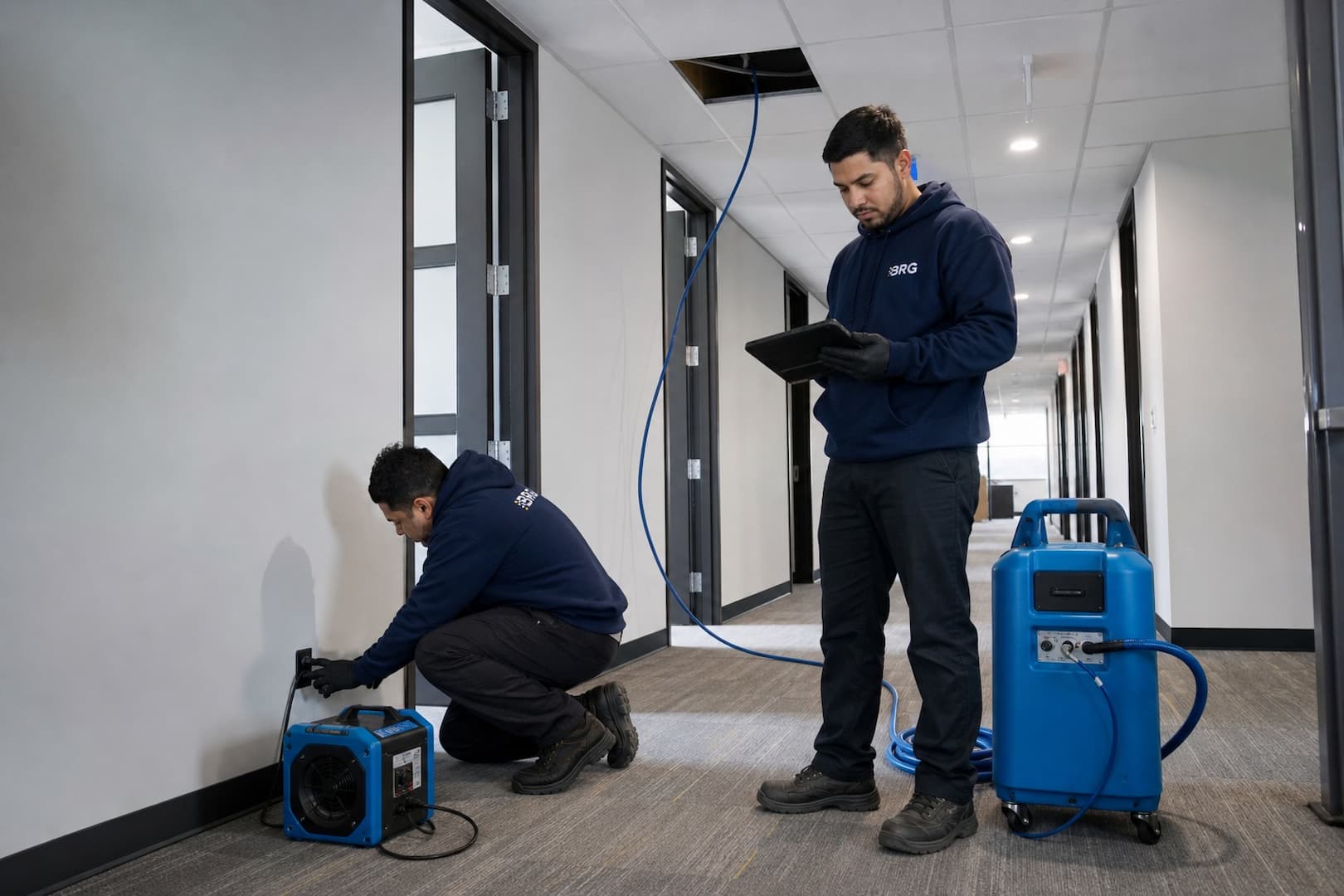
BRG establishes unaffected comparison areas and records conditions by building, floor, unit, room, and assembly as needed. That map helps the property team understand which spaces need extraction, controlled access, drying, selective removal, or further investigation.
- Check the level below and adjacent tenant boundaries
- Record ceiling plenums, wall bases, flooring layers, and built-in finishes
- Separate source repair from resulting-water restoration
The first extraction route should protect more than square footage
Safety remains first. After that, the team considers active spread, floors below, critical services, sensitive contents, public routes, tenant operations, water condition, and which materials will deteriorate fastest. A server room, medical area, archive, refrigeration space, or occupied residence may require a different sequence than an empty office.
Critical systems
Coordinate access around power, alarms, elevators, data, specialized equipment, and fire protection without operating outside restoration authority.
Sensitive contents
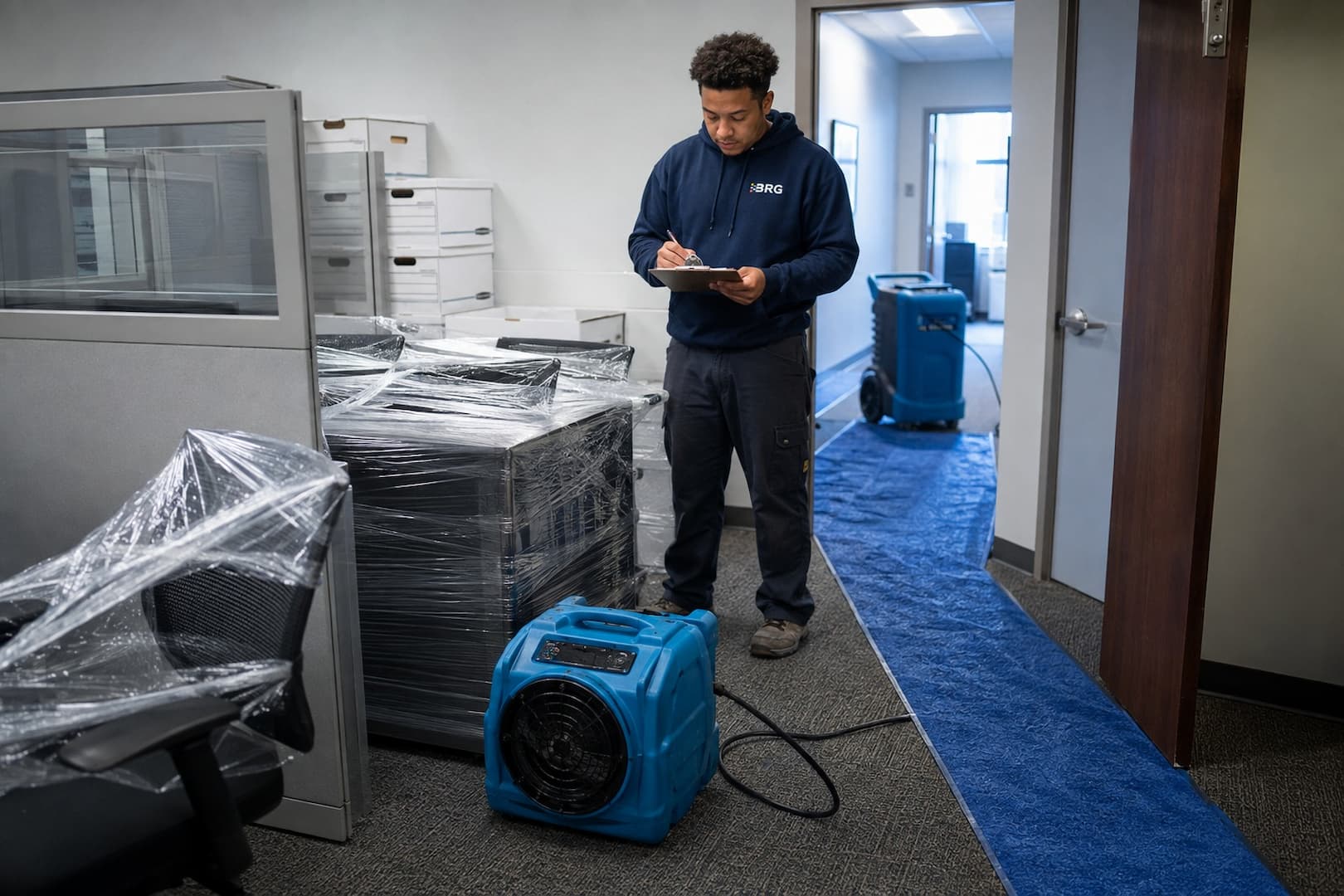
Prioritize documents, inventory, finishes, furniture, and specialty items by exposure, cleanability, use, and owner direction.
Tenant and public routes
Keep dry travel, egress, deliveries, and customer areas separate from extraction hoses, equipment, debris, and wet surfaces.
Dry the assembly while protecting the operation
Equipment zones and contents movement are planned together so a moisture solution does not create an access or handling problem.
A repeatable record with a property-specific sequence
Daily decisions depend on source status, water category, material response, access, occupancy, and approvals. BRG explains when a condition changes the plan.
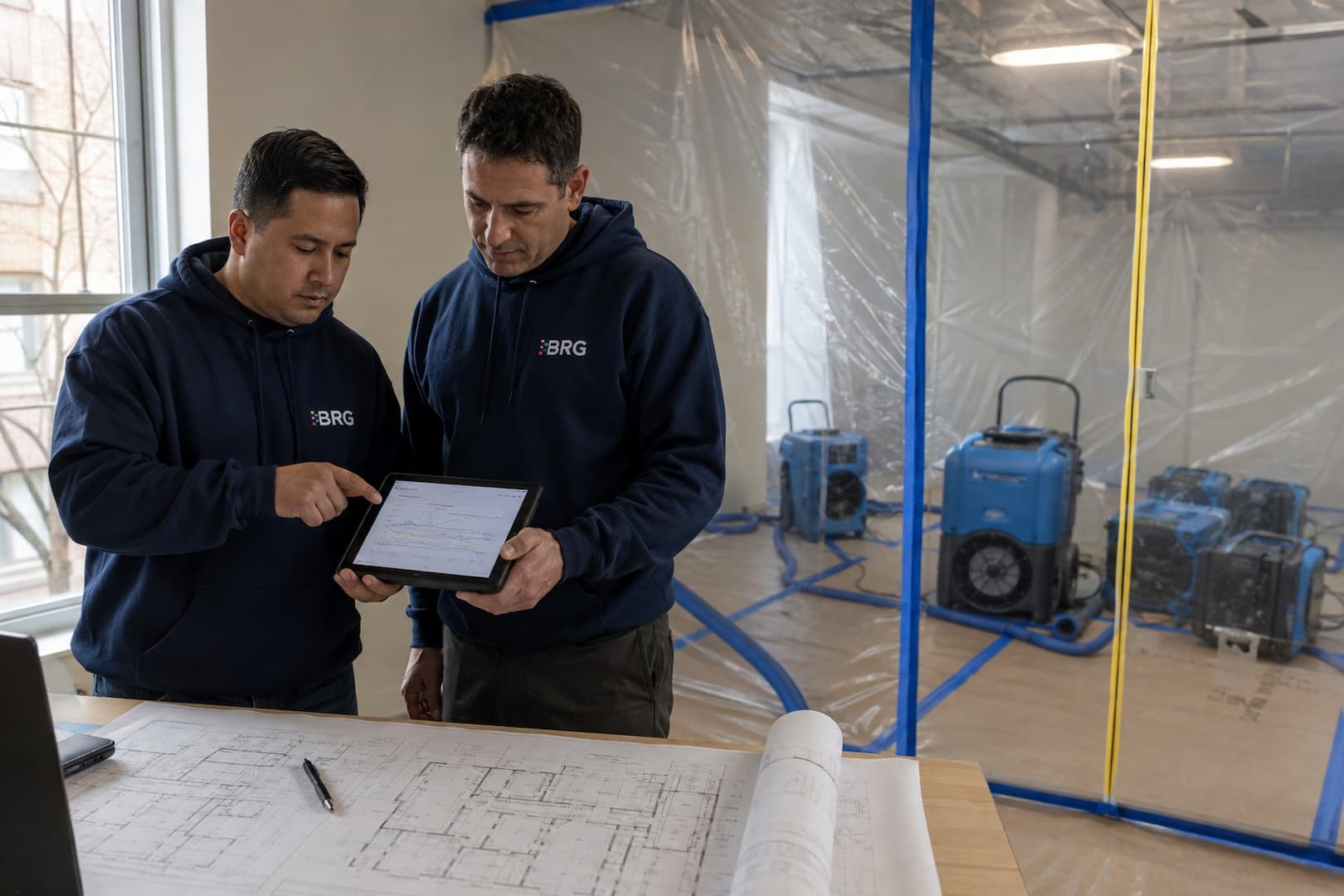
Assess source, safety, and operations
Confirm water status, hazards, affected levels, building systems, tenant needs, and authorized access.
Extract and establish zones
Remove accessible water and define wet, transition, dry, equipment, contents, and restricted areas.
Map materials and create access
Use readings and construction information to identify wet layers and select drying access or controlled removal.
Dry and monitor
Position equipment for exposed wet materials, track material response, and adjust while protecting egress and operations.
Release areas and hand off repairs
Document completed mitigation by zone and identify flooring, drywall, ceiling, millwork, paint, or system repairs still needed.
Three views help owners, tenants, and repair teams read the same project
The documentation should answer where the water went, what BRG did, and what remains.
Cause and source status
Reported event, discovery time, active or isolated source, emergency trade, water condition, and access limits.
Floor, unit, room, and assembly
Affected boundaries, moisture readings, contents, equipment, selective removal, and areas released.
Mitigation versus reconstruction
Material retained, material removed, finishes affected, temporary controls, and permanent work outstanding.
A documented scope supports review without deciding coverage
BRG can provide photographs, moisture and equipment records, room or zone notes, material-removal detail, and an itemized restoration scope. The insurer applies the policy and determines coverage; the property authorizes work and coordinates tenant, vendor, and repair decisions.
- Source and affected-area chronology
- Measured drying and completed work
- Open trade, contents, and reconstruction items
Commercial water restoration questions
The building, water source, operations, and material layers determine the answer.
Can BRG work while the building remains occupied?
Sometimes. Safe egress, utilities, water condition, noise, access, hoses, equipment, dust controls, and tenant separation must be workable. The property and applicable authorities decide occupancy.
Why are rooms below and next door inspected?
Water follows gravity and penetrations and can cross under walls or above ceilings. The release point does not define the complete moisture boundary.
Can carpet, ceiling tile, or wallboard stay?
The decision depends on water condition, exposure time, material integrity, contamination, access, backing or insulation, and whether drying can be verified.
How long does commercial drying take?
There is no responsible fixed answer before assessment. Material type, wetness, assembly depth, humidity, access, equipment conditions, and source correction all affect progress.
Will BRG communicate with the insurance carrier?
With authorization, BRG can provide project records and answer scope questions. The carrier determines coverage and the property remains responsible for work authorization and operational decisions.
Request commercial water damage restoration
Share the property address, source status, affected floors or units, water condition, critical operations, building contacts, and any electrical, elevator, fire-protection, or access restrictions.
617-202-3772- Keep occupants away from water near power and sagging ceilings
- Identify the level below and all known tenant areas
- Provide loading, security, elevator, and after-hours instructions
Request Commercial Water Help
A clear building and incident description helps BRG prepare the right first response.