
Residential Fire and Smoke Damage Restoration
After the fire is out, the loss is rarely limited to the burned room. Smoke can travel through doors, chases, and HVAC pathways while firefighting water moves downward. BRG builds one documented scope for stabilization, residue, moisture, contents, cleaning, odor source, and repairs.
- Work after official release
- Soot and residue assessment
- Contents triage and documentation
- Water mitigation and repair planning
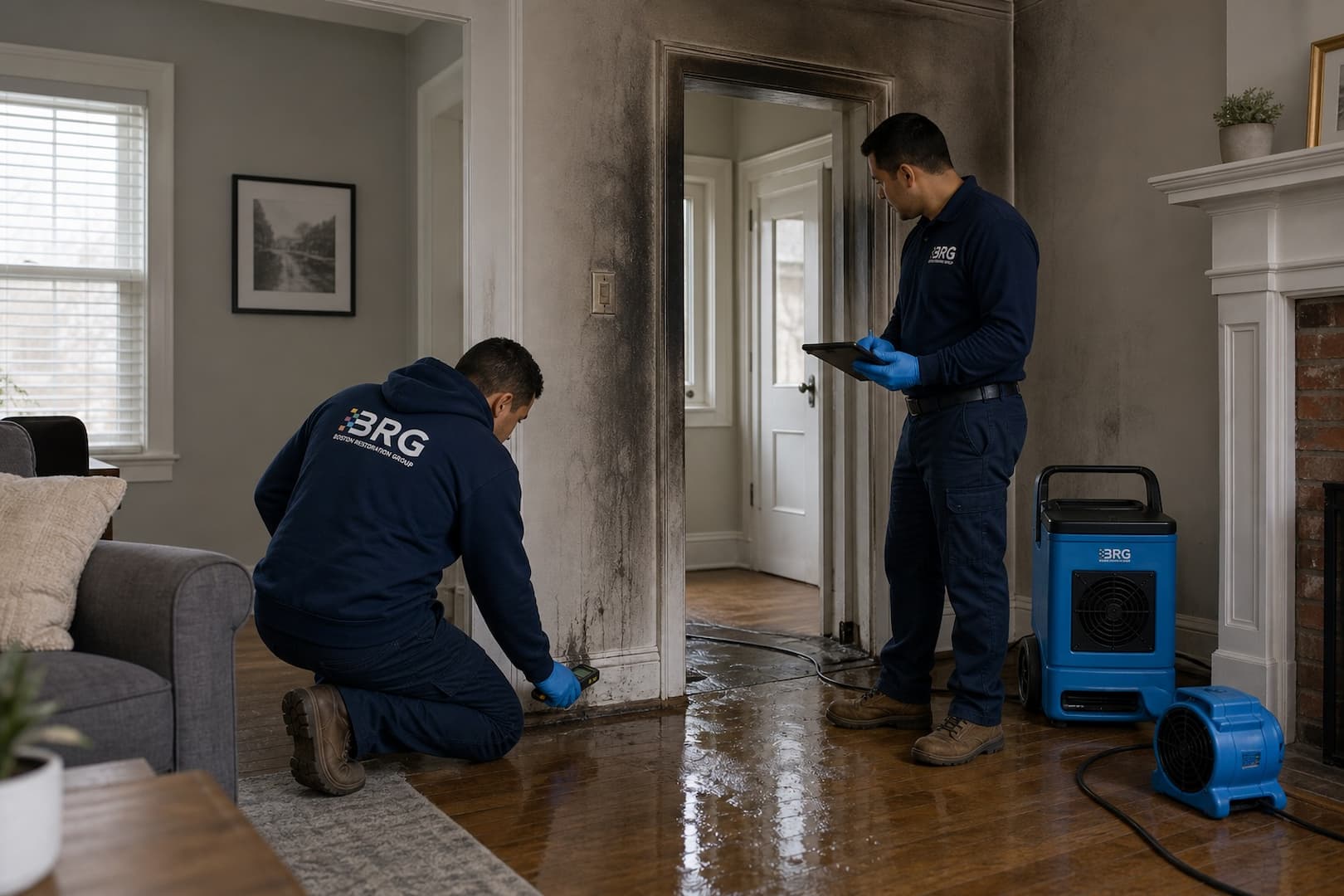
Stabilize first
Openings, utilities, water, loose material, access, and security are addressed before detailed cleaning.
Read the residue
Dry soot, wet smoke, protein residue, fuel-oil deposits, and fire-extinguisher agents behave differently.
Decide contents deliberately
Immediate protection, cleaning candidates, specialty items, and disposal decisions stay separate.
Create the repair handoff
The final file distinguishes stabilized, cleaned, retained, removed, and unrepaired materials.
The house may be released and still not be safe to occupy
Fire officials determine scene control. Utilities, structure, air quality, residue, water, and security still require project-specific decisions.
Confirm release and authority
BRG confirms that fire investigators or other authorities have released the work area and identifies who can approve access and contents handling.
Secure and stabilize
Temporary board-up, roof protection, utility coordination, standing-water removal, and unstable-material controls are documented as separate immediate needs.
Map fire, smoke, and water
The crew follows heat, soot, odor, extinguisher residue, and firefighting water through rooms and connected assemblies.
Protect and triage contents
Items at risk of secondary damage are identified. Pack-out, on-site cleaning, specialty referral, and disposal require different approvals.
Set cleaning and repair priorities
Test cleaning and material condition determine what can be restored and what belongs in the repair scope.
The room of origin does not tell the whole cleaning story
Hot smoke may carry fine particles into upper rooms and concealed pathways. Cooler surfaces can collect residue far from the fire. A kitchen event may leave protein-based residue with little visible soot. Smoldering plastics, wood, cooking oil, heating fuel, and extinguishing agents each affect surfaces and odors differently.
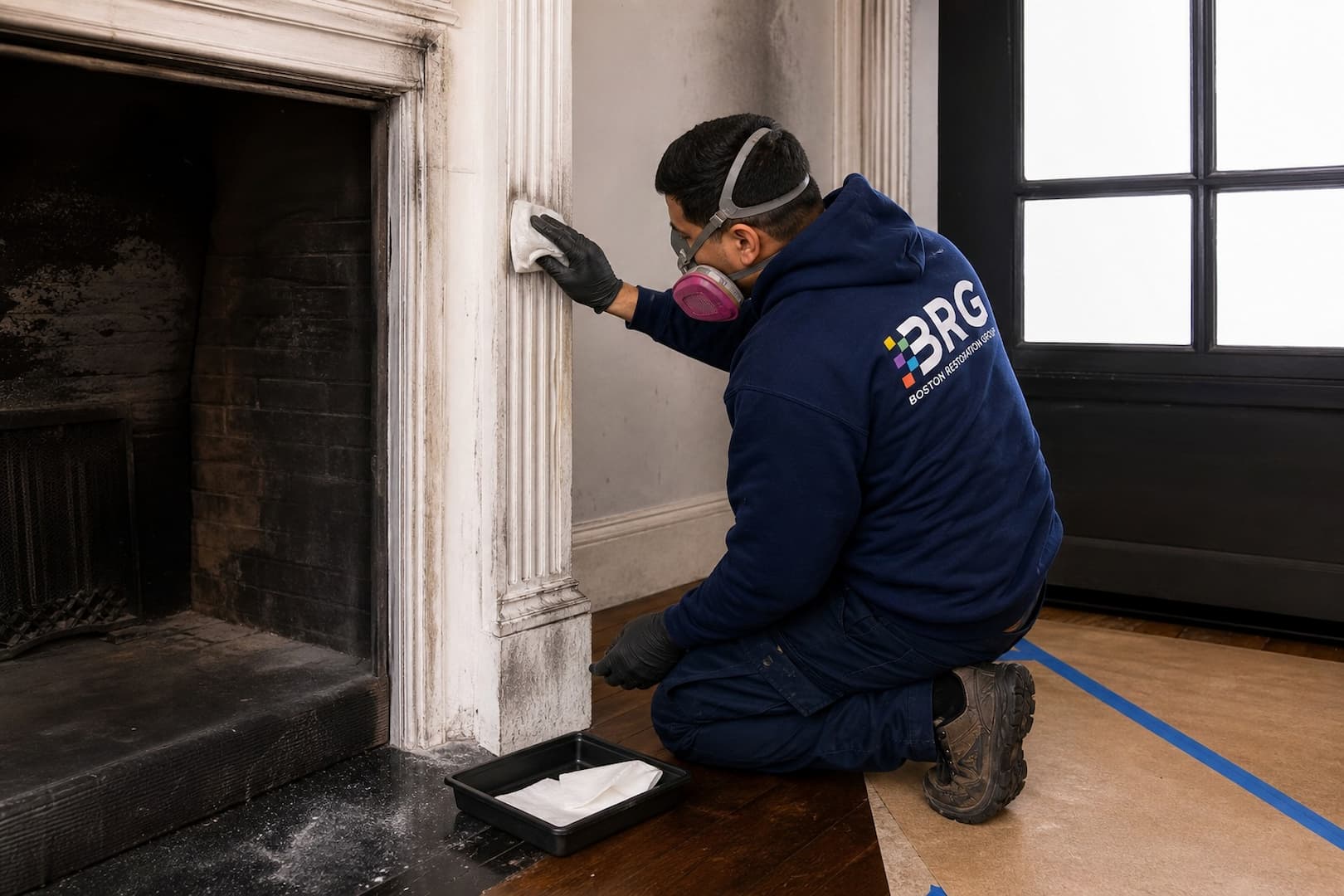
BRG documents the fire source information available, surface types, residue distribution, and cleaning-test results. The crew starts with the least aggressive effective method for a retained material. Painting over unremoved residue or applying fragrance before source cleaning can conceal a problem without resolving it.
Do not wipe soot before assessment
Improvised wet wiping can smear or set some residues into porous paint, textiles, stone, metal, and unfinished wood. Close the area and photograph visible conditions without touching them.
Structure, contents, HVAC, and water need connected decisions
The restoration plan stays useful when each track has its own condition, method, and handoff.
| Track | Questions to answer | Possible next step |
|---|---|---|
| Structure and finishes | Heat damage, char, soot, blistering, corrosion, porosity, and access | Clean-test retained surfaces; remove or refer materials that cannot be restored or require structural review |
| Contents | Material, sentimental or monetary value, residue, water, pack-out need, and specialist limits | Protect in place, clean on site, inventory and pack out, specialty refer, or document disposal |
| Firefighting water | Affected floors, wall cavities, insulation, contamination, and time | Extract, map, clean as needed, dry, and monitor as a water-mitigation track |
| HVAC pathways | System operation during the fire, return locations, filters, visible residue, and affected zones | Pause operation when appropriate and coordinate inspection or cleaning with an HVAC specialist |
| Odor | Remaining source material, concealed residue, contents, humidity, and air pathways | Remove sources and clean first; select supplementary odor treatment only for the remaining condition |
Personal items deserve an inventory, not a pile
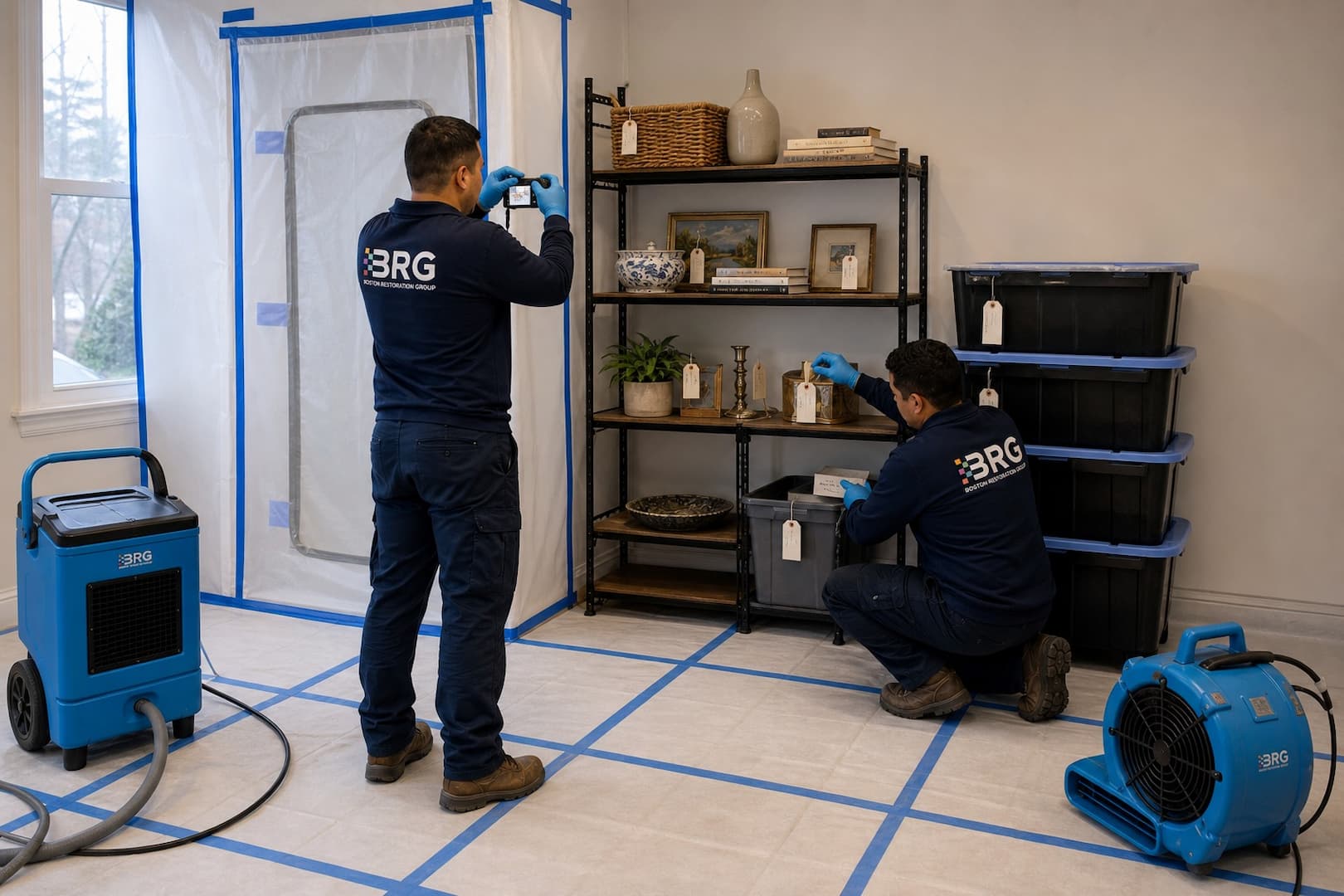
Some contents require immediate drying or corrosion control. Others can wait for owner review. Electronics, artwork, documents, musical instruments, antiques, textiles, and upholstered items may need specialists before anyone attempts ordinary cleaning.
BRG can photograph locations, create group or item records appropriate to the project, separate cleaning candidates, and maintain an approval path for non-salvage decisions. The inventory level should match the loss and stakeholder needs rather than produce paperwork no one can use.
- Identify medication, identity documents, keys, and items needed immediately.
- Flag heirlooms and specialty items before movement.
- Keep unaffected contents outside dirty transport routes.
- Do not discard the suspected failed appliance or component without authorization.
A complete record prevents the repair team from guessing
BRG separates emergency stabilization, cleaning, water mitigation, contents work, removed materials, retained materials, and remaining reconstruction. The insurer determines coverage; the restoration record describes the observed condition and work performed.
Fire, smoke, water, and opening conditions are recorded by area.
Test areas and retained-material methods support restoration decisions.
Demolition, cleaning completion, and unrepaired finishes stay distinct.
Fire and smoke restoration questions
Wait for official release and ask before entering, retrieving belongings, or changing utilities.
When can BRG enter after a fire?
Only after the fire department, investigator, or controlling authority releases the relevant area and an authorized property representative approves access.
Can all smoke damage be cleaned?
No. Restoration depends on residue, heat, material, finish, penetration, corrosion, and condition. Cleaning tests help distinguish suitable retained surfaces from repair or replacement needs.
Should the HVAC system be turned on?
Not until its condition and the smoke pathway are considered. Operation can move residue between zones. An HVAC specialist may need to inspect or clean the system.
Does deodorizing remove smoke damage?
Odor treatment is not a substitute for removing damaged source material and cleaning residue. Supplementary methods are selected only after source work defines what remains.
Can BRG help with insurance documentation?
BRG can provide photographs, inventories, measurements, scopes, cleaning records, and work documentation. Coverage, limits, valuation, and claim payment remain carrier decisions.
Are BRG employees certified?
Yes. All BRG employees are certified restoration specialists, and project-specific qualification information can be provided for the assigned team.
Request residential fire and smoke restoration
Call after release for urgent stabilization. Provide the address, release status, rooms involved, open roof or windows, standing water, utility status, occupants, pets, and authorized contact.
617-202-3772- Do not enter or remove contents before official release.
- Do not turn on HVAC equipment or wipe soot without assessment.
- Identify medications, documents, keys, and high-priority personal items.
Begin the fire-loss conversation
A project lead can collect sensitive details by phone after the first message.