Basement Flooded After Heavy Rain? First Steps Before Help Arrives

A basement flood after heavy rain can feel overwhelming in the first few minutes. Water is on the floor, the smell of damp materials starts building fast, storage boxes may already be wet, and homeowners are suddenly trying to decide whether the situation is annoying, serious, or dangerous. In many cases, it is all three.

What makes basement flooding especially stressful is that the source is not always obvious right away. Water may be entering through foundation cracks, window wells, door thresholds, overloaded drains, hydrostatic pressure under the slab, poor exterior drainage, sump pump failure, or a sewer or septic-related backup triggered by heavy rainfall. Two basements can look equally wet at first while requiring very different responses. Clean rainwater intrusion, gray water from drainage issues, and black water contamination from sewage-related backup are not the same event, and treating them as if they are can make the situation worse.

That is why the first hour matters. The right response can reduce damage to flooring, drywall, framing, insulation, appliances, and stored belongings. The wrong response—walking into electrified water, waiting too long to extract it, or assuming everything can just “dry on its own”—can turn a limited flood into a much more expensive restoration project.

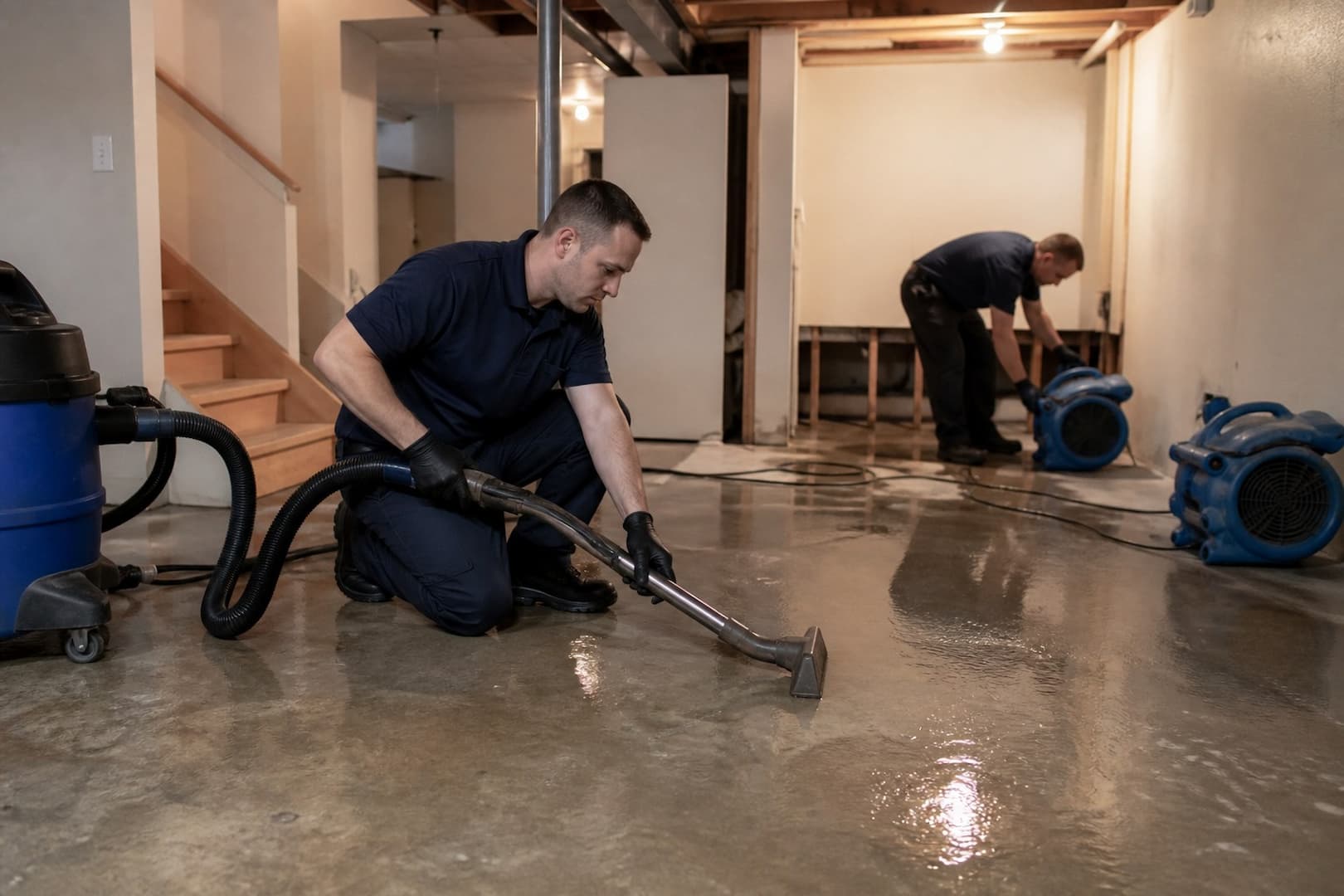
If water is already pooling across the floor, fast emergency standing water removal in Boston can make a major difference before moisture spreads deeper into wall cavities, floor materials, and contents.

But even before help arrives, homeowners can do a lot to protect the property and avoid common mistakes. This guide walks through the first steps to take after a basement floods during or after heavy rain, how to assess the type of water involved, what dangers to watch for, what can usually be saved, and when the problem has moved beyond DIY cleanup.

Why Basements Flood So Often After Heavy Rain

Basements are naturally the most vulnerable part of the house during major rain events because they sit below grade and are surrounded by soil that holds and redirects water. When rain falls faster than the property can shed it, pressure builds around the foundation. Water looks for the easiest path inward. That path might be visible, such as a crack in the wall or water running in through a low door. It might also be hidden, such as seepage where the slab meets the wall, a foundation penetration around a pipe, or subsurface water rising under the floor.

In Boston and surrounding areas, basement flooding is especially common in older homes because many properties have:

  • aging foundation walls
  • older perimeter drainage systems
  • narrow side yards with poor runoff control
  • basement windows close to grade
  • historic masonry or stone foundations
  • older sump pump systems
  • neighborhood drainage overload during heavy storms
  • finished basements that hide early warning signs until the water is already inside

Heavy rain can also trigger flooding indirectly. A sump pump may fail just when it is needed most. A storm drain system may back up. Gutters may overflow right next to the foundation. Downspouts may discharge too close to the house. Water may enter through a window leak, then collect in the basement below. Or a weather event may combine multiple problems at once.

If storm conditions affected more than just the basement itself, broader storm damage restoration may also be relevant when the flooding is part of a wider rain and weather-related property event.

The key point is that a flooded basement is not always “just water from rain.” The source determines the risk level, the cleanup method, and the materials that may or may not be salvageable.

The First Rule: Do Not Rush Straight Into the Water

The first instinct is often to run downstairs and start moving things. That is understandable—but it is not always safe.

Before stepping into a flooded basement, stop and think about the immediate hazards:

  • electricity
  • contaminated water
  • slipping hazards
  • ceiling or structural deterioration
  • appliances or mechanical systems exposed to water
  • hidden sharp objects under murky water

If water has reached outlets, appliances, extension cords, power strips, or the lower portions of mechanical equipment, there may be an electrical hazard. Even shallow water can be dangerous if energized. If you are not completely sure the area is safe, do not enter until power concerns are addressed appropriately.

Also remember that not all floodwater is clean. Water that entered through the foundation during rain may be relatively clean at first. But if the basement contains stored chemicals, dirty floor runoff, drain backups, or sewage-related contamination, the risk level changes quickly.

The safest approach is controlled observation first, not blind action.

Step 1: Figure Out Whether the Water Is Potentially Dangerous

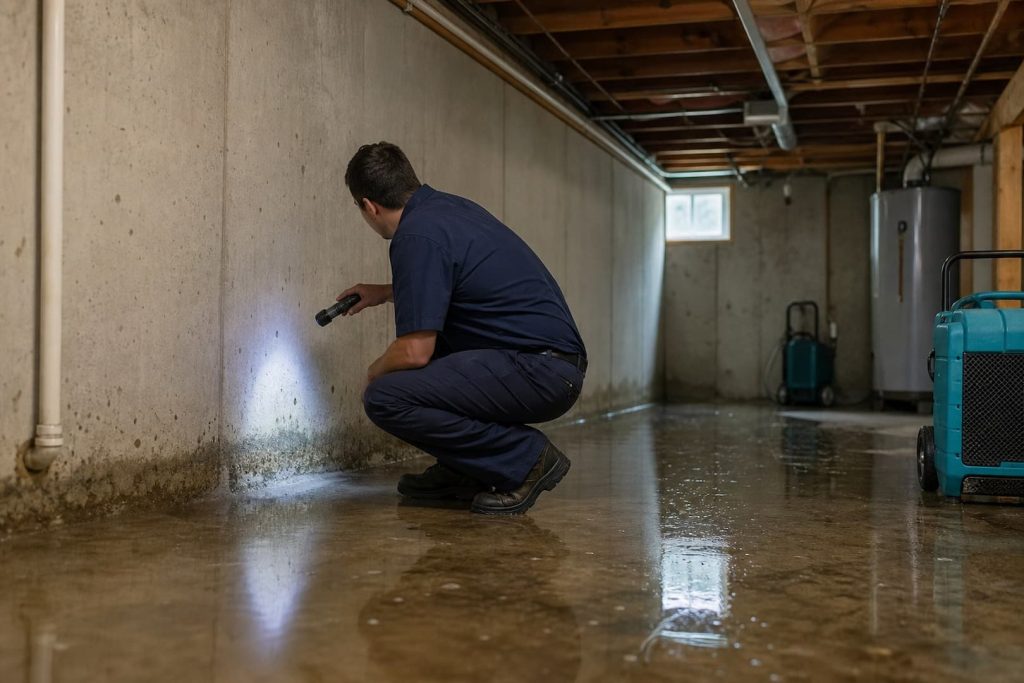
As quickly as possible, try to identify what type of water you may be dealing with. This matters because the cleanup standard for clean rain intrusion is different from a backup involving sewage or black water contamination.

Cleaner rain-related intrusion may involve:

  • clear or lightly cloudy water
  • water entering through foundation seepage or a basement window
  • sump overflow without sewage involvement
  • stormwater intrusion from exterior grading issues

Higher-risk contaminated water may involve:

  • strong foul odor
  • toilet or drain backup
  • visible debris or sludge from a drain opening
  • dark, dirty water with organic contamination
  • septic-related backup after saturation
  • sewer line overload during heavy rainfall

If the water appears contaminated, smells strongly of sewage, or clearly backed up from drains or toilets, the situation moves out of ordinary rain cleanup and into a higher-risk category. In that case, sewage cleanup and disinfection or black water cleanup may be the more appropriate response path than standard flood cleanup.

If the problem appears tied to a septic-related event—something that can happen when saturated ground and rainfall stress the system—septic backup cleanup may be especially relevant.

Do not assume all rain-related basement flooding is clean. One overloaded drain can change the risk category significantly.

Step 2: Shut Off Electricity to the Basement If It Is Safe to Do So

If you suspect water is near electrical wiring, appliances, outlets, or the electrical panel, safety comes first. If you can shut off power to the basement safely without entering the flooded area, do so. If the breaker panel is in the basement and the floor is already wet around it, do not approach it casually.

This is one of the most important moments to avoid improvisation. Homeowners get injured during flood events not because the water is deep, but because they underestimate electricity in wet environments.

Think about common basement electrical hazards:

  • washer and dryer connections
  • dehumidifiers and extension cords
  • chest freezers
  • sump pump outlets
  • furnace or boiler controls
  • electric water heaters
  • storage shelves with plugged-in devices
  • low-mounted outlets on finished walls

If there is any doubt, treat the area as unsafe until the power issue is addressed properly.

Step 3: Stop the Source If You Can Identify It

“After heavy rain” does not always mean the rain itself is the only source. In many basement flooding events, more than one pathway is active. If you can identify and safely address part of the problem, do it early.

Possible source actions include:

  • checking whether a sump pump has failed or lost power
  • confirming whether a hose, appliance, or interior supply line is also leaking
  • clearing a blocked floor drain only if it is safe and clearly minor
  • redirecting exterior downspout discharge away from the foundation
  • closing basement windows if wind-driven rain is entering
  • stopping additional water from entering through a doorway or threshold

This is also the stage where some homeowners realize the flood is not purely weather-driven. Sometimes a rain event reveals a separate plumbing issue or overwhelms an already weak system. If a burst or leaking supply line is involved too, the response changes quickly.

A basement taking on water from multiple sources is much more serious than a single isolated seepage point.

Step 4: Protect People, Pets, and Essentials First

Once immediate safety is addressed, shift to protection priorities.

Move people and pets away from the area. Then focus on:

  • medications
  • important documents
  • electronics
  • sentimental items
  • textiles and soft goods
  • boxes stored on the floor
  • furniture with legs sitting in water
  • anything absorbent that will deteriorate quickly

If the water is clean and the area is safe, raising items onto shelves, tables, or dry platforms can limit loss. If the water is contaminated, avoid handling porous belongings too freely until the contamination level is understood.

Do not waste your first 30 minutes on low-value clutter if there are irreplaceable items nearby. In wet environments, time matters most for paper, cardboard, fabrics, photos, and upholstered materials.

Step 5: Document Everything Before Major Cleanup Starts

This step is easy to skip when the situation feels urgent, but it matters. Before large-scale removal begins, take photos and short videos of:

  • the standing water
  • the apparent entry points
  • damaged belongings
  • water lines on walls
  • wet flooring
  • stained drywall or insulation
  • affected mechanical areas
  • exterior conditions such as overflowing gutters or window well issues

If the problem later turns into an insurance matter or a dispute about causation, that documentation is useful. It also helps track the spread of damage that may not seem obvious in the moment.

A basement flood can look smaller than it really is because moisture travels into baseboards, wall bottoms, subfloor materials, storage contents, and concealed cavities before visible signs catch up.

Step 6: Start Removing Standing Water as Soon as Conditions Are Safe

The longer water sits, the worse the damage becomes. Even shallow standing water can wick into:

  • drywall
  • wood trim
  • insulation
  • doors and jambs
  • laminate flooring
  • engineered wood
  • carpet and pad
  • stored boxes
  • furniture legs
  • framing at the wall base

This is why extraction is often the biggest priority after safety and source control. Household towels and mops can help with minor wetness, but a genuinely flooded basement usually needs much more than that.

If the amount of water is more than a small isolated area, prompt flood damage restoration is often the better path than trying to manage a significant basement event with shop towels and slow air drying.

Homeowners often underestimate the difference between getting the visible water up and removing enough moisture to prevent deeper material damage. Those are not the same thing.

Step 7: Separate What Is Wet Into “Likely Salvageable” and “Probably Not”

One of the biggest questions after basement flooding is what can be saved. The answer depends on three things:

  1. what type of water entered
  2. how long materials stayed wet
  3. what those materials are made of

Often salvageable if addressed quickly:

  • plastic bins and contents inside if sealed
  • metal shelving
  • washable hard-surface items
  • some solid wood furniture with limited contact
  • non-porous tools
  • some electronics if not submerged and handled correctly
  • certain finished surfaces if water did not remain long

Often difficult or unsafe to salvage:

  • cardboard boxes
  • loose paper storage
  • upholstered furniture
  • rugs and carpet pads in contaminated water
  • insulation
  • particleboard furniture
  • laminate materials that have swelled
  • drywall that wicked water upward
  • porous contents exposed to sewage or black water

Do not decide salvageability based only on how the item looks right now. A cardboard box can appear mostly intact and still have moisture damage inside. A wall may look dry from the front while insulation behind it is wet.

If the basement contains carpeted sections, the response may depend on whether the water was clean and how fast extraction began. Where carpet and pad have taken on significant moisture, carpet water damage cleanup and drying may be a better fit than assuming a fan in the corner will solve it.

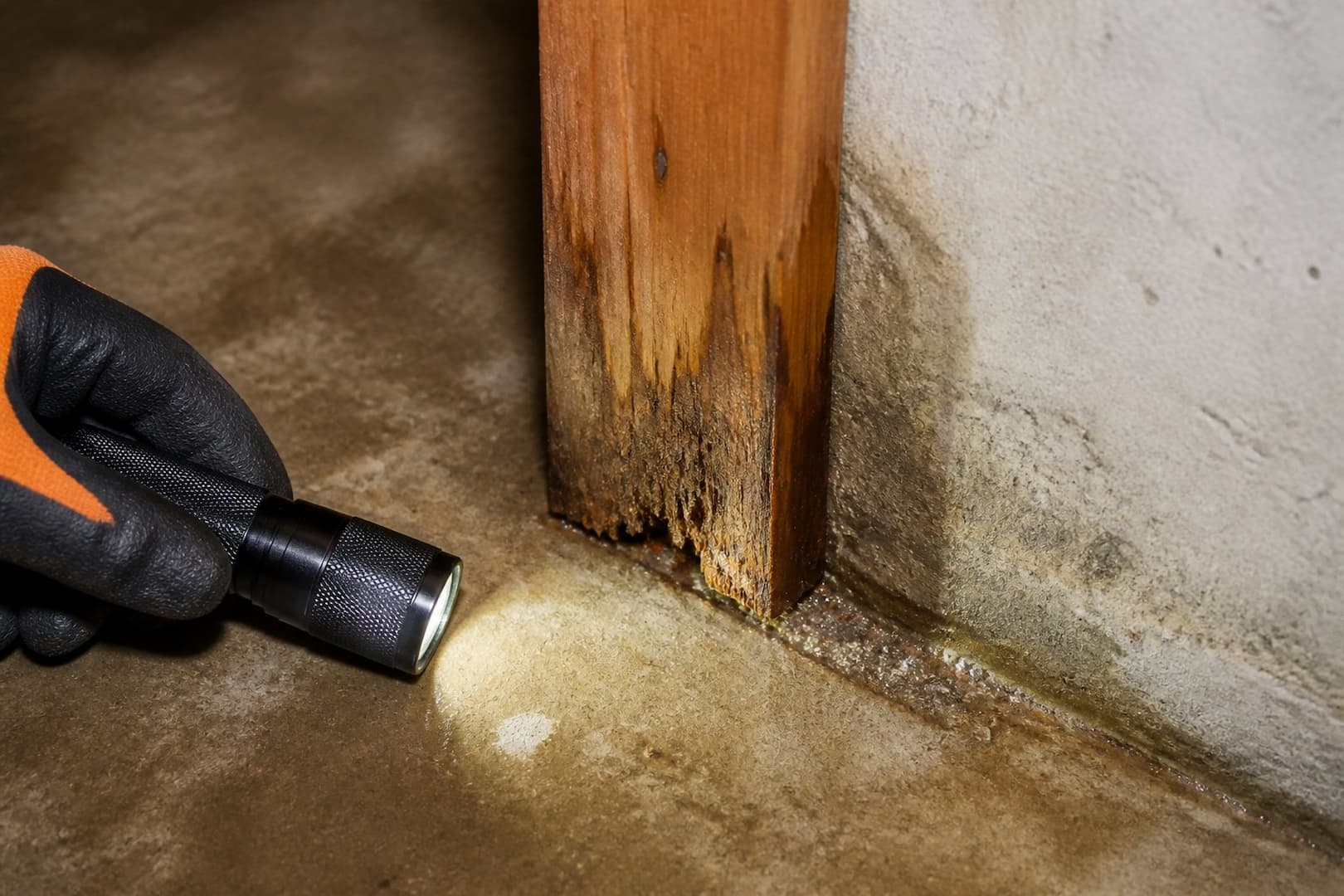
Step 8: Watch the Lower 12–24 Inches of Walls Carefully

Basement walls tell an important story after flooding. Even when water depth seems minor, drywall and wall assemblies may already be affected.

Pay attention to:

  • swelling baseboards
  • soft drywall at the bottom edge
  • staining or bubbling paint
  • trim joints opening up
  • musty odor beginning near wall lines
  • wet insulation inside finished walls
  • paneling that looks warped or darkened

Water does not need to be deep to damage walls. Even an inch or two on the floor can wick upward into drywall and trim. In finished basements, the visible floor water is often only part of the damage. The lower wall cavity may be holding moisture long after the floor looks better.

This is one reason delayed cleanup often leads to bigger tear-out needs later. Once moisture becomes trapped in finished walls, the problem shifts from simple water removal to controlled drying and selective demolition.

If removal of wet materials becomes necessary, a service such as debris removal, tear-out, and haul-away can become relevant when damaged drywall, insulation, flooring, and unsalvageable basement contents have to be cleared efficiently.

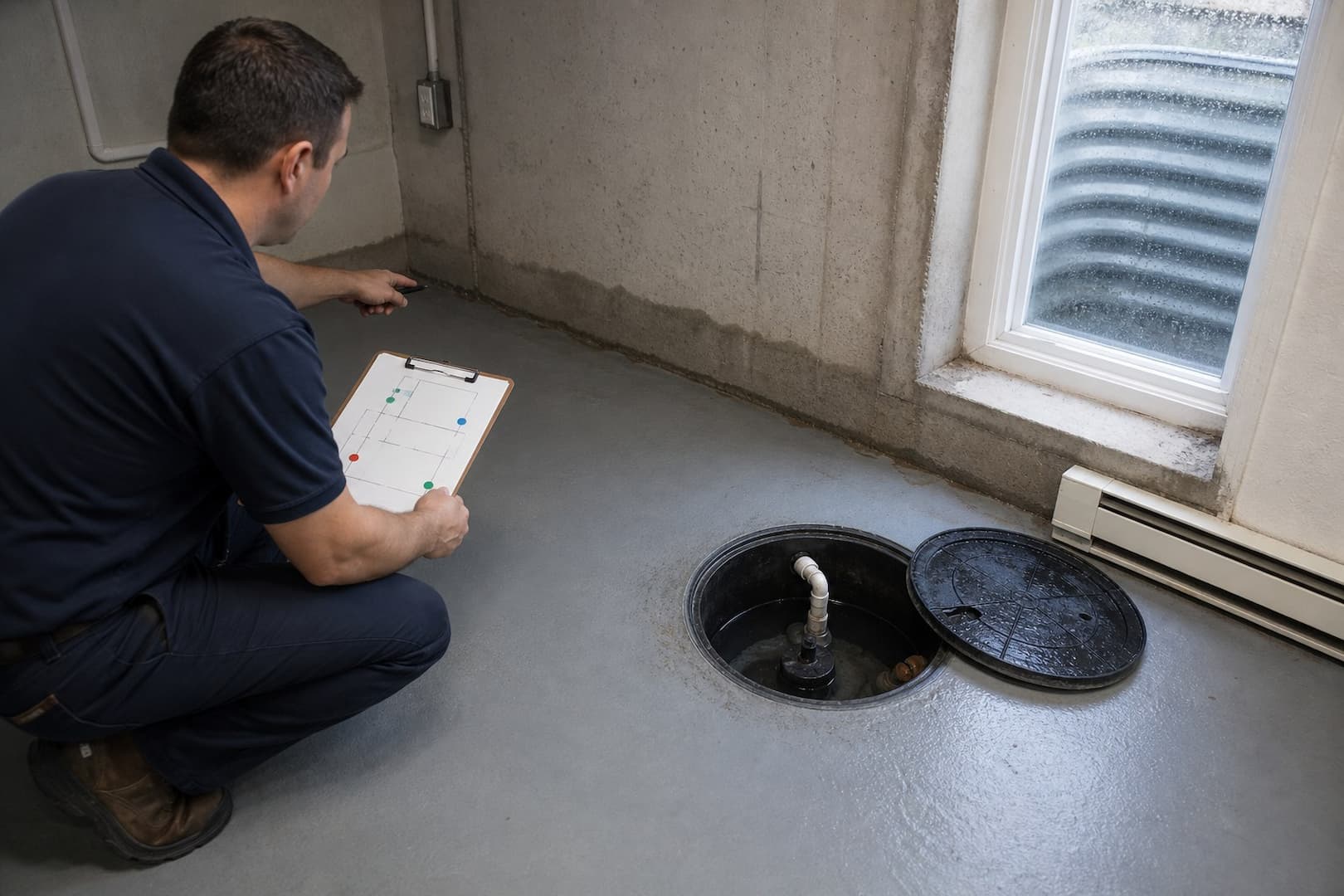
Step 9: Do Not Assume a Sump Pump Means the Crisis Is Over

Many homeowners feel relief the moment the sump pump starts running again. But that does not necessarily mean the basement is safe or drying properly.

A sump pump can:

  • reduce active water buildup
  • help lower the water level
  • keep new water from rising as fast

What it cannot do by itself is:

  • extract standing water already spread across finished areas
  • dry soaked drywall or insulation
  • disinfect contaminated surfaces
  • prevent hidden moisture in wall cavities
  • save already saturated storage contents
  • correct exterior drainage problems

If the flood happened because the sump system failed during the storm, there is also a chance it may fail again during the next heavy rain unless the underlying issue is corrected.

A rain-related basement flood tied to sump trouble often pairs naturally with sump pump backup cleanup when the event is specifically connected to a basement sump failure or backup condition.

Step 10: Start Drying Immediately—But Know the Limits of DIY Drying

After water extraction, drying starts right away. This is the stage where many homeowners unintentionally underestimate the seriousness of the event. They open a window, set up a fan, maybe plug in a dehumidifier, and assume the rest is time. Sometimes that is enough for a very small, clean, quickly addressed spill. Basement flooding after heavy rain is usually not that kind of event.

Basements dry slowly because they are:

  • below grade
  • naturally cooler
  • often poorly ventilated
  • surrounded by moisture-bearing materials
  • full of corners, storage, and concealed cavities
  • sometimes finished with materials that trap water

Good drying requires more than air movement. It requires removing moisture from materials and air at the same time, while checking where water traveled beyond the visible area.

This is also where homeowners discover that their basement “smells mostly fine” for a day or two, then develops a stronger damp odor later. That delayed smell is a warning that moisture remained where surface cleanup did not reach.

If drying needs go beyond ordinary household equipment, restoration equipment rental may make sense in situations where professional-grade drying gear is needed but the property owner is coordinating part of the response directly.

Common Basement Flood Sources After Heavy Rain

Understanding the likely source helps prevent repeat events. Not every flooded basement starts the same way.

1. Hydrostatic pressure

After prolonged rain, groundwater pressure builds around the foundation and pushes water through cracks, joints, or porous foundation materials.

2. Foundation wall or floor seepage

Water may enter through small cracks, cold joints, penetrations, or the wall-floor seam.

3. Window well intrusion

Basement windows near grade often take on water when wells fill or drain poorly.

4. Sump pump failure

A pump can fail because of power loss, mechanical failure, float problems, clogs, or simply being overwhelmed.

5. Gutter and downspout problems

Overflowing gutters or downspouts that discharge too close to the house can dump huge volumes of water near the foundation.

6. Exterior grading issues

If the yard slopes toward the house, heavy rain naturally drives water against the foundation instead of away from it.

7. Sewer or drain backup

Stormwater overload can force wastewater backward through drains in some properties, dramatically raising contamination risks.

8. Septic overload

In some homes, saturated conditions can contribute to septic-related backup behavior after heavy rain.

9. Window or door threshold leakage

Water may enter through low points in basement access doors, bulkheads, or poorly sealed basement windows.

The cleanup response may look similar at first, but prevention depends on knowing which of these pathways was active.

How to Tell If the Water Was Clean, Gray, or Black

This question affects everything from salvage decisions to cleaning standards.

Clean water

Usually comes from rain intrusion or a clean supply source. It may still carry dirt, but it does not begin as heavily contaminated wastewater.

Gray water

Contains more contamination than clean water, possibly from appliance discharge, minor drain problems, or dirty runoff. It is riskier and needs more caution.

Black water

Highly contaminated water, often involving sewage, septic waste, toilet backup, or drain overflow carrying dangerous pollutants and biological contaminants.

Heavy rain can turn a seemingly straightforward flood into a contamination event quickly if drains back up or wastewater systems become involved. This is why odor, source, and visible debris matter so much.

If there is any real sign of black water conditions, black water cleanup is the right internal service reference rather than ordinary rain intrusion cleanup.

What Not to Do After a Basement Flood

Knowing what to avoid is just as important as knowing what to do.

Do not enter standing water casually

Especially if electricity, mechanical systems, or contamination may be involved.

Do not wait a full day to “see if it dries”

Basement flooding gets more expensive with delay.

Do not leave wet boxes stacked together

They trap moisture and ruin contents faster.

Do not keep soaked porous items indoors indefinitely

They continue releasing moisture and odor into the space.

Do not repaint or seal over wet walls

That only traps moisture.

Do not assume bleach solves everything

Bleach is not a complete basement flood solution, especially when materials are still wet or contamination is significant.

Do not run HVAC equipment thoughtlessly

In some situations, circulating damp or contaminated air can spread odor and moisture issues through the house.

Do not ignore the smell

A musty or foul odor after cleanup is not just unpleasant—it usually means something remained wet or contaminated.

If odor persists after the visible water is gone, disinfection and sanitizing services or residential odor damage restoration may become relevant depending on whether the issue is microbial, contamination-related, or persistent post-flood odor trapped in materials.

What About Finished Basements?

Finished basements are often where flood damage escalates fastest because water can hide behind clean-looking surfaces.

A finished basement may contain:

  • drywall
  • insulation
  • laminate or engineered flooring
  • carpeting and pad
  • MDF trim
  • built-ins
  • upholstered furniture
  • electronics
  • home office equipment
  • media systems
  • stored textiles and paper goods

The visible puddle on the floor is only the beginning. Water can wick into wall bottoms, under flooring, behind baseboards, and into insulation before obvious staining appears. This is why homeowners sometimes think they “caught it in time,” only to discover swelling trim, odor, or buckled flooring days later.

If the basement includes wood or laminate floor finishes, damage may spread more than expected from shallow water alone. In some cases, hardwood and laminate water damage restoration becomes relevant even when the flood depth never looked dramatic.

Special Risk: Water Near Boilers, Water Heaters, and Mechanical Systems

Basements often house critical equipment. When floodwater reaches a boiler, furnace, water heater, electrical panel, laundry appliances, or connected piping, the issue becomes more than a flooring cleanup problem.

Pay attention if water reached:

  • burner assemblies
  • control boards
  • ignition components
  • lower appliance housings
  • drain pans
  • pipe insulation
  • nearby wall cavities
  • condensate lines

In some homes, the storm-related flood reveals a second issue such as a condensate line failure or a boiler leak. When the water source is partly mechanical rather than solely storm-driven, the response may overlap with more targeted cleanup scenarios.

For example:

A basement flood after rain can sometimes expose a separate water issue that was already developing.

How Fast Does Mold Risk Start?

Homeowners often worry about mold immediately after a flood, and the concern is justified—but the most useful way to think about it is this: mold risk is not just about time, it is about unresolved moisture.

If water is extracted quickly, wet materials are dried correctly, and damaged porous materials are removed where needed, the risk can often be contained. If moisture remains trapped in wall bottoms, carpets, insulation, stored contents, or subfloor materials, the risk rises fast.

This is especially true in basements because they already tend to be humid, cool, and poorly ventilated. Even clean rainwater, if left in materials long enough, can create conditions where mold becomes a secondary problem.

That is why a flood response should not stop at “the floor looks dry now.”

When the Problem Is Bigger Than a Homeowner Cleanup Job

Some basement floods are manageable with fast action, minimal water volume, and a clearly clean source. Many are not.

The problem has usually moved beyond normal DIY cleanup when:

  • more than a small area is affected
  • water depth was significant
  • contaminated water is involved
  • drywall, insulation, or flooring wicked moisture
  • odor develops quickly
  • the source is still uncertain
  • the basement is finished
  • contents losses are widespread
  • storm conditions may recur before the area is stabilized
  • the homeowner cannot verify complete drying

At that point, the goal is not just getting the basement “looking better.” It is making sure the structure, materials, and indoor environment are actually returning to a safe and stable condition.

Preventing the Next Basement Flood

Once the immediate event is under control, prevention becomes the next priority. Basement flooding after heavy rain is often a repeat-risk problem unless the cause is addressed.

Common prevention measures include:

  • cleaning and repairing gutters
  • extending downspouts farther from the house
  • regrading soil away from the foundation
  • checking basement window wells and drains
  • maintaining and testing sump pumps regularly
  • adding battery backup for sump systems
  • sealing known entry points where appropriate
  • monitoring foundation cracks
  • reducing clutter on basement floors
  • storing valuables in sealed bins off the ground
  • identifying sewer or septic vulnerabilities before the next storm season

If the flooding pattern appears tied to major weather events, your basement is effectively part of the home’s weather-damage profile, not just a random leak zone.

FAQ: Basement Flooded After Heavy Rain

Is basement floodwater after rain always dangerous?

Not always, but it is never smart to assume it is safe. It may be relatively clean rain intrusion, or it may involve sewage, septic, or drain contamination.

Can I just use fans and a dehumidifier?

For a very minor event, maybe. For a real basement flood, visible drying is usually not enough by itself.

Should I throw everything out right away?

No. Sort carefully based on water type, material type, and how long items stayed wet. But do not cling to porous contaminated items that are unlikely to be safely salvageable.

How do I know if the walls got wet?

Look for soft drywall, swelling trim, paint bubbling, musty odor, or staining. In finished basements, hidden wetness is common.

Can a flooded basement cause long-term odor even after cleanup?

Yes. Persistent odor usually means moisture or contamination remained in materials, cavities, or contents.

Final Thoughts

A flooded basement after heavy rain is one of those home emergencies that starts out looking like a simple water problem and quickly reveals itself to be much more. The real issue is rarely just the puddle on the floor. It is the combination of source, safety, contamination level, hidden moisture, material absorption, and how long everything stays wet.

In Boston homes, where older basements, foundation vulnerabilities, sump issues, weather exposure, and finished lower levels are common, the smartest response is to act early and methodically. Make the area safe. Identify the type of water. Stop what you can. Protect people and essentials. Document everything. Remove standing water fast. Then take hidden moisture seriously, because that is where many basement floods become far more expensive than they first appear.

And perhaps most importantly, do not let the calm after the rain fool you. A basement can look dramatically better once the water is gone, while still holding moisture in walls, flooring, insulation, contents, and air. The visible water is only the beginning. The real recovery comes from making sure the space is not just cleaner, but truly dry, safe, and stable before the next storm hits.