
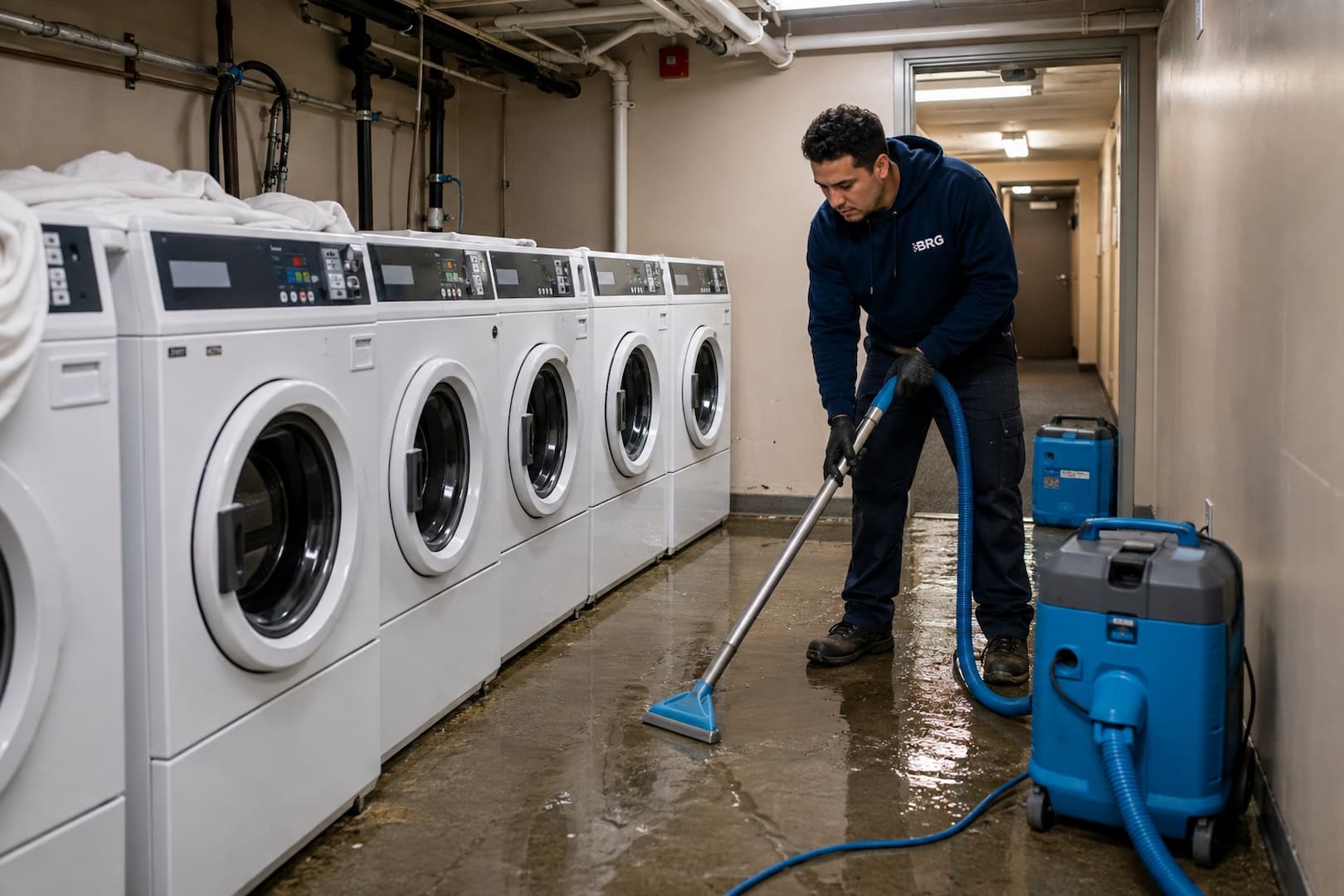
Washing Machine Overflow Cleanup in Boston, MA
A failed supply hose can release water under pressure, while a standpipe backup, drain hose problem, pump leak, or tub overflow may discharge only during a cycle. BRG identifies the resulting water condition, extracts accessible water, maps connected rooms and floors below, and coordinates restoration access with the appliance or plumbing repair.
Do not reach behind a wet energized washer or repeat a cycle to diagnose the leak.
A clean supply hose release and a standpipe backup require different cleaning controls.
Hallways, closets, walls, floor cavities, and lower units may be affected quickly.
A full washer and wet floor create lifting, tipping, connection, and finish-damage risks.
A washer loss combines water, electricity, weight, and moving connections
Use a known safe control or shutoff only if it is reachable without entering water or pulling the appliance. If the hose is spraying, water is near electricity, or the ceiling below is affected, keep people out and call building management, the utility, emergency services, plumber, or appliance professional as the condition requires.
Supply hose or valve
A pressurized hot or cold connection can release a high volume until isolated and may spray into the wall or behind the machine.
Standpipe or drain backup
Stop use, report residue and odor, and treat water that returned from the drainage system as potentially contaminated.
Tub, pump, or door
The machine may need controlled diagnosis and movement; do not run another load over wet building materials.
Thresholds, penetrations, and floors below define the hidden loss
Water may move behind the washer, around pipe holes, beneath a floating floor, along a hallway, into a closet, or through the floor-ceiling system. In stacked or multi-unit properties, it can cross unit boundaries before the laundry floor looks severely affected.
BRG checks the appliance recess, wall base, flooring and underlayment indicators, thresholds, adjacent rooms, floor penetrations, and levels below. The source professional’s findings establish whether the release was supply, waste-side, or internal to the appliance.
- Identify all units or floors that reported water
- Preserve safe appliance and plumbing repair information
- Check contents stored beside or above the machine
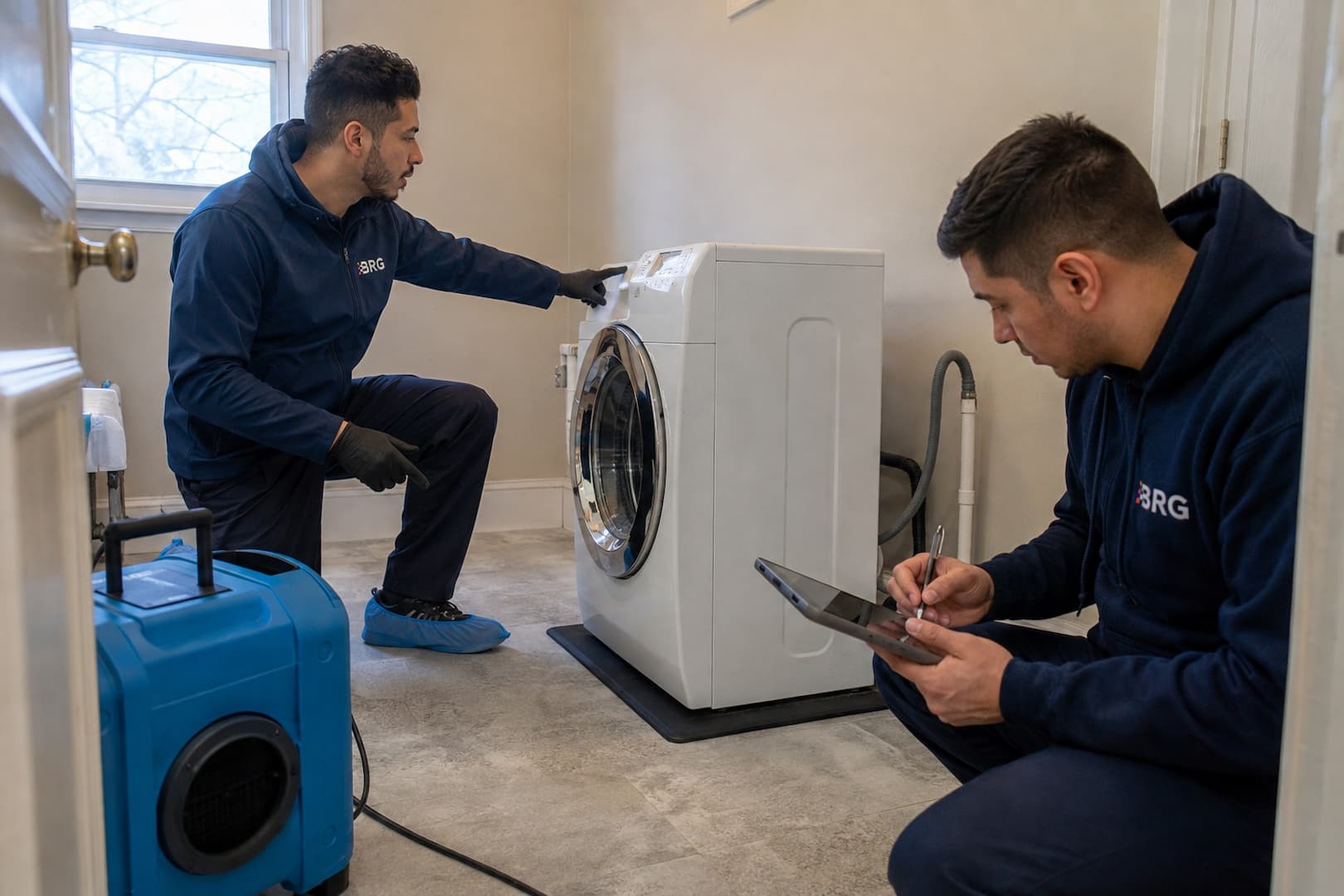
The laundry threshold is only one checkpoint
A multi-room and lower-floor assessment prevents the machine location from becoming the assumed boundary.
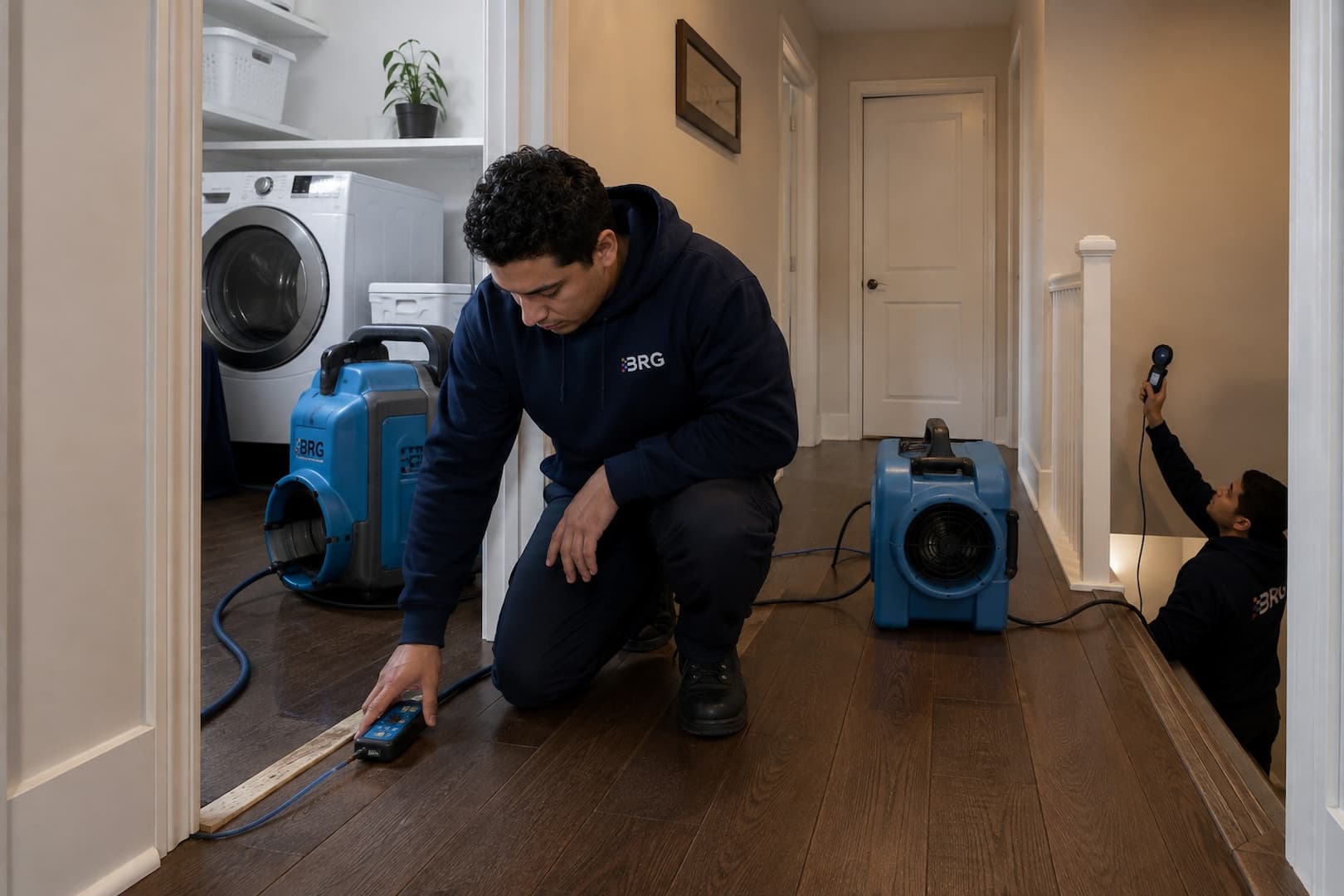
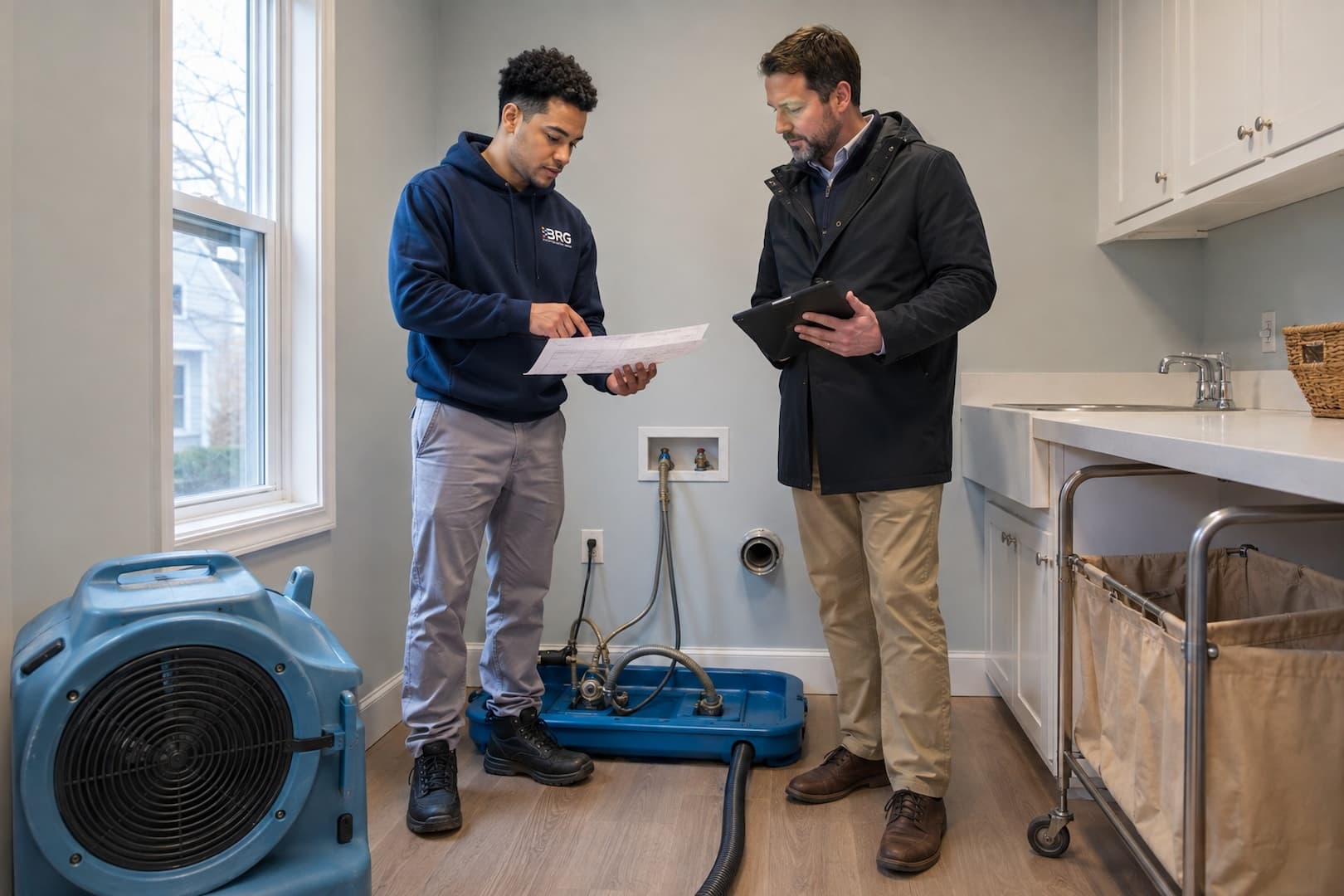
Floor type, water condition, and access shape salvage decisions
The washer’s weight and connections add constraints that do not exist in an empty room.
Resilient or tile floor
Review
Seams, perimeter, substrate, penetrations, loose material, and water beneath the machine.
Wood or laminate outside the room
Review
Threshold migration, edge swell, cupping, finish, underlayment, and subfloor moisture.
Walls and baseboards
Review
Wicking behind the washer, pipe openings, insulation, both sides of partitions, and detachable trim.
Ceilings and units below
Review
Insulation, lights, multiple rooms, tenant contents, safe access, and documentation by unit.
Control the machine, water route, and occupied-property impact
Apartment, condo, and managed-building projects require clear unit access, tenant communication, and records by floor or residence.
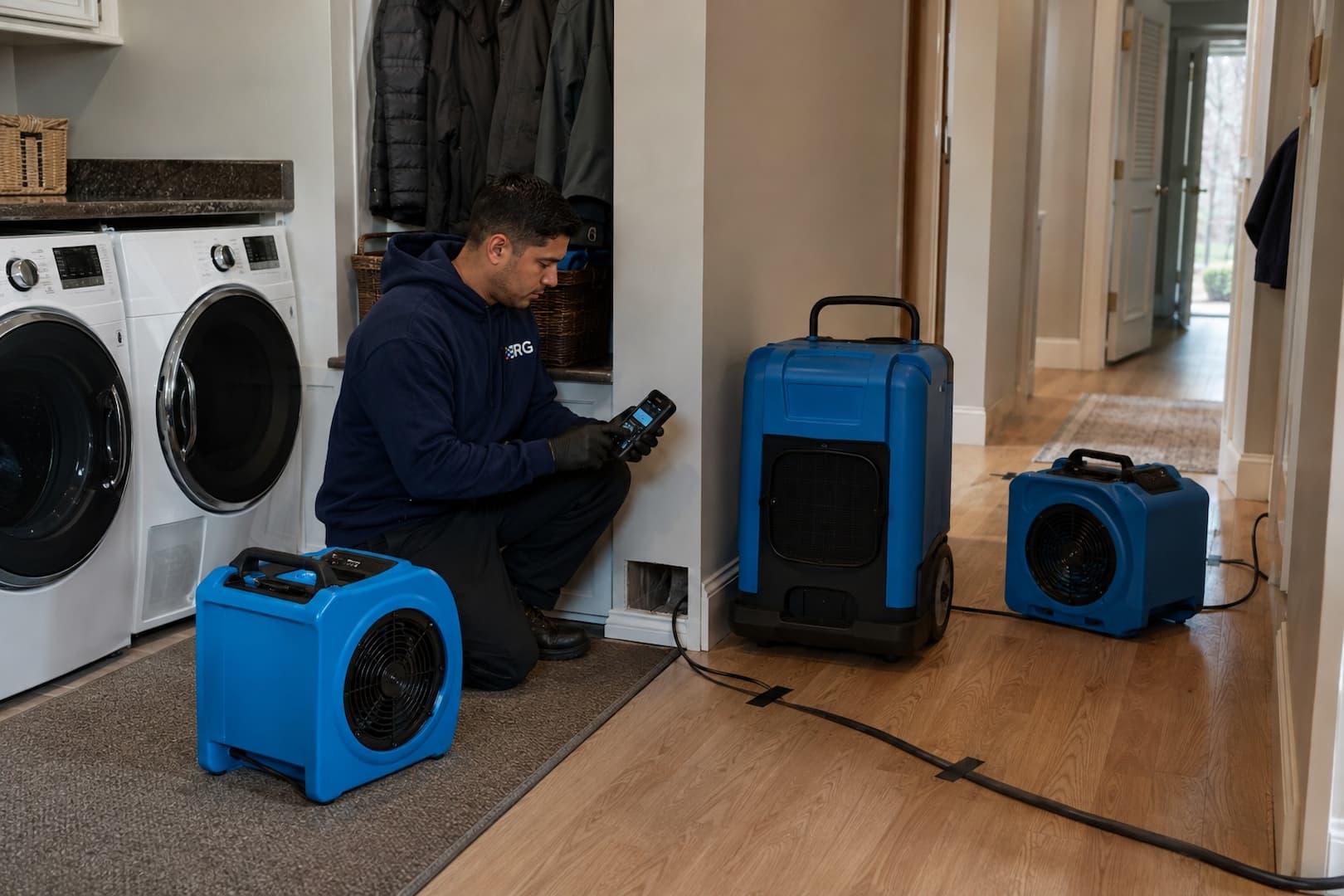
Stop operation and establish safe source control
Record cycle, supply, drain, power, appliance contents, water condition, and affected units.
Extract accessible water
Protect dry halls and units while removing bulk water from laundry and connected spaces.
Coordinate appliance movement and repair
Allow the proper professional to drain, disconnect, move, diagnose, and repair the machine or plumbing.
Map and dry building materials
Inspect flooring, wall bases, penetrations, rooms and floors below; create targeted access as justified.
Verify, reset, and hand off finishes
Document source correction, moisture progress, appliance status, materials removed, and repairs still needed.
Keep the source and each affected area readable
A washer loss can involve one appliance but several rooms, floors, or occupants.
Cycle and failure record
Fill, wash, drain, idle, hose, valve, standpipe, pump, tub, door, and professional repair.
Room and unit map
Laundry, halls, closets, adjacent rooms, penetrations, ceilings, units, contents, and readings.
Work and remaining repairs
Extraction, cleaning, drying, removal, appliance reset, floor, wall, and ceiling needs.
Confirm the source under controlled operation
The appliance or plumbing professional should test the repaired supply, standpipe, drain hose, pump, and machine. BRG verifies surrounding materials; the washer should not conceal unfinished drying or a recurring leak.
- Use manufacturer-appropriate hose and drain configuration
- Keep shutoffs accessible
- Consider an appliance pan or monitored protection where suitable for the property
Washing machine overflow cleanup questions
Cycle stage, water source, and affected floors determine the response.
Can I move the washer to dry behind it?
Do not move a connected, wet, or water-filled washer yourself. It is heavy and can tip, damage flooring, or strain electrical and plumbing connections.
Is washer overflow water clean?
A supply hose may release clean water; tub or drain water can contain detergent, soil, lint, and waste-side contamination. The cycle and route are evaluated.
Why inspect the unit below?
Laundry pipe penetrations and floor seams can route water directly into the floor-ceiling system and another unit.
Can laminate outside the laundry be saved?
Edge swelling may be permanent, and water can remain beneath floating planks. The affected area, underlayment, subfloor, and product construction determine the decision.
Who reconnects the washing machine?
A qualified appliance or plumbing professional should reconnect and test it. BRG coordinates access and documents building-material restoration.
Request washing machine overflow cleanup
Tell BRG whether the release came from a supply hose, standpipe, drain, pump, tub, or unknown source; whether the machine is stopped; and which rooms, units, or ceilings are affected.
617-202-3772- Do not reach behind a wet energized washer
- Mention drain residue, detergent, hot water, and tenant impact
- Provide laundry, elevator, parking, and building-management access
Request Washer-Overflow Help
The cycle stage and vertical water route help prepare the response.