
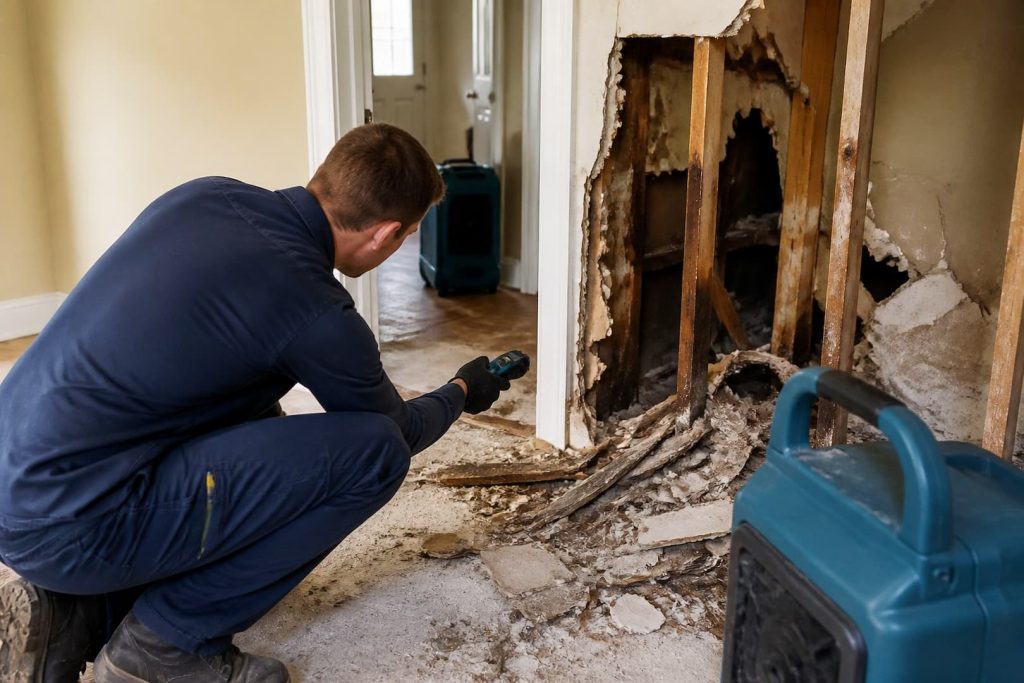
Debris removal after property damage is not the same as clearing ordinary household junk. The work may involve wet drywall, insulation, flooring, broken glass, soot-covered contents, storm-damaged lumber, contaminated carpet, or material removed to expose a wall or floor for drying. Each stream has its own handling, documentation, and disposal needs.
The scope begins before anything is loaded. A restoration team identifies what can be saved, what must be removed to reach wet or unsafe material, what may contain hazardous substances, and which items the owner or insurer still needs to inspect. Premature disposal can erase evidence or destroy property that was a reasonable salvage candidate.
Debris removal, selective demolition, and junk hauling
| Service | Primary purpose | Typical examples |
|---|---|---|
| Restoration debris removal | Move damaged, unsalvageable material out of a controlled loss site | Wet drywall, carpet pad, insulation, smoke-damaged contents |
| Selective demolition or tear-out | Open an assembly or remove only the portion that cannot remain | Lower wall cuts, cabinet toe-kicks, damaged subfloor sections |
| Emergency board-up cleanup | Stabilize openings and clear immediate hazards | Broken glass, damaged trim, loose roofing, temporary protection waste |
| Junk hauling | Remove unwanted but not loss-related household or commercial items | Old furniture, routine cleanouts, non-damaged contents |
| Hazardous-material abatement | Handle regulated or specially controlled material under the applicable rules | Asbestos-containing material, lead hazards, chemicals, refrigerants |
One contractor may coordinate several parts of the project, but the labels should not blur the responsibility. Lead, asbestos, chemicals, medical waste, compressed cylinders, electronics, refrigerants, and unknown containers may require testing, a licensed trade, or a special facility. Do not put them into a general construction dumpster by assumption.
What the restoration process should include
- Stabilize the site. Control electricity, structural hazards, sharp debris, active water, and access before sorting.
- Document conditions. Photograph rooms, damaged assemblies, contents, serial numbers, and material quantities when relevant.
- Separate salvage from disposal. Protect clean or restorable items from the dirty work zone.
- Identify special handling. Older finishes, sewage contamination, fire residues, and unknown chemicals change packaging and disposal.
- Remove without spreading the loss. Use a route, containment, bags, carts, or floor protection that fits the project.
- Transport and dispose lawfully. Match the load to municipal, state, facility, and hauler requirements.
- Leave a usable record. The owner should understand what left, why, and what remains for drying or repair.
Water, sewage, fire, and storm debris differ
Water-damaged material
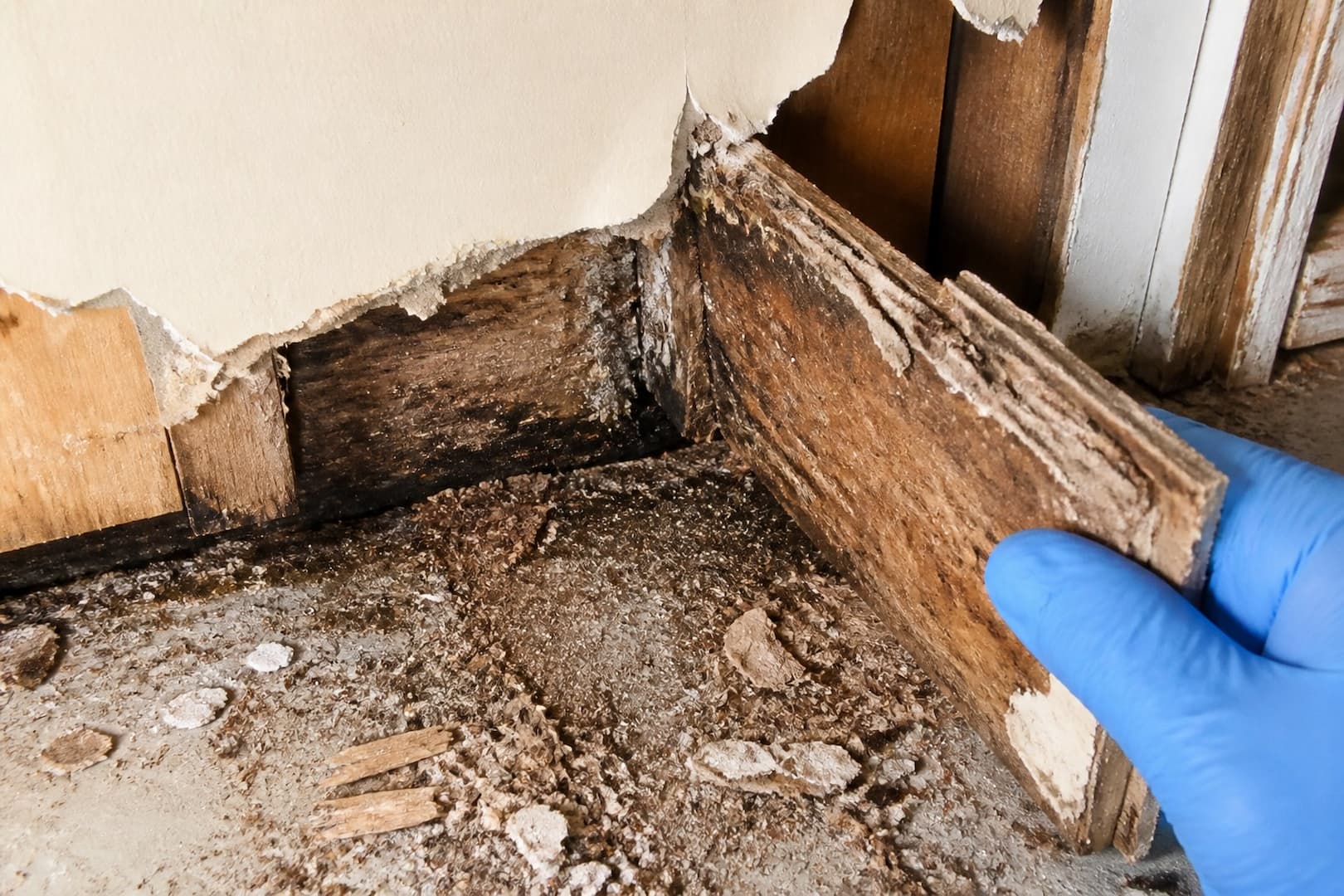
Clean-water exposure does not automatically make every wet item trash. Sound framing, some hard finishes, and certain contents may dry successfully if response begins early. Saturated insulation, carpet pad, crumbling drywall, and swollen composite products are less forgiving. Water damage restoration should decide removal from moisture readings, contamination, physical condition, and access—not a preset demolition height.
Sewage and floodwater debris
Contaminated water calls for a more conservative salvage standard. The CDC advises discarding drywall and insulation contaminated by sewage or floodwater. Porous contents may retain pathogens even after they look dry. Hard, nonporous items may be cleanable when the material and use permit it. Sewage cleanup and disinfection includes source control and decontamination before ordinary haul-away.
Fire and smoke debris
A fire site may combine charred structural material, glass, sharp metal, extinguisher residue, water from suppression, soot, food, appliances, batteries, and chemicals. Fire officials must first release the property for entry. Contents should be inventoried before pack-out or disposal, and utilities should stay off until the responsible trade clears them.
Storm and structural debris
Wind and falling trees can leave unstable roofing, nails, broken branches, wet insulation, and damaged exterior finishes. A tarp or board-up may be the first task. Heavy or load-bearing components need structural direction rather than an improvised cleanup crew.
Documentation for an insurance claim
Take wide room photographs, close-ups, and a path from source to damaged material before major removal when it is safe. Record dates, measurements, invoices, disposal quantities, and any reason emergency work could not wait. The Massachusetts Division of Insurance says policyholders can usually take reasonable temporary measures to protect property, but should avoid discarding items believed to be a total loss before the company representative examines them. Policy language and circumstances control the claim.
Questions to ask a debris-removal contractor
- Does the quote separate demolition, labor, hauling, container fees, disposal, cleaning, and repair?
- Which materials are presumed hazardous, and who decides whether testing is needed?
- How will salvageable contents and unaffected finishes be protected?
- What disposal records, photos, or quantity logs will the owner receive?
- Where will containers sit, and who handles permits or property rules?
- Does the scope include final cleaning, or only loading and transport?
- What happens if concealed damage expands the removal boundary?
Debris removal questions
Can damaged material be removed before an adjuster arrives?
Emergency measures may be needed to prevent further damage, but document first when safe and communicate with the insurer. Keep samples, photographs, inventories, and receipts when the claim process calls for them.
Does debris removal include reconstruction?
Not automatically. Tear-out, hauling, cleaning, drying, and reconstruction are separate scope items even when one company coordinates them.
Is every water-damaged wall removed two feet high?
No. Removal height should follow the wetting pattern, contamination, material condition, access needs, and the planned drying method. A fixed cut line is not a universal standard.
Can BRG remove ordinary household junk?
The article addresses debris created by a property loss or restoration scope. Confirm the actual material list and service availability with BRG before scheduling.
The debris stream should be classified before it is loaded
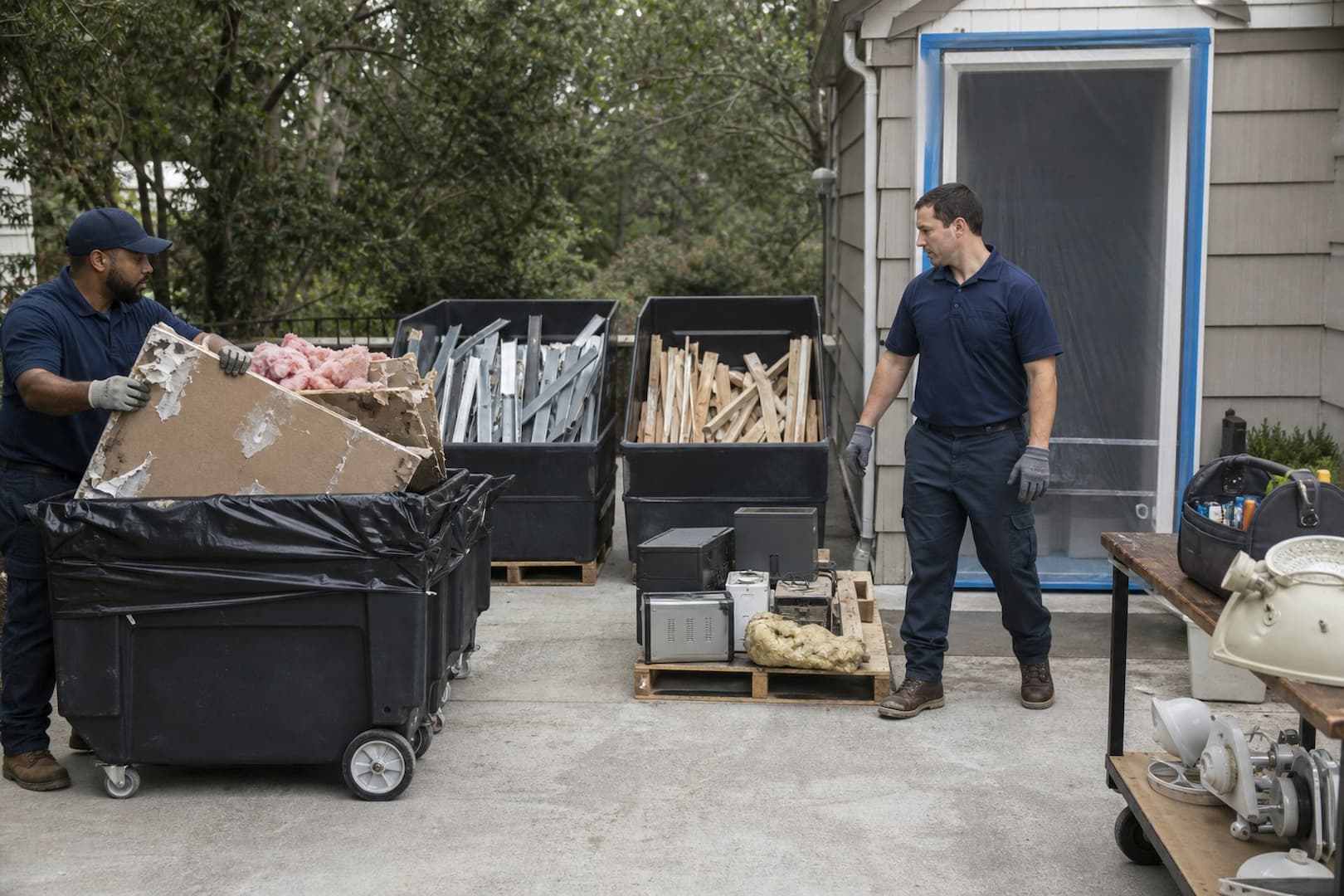
Dry construction offcuts, wet gypsum, sewage-contaminated carpet, fire debris, electronics, appliances, chemicals, and regulated building materials do not belong in one undifferentiated pile. The loss source and building age may trigger special handling. Paint, refrigerants, batteries, fuels, propane cylinders, mercury devices, asbestos-containing material, and lead-dust work can require separate contractors or disposal routes.
| Debris type | Primary concern | Documentation worth keeping |
|---|---|---|
| Clean construction debris | Weight, access, recycling, property protection | Container size, tickets, photos |
| Water-damaged porous material | Moisture, mold, concealed fasteners/utilities | Affected boundary and removal photos |
| Sewage-contaminated debris | Exposure and cross-contamination | Zone, bagging route, disposal record |
| Fire/soot debris | Sharp objects, combustion residue, unstable materials | Fire report, item inventory, load photos |
| Appliances/electronics | Refrigerant, batteries, data, salvage value | Serial numbers and disposition |
| Suspect asbestos/lead materials | Regulated disturbance and disposal | Survey, contractor credentials, waste manifest where applicable |
Selective demolition is investigative work
A restorer may remove baseboard, toe-kicks, drywall, insulation, or flooring to reach water and contamination. Every opening should have a reason: verify a cavity, remove unsalvageable material, create drying access, or expose a repair. Photograph layers and unexpected conditions before continuing. Broad demolition without a map can erase the evidence needed to explain the scope.
Utilities complicate removal. Locate electrical, plumbing, gas, data, fire protection, and radiant systems before cutting. Stabilize cabinets, ceilings, and structural components. In older Boston-area buildings, plaster assemblies and regulated materials deserve special planning. “Debris removal included” should never imply authorization to disturb every material in the room.
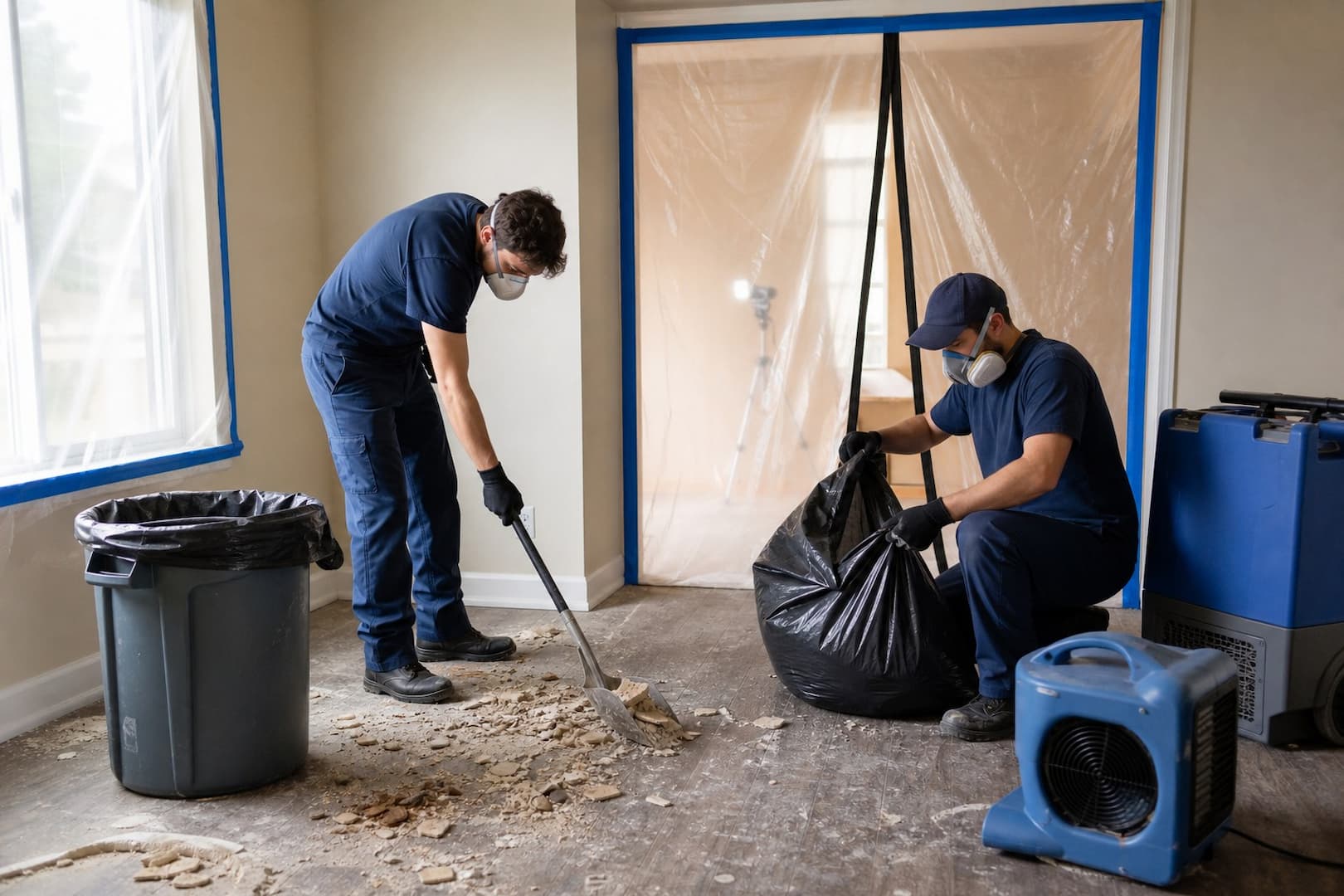
The exit route is part of containment
Bagging material inside the work zone is only the first step. Plan how workers and debris pass through doors, elevators, stairwells, sidewalks, and occupied areas. Protect floors and corners, maintain egress, control dust, and clean the route. Containers need placement that respects access, overhead lines, permits, neighbors, and weight limits. A heavy wet load can exceed assumptions quickly.
Specialty restoration services may coordinate difficult removals, but regulated waste and hazardous materials can require other licensed vendors. Ask who owns each stream and where it goes. A low hauling price can become expensive if rejected loads or contamination fees appear later.
Inventory before disposal supports both salvage and claims
- Assign a room and item number before removal
- Photograph labels, serial numbers, and distinctive features
- Separate restoration debris from undamaged renovation material
- Record quantities in a reproducible unit: bags, cubic yards, square feet, or item count
- Obtain authorization for high-value or disputed items
- Keep scale tickets, manifests, invoices, and donation/recycling receipts
For sewage losses, the guide to sewage salvage decisions explains why porosity and access matter. For fire losses, unstable structure and hazardous residue take priority over sorting speed.
A clean demolition endpoint makes reconstruction safer
Debris removal ends when the planned materials are gone, fasteners and sharp projections are controlled, dust is cleaned to the scope, retained surfaces are accessible, and the work area is ready for drying or repair. It does not end when the dumpster leaves. Photograph the exposed assembly, label repair areas, and transfer source and moisture information to the reconstruction team.
Estimate volume and weight before choosing a container
Wet plaster, roofing, masonry, and saturated gypsum are much heavier than dry household debris. Container companies impose weight limits, prohibited-material rules, and placement requirements. Overloading creates road and lifting hazards and can add substantial fees. Separate dense material, measure the accessible staging area, and confirm whether a street permit or building approval is needed before demolition fills the only exit route.
Ask the hauler how rain covers, overnight security, prohibited items, and contaminated loads are handled. An open container can take on water and invite illegal dumping, changing both weight and contents. Photograph the empty container, each major load stage, and the final pickup condition when the project or claim is large.
Sources and further reading
- CDC: Guidelines for Cleaning Safely After a Disaster
- Boston.gov: Recovering from a Flood
- Massachusetts DPH and MassDEP: Flooding and Sewage Back-ups Home Care Guide
- Massachusetts DPH: Quick Reference — Water Damage Response in Buildings
When the property needs a closer look
Boston Restoration Group can inspect the affected area, document moisture and material conditions, and explain which restoration step fits the loss. Use the BRG contact page to request service in Greater Boston.