
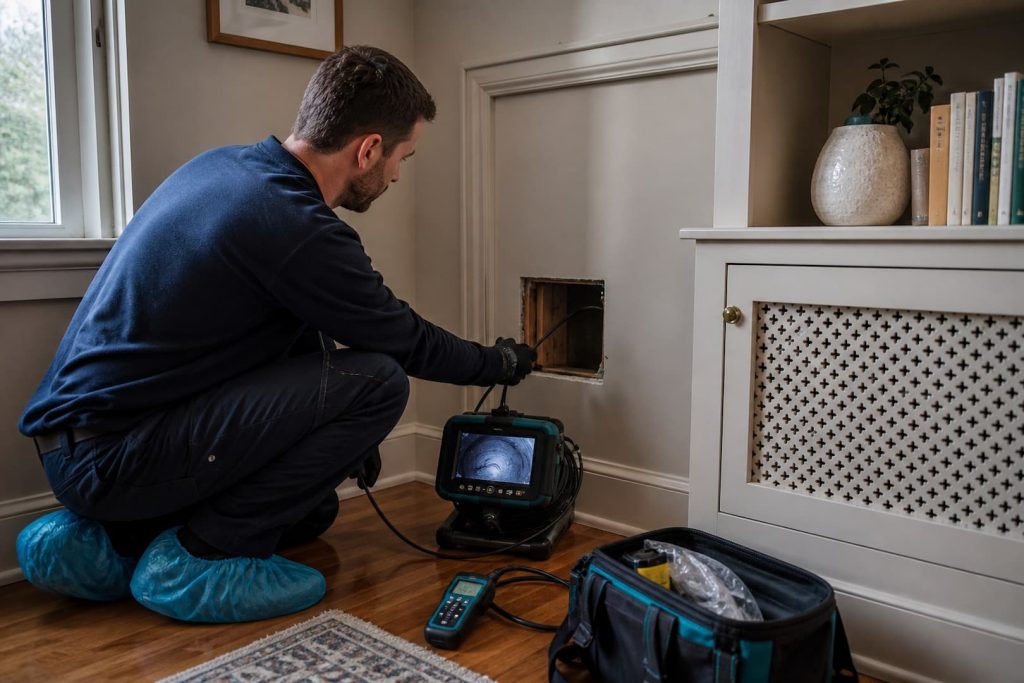
A musty room does not automatically contain visible mold, and a room without odor is not automatically dry. Odors can come from damp drywall, wet carpet pad, a crawl space, stored cardboard, a floor drain, a dry plumbing trap, contaminated contents, or residues in HVAC equipment. The useful first move is to map when and where the smell appears.
Notice whether the odor is strongest after rain, when the air conditioner starts, near one wall, inside a closed cabinet, at the basement stairs, or only after the house has been shut overnight. That timing turns a vague complaint into a building investigation.
Why damp buildings smell musty
Fungi and bacteria can release volatile compounds while growing, but the “moldy” character of an odor is not a laboratory identification. Wet wood, old carpet backing, drain biofilm, soil air, and decaying contents can smell similar. Odor intensity also does not measure exposure or establish a health threshold. If a person has symptoms, the right contact is a qualified healthcare professional; the property investigation should stay focused on moisture and materials.
Trace the odor by zone
| Where it is strongest | Common sources to check | Useful observation |
|---|---|---|
| Below a sink or vanity | Slow supply or drain leak, swollen cabinet base, failed caulk | Moisture at fittings, toe-kick, wall base, and room below |
| Finished basement | Foundation seepage, wet carpet pad, sump area, cardboard, wall cavity | Changes after rain, floor-edge staining, relative humidity |
| Bathroom | Weak exhaust, wet caulk, leaking fixture, dry trap | Fan discharge, joint condition, fixture use, drain water |
| One exterior wall or closet | Condensation, window leak, stored contents against cold surface | Season, airflow gap, staining, surface temperature |
| When HVAC starts | Wet filter, condensate problem, contaminated return path | Equipment condition and whether odor travels to several rooms |
| Crawl space or attic access | Ground vapor, roof leak, air leakage, damp insulation | Safe visual inspection and moisture source |
A practical source-finding sequence
- Rule out active water. Look for plumbing drips, roof or window intrusion, appliance leaks, a full condensate pan, or standing water.
- Check simple drain causes. Restore water to rarely used traps and have recurring sewer odors evaluated by a plumber.
- Remove damp contents from the room. Cardboard, fabric, rugs, and stored furniture can carry the odor even after the building is dry.
- Compare moisture. A meter reading is useful only against dry reference materials and with an understanding of the assembly.
- Follow air movement. Stairwells, return-air paths, pipe chases, and gaps around penetrations can move odor far from its source.
- Escalate deliberately. If the smell persists with no visible source, use inspection and targeted testing only to answer a defined question.
Why sprays, candles, and ozone are not source control
Fragrance can make a room harder to assess while damp material remains. Consumer “mold bombs” and indiscriminate antimicrobials do not open a wet wall or remove saturated carpet pad. Ozone is a respiratory irritant and should not be treated as an occupied-space air freshener. Any deodorization method must fit the residue, material, occupancy, and product instructions.
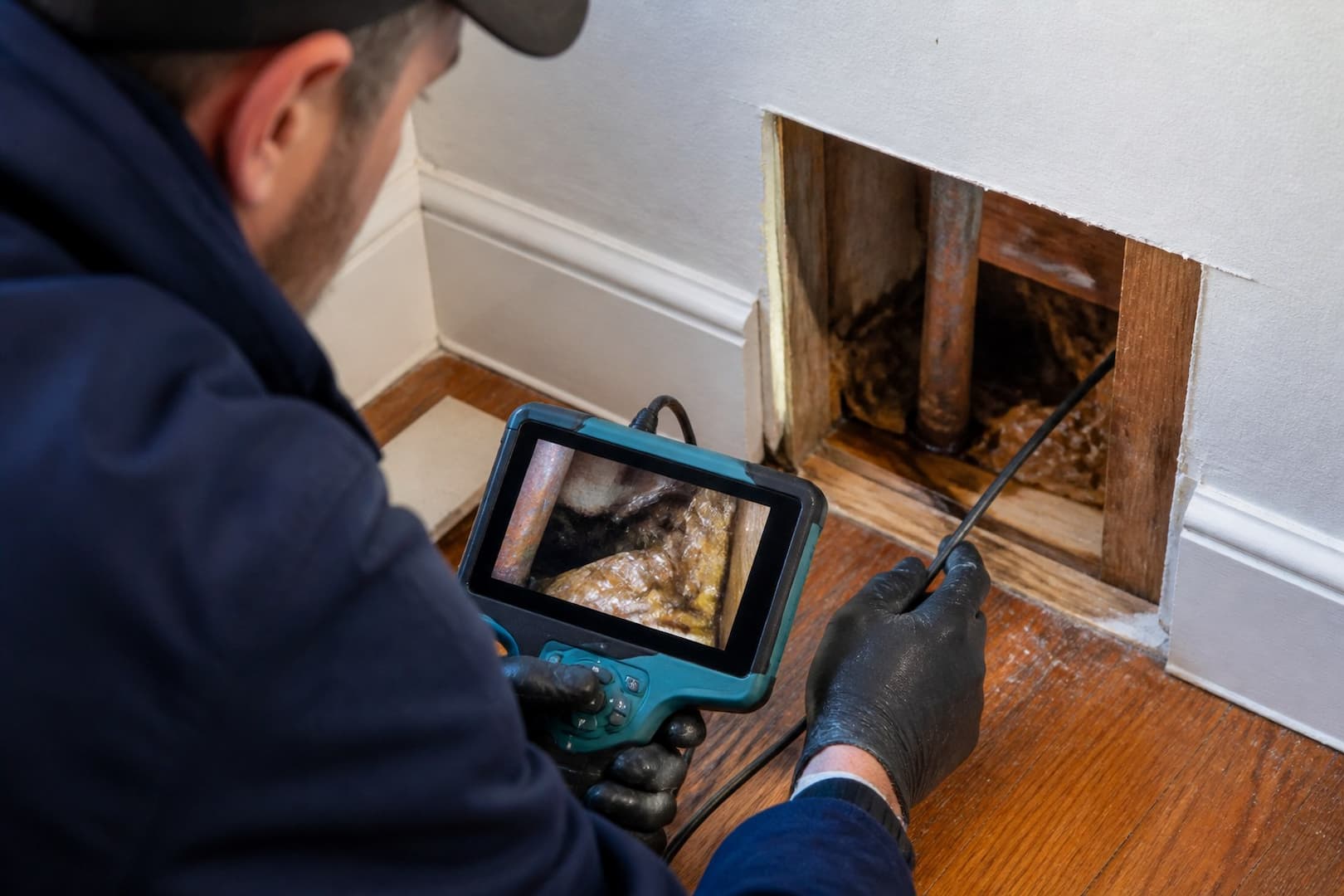
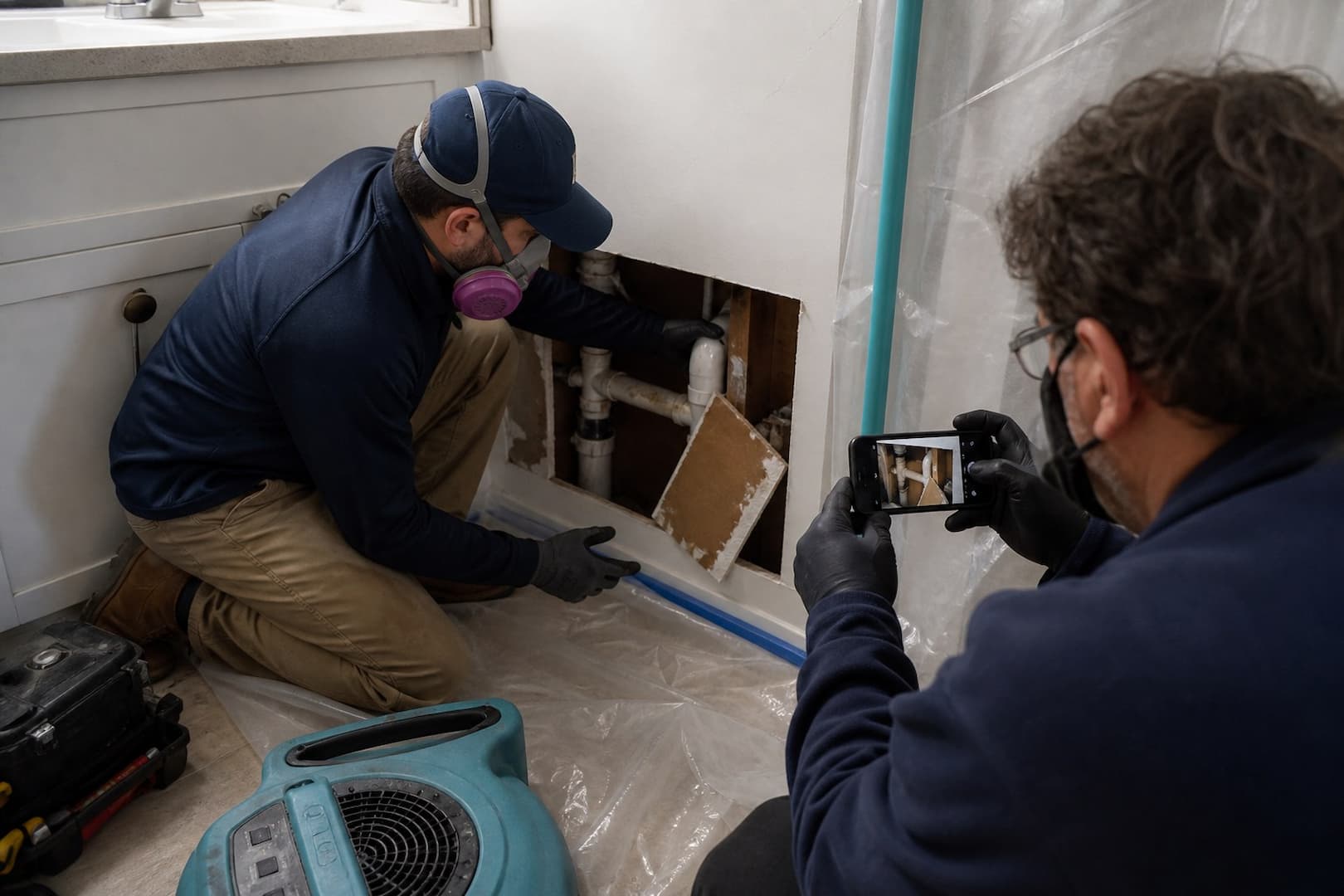
Source removal may involve drying a clean-water leak, replacing unsalvageable porous material, cleaning sound hard surfaces, correcting a drain problem, or remediating affected building material under containment. Professional odor restoration should begin with that source decision, not with a stronger scent.
Cleaning after the source is known
For a small mold area on a suitable hard surface, EPA guidance recommends detergent and water followed by complete drying. Porous ceiling tile, saturated insulation, damaged drywall, carpet pad, and swollen composite wood may need removal rather than deodorizing. If sewage, floodwater, or another contaminated source was involved, the salvage standard becomes more conservative.
Preventing a musty room from returning
- Repair leaks and confirm that concealed layers dry before closing them.
- Keep gutters, downspouts, grading, foundation drainage, and sump equipment maintained.
- Vent bathroom and kitchen exhaust outdoors.
- Manage indoor humidity rather than relying on temperature alone.
- Store paper and fabric off basement floors and away from masonry.
- Clean and maintain HVAC condensate components according to the equipment instructions.
- Recheck the room after rain, snowmelt, humid weather, and heating-season changes.
Musty odor questions
Does a musty smell prove hidden mold?
No. It justifies an investigation, but drains, wet contents, damp soil air, and other residues can smell similar. Moisture history and material inspection are the starting point.
Should I buy a home mold test kit?
A settling plate often grows common environmental spores and does not locate the source or define a health risk. Testing is more useful when an inspector has a specific question and a plan for interpreting the result.
Why does the smell return when the air conditioner runs?
The system may be moving odor from another area, or its filter, condensate components, insulation, or return path may be damp. Turn the observation into an HVAC and moisture check rather than assuming the ducts are the source.
Can I stay in a room that smells musty?
Odor alone cannot determine occupancy. If there is active water, sewage, visible extensive growth, electrical danger, severe symptoms, or a vulnerable occupant, keep people away and seek appropriate professional guidance.
Odor is a pathway clue, not a moisture meter
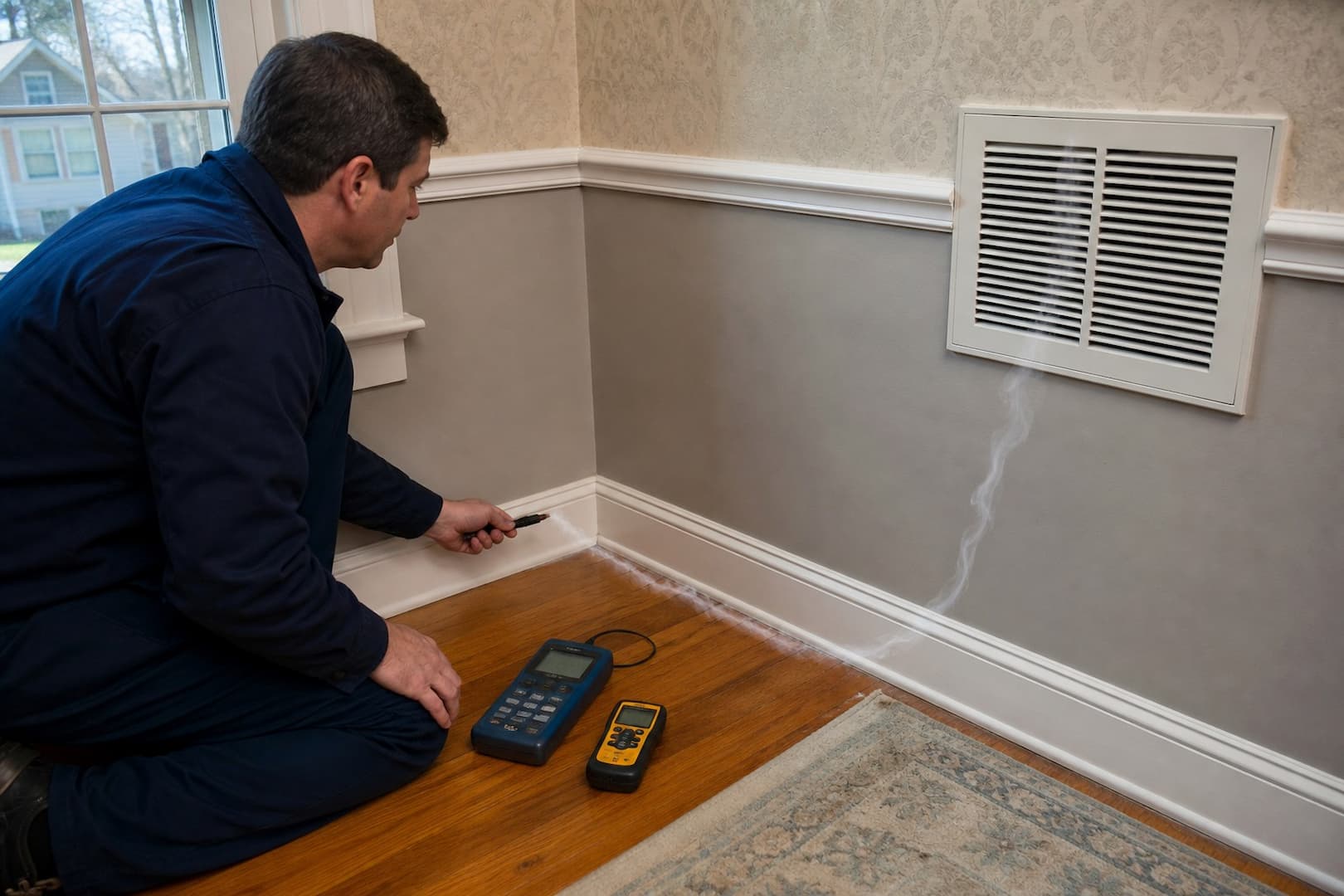
People often notice a musty smell where air exits, not where odor originates. Wall cavities, chases, return plenums, stairwells, and gaps around pipes can carry air from a basement, crawl space, attic, or hidden leak. Note when the odor strengthens: after rain, when a bathroom fan runs, when the HVAC starts, during humid weather, or when a closed room warms. Those changes reveal pressure and moisture relationships that a one-time sniff cannot.
| Odor pattern | Possible pathway or source | Useful next check |
|---|---|---|
| Strongest at one baseboard | Wall cavity, slab edge, wet sill | Moisture map and selective access |
| Appears when air handler starts | Return leakage, wet filter/cabinet, connected cavity | HVAC inspection before duct cleaning |
| Returns after rain | Foundation, roof, window, chimney, or drain entry | Exterior-to-interior water tracing |
| Strong in closet on exterior wall | Cold surface and low air movement | Move contents; check surface temperature/RH |
| Near sink but no visible leak | Drain, overflow, cabinet base, supply penetration | Plumbing and cabinet/subfloor inspection |
Rule out non-mold odors without dismissing moisture
Sewer gas, dry traps, floor drains, decaying pests, wet wood, old carpet backing, smoke residue, and chemical products can all be described as musty. A plumber can check traps, vents, and drain seals. An HVAC technician can inspect condensate pans, coils, filters, and return leakage. Restoration assessment focuses on water history and affected materials. Several sources may coexist, particularly in an older basement or after a long vacancy.
Avoid naming the organism by smell. Microbial volatile compounds are not species-specific, and odor intensity does not measure exposure or affected area. A faint persistent odor can come from a small concealed reservoir; a strong smell may come from a wet cardboard box. Use odor to prioritize locations, then confirm with inspection and moisture evidence.
Why duct cleaning is sometimes the wrong first purchase
If the HVAC system itself was wet, contaminated, or connected to an affected return pathway, it needs qualified evaluation. But dust in a supply register does not prove the ducts caused the odor. Cleaning ducts while a wet wall or crawl space remains connected may produce a short-lived improvement. Determine whether odor appears with the system off, changes between heating and cooling, or concentrates near returns rather than supplies.
When mold is suspected near an intake or within HVAC components, EPA advises consulting its duct guidance and experienced professionals. Do not spray fragrance, disinfectant, or sealant into the system as a diagnostic shortcut. The mold inspection service can coordinate the building-side investigation while the mechanical contractor evaluates equipment.
Build an odor-removal sequence that can be verified
- Identify and stop water, drainage, or condensation sources.
- Define the materials and cavities that hold moisture or residue.
- Remove unsalvageable porous material under appropriate controls.
- Physically clean retained surfaces and settled dust.
- Dry the assembly and document stable conditions.
- Clean or isolate affected contents before returning them.
- Ventilate and reassess under normal building operation.
Deodorization belongs near the end. Hydroxyl, ozone, fogging, adsorbents, and sealers each have limitations and occupancy concerns; none substitutes for removing a wet or contaminated reservoir. Ozone can be harmful and can react with indoor materials, so it should not be presented as an occupied-space cure. If odor remains after source removal and cleaning, reopen the investigation rather than adding stronger perfume.
For hidden-wall clues, use the guide to water damage behind walls. A repeatable completion check uses normal HVAC operation, closed-room conditions, humidity control, and follow-up after the weather event that used to trigger the smell.
Track room conditions instead of relying on memory
Use a simple log with date, weather, indoor temperature and humidity, HVAC mode, windows open or closed, and odor location on a zero-to-five scale. The score is subjective, but the pattern can be useful. If odor rises only after rain or only when the air handler runs, the investigation becomes narrower. Take sensor readings in more than one zone; a dry first-floor thermostat cannot describe a cool basement closet.
Sources and further reading
- U.S. EPA: A Brief Guide to Mold, Moisture and Your Home
- U.S. EPA: Mold Cleanup in Your Home
- CDC: Mold — overview, health effects, prevention and cleanup
- Massachusetts DPH: Mold Cleanup, Repairs, and Excess Moisture Control
When the property needs a closer look
Boston Restoration Group can inspect the affected area, document moisture and material conditions, and explain which restoration step fits the loss. Use the BRG contact page to request service in Greater Boston.