
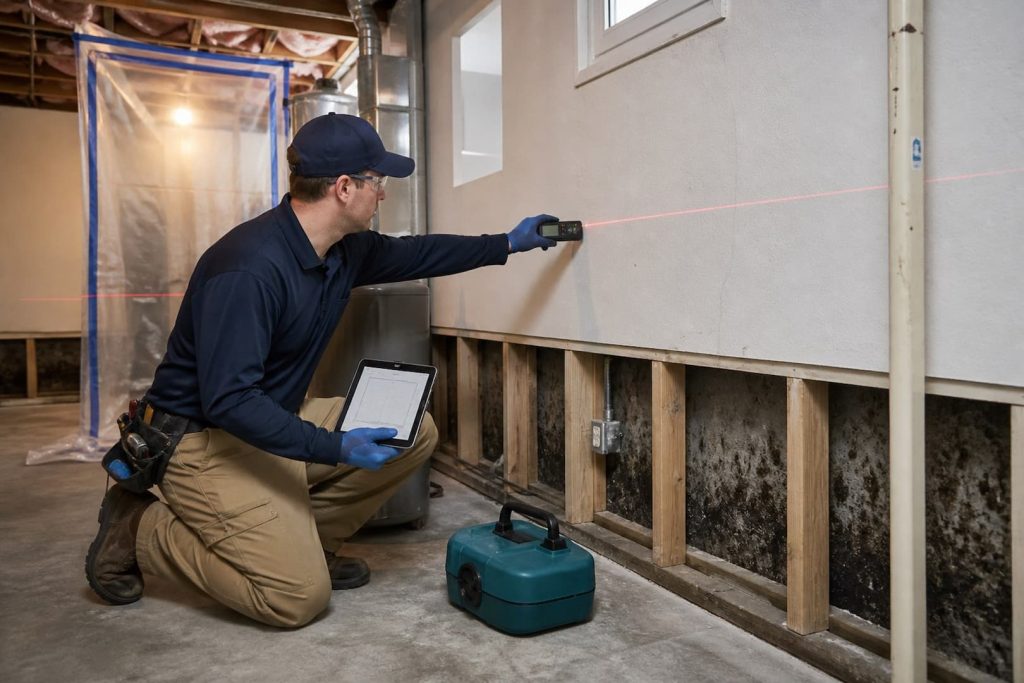
For 2026 planning, many contained residential mold-remediation projects are discussed in a broad range of roughly $1,500 to $6,000. Small, accessible surface work may be lower; concealed wall systems, attics, HVAC involvement, multi-room losses, difficult access, or whole-house conditions can reach $10,000 to $30,000 or more. These are market references, not a quote for a Boston property.
Local consumer data from Angi lists a Boston average near $2,454 and a usual range of about $1,381 to $3,563, while national 2026 guides publish wider ranges. The spread is real because “mold remediation” can mean anything from one contained bathroom area to selective demolition and cleaning across several floors. Price becomes useful only after the scope is defined.
2026 planning ranges
| Project pattern | Rough planning range | Why the number can move |
|---|---|---|
| Very small, accessible area | About $500–$1,500 | Minimum mobilization, simple access, limited removal |
| Contained single-room or single-area work | Often about $1,500–$6,000 | Containment, labor, removal, cleaning and equipment |
| Attic, basement or several connected areas | Often about $3,000–$10,000+ | Access, square footage, insulation, structural cleaning, heat or humidity |
| HVAC-related or complex concealed work | Often about $3,000–$10,000+ | Specialized access and cleaning; possible component replacement |
| Extensive multi-room or whole-house condition | About $10,000–$30,000+ | Large containment, contents, demolition, cleaning, disposal and rebuild interface |
Do not multiply visible square footage by a web rate and treat the result as a bid. Published rates commonly span roughly $5 to $30 per affected square foot, but contractors define affected area differently, and minimum charges make small jobs non-linear. Ten square feet behind a built-in cabinet can cost more to access than a larger open area on exposed framing.
The six strongest cost drivers
- Extent and depth. Surface growth on an accessible substrate differs from wet insulation and drywall in a connected cavity.
- Location and access. Attics, crawl spaces, tall ceilings, built-ins, and occupied commercial areas add labor and controls.
- Material decisions. Cleaning sound framing and removing drywall carry different labor, disposal, and rebuild costs.
- Containment and air management. Barriers, pressure control, equipment, and protected pathways scale with disturbance.
- Source and contamination. Sewage, floodwater, or unresolved plumbing may add trades and change salvage.
- Verification and reconstruction. Independent assessment, sampling, finish repairs, and permits may sit outside the remediation bid.
What a remediation estimate should show
- Rooms and material boundaries included in the price.
- Assumptions about hidden conditions and unit prices for authorized expansion.
- Containment, pressure control, cleaning and equipment included.
- Which drywall, insulation, flooring, cabinets or contents will be removed or protected.
- Debris handling and disposal.
- Moisture-source repair responsibility.
- Drying and monitoring responsibilities.
- Completion criteria and whether independent verification is included.
- Reconstruction, painting, plumbing, electrical, HVAC, asbestos or lead work that is excluded.
- Taxes, permits, minimum charges, after-hours rates and payment schedule.
A one-line “mold treatment” estimate is difficult to compare with a detailed remediation scope. Ask each bidder to price the same work or explain the difference. A lower total may exclude containment, post-removal cleaning, disposal, cavity access, equipment, or reconstruction rather than perform the same job more efficiently.
Inspection and testing costs
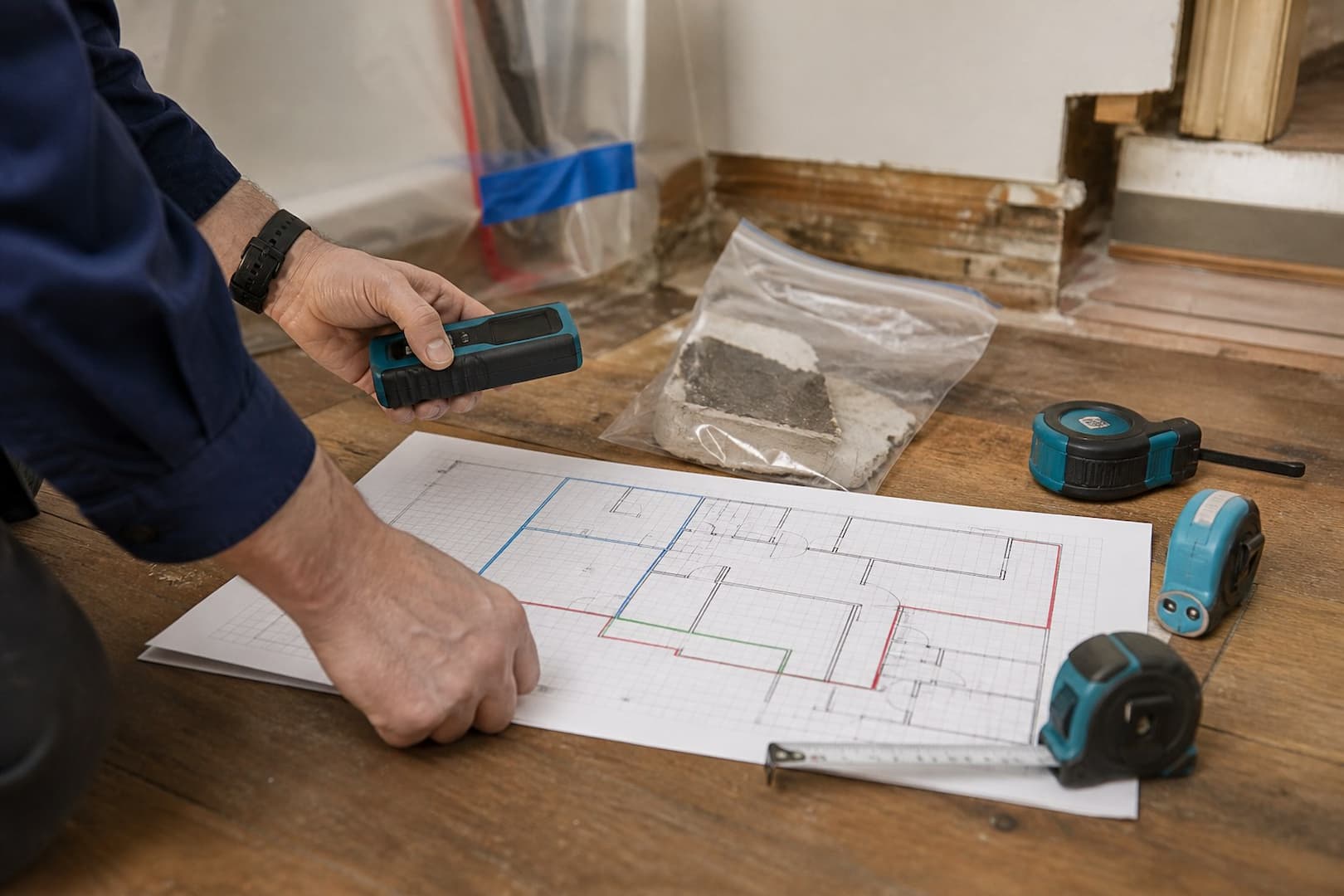
An inspection may be included, charged separately, or performed by an independent consultant. Consumer guides commonly place mold inspection and sampling in the hundreds of dollars, with the number of samples and written protocol affecting price. Testing is not mandatory for every visible mold problem; it is most useful when the substance is uncertain or the result will change scope, medical communication, litigation, or verification.
Massachusetts does not use a general state mold-remediator license as a substitute for due diligence. Ask about training, insurance, written scope, containment methods, references, worker safety, regulated-material screening, and how the company handles discoveries behind finishes.
Remediation versus reconstruction
Remediation removes affected material, cleans remaining surfaces, controls contamination, and addresses drying. Reconstruction replaces drywall, insulation, trim, flooring, cabinets, and finishes. Some estimates include both phases; others end at clean, dry framing. Compare the endpoint, not the headings on the proposal.
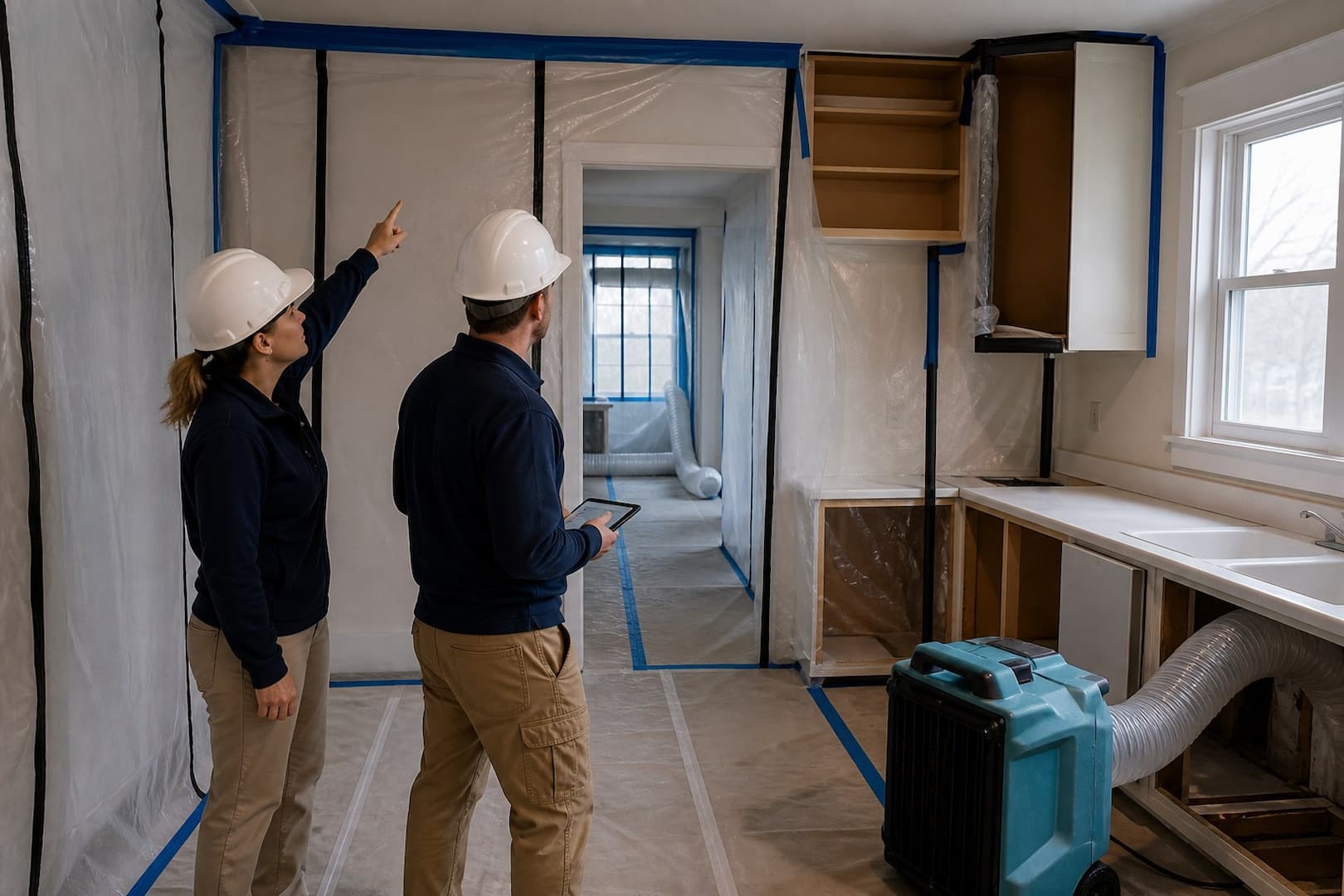
Source repair is another line. A roofer, plumber, HVAC contractor, drainage contractor, or building-envelope specialist may need to correct the condition that supported growth. Paying for remediation without funding the cause can lead to a repeat loss.
Insurance and mold
Coverage depends on policy wording and the cause of loss. Some policies limit or exclude mold while providing restricted coverage when mold results from a sudden covered water event; long-term seepage, maintenance, groundwater, and flood may be treated differently. Notify the insurer promptly, preserve source and damage photographs, and ask for decisions in writing. The contractor does not decide coverage.
How to control cost without cutting the wrong work
- Stop the moisture source quickly and document it before repair when safe.
- Remove free water and begin appropriate drying before a small loss becomes a larger one.
- Clear access to the area without disturbing suspect growth.
- Separate sentimental or specialty contents for item-specific decisions.
- Use a written scope and change-order process for concealed discoveries.
- Compare inclusions, exclusions, quantities and endpoints across bids.
- Schedule reconstruction only after remediation and moisture criteria are met.
Professional mold remediation should be scoped from field conditions. Photographs can support triage, but they rarely reveal insulation, the back of drywall, floor layers, or the actual moisture source.
Cost questions
Is mold remediation always priced by square foot?
No. Companies may use affected area, labor and equipment, task quantities, room minimums, or a lump-sum scope. Ask what measurement the rate applies to and what is included.
Why did the estimate increase after demolition?
Finishes can conceal additional wet insulation, growth, plumbing damage, or connected cavities. A sound proposal explains assumptions and requires documented authorization before expansion except for urgent safety work.
Is the cheapest estimate a bad choice?
Not automatically. Normalize the scope first. If two bids reach the same defined endpoint with comparable controls, a lower price may be efficient. If one ends at “spray and paint” and the other includes removal, cleaning and drying, the totals do not describe the same product.
Compare scopes before comparing totals
Two prices can describe different projects. One estimate may include containment, selective removal, HEPA cleaning, disposal, daily setup, and final cleaning. Another may cover only an antimicrobial application and coating. Put each proposal into the same columns before judging the total. If a line item is absent, ask whether it is excluded, bundled, or not considered necessary.
| Scope element | Questions to ask | Common cost variable |
|---|---|---|
| Assessment and boundary | How was the affected area established? | Access, number of rooms, concealed conditions |
| Containment and protection | Which rooms, HVAC openings, and contents are protected? | Occupancy, pathways, project size |
| Removal and cleaning | Which materials stay, and by what method? | Porosity, height, labor, tight access |
| Drying and monitoring | Included in mold scope or separate water mitigation? | Moisture load, equipment days, access |
| Verification | Visual criteria, moisture criteria, independent review? | Testing plan and reviewer |
| Reconstruction | Drywall, insulation, trim, paint, flooring included? | Finish level and matching |
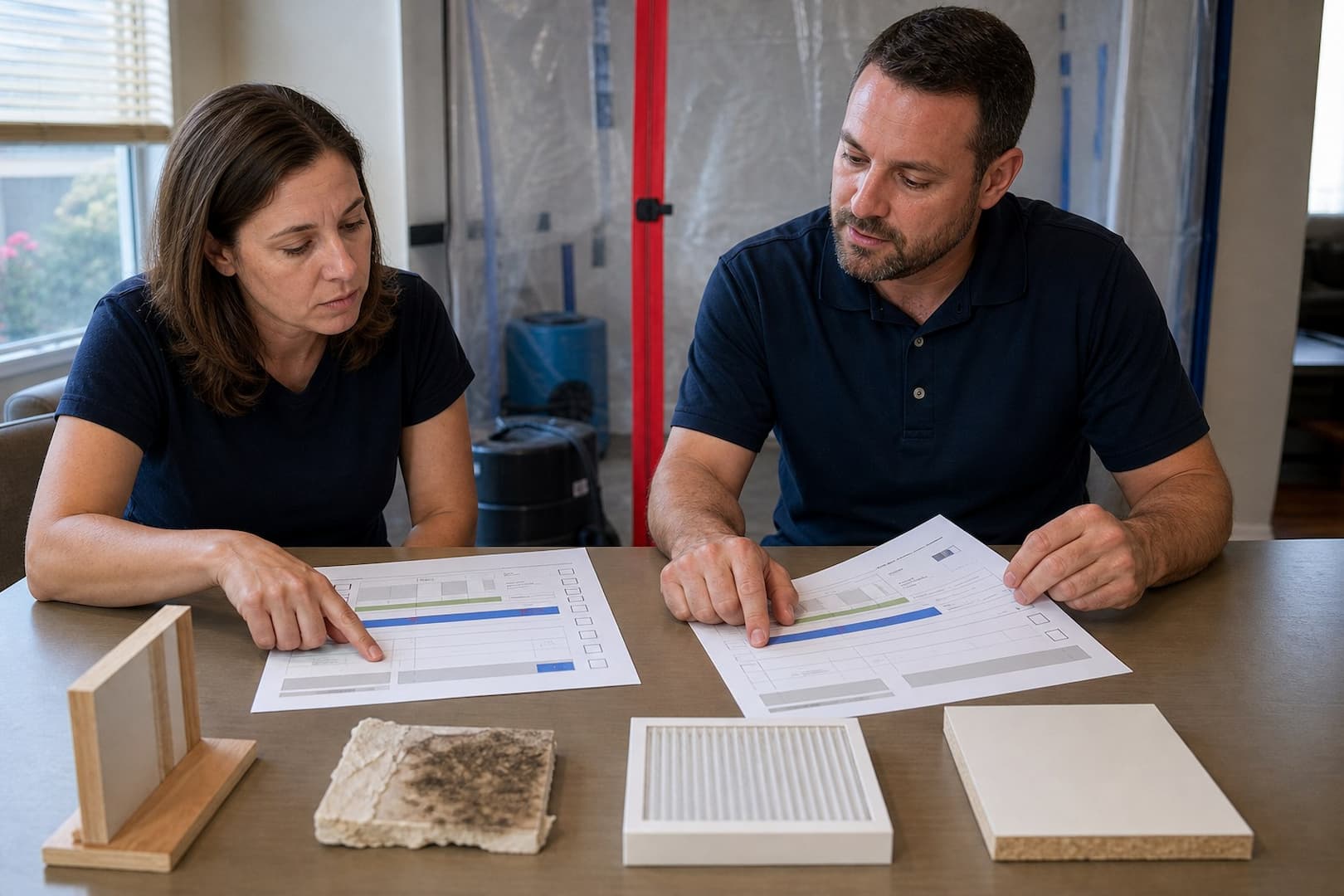
Access can cost more than the visible square footage
Ten square feet on an open basement wall is not equivalent to ten square feet behind kitchen cabinets or inside a tight attic eave. Crews may need floor protection, contents moves, temporary dust walls, scaffold or crawl-space access, and careful removal around plumbing or electrical work. Historic plaster, custom millwork, stone, and built-in furniture increase the effort to expose and later restore the affected area.
Location also affects debris handling. Carrying bagged material down finished stairs through an occupied home requires a protected route and repeated cleaning. Work in a vacant, open room can be simpler. Ask whether after-hours work, parking restrictions, elevator protection, permits, disposal, or specialty subcontractors are included. These are concrete scope differences, not vague “overhead.”
Testing, clearance, and inspection are not interchangeable
An initial inspection may rely on moisture mapping and visible conditions. Sampling may be added when it answers a defined question. Post-remediation verification can include a visual review, moisture check, dust assessment, or sampling plan set by an independent consultant. The price changes with the number and type of samples, laboratory turnaround, written protocol, and site visits. More samples are not automatically better; a poorly framed test can add cost without resolving the construction decision.
Mold inspection and testing should be priced around the decision it supports. If a company both writes the acceptance criteria and performs the cleanup, understand how conflicts will be handled. For larger or disputed projects, independent review can make responsibilities clearer.
Allowances and change orders deserve scrutiny
Hidden conditions are real, but an undefined allowance transfers every uncertainty to the owner. A proposal should state what happens if growth continues behind a wall, framing is damaged, asbestos or lead concerns arise, or the source repair is incomplete. Require photographs and revised quantities before expanded work proceeds when safety permits. Separate unit prices for drywall removal, cleaning area, insulation, and rebuild can make a change easier to audit.
- Ask for exclusions as carefully as inclusions
- Confirm whether contents manipulation and storage are included
- Identify source-repair responsibility before remediation starts
- Do not accept a guarantee that mold will “never return”
- Keep mitigation, remediation, testing, and reconstruction invoices distinct
- Verify insurance-specific questions against the policy, not a sales promise
The related Massachusetts mold-insurance guide explains why coverage often follows the cause and endorsements rather than the remediation invoice alone.
Use cost per square foot cautiously
Area pricing can help with early planning for repetitive, accessible work. It becomes misleading when cabinetry, crawl access, multiple containments, specialty finishes, structural repair, or extensive contents dominate the job. Ask what surface the square footage represents: visible growth, material removed, cleaned framing, floor area, or enclosure area. Those quantities are not interchangeable.
A site-specific estimate should connect every major cost to a physical condition. That is the standard to use when requesting a mold-remediation scope. A precise-looking number without a moisture diagnosis and work boundary is still only a guess.
Sources and further reading
- U.S. EPA: A Brief Guide to Mold, Moisture and Your Home
- U.S. EPA: Mold Cleanup in Your Home
- CDC: Mold — overview, health effects, prevention and cleanup
- Massachusetts DPH: Mold Cleanup, Repairs, and Excess Moisture Control
- Angi: Mold Remediation Cost in Boston — 2026 data
- This Old House: Mold Remediation Cost — 2026 Guide
- HomeGuide: Mold Removal and Remediation Cost — 2026
Request a site-specific mold scope
Boston Restoration Group can inspect affected materials, trace moisture, define the remediation boundaries and provide a scope tied to field conditions. A site visit is more reliable than pricing from photographs alone.