
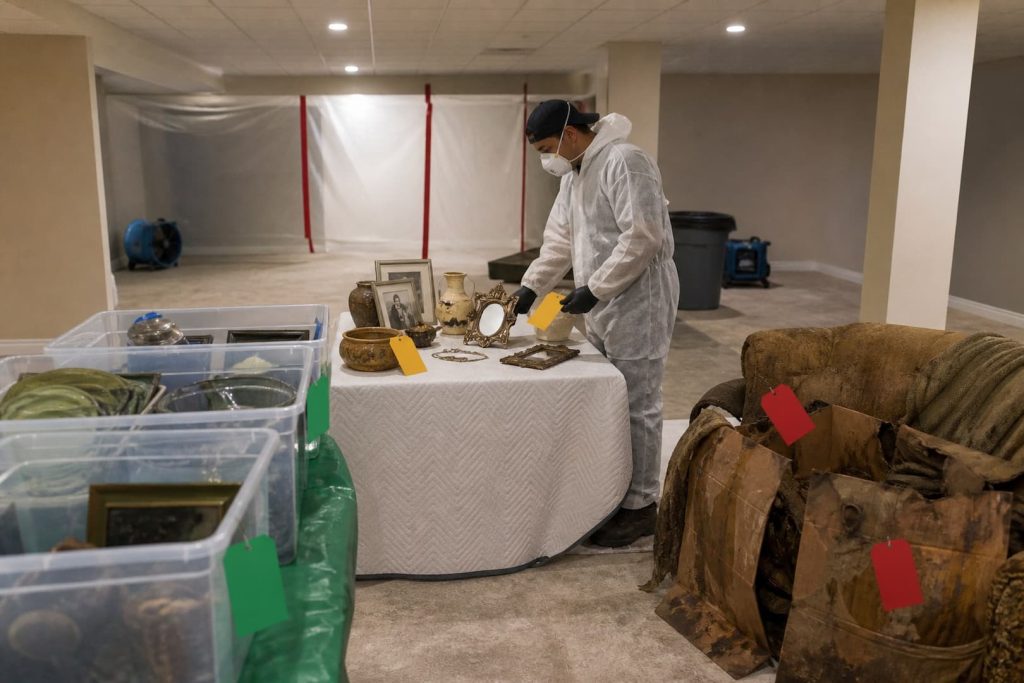
A sewage backup is not ordinary water damage. The water can carry human waste, microbes, chemicals, and debris, and it can move under flooring, into wall bases, through cabinet seams, or across contents that never sat in the deepest water. Keep people and pets out, avoid operating electrical equipment in wet areas, and do not use a household vacuum on sewage.
Salvage depends on the material, construction, use, contamination path, and whether all surfaces can be reached, cleaned, disinfected where appropriate, and dried. “It looks fine” is not enough. A plastic storage bin and a child’s porous bath toy may share a polymer name but not the same seams, cleanability, or exposure consequence.
A practical salvage matrix
| Item or material | Typical decision | Reason |
|---|---|---|
| Glass, metal, glazed ceramic | Often salvageable | Hard surfaces can usually be washed and treated when every surface is accessible |
| Rigid nonporous plastic | Often salvageable with limits | Inspect seams, hollows, cracks, labels, and intended food or child use |
| Solid finished furniture | Case by case | Joints, unfinished backs, veneer, swelling, and internal cavities may retain contamination |
| Clothing and washable textiles | Case by case | Fiber, washability, contact level, value, and laundry guidance matter |
| Carpet and pad | Pad usually removed; carpet decision is conservative | Large porous area, backing, seams, tack strip, and subfloor complicate decontamination |
| Drywall and insulation | Contaminated portions removed | CDC guidance calls for discarding drywall and insulation contaminated by sewage or floodwater |
| Mattresses and upholstered furniture | Usually discarded | Deep porous layers and inaccessible interiors are difficult to decontaminate |
| Cardboard, paper, books | Usually discarded or specialist salvage | Highly absorbent; important records may need a document-conservation professional |
| Hardwood flooring | Case by case, often difficult | Water enters joints, underside, finish cracks, and subfloor |
| Concrete, tile, masonry | Often cleanable after removal of porous coverings | Cracks, grout, coatings, and adjacent assemblies still need attention |
Before sorting anything
- Stop the backup and protect occupants. Plumbing, septic, or municipal issues must be controlled.
- Address electricity and utilities. Do not enter standing water near live systems.
- Photograph rooms and contents. Capture wide views, water lines, item groups, and serial numbers.
- Establish dirty and clean zones. Do not carry dripping contents through occupied rooms.
- Use appropriate PPE. CDC guidance includes rubber boots, rubber gloves, and goggles for sewage; the job may require more protection.
- Sort by material and use. Keep sentimental or high-value items for specialist review rather than casual disposal.
- Record what leaves. Inventory, photographs, quantity, and reason for disposal support owner and insurer decisions.
Items that often can be cleaned
Stainless steel, unpainted metal, glass, glazed ceramic, and some rigid plastics are the strongest salvage candidates when they are intact and fully accessible. Remove visible soil first; cleaning must precede disinfection because organic matter can interfere with many products. Follow the disinfectant label for dilution, contact time, material compatibility, ventilation, and rinsing.
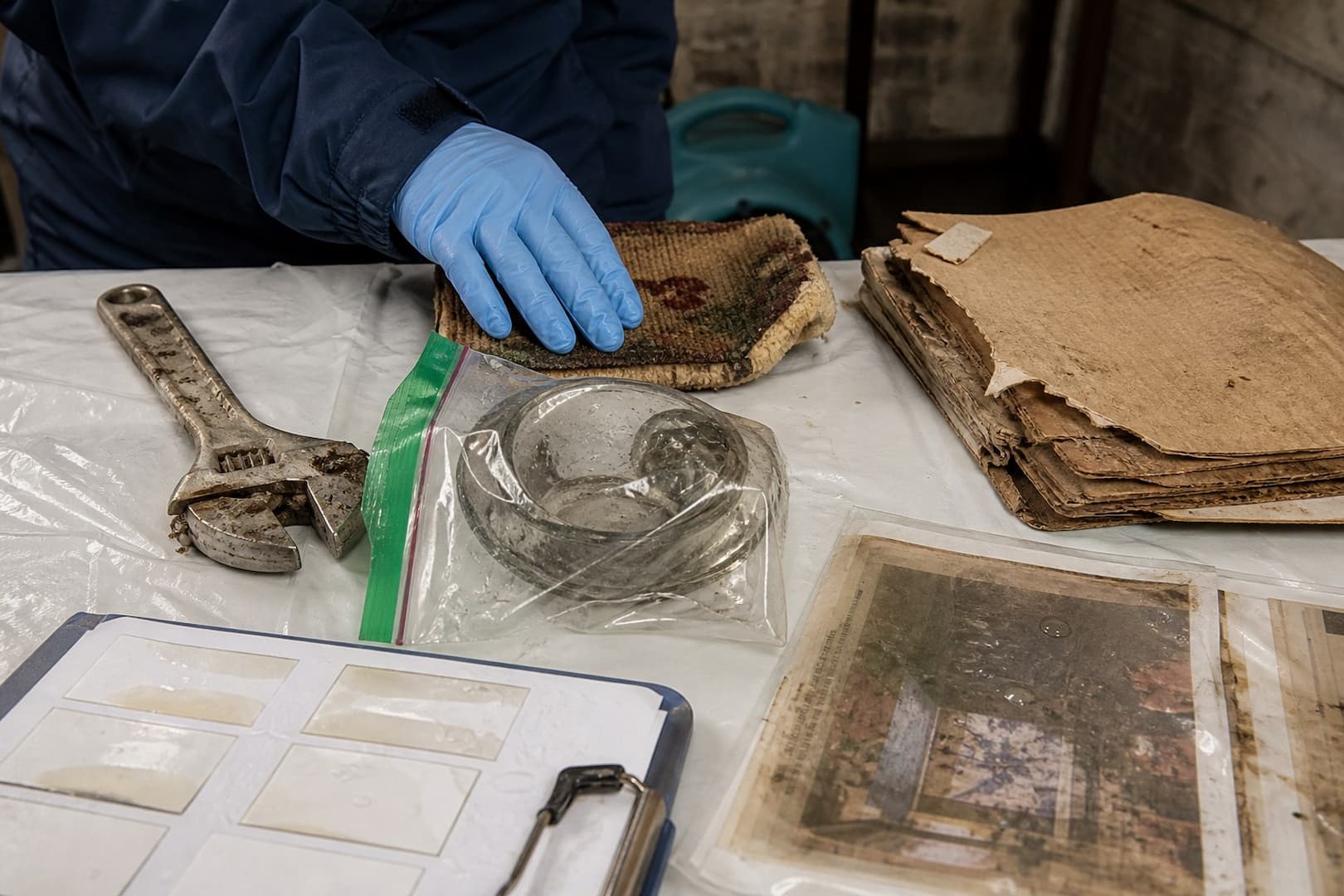
Appliances need separate judgment. A sealed exterior may be cleanable, while insulation, motors, controls, compressors, burners, wiring, or hollow bases may have been reached by sewage. Do not plug in a wet appliance. Use an electrician, appliance technician, or manufacturer-authorized service as appropriate.
Items commonly removed
Carpet pad, saturated drywall, contaminated insulation, ceiling tile, mattresses, stuffed toys, upholstered furniture, and swollen particleboard usually offer poor access to their internal surfaces. The CDC specifically advises discarding drywall and insulation contaminated with sewage or floodwater. Children’s mouth-contact items, medical supplies, cosmetics, and food-contact articles deserve especially conservative decisions.
Books, photographs, art, documents, and heirlooms are not ordinary debris when they cannot be replaced. Isolate them without spreading contamination and contact a qualified contents or conservation specialist quickly. Freezing, vacuum freeze-drying, or other specialist methods may be options for some paper collections; they are not DIY decontamination guarantees.
Building materials at the edges of the backup
Water wicks above the visible line and travels under finishes. Inspect the back of baseboards, drywall paper, insulation, sill plates, cabinet toe-kicks, tack strip, subfloor seams, floor penetrations, and adjacent rooms. Removal boundaries should follow contamination and material condition rather than an automatic height.
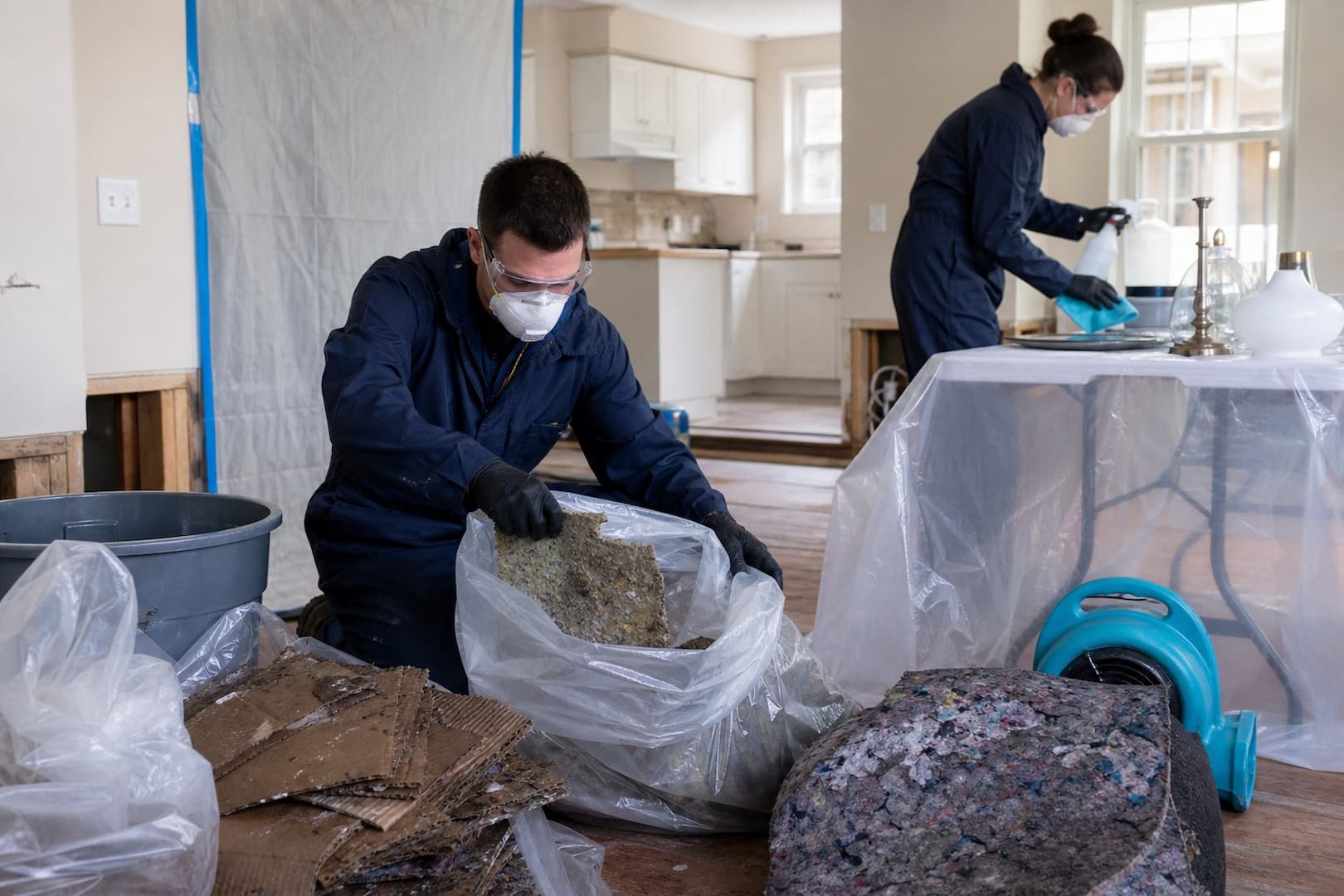
Sound concrete, masonry, framing, and some hard finishes may remain after gross contamination is removed, surfaces are cleaned and treated with a compatible registered product, and the assembly is dried. Wood that is soft, delaminated, decayed, or inaccessible may need repair or replacement. Professional sewage cleanup should document those decisions.
Why drying and odor are not clearance tests
A dry surface can still hold contamination, and a deodorized room can still contain sewage residue. Conversely, some clean materials may retain an odor for a time. Completion should consider source correction, removal of unsalvageable porous material, cleaning of remaining surfaces, product instructions, structural dryness, and inspection—not smell alone.
Insurance and disposal
Notify the insurer and ask about sewer-backup or sump endorsements, emergency measures, inspection, and inventory format. Photograph before disposal when safe. If public-health or building conditions require immediate removal, record why and retain representative samples only when doing so is safe and requested. Follow local rules for construction debris, electronics, chemicals, and bulky waste.
Sewage-salvage questions
Can carpet be steam-cleaned and kept?
Carpet and pad are porous systems with inaccessible layers. After sewage contamination, pad is generally removed and carpet salvage is uncommon and case-specific. The subfloor and tack strip also need assessment.
Can clothing be washed?
Some washable textiles may be salvageable when handled separately under suitable laundry guidance. Heavily contaminated, delicate, padded, or non-washable items may not be. Do not mix them with ordinary household laundry by default.
Are plastic bins safe?
An intact rigid bin may be cleanable, but hollow handles, textured surfaces, lids, labels, cracks, and contents can change the decision. Food, infant, and medical uses call for more caution.
Is a small backup a DIY job?
Volume is only one factor. Source, electrical safety, vulnerable occupants, porous material, spread under finishes, and ability to contain waste all matter. A small toilet overflow limited to an intact hard floor differs from sewage across a finished basement.
Sort by porosity, access, function, and value
Porosity is the first screen, not the whole decision. A hard plastic bin may be cleanable if every surface is accessible; an appliance with contaminated insulation or controls may not be. A valuable wet document can justify freezing and conservation, while ordinary paper goods do not. Children’s mouth-contact items, medical supplies, cosmetics, and food require a more conservative approach than a metal shelving unit.
| Item | Typical direction | Reason or specialist question |
|---|---|---|
| Sealed glass and non-porous dishes | Clean and disinfect if intact | All surfaces are reachable; follow public-health guidance |
| Upholstered furniture and mattresses | Usually discard | Deep porous layers are not readily cleaned |
| Solid-wood furniture | Case-specific | Joints, finish, exposure duration, and value matter |
| Electronics and appliances | Specialist/manufacturer review | Hidden insulation, corrosion, and electrical risk |
| Photographs and documents | Isolate; conservator may freeze/dry | Value may justify specialty recovery |
| Food, medicine, cosmetics | Discard when exposed or packaging compromised | Not a restoration-cleaning decision |
| Washable textiles | Case-specific laundering | Fabric, soil load, care label, and use matter |
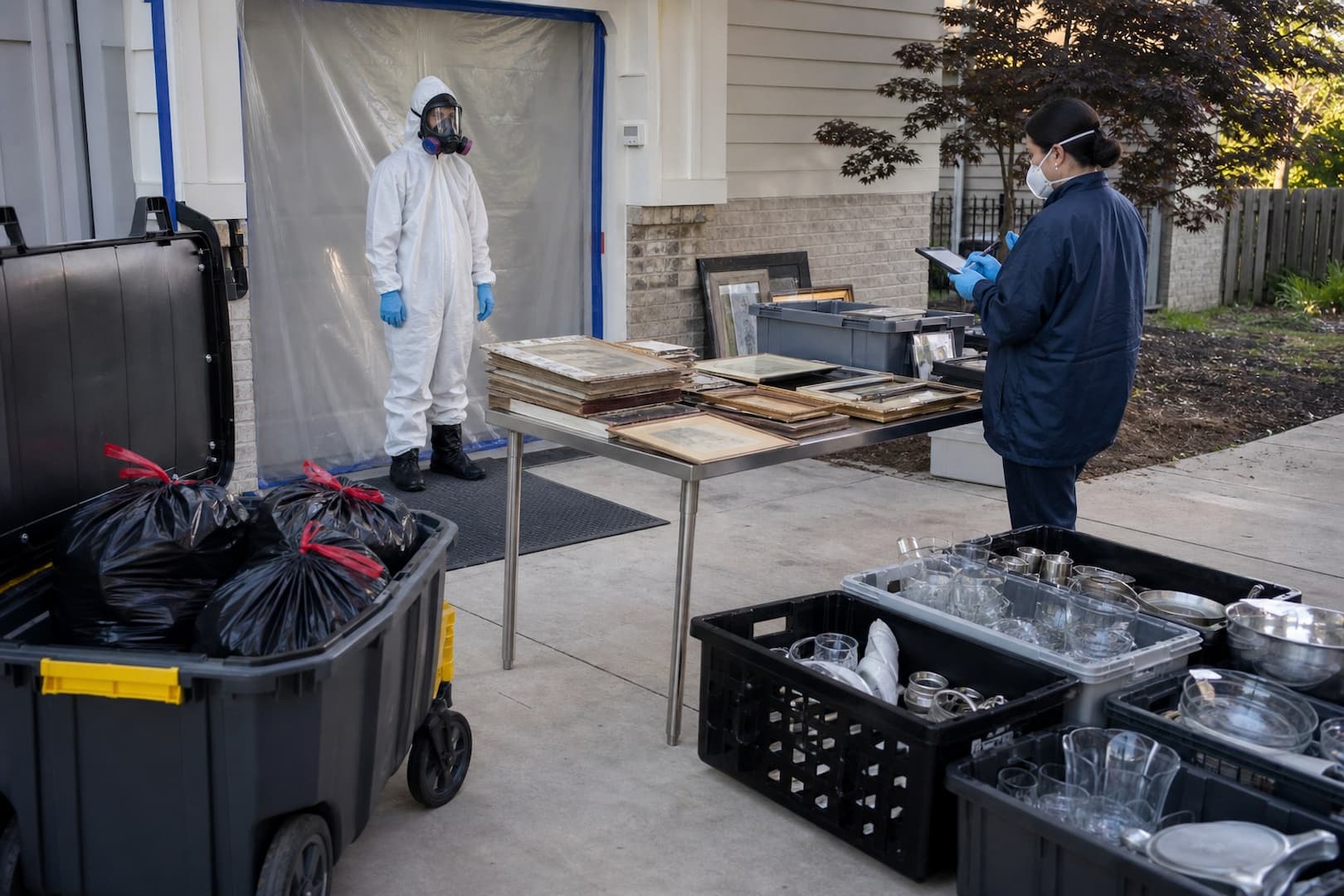
Create dirty, transition, and clean zones
Do not sort belongings on the unaffected living-room floor. Establish a contaminated work area, a controlled transition, and a clean staging area. Bag or wrap items before movement. Label photographs and inventory numbers outside the contaminated zone when possible. Tools and carts need a decontamination plan too. The path to the exit should avoid HVAC returns, food areas, and occupied rooms.
Gross solids and standing sewage are removed before detailed cleaning. Dry sweeping, ordinary vacuuming, and aggressive fans can spread contamination. Extraction equipment, PPE, containment, and disposal methods should match the loss. Sewage cleanup and disinfection combines physical soil removal with cleaning, appropriate disinfection, and drying; a disinfectant label does not make uncleaned porous material salvageable.
Floor and wall edges decide more than the center of the room
Sewage reaches tack strips, baseboard gaps, bottom plates, wallboard edges, insulation, cabinet toe-kicks, and flooring seams. Hard tile at the center may remain serviceable while contaminated water sits under a floating floor or behind a vanity. Selective access should follow the water boundary. Removing only the visibly stained carpet can leave the pad and perimeter reservoir.
Concrete and masonry can often be cleaned, but cracks, joints, coatings, and wood sleepers need inspection. Laminate and particleboard swell and trap soil. Solid wood may be evaluated where surfaces and joints can be reached, yet contamination beneath it can force removal for access. Record the reasoning item by item; “hard surface” is not enough.
Document disposal before the pile leaves
- Photograph each room and water line before moving contents
- Create grouped inventories with make, model, age, and condition when available
- Take representative photos of large groups without hiding high-value items
- Record why an item is non-salvageable: porosity, delamination, inaccessible contamination, or safety
- Keep disposal authorization and receipts
- Retain samples only when safe and agreed with the insurer
Do not delay urgent removal solely for adjuster arrival if doing so increases hazard or damage. Ask the carrier how it wants evidence preserved and confirm instructions in writing. The broader guide to water-damage claim denials explains how timelines and mitigation records fit the claim file.
Odor should fall after cleaning, but odor is not the only acceptance test
A room that smells better can still contain contaminated dust or wet porous material. Conversely, some building materials retain a non-sewage odor after cleaning that needs additional source tracing. Completion should review removal boundaries, visible cleanliness, retained-surface cleaning, moisture, HVAC pathways, and the written scope. Reoccupancy may also require plumbing or public-health clearance depending on the property and event.
Sources and further reading
- CDC: Guidelines for Cleaning Safely After a Disaster
- Boston.gov: Recovering from a Flood
- Massachusetts DPH and MassDEP: Flooding and Sewage Back-ups Home Care Guide
- Massachusetts DPH: Quick Reference — Water Damage Response in Buildings
- CDC: Cleaning Safely After a Disaster — floodwater and sewage
Request contaminated-water cleanup
Boston Restoration Group can isolate the affected area, remove sewage, document damaged materials, clean suitable surfaces, dry the structure, and coordinate disposal. Keep people and pets away until the area is assessed.