
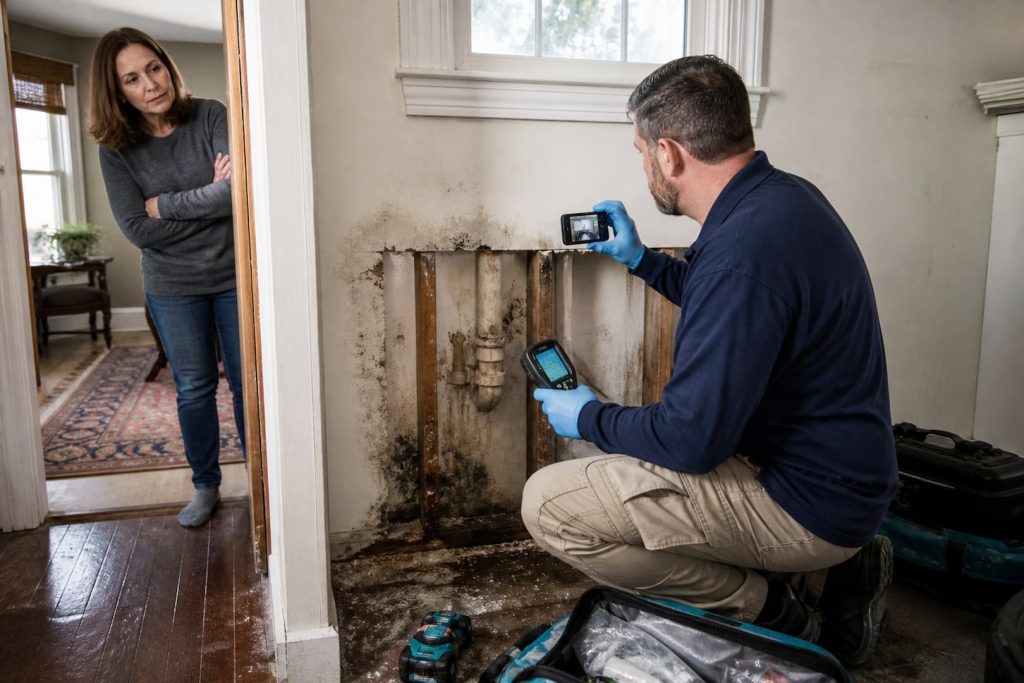
Homeowners insurance may cover some mold-related work when mold results from a sudden, covered water event, but many policies limit mold, exclude repeated seepage or maintenance conditions, and treat flood or groundwater separately. There is no statewide yes-or-no answer for every Massachusetts policy.
Read the declarations, property coverage form, water exclusions, mold or fungi endorsement, sewer-backup endorsement and any sublimits together. The insurer and policy—not the restoration contractor—decide coverage. Notify the carrier promptly and ask for the coverage position and cited policy language in writing.
The cause usually matters more than the word mold
| Scenario | Possible coverage issue to review | Evidence that helps |
|---|---|---|
| Supply pipe suddenly bursts inside wall | Sudden discharge and resulting damage; source pipe may differ | Plumber cause report, failed component, water path, prompt mitigation |
| Slow refrigerator line seepage | Repeated seepage, wear, discovery timing | Photos, last known dry condition, meter history, repair diagnosis |
| Roof opening from wind event | Covered storm damage versus wear and maintenance | Weather data, roofer report, exterior and interior photos |
| Long-term roof or window leak | Maintenance, deterioration and repeated entry | Repair history, prior stains, envelope findings |
| Sewer backup | Often requires specific endorsement | Drain source, plumber/sewer report, backup endorsement |
| Groundwater or external flood | Typically separate flood coverage or exclusion | Water-entry line, storm records, flood policy |
| Mold after delayed drying | Duties after loss and reasonable mitigation | Notice date, contractor calls, drying logs and access constraints |
These are questions to investigate, not coverage predictions. Policy editions and endorsements differ, and the same visible mold can follow very different causes. An adjuster may separate the failed device, access to reach it, resulting water damage, remediation and reconstruction into different decisions.
Mold sublimits and exclusions
Some policies contain a fungi, wet rot, dry rot or bacteria limitation with a dollar cap and specific triggers. The sublimit may apply to testing, removal, tear-out, contents or additional living expense, or it may work differently. Other policies may provide an endorsement that expands limited coverage.
Do not assume the dwelling limit is the mold limit. Ask the insurer to identify the exact endorsement, limit, deductible and expenses counted against it. If the decision is unclear, request a written explanation and speak with a licensed insurance professional or attorney for policy interpretation.
What to do after discovering mold and moisture
- Protect people and property. Address active water, electricity, sewage and unstable material first.
- Notify the insurer promptly. Use the claim channel and record the claim number and time.
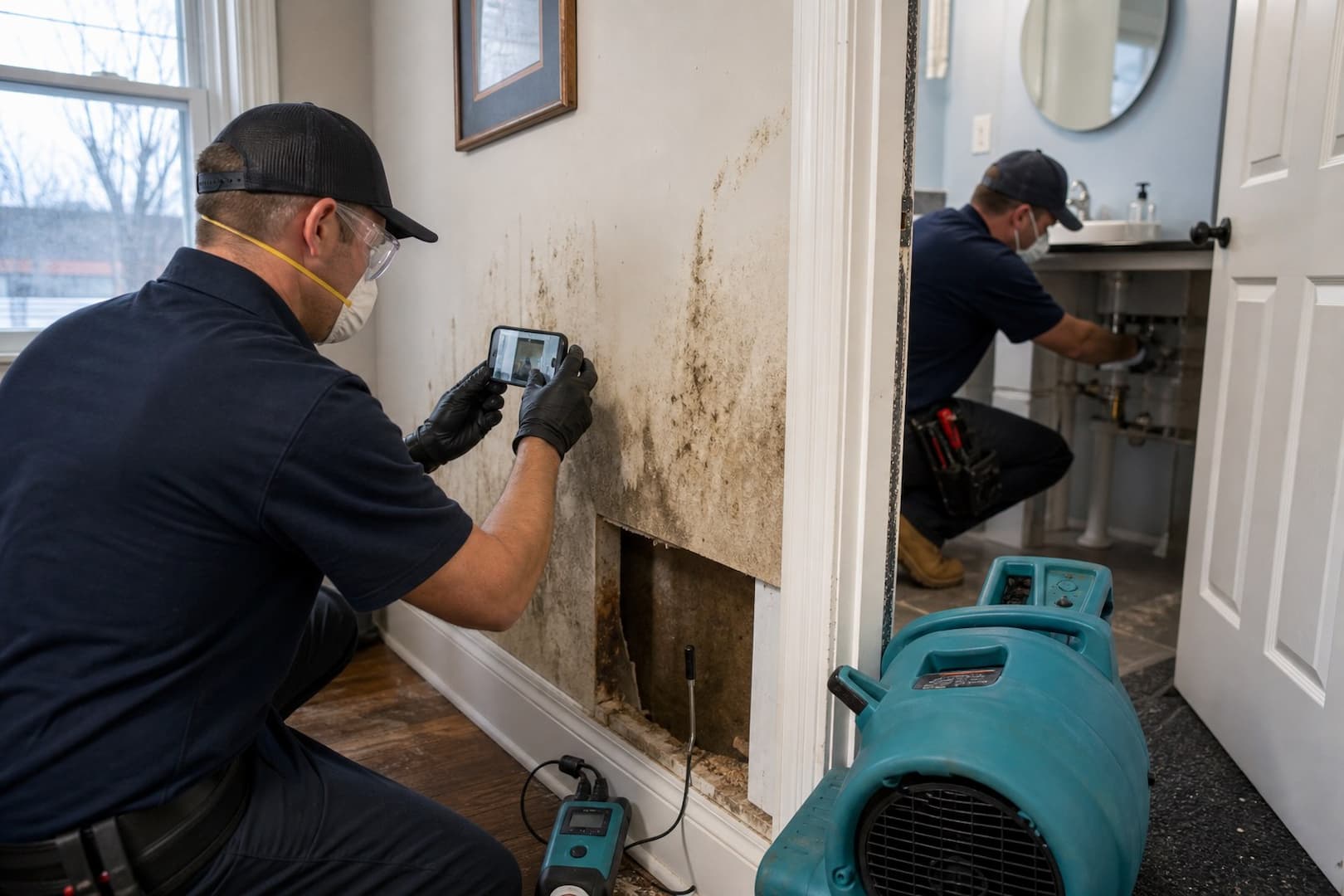
- Document before major change. Photograph source, visible growth, water staining, connected rooms and contents.
- Stop ongoing damage. Arrange reasonable emergency mitigation without destroying evidence unnecessarily.
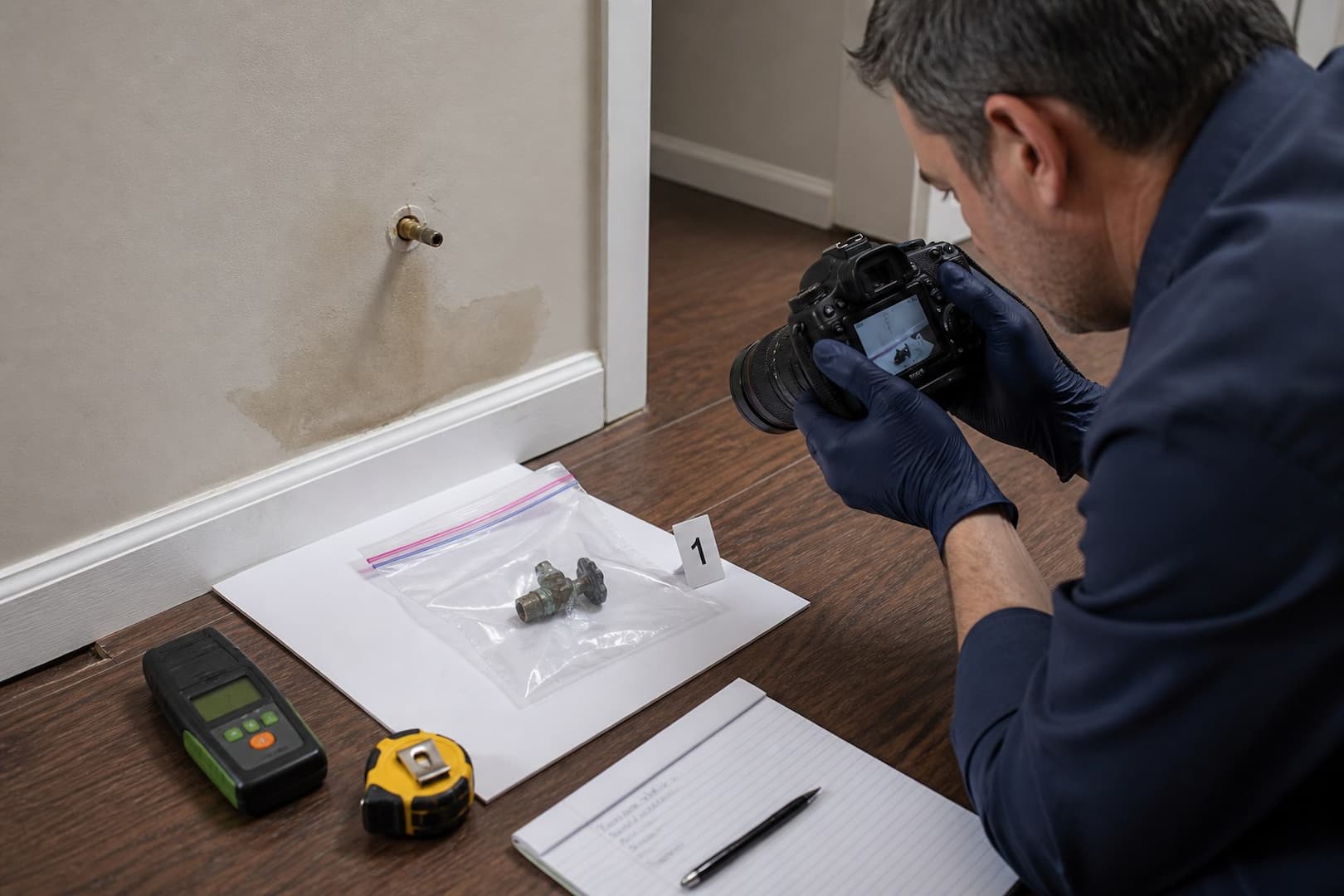
- Preserve the failed part. Keep a pipe, hose, valve or appliance component when safe and practical.
- Obtain cause and scope documents. Plumber, roofer, HVAC and restoration records answer different questions.
- Track communications and costs. Save invoices, receipts, temporary housing records and disposal inventory.
- Request decisions in writing. Ask which policy language supports approval, limitation or denial.
Emergency mitigation before approval
Policies commonly require reasonable steps to protect property from further damage, but procedures vary. You may need to stop a leak, extract standing water, remove an immediate hazard or establish drying before a full estimate is approved. Tell the carrier what is happening, photograph conditions and use a written work authorization.
Avoid elective demolition beyond emergency needs until the scope and evidence are understood. At the same time, do not leave active sewage, collapsing material or spreading water in place merely to wait for an inspection. Document why urgent work was necessary.
What restoration documentation can establish
- Observed source and migration pattern, without making a policy conclusion.
- Affected rooms, materials and approximate boundaries.
- Contamination conditions and immediate safety controls.
- Moisture readings and dry references by material and location.
- Emergency extraction, containment, removal and equipment dates.
- Photographs before, during and after work.
- Materials removed and reasons related to condition or access.
- Drying progress and completion criteria.
- Changes discovered after finishes were opened.
Mold and moisture inspection can create building evidence, but it does not guarantee payment. Air or surface samples are useful only when they answer a defined scope or verification question; a lab result alone does not establish that the cause is covered.
Flood and sewer backup are different
Standard homeowners insurance generally does not substitute for a separate flood policy for rising external water. Sewer or drain backup often requires an endorsement. A basement can receive groundwater, surface water and sewage during the same storm, so source documentation should distinguish paths rather than label everything “flood.”
If the claim is limited or denied
Read the letter and the policy section it cites. Compare the stated cause with plumber, roofer or restoration findings. Send factual corrections and missing documents through the claim channel. Ask about appraisal, reinspection or appeal procedures available under the policy. For legal or coverage advice, consult a Massachusetts-licensed insurance professional or attorney; this article is not legal advice.
Massachusetts mold-coverage questions
Does the state require insurers to cover mold?
Do not assume a blanket mandate. Coverage arises from the purchased policy and endorsements subject to Massachusetts law. The Division of Insurance provides consumer guidance and accepts inquiries or complaints.
Will insurance pay to fix the leak?
The failed pipe, appliance, roof or maintenance defect may be treated differently from resulting damage and access. Ask for each component of the decision separately.
Should I wait for an adjuster before drying?
Report promptly and ask for instructions, but take reasonable steps to prevent additional damage and address hazards. Photograph and retain records so emergency work remains explainable.
Read the policy in layers
Start with the covered-perils section and exclusions for the water event. Then find limitations for repeated seepage, wear, faulty work, flood, groundwater, sewer backup, vacancy, and neglect. Next read any mold, fungi, wet-rot, or bacteria limitation and its sublimit. Finally review endorsements, deductibles, additional living expense, debris removal, ordinance or law, and claim duties. A summary page cannot replace these connected provisions.
| Coverage layer | Question to ask | Document to review |
|---|---|---|
| Cause of loss | Was the water event covered? | Policy form and cause report |
| Resulting damage | Which building/contents damage follows? | Adjuster scope and photographs |
| Mold/fungi limitation | Is there a sublimit or exclusion? | Endorsement and definitions |
| Flood or sewer | Was separate coverage purchased? | Flood policy or backup endorsement |
| Mitigation | What emergency steps and records are required? | Duties after loss and carrier instructions |
| Living expense | When is the home considered unfit? | ALE provision and receipts |
A covered pipe break does not make every condition covered
A sudden pipe break may be covered while the failed pipe itself, corrosion, long-term leakage, pre-existing mold, or unrelated basement humidity is treated differently. Opening the wall can reveal layers from different periods. Preserve photographs and material condition before cleaning or rebuild. Ask the plumber and restorer to state observations and timelines they can support, not opinions about coverage.
If mold develops because wet materials were not addressed promptly, the carrier may examine both the original event and steps taken after discovery. Contact the insurer, document the condition, and mitigate further damage without waiting for an indefinite approval. Obtain written scope and change-order controls from vendors.
Flood, groundwater, and sewer backup need separate attention
Standard homeowners policies generally do not cover external flood in the same way as an internal pipe loss; federal or private flood insurance may apply. Sewer or drain backup often depends on a specific endorsement. A heavy-rain basement can contain groundwater, surface water, foundation seepage, and drain backup in one event. Trace each pathway rather than giving the entire loss one label.
The guide to a basement flooded after heavy rain explains the evidence needed to distinguish those paths. For contaminated water, sewage cleanup should not wait for a coverage debate when health and property are at risk.
Build a mold claim file that shows causation
- First-noticed date and what was observed, without guessing a start date
- Source-repair report and failed part when safe
- Pre-remediation photographs and moisture map
- Emergency mitigation authorization, invoices, and drying records
- Remediation protocol, estimate, and change orders
- Contents inventory and disposal evidence
- Post-remediation and reconstruction records
- All carrier correspondence and cited policy language
Sampling may support a defined dispute or protocol, but a species report does not prove when growth began or what caused the moisture. The most persuasive building record usually connects a documented event to a physical pathway and affected materials.
Use Massachusetts resources without treating them as legal advice
The Massachusetts Division of Insurance provides consumer information and a complaint process. A public adjuster or attorney can advise on a disputed claim and policy interpretation. Contractors provide estimates and building evidence. Keep those roles separate. The article on water-claim denial reasons offers a step-by-step recordkeeping framework.
Condominiums and rentals add another policy layer
The unit owner’s policy, condominium master policy, landlord policy, tenant contents coverage, and association documents may divide responsibility for walls, finishes, plumbing, and common elements. Notify the property manager and preserve the same source and moisture evidence. Responsibility for repair is not automatically the same as insurance coverage, and neither question should delay reasonable mitigation.
Build the coverage analysis from the water event forward
Mold coverage rarely begins with the question “Is mold covered?” Begin with the event that supplied moisture. Was there a sudden discharge from a plumbing system, rain through storm damage, repeated leakage, groundwater, external flood, sewer backup, condensation, or deferred maintenance? Then separate the failed component from resulting building damage, mold or fungi limits, emergency mitigation, contents, additional living expense, and reconstruction. Different provisions can apply to each part.
| Claim component | Evidence that helps describe it | Coverage question for the carrier |
|---|---|---|
| Water source | Failed part, plumber findings, event timeline | Is the source event a covered cause of loss? |
| Resulting damage | Room overview, water path, material condition | Which ensuing damage is covered? |
| Mold/fungi work | Moisture map, affected material, remediation scope | Does an exclusion, exception, or sublimit apply? |
| Emergency mitigation | Dispatch, extraction, containment, drying logs | What reasonable protective work is reimbursable? |
| Contents | Item inventory, material, condition, salvage result | Replacement cost, actual cash value, or special limit? |
| Living expense | Occupancy plan, receipts, carrier communication | When and to what extent does ALE apply? |
Read exclusions, exceptions, and endorsements together
A policy form can exclude fungi while an endorsement buys back limited coverage. A water exclusion may address flood, surface water, groundwater, sewer, drain, or sump events differently. Repeated seepage language may include a time condition, while ensuing-loss language may preserve some resulting damage without covering the defect itself. Exact wording and state-approved forms matter; online summaries cannot replace the issued contract.
Use the declarations page to identify form numbers, endorsements, limits, deductibles, and named insureds. Request a complete certified policy if pages are missing. When a carrier cites an exclusion, ask for the coverage position and the exact provisions in writing. Massachusetts Division of Insurance provides consumer information and a complaint process, but it does not rewrite the individual contract or substitute for legal advice.
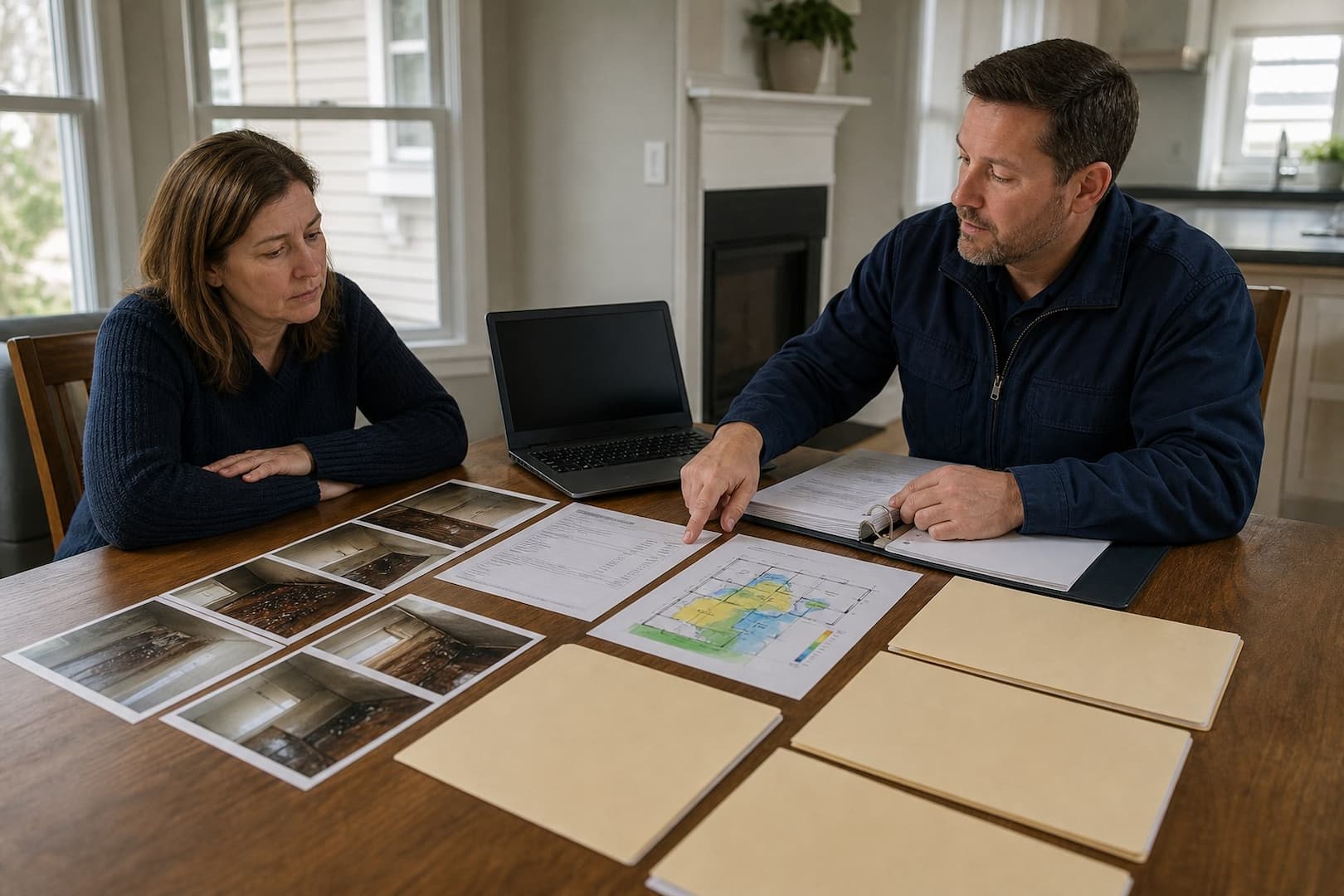
Create one timeline that every specialist can support
- Before discovery: prior leaks, repairs, inspections, weather, vacancy, humidity, and maintenance.
- Discovery: date, time, who saw what, odors, alarms, meter or utility anomalies.
- Source control: shutoff, plumber, roofer, HVAC, or appliance findings.
- Mitigation: notification, extraction, access, containment, equipment, and daily readings.
- Scope change: what hidden layers revealed and who authorized further work.
- Completion: moisture criteria, cleaning verification, rebuild, and retained invoices.
Use observation language. “The lower 18 inches of drywall were wet when inspected” is different from “the wall leaked for months.” Let each professional explain only what their evidence supports. Speculation about duration or coverage can create conflict and does not improve the building repair.
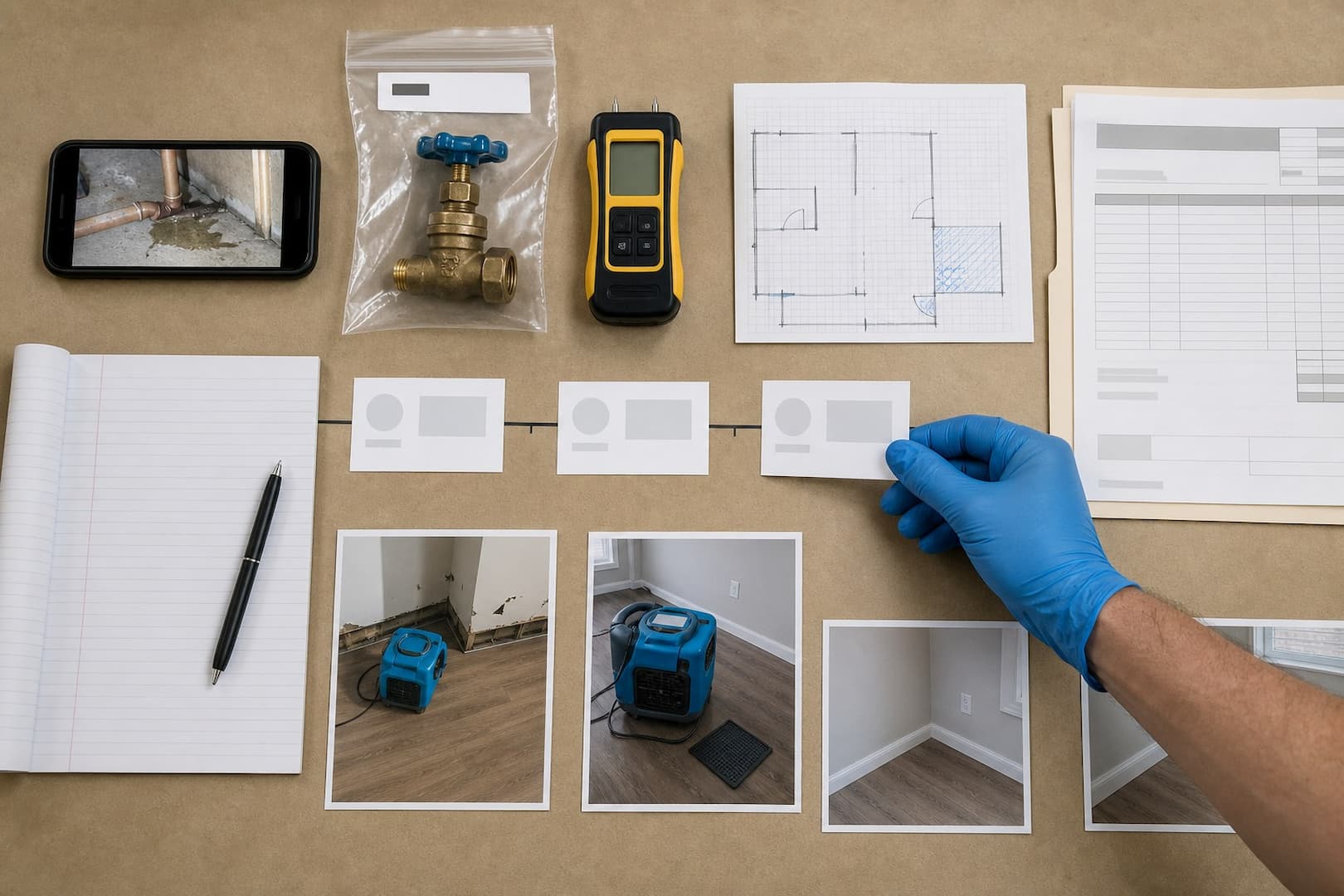
Document before removal without delaying protection
Capture room overviews, the apparent source, water migration, meter locations, staining, swelling, contents, and the failed component before major alteration when it is safe. If conditions demand immediate removal, take progress photographs and retain representative material or parts only when safe, lawful, and requested. Keep originals with dates and a simple file naming system.
Do not wait indefinitely for an adjuster while water remains active or materials continue deteriorating. Policies commonly impose duties to protect property from further damage, report promptly, cooperate, and preserve records. Ask the carrier how it wants emergency work documented, but keep life safety and reasonable mitigation first.
Separate contractor scope from insurance scope
| Professional | Proper role | Role boundary |
|---|---|---|
| Restoration contractor | Document conditions, mitigate, remediate, dry, estimate work | Cannot promise coverage or act outside licensing |
| Plumber/roofer/HVAC/appliance trade | Diagnose and repair source within discipline | Should not define mold extent without evidence |
| Adjuster/insurer | Investigate claim and state coverage position | Does not perform remediation quality control |
| Public adjuster where licensed | Represent policyholder in claim scope/valuation | Does not replace legal or engineering advice |
| Attorney | Interpret rights and handle legal disputes | Does not design restoration work |
| Environmental/industrial hygiene professional | Define or verify technical mold scope when needed | Does not decide policy coverage |
Ask for estimates that distinguish emergency service, source repair, regulated-material work, mold remediation, contents, reconstruction, code upgrades, and temporary conditions. A lump sum makes both comparison and coverage analysis harder.
Handle disputed scope with evidence, not duplicate demolition
If the carrier and contractor disagree, identify the disputed fact: water boundary, material condition, contamination, access, dry goal, cleaning method, labor quantity, matching, or code requirement. Request a joint inspection before concealed layers are rebuilt. Use photographs, readings, product information, plans, and independent evaluation where the question justifies it.
Do not create more damage simply to prove damage. Selective access should answer a defined question and follow safety controls. Preserve removed material and dimensions when matching or condition is disputed.
Review prevention and coverage before the next loss
- Repair aging supply lines, appliance connections, roofs, drainage, and known seepage
- Use monitored leak sensors or flow shutoff devices where appropriate
- Inspect sump, sewer, and drain-backup risks and endorsements
- Keep an accessible home inventory and policy copy off site
- Review mold/fungi limits, water exclusions, deductibles, and ALE
- Update the insurer after occupancy or renovation changes as required
- Record maintenance and professional repairs
Prevention reduces damage but does not guarantee coverage. Insurance products and forms change, so review the actual renewal packet rather than relying on last year’s summary. The strongest claim file and the strongest building outcome share the same foundation: fast source control, clear evidence, reasonable mitigation, and no promises beyond the facts.
Sources and further reading
- Massachusetts Division of Insurance: Frequently Asked Questions Following a Disaster
- Massachusetts Division of Insurance: Winter Weather and Insurance
- CDC: Returning Home After a Natural Disaster
- U.S. EPA: A Brief Guide to Mold, Moisture and Your Home
- U.S. EPA: Mold Cleanup in Your Home
- CDC: Mold — overview, health effects, prevention and cleanup
- Massachusetts DPH: Mold Cleanup, Repairs, and Excess Moisture Control
Document the building while the insurer reviews coverage
Boston Restoration Group can photograph conditions, map moisture, describe emergency mitigation and provide a remediation scope. BRG does not determine coverage; your insurer applies the policy.