
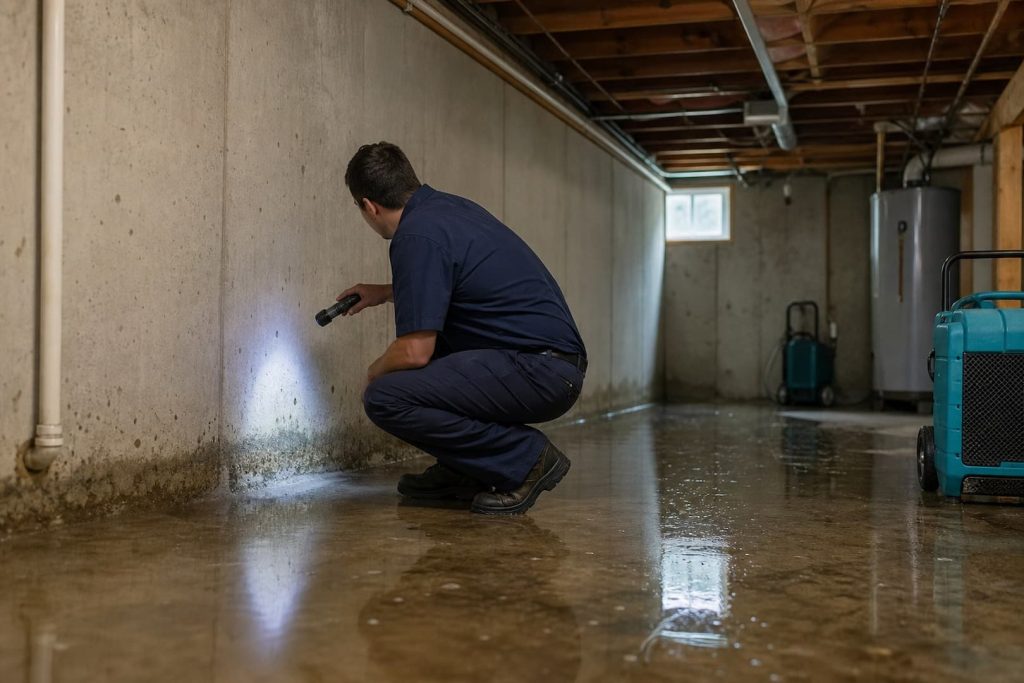
Do not walk into a flooded basement to unplug equipment or rescue boxes. Water can contact energized circuits, boilers, furnaces, water heaters, appliances, pumps, and damaged wiring. Rain-related water may also mix with sewage, fuel, chemicals, soil, or drain contents. If the safety of entry is uncertain, keep people and pets out.
From a dry location, note how high the water is, whether it is rising, whether a sump pump is running, and whether odor or debris suggests a sewer or drain backup. Contact emergency services, the utility, an electrician, plumber, septic professional, or restoration company according to the immediate hazard.
First actions in a safe order
- Control access. Keep children, pets, tenants, and unassigned workers away.
- Address electricity through a safe route. Do not reach a panel by crossing water. A qualified electrician may need to isolate the basement.
- Identify the likely source without entering. Check rainfall, exterior pooling, sump alarms, floor drains, plumbing use, and municipal notices.
- Stop additional water where possible. Redirect obvious exterior flow only if it can be done safely; plumbing and sewer sources need the correct trade.
- Document before major cleanup. Photograph water height, affected rooms, contents, source clues, and equipment from safe positions.
- Begin extraction when the area is cleared. The method and rate must consider groundwater, foundation condition, utilities, and contamination.
- Open and dry wet assemblies deliberately. Floors, wall bases, insulation, cabinets, and contents may hold water after the surface is pumped.
What caused the flood?
| Source | Clues | Who commonly addresses the cause |
|---|---|---|
| Sump-pump failure or power loss | Full pit, alarm, silent pump, tripped circuit | Sump/plumbing contractor and electrician as needed |
| Foundation seepage or groundwater | Water at floor-wall joint, cracks, broad rainfall pattern | Drainage or waterproofing professional |
| Window-well or door entry | Debris line, overflow at one opening | Exterior drainage, window/door, or landscaping trade |
| Roof and downspout discharge | Pooling near foundation, short or failed downspout | Roofing/gutter and drainage correction |
| Sewer or drain backup | Floor-drain flow, toilet use connection, sewage odor or residue | Plumber, sewer authority, or septic professional |
| Burst pipe or appliance | Localized pressurized source independent of rain | Plumber or appliance technician |
| Combined sources | Rain overwhelms drainage while sewage or groundwater enters | Multiple trades; restoration documents separate paths |
Do not label rainwater as clean merely because it looks clear. Water that crossed soil, pavement, a window well, foundation, drain, or sewer can carry contaminants. The source and path control PPE, salvage, and disinfection decisions.
Removing water without damaging the building
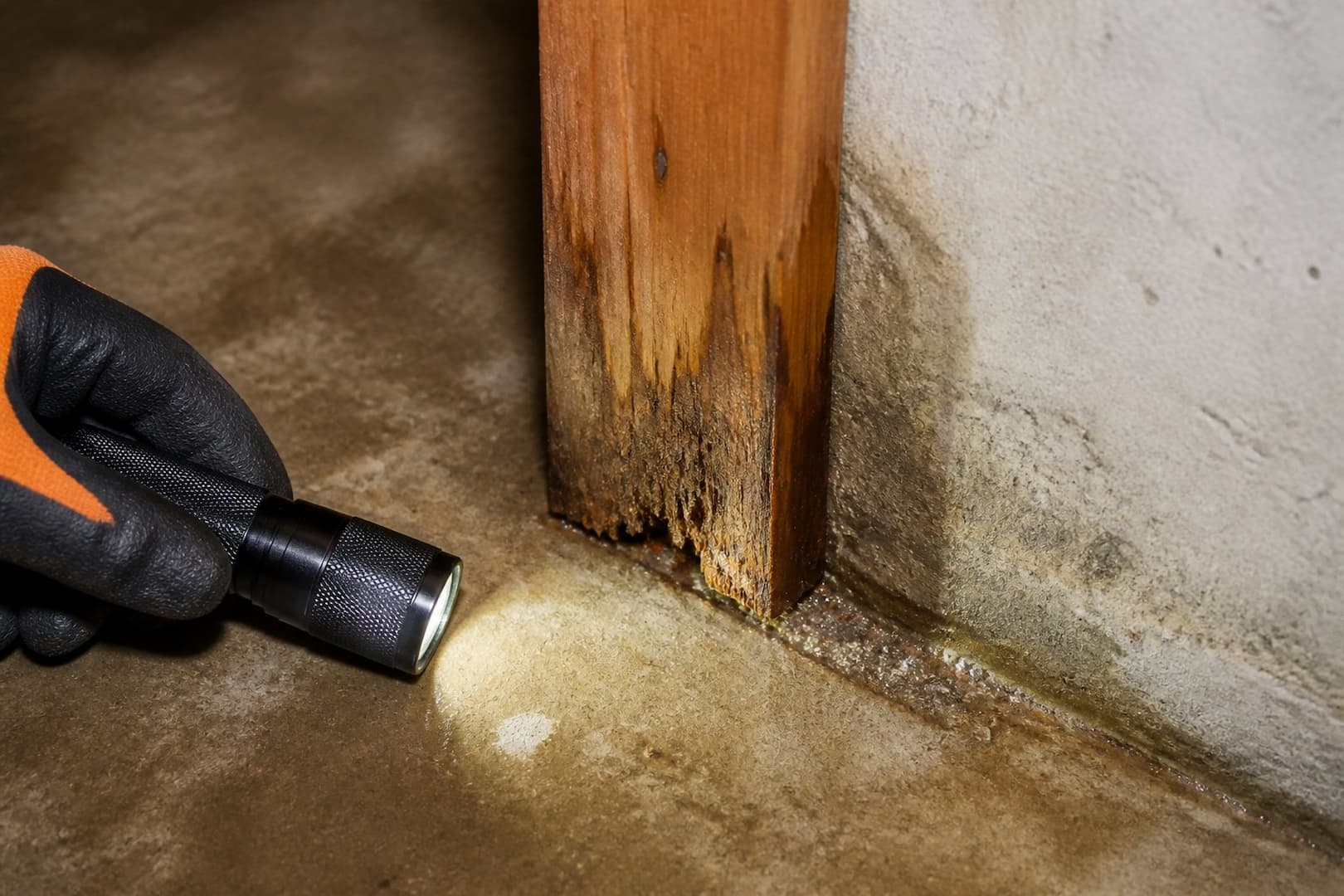
Boston.gov advises using a wet vacuum or sump pump for floodwater when conditions are safe. Deep basement flooding with saturated soil outside can place pressure on walls and slabs; rapid pumping may be unsafe in some situations. If water is deep, the foundation is cracked or moving, or officials warn of high groundwater, obtain local emergency or structural guidance before aggressive removal.
Never run a gasoline-powered pump, generator, or combustion heater indoors or near openings where exhaust can enter. Carbon monoxide can kill without warning. Electrical pumps and dehumidifiers need a safe circuit and placement outside standing water.
What to save first
Move clean, dry, high-value contents out of the migration path if access is cleared. Wet cardboard, carpet pad, drywall, insulation, upholstered furniture, and composite wood are poor candidates after contaminated or prolonged flooding. Hard, nonporous items may be cleanable. Photograph and inventory before disposal when possible, and follow insurer and local waste instructions.
| Material | Early decision |
|---|---|
| Drywall and baseboards | Inspect above the water line for wicking; remove contaminated or physically damaged portions to a field-determined boundary |
| Fiberglass or cellulose insulation | Saturated or contaminated material commonly needs removal |
| Carpet and pad | Pad is vulnerable; sewage or outdoor floodwater usually makes salvage conservative |
| Concrete and masonry | Often cleanable, but cracks, coatings, salts, and wall cavities still need attention |
| Wood framing | May remain if sound, accessible, cleaned as required, and dried |
| Furnace, boiler, water heater, appliances | Do not operate until the appropriate technician clears them |
Drying the finished basement
Extraction is only the first step. Water can wick into drywall, stay under laminate or vinyl, soak carpet pad, enter cabinet toe-kicks, and collect inside insulation. Air movers without dehumidification may only move humid air, and fans should not spread sewage, mold, or debris. BRG’s flood damage restoration service uses moisture mapping to set access and drying.
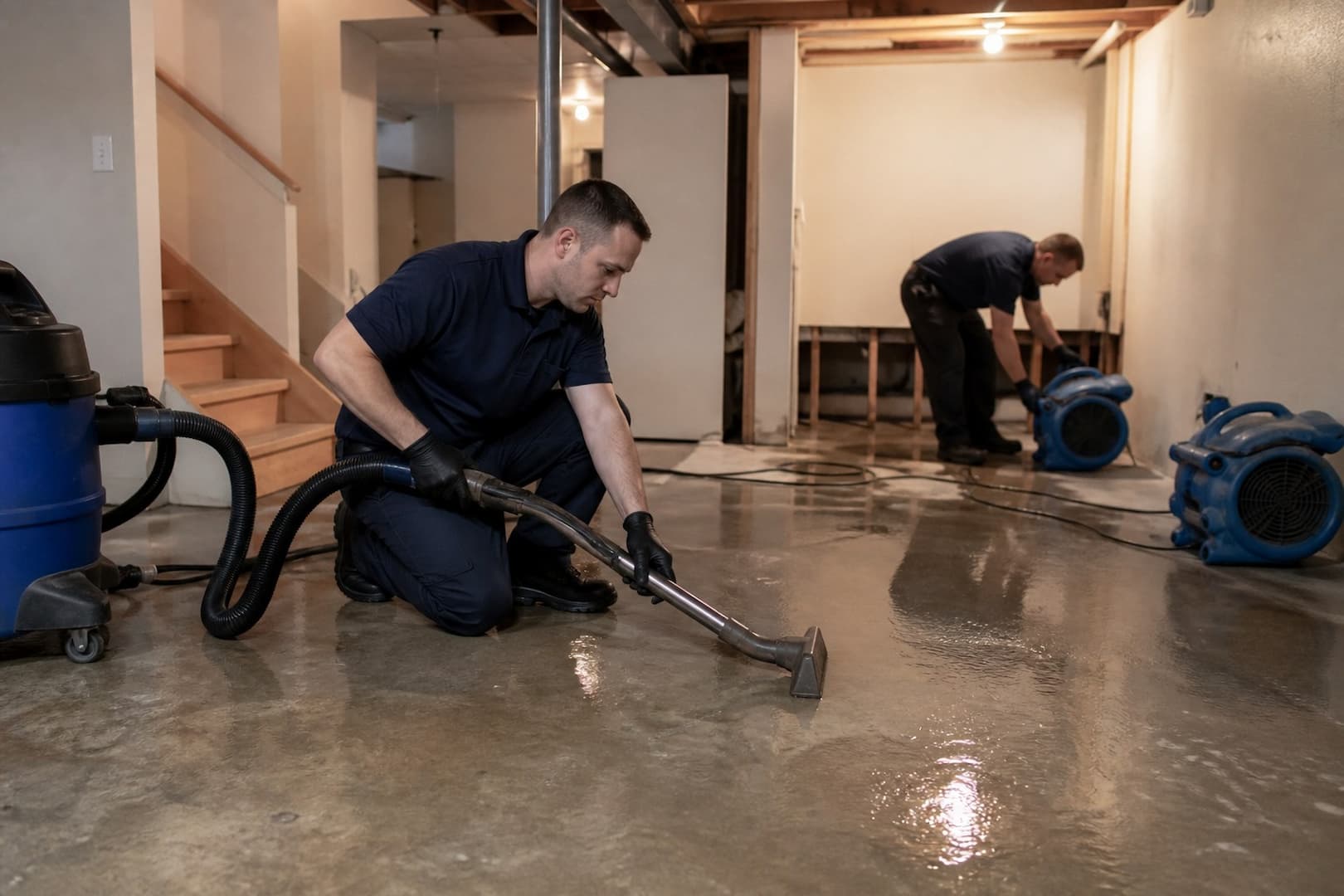
A reasonable completion point compares affected materials with dry references, confirms that concealed layers were addressed, and verifies the source correction. Touch, color, and odor alone are not dry standards. Rebuild only after the slab, framing, wall bases, and flooring system are ready for their new materials.
Insurance and documentation
Notify the insurer and ask specifically about flood, groundwater, sewer backup, sump overflow, and water endorsements. Standard homeowners policies often exclude external flood and may require a backup endorsement; the exact source and policy control. Save photographs, weather records, pump or alarm history, emergency invoices, disposal records, and all communications.
Reducing the next heavy-rain loss
- Maintain gutters and discharge downspouts away from the foundation to a lawful outlet.
- Correct grading, window-well drainage, and surface pooling.
- Service the sump pump, check valve, discharge line, alarm, and backup power.
- Do not store paper, fabric, electronics, or furniture directly on the basement floor.
- Install monitored water and high-level alarms where they can trigger a real response.
- Inspect foundation cracks and floor drains before storm season.
- Review sewer-backup, sump, and flood insurance options before a loss.
- Keep shutoff, electrician, plumber, septic, restoration, and insurer contacts accessible.
Flooded-basement questions
Should I turn off the basement breaker?
Only from a dry, safely accessible location and within your capability. Do not enter water to reach a panel. When in doubt, call the utility or electrician.
Can I use fans immediately?
Only after electricity is safe and the water source, contamination, and mold conditions are understood. Fans can spread contaminated droplets, dust, or spores.
How much drywall should be cut out?
There is no universal height. The boundary follows contamination, wicking, material damage, insulation, framing access, and moisture readings.
Is the basement safe when standing water is gone?
Not necessarily. Utilities, contamination, wet cavities, flooring, and structural conditions may remain unresolved. Extraction removes the visible reservoir; inspection and drying address the assembly.
Build a timeline while the storm is still fresh
The best clue may disappear before a contractor arrives. Record when rain became heavy, when water first appeared, whether it rose from a drain or entered at a wall, and when the sump pump started or stopped. Photograph the water line against a fixed object. A slow seep through one foundation joint tells a different story from water welling across the slab or backing up through a plumbing fixture. If the street was flooded or a municipal overflow was reported, save those notices too.
Do not step into water to collect evidence. From a safe, dry location, photograph the electrical panel, extension cords, fuel-fired equipment, and any sagging ceiling below the wet area. Keep children and pets upstairs. If water may have contacted outlets, appliances, a furnace, or the panel, an electrician or emergency responder should establish the electrical safety boundary before extraction equipment is plugged in.
| Observation | What it may mean | Who may need to investigate |
|---|---|---|
| Water at wall-floor joint during peak rain | Hydrostatic pressure, crack, poor drainage | Foundation/drainage contractor after cleanup |
| Sump pit overflowing | Pump, float, check valve, discharge, power, or capacity failure | Plumber or sump specialist |
| Water from floor drain or toilet | Sewer surcharge or building drain obstruction | Licensed plumber and possibly the utility |
| Water below one window or bulkhead | Opening, well drain, grading, or flashing defect | Exterior envelope contractor |
| Uniform rise across low floor | Multiple pathways or groundwater exceeding system capacity | Restorer plus drainage specialist |
Why a finished basement needs a layered inspection
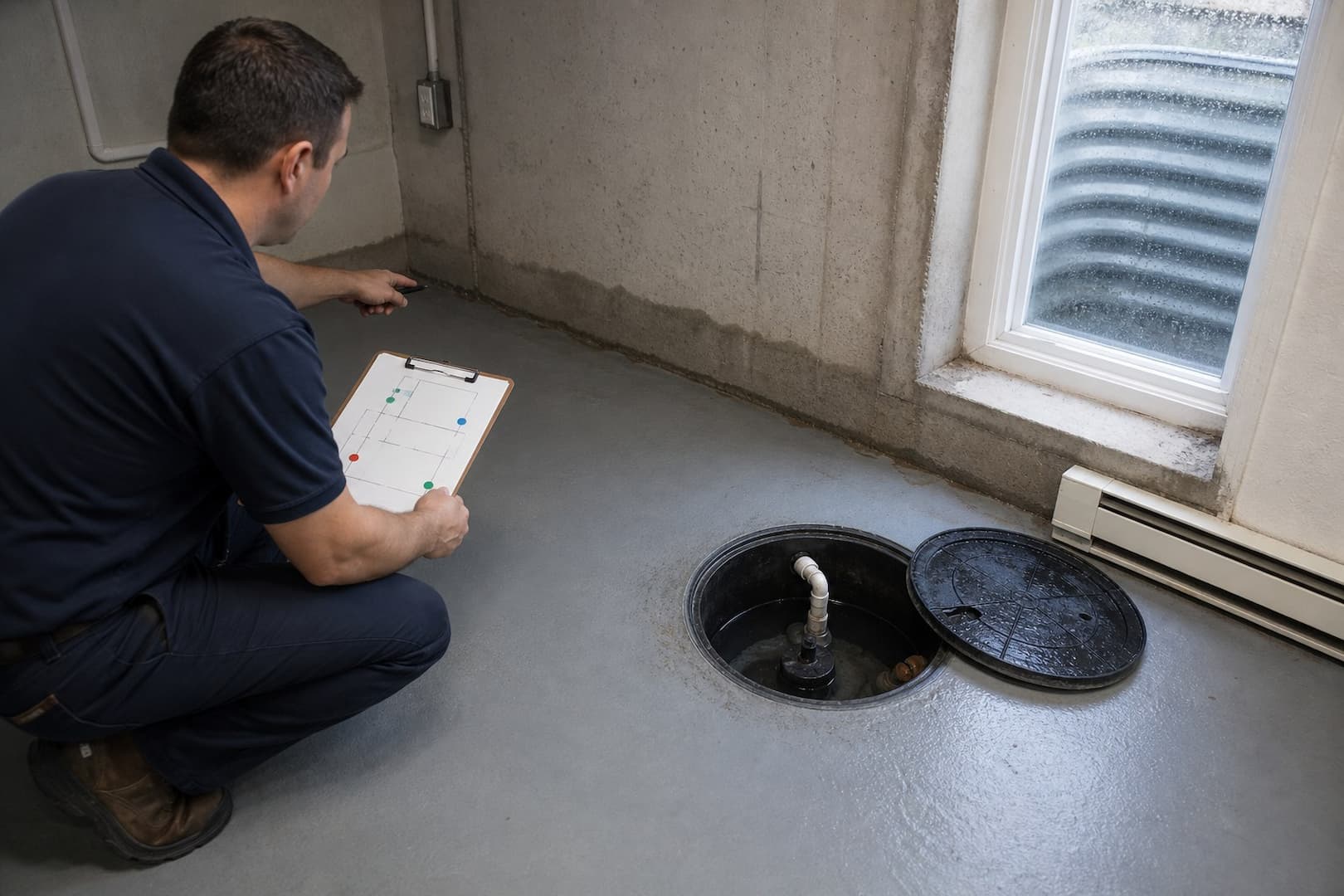
A dry-looking floor can hide a wet assembly. Water travels beneath floating laminate, along foam underlayment, behind baseboard, and into the paper faces of drywall. Fiberglass batts can hold water against studs even after the lower wall feels dry. Built-in cabinets create another closed edge. A competent moisture map therefore follows transitions, exterior walls, partitions, stair landings, closets, and the ceiling below–not just the place where standing water was deepest.
Selective removal should answer a question. Removing a short baseboard section can expose the drywall edge; a small inspection opening may reveal insulation condition; lifting one flooring transition can show whether water crossed underneath. Demolishing every wall before mapping wastes salvageable material, while refusing all access can leave a reservoir closed. The decision rests on water source, exposure time, material, odor, visible change, and readings over time.
Manage humidity without spreading contamination
Air movement is useful only after the safety and contamination plan is clear. A fan aimed across suspect sewage, mold, or settled debris can carry particles to the stairwell and HVAC return. Close the route to occupied rooms where practical, keep the HVAC decision tied to the affected pathways, and establish controlled airflow before demolition. For clean rainwater caught quickly, extraction and dehumidification may begin with fewer controls, but rainwater that crosses soil, window wells, or a dirty drain should not be assumed clean from appearance alone.
Water extraction removes free water; it does not prove that the wall and floor system are dry. Daily records should show the affected locations, dry references, room conditions, equipment changes, and whether readings are falling. If a material plateaus, find the closed layer rather than simply adding days to the equipment rental.
Turn the loss into a prevention project after drying
Once the basement is open and dry, rank repairs by the evidence. Clear gutters and extend downspouts only if roof runoff was part of the path. Repair a window well only if it overflowed. A larger sump pump will not fix a blocked discharge or missing backup power. Exterior excavation may be justified for a foundation defect, but not every damp joint needs the same costly response. The article on sump-pump failure during heavy rain provides a deeper checklist for that branch of the diagnosis.
Sources and further reading
- CDC: Guidelines for Cleaning Safely After a Disaster
- Boston.gov: Recovering from a Flood
- Massachusetts DPH and MassDEP: Flooding and Sewage Back-ups Home Care Guide
- Massachusetts DPH: Quick Reference — Water Damage Response in Buildings
Request flooded-basement response
Boston Restoration Group can extract standing water, map moisture, remove unsalvageable material, dry the structure, and document the loss. If sewage, electrical danger, or structural damage is suspected, keep everyone out and report it when you call.