
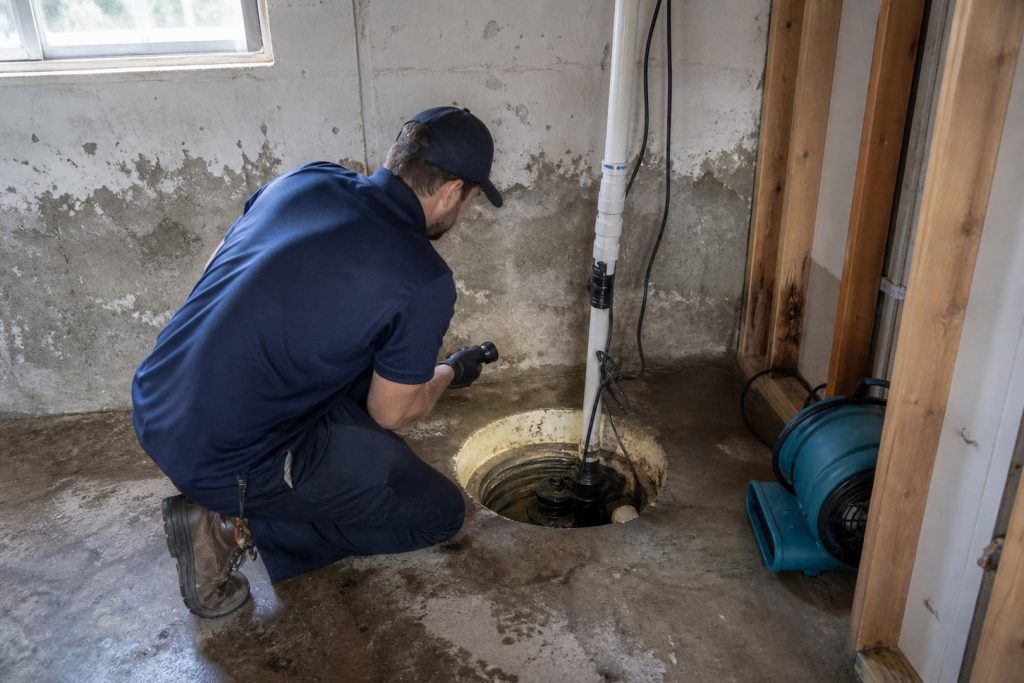
If a sump pump stops during heavy rain, do not walk through basement water to reset a breaker, unplug the pump or inspect the pit. Standing water may contact the electrical panel, furnace, boiler, water heater, appliances and damaged wiring. It may also mix with sewer flow, floor-drain contents, fuel, chemicals or soil.
From a dry location, check whether water is rising, whether an alarm is sounding, whether the building has power, and whether a sewage odor or drain flow is present. Call an electrician, plumber, utility, sewer authority, septic contractor or restoration company according to the immediate condition. A backup pump is useful only when its power source and discharge path are safe.
Why the sump system failed
| Observed condition | Possible failure | Source-control response |
|---|---|---|
| No power in building | Utility outage | Use a properly installed battery backup; never run a generator indoors |
| Breaker trips or outlet is wet | Electrical fault, pump jam or wet equipment | Electrician; do not keep resetting |
| Pump runs but water rises | Undersized pump, blocked intake, overwhelmed drainage | Plumber or drainage specialist |
| Pump hums but does not discharge | Jammed impeller, frozen/blocked line or failed check valve | Disconnect only by qualified person; inspect discharge |
| Water returns to pit | Failed/missing check valve or short-cycling | Plumber evaluates valve and piping |
| Water bypasses pit | Grading, wall seepage, window well or foundation path | Drainage or waterproofing assessment |
| Sewage comes through drain | Sewer or septic backup, not simply sump failure | Plumber, sewer authority or septic professional |
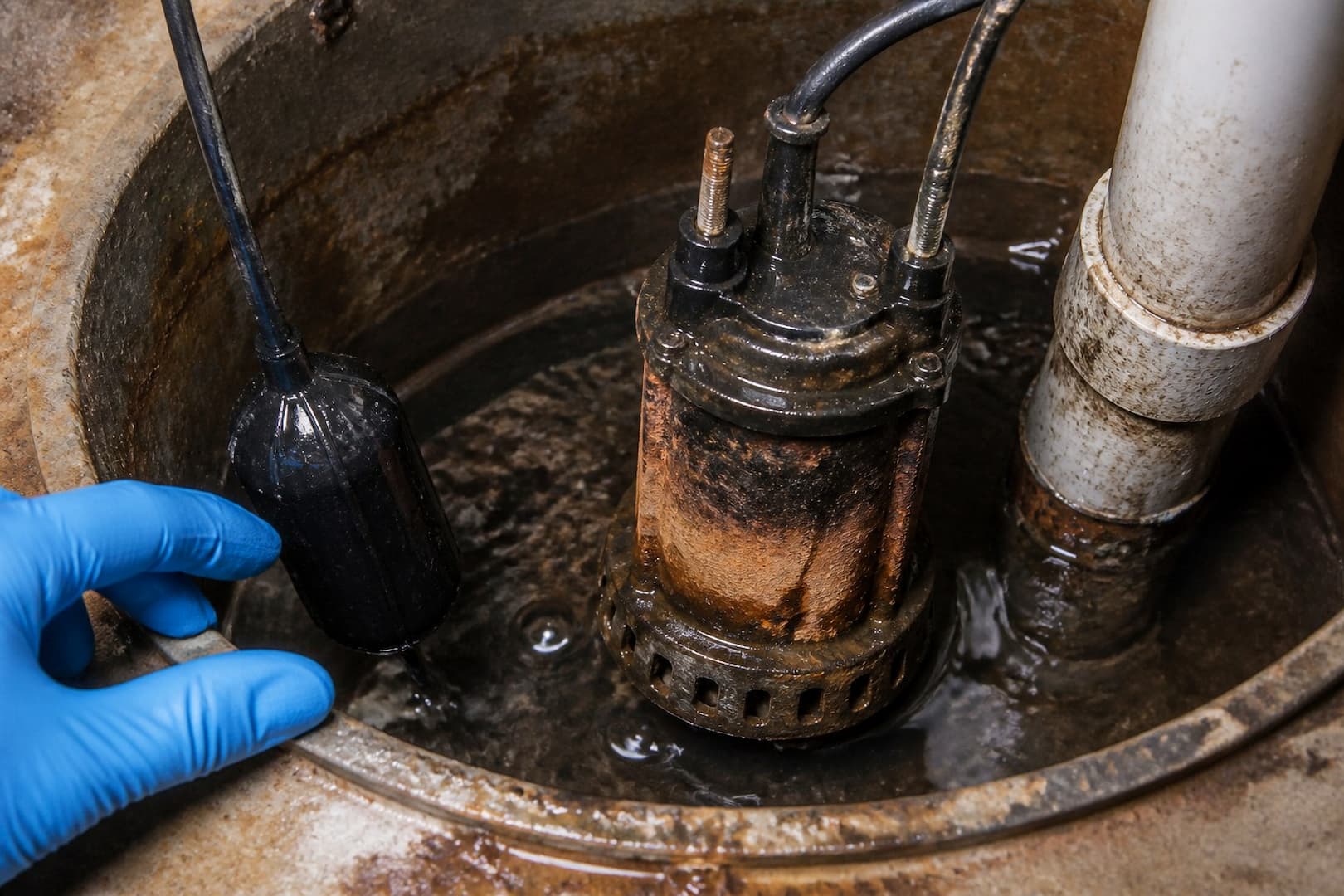
Do not assume the pump is defective because the pit filled. A frozen exterior discharge, failed check valve, lost power, undersized system or unusual groundwater load can overwhelm a working pump. Preserve the pump and controller settings for diagnosis before replacement when practical.
Immediate safety sequence
- Control access. Keep occupants and pets upstairs or outside the affected zone.
- Address electricity from a dry route. Do not reach the panel by crossing water; call the utility or electrician.
- Identify contamination clues. Sewage odor, toilet use, drain flow, fuel sheen or chemical containers change the response.
- Stop additional inflow where safe. Redirect obvious surface drainage without entering floodwater or damaging neighboring property.
- Document water height and equipment. Photograph the pit, alarm, pump, affected utilities and room boundaries.
- Arrange controlled extraction. Deep water, foundation distress or high groundwater may require local structural guidance.
- Open and dry wet materials. Pumping the pit does not dry the basement.
Can you pump the basement immediately?
Shallow water after electrical clearance may be removed promptly. Deep basement water with saturated soil outside can create pressure differences across walls and slabs, and rapid removal may be unsafe in some conditions. If foundation walls are cracked, bowing or moving, water is several feet deep, or officials warn of high groundwater, obtain emergency or structural guidance before aggressive pumping.
Never use a gasoline-powered generator, pump or combustion heater indoors, in a garage, or near openings where exhaust can enter. Carbon monoxide has no reliable warning smell. Electrical extraction and drying equipment need protected circuits and dry placement.
Is sump water contaminated?
Groundwater is not equivalent to potable supply water. It can carry soil organisms, fertilizers, petroleum, pesticides and other contaminants, and it may mix with drain or sewer flow. Clear appearance does not establish Category 1. The source and path determine PPE, porous-material salvage and cleaning.
If sewage is present, avoid fans and household vacuums. Many wet porous materials—including carpet pad, drywall, insulation and composite wood—become removal candidates. Suitable concrete, masonry and framing may be cleaned, disinfected as appropriate and dried after gross contamination is removed.
Drying the basement
Water moves under floating flooring, behind finished walls, into sill plates and upward through drywall paper. A pit that has returned to normal level says little about those assemblies. Flood damage restoration combines extraction, selective access, cleaning, dehumidification, air movement and measured completion.
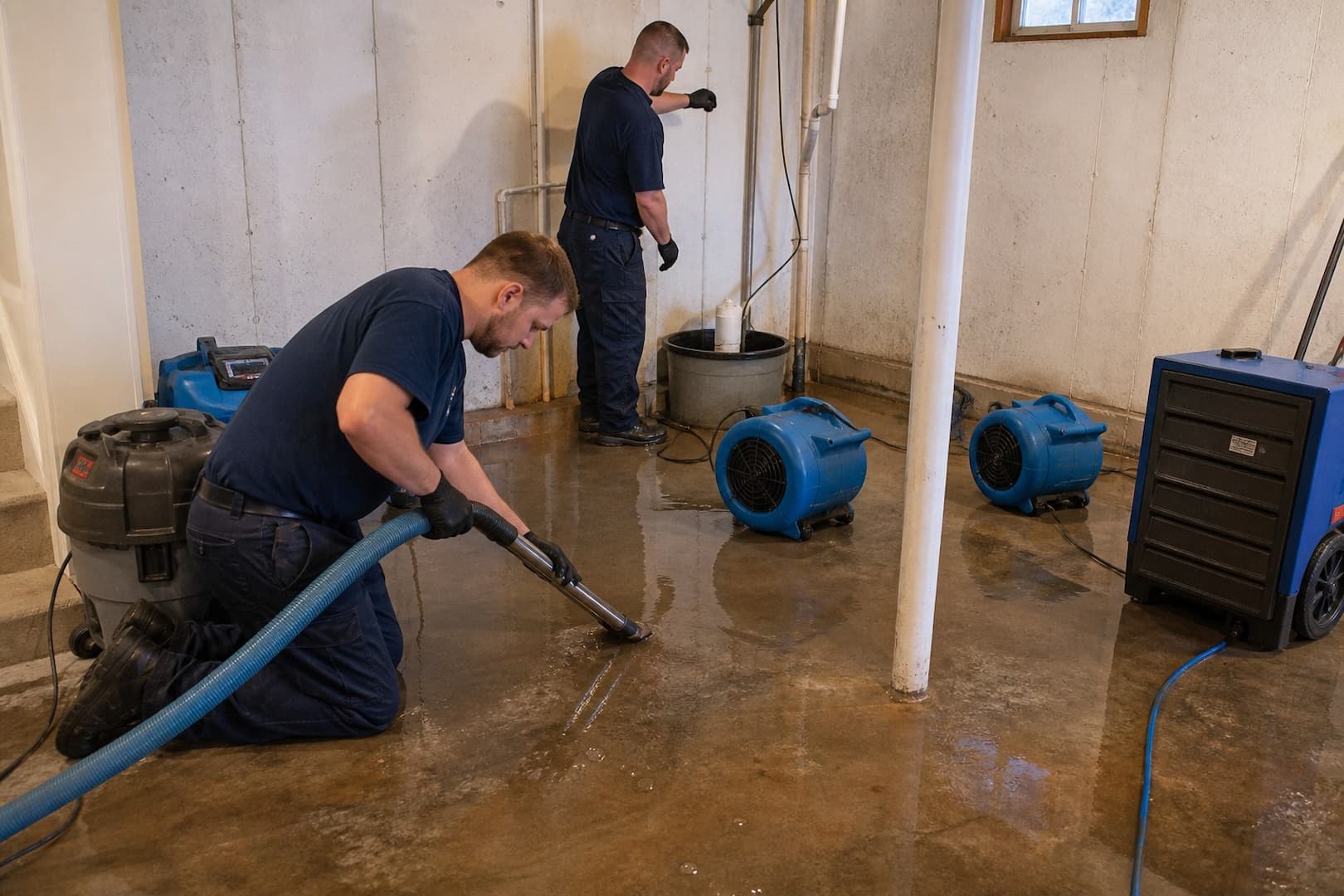
A musty smell is not a drying standard. Compare materials with suitable dry references, inspect concealed layers and monitor until the source is controlled and retained materials reach the project endpoint.
Insurance and documentation
Ask the insurer specifically about sump overflow, sewer or drain backup, groundwater and external flood. These may involve endorsements or separate flood coverage rather than standard water provisions. Save alarm logs, maintenance records, weather information, plumber findings, photographs, emergency invoices and disposal lists.
Reducing the next failure
- Test and service the primary pump on a schedule appropriate to the manufacturer and building.
- Use a compatible check valve and a discharge line protected from blockage and freezing.
- Install a high-water alarm that reaches someone who can respond.
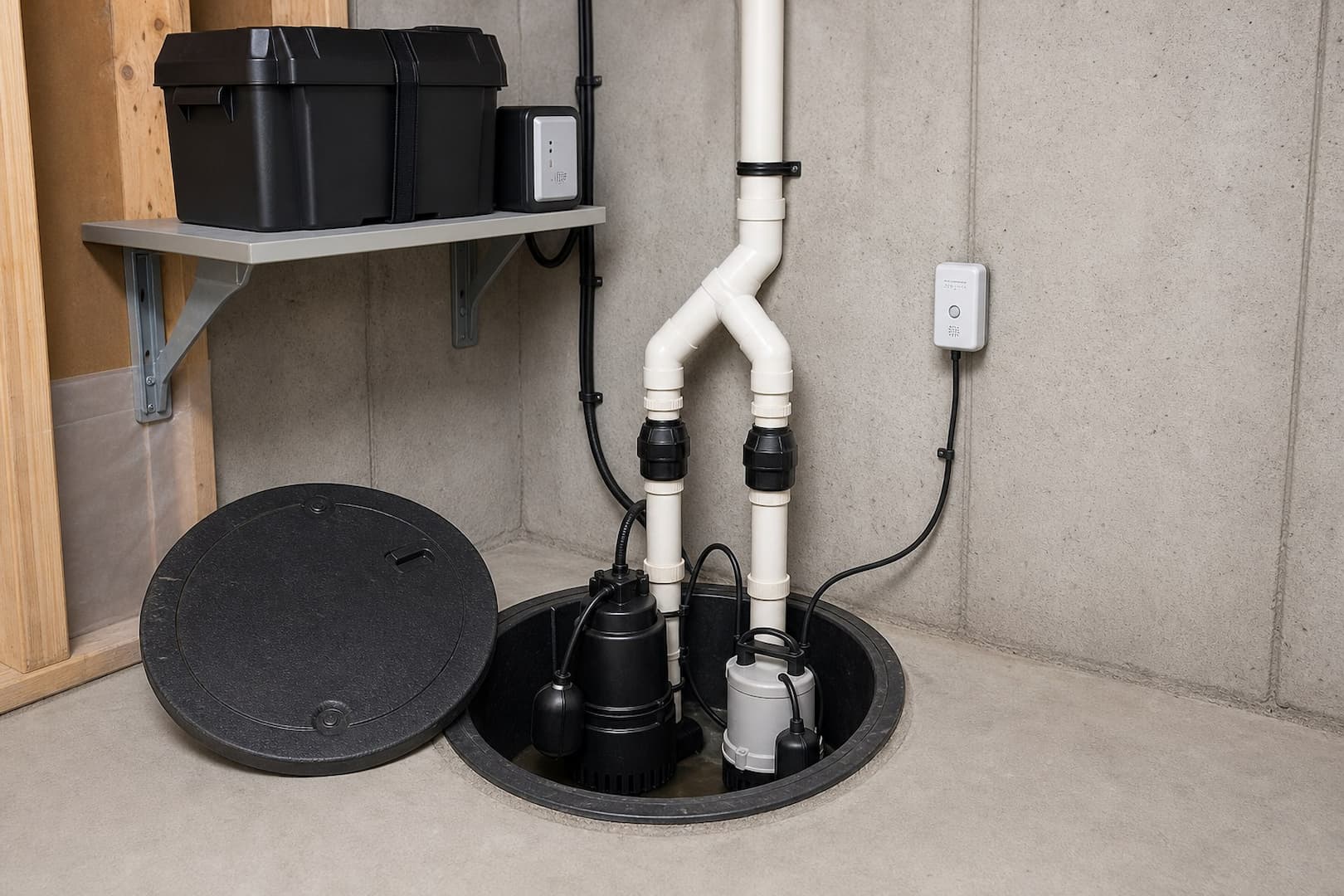
- Provide a properly designed battery or water-powered backup where lawful and suitable.
- Keep the pit covered and free of debris without blocking service access.
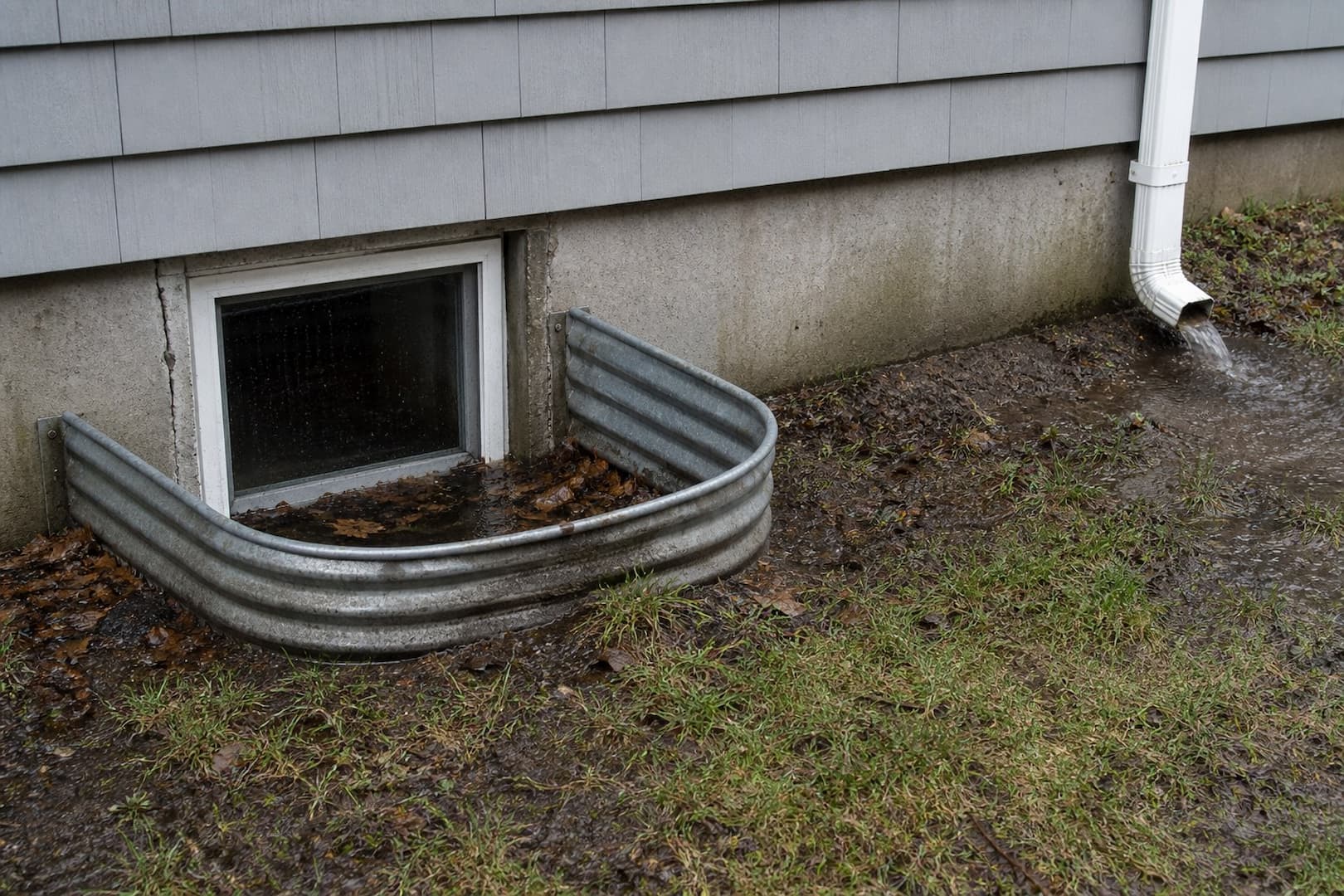
- Correct gutter, grading, window-well and surface-drainage problems that overload the system.
- Avoid storing porous valuables directly on the basement floor.
- Review sump, sewer-backup and flood insurance before storm season.
Sump-failure questions
Should I keep resetting the breaker?
No. Repeated tripping can indicate a fault, jam or wet equipment. Leave the area and have an electrician or qualified pump professional diagnose it.
Can a shop vacuum handle the water?
Only a wet-rated device on a safe circuit for a small, suitable clean-water condition. It is not appropriate for sewage, deep flooding or submerged electrical hazards.
Why does the pump run every minute after the rain?
High inflow, a short discharge cycle, failed check valve, undersized pit or drainage defect can cause short-cycling. A plumber or drainage specialist should evaluate the whole system.
A pump can run and still fail the basement
Failure includes more than a dead motor. The float can bind, the intake can clog, the check valve can fail, the discharge can freeze or recirculate near the foundation, and inflow can exceed capacity. Power loss and failed battery backup are common during storms. A pump cycling constantly may be working correctly against an extraordinary load–or warning that water is returning through a poor discharge route.
| Observation | Possible failure | Next check after safety |
|---|---|---|
| No sound and rising pit | Power, switch, float, motor | Electrician/plumber; do not enter water near power |
| Pump runs but level rises | Capacity, clog, discharge blockage | Plumber/sump specialist |
| Rapid short cycling | Check valve or float setting | Discharge and valve inspection |
| Water returns beside foundation | Short/poor discharge route | Exterior drainage evaluation |
| Backup did not start | Battery, charger, controller, maintenance | Test/replace system |
| Pit controlled but room still floods | Other entry path | Foundation, drain, window, or sewer diagnosis |
Do not pump an unknown basement blindly
If the water level outside the foundation remains high, very rapid removal can increase pressure on walls or slabs in vulnerable conditions. Sewage, oil, chemicals, and electrical hazards also change equipment and disposal. Establish source, structural, utility, and contamination conditions first. Local authorities may give specific instructions during widespread flooding.
Water rising from a floor drain or plumbing fixture may be a sewer backup, not a sump-only problem. Close the area and call a plumber. Sewage cleanup requires different controls from recent groundwater seepage.
The finished basement needs a full moisture map
The sump is the low collection point, but water can travel beneath floating floors, through wall bases, behind cabinets, and into stair stringers. Inspect the entire perimeter, transitions, partitions, closets, and the ceiling below. Remove wet porous materials according to source and condition. Do not direct fans over suspect contaminated water.
The heavy-rain basement guide provides a room-by-room drying sequence. Professional extraction removes free water after the safety and source decision.
Design redundancy around the way this system failed
- Size the primary pump and basin from actual inflow and lift, not horsepower alone
- Use an approved check valve and serviceable discharge
- Route water well away from the foundation without creating ice or neighbor impacts
- Add battery or generator-backed redundancy appropriate to outage duration
- Install high-water and power-loss alerts that reach someone off site
- Provide a second pump or alternate capacity where risk warrants
- Inspect and test floats, valves, battery, charger, and discharge on a schedule
A water-powered backup depends on municipal-water conditions and local requirements; a battery backup depends on battery health and runtime. No system is maintenance-free. Record test dates and replace components before end-of-life uncertainty becomes a storm-time experiment.
Test the alarm where someone will actually receive it
A local beeper in a closed basement offers little protection during travel or a power outage. Test high-water, pump-failure, battery, and communication alerts through the complete path to the responsible person’s phone or monitoring service. Document contacts and escalation. If the network fails with utility power, use an alert design that acknowledges that same failure mode.
Keep the alarm sensor above nuisance splash but below the level that damages finished walls or equipment. A high-water switch set too high may provide only minutes of warning. During testing, verify not just the notification but the physical sensor, power supply, and backup communication path.
Exterior water management reduces the pump’s job
Clean gutters, direct downspouts, maintain grading, protect window wells, and repair known foundation openings based on evidence. Do not send pump discharge into a location that drains back toward the house. If the system runs frequently in ordinary weather, investigate groundwater and drainage rather than waiting for the next alarm.
Identify the failure mode without entering the water
A pump that is silent may lack power, have a failed switch, be jammed, disconnected, burned out, or already submerged beyond safe access. A pump that runs continuously may be undersized, air-locked, blocked, discharging back toward the foundation, or losing ground to an extraordinary inflow. Short cycling can point to a check valve, pit size, switch setting, or discharge return. The observation should guide the service call, not a homeowner’s entry into a wet electrical area.
| Observed behavior | Possible branch | Safe information to report |
|---|---|---|
| No sound during rising water | Power, float, motor, jam, control | Power outage status, alarm, water level from dry location |
| Runs but level rises | Capacity, obstruction, discharge, inflow exceeds design | Weather, discharge location, cycling pattern |
| Starts and stops rapidly | Check valve, short return, float, pit size | Cycle duration and visible discharge from outdoors |
| Water returns after pump stops | Failed check valve or discharge recirculation | Level rebound and exterior outlet condition |
| Backup also fails | Shared power, exhausted battery, blocked common discharge | Alarm/panel indicators without touching wet equipment |
Separate groundwater, surface water, drain backup, and sewage
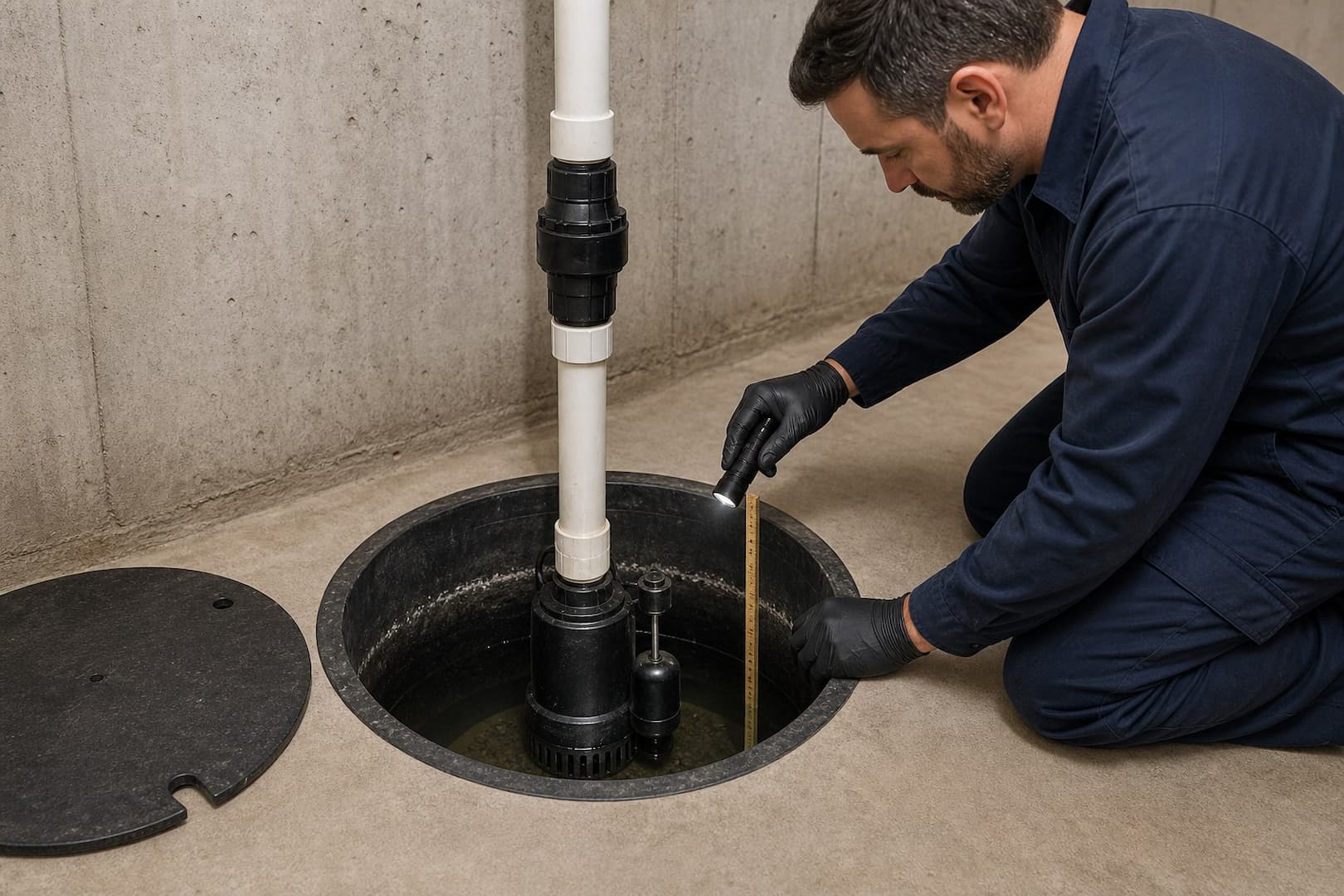
A sump pit commonly receives groundwater or foundation drainage, but basement water can also enter through a door, window well, wall opening, floor drain, sanitary sewer, storm connection, or plumbing line. More than one route can operate during a storm. Odor, solids, drain behavior, outside grade, high-water marks, and the sequence of entry matter.
Do not assume clear water is sanitary. Keep people and pets out until the source and electrical conditions are understood. If sewage or outdoor floodwater may be involved, ordinary carpet-saving and household fan advice no longer applies.
Protect the house while waiting for service
- Keep everyone away from basement water and affected electrical/mechanical equipment
- Call emergency, utility, electrical, plumbing, sewer, septic, or restoration help based on the hazard
- Move only dry, safely reachable valuables from areas water has not entered
- Photograph levels and pathways from a safe location
- Do not connect improvised pumps or extension cords through water
- Do not discharge water into a sanitary, neighbor, street, or foundation location without lawful guidance
- Track rain, outage, alarms, pump behavior, and first discovery time
A portable pump may create electrical, contamination, discharge, and foundation risks. If emergency pumping is appropriate, qualified responders should choose equipment, power, hose route, and destination.
Map damage after safe entry is established
- Mark the high-water line and time. Note whether the level was rising or receding.
- Trace every entry point. Pit, cracks, windows, doors, drains, penetrations, and appliances.
- Classify the water path. Record uncertainty and contact materials.
- Inspect mechanical systems. Electrical, furnace, boiler, water heater, laundry, and stored chemicals.
- Map porous materials. Drywall, insulation, carpet, pad, wood, boxes, and contents.
- Create drying access. Remove unsalvageable reservoirs and clean retained surfaces.
- Verify by location. Trend materials against dry references before reconstruction.
Design redundancy around independent failure modes
| Failure mode | Primary protection | Independent backup question |
|---|---|---|
| Utility outage | Battery, generator, or water-powered backup | Does it share the same failed power or controller? |
| Primary pump failure | Second pump with separate switch | Can it handle the design inflow and pit geometry? |
| Discharge blockage/freeze | Protected, correctly sized route | Do both pumps share the blocked pipe? |
| Check-valve failure | Accessible listed check valve and testing | Will returned water overwhelm both pumps? |
| High inflow | Capacity review, exterior drainage, foundation strategy | Is backup capacity realistic for the site? |
| No one home | Remote high-water/power alarm | Does communication survive power/network failure? |
Test the whole chain, not just whether a motor runs
A maintenance test should verify pit condition, float freedom, pump activation, flow, check valve, exterior discharge, backup activation, battery or alternate power, charger, alarms, and notification delivery. Record the date and result. Do not pour so much water that a marginal system floods; follow manufacturer and professional guidance.
Inspect after remodeling. New partitions, storage, electrical loads, landscaping, downspouts, patios, and additions can block access or change inflow. A working pump cannot correct water intentionally discharged back toward the foundation.
Coordinate insurance categories before the next storm
External flood, groundwater, sewer/drain backup, and sump overflow may be treated differently under homeowners, flood, or endorsement language. Review the issued policy with the carrier or licensed professional. Photograph equipment and retain maintenance records, alarm history, failed components, and restoration logs after a loss.
Coverage planning does not replace drainage planning. Reduce roof and surface water at the exterior, maintain window wells and grading, correct recirculating discharge, and have a qualified waterproofing or drainage professional evaluate frequent pump operation. The goal is not a larger pump endlessly fighting avoidable inflow.
Record pump behavior during ordinary rain, not only emergencies
After corrective work, keep a simple log for several storms: rainfall conditions, approximate cycling frequency, alarm events, power interruptions, discharge location, and whether water returns to the pit. Frequent short cycling can indicate switch, check-valve, pit-volume, or inflow issues; unusually long runs can signal high inflow or restricted discharge. The log gives a drainage or waterproofing professional better evidence than a dry-day test and may reveal a system operating too close to its limit.
Sources and further reading
- CDC: Guidelines for Cleaning Safely After a Disaster
- Boston.gov: Recovering from a Flood
- Massachusetts DPH and MassDEP: Flooding and Sewage Back-ups Home Care Guide
- Massachusetts DPH: Quick Reference — Water Damage Response in Buildings
When the sump pit is no longer the only wet area
Boston Restoration Group can extract basement water, assess contamination, map walls and floors, remove unsalvageable material and document structural drying while a plumber corrects the pump system.