
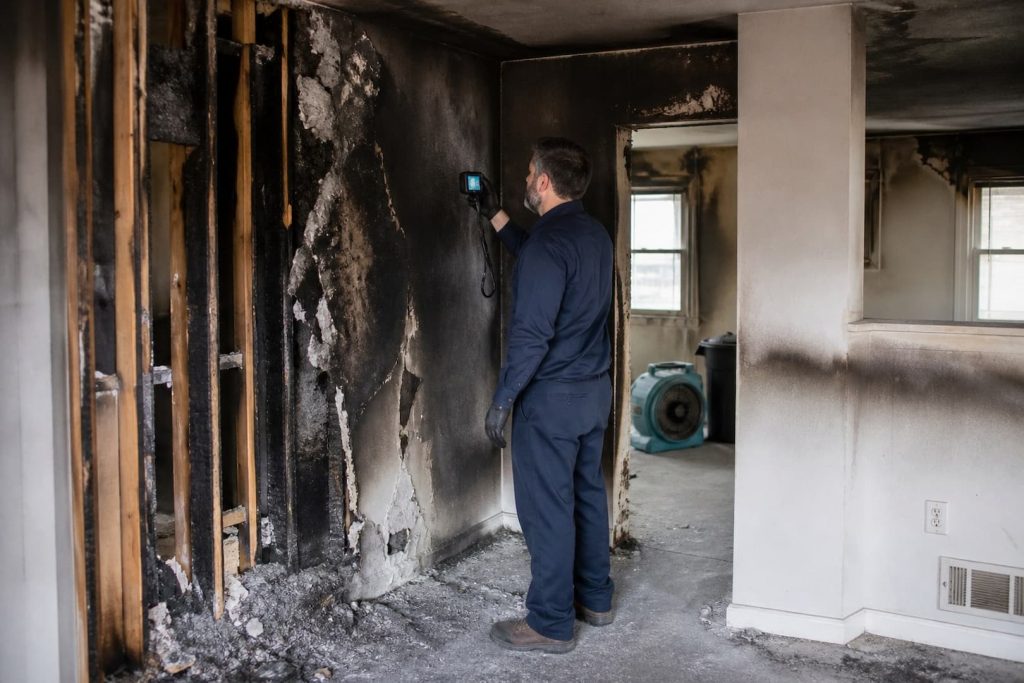
Smoke odor does not disappear reliably with open windows, fragrance or one machine. Odor molecules and particles remain in soot, char, dust, insulation, unfinished wood, paint films, textiles, cabinets and HVAC components. The durable sequence is source removal, detailed cleaning, drying, reassessment and only then targeted deodorization or sealing where justified.
Do not enter or operate utilities until the fire authority and appropriate trades clear the building. Turning on fans or central HVAC can move loose soot into cleaner rooms. Ozone and other reactive treatments carry exposure and material risks and are not occupied-space air fresheners.
Why smoke odor persists
| Reservoir | Why it holds odor | Typical response |
|---|---|---|
| Charred structural material | Deep fire byproducts and ongoing residue | Remove non-restorable char; specialty clean sound structure |
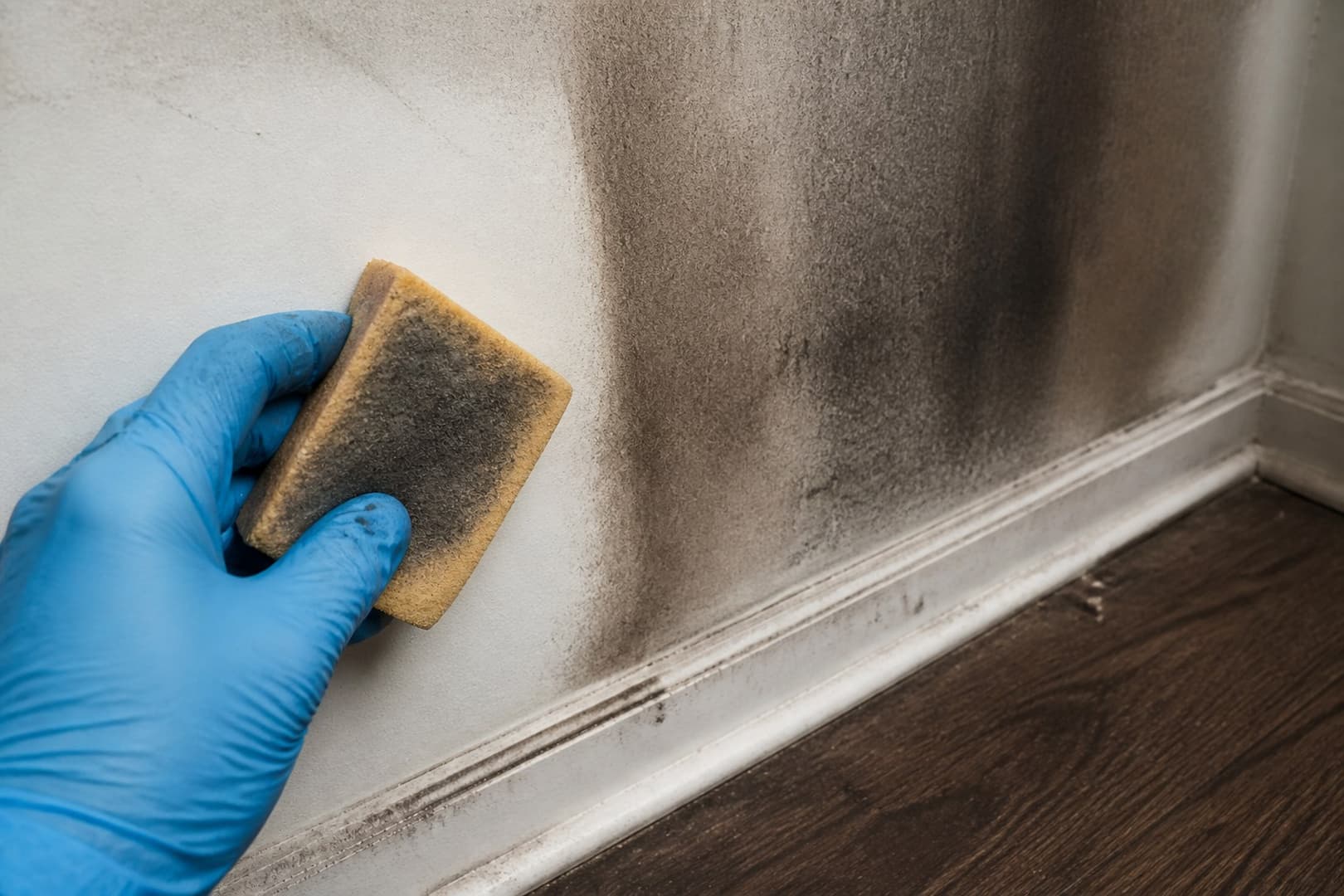
| Soot on walls and ceilings | Particles and films continue off-gassing | Surface-specific HEPA and wet cleaning |
| Insulation | High surface area and difficult cleaning access | Remove when contaminated beyond restoration |
| Textiles and upholstery | Fibers absorb and release odor with humidity | Specialty cleaning, laundering or off-site treatment |
| Cabinets and unfinished wood | Residue enters joints, grain and voids | Detailed cleaning; sealing only after source removal |
| HVAC components | System can collect and redistribute residue | Qualified inspection, cleaning or component replacement |
| Wet fire debris | Moisture intensifies odor and supports microbes | Extract, remove debris and dry the building |
Odor perception changes with humidity, temperature and time away from the building. A room that seems acceptable during cool, dry cleanup may smell again on a humid day. Reassessment should occur after the structure is clean and climate conditions stabilize.
The correct order of work
- Obtain entry and utility clearance. Do not use HVAC or electrical devices casually.
- Remove burned debris and unsalvageable contents. Photograph and inventory before disposal.
- Address fire-suppression water. Wet insulation, drywall and flooring add odor and material damage.
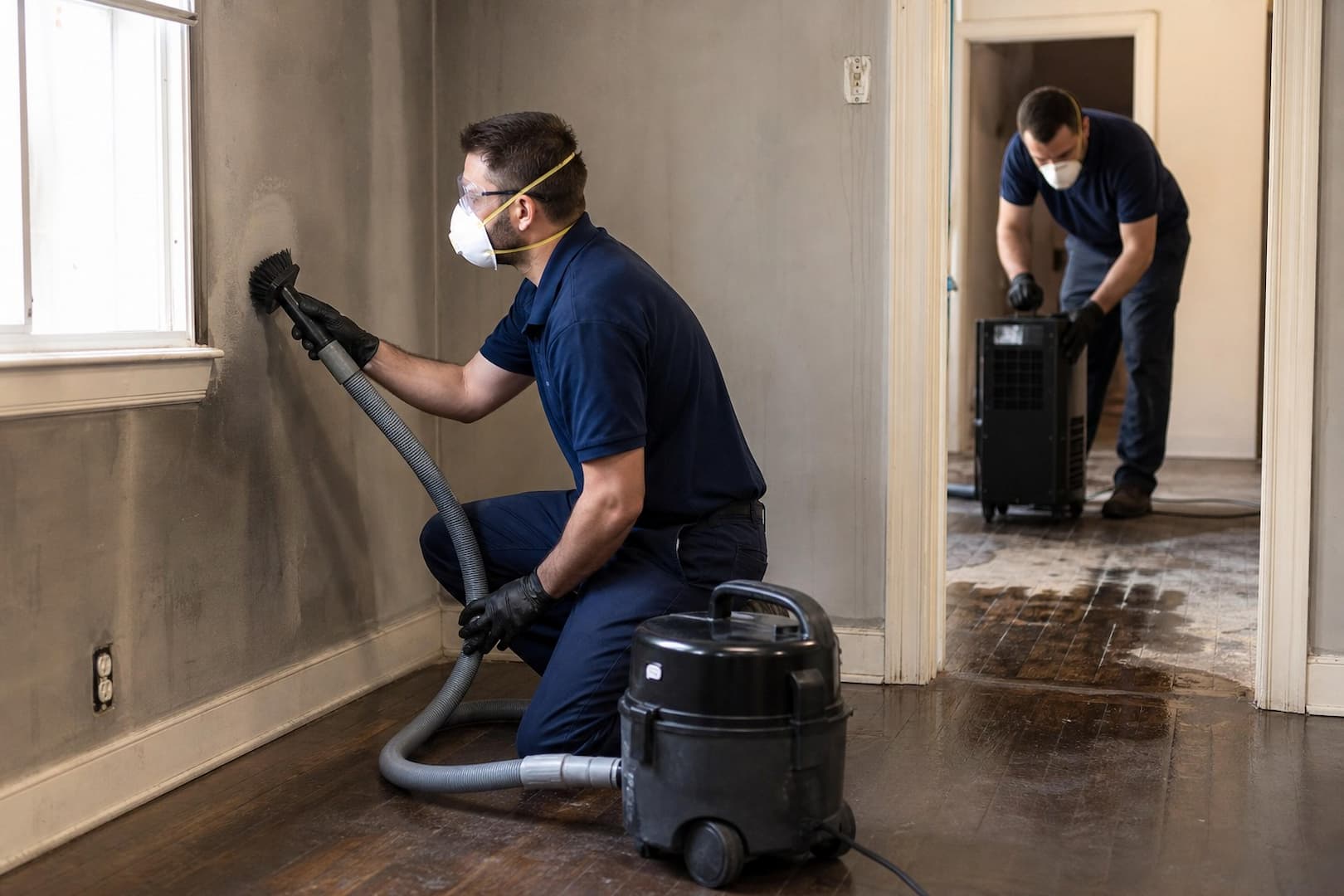
- Control loose particulate. Protect clean zones and use suitable HEPA methods.
- Clean structure and restorable contents. Match chemistry and technique to residue and material.
- Evaluate HVAC and concealed cavities. Follow the smoke pathway rather than room boundaries alone.
- Dry and ventilate under a plan. Avoid spreading residue.
- Reassess remaining odor. Select targeted treatment or sealing only for the residual source.
Cleaning comes before deodorizing
A fragrance changes what a person smells; it does not remove soot. Thermal fogging and hydroxyl or ozone processes may reach odor in some projects, but they do not replace cleaning. Method selection depends on the residue, material, occupancy, equipment instructions, exposure controls and insurer scope.
Ozone can harm lungs and react with materials. It should not be used in occupied spaces or improvised with consumer devices. Only a qualified professional using a controlled protocol should decide whether any reactive treatment is appropriate, and people, pets, plants and sensitive contents may need removal.
Walls, ceilings and unfinished framing
Painted surfaces need cleaning tests because heat and soot can change the coating. Aggressive washing can streak or drive residue into porous paint. Unfinished wood may need HEPA vacuuming and a suitable physical cleaning method. Sanding without containment spreads fine particulate.
A stain-blocking or odor-sealing coating can be a final control on clean, dry, structurally sound material that cannot be fully restored by cleaning alone. Sealer applied over soot, char or damp wood can fail and conceal the reservoir.
Contents and textiles
Separate items by material, value, damage and cleaning pathway. Metal, glass and some hard goods may clean readily; electronics need specialty evaluation; upholstered furniture and mattresses depend on depth and exposure; documents, art and heirlooms may need conservators. Do not run soot-covered textiles through ordinary laundry without guidance because heat or detergent can set residues.
Track each item with photographs and an inventory location. Uncontrolled “odor tests” by repeatedly opening bags can cross-contaminate clean space. Pack-out and off-site cleaning need chain of custody for high-value or business-critical contents.
HVAC and air pathways
A smoky room does not prove every duct is contaminated, and a clean-looking register does not clear the system. Consider whether HVAC ran during or after the fire, where returns are located, whether ducts are lined, and whether residue reached the air handler. An HVAC professional can evaluate components and define cleaning or replacement.
Professional odor damage restoration coordinates source cleaning with air management. Air scrubbers capture airborne particles; they do not clean residue bonded to walls or hidden in cabinets.
How completion is judged
- Burned debris and non-restorable reservoirs are removed.
- Retained structure and contents are visibly clean under appropriate lighting.
- Suppression-water damage is clean and dry.
- HVAC and concealed pathways are addressed according to evidence.
- No masking fragrance interferes with evaluation.
- The building is assessed under realistic temperature and humidity.
- Any sealer or targeted treatment has a documented purpose and completed protocol.
- Utilities and occupied areas have required clearances.
Smoke-odor questions
Will an air purifier remove fire odor?
HEPA filtration can reduce airborne particulate, and suitable carbon media may reduce some gases, but a purifier cannot remove soot from surfaces or char in a wall.
Can I paint over the smell?
Only after damaged material and residue are removed, the substrate is clean and dry, and a compatible sealing system is specified. Ordinary paint over soot is not odor restoration.
Why does odor return when it rains?
Higher humidity and pressure changes can release compounds from porous reservoirs. A returning odor points to remaining source material or an incomplete pathway assessment, not a need for stronger fragrance.
Map smoke by pathway and residue type
Smoke does not deposit evenly. Hot gases rise, HVAC and pressure move particles, and cooler surfaces collect more residue. Open doors, closets, cabinets, attics, chases, and return-air paths. Note whether odor is strongest when the home warms, the HVAC runs, or humidity rises. A room can smell clean with windows open and release odor again after it is closed overnight.
| Odor reservoir | Evidence | Likely treatment branch |
|---|---|---|
| Painted walls/ceilings | Residue test and odor after closure | Surface-specific cleaning, then seal/paint if needed |
| Unfinished framing | Soot in pores and heat exposure | Detailed cleaning; targeted sealing only after acceptance |
| Insulation | Direct smoke/soot contact | Often removal when cleaning is impractical |
| Textiles/upholstery | Fiber construction and odor response | Specialty laundering/contents cleaning or discard |
| HVAC components | Residue at return, filter, blower, coil, ducts | Qualified mechanical and restoration assessment |
| Cabinets/voids | Odor returns from closed space | Disassembly/access and cleaning |
Cleaning sequence matters more than deodorizer strength
Remove charred and non-salvageable material after investigation release. HEPA-vacuum compatible dry particulate. Clean retained surfaces with methods tested for the residue and finish. Address contents separately so a cleaned room is not repopulated with smoky textiles. Only then assess residual odor and choose targeted deodorization.
Fogging fragrance into an uncleaned house can combine odors without removing the reservoir. Ozone has health and material risks and should not be used in occupied spaces; it is not a substitute for source removal. Hydroxyl and other processes also need an appropriate scope, product knowledge, and occupancy plan.
Some smoke damage requires material removal
Insulation, acoustic tile, badly charred wood, melted plastics, and porous items with inaccessible residue may not be reasonably cleanable. Drywall can sometimes be cleaned and sealed; it may need removal if fire, water, or cavity contamination damaged the assembly. Make removal decisions after testing and inspection, not from odor alone. Preserve fire-origin evidence until authorities release it.
Fire and smoke restoration coordinates building cleaning. For a heating-specific oily residue, see furnace puffback cleanup.
A sealant is not a substitute for clean substrate
Stain- and odor-blocking coatings may be part of reconstruction on clean, dry, sound surfaces. They should not cover loose soot, char, wet material, or inaccessible contamination. Product choice depends on substrate, heat damage, previous coating, and intended finish. Document cleaned condition before coating so a later odor is not blamed on an unknown layer.
Use staged odor checks
- Evaluate with windows closed and normal room temperature
- Run the HVAC only after it is cleared and cleaned as needed
- Check cabinets, closets, attics, and wall penetrations separately
- Return a small batch of cleaned contents before full move-back
- Recheck after humidity or temperature rises
- Use an unaffected person or independent reviewer when practical
- Record locations and conditions if odor returns
Odor perception varies among people and can fatigue during a long inspection. Staging and normal operating conditions make the endpoint more reproducible than walking through immediately after deodorization.
Neighbors and shared buildings add another pathway
In attached housing, smoke can cross party-wall penetrations, common halls, roof spaces, and shared mechanical systems. A clean unit may receive odor again from an untreated adjoining space. Coordinate inspection with property management and document pressure or HVAC connections before repeating deodorization. Responsibility and coverage may be split, but the air pathway does not respect the lease line.
Contents can recontaminate a cleaned building
Boxes, books, clothing, upholstered furniture, and electronics moved off site may carry residue or odor back into completed rooms. Maintain item and room labels, clean storage conditions, and a release process for each contents category. Return a small representative group first. If odor reappears, isolate whether it came from the contents, the room, or changing temperature before moving the rest.
Odor is an inventory problem before it is a treatment problem
Build a source inventory by room and material: charred framing, soot films, insulation, carpet and pad, unfinished cabinet interiors, contents, paper, textiles, HVAC insulation, wall cavities, and debris. Note where odor is stronger under warm, humid, or closed conditions. A room fragrance, hydroxyl device, ozone generator, fogging treatment, or sealant cannot compensate for an unidentified source reservoir.
| Reservoir | Why odor persists | First decision |
|---|---|---|
| Charred or heat-damaged material | Continues releasing combustion compounds | Remove, clean, or evaluate structural retention |
| Oily soot on finishes | Smears and remains in pores/joints | Test cleaning chemistry by substrate |
| Insulation and porous cavities | Large inaccessible surface area | Access, remove, or document specialty treatment |
| Textiles and paper | Absorb odor and particles | Specialty cleaning, conservation, or disposal |
| HVAC components | Move residue between zones | System-specific inspection and disposition |
| Unfinished wood/composite | Absorbs residue beyond clean face | Cleaning tests, sanding only when appropriate, sealing after acceptance |
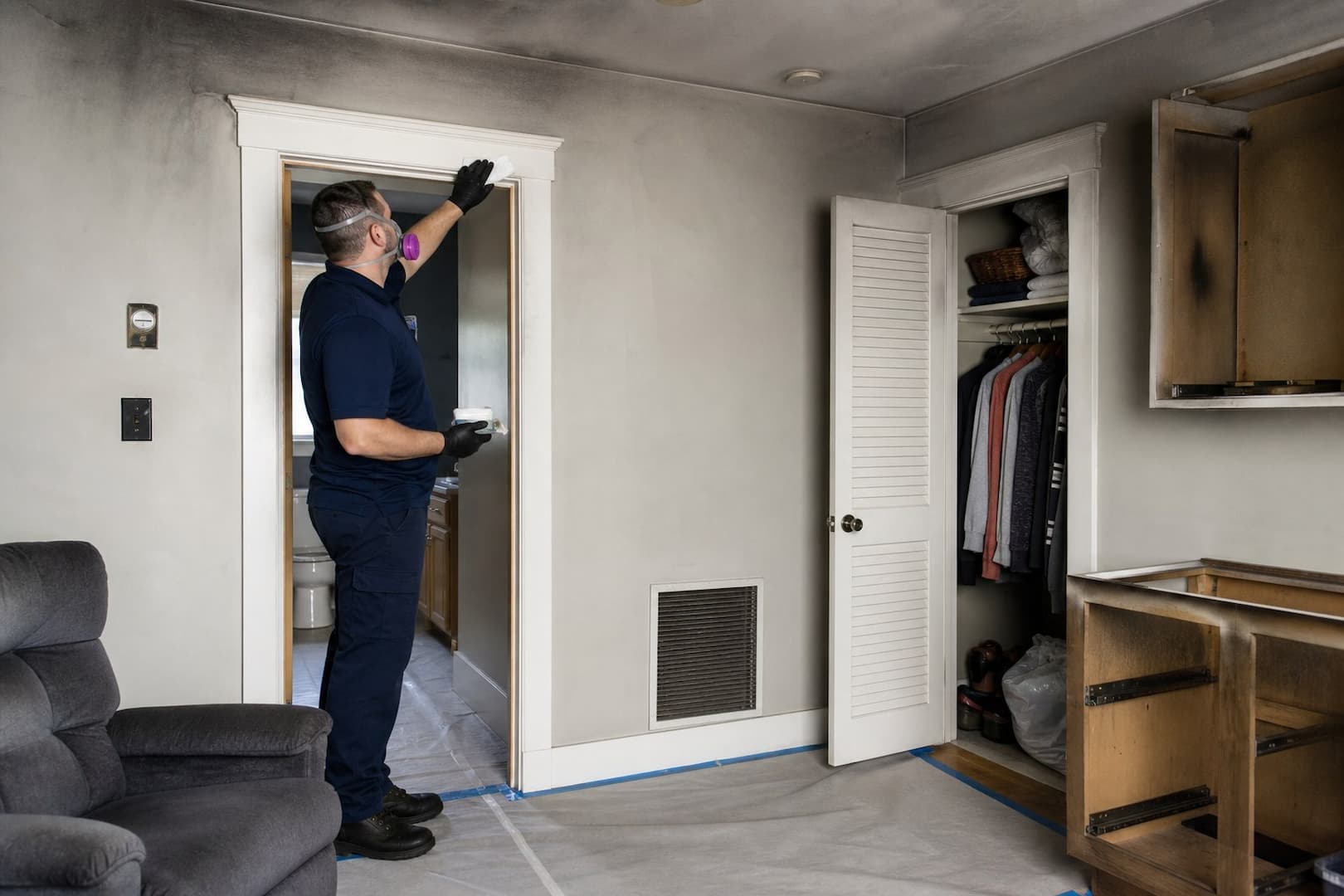
Separate particle removal from odor treatment
Soot particles and gaseous odor compounds behave differently. HEPA filtration can capture appropriate airborne particles but does not remove a film from a wall or gas absorbed into porous material. Detergent cleaning can remove residue but may not reach the back of drywall or inside upholstery. Deodorization may address remaining compounds only after gross source removal and cleaning.
The work sequence should therefore name the target at each step: debris removal, dry particulate capture, wet cleaning, specialty contents processing, HVAC disposition, drying, sealing, adsorption, or controlled oxidation. If the contractor cannot say what a treatment is intended to change, it is not a measurable plan.
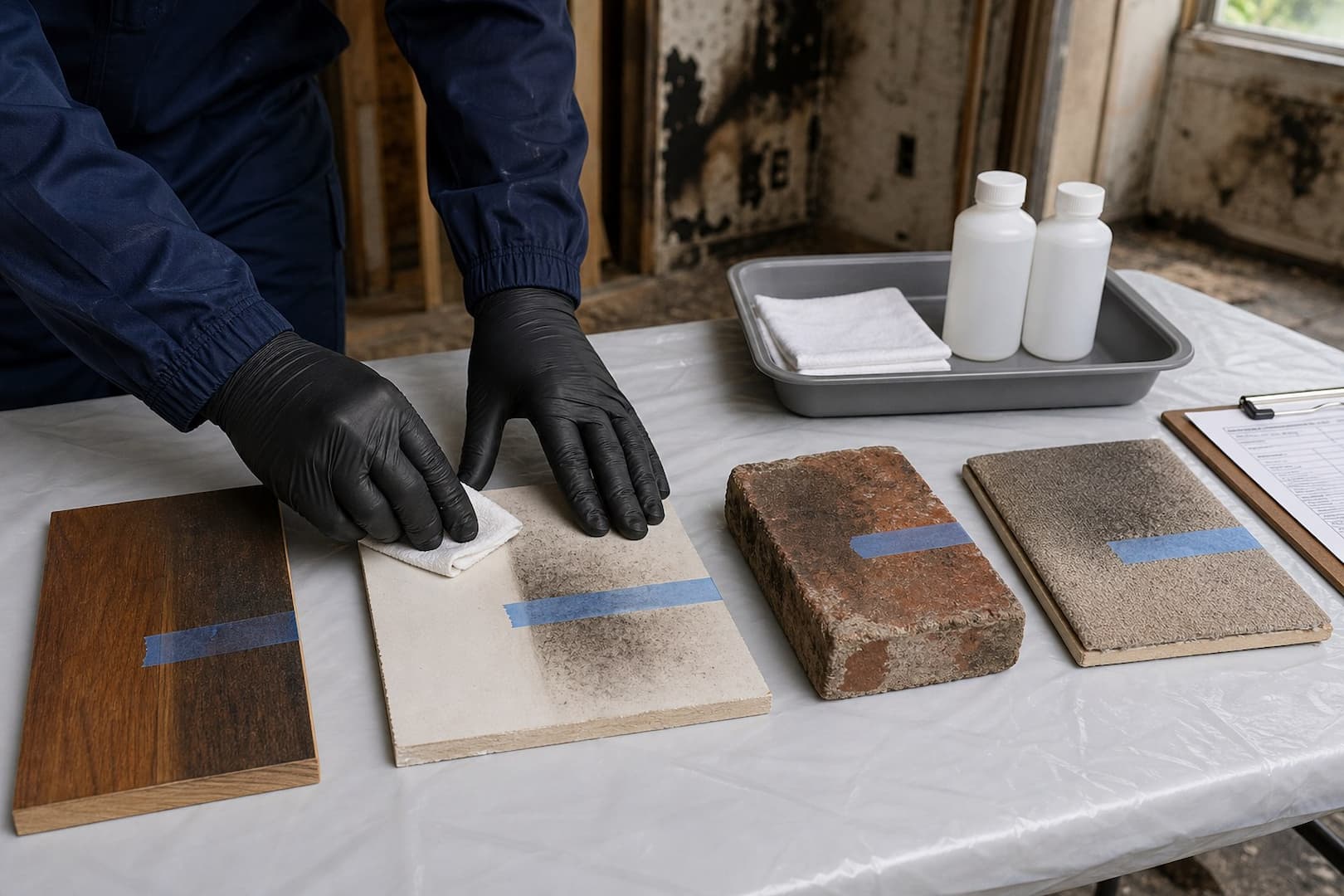
Test methods against residue and substrate
| Method | Potential use | Limit or risk |
|---|---|---|
| HEPA vacuuming/capture | Loose particulate on suitable dry surfaces | Not a substitute for cleaning bonded oily soot |
| Detergent/degreasing | Residue removal from compatible surfaces | Can smear, discolor, raise grain, or damage finish |
| Thermal/ultrasonic textile cleaning | Specialty contents recovery | Material, dye, electronics, and value limitations |
| Adsorption/air filtration | Temporary reduction of airborne compounds | Does not remove source from materials |
| Sealing/encapsulation | Isolate accepted residual odor in retained porous substrate | Only after cleaning, drying, adhesion and compatibility testing |
| Ozone/reactive oxidation | Specialized unoccupied treatment in limited circumstances | Respiratory hazard, material reactions, byproducts, strict reentry needs |
Treat HVAC as a system, not automatically as the source
Determine whether the system operated during or after the fire, where returns and supplies sit relative to the smoke path, which filters and internal insulation were present, and whether soot is visible or transferable inside accessible components. A register halo alone can result from ordinary deposition on a cold surface; it does not prove the entire duct system needs one standard treatment.
An HVAC professional and restoration team should coordinate equipment safety, filter handling, blower and coil inspection, lined versus bare ducts, flex duct, returns, plenums, and insulation. Do not restart central air to “air out” the house before that disposition is made.
Use contents triage early
Leaving odor-loaded contents in a cleaned room can make the building seem unsuccessful. Divide items into immediate disposal, onsite cleaning, offsite specialty cleaning, conservation, electronics evaluation, and clean storage. Record box or item numbers and room of origin. Store processed contents away from dirty work and verify containers are not trapping moisture.
High-value books, artwork, instruments, textiles, leather, photographs, and electronics may need specialists. Replacement price is not the only factor; sentimental, historical, data, or business value may justify a different recovery path.
Control humidity and temperature during odor evaluation
Warmth and humidity can increase odor release from materials. A cool, dry inspection immediately after equipment shutdown may understate what occupants notice later. Reassess under safe, reasonably normal conditions after cleaning and drying. Keep the comparison consistent rather than moving from an open, ventilated worksite to a closed heated home and calling the change a recurrence.
Odor perception varies among people and can fatigue during a long inspection. Use more than one trained evaluator where appropriate, document locations and conditions, and combine odor observations with surface, cavity, contents, and HVAC evidence.
Set acceptance criteria before the final treatment
- All char, fire debris, and unsalvageable odor reservoirs have documented disposition
- Representative surfaces show no transferable soot after cleaning
- Retained porous materials are dry and structurally acceptable
- Contents are removed, cleaned, specialized, or returned through a controlled process
- HVAC components have a documented disposition and clean filters
- Any sealer passed cleaning, moisture, adhesion, and compatibility requirements
- Any unoccupied reactive treatment has exposure, monitoring, ventilation, and reentry controls
- Odor evaluation occurs under agreed conditions with findings recorded by zone
Avoid the two most expensive mistakes
The first mistake is treating too early: fogging or ozone before soot and char are removed can mask the source and expose materials to unnecessary chemistry. The second is rebuilding too early: new insulation, drywall, cabinets, or flooring can cover a reservoir that later contaminates the repaired room. Require a pre-close inspection of cavities and retained materials.
The EPA states that ozone levels required for odor control may exceed levels considered safe for humans and that ozone can react with indoor chemicals. No occupied-space device should be marketed as a simple smoke cure. A complete smoke-odor project is material removal, cleaning, drying, verification, and only then a justified finishing treatment.
Sources and further reading
- U.S. Fire Administration: After the Fire — Returning to Normal
- American Red Cross: Cleaning Up After a Fire
- American Red Cross: Disaster Cleanup and Repair for Your Home
- Massachusetts Division of Insurance: Frequently Asked Questions Following a Disaster
When smoke odor returns after ventilation
Boston Restoration Group can map the smoke path, clean residue from structure and contents, coordinate HVAC evaluation and select odor treatment that matches the remaining source.