Frozen Pipes in Boston: 9 Early Warning Signs Before a Burst

Boston winters do not have to be record-breaking to create pipe problems. A few nights of hard cold, wind pushing through old exterior walls, an uninsulated basement corner, or a vacant second floor in a triple-decker can be enough to put plumbing at risk. Many homeowners assume a pipe burst happens suddenly and without warning. Sometimes it does feel that way. In reality, there are often smaller clues first—changes in water pressure, frost on exposed lines, strange smells, cold spots around plumbing walls, or minor moisture signs that suggest a section of pipe is already under stress.

That matters because a frozen pipe is not just a winter inconvenience. It can turn into a major water damage event the moment the ice blockage shifts, the pipe expands past its limit, or thawing water finds a split in the line. And in Boston-area homes—especially older properties with basements, crawl spaces, additions, exterior-wall plumbing, and aging insulation—those failures can affect drywall, hardwood floors, ceilings, cabinetry, and finished lower levels very quickly.

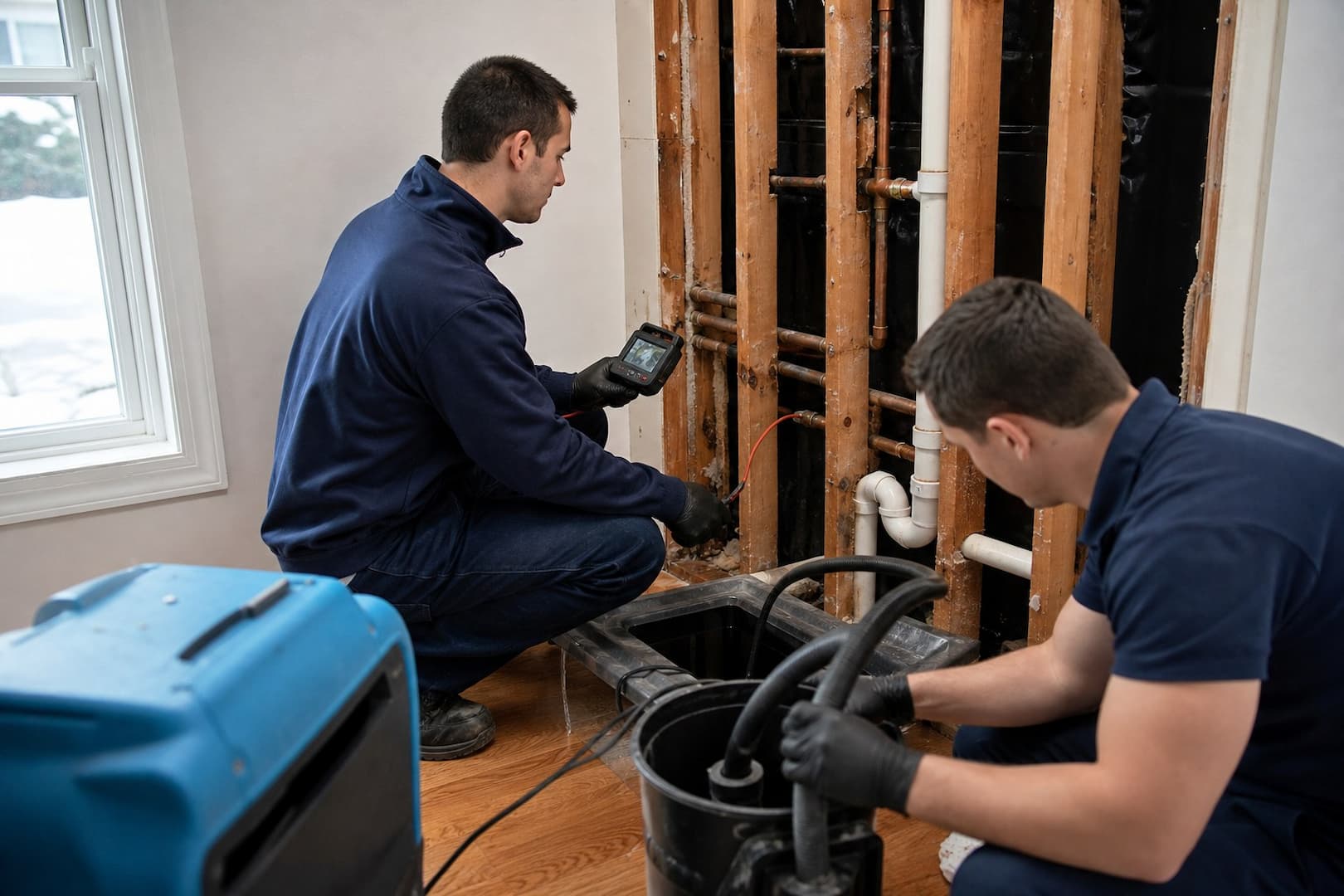
If a line has already cracked or started leaking, prompt help with burst or leaking pipe restoration can reduce the spread of damage before wet materials begin to swell, stain, or deteriorate further.

The bigger goal, though, is to catch the issue before that stage. That is what this guide is for. Below, you will find the most common early warning signs of frozen pipes in Boston, why they happen, what they usually mean, and what to do next.

A frozen line can begin as a pressure problem long before it becomes a visible flood. And if water has already escaped into walls, flooring, or ceilings, residential water damage restoration may be needed to dry hidden materials correctly and prevent larger secondary issues.

Why Frozen Pipes Are So Common in Boston Homes

Frozen pipes are not just about outdoor temperature. They happen when cold air reaches vulnerable plumbing for long enough to let the water inside begin freezing. Boston homes have several characteristics that make that more likely.

First, the housing stock is old. Many houses and multifamily properties in and around Boston were built long before modern insulation standards. You will often find plumbing in exterior walls, under drafty sinks, above unconditioned basements, in attic-adjacent spaces, or routed through additions and enclosed porches that do not hold heat well.

Second, winter wind matters. Even when indoor heat is on, cold air infiltration around sill plates, foundation penetrations, rim joists, basement windows, and wall cavities can chill pipe runs much faster than homeowners realize.

Third, occupancy patterns create risk. Pipes freeze more often when people leave town, close doors to unused rooms, lower the thermostat too much overnight, or stop running water in a part of the house that rarely gets used. Vacation homes, rental turnovers, vacant units, and top-floor spaces can all be vulnerable.

Fourth, some plumbing materials are less forgiving than others. Copper can split when ice expansion creates too much pressure. Older fittings, corroded joints, and weakened supply lines may fail sooner. Even if the frozen section itself does not rupture visibly, pressure can build upstream and damage another weak point in the system.

The key takeaway is simple: frozen pipes usually develop where cold air, poor insulation, and stagnant water use overlap. That is why paying attention to early signs matters more than waiting for a dramatic failure.

1. Frost, Ice Crystals, or Unusual Condensation on Exposed Pipes

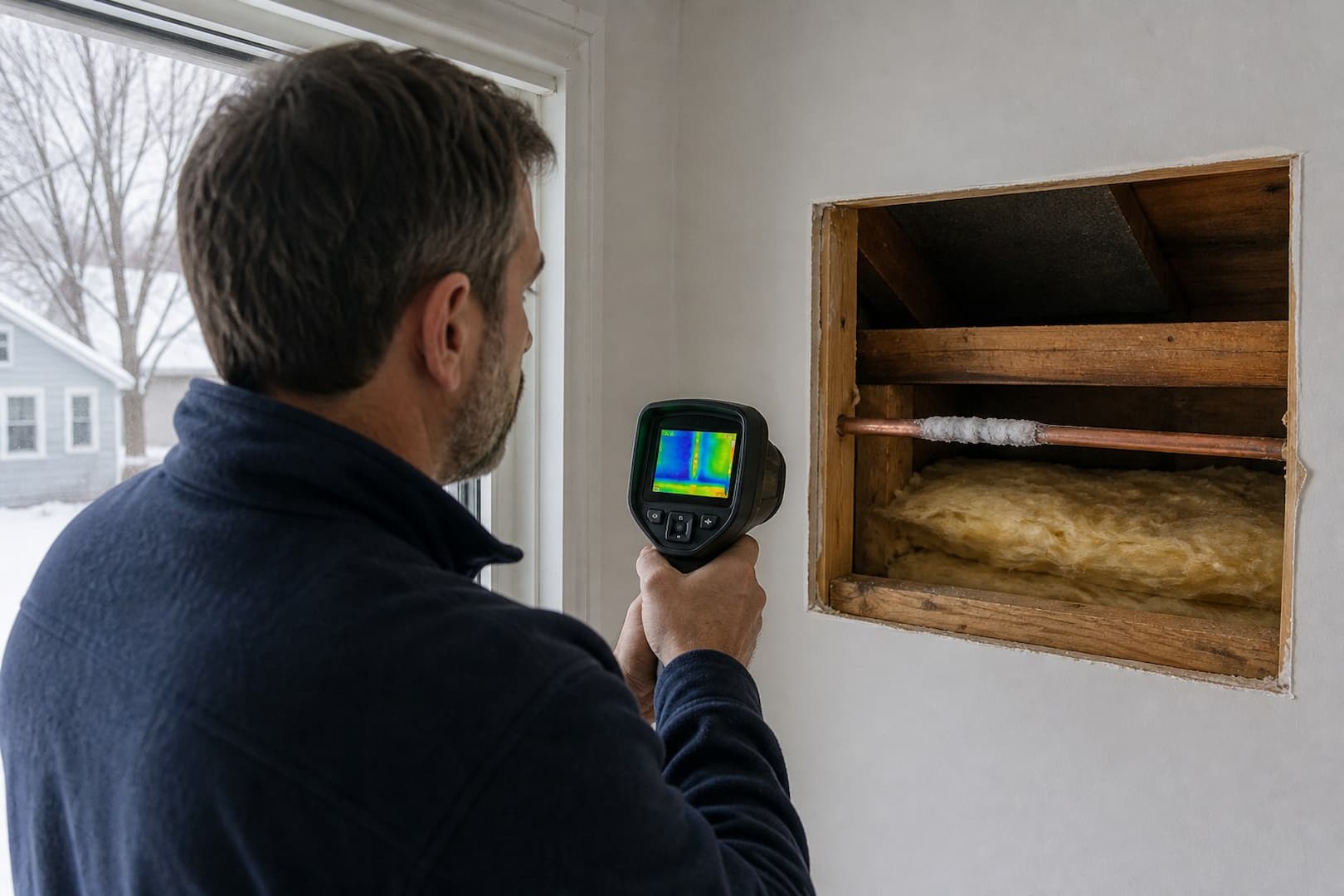
One of the clearest early warning signs is visible frost on an exposed pipe. This is especially common in basements, utility rooms, garages, crawl spaces, and under sinks along exterior walls. If the pipe surface looks white, icy, or unusually wet and cold to the touch, the line may already be approaching a freeze.

People sometimes dismiss this as harmless winter condensation, but context matters. A little moisture on a cold pipe can happen. A distinct band of frost, a pipe segment that looks frozen while the rest does not, or ice forming near a joint or bend is more concerning. It means the pipe temperature has dropped low enough for freezing conditions to take hold.

This sign often shows up first on supply lines rather than drains, especially in spots where insulation is missing or has pulled away. Copper lines near basement walls, pipes passing through foundation openings, and plumbing inside sink cabinets on exterior walls are frequent trouble zones.

Do not scrape or force the pipe. And do not ignore it because water is still running elsewhere in the house. A pipe can partially freeze first, allowing some water movement while pressure is building in the line.

If you notice frost on a section of plumbing, open cabinet doors nearby, raise the temperature in that area, and begin gentle warming measures. The sooner you respond, the better the chance of preventing a split.

2. Water Flow Drops to a Trickle at One Faucet or Fixture

A sudden drop in water flow at one faucet is one of the most common signs that a nearby supply line is freezing. This often begins subtly. Maybe the bathroom sink on an outside wall runs weaker than usual in the morning. Maybe the kitchen faucet feels normal on the hot side but reduced on the cold side. Maybe a shower on the top floor loses pressure after a very cold night.

That reduced flow usually means ice is narrowing the inside diameter of the pipe. Water can still pass through, but not efficiently. If temperatures stay low, the restriction can become a full blockage. Once that happens, pressure behind the frozen section may continue rising, especially if the line is closed off and trapped.

The danger here is not only that water stops. It is that the actual rupture may happen somewhere else along the pipe run—often in a weaker segment, joint, elbow, or fitting that is not immediately obvious.

This is why a localized pressure drop should never be treated as “just low pressure” during freezing weather. If only one fixture is affected, think about the path of that line. Is it on an exterior wall? Above a garage? Near an unheated basement corner? Below a drafty window? Those clues help identify the section most at risk.

If the line has already failed and water begins entering the home, quick emergency standing water removal in Boston can make a major difference in limiting damage to flooring, walls, and contents.

3. A Faucet Stops Running Normally After a Very Cold Night

This sign is related to reduced flow, but it deserves separate attention because it is often the moment homeowners realize the problem has moved beyond “possible” and into “active.” If a faucet that worked yesterday suddenly produces almost no water—or none at all—after overnight freezing temperatures, a section of pipe may already be frozen solid.

This commonly happens in:

  • bathroom sinks on exterior walls
  • kitchen lines in poorly insulated cabinets
  • hose bib supply lines
  • laundry rooms near exterior framing
  • second-floor plumbing in drafty corners
  • lines above garages or enclosed porches

Many people make a dangerous mistake at this point: they assume no water means no leak risk. In reality, the frozen blockage may be holding back pressurized water. The pipe might not burst until thawing begins. That is why late morning and afternoon, when the house warms up, can actually be when the leak reveals itself.

If one faucet has stopped while others still work, do not wait for it to “sort itself out.” Leave that affected faucet slightly open so pressure can relieve as thawing begins. Then warm the area carefully and inspect any accessible pipe sections. If you cannot identify the frozen area, it may be hidden behind a wall or under a floor, which increases the risk of unseen damage.

At this stage, prevention and rapid response matter more than force. Never use open flames, torches, or aggressive heat sources on residential plumbing.

4. Strange Smells Coming From a Drain or Sink Area

Unusual odors are not the first thing most people associate with frozen pipes, but they can be an early clue. When drain or vent lines are affected by freezing, sewer gas odors or stale smells may begin appearing around sinks, tubs, or floor drains. In some cases, the odor is caused by partial blockage that interferes with normal drainage and venting. In others, it may reflect trapped water, slow backups, or plumbing that is no longer moving as it should.

This sign is more common in very cold conditions when vent stacks, branch drains, or under-sink lines are exposed to low temperatures long enough to affect flow. It can also appear when a sink or drain line near an exterior wall becomes sluggish due to cold exposure.

The smell itself does not always mean a burst is imminent. But it does mean the plumbing system is not functioning normally, and winter conditions may be a factor. If the odor appears together with slow drainage, reduced water pressure, or visible frosting on nearby lines, frozen plumbing should move higher on your list of likely causes.

Boston homes with older drain layouts, unfinished basements, or rarely used fixtures may be especially susceptible because cold air infiltration and dormant plumbing create an environment where freezing symptoms are easier to miss until they become more serious.

A smell by itself might not be an emergency. A smell combined with pressure changes, slow flow, or visible icing should not be ignored.

5. Banging, Whistling, Ticking, or Other Unusual Pipe Noises

Pipes make noise for many reasons, but winter-specific sounds deserve attention. Homeowners sometimes hear ticking inside walls, light banging when water is turned on, faint whistling from a restricted line, or sharp popping noises as frozen pipe sections expand and contract.

Not every sound means a burst is coming. However, a change in pipe behavior during a cold snap can signal pressure stress, constriction, or thermal movement in plumbing that is being exposed to freezing conditions.

For example, a partially frozen line may whistle or squeal because water is trying to pass through a narrowed opening. A section of pipe in a wall cavity may click or tick as temperatures fluctuate and the metal reacts. A pipe that begins to pull against fasteners or rub framing members can produce unusual noises that were not there before.

These sounds matter most when they are new, localized, and paired with another warning sign such as weak water flow or cold spots in a plumbing wall. The combination is what makes the pattern significant.

If you hear persistent or unexplained noises from a plumbing run during freezing weather, try to map the affected area. Listen near exterior walls, sink cabinets, basement ceilings, and mechanical corners. Small clues can help you act before a pipe gives way.

6. Bulging, Hairline Cracks, or Small Leaks Around Pipe Joints and Fittings

A frozen pipe does not always burst wide open immediately. Sometimes the earliest physical sign is subtle deformation. You may notice a slight bulge in a copper line, a stressed fitting, a tiny drip from a joint, or mineral staining around a connection that was previously dry. That can happen because freezing water expands and creates pressure throughout the line, putting weak points under strain.

This is especially important in older Boston homes, where plumbing may already have age-related wear. Corrosion, previous repairs, mixed materials, and older shutoff valves can all create points of failure. When freezing adds pressure to the system, those weak spots often show themselves first.

A small drip in winter should never be brushed aside. It may be the first visible sign that the pipe has already begun to fail. Even if the active leak seems minor, conditions can worsen as thawing continues and pressure redistributes in the system.

Look closely around:

  • elbows and bends
  • shutoff valves
  • compression fittings
  • soldered joints
  • exposed basement runs
  • pipe penetrations where lines enter cold wall cavities

If you find any splitting, pinhole leakage, or active dripping, the situation has moved beyond prevention and into damage control. Shutting off the water to the affected line—or the house, if needed—may prevent a much larger release.

If a supply line rupture has already soaked nearby materials, broken water supply line cleanup in Boston may be the most relevant next step when the source is a failed pressurized line rather than a slow plumbing drip.

7. Cabinets, Walls, or Floors Near Plumbing Feel Unusually Cold

Sometimes the pipe itself is hidden, but the environment around it tells the story. A cabinet under the sink that feels much colder than the rest of the kitchen, a bathroom vanity wall that seems icy, or a floor area above a basement pipe run that suddenly feels chilled can all be indirect warning signs.

This happens because pipes typically freeze where surrounding building materials are losing too much heat. If the wall cavity, floor cavity, or cabinet zone is cold enough to make your hand recoil, the plumbing inside may be getting close to freezing too.

This is one reason exterior-wall kitchens and bathrooms are so vulnerable in Boston. A sink cabinet along an outside wall can become a little cold every winter. But if the cabinet interior is dramatically colder than normal during a cold snap, or if stored items inside feel chilled, that is a clue worth treating seriously.

Cabinets and access panels should be opened during severe cold to let conditioned indoor air circulate around hidden plumbing. That simple step can make a real difference. So can moving stored items that are blocking heat from reaching the pipe zone.

Cold spots are not proof of a frozen line. But they are exactly the kind of pre-failure clue that gives homeowners a window to act early.

8. Small Water Stains, Damp Drywall, or Moisture Marks Appear Without an Obvious Leak Source

One of the most deceptive frozen pipe warning signs is a minor stain or damp patch that seems too small to be serious. Maybe there is a faint yellowing on a ceiling below an upstairs bathroom. Maybe drywall near a sink line looks just slightly bubbled. Maybe a baseboard in a finished basement feels damp after freezing weather even though no major leak is visible.

These signs can mean a frozen line has already developed a small crack, pinhole, or seep behind the wall. The pipe may not have opened fully yet, but the damage process has started.

This is especially common when a line freezes overnight and then partially thaws the next day. Water may escape only during certain temperature windows, making the problem seem intermittent. Homeowners often misread this as condensation, a one-time spill, or an old stain—until a much larger failure follows.

Pay close attention to any new moisture signs that appear during or immediately after extreme cold. If the location corresponds to a plumbing path, assume the possibility of hidden leakage until proven otherwise. Wet drywall, trim, insulation, and flooring can hold moisture longer than they look wet from the surface.

A pipe problem hidden behind finished materials often requires more than surface cleanup. If moisture has migrated beyond what is visible, proper drying and removal of trapped water may be needed to avoid larger repairs later.

9. Repeated Freezing History in the Same Area of the House

The final early warning sign is a pattern. If a pipe, faucet, sink cabinet, laundry area, or second-floor bathroom has frozen before, that area should be treated as a known risk point every winter. Plumbing failures rarely happen in completely random spots. They tend to recur where insulation is weak, airflow is poor, or design conditions leave a line repeatedly exposed.

This is especially important in Boston homes with additions, dormers, enclosed porches, converted attics, garden-level spaces, and partially finished basements. A pipe that “almost froze” last winter is not reassuring. It is a warning that the vulnerability is still there.

Repeated seasonal symptoms may include:

  • the same faucet losing pressure during cold spells
  • the same cabinet becoming extremely cold
  • the same basement pipe getting frost
  • the same upstairs bathroom acting sluggish in the morning
  • prior minor leaks in the same wall or ceiling area

When a pattern repeats, the right response is not just short-term warming. It is to address the root cause: insulation gaps, air sealing failures, lack of pipe insulation, thermostat setbacks that are too aggressive, or plumbing routed through spaces that do not hold heat well.

History is one of the strongest predictors of future damage. If a pipe or location has already shown vulnerability, assume it needs active protection before the next hard freeze.

What to Do Immediately If You Notice One of These Signs

If you suspect a pipe is freezing or already frozen, your first goal is to reduce pressure and raise temperatures safely.

Start with these steps:

1. Keep the heat on

Do not lower the thermostat during a cold snap. Maintain a stable indoor temperature, including at night. If part of the home is unused, it still needs enough heat to protect plumbing.

2. Open cabinet doors

Open sink cabinets and vanity doors along exterior walls so warm indoor air can circulate around the pipes.

3. Let the faucet drip if needed

If a specific line is at risk, allowing a small stream or drip can keep water moving and reduce the chance of a total freeze.

4. Warm the area gradually

Use safer heat sources such as a space heater placed carefully away from combustibles, a hair dryer used cautiously, or simply warmer room air circulation. Never leave heat devices unattended.

5. Identify the shutoff

Know where the main water shutoff is before the situation worsens. If the pipe bursts, seconds matter.

6. Watch for leaks during thawing

A frozen pipe may not reveal damage until it starts to thaw. Inspect the area continuously once temperatures rise.

If water has already started spreading across a basement or finished floor, fast extraction is often more important than trying to salvage everything with towels and household fans.

What Not to Do

Frozen pipe situations get worse when homeowners panic or use the wrong methods. Avoid these common mistakes:

  • Do not use an open flame, torch, or propane heater on or near household plumbing.
  • Do not assume the problem is over once water starts flowing again. A split may still reveal itself afterward.
  • Do not ignore a small stain or drip because it seems manageable.
  • Do not shut interior doors to cold rooms if plumbing runs through them.
  • Do not turn the thermostat too low when leaving town in winter.
  • Do not forget basement, attic-adjacent, garage, and addition plumbing. These are often the most vulnerable zones.

The safest approach is controlled warming, careful inspection, and a readiness to shut off water if conditions worsen.

Can You Thaw a Frozen Pipe Yourself?

Sometimes, yes. But it depends on where the pipe is and whether damage has already occurred.

A homeowner may be able to thaw a pipe safely when:

  • the frozen section is exposed and easy to identify
  • there is no sign of cracking or active leakage
  • the pipe is accessible in a sink cabinet, basement, or utility room
  • gentle warming can be applied gradually and safely

Professional help becomes more important when:

  • the line is hidden behind walls or ceilings
  • water staining or moisture is already visible
  • the pipe appears cracked, bulged, or actively dripping
  • multiple fixtures have lost pressure
  • the home has already experienced a burst
  • standing water or soaked materials are present

The real issue is not just restoring flow. It is making sure no hidden water has already escaped into building materials. That is where many winter pipe incidents become more expensive than homeowners expect.

How to Prevent Frozen Pipes in Boston

The best prevention plan combines heat, insulation, airflow, and awareness. No single trick works on its own.

Keep indoor temperatures consistent

Even if you are trying to save on heating costs, avoid aggressive thermostat setbacks during severe cold. Pipes care more about minimum temperature than homeowner comfort.

Insulate vulnerable pipe runs

Focus on exposed supply lines in basements, crawl spaces, garages, utility areas, and along rim joists or foundation walls. Pipe insulation is especially useful where past freezing has occurred.

Seal drafts

Cold air leaking through foundation gaps, sill plates, utility penetrations, basement windows, and wall openings can chill pipes quickly. Air sealing often matters as much as pipe wrap.

Protect sink cabinets on exterior walls

Open cabinet doors during cold spells. Remove stored items that block warm air circulation around pipes.

Disconnect and winterize exterior hose lines

Outdoor spigots and hose bib supply lines are common failure points. Disconnect hoses and shut off interior feed valves where available.

Let vulnerable fixtures run slightly

In extreme cold, a small drip from a susceptible faucet can reduce freeze risk, especially in known trouble spots.

Do not neglect vacant or rarely used spaces

Guest rooms, upper floors, additions, and finished basements need heat too. An unused room with plumbing is still a winter liability.

Address repeat problem areas permanently

If the same line or wall freezes every year, temporary measures are not enough. Improve insulation, correct air leakage, or reroute vulnerable plumbing if necessary.

What Happens If a Frozen Pipe Bursts?

When a frozen pipe finally fails, the damage can unfold in two ways. Sometimes it is immediate and obvious: a split line releases water quickly into a basement, under a sink, or across a floor. Other times the leak is hidden, and water escapes behind walls, above ceilings, or into insulation before anyone notices.

The amount of damage depends on:

  • how long the leak continues
  • whether the line is pressurized
  • what materials were exposed
  • how quickly water is removed
  • whether hidden moisture is dried correctly afterward

In homes with hardwood floors, plaster or drywall finishes, built-in cabinets, and finished basements, even a relatively small supply line failure can lead to swelling, staining, warping, peeling paint, and trapped moisture inside cavities.

That is why the first response after a burst is always:

  1. shut off the water
  2. protect safety if electrical hazards are present
  3. begin getting water out
  4. document damage
  5. dry affected materials properly

A burst pipe event is not just a plumbing repair problem. It often becomes a structural drying and materials restoration problem too.

Boston-Specific Areas Where Frozen Pipes Commonly Start

Because local housing conditions matter, it helps to know where frozen pipes often begin in Boston and nearby neighborhoods.

Common risk zones include:

  • unfinished basements in older homes
  • exposed ceiling plumbing in garden-level spaces
  • sink cabinets on exterior masonry or framed walls
  • pipes routed through rear additions
  • enclosed porches converted to interior use
  • bathrooms built into dormers or top-floor corners
  • laundry areas near poorly insulated exterior walls
  • plumbing above garages or unheated entries
  • vacant units in multifamily properties
  • hose bib and supply lines near the front or side of the house

Older homes can be especially deceptive because one side of the house may be comfortable while a hidden cavity or corner remains much colder than the rest.

FAQ: Frozen Pipes in Boston

How cold does it have to get for pipes to freeze?

It varies. Pipes can freeze well before outdoor temperatures become extreme if they are exposed to drafts, poorly insulated cavities, or unheated spaces.

Are frozen pipes always obvious?

No. Some freeze behind walls or above ceilings with only indirect signs like low pressure, cold spots, or minor staining.

Is a dripping faucet enough to prevent frozen pipes?

Sometimes it helps, especially in known risk areas, but it is not a complete substitute for insulation, heat, and draft control.

Can a pipe burst after it thaws?

Yes. In many cases, the leak becomes visible during thawing rather than during the actual freeze.

Should I turn off water when traveling in winter?

That can be smart in some situations, especially for vacant properties, but it depends on the plumbing setup and heating plan. At minimum, never leave a Boston property in winter without a freeze-prevention strategy.

Final Thoughts

Frozen pipes rarely begin as dramatic emergencies. More often, they start with clues that are easy to rationalize away: a weak faucet, frost on one pipe, a sink cabinet that feels too cold, a new stain on drywall, or a line that “always has trouble when it gets really cold.” Those small warnings matter.

In Boston, the combination of older housing, winter wind, exterior-wall plumbing, unheated basement zones, and inconsistent insulation means frozen pipe risk is not limited to neglected buildings. It can happen in well-kept homes too. The difference is often how quickly the early signs are recognized and how decisively the homeowner responds.

If you catch the problem early, you may prevent a major loss entirely. If you miss it, what seemed like a pressure issue in the morning can become a cleanup, drying, and repair project by afternoon.

That is why winter pipe prevention is less about fear and more about attention. Watch the vulnerable areas, take repeat trouble spots seriously, and treat small signs as a chance to act before water gets loose where it should not be.