
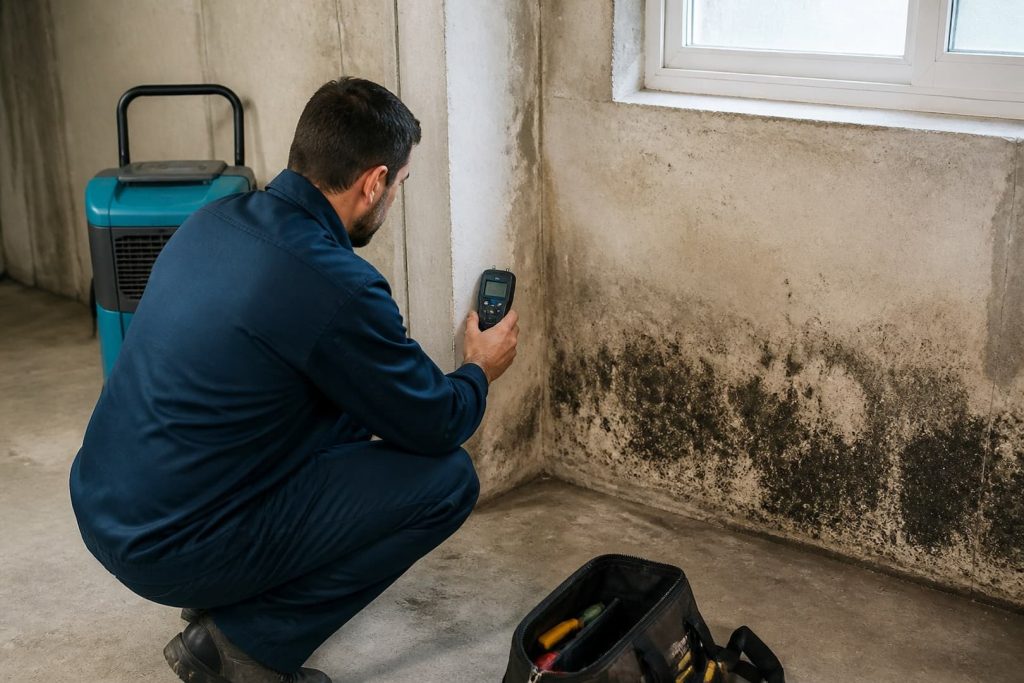
Basement mold has several possible water sources, and they do not share one cure. Liquid water can enter through a crack, window well, slab joint, plumbing line, appliance, or sewer backup. Humid summer air can condense on cool masonry and pipes. A finished wall can trap either source behind drywall and insulation long after the visible floor looks dry.
Start with timing. A problem that worsens after rain suggests drainage or groundwater. Summer-only dampness on cold surfaces points more toward condensation. A localized wet cabinet or ceiling below plumbing deserves a supply or drain check. After a flood, contamination and wall-base wicking control the salvage decision.
Match the pattern to the source
| Pattern | Likely sources | Next investigation |
|---|---|---|
| Wet floor-wall joint after heavy rain | Hydrostatic pressure, crack, poor grading, short downspout | Exterior drainage, sump operation, foundation path |
| Sweating pipes and cool walls in summer | Humid-air condensation | Relative humidity, surface temperature, insulation, air leakage |
| One damp wall below a kitchen or bath | Plumbing or appliance leak | Supply, drain, fixture, and ceiling path |
| Musty finished wall with no surface stain | Concealed wet insulation, old flood, slow seepage | Baseboard, cavity, carpet edge, moisture comparison |
| Odor near a drain or sump | Dry trap, sewage, stagnant pit, or damp organic residue | Plumbing function, cover, backup history, water source |
A dehumidifier may control humidity-driven condensation, but it cannot stop bulk water through a foundation or dry a closed wet wall by itself. Interior coatings may hide a stain without reducing exterior water pressure. Likewise, opening windows on a humid day can make a cool basement wetter rather than drier.
What basement materials can be cleaned or saved?
Sound concrete, masonry, metal, glass, and some sealed finishes are often cleanable after the source is controlled. Paper-faced drywall, carpet pad, fiberboard, cardboard, and saturated insulation are more difficult. Wood framing can sometimes be cleaned and dried if it remains sound. Decay, delamination, swelling, contamination, and prolonged saturation change that answer.
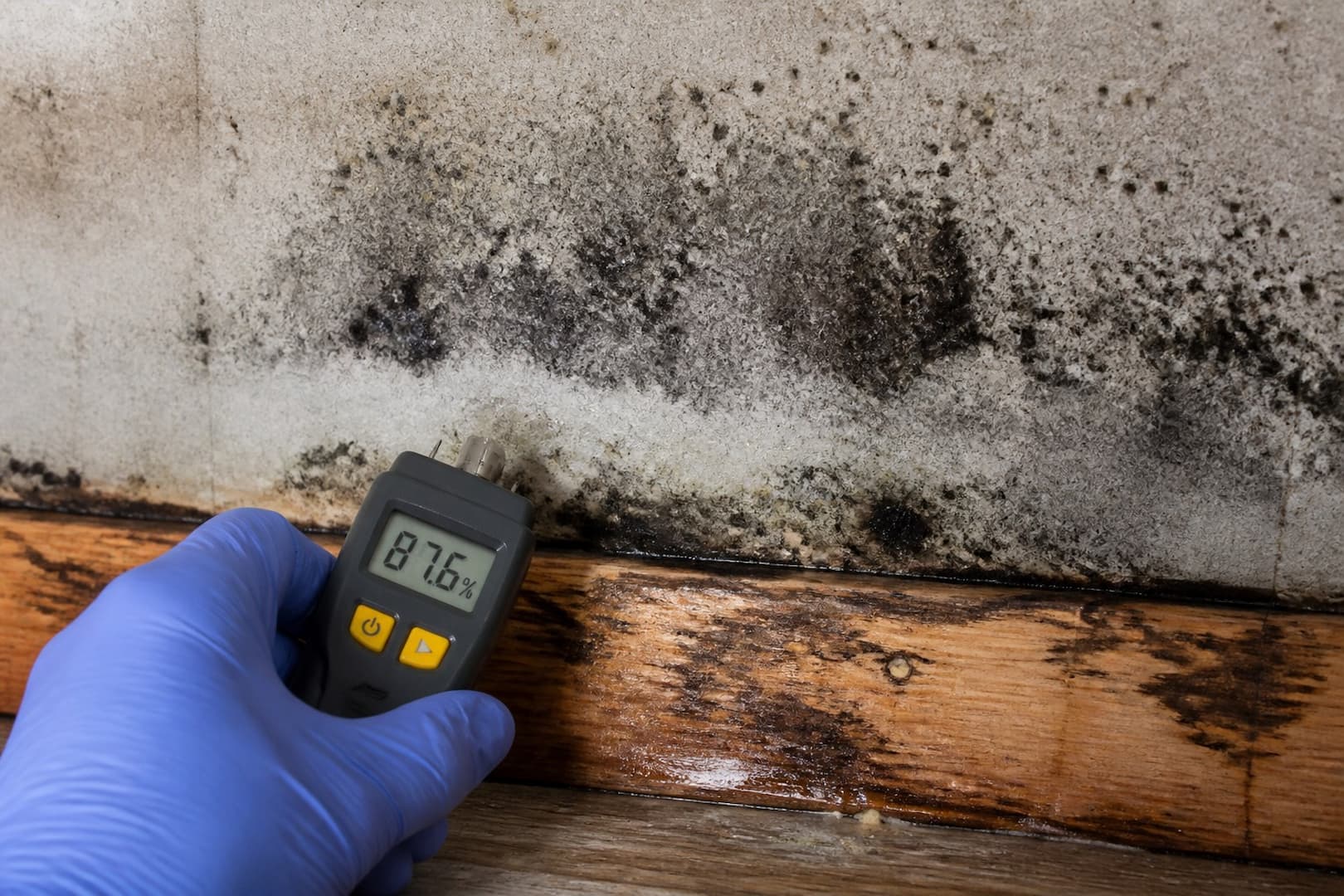
| Material | More likely to remain | More likely to need removal |
|---|---|---|
| Concrete or masonry | Sound, accessible, cleanable, and able to dry | Coated or concealed areas that keep receiving water may require access or repair |
| Wood framing | Structurally sound after cleaning and drying | Soft, decayed, deformed, or contaminated wood needs further evaluation |
| Drywall | Brief clean-water exposure with sound paper and dry cavity | Soft, swollen, mold-colonized, sewage-contaminated, or wet-backed panels |
| Carpet system | Small clean-water event addressed immediately | Contaminated water, wet pad, odor, delamination, or prolonged wetting |
| Insulation | Light clean-water dampness with open access in limited cases | Saturated, compressed, contaminated, or mold-colonized material |
Limited DIY cleanup versus remediation
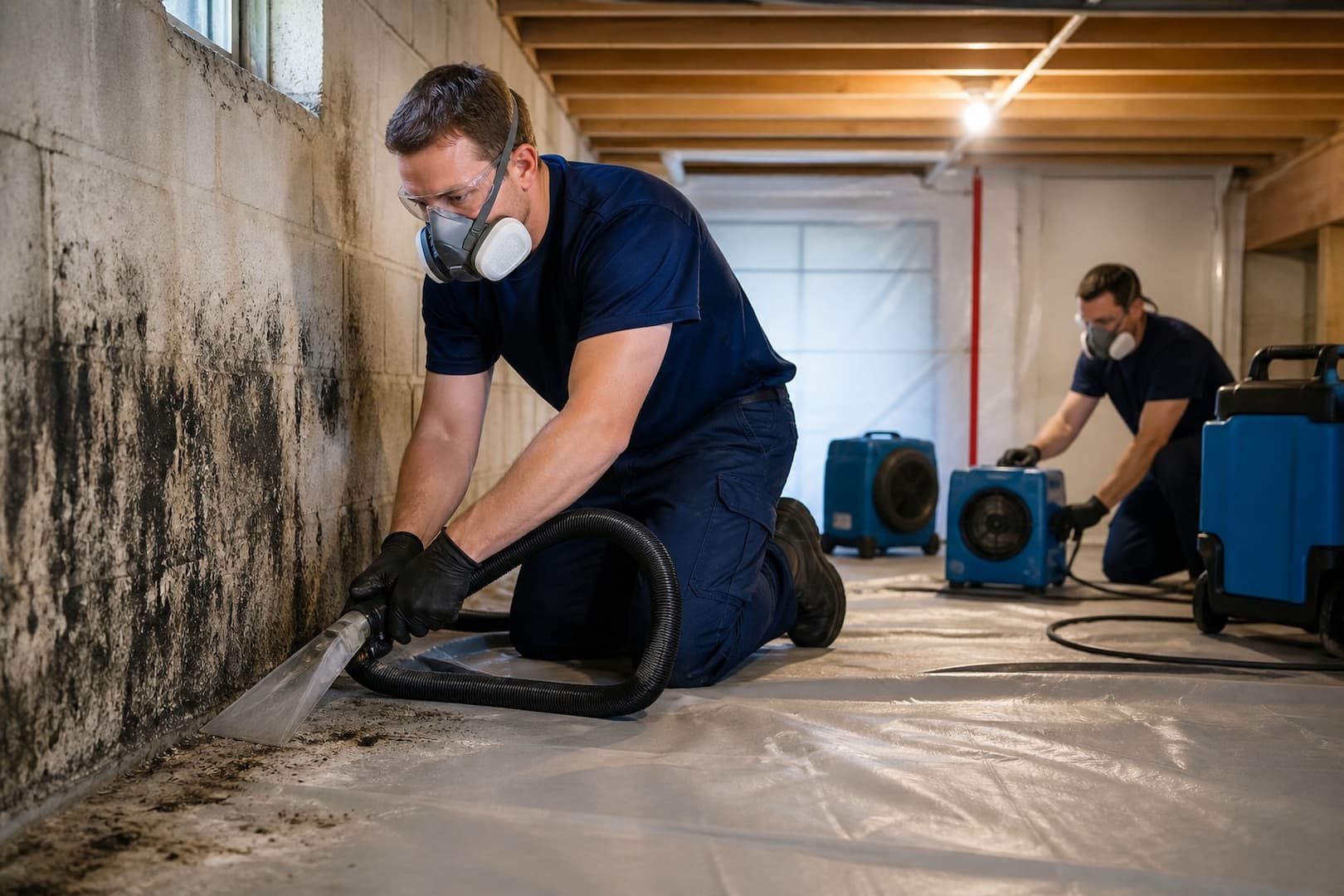
EPA guidance says many isolated mold areas under about 10 square feet can be cleaned by a homeowner. A basement adds complications: several walls may be affected behind finishes, the water may be contaminated, air movement can carry dust upstairs, and the source may remain active. Wear gloves, sealed goggles, and at least an N95 for any suitable small cleanup. Do not dry-brush or sand growth, and do not point a fan at it.
Use detergent and water on sound hard surfaces, then dry completely. Bleach is not a universal treatment and must never be mixed with ammonia or another cleaner. Damaged porous material may need controlled removal. For broad, concealed, recurring, or contaminated conditions, mold remediation should set containment, removal, cleaning, and drying around the actual basement assembly.
Fixing the water path
Exterior drainage and groundwater
Keep gutters clear, direct downspouts away from the foundation to a lawful discharge point, and maintain grading that moves surface water away. Window wells need drainage and covers suited to the opening. A sump system needs a functional pump, discharge route, check valve where appropriate, and a power-outage plan. Persistent groundwater may require a qualified waterproofing or drainage contractor.
Humidity and cold surfaces
Measure relative humidity instead of guessing. The EPA’s ideal indoor range is 30–50 percent, with levels below 60 percent recommended to limit condensation and mold conditions. Insulating cold pipes and correcting exterior-wall air leakage may help, but vapor control and insulation must match the wall assembly. A badly placed vapor-impermeable finish can trap moisture.
Leaks, floods, and finished walls
After an active water event, extraction and structural drying come first. Remove baseboards or create access only when it is safe and justified. A small stain can understate water inside insulation, carpet pad, or the sill area.
Preventing recurring basement mold
- Keep paper, fabric, and upholstered contents off the floor and away from masonry.
- Use shelving that allows air and inspection behind stored items.
- Maintain the sump, floor drains, appliances, and plumbing shutoffs.
- Compare humidity in summer and winter; do not treat one reading as a year-round diagnosis.
- Inspect after intense rain, snowmelt, and power outages.
- Dry clean-water losses quickly and treat sewage or floodwater as contaminated.
- Do not reinstall drywall, insulation, or flooring until the assembly is demonstrably dry.
Basement mold questions
Is white powder on a foundation wall mold?
It may be mineral efflorescence. The deposit is still a moisture clue. Do not decide by color alone; examine texture, material, dampness, and whether crystals return after rain.
Will waterproof paint stop basement mold?
A coating may have a role in a designed system, but it will not fix grading, a crack, groundwater pressure, or a wet wall cavity. Source control comes first.
Should I run a fan in a moldy basement?
Not across visible growth. Fans can spread particles and may pull humid outdoor air inside. Air movement belongs inside a plan that considers containment, dehumidification, and the source.
Why does the smell travel upstairs?
Stack effect, stairwells, duct returns, pipe chases, and gaps can move basement air through the home. Remove the source and correct moisture rather than treating only the upper-floor odor.
Basement mold often has more than one moisture source
Basements sit at the intersection of ground moisture, plumbing, exterior drainage, cool surfaces, and indoor air. That is why one repair can improve the room without solving it. A dehumidifier may control summer humidity but cannot stop a foundation crack during rain. New gutters may reduce runoff while a cold water pipe continues to sweat behind a wall. Start with a source matrix: rainfall, plumbing use, season, indoor humidity, location, and whether the pattern changes when the HVAC operates.
| Clue | Most useful check | Common wrong conclusion |
|---|---|---|
| Growth behind furniture on exterior wall | Surface temperature and air gap | “The foundation is leaking” without evidence |
| White crystals on bare masonry | Dry brush texture and moisture path | Calling all pale material mold |
| Lower drywall wet after storms | Baseboard removal and cavity reading | Painting the exposed face |
| Condensation on pipes | Insulation continuity and room dew point | Treating the pipe as a plumbing leak |
| Musty odor near a sump | Pit cover, drainage, wall and floor perimeter | Assuming the odor proves mold in the pit |
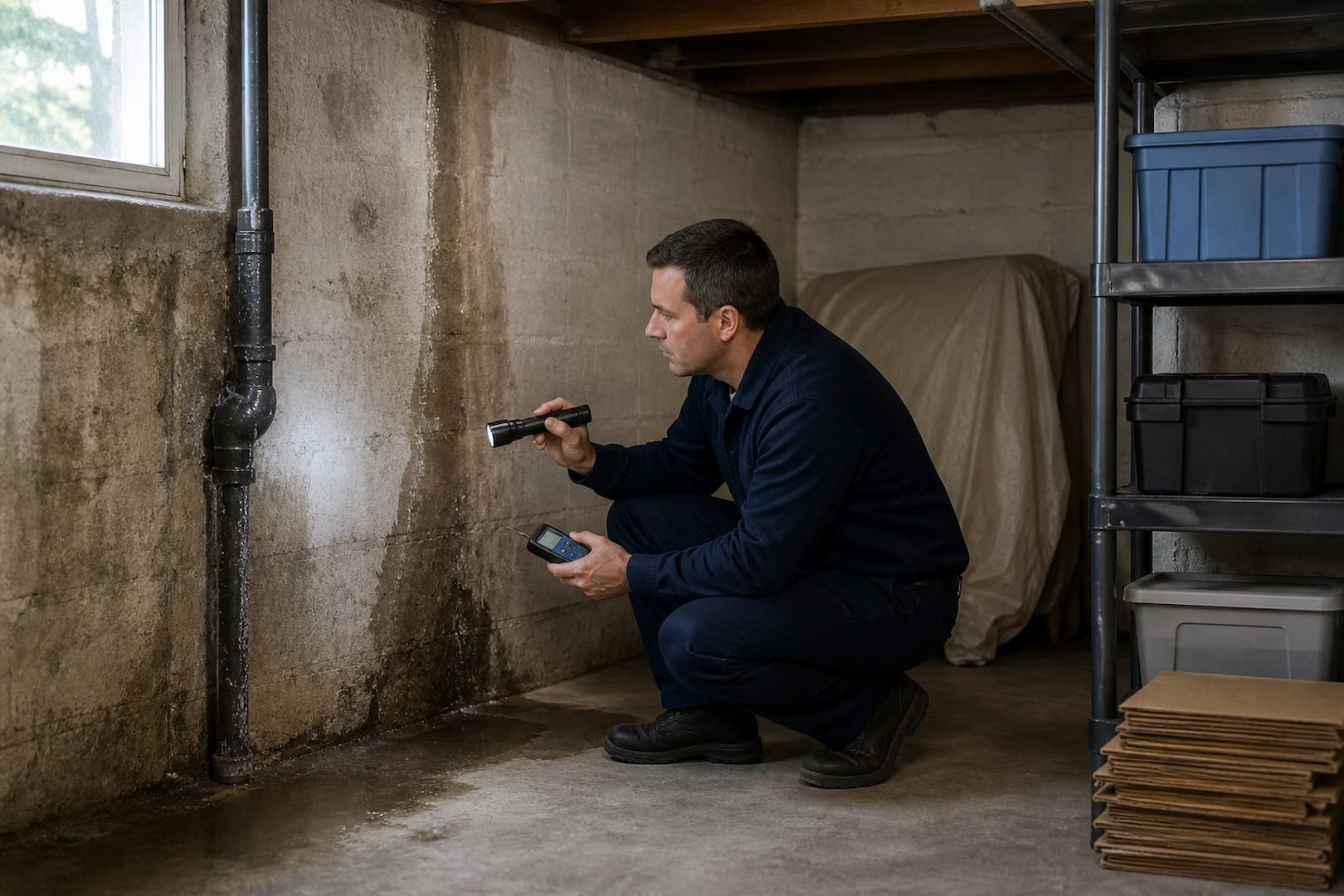
Finished walls change both the risk and the inspection plan
An unfinished concrete wall gives up its clues. A framed wall hides the masonry, sill area, insulation, and back of the drywall. Vapor-impermeable finishes can slow drying toward the room, while fiberglass can hold dust and moisture in contact with paper-faced gypsum. If readings or odor concentrate in a closed wall, small evidence-led access is often more useful than broad air sampling. The opening should be made with containment appropriate to what may be inside.
Do not rebuild the same vulnerable assembly automatically. Material choice must fit the wall and water mechanism. The details differ for above-grade rim joists, below-grade masonry, slab edges, and partition walls. A basement contractor, insulation specialist, and restorer may each own a different part of the solution. Ask them to agree on where the assembly is expected to dry and what prevents indoor air from reaching cold surfaces.
How to judge a remediation proposal
A credible scope identifies the moisture source, affected boundary, materials, containment, cleaning method, debris route, drying plan, and completion criteria. It should say whether insulation, drywall, paneling, carpet, and contents are included. “Treat entire basement” is not a scope unless the affected area and work method are defined. Fogging alone does not remove damaged drywall or dust from framing; waterproof paint does not clean a wall cavity.
- A sketch or photographs showing the work area and containment
- A clear distinction between cleaning, removal, drying, and reconstruction
- Protection for stairs, HVAC openings, stored contents, and occupied space
- A plan for the sill, joists, subfloor above, and tight mechanical areas
- The conditions required before walls, flooring, or insulation are replaced
- Responsibility for source repairs that fall outside remediation
For widespread or concealed growth, professional mold remediation should connect physical removal and cleaning to moisture correction. It should not promise a sterile building. Normal outdoor and indoor environments contain spores; the practical goal is to remove indoor growth and return the area to a dry, clean condition.
A prevention plan should match the calendar
Log basement humidity for several weeks through the season that causes trouble. In humid weather, keep windows closed if outdoor air raises the dew point, and operate a correctly sized dehumidifier with dependable drainage. During storms, watch gutters, grading, window wells, and the sump discharge. In winter, check rim-joist condensation and plumbing insulation. The companion guide on a basement flooded after heavy rain covers the emergency side of the same building system.
Sources and further reading
- U.S. EPA: A Brief Guide to Mold, Moisture and Your Home
- U.S. EPA: Mold Cleanup in Your Home
- CDC: Mold — overview, health effects, prevention and cleanup
- Massachusetts DPH: Mold Cleanup, Repairs, and Excess Moisture Control
When the property needs a closer look
Boston Restoration Group can inspect the affected area, document moisture and material conditions, and explain which restoration step fits the loss. Use the BRG contact page to request service in Greater Boston.