
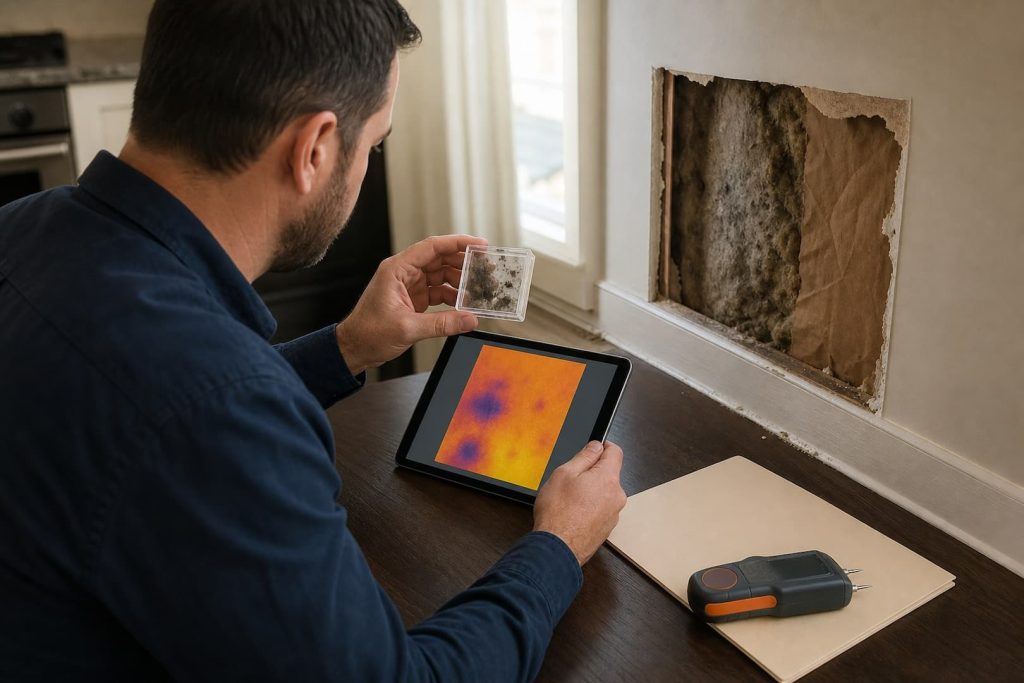
Chaetomium is a genus of mold often associated with cellulose-rich materials that have stayed wet: drywall paper, wood, ceiling tile, and some insulation facings. A laboratory result can support an investigation, but it does not tell you the size of the problem, the source of moisture, the condition of a wall cavity, or a person’s health risk.
Treat the result as evidence to follow. Ask where and how the sample was collected, what prompted it, whether the sampled surface was visibly affected, and what moisture pathway could support growth. The building diagnosis should remain tied to materials and water, not to the drama of a Latin name.
What the result does—and does not—show
| The result may support | The result does not prove |
|---|---|
| Chaetomium was detected in the submitted sample | Every room contains the same organism |
| A wet cellulose material may deserve closer inspection | The source or extent of moisture |
| The sampled material or air had detectable structures | A universal “safe” or “unsafe” concentration |
| Targeted remediation or additional investigation may be warranted | That symptoms were caused by this finding |
| The work plan should consider hidden affected material | That the visible color identifies Chaetomium elsewhere |
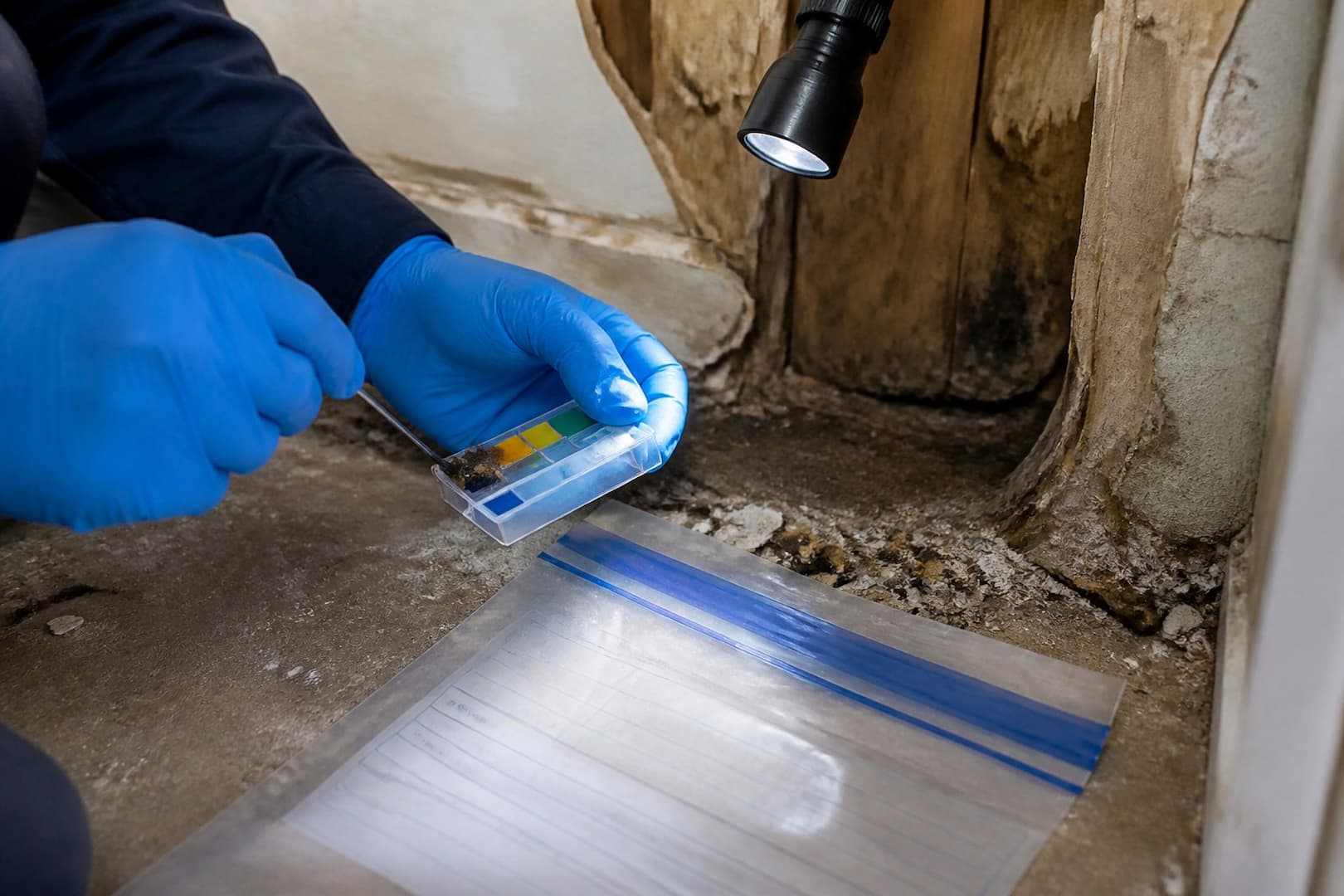
Surface samples describe the spot collected. Air samples describe a brief period under specific indoor and outdoor conditions. Both can miss hidden growth or overrepresent a local disturbance. Chain of custody, laboratory method, sample location, weather, HVAC operation, and the inspection findings belong with the number.
Why wet cellulose matters
Chaetomium species can colonize paper and other cellulose when moisture persists. That association often points toward a slow plumbing leak, roof or window entry, condensation, flooding, or a wet cavity that did not dry. In some cases the surface looks dry by the time the result arrives, but staining, soft drywall, delamination, or elevated moisture remains deeper in the assembly.
The source may be intermittent. A shower supply leaks only during use; wind-driven rain reaches one flashing detail; an air-conditioning line sweats during humid weather. A dry reading on one visit does not erase that history. Look for patterns in weather, fixture use, and material damage.
Is Chaetomium “black mold”?
The phrase black mold is imprecise. Chaetomium colonies may darken, and several unrelated molds can look gray, olive, brown, or black. Stachybotrys is a different genus. Visual color cannot reliably distinguish either one, and the remediation principles still center on source correction, controlled removal of colonized porous material, cleaning, and drying.
Health context
Mold exposure can be associated with irritation and allergic or respiratory symptoms in susceptible people, but a lab report cannot diagnose an illness or calculate an individual dose. People with asthma, significant allergies, immune suppression, or chronic lung disease should discuss personal concerns with a clinician. Seek urgent care for urgent symptoms.
There is no generally accepted health-based indoor threshold that turns a single Chaetomium count into a pass/fail decision for every building and occupant. Be cautious when a report makes a medical conclusion from one air cassette without inspection context.
Inspection after a Chaetomium finding
- Review the sampling record. Identify the room, surface or air location, collection method, and reason for testing.
- Map moisture and damage. Follow plumbing, roof, window, condensation, and flood routes across connected materials.
- Use selective access. Inspect from the least destructive side when a cavity is suspected; account for electrical and regulated-material hazards.
- Define the work area. Include affected material and the access needed to remove it without spreading debris.
- Assign source repair. A plumber, roofer, HVAC contractor, envelope specialist, or drainage contractor may own the cause.
Professional mold inspection should answer scope questions, not produce samples for their own sake. If visible colonization and wet drywall already establish the problem, additional testing may add little. If the substance is uncertain or independent verification is required, targeted sampling may be useful.
Remediation principles
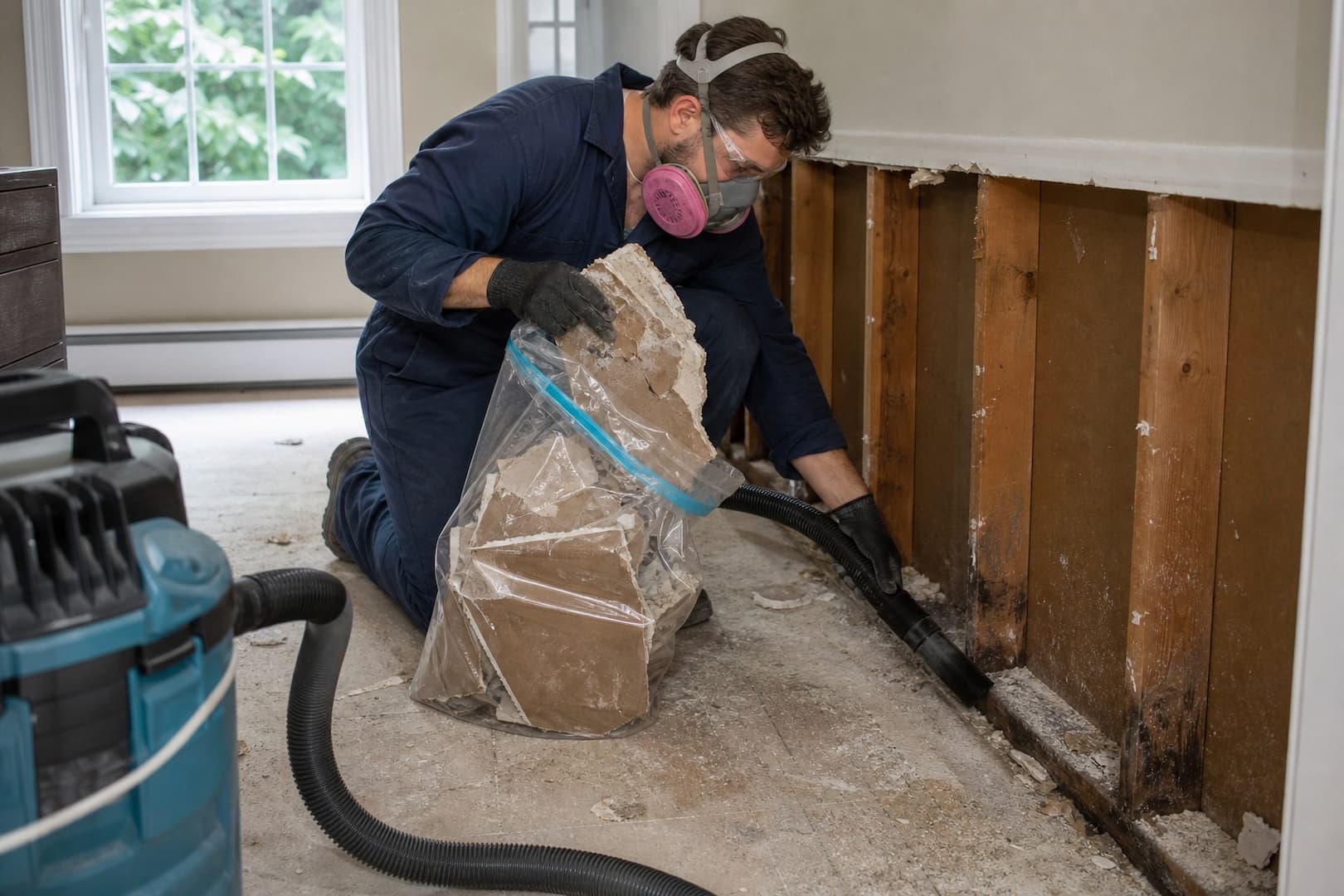
Containment and pressure control should match the extent and disturbance. Colonized drywall, ceiling tile, and other unsalvageable porous material are removed in a controlled manner. Sound framing may be cleaned with HEPA vacuuming and an appropriate physical method, then dried. The pathway and work area receive detailed cleaning before containment is removed.
Spraying a biocide through a small hole does not remove damaged drywall paper or disclose how far water traveled. Encapsulation may be appropriate only after source correction, removal or cleaning, and drying, and when the product and specification fit the remaining substrate.
Completion and verification
- The moisture source is repaired or has a documented correction plan.
- No visible growth, dust, or debris remains in the defined work area.
- Remaining materials are sound and meet the agreed moisture criteria.
- Removed material boundaries match field findings rather than a preset cut height.
- The work pathway is clean and containment is removed deliberately.
- Independent post-remediation verification is used when the project, contract, or sensitive occupancy calls for it.
Chaetomium questions
Should every Chaetomium result trigger whole-house remediation?
No. The response should follow the affected material and moisture pathway. A localized wall cavity and a widespread wet-building event require different scopes.
Can the house be declared safe from one follow-up air sample?
A sample can be one line of evidence, not a universal safety certificate. Completion criteria should also include source correction, visual cleanliness, scope conformance, and moisture conditions.
Will replacing drywall solve it?
Only if the source, adjacent materials, framing, insulation, and drying are addressed. New drywall over a wet or dirty cavity recreates the problem.
A Chaetomium result should send the investigation toward wet cellulose
Chaetomium species are associated with cellulose-containing materials that have stayed wet, such as drywall paper, wood, and ceiling tile. A result therefore raises a useful building question: where has paper or wood remained damp long enough to support growth? It does not identify the leak, affected boundary, exposure dose, or repair. Trace plumbing, roof, window, foundation, condensation, and prior flood history around the sampled location.
| Result context | Reasonable interpretation | What not to conclude |
|---|---|---|
| Tape sample from visible drywall growth | The sampled spot contains structures identified by the lab | Every wall in the house is affected |
| Air sample with low count | Chaetomium-like particles were collected during that period | The hidden source is small or safe |
| Air sample with higher count near a room | A source/pathway may warrant investigation | Species alone proves a health diagnosis |
| Swab after cleaning | The sampled surface condition at that point | The cavity and all dust are cleared |
| No detection in one sample | Nothing was collected in that sample | Chaetomium is absent everywhere |
Sampling design matters more than sample count
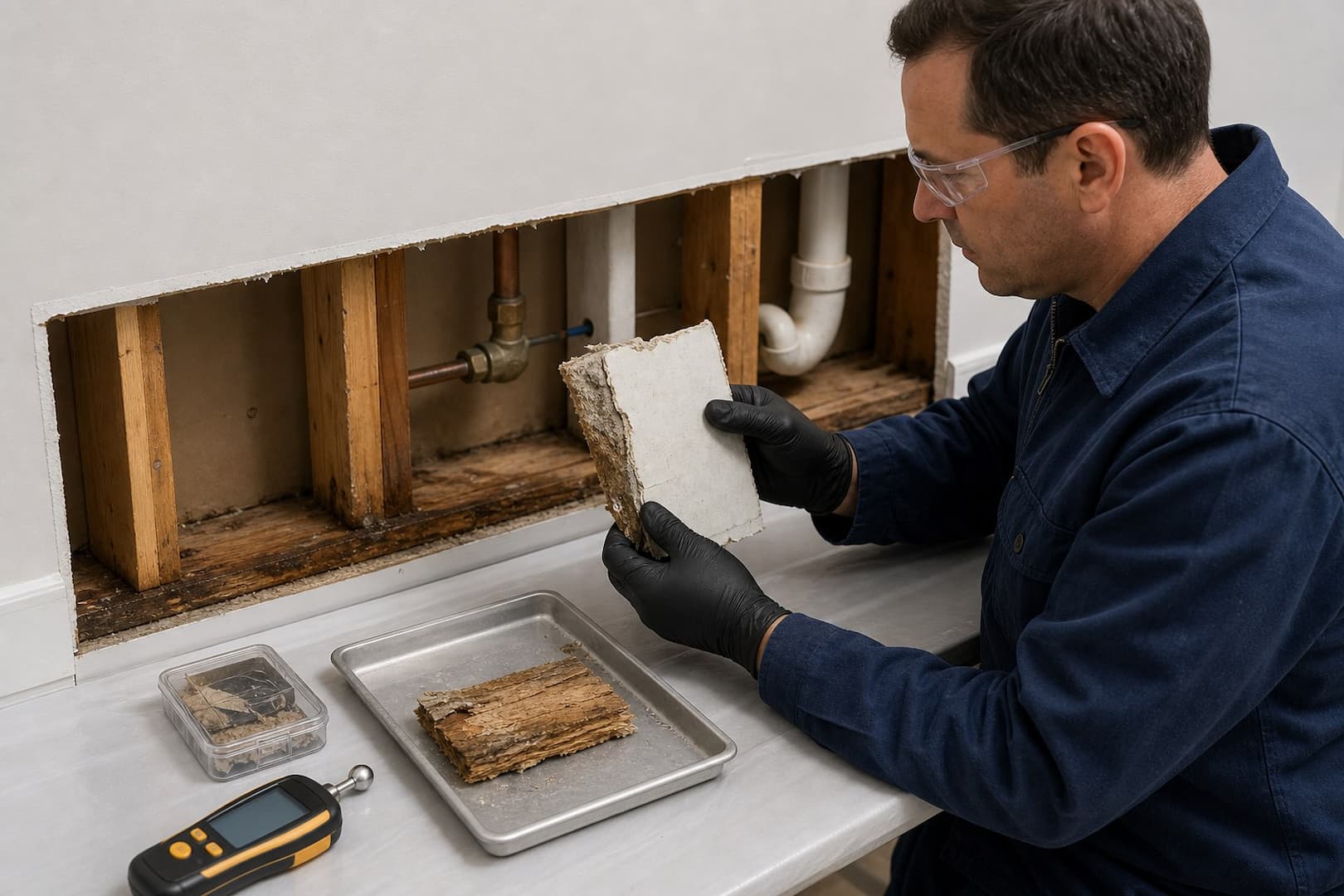
Every sample needs a question. A direct sample may help identify visible material. Targeted air sampling may compare areas or investigate a suspected pathway, but results depend on collection time, airflow, disturbance, weather, and laboratory method. More cassettes do not fix an unclear hypothesis. Write in advance how each result will influence inspection, containment, removal, or verification.
An independent consultant may be helpful for large, disputed, medically sensitive, or complex projects. The consultant can define a protocol and acceptance criteria while the remediator performs the work. That separation is not mandatory for every small project, but it can prevent the cleanup scope from being written around a sales package.
Health context requires careful language
CDC describes respiratory and allergic effects from mold exposure broadly and identifies people with asthma, chronic lung disease, allergies, or immune suppression as potentially more vulnerable. A laboratory name cannot diagnose an illness. People with symptoms should speak with a healthcare professional and share the building timeline and report. Contractors should avoid claims that a post-remediation sample proves a home is medically “safe.”
Until the building is evaluated, limit unnecessary disturbance and keep vulnerable people away from active demolition. Do not dry-brush growth or run fans across it. If a ceiling or wall is structurally compromised, leave the area and address that hazard first.
Remediation follows the material and pathway
Paper-faced drywall, cellulose ceiling tile, and badly affected insulation are often removed rather than treated at the surface. Sound framing may be retained after controlled physical cleaning and drying. Containment should account for occupied space, HVAC, debris movement, and the amount of dust-generating work. Professional mold remediation should document source correction and affected boundaries, not market a species-specific chemical.
For drywall-specific decisions, see mold on drywall. Post-remediation review should examine the work area, retained surfaces, dust, moisture, and the criteria set before work. Sampling, if included, supports that plan; it does not replace visual and moisture evidence.
Preserve the laboratory chain from site to report
Record who collected the sample, exact location and height, material, collection method, date, room conditions, and recent activity. Photograph the sampling point before cleaning. Confirm the laboratory’s identification method and reporting limitations. If a later party cannot tell whether a “wall sample” came from the painted face, back paper, or settled dust, the species name may create more argument than evidence.
Keep the original report and laboratory notes with the remediation file. A cropped screenshot can omit detection limits, sample volume, qualifiers, and method. When comparing pre- and post-work results, confirm that locations and methods are genuinely comparable; two different collection plans should not be presented as a numerical before-and-after experiment.
Sources and further reading
- U.S. EPA: A Brief Guide to Mold, Moisture and Your Home
- U.S. EPA: Mold Cleanup in Your Home
- CDC: Mold — overview, health effects, prevention and cleanup
- Massachusetts DPH: Mold Cleanup, Repairs, and Excess Moisture Control
When the property needs a closer look
Boston Restoration Group can inspect the affected area, document moisture and material conditions, and explain which restoration step fits the loss. Use the BRG contact page to request service in Greater Boston.