
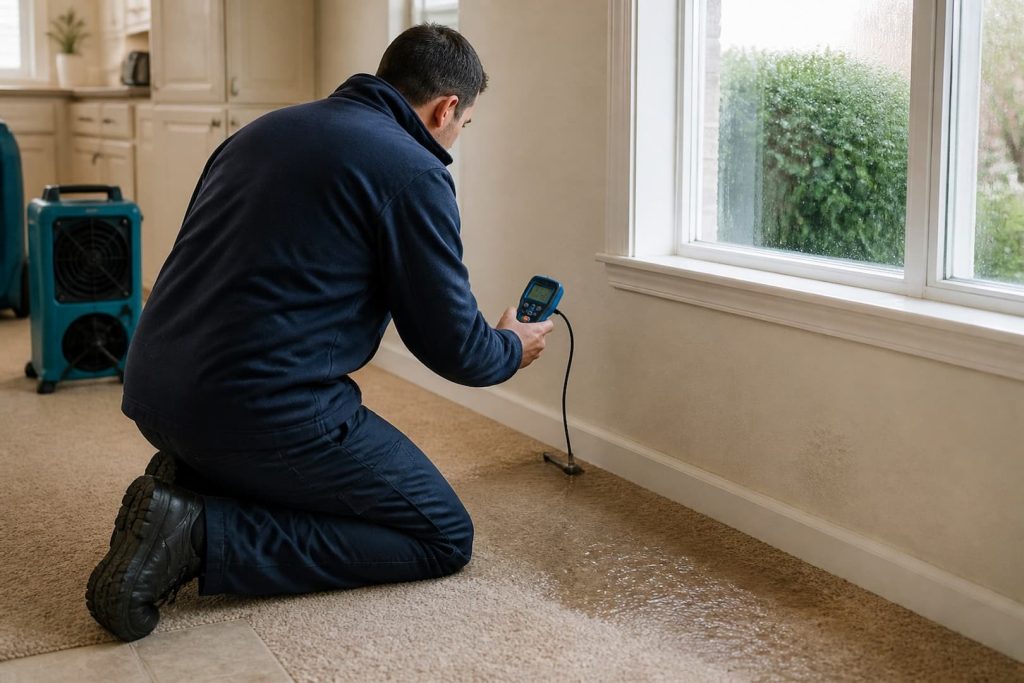
Wet carpet can sometimes be saved after a brief sanitary-water loss, but no universal hour limit guarantees salvage. A supply-line spill addressed promptly is different from sewage, outdoor floodwater or dishwasher discharge. Carpet construction, pad, adhesive, subfloor, occupant vulnerability and how long the system stayed wet all matter.
Do not decide by touching the face yarn. Carpet can feel dry while the pad and wood subfloor still hold a large reservoir. It can also look undamaged after contaminated water has passed through it. Evaluate the source and layers before setting fans or returning furniture.
A practical salvage matrix
| Condition | Salvage outlook | Why |
|---|---|---|
| Small, recent Category 1 loss; clean carpet; rapid deep extraction | Often favorable | Limited contamination and access to pad/subfloor drying |
| Category 1 water with saturated pad or broad migration | Case by case | Pad, seams, backing, tack strip and subfloor need access |
| Appliance discharge or Category 2 water | Conservative, professional evaluation | Detergent, soil and microbial load affect cleaning and pad decisions |
| Sewage or outdoor floodwater | Replacement is usually appropriate for ordinary carpet and pad | Porous layers cannot be reliably cleaned in place |
| Delaminated backing, failed adhesive or dye transfer | Poor | Physical construction has failed |
| Mold growth or long damp exposure | Poor to case by case with specialty contents | Colonization may extend through backing and pad |
First steps
- Stop the source and address electricity. Do not plug in a wet vacuum or cross water to reach a device.
- Keep contaminated areas isolated. Prevent children and pets from walking through and tracking water.
- Photograph before moving contents. Record water line, furniture, source and affected rooms.
- Move clean items from the edge. Avoid dragging contaminated furniture through dry space.
- Extract rather than merely blot. Professional equipment removes water through the carpet depth.
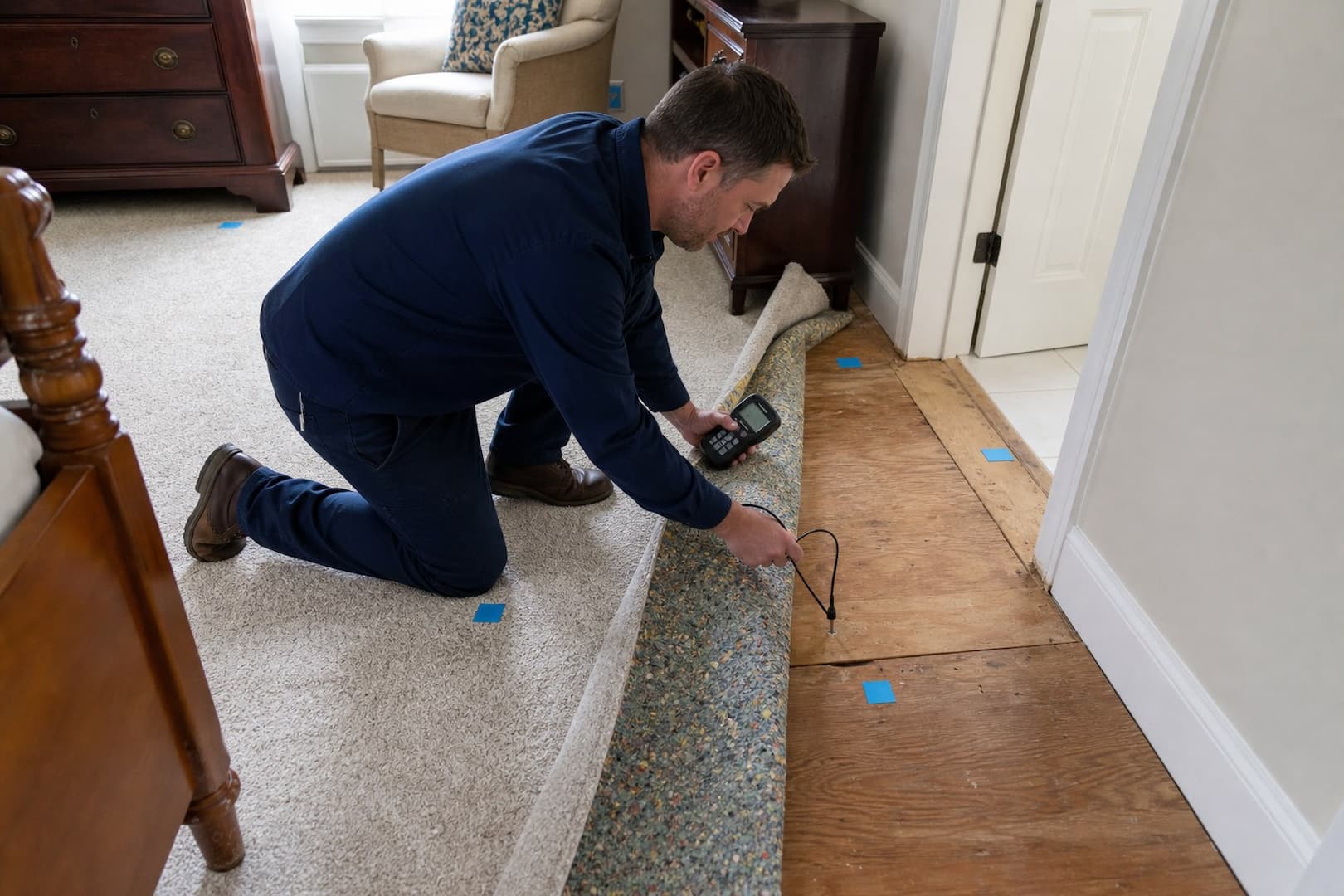
- Inspect pad and subfloor. Lift or access the system using a method suited to installation.
- Clean, dry and verify. Each retained layer needs an endpoint.
Why the pad matters
Pad holds water under the visible face and slows airflow to the subfloor. Some cushion can be removed and replaced while a sound carpet is cleaned and retained after a suitable clean-water loss. Contaminated, deteriorated, bonded or deeply saturated pad is less likely to be reasonable to save.
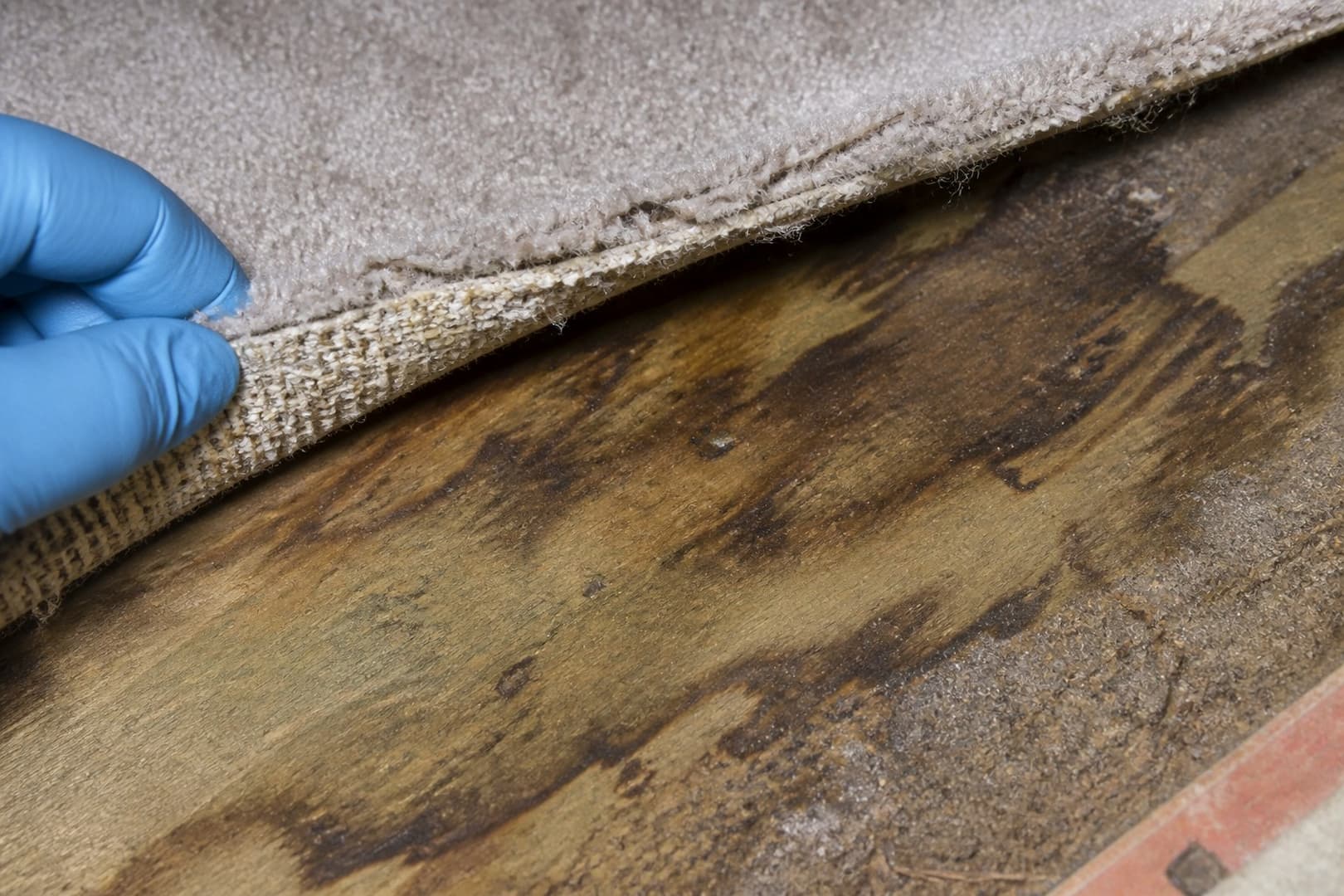
Pulling carpet back without care can tear backing, release tack-strip nails and make reinstallation difficult. In occupied homes, asbestos-containing flooring or adhesive may exist beneath older carpet, so demolition should account for the building age and planned disturbance.
Carpet construction changes the answer
Wall-to-wall synthetic carpet differs from wool, natural-fiber rugs, glued-down commercial carpet and carpet tile. Secondary backing can delaminate, latex can break down, dyes can bleed and seams can open. High-value rugs may be candidates for controlled off-site cleaning even when ordinary installed carpet is not.
Furniture stains, rust, wood dyes and adhesive can migrate into wet fibers. Place foil or non-staining blocks only when safe and appropriate, and remove metal or wood legs from direct wet contact. Do not put plastic over a wet carpet; it traps moisture.
The subfloor can be the longer project
Plywood and oriented strand board absorb water at seams and edges. Concrete may hold internal moisture even after the carpet face dries. Wood tack strip, wall base and drywall can wick around the perimeter. Drying the room air without extracting the pad and evaluating the subfloor can leave odor and later flooring failure.
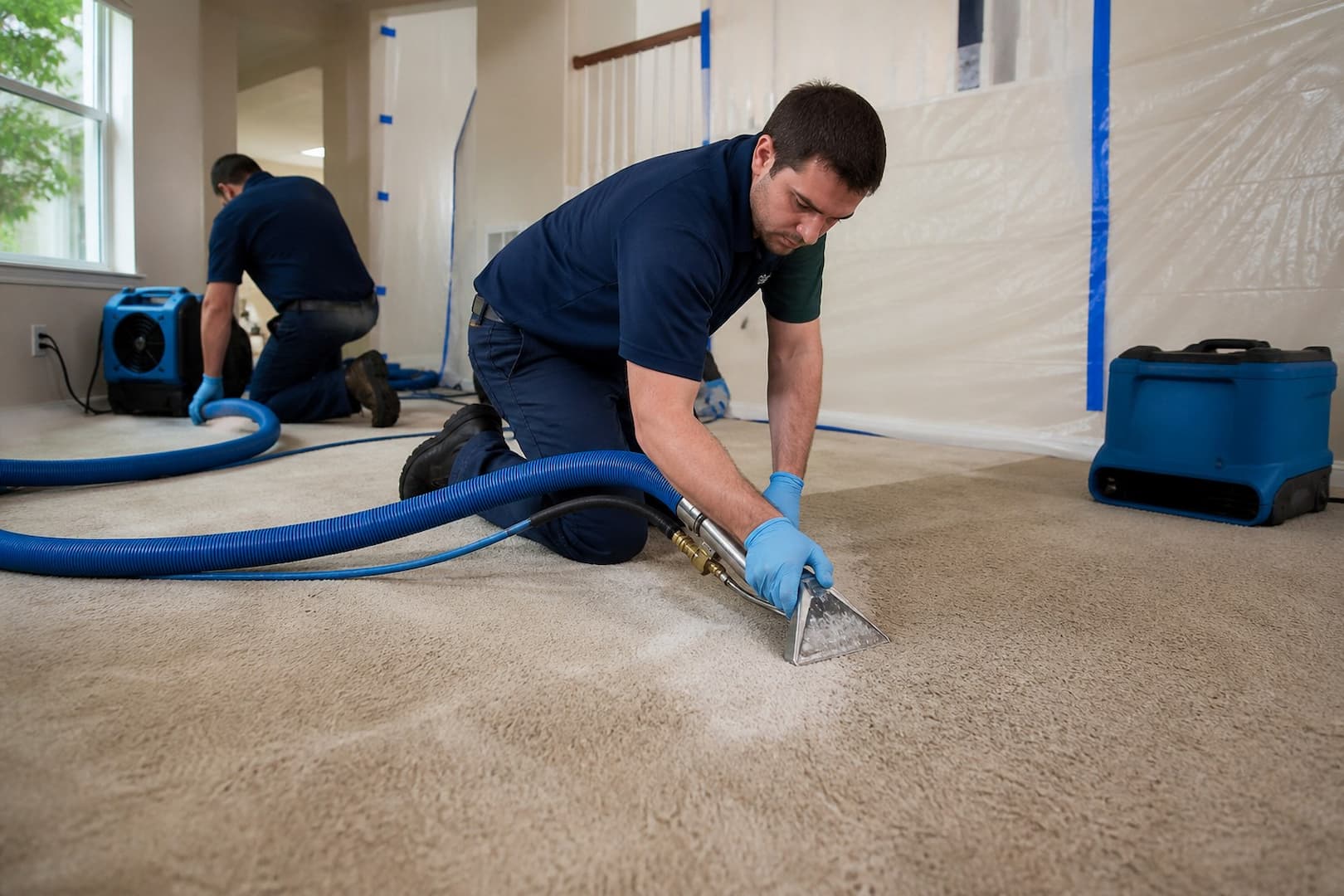
Professional water extraction may use weighted extraction, controlled disengagement, pad removal, subfloor drying, dehumidification and cleaning. Fans are used only after electrical and contamination conditions are appropriate.
Cleaning and odor
Cleaning removes soil; disinfection, when applicable, uses a labeled product on a suitable surface at the required wet contact time. A deodorizer can temporarily mask odor without removing the reservoir or contaminant. Musty odor after drying calls for inspection of pad, tack strip, wall base and subfloor.
Do not mix household chemicals or saturate carpet with bleach. Bleach can damage fibers and backing and does not make sewage-soaked pad restorable. Product use follows its label and the material manufacturer.
How dryness is verified
Check carpet, pad or replacement boundary, tack strip, subfloor and wall perimeter. Compare wood readings with unaffected areas and track trends. A low room relative humidity is useful but does not prove the subfloor reached its endpoint. Reinstall pad and restretch carpet only after retained layers are ready.
Insurance documentation
Record source, category evidence, affected area, carpet type, pad condition, extraction and cleaning steps, photographs and disposal. Keep a sample when matching may matter. Ask about replacement cost, matching, detached rugs, contents cleaning and whether the source device itself is covered.
Wet-carpet questions
Is carpet ruined after 24 or 48 hours?
Time increases concern, but there is no universal salvage timer. Warmth, source, soil, pad, construction and access matter. Prompt action improves options without guaranteeing them.
Can a rental carpet cleaner extract floodwater?
It is not designed for electrical hazards, sewage, deep reservoirs or structural drying. Use equipment and controls suited to the source and scale.
Can carpet be saved if the pad is removed?
Sometimes after a suitable sanitary-water loss, if the carpet remains sound and can be properly cleaned, dried and reinstalled. The subfloor and perimeter still need verification.
Evaluate the carpet as five connected layers
The face fiber, primary backing, secondary backing, adhesive or latex, pad, tack strip, and subfloor respond differently. A carpet can feel dry at the tips while the pad and wood remain wet. Delamination may appear as ripples or loose backing after extraction. Natural fibers, woven construction, glued-down commercial carpet, and area rugs require different methods and specialists.
| Layer | Possible retention factors | Removal concerns |
|---|---|---|
| Carpet face/backing | Recent clean-water loss, stable construction, cleanable soil | Sewage, delamination, staining, inaccessible contamination |
| Pad | Known product, brief clean exposure, accessible drying plan | Absorbent reservoir, contamination, compression |
| Tack strip | Dry, clean, structurally sound | Rust, sewage contact, swollen wood, sharp contaminated surface |
| Wood subfloor | Sound, cleanable, dryable | Delamination, decay, inaccessible contamination |
| Concrete slab | Cleanable and dryable | Adhesive, cracks, moisture below finishes |
| Baseboard/wall edge | Dry and sound | Wet drywall paper or insulation |
Water source comes before extraction method
A recent supply-line leak differs from dishwasher discharge, stormwater, or sewage. Category can worsen with time and contact. Do not rent a carpet cleaner and return contaminated extraction water through household fixtures without a plan. Establish electrical safety, source, and affected boundary first.
The water category guide explains classification. If sewage is involved, porous carpet and pad are generally removal items under public-health guidance.
The pad often controls access
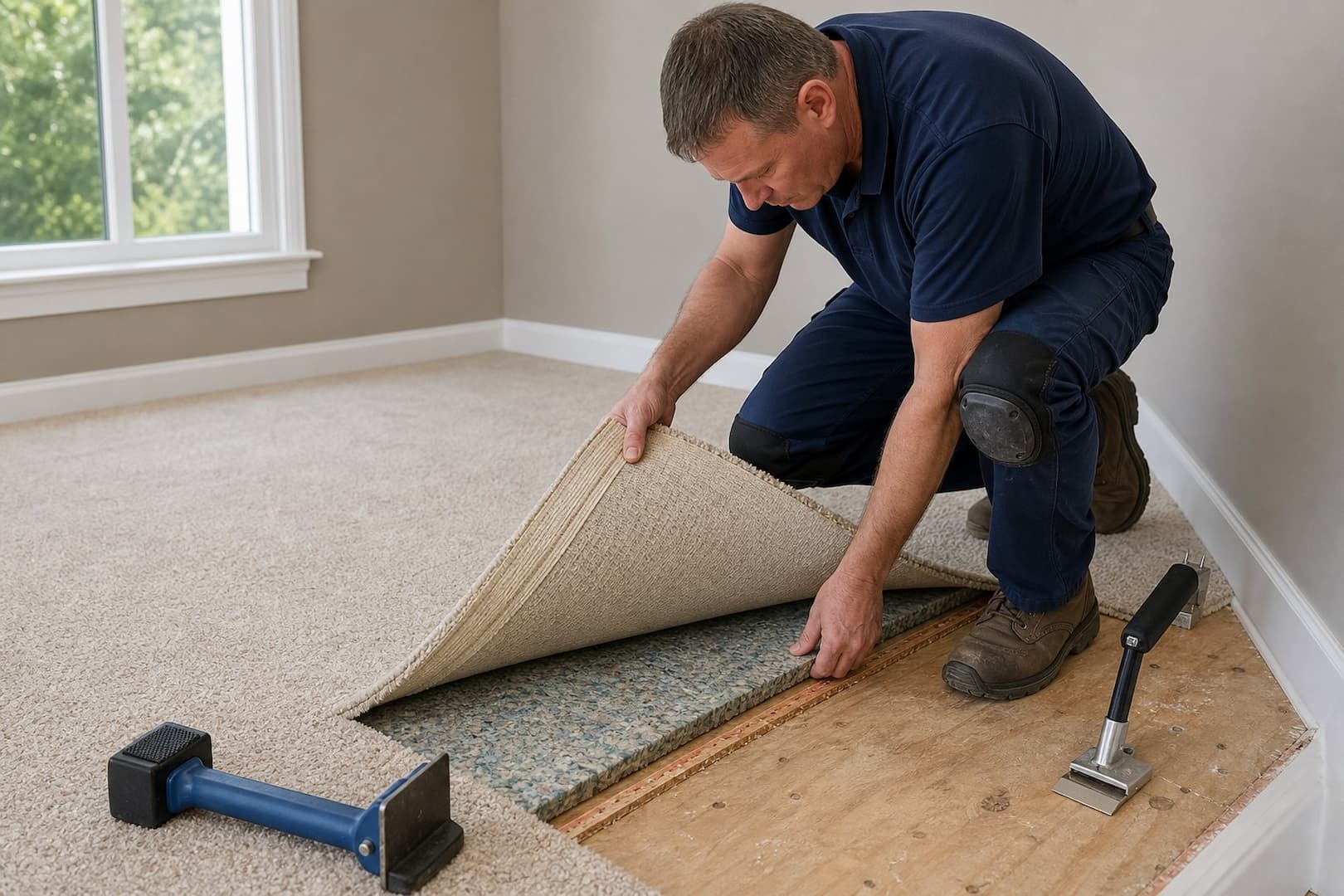
Lifting carpet at a transition or edge can expose the pad and subfloor, but stretching systems and seams require care. Improper pulling can tear backing or damage stairs. Glued-down carpet may not lift without destroying the installation. A flooring or restoration professional can choose access, disengage tack strip safely, and determine whether replacement is more economical than specialty drying.
Do not direct fans across wet carpet before contamination and cleaning are addressed. Air movement can spread particles and odors. Extract water, remove or access wet layers, clean as required, then establish controlled drying.
Furniture and contents leave secondary damage
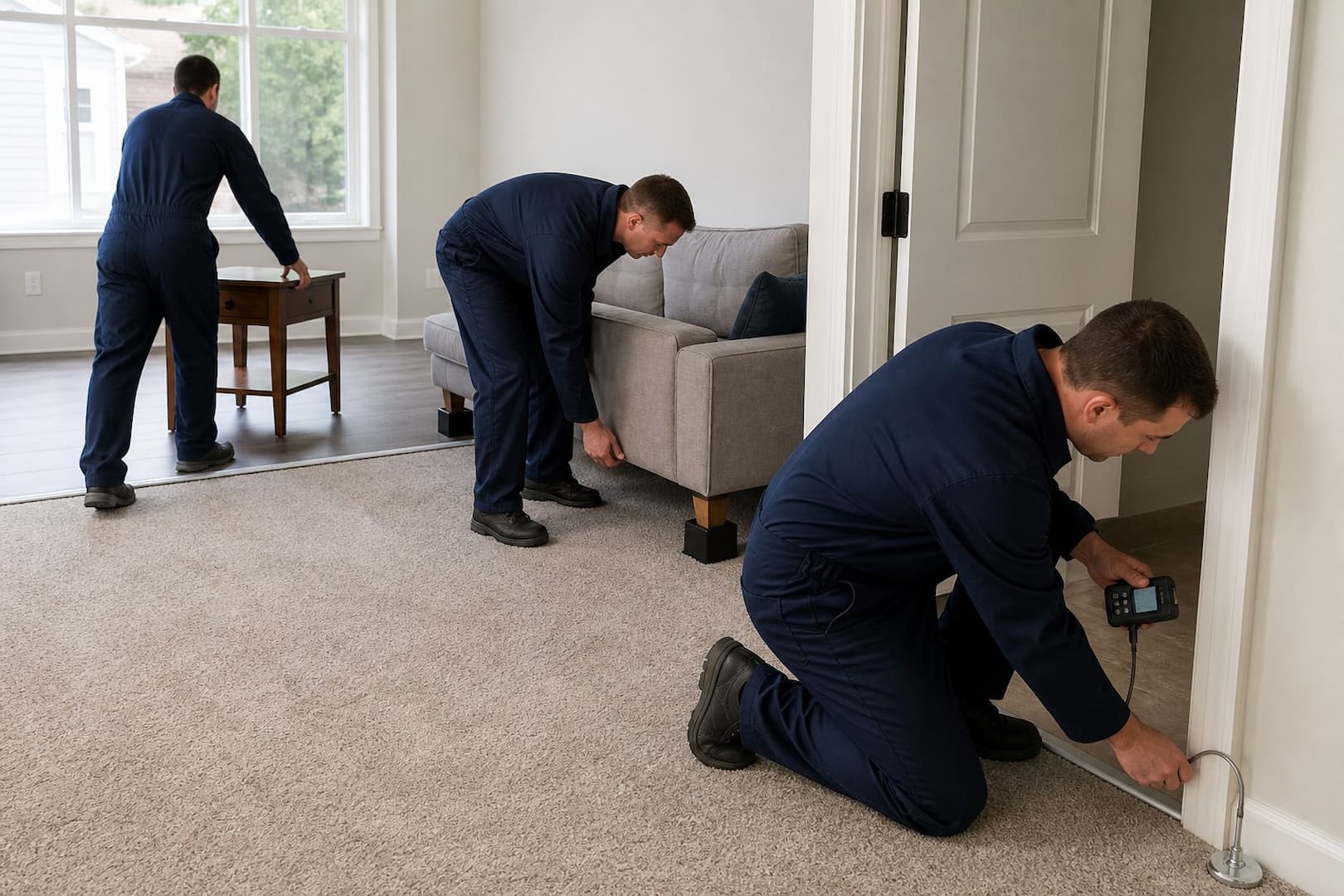
Wood furniture legs can bleed dye or finish into wet carpet. Metal feet rust. Cardboard boxes collapse and transfer ink. Photograph and move items to protected blocks or a controlled drying area. Do not place aluminum foil or plastic under contaminated furniture as a complete solution; the underside and contents still need evaluation.
Verify carpet, pad, and subfloor separately
- Map the wet perimeter beyond the visible stain
- Inspect backing and seams for delamination
- Measure subfloor at affected and reference locations
- Track room conditions and layer readings over time
- Clean or remove contaminated tack strip and baseboard edges
- Check the ceiling below and adjoining rooms
- Reinstall and stretch only after acceptance
Water extraction removes bulk water but does not verify the floor system. The drying-time guide explains why trends and reference readings matter.
Area rugs may be worth specialty recovery
Hand-knotted wool, silk, antique, or high-value rugs should be evaluated quickly by a rug-cleaning conservator. Dyes can migrate, fibers can shrink, and backing can distort. Roll or fold only as the specialist directs; wet rugs become heavy and can tear. Document maker’s marks and condition, and keep them isolated from hard-floor finishes that could stain.
Replacement scope should include what carpet removal reveals
A carpet estimate may omit pad, tack strip, baseboard, subfloor repair, contents moving, disposal, and matching across continuous rooms. Document product labels and retain a sample when appropriate. Ask how seams, transitions, stairs, and adjacent rooms will be handled. Replacement is not complete if wet wall edges remain behind new trim.
Watch the perimeter after the center feels dry
Carpet edges beside exterior walls, closets, stairs, and heavy furniture receive less airflow and are often the last places to dry. Tack strip and baseboard can hold moisture against drywall paper. Recheck those locations after equipment is removed and again after furniture returns. A clean center reading does not clear the room perimeter.
If carpet is reinstalled, the flooring contractor should confirm seam, backing, and stretch condition. Do not restretch a delaminated backing to hide wrinkles; movement can recur and seams may fail. Keep the final moisture and cleaning record with the flooring invoice.
Assess the carpet as a layered floor system
The visible pile is only one layer. A typical installation can include face fiber, primary and secondary backing, seams, adhesive or tack strip, cushion, subfloor, transitions, baseboard, wall plate, and contents sitting on top. A surface extraction may leave the cushion and subfloor wet. The decision to save carpet must account for every affected layer and the route water took to reach it.
| Layer | Typical concern after water | Verification question |
|---|---|---|
| Face fiber | Soiling, dye transfer, odor, delamination stress | Can it be cleaned without texture or color damage? |
| Backing and seams | Latex breakdown, separation, trapped soil | Are seams and backing stable after controlled drying? |
| Cushion/pad | High water retention and poor access | Can it be fully removed, cleaned if appropriate, or replaced? |
| Tack strip | Wood swelling, rusted pins, contamination | Is it clean, secure, and serviceable? |
| Subfloor | Absorption, swelling, trapped moisture | Were the wettest edges and seams measured? |
| Wall perimeter | Wet base, gypsum edge, sill plate | Did water wick beyond the carpet boundary? |
Make the category decision from the source and journey
A supply-line release into a clean, maintained room is different from drain backup, groundwater, sewage, toilet overflow beyond the bowl, storm entry carrying soil, or water that traveled through contaminated assemblies. Time and use matter: water can encounter pet waste, pesticides, fireplace ash, stored chemicals, dirty HVAC dust, or a failed drain after it leaves the source.
Do not use color or odor as the only category test. Clear water can be contaminated, and dirty-looking water can contain ordinary carpet soil. When the source is uncertain or occupants are medically vulnerable, use a qualified restoration assessment and appropriate public-health guidance.
Create access to the slowest layer
Extraction should remove as much liquid as practical before evaporation equipment is expected to work. In some clean-water situations, controlled lifting or disengagement allows inspection and drying of the back, cushion, and subfloor. In other situations, lifting can damage a brittle backing or spread contamination. Glued-down carpet, broadloom on pad, carpet tile, wool, natural fiber, and commercial cushion systems need different methods.
Do not aim high-velocity air under carpet as an automatic trick. The method must match water quality, containment, material construction, and manufacturer/restoration guidance. Air movement that aerosolizes contamination or drives moisture into walls is not successful drying.
Use a documented salvage matrix
| Condition | Salvage more plausible | Replacement more plausible |
|---|---|---|
| Water source | Known clean supply and prompt response | Sewage, drain backup, gross contamination, unknown source |
| Carpet construction | Stable synthetic face and backing | Natural fiber damage, latex breakdown, delamination |
| Cushion | Accessible and demonstrably clean/dry | Contaminated, inaccessible, compressed, odor-retaining |
| Subfloor | Drying trend and retained integrity | Swollen composite, persistent contamination, trapped moisture |
| Installation | Can be lifted and reset without damage | Brittle seams, failed adhesive, complex built-ins |
| Occupant/space use | Ordinary residential exposure with controls | Healthcare, childcare, vulnerable occupants, regulated space |
| Economics and matching | Cleaning/reset produces warranted usable result | Labor risk exceeds reliable replacement result |
This matrix supports a project decision; it is not an insurance promise. Replacement scope, matching, depreciation, and coverage are separate policy questions. A restorer should explain physical condition and method limitations without deciding what the carrier owes.
Protect contents and prevent secondary stains
Furniture legs, metal frames, cardboard, wood finishes, rugs, plants, and stored items can transfer rust, dye, tannin, adhesive, or soil into wet carpet. Move or block contents using compatible materials after documenting the layout. Plastic directly under a wet or finished wood item can trap moisture or mark finishes. Heavy furniture can also hide wet pad and create permanent compression.
Clean and dry as separate objectives
Drying removes moisture; it does not necessarily remove soil, microorganisms, detergent, odor sources, or residues. Cleaning does not prove the subfloor is dry. A salvage plan may require extraction, controlled access, cushion decision, cleaning appropriate to source and fiber, rinsing, grooming, air movement, dehumidification, antimicrobial use only when justified and label-compliant, and professional reset.
Track room temperature and relative humidity, but release materials with material measurements. Record the same carpet zones, cushion/subfloor locations, wall perimeter, and dry reference area. Moisture that rebounds after equipment is paused can reveal an enclosed reservoir.
Handle specialty carpet and rugs separately
Wool, viscose/rayon, silk blends, handmade rugs, natural backing, specialty dyes, antiques, and carpet with complex borders can shrink, bleed, brown, distort, or lose finish. Photograph labels and construction and consult a qualified textile or rug specialist early. Do not promise onsite salvage based on a small synthetic-carpet method.
Inspect the room outside the carpet boundary
- Baseboard and the lower edge of gypsum or plaster.||Closets where airflow is poor and stored items touch the floor.||Door thresholds and transitions to hardwood, tile, or floating floors.||Cabinet toe kicks and built-in furniture.||Floor penetrations, HVAC registers, radiator pipes, and electrical floor boxes.||The ceiling below, crawl space, or basement when water can move vertically.||Adjacent rooms reached under a shared wall even when their carpet feels dry.
Define completion before reinstalling the room
- Verify the source is repaired and the water path is documented.||Confirm cleaning or removal decisions for carpet, cushion, tack strip, subfloor, wall perimeter, and contents.||Measure the slowest layers against an appropriate dry baseline.||Inspect seams, backing, adhesive, odor, staining, texture, and dimensional stability.||Have qualified installers reset or replace the system with serviceable cushion and fasteners.||Return furniture only after the floor and furniture contact points are dry and protected.||Recheck the perimeter and any previously enclosed layer after normal HVAC conditions resume.
A carpet can feel dry to a bare hand while the cushion, seam, subfloor, or sill plate remains wet. The defensible endpoint is a clean, stable, dry floor system with the source corrected and each retained layer documented.
Sources and further reading
- CDC: Guidelines for Cleaning Safely After a Disaster
- Boston.gov: Recovering from a Flood
- Massachusetts DPH and MassDEP: Flooding and Sewage Back-ups Home Care Guide
- Massachusetts DPH: Quick Reference — Water Damage Response in Buildings
When carpet extraction needs a full floor plan
Boston Restoration Group can classify the water source, perform deep extraction, inspect pad and subfloor, clean salvageable materials and monitor structural drying.