
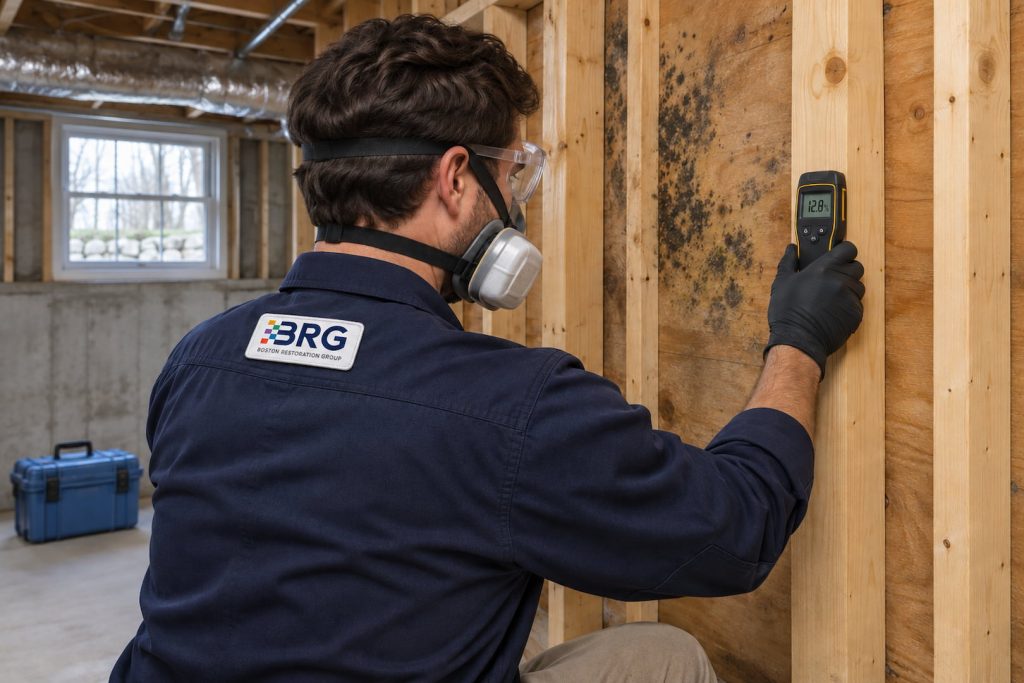
Moldy wood can sometimes be cleaned, dried, and retained. A dark patch alone does not justify replacing a beam, and a clean-looking surface does not prove that a wet cabinet is sound. The decision depends on what kind of wood product you have, how much of it is affected, whether the surfaces can be reached, and whether moisture has caused physical deterioration.
Treat mold, staining, and decay as separate questions. They can occur together, but they are not interchangeable. Start by finding the moisture source and evaluating the wood’s condition before sanding, bleaching, painting, or closing the area back up.
Mold, stain, or rot: the difference matters
The USDA Forest Products Laboratory’s Wood Handbook chapter on biodeterioration distinguishes molds and fungal stains from decay. It also describes nonbiological stains that can resemble fungal discoloration. Decay involves deterioration of the wood itself; a surface color change does not establish that structural condition.
| Observation | What it may suggest | What it cannot establish alone |
|---|---|---|
| Spotted, fuzzy, or powdery material | Possible surface growth requiring assessment and appropriate cleaning | Species, depth, or structural strength |
| Dark marks within otherwise firm wood | Fungal staining, a water mark, metal-related staining, or another discoloration | Whether active growth remains |
| Softness, crumbling, distorted connections, or loss of section | Physical deterioration that needs qualified evaluation | The repair design or capacity of a structural member |
| Swollen panel edges or separated layers | Moisture-related damage to a wood product | Whether the panel remains suitable for its intended use |
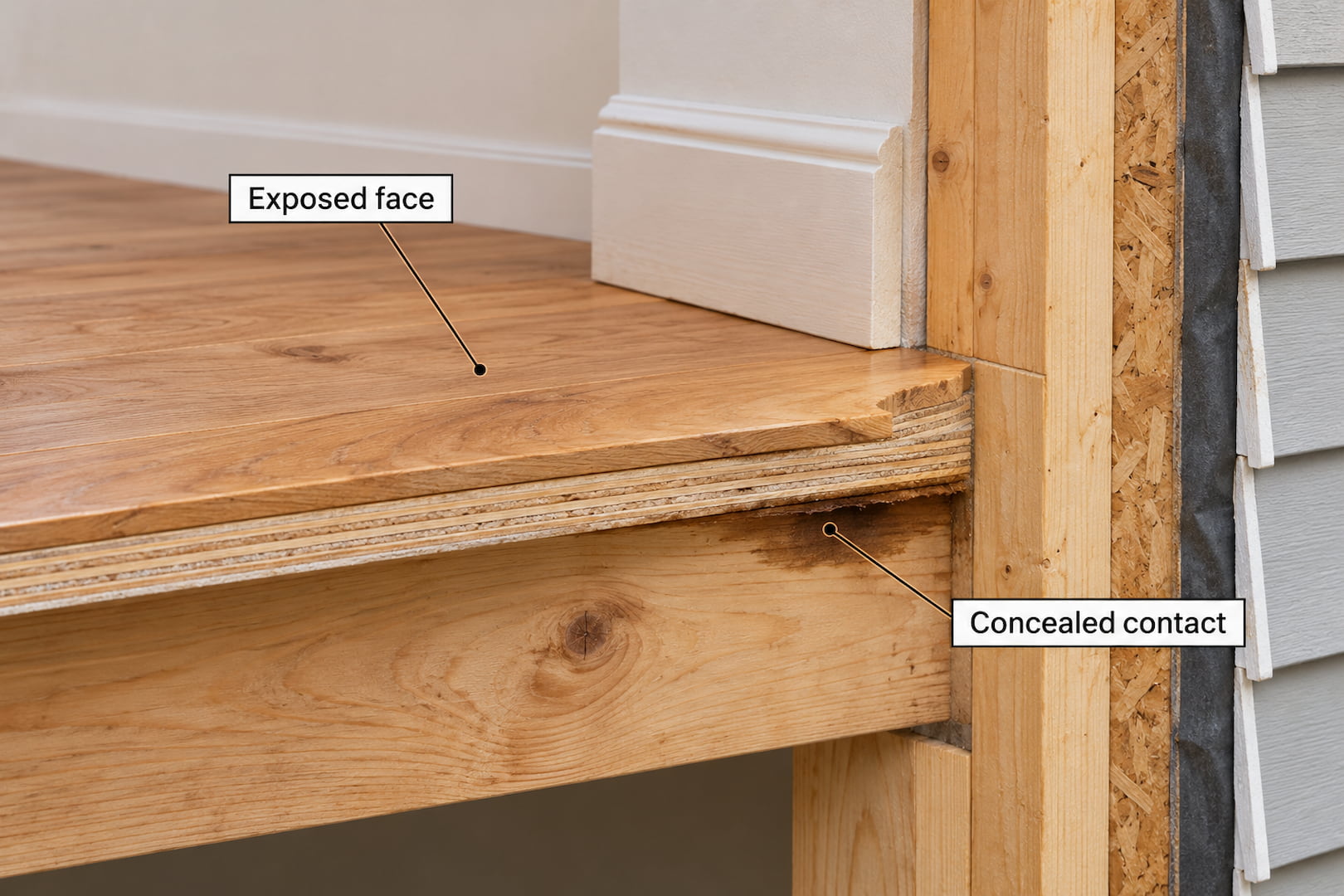
| A dry-looking face with damp joints or concealed edges | Uneven drying or continuing moisture entry | The moisture condition through the full assembly |
Do not test a suspect structural member by forcefully probing, cutting, or removing it yourself. Sagging floors, damaged connections, or visibly compromised framing call for a qualified building or structural professional. Cleaning work and a structural repair design serve different purposes.
Identify the wood product before choosing treatment
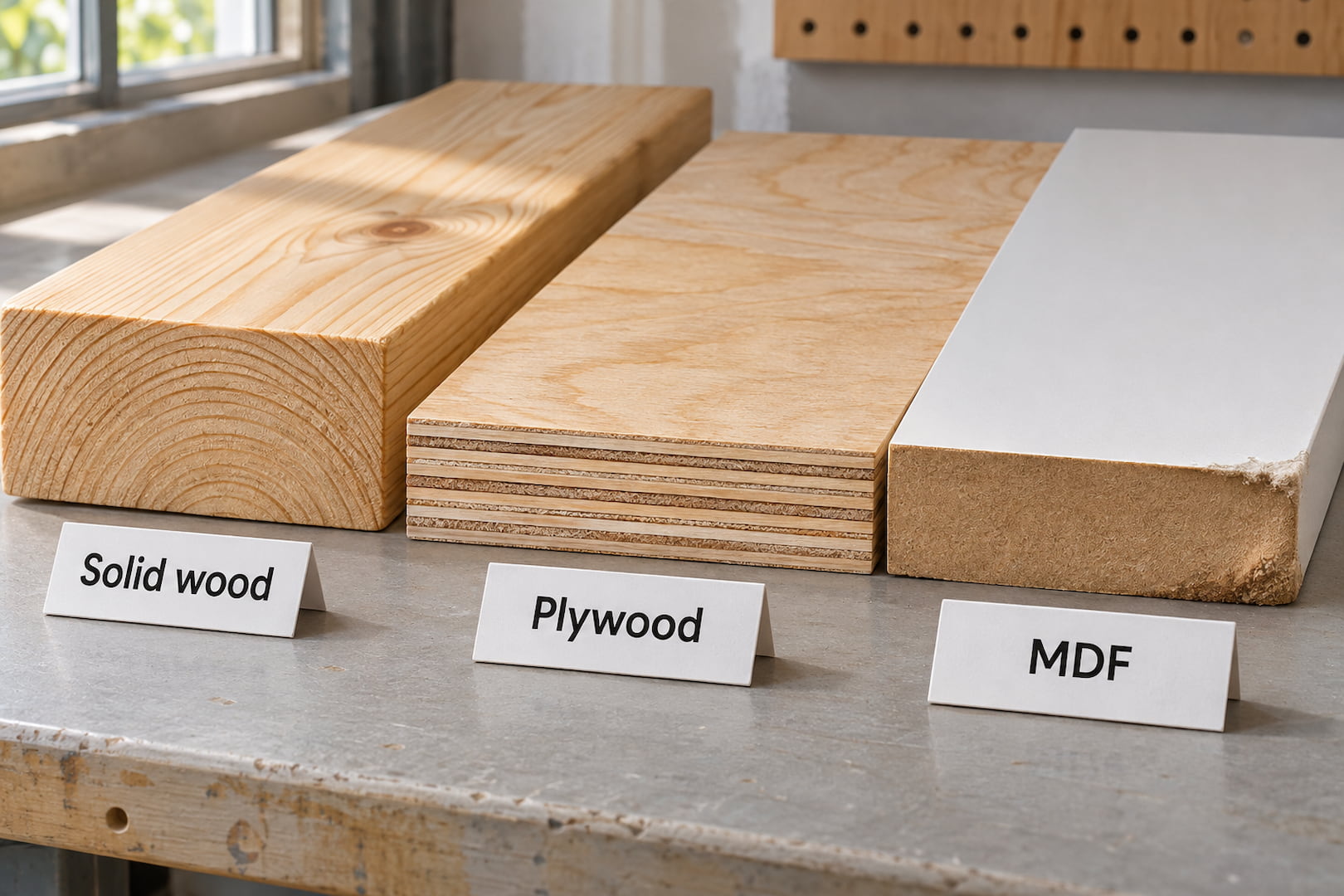
Solid framing, joists, and sheathing boards
Accessible solid wood may offer more cleaning options than a thin composite panel. The assessment still needs to include end grain, joints, contact surfaces, and the side against insulation or another board. A contractor should explain which faces are reachable and how any inaccessible affected area changes the plan.
Plywood, OSB, and engineered structural products
These products have their own construction and service requirements. Surface growth does not automatically mean structural failure, but swelling, delamination, damaged connections, or decay deserve evaluation before the product stays in service. Manufacturer guidance can matter, especially for engineered joists and beams.
For its own engineered wood and OSB products, Weyerhaeuser distinguishes mold alone from deterioration and recommends replacement or a site-specific design-professional evaluation when moisture has damaged or decayed the product. That manufacturer-specific advice should not be turned into a blanket salvage rule for every panel.
Finished furniture and millwork
A durable intact finish can make the exposed face easier to clean, but the back, underside, joints, and drawer interiors may be unfinished. Veneer can lift, finishes can react to cleaners, and water can affect adhesives. A valuable table or historic trim may warrant a furniture restorer or conservator before an abrasive or chemical treatment changes it permanently.
Hardwood and engineered wood flooring
Flooring has more than a walking surface. Growth or moisture may involve board edges, the underside, underlayment, or the subfloor. With engineered flooring, the wear layer and bonded core also need consideration. Cleaning the top cannot settle the condition underneath, and sanding removes material without solving trapped moisture. If boards lift, joints distort, or layers separate, have the flooring and supporting assembly assessed before refinishing.
MDF, particleboard, and cabinet cores
A cabinet described as wood may have a thin decorative face over a composite core. If that core has swollen, softened, or separated, cleaning cannot restore its original dimensions. The decision should include hinges, fasteners, countertop support, and adjoining units rather than only the visible patch at floor level.
Trace the moisture before touching the surface
Ask when the wood became wet and what changed around it. A recent pipe leak, repeated roof seepage, damp basement air, condensation, and stored wet contents create different patterns. In a wall or floor, water may travel along framing and appear some distance from its entry point.
Record accessible readings and observations at repeatable locations. A moisture meter is useful when the operator understands its mode, depth, material setting, and limitations. Readings close to metal fasteners or through layered finishes need care. One apparently normal number on the face of a joist does not describe the adjacent subfloor or the end of the joist inside a wall.
A mold inspection and moisture assessment can connect the visible growth with the building’s water history. Give the inspector any leak-repair records and earlier photographs. Explain whether the area has already been cleaned or coated; those changes affect what can be observed.
When cleaning may be a reasonable option
Retention becomes more plausible when the wood remains physically serviceable, affected surfaces can be accessed, the contamination can be removed appropriately, and the moisture source can be corrected. The cleaning method should fit the wood and finish. A smooth sealed cabinet door and rough unfinished framing will not necessarily respond to the same method.
The EPA’s remediation training describes material-dependent cleaning, drying, and control of cleanup debris. Its discussion of water-damaged materials includes mild cleaning for compatible finished wood and cautions that contaminated-water situations need a different approach. A method appropriate after a recent sanitary leak should not simply be copied after sewage or outdoor flooding.
A limited cleanup on an intact finished surface
A small patch on an accessible, intact finish may be suitable for careful cleaning if the wood is firm, the source is corrected, and there is no sign of a larger hidden or contaminated-water problem. The EPA’s home guide uses about 10 square feet as one factor in deciding who should do the work. Valuable furniture and uncertain finishes deserve specialist advice even when the patch is smaller.
- Check the finish manufacturer’s cleaning restrictions and inspect accessible edges, backs, and joints. Stop if the finish lifts, the core swells, or the affected area extends beyond reach.
- Wear gloves, goggles, and a properly fitted N95 for mold particles. Protect nearby belongings and avoid brushing or sanding residue into the air.
- Use a finish-compatible mild cleaning method and a lightly damp cloth; avoid flooding seams or saturating bare end grain. Follow the cleaner’s directions for removing residue.
- Dry the surface and assess the wood beneath it before returning the item to service or enclosing it. Persistent growth, dampness, or finish damage means the plan needs review.
This is a limited surface-cleaning sequence, not a method for rough framing, moldy insulation, or a wet wall cavity. Rough grain and concealed contacts can need a different removal method and controls. Do not keep scrubbing until a stain disappears if doing so damages the finish or wood.
Work that needs a broader plan
Professional work may involve controlled access, appropriate containment, removal of unsuitable surrounding materials, HEPA cleaning, and a selected surface-cleaning process. The purpose is to remove contamination while limiting its spread. A homeowner should not start power sanding an exposed moldy beam because it appears to be solid wood.
Before disturbing older painted trim, flooring, adhesives, or adjoining finishes, account for possible hazardous materials. The age and construction of the house can change how access and removal should proceed. Keep that question separate from whether the wood itself could eventually be saved.
When replacement or specialist review becomes more likely
- The material has lost physical integrity, including a swollen composite core, separated layers, crumbling wood, or damaged connections.
- Affected faces or joints cannot be reached well enough to clean and dry them.
- The contamination history makes retention unsuitable for the material and use.
- Cleaning would remove too much material or permanently damage a valuable finish.
- The wood cannot be dried while it remains in place, or the source cannot be corrected without selective removal.
- A structural or product-specific assessment identifies a serviceability problem.
Replacement boundaries should follow the damage and the construction. Removing a cabinet base may require support and coordination with a countertop installer. Replacing a subfloor panel may involve framing connections and flooring above it. Ask the contractor to distinguish the mold-remediation scope from the carpentry or engineering work needed afterward.
Drying has to reach the slowest parts
Room air and wood do not dry at the same rate. Thick sections, overlapping members, flooring layers, and tightly enclosed joints can retain moisture after the exposed face feels dry. Insulation or a finish on the opposite side can also limit access. Check the assembly rather than relying on touch.
There is no single moisture-meter percentage that fits every species, product, climate, meter, and intended finish. The drying goal should use appropriate comparisons, the material’s requirements, and the conditions expected in service. Record the method and location so later readings can be compared meaningfully.
For a leak affecting multiple layers, structural drying after water damage can include repeat monitoring and adjustment of access or equipment. Do not close the wall or lay new flooring solely because a dehumidifier has run for a particular number of days.
Stains, sealers, and the final inspection
A remaining stain needs interpretation, not automatic sanding until the wood is pale. The inspection should determine whether there is remaining growth or residue, whether the wood is dry and serviceable, and whether the cleaning criteria have been met. Some discoloration can be cosmetic; uncertainty about an unusual deposit may justify a targeted specialist assessment.
A coating should have a defined purpose and a suitable substrate. It cannot compensate for inaccessible contamination, wet material, or decayed wood. Ask why a sealer is proposed, what preparation it requires, and whether it will obscure later moisture or condition checks. Photograph the retained surfaces before coating or enclosure.
A useful handoff identifies the moisture source, repairs completed, retained and removed materials, final observations, and any unresolved work. If an independent review or sampling protocol is part of the project, agree on it before cleanup. Do not substitute an arbitrary ‘zero spores’ promise for clear completion criteria.
Keep the repaired wood from becoming wet again
Return stored belongings only after the space and items are ready. Leave access to repaired plumbing joints and formerly wet corners so a small recurrence can be noticed. Avoid pushing furniture tightly against a damp exterior wall or placing absorbent boxes directly on a basement floor. Check the underside of the item as well as the surface you can see from the doorway.
For construction or repair materials, protect new wood while it waits for installation. The Department of Energy’s Building America guidance emphasizes dry storage, inspection, and moisture checks before enclosure. That is especially relevant when a repaired room also serves as the storage area for replacement trim, panels, or flooring. Bringing damp replacement materials into a cleaned space can undermine the work before finish installation starts.
Questions homeowners often ask about moldy wood
Is yellow, blue, or white mold on wood treated differently?
Color alone does not determine the organism or the remediation scope. Describe the surface, extent, moisture, and material condition. Yellow growth on a damp cabinet and blue staining within lumber may represent different conditions, but an image search cannot reliably settle the distinction.
Can I just spray bleach on the wood?
A spray does not establish that affected surfaces are clean, that hidden areas have been reached, or that the wood is dry. Bleach can alter appearance and may be incompatible with finishes or surrounding materials. Choose a material-specific plan; do not mix cleaning products or saturate the assembly in an attempt to make discoloration disappear.
Will a dehumidifier remove the mold?
A dehumidifier can help control moisture under appropriate conditions, but it does not remove existing contamination or restore damaged wood. It also cannot prove that enclosed material is dry. Source repair, cleaning or removal, and verification still need their own decisions.
Plan the work before removing sound wood
Boston Restoration Group can assess affected framing, cabinetry, and other wood surfaces and explain the mold-remediation options. For a Greater Boston property, send the location, type of wood or assembly, leak history, approximate extent, and any signs of softness or separation. Structural questions can then be directed to the appropriate professional as the cleanup scope is developed.