
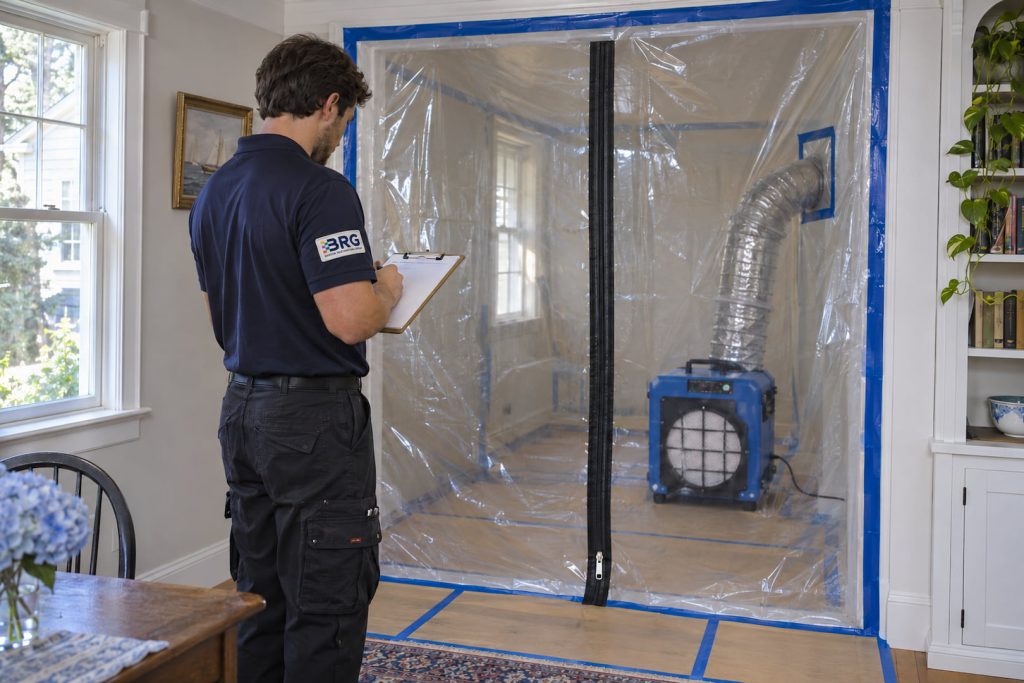
Mold remediation can take hours for limited work or several days for a larger cleanup, with complex projects extending beyond that. As one published reference, PuroClean’s national mold-removal FAQ gives a span from four hours to five days or longer. That is a provider’s broad planning range, not a Boston Restoration Group estimate or a deadline for getting your room back.
The practical question is how much time your particular scope requires. Opening walls, removing damaged materials, drying framing, and rebuilding finishes can stretch the calendar beyond the crew’s active cleaning days. Ask for three milestones: when cleanup should finish, when the area can be released for its intended use, and when reconstruction should finish.
What does the quoted timeline actually include?
If a proposal allows two workdays for removal and cleaning, ask what happens outside those workdays. The plumber’s visit, equipment monitoring, an independent assessment, new drywall, and paint may follow a separate schedule. The quoted cleaning time does not by itself tell you when the room will be ready to use.
Also confirm whether the estimate means working days or elapsed calendar days. A crew may finish removal on Friday while equipment monitoring, an assessor’s visit, or a repair appointment falls later. Ask for an anticipated start date and the next confirmed milestone; a statement that the work takes three days says little if it does not say when those days begin.
Ask the contractor to name the starting condition. Is the estimate based on a repaired leak, empty access to the room, and an accessible work area? If the room is full of stored belongings or the roof still admits rain, the same work description does not produce the same calendar.
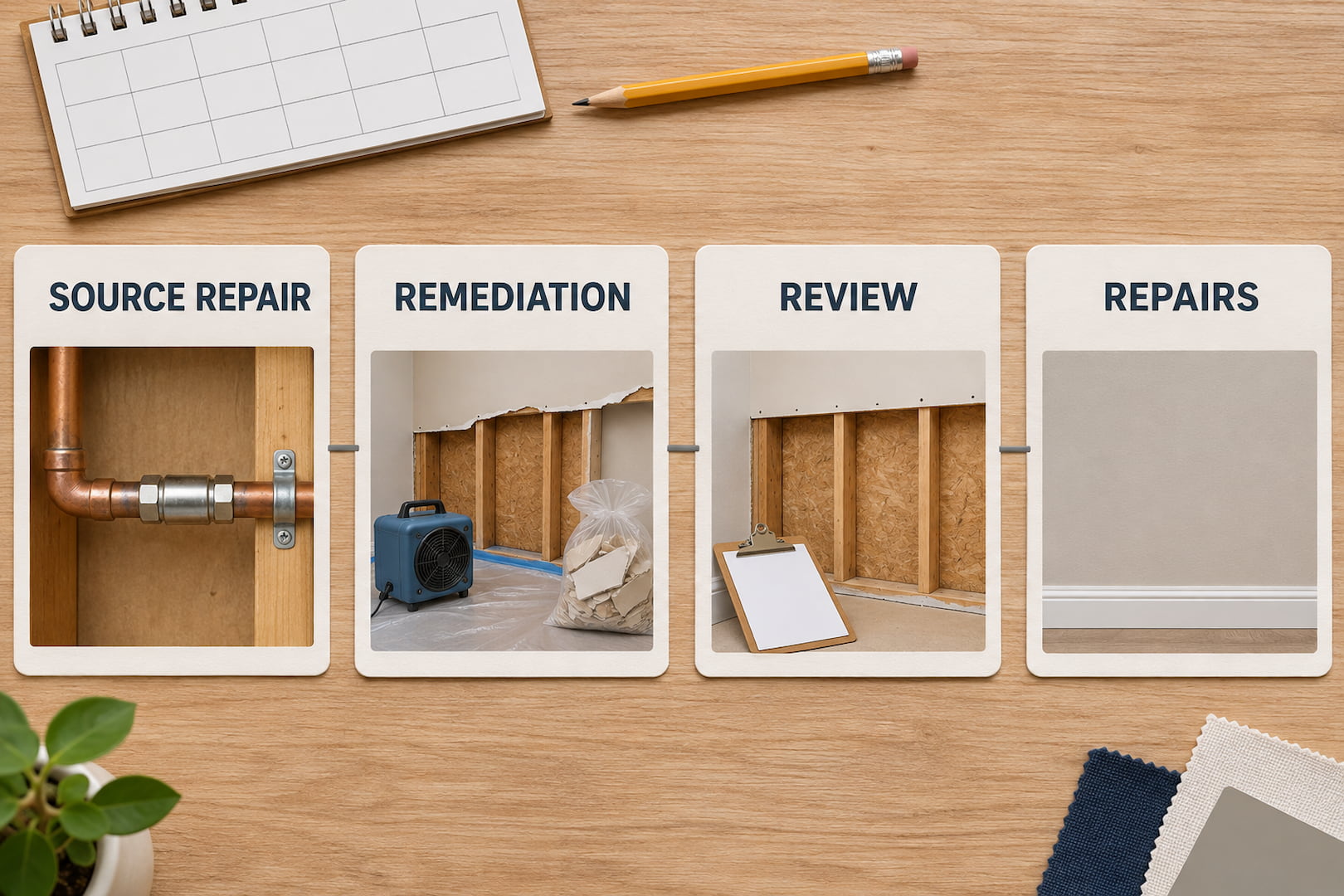
| Milestone | What it means | What can hold it up |
|---|---|---|
| Scope agreed | The affected area, materials, controls, and completion criteria are defined | Hidden conditions, access limits, unresolved source |
| Cleanup complete | The agreed removal and cleaning work is finished | Newly exposed growth, inaccessible edges, cleaning that needs another pass |
| Area released | The agreed review and moisture requirements have been met | Retained materials still wet, unresolved findings, scheduled independent review |
| Repairs complete | Removed finishes and fixtures are restored | Materials, trade availability, inspections, finish drying or curing |
What makes a short project become a longer one?
A small accessible area with a corrected moisture source has fewer dependencies than a wet wall behind cabinets. If the crew finds affected insulation or growth on the back of adjacent drywall, the estimate may need to include more access, removal, and cleaning. In a larger project, several rooms or trades may need to proceed in stages. PuroClean’s project-duration FAQ describes this difference as days for small contained work versus potentially weeks for extensive contamination, depending in part on reconstruction.
For your own schedule, ask which assumption could change the finish date most: the affected boundary, retained moisture, a source repair, or access. That question is more useful than treating the shortest online estimate as a target for every house.
The work that has to happen before removal
The first visit should establish why the area became damp and how far the problem may extend. A stain beneath a window, a basement wall that gets wet after rain, and mold beside a leaking supply pipe require different source repairs. Cleaning cannot make an unreliable window flashing or an active plumbing leak stop admitting water.
A mold and moisture inspection can help define that starting scope. Inspection and testing are separate decisions: opening a clearly defined access point or tracing a wet wall may be more useful than ordering an air sample. The contractor should explain what information is still missing and how it affects the schedule.
In an older Boston-area home, workers also need to know which finishes they will disturb. Before cutting, scraping, or sanding suspect older materials, they may need a separate assessment and appropriate controls. EPA’s guidance for renovation in pre-1978 homes explains why lead-safe work practices matter. Mold work does not remove those other responsibilities.
How the remediation stages affect the calendar
Setting up a work area
Before disturbing material, the crew protects travel paths, plans debris removal, and installs the controls appropriate to the scope. Furniture may need to move. A room shared with an HVAC return or the only passage to a bathroom can require a more involved access plan than an isolated storage area.
EPA’s remediation planning guidance connects containment and work methods to the conditions of the project. It is guidance for making those decisions, not a universal timetable. Time spent preparing the boundary is part of the work, even though the visible mold has not yet changed.
Removing unsuitable material and cleaning what remains
A crew may remove affected porous finishes while retaining sound framing that can be reached and cleaned. The schedule changes when growth extends around a corner, continues behind a cabinet, or appears on the back of a wall that looked unaffected from the room.
The important question is what the new finding changes. A photograph and a revised boundary are more useful than a vague statement that the job is taking longer. Ask whether it adds removal, a different control, another trade, or more drying. Each has a different effect on your plans.
Drying retained materials
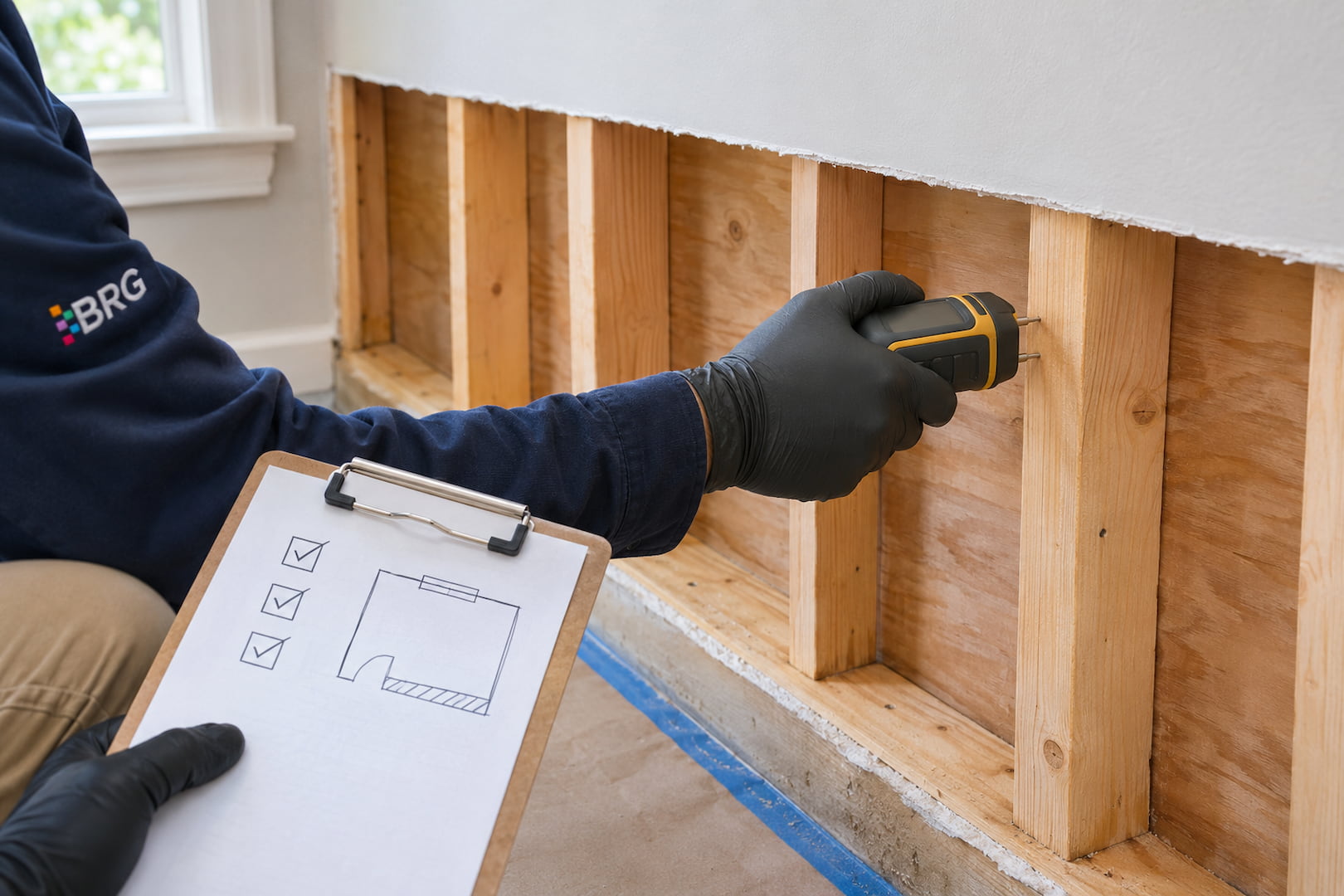
Cleaning may finish before the wood, subfloor, or wall assembly is ready to close. Moisture near the surface can fall faster than moisture deeper in a material. Room humidity is helpful context, but it does not establish that every retained layer is dry enough for the next stage.
If the project began with a leak, water damage restoration and monitored drying may run alongside the remediation work. Ask which materials are being measured, where the dry comparison comes from, and what happens if readings stop improving. More equipment is not automatically the answer to an inaccessible wet layer.
Equipment also serves different purposes. A dehumidifier removes moisture from the air; a HEPA-filtered air device helps control particles as part of the work plan. Neither its runtime nor a quiet room proves that the materials are ready to close. Ask what each machine is doing and what observation or reading will allow it to be removed. Do not turn it off overnight to make the room usable sooner.
Reviewing the work and handing the room back
The final review should address the agreed work area, cleaning, material condition, source correction, and any unresolved findings. If an independent assessor is part of the plan, arrange the scope and timing before removal begins. Otherwise, a finished crew may be waiting for a visit nobody booked.
The contractor may call this post-remediation verification. Agree on what that means for the job: who reviews the accessible surfaces, which moisture checks are needed, and whether any sampling has a defined purpose. If a review identifies a missed surface or retained wet material, allow time to correct it and confirm the correction before the next trade covers the area.
Why the size of the visible patch is a poor time estimate
Area matters, but access and construction can matter just as much. A reachable patch on a hard surface presents a different task from the same visible area on drywall with growth on the concealed paper backing. A narrow strip behind a built-in cabinet can take longer to access than an open wall with a larger affected surface.
EPA says many mold problems smaller than about 10 square feet can be handled by homeowners, while also identifying conditions that call for additional care or professional help. That is a cleanup guidance threshold, not a guarantee of a short job or a substitute for evaluating hidden damage, contaminated water, or occupant concerns.
Several separated patches also need context. They might follow one continuous wet wall cavity, or they might come from different sources. A proposal should explain which rooms and materials it includes. Counting the patches without tracing the moisture can leave part of the job outside the original estimate.
Delays that deserve a clear explanation
Some changes are reasonable discoveries. Others come from missing coordination. Before approving extra time, ask for a short update that identifies the condition, the next action, who owns it, and when it will be checked again.
- The source remains active. Confirm whether a plumber, roofer, or building contractor is responsible and whether temporary measures are sufficient for the next stage.
- The affected boundary expanded. Request photographs and an updated description of the newly exposed materials.
- Drying has stalled. Ask whether the crew needs better access, a changed setup, or a decision to remove a material that cannot reasonably remain.
- A review is pending. Identify the assessor, appointment, and any agreed laboratory turnaround rather than assuming every day is active cleaning.
- Reconstruction is waiting. Keep the remaining finish work separate from any unresolved remediation finding.
For a condominium or managed building, access approval may belong to someone other than the occupant. Shared walls, neighboring units, service risers, elevators, and allowed work hours can affect the sequence. Assign one contact who can obtain access and approve scope changes; repeated messages between different people often leave a practical question unanswered.
Does every project need an air test before it is finished?
No. EPA states that routine sampling is often unnecessary when mold is visible and that there are no federal airborne mold limits against which a home can simply pass or fail. Its mold testing guidance recommends qualified professionals when sampling has a defined purpose.
A project may still include independent verification or sampling because of the agreed protocol, the building’s use, a particular concern, or another applicable requirement. The distinction matters for scheduling. Ask what review was included, who performs it, and what finding would require more work. Do not add a test at the end merely because the calendar has reached a certain day.
An air result cannot replace checking an uncleaned surface or an unresolved leak. Conversely, a project should not remain open indefinitely because someone expects a normal building to contain no mold spores at all. Completion needs a defined, reasonable scope.
When can you use the room again?
The date equipment leaves is not always the date the room can be used normally. Removed flooring may leave an uneven surface; a bathroom may lack fixtures; an open ceiling may still need repair. Ask the contractor to distinguish release from the remediation work area from full occupancy after construction.
There is no single waiting period after mold remediation that overrides those conditions. If the plan uses a product with ventilation or re-entry directions, those directions also apply. Obtain the room’s release instructions before bringing furniture back, removing barriers, or letting children and pets use the area. An air test result does not replace those practical instructions.
Whether other rooms can remain occupied depends on the layout, work-zone controls, ventilation, access, and the people living there. A contractor can explain the physical work plan. Personal medical concerns belong with the occupant’s clinician, particularly when exposure advice may change where someone should stay. A sample result does not make that individual decision.
For a home with only one bathroom or a work area across the only exit route, discuss daily logistics before the crew arrives. Temporary arrangements can take more coordination than the cleaning itself. Do not remove a barrier, enter the contained area, or switch equipment off to reclaim the room early.
How to keep the schedule moving without rushing the work
Gather the leak history, prior repair invoices, and photographs you already have. Tell the contractor about earlier staining or cleanup, even if the area now looks clean. Share building access rules and the dates when another trade can attend. Accurate background information helps avoid repeating the investigation.
Ask before moving belongings from the affected area; carrying dusty or moldy items through clean rooms can create more work. Clear only the safe, unaffected access routes the contractor identifies. Keep children and pets out of the work zone, and maintain the agreed equipment and power arrangements.
A useful progress update answers a few practical questions: What was completed? What remains? What changed? What is the next decision? You should be able to tell whether the project is progressing, waiting for a result, or waiting for another person without interpreting a collection of equipment photographs.
What should be in the completion record?
Keep the final scope, photographs, material decisions, relevant moisture records, and any independent review with the source-repair documentation. Record work that remains outside the remediation contract. This lets the repair team see which surfaces can close and prevents an unfinished source repair from disappearing between contractors.
EPA’s completion guidance centers on correcting moisture, completing cleanup, and checking that the problem has not returned. Arrange a follow-up appropriate to the original source: a window leak may need observation after rain, while a plumbing repair needs confirmation under normal use. A calendar date alone cannot provide that evidence.
Get a timeline for the actual rooms and materials
Boston Restoration Group’s mold remediation service addresses the affected materials, work-zone controls, cleaning, and repair handoff. When requesting an assessment, describe the rooms involved, the known moisture source, any repairs already completed, and access restrictions. Those details support a schedule you can plan around.