

A frozen pipe may stop water without leaking, or it may already have split and remain temporarily sealed by ice. The dangerous moment often comes during thawing, when pressure and flow return. Know the main water shutoff before warming the pipe, keep a clear path to it, and watch the entire accessible run—not just the faucet.
If water is near electrical equipment, a ceiling is sagging, a pipe has burst, or the frozen section is concealed, leave the area and call the appropriate emergency, plumbing, electrical, or restoration professional. Never use a torch, open flame, charcoal heater, or unattended high-heat device to thaw plumbing.
Nine warning signs
- One faucet produces a trickle or no water. Compare hot and cold sides and nearby fixtures; the freeze may be in a branch or supply.
- Frost or ice appears on an exposed pipe. This is a strong clue, although not every frozen section is visible.
- A sink cabinet or exterior-wall chase feels unusually cold. Drafts and insulation gaps can chill a hidden run.
- Several fixtures on one side of the house lose pressure. The shared branch may be affected.
- A toilet tank does not refill. Its small supply line may be frozen even when another faucet works.
- Odor comes from a drain when supply flow stops. Reduced water use or a dry trap can expose drain odors; the smell does not locate the freeze by itself.
- Pipes tick, knock, or whistle as temperatures change. Noise is nonspecific, but paired with low flow it deserves investigation.
- A bulge, crack, damp joint, or new stain appears. Shut off water if a leak is suspected.
- The same wall, garage, crawl space, or addition has frozen before. Repeat history is one of the best prevention clues.
What to do when a pipe may be frozen
- Keep the heat on. Maintain a stable indoor temperature and open interior doors so heat reaches the area.
- Find the shutoff. Test access but do not force a corroded valve during the emergency.
- Open the affected faucet slightly. This can show when flow returns and gives expanding water a path.
- Warm the area gradually. Use building heat, warm air, or another flameless method allowed by the pipe and device instructions.
- Start near the faucet side of the frozen section. Work toward the colder area so meltwater can escape.
- Inspect during and after thawing. Look along the pipe, fittings, wall, ceiling below, and nearby floor.
- Shut off water if leakage begins. Call a plumber for the pipe and a restoration company for escaped water.
Do not pour boiling water onto a pipe or use a device that can ignite nearby framing, insulation, paint, or contents. Do not use electrical equipment while standing in water. If the frozen pipe is behind a wall, in an unsafe crawl space, near a service panel, or part of a fire-protection system, stop the DIY attempt.

Where Boston-area pipes often freeze
| Location | Why it is vulnerable | Prevention focus |
|---|---|---|
| Kitchen or vanity on an exterior wall | Cold cabinet, air leaks, small supply tubes | Air sealing, insulation, safe cabinet heat circulation |
| Unheated garage or room above it | Low ambient temperature and exposed runs | Relocate or insulate plumbing; maintain heat |
| Basement rim joist and sill area | Outdoor air leakage around penetrations | Seal gaps with code-appropriate materials and insulate |
| Crawl space | Ground moisture, wind, failed insulation, limited heat | Repair source, insulation, vapor control, and monitoring |
| Addition, dormer, or bay | Discontinuous insulation and hidden exterior exposure | Building-envelope evaluation |
| Outdoor hose connection | Connected hose and unprotected sillcock | Disconnect hoses and winterize per fixture design |
| Vacant or rarely used area | Heat set too low, unnoticed outage, closed doors | Monitoring, caretaker plan, and policy-compliant heat |
If the pipe bursts
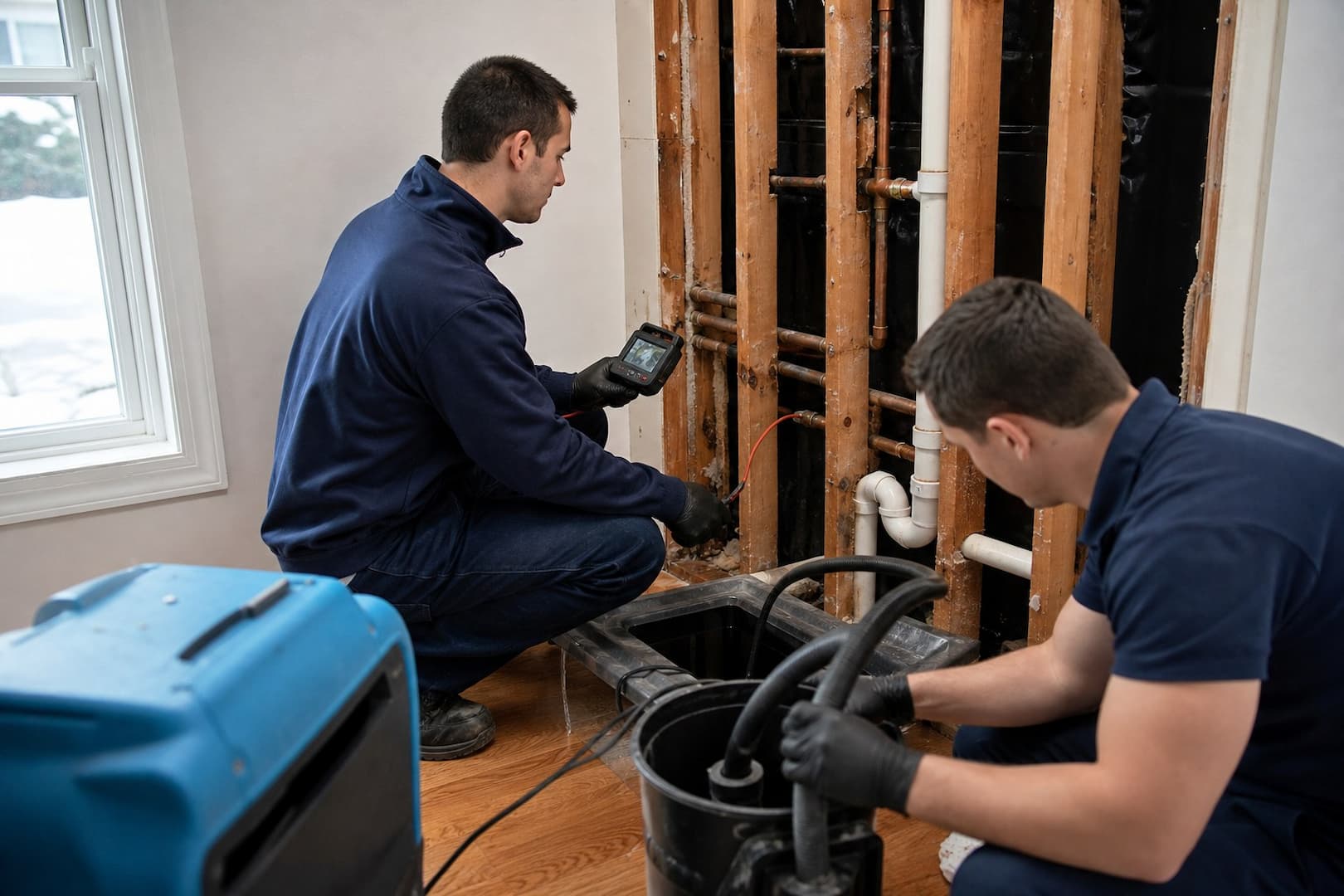
Close the water source if it is safe. Avoid wet electrical equipment and weakened ceilings. Move undamaged contents from the water path, photograph the source and affected rooms, and begin extraction. Drywall, insulation, wood flooring, cabinets, and the room below may be wet even after the plumbing repair is complete. BRG’s burst-pipe restoration service handles the building drying while the plumber repairs the line.
Notify the insurer promptly and ask about emergency measures and documentation. The Massachusetts Division of Insurance reported that most homeowners policies cover sudden and accidental burst-pipe water damage only subject to the policy and duties such as maintaining heat; negligence, vacancy, exclusions, and endorsements can change the result. Save receipts and do not promise yourself coverage based on a generic article.
Reducing freeze risk before the next cold snap
- Maintain heat in all areas containing plumbing and follow policy or lease requirements.
- Seal drafts around rim joists, penetrations, exterior walls, and access doors with suitable materials.
- Insulate vulnerable pipes without hiding active leaks or unsafe wiring.
- Disconnect garden hoses and service outdoor fixtures according to their design.
- Open interior doors and, during severe cold, cabinet doors where safe for children, pets, and stored chemicals.
- Use monitored low-temperature and leak sensors in remote areas.
- Arrange checks for vacant properties and plan for power outages.
- Have a plumber correct repeat freeze locations rather than relying on a dripping faucet each winter.
Frozen-pipe questions
At what temperature do pipes freeze?
There is no single indoor or outdoor threshold for every pipe. Duration, wind, insulation, air leakage, pipe material, water use, and location matter. Risk rises during sustained cold, especially below-freezing air reaching exposed plumbing.
Can a pipe burst without visible frost?
Yes. Concealed sections can freeze, and a split may stay hidden until thawing. Reduced flow and repeat history justify inspection even without frost.
Should I leave a faucet dripping?
A small flow may reduce risk in a known vulnerable line during severe cold, but it is not a repair and may be inappropriate where drainage can freeze or water conservation rules apply. Correct the building and plumbing defect.
Can I leave after water starts flowing again?
Stay and inspect. A thawed split may begin leaking gradually or only when full pressure returns. Monitor the pipe and adjacent materials.
The frozen section may be far from the silent faucet
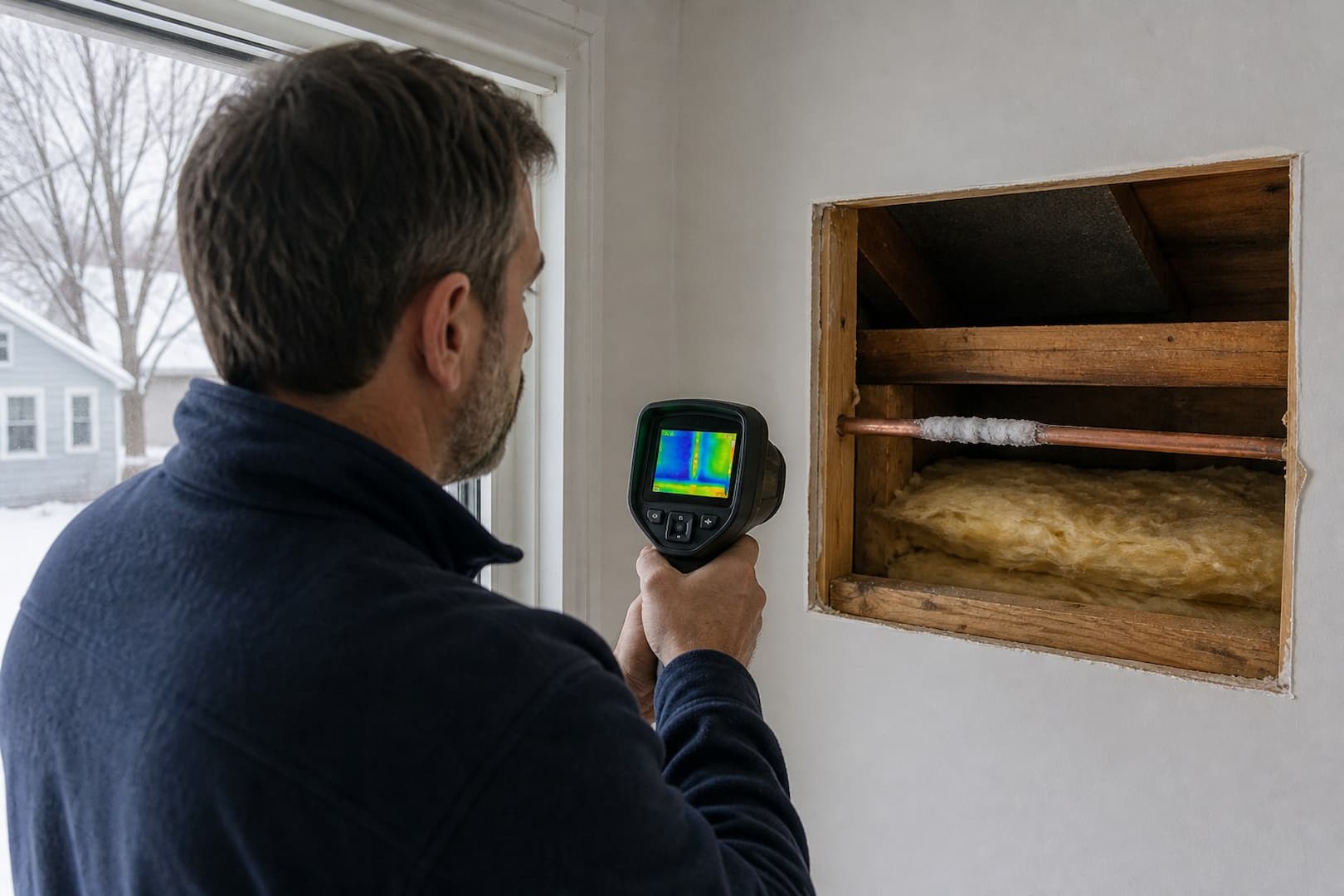
A faucet loses flow because ice blocks the supply somewhere upstream. The vulnerable section may run through an exterior wall, unheated crawl space, garage ceiling, porch addition, cabinet chase, or rim joist. Water can still be under pressure between the blockage and the main. That is why a pipe may split before anyone sees a leak, then release water when the ice thaws. Do not assume the visible faucet marks the safe place to apply heat.
| Clue | Possible frozen location | Safe next check |
|---|---|---|
| One fixture has no cold water | Branch line near exterior wall | Open cabinet, compare nearby fixtures, find shutoff |
| Several fixtures in one zone are weak | Shared branch in crawl space or chase | Trace accessible route without cutting blindly |
| Whole house has no flow | Main, meter, utility issue, or broader freeze | Confirm utility status and main valve location |
| Bulging or split pipe is visible | Ice pressure damaged the pipe | Shut main; do not thaw until plumber is ready |
| Water stain appears during thaw | Hidden rupture now releasing | Electrical safety, shut water, emergency mitigation |
Thaw gently and keep an exit path for water
If the pipe is accessible, intact, and the area is electrically safe, open the affected faucet and warm the pipe gradually from the faucet side toward the blockage with methods recommended by fire-safety authorities. Never use a torch, open flame, or unattended high-heat device. Space heaters create clearance and electrical risks, especially around wet materials. If the route is concealed or a split is suspected, stop and call a plumber.
Know how to close the main before thawing begins. Keep someone at the valve while another person watches the pipe and the room below. A thaw can reveal the rupture immediately. In a multifamily building, the correct shutoff may serve other units and may require building management. Document the valve condition and do not force a corroded handle that may break.
Inspect beyond the pipe repair
A plumber restores the water system; that does not establish how far water traveled. In wall cavities, water can run along plates, wiring penetrations, insulation, and the back of finishes. On upper floors it may spread across a ceiling before a stain appears. Map the branch route, rooms below, adjoining closets, baseboards, flooring transitions, and cabinets. Burst-pipe restoration should record the wet boundary and dry references before repairs conceal it.
Plaster deserves special attention in older Boston housing. Dense plaster may appear firm while wood lath, insulation, or framing behind it remains wet. Decorative finishes can complicate access. Selective openings from a less visible side may preserve more fabric, but only if they allow cleaning and drying of the actual reservoir. A sagging or detached ceiling needs a safety decision before moisture testing below it.
Prevent the route, not just the next cold night
After repair, ask why that section froze. Missing insulation is only one possibility. Cold air may wash through a rim joist gap, plumbing chase, sill penetration, or poorly sealed bulkhead. A pipe may sit outside the thermal and air boundary even when the cavity is full of fiberglass. Moving the line, air-sealing the enclosure, insulating in the correct plane, or providing designed heat may be more reliable than adding another batt.
- Label the main and branch shutoffs and test them during mild weather
- Seal exterior air leaks without blocking required combustion air or ventilation
- Keep garage doors and crawl-space access points closed and maintained
- Disconnect hoses and protect exterior faucets as their design requires
- Use monitored low-temperature alerts in remote or vacant properties
- Arrange winterization when heat or water will be off for an extended period
If a rupture wets walls or ceilings, the guide to drying drywall, insulation, hardwood, and carpet explains why time alone cannot verify recovery.
Sources and further reading
- CDC: Guidelines for Cleaning Safely After a Disaster
- Boston.gov: Recovering from a Flood
- Massachusetts DPH and MassDEP: Flooding and Sewage Back-ups Home Care Guide
- Massachusetts DPH: Quick Reference — Water Damage Response in Buildings
- Massachusetts Division of Insurance: Frequently Asked Questions Following a Disaster
- Massachusetts Division of Insurance: Winter Weather and Insurance
- CDC: Returning Home After a Natural Disaster
- Massachusetts Division of Insurance: 2026 Cold Snap and Frozen Pipes
When the property needs a closer look
Boston Restoration Group can inspect the affected area, document moisture and material conditions, and explain which restoration step fits the loss. Use the BRG contact page to request service in Greater Boston.