
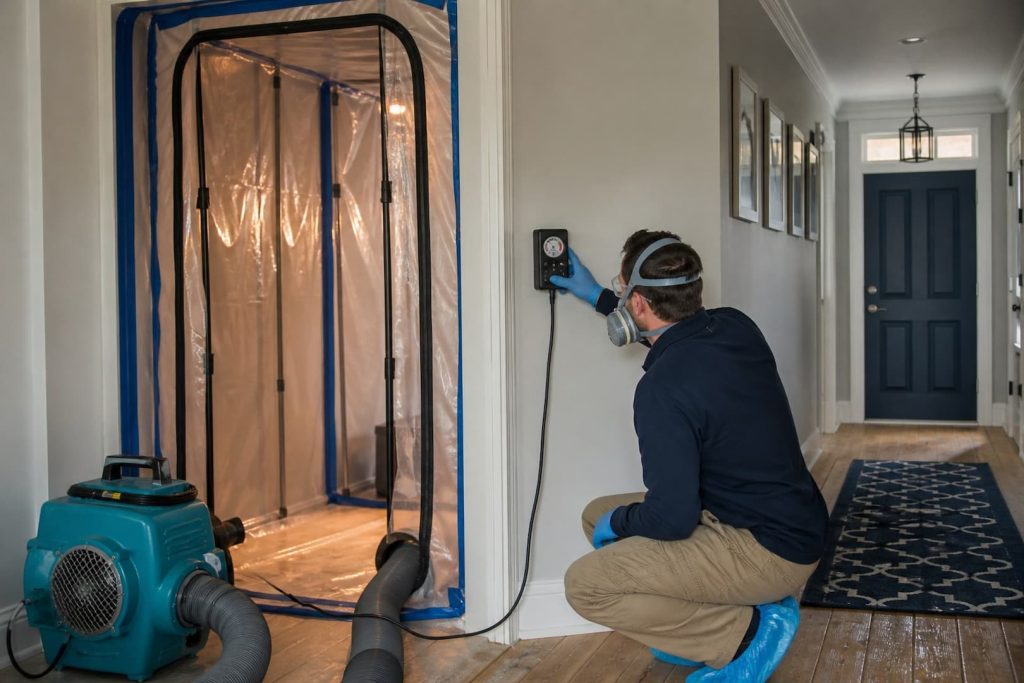
Sometimes. A small, contained project in a basement or one room may allow occupants to stay in a separated part of the home. Temporary relocation is more prudent when work affects bedrooms, the only bathroom or kitchen, the central HVAC system, several rooms, a primary exit, or people with asthma, immune suppression, chronic lung disease or other medical vulnerability.
There is no universal square-foot rule that answers occupancy. The decision belongs in the work plan before disturbance begins and should account for the actual household. A contractor can describe the building controls; a healthcare professional advises on an individual’s medical risk.
Factors that change the answer
| Factor | Staying may be more workable | Relocation becomes more prudent |
|---|---|---|
| Work area | Small, isolated and away from daily living | Several rooms, central corridor or open plan |
| Containment | Durable barrier with controlled access | Difficult geometry, repeated entry or shared pathway |
| HVAC | Work zone isolated from distribution | Affected air handler, lined ducts or unavoidable shared returns |
| Occupants | No known heightened vulnerability | Asthma, severe allergy, immune suppression, chronic lung disease, infant or medically fragile person |
| Essential rooms | Kitchen, bath, bedroom and laundry remain usable | Only bath/kitchen or sleeping area is inside work zone |
| Egress | Two clear exits remain | Containment or equipment narrows the required route |
| Work type | Limited selective removal and cleaning | Heavy demolition, abrasive cleaning or extensive contents work |
| Duration | Short, predictable phases | Open-ended discovery, drying or repeated clearance failure |
Questions to ask before deciding
- Which rooms and pathways are inside the work zone?
- Will workers enter through living space, and how is that route protected and cleaned?
- Is negative pressure used, where does filtered exhaust discharge, and how is it monitored?
- Will the HVAC system be shut down or isolated, and who restores it?
- What noise, odor, heat, power, water or access interruptions should occupants expect?
- Can pets be kept completely outside the work and equipment areas?
- What happens if hidden growth expands the scope?
- What are the daily cleanup and final completion criteria?
- Who can occupants call if a barrier fails or an alarm sounds?
Containment reduces spread; it does not make the project invisible
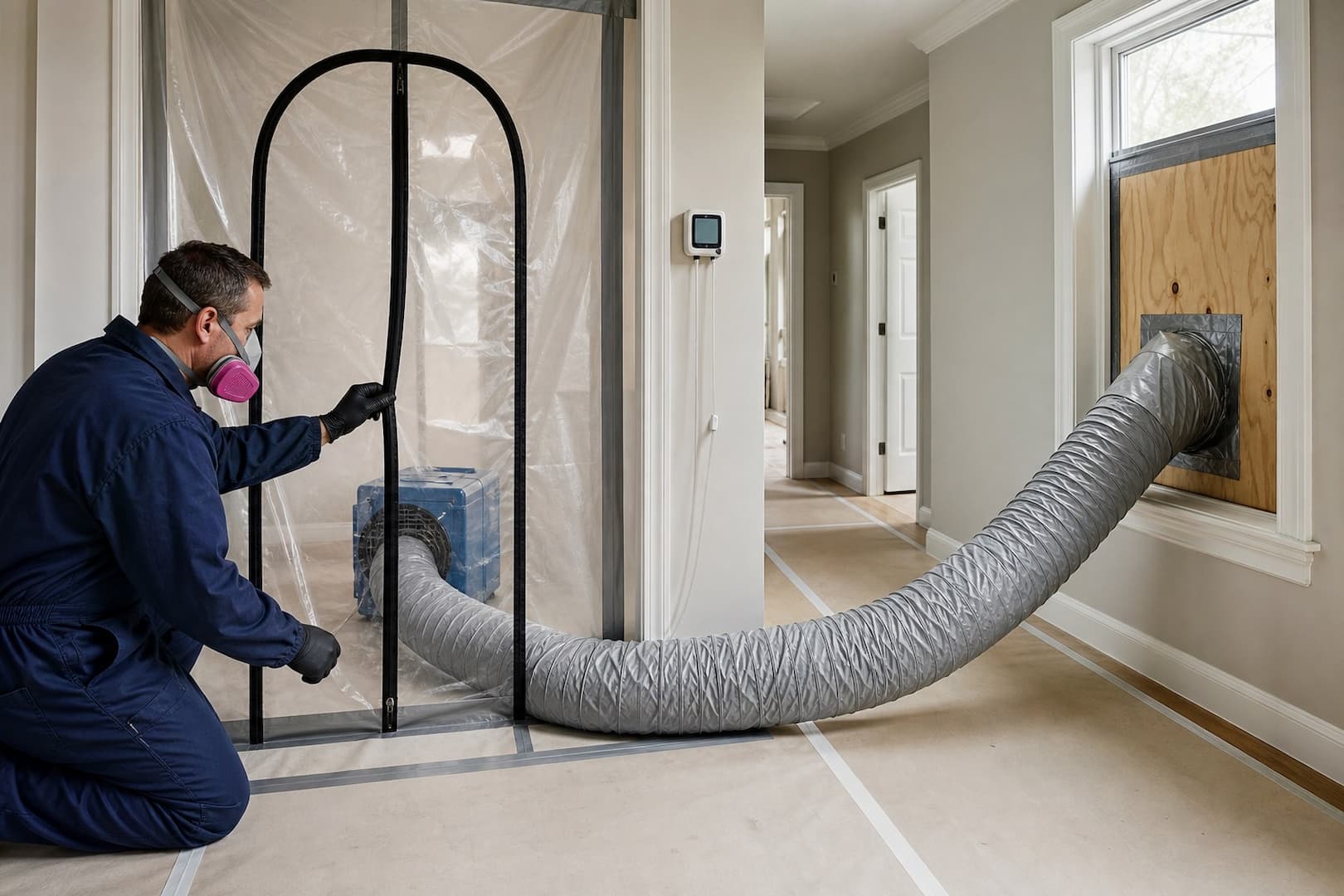
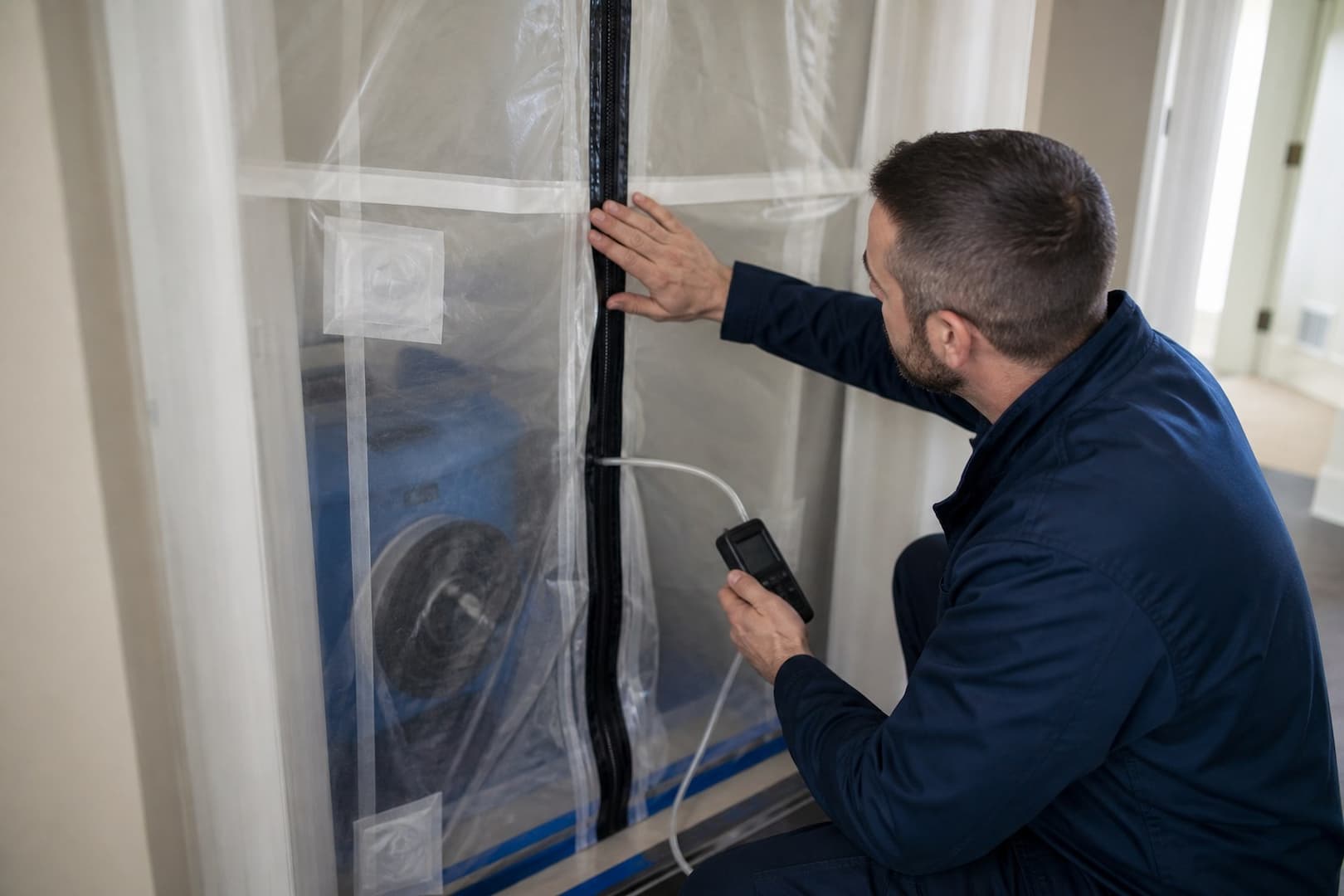
Plastic barriers, sealed penetrations, pressure control and HEPA-filtered air devices are designed to separate dust and work activity from clean areas. Performance depends on installation, door use, power, exhaust, building pressure and worker practices. A shared return-air path or frequently opened zipper door can defeat an otherwise neat enclosure.
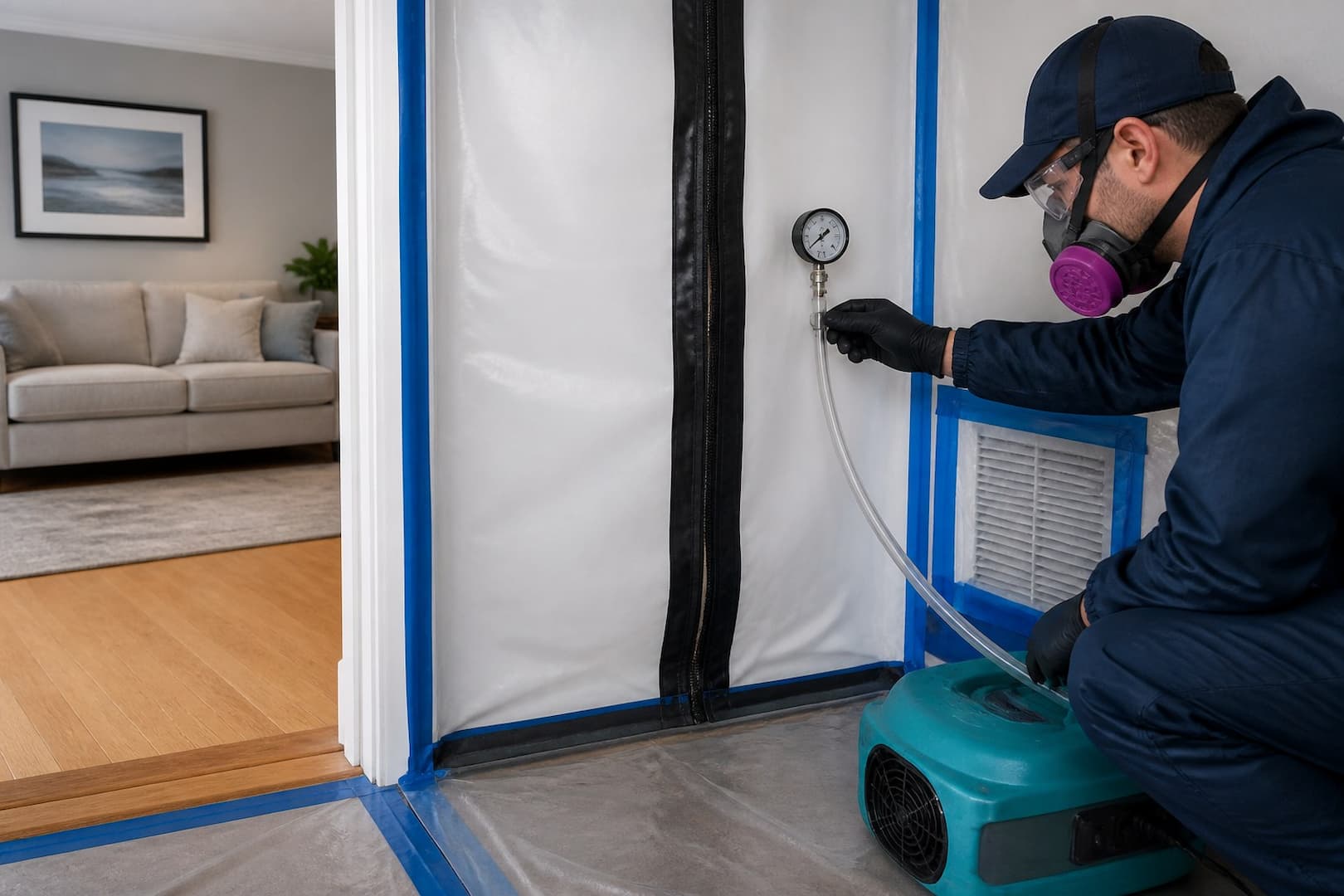
Occupants should not enter containment, move equipment or open a window that changes the pressure plan. Children and pets need a physical separation, not verbal instructions. Extension cords, hoses and exhaust ducts also create trip, access and weather concerns.
When HVAC is part of the decision
If the affected area includes an air handler, return chase, lined duct or central mechanical room, ordinary separation may not be enough. An HVAC professional may need to inspect, isolate, clean, repair or replace components. Running the system during demolition can distribute debris; shutting it off in extreme weather can create temperature or humidity problems.
Window units, portable air conditioners and dehumidifiers are not automatic substitutes. Equipment must fit the pressure and moisture plan and cannot exhaust contaminated air into occupied space.
Health and individual vulnerability
CDC and EPA describe stronger precautions for people with asthma, mold allergy, immune suppression or chronic lung disease. A remediation contractor should not promise that containment makes exposure impossible or declare a medically vulnerable person safe to remain. Share the proposed scope and schedule with the person’s healthcare professional.
If anyone develops severe breathing difficulty or another urgent symptom, seek medical care. Do not enter the work area to investigate an odor or symptom. Report the concern to the project contact from a clean location.
Practical reasons to relocate
Even where exposure controls are reasonable, relocation may be the functional choice if the only bathroom is closed, water will be unavailable, equipment noise prevents sleep, a nursery shares a wall with the work, a pet cannot be separated, or the household cannot maintain the barrier. Hotel, pet boarding, food and access costs should be discussed with the insurer before commitment when a claim exists.
If you remain in the home
- Use a defined clean zone. Keep sleeping, eating and medication areas away from the work path.
- Follow HVAC and window instructions. Do not change pressure or ventilation settings casually.
- Keep pets and children out. Barriers and equipment are active work controls.
- Use a separate entry if available. Reduce traffic through occupied rooms.
- Agree on daily conditions. Barriers intact, pathway cleaned, debris removed and equipment operating.
- Keep a relocation trigger. Scope expansion, barrier failure, HVAC involvement or symptoms should prompt reassessment.
Residential mold remediation should provide a written scope and change process. Occupancy assumptions belong beside containment and access, not in a last-minute conversation after walls are opened.
Returning after temporary relocation
Return at the agreed milestone: work completion and verification, not simply the end of demolition. The source should be corrected, affected material removed or cleaned, remaining surfaces visibly clean, the area dry to the project criterion, containment removed deliberately and essential utilities restored. Independent verification may be appropriate for sensitive occupants or specified projects.
Occupancy questions
Is it safe to sleep one floor above remediation?
Floor separation helps only if pathways, HVAC, penetrations and access are controlled. Review the actual plan rather than relying on distance alone.
Can pets stay if people leave?
Pets can enter barriers, chew cords and react to noise. If a secure clean zone and caretaker access cannot be maintained, boarding elsewhere is safer operationally.
Does negative air guarantee no exposure?
No. It is one control within a system. Barrier integrity, filtration, exhaust, pressure monitoring, work practice and cleaning all contribute.
Make the occupancy decision room by room
A project in a detached garage is not the same as demolition beside a nursery. Map the work area, occupied rooms, shared corridors, HVAC zones, bathrooms, kitchen, and every path workers or debris will use. Then identify who lives in the home and what they need: asthma or chronic lung disease, immune suppression, pregnancy, young children, pets, mobility limits, sleep schedules, and access to medication. The result may be full relocation, partial relocation within the home, or normal occupancy outside controlled work hours.
| Condition | Occupancy concern | Possible control to discuss |
|---|---|---|
| Work shares an HVAC zone | Air and dust pathway | Isolation/shutdown plan, independent temporary conditioning |
| Only bathroom is inside containment | Loss of essential facility | Temporary sanitary arrangement or relocation |
| Debris route crosses living space | Repeated transition contamination | Alternate exit, protected route, scheduled moves |
| Vulnerable occupant | Lower tolerance for exposure and disruption | Healthcare advice and conservative relocation |
| Pets remain home | Containment damage, stress, chemical sensitivity | Secure clean zone or off-site care |
| Long drying/noise period | Sleep, access, equipment heat | Schedule, remote monitoring, temporary lodging |
Containment has operating limits
A barrier works only when its seams, doors, penetrations, and airflow are maintained. Workers opening the zipper, carrying bags, changing filters, and entering clean areas create transition events. Ask who checks pressure or airflow, what happens during power loss, and how the work zone is secured after hours. Negative air should not pull combustion gases from fireplaces or appliances; a building professional may need to review that risk.
The rest of the home can also affect containment. Opening exterior doors, running large exhaust fans, or changing HVAC operation alters pressure. Occupants need simple instructions that explain which equipment and doors not to touch. If the plan is too fragile for normal household use, staying home may not be reasonable.
Chemicals are only one part of the decision
Product labels, application method, ventilation, and reentry requirements matter, but dust-generating removal often drives the larger occupancy question. Ask for Safety Data Sheets for products used and the contractor’s plan for odors, residues, and sensitive occupants. “Plant-based” or “non-toxic” marketing does not replace the label. Ozone should not be used in occupied spaces as a mold solution.
If someone has a medical condition, the healthcare professional decides personal precautions. The restorer can provide the scope, products, schedule, and containment details for that discussion. Mold remediation controls the building work; it cannot certify that every individual can remain comfortably in the home.
Write return conditions before leaving
- Demolition and cleaning in the assigned phase are complete
- Waste and tools have left through the controlled route
- The area meets the written visual and moisture criteria
- Required post-remediation review or sampling is accepted
- Temporary HVAC isolation is safely restored
- Products have met label drying or reentry instructions
- The work area is secure and essential rooms are usable
Do not use odor alone as the return test. Some cleaning products smell after proper use, while dust may be present without a strong smell. The agreement should name who releases the containment and who restores HVAC. The inspection and testing guide helps define evidence when an independent review is part of the plan.
Relocation costs and logistics belong in the claim file
If an insured event led to remediation, ask the carrier whether additional living expense coverage may apply and what documentation it requires. Keep lodging, pet boarding, meals beyond normal cost, laundry, and transportation receipts as instructed. Coverage depends on the policy and facts; a contractor should not promise reimbursement. Even without coverage, a written occupancy plan prevents last-minute costs caused by losing the only bathroom or discovering that equipment blocks access.
Plan occupancy by work phase, not by one yes-or-no answer
Conditions change during a remediation project. Inspection and equipment setup may create little disturbance. Demolition, wire brushing, HEPA vacuuming, bag-out, chemical application, drying, and post-remediation review create different noise, access, dust, odor, and pressure conditions. A family may reasonably stay during preparation, leave for the most disruptive phase, and return to a clean part of the home before containment is removed. The written schedule should say which rooms are available at each phase and what event can change that plan.
| Project phase | Main occupancy issue | Decision checkpoint |
|---|---|---|
| Pre-work inspection | Limited access, no deliberate disturbance | Can the work zone and pathways be separated? |
| Containment and equipment setup | Noise, blocked exits, pressure changes | Are combustion appliances and essential rooms protected? |
| Removal and detailed cleaning | Highest dust and worker traffic | Should all occupants and pets be off site? |
| Drying and air filtration | Continuous noise, heat, electrical load | Can equipment operate safely around daily life? |
| Verification and rebuild | Controlled access and product reentry times | Who releases each zone and restores HVAC? |
Ask for an actual containment specification
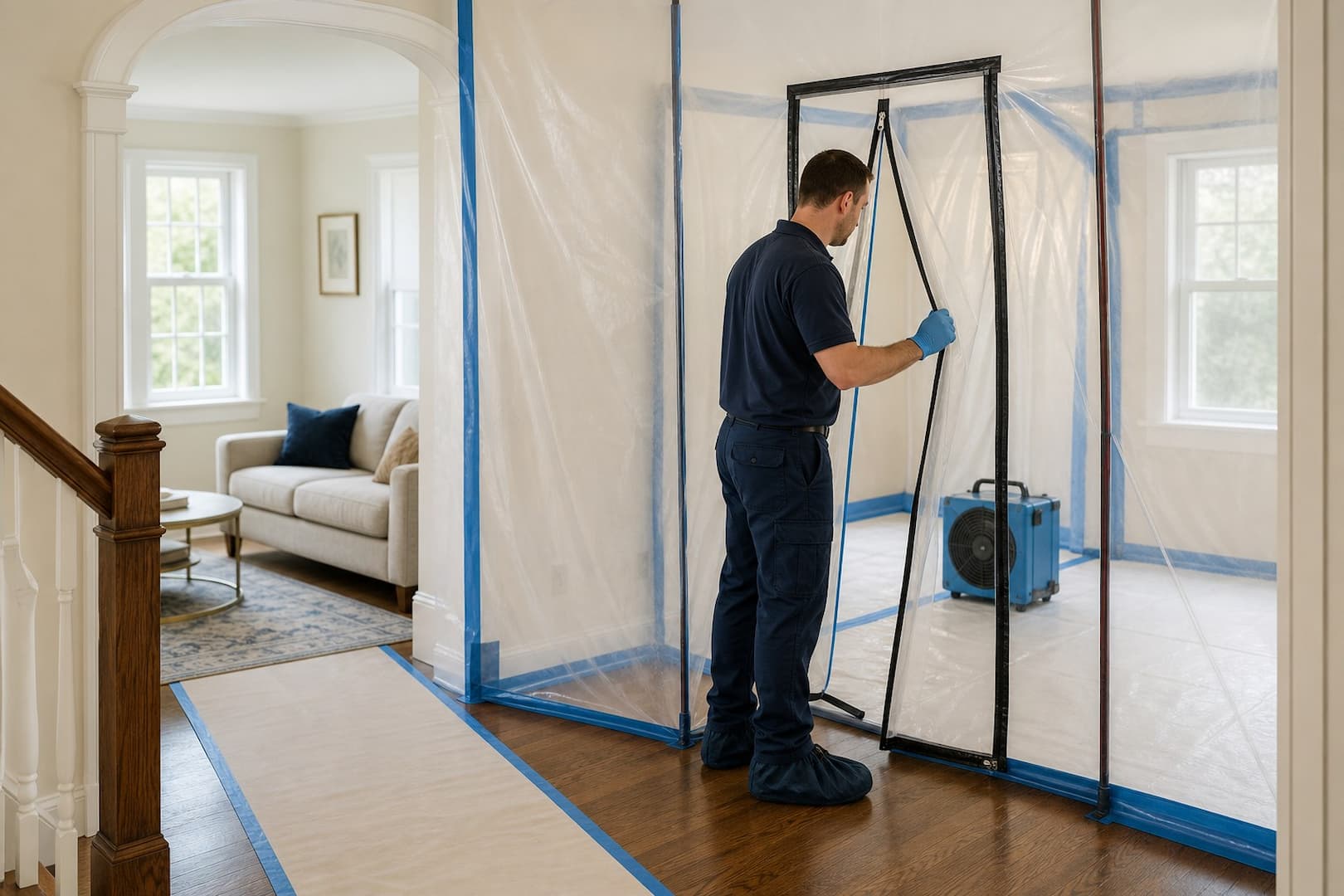
The phrase “full containment” is not a specification. The scope should identify barrier locations, protected openings, the entry chamber or transition, negative-air equipment, exhaust destination, pressure or airflow checks, waste route, worker decontamination, and after-hours security. It should also say how clean belongings near the work are protected and whether contents must be moved before barriers go up.
Pressure deserves special attention in a Boston home with a boiler, furnace, fireplace, or atmospheric water heater. Exhaust equipment can change building pressure and contribute to backdrafting when combustion systems are not isolated or reviewed. The mold contractor should not improvise around fuel-burning appliances; appropriate HVAC, plumbing, combustion-safety, or building professionals may need to coordinate the plan.
Separate medical advice from building information
The contractor should provide facts a healthcare professional can use: affected rooms, products and Safety Data Sheets, expected dust-generating activities, containment design, HVAC changes, schedule, and proposed return criteria. The contractor should not declare that a person with asthma, immune suppression, chronic lung disease, recent surgery, pregnancy, or another concern is medically safe to remain. CDC guidance is particularly conservative for people with asthma, COPD, or immune compromise in a moldy home.
A resident who develops symptoms should leave the affected environment and seek medical advice. Do not use an air sample, a species result, or a contractor’s odor check as an individual health clearance. Building verification and medical assessment answer different questions.
Children, pets, home offices, and shared buildings change the plan
Children may touch barriers or crawl near floor-level gaps. Cats can puncture sheeting; birds and other animals may be sensitive to dust, odors, temperature changes, and unfamiliar equipment. A home office beside the work zone may be technically outside containment but still unusable because of noise and traffic. These are not side issues. List them during the pre-work walkthrough.
In a condominium or multifamily building, corridors, elevators, stairwells, chases, shared HVAC, and fire-rated walls may affect other occupants. Coordinate bag-out, equipment power, parking, access, and notices with building management. Do not block an egress route or alter a shared life-safety system for containment. The work plan should identify who has authority over common areas and who responds if a neighboring unit reports dust or odor.
Use a daily stay-or-leave checkpoint
- Barrier check: intact seams, doors, floor protection, and protected penetrations
- Airflow check: documented direction or pressure method appropriate to the scope
- Equipment check: filters, alarms, cords, condensate, heat, and noise acceptable
- Pathway check: clean worker route and controlled waste movement
- House check: essential bathroom, kitchen, sleep, medication, and exit access
- Occupant check: no new symptoms or unforeseen sensitivity concerns
- Schedule check: the next phase and any product reentry time are understood
Any failed condition should have a named response: repair containment, pause disturbance, move occupants, contact a trade, or revise the schedule. “We have always done it this way” is not a contingency plan.
Return is a release process, not the moment machines leave
Before returning a room to normal use, verify that the moisture source was corrected, affected material was removed or cleaned according to the scope, remaining surfaces are visibly clean, debris has left through the controlled route, retained materials meet the written moisture criteria, and any independent post-remediation evaluation has been completed. HVAC components and registers affected by isolation should be restored by the responsible party.
Record the release with photographs, moisture results, product reentry information, filter or equipment notes, and the name of the person accepting each criterion. The best answer to “Can we stay?” is therefore a documented occupancy plan with phase-specific conditions, not a blanket promise made before the wall is opened.
Plan for delays without weakening the safety boundary
Build a small contingency into lodging, pet care, medication access, parking, and work schedules. Discovering an additional wet cavity or waiting for an independent inspection can extend a phase, while a smaller verified boundary can shorten it. The response should be a documented change to scope and occupancy rules, not pressure on workers to remove containment early. Keep essential documents, chargers, work equipment, and several days of clothing outside the work zone before setup so nobody has to cross containment for routine items.
Sources and further reading
- U.S. EPA: A Brief Guide to Mold, Moisture and Your Home
- U.S. EPA: Mold Cleanup in Your Home
- CDC: Mold — overview, health effects, prevention and cleanup
- Massachusetts DPH: Mold Cleanup, Repairs, and Excess Moisture Control
Plan occupancy before demolition starts
Boston Restoration Group can define the work zone, containment, equipment, access route and expected milestones so owners can make an informed occupancy decision with their healthcare providers when needed.