
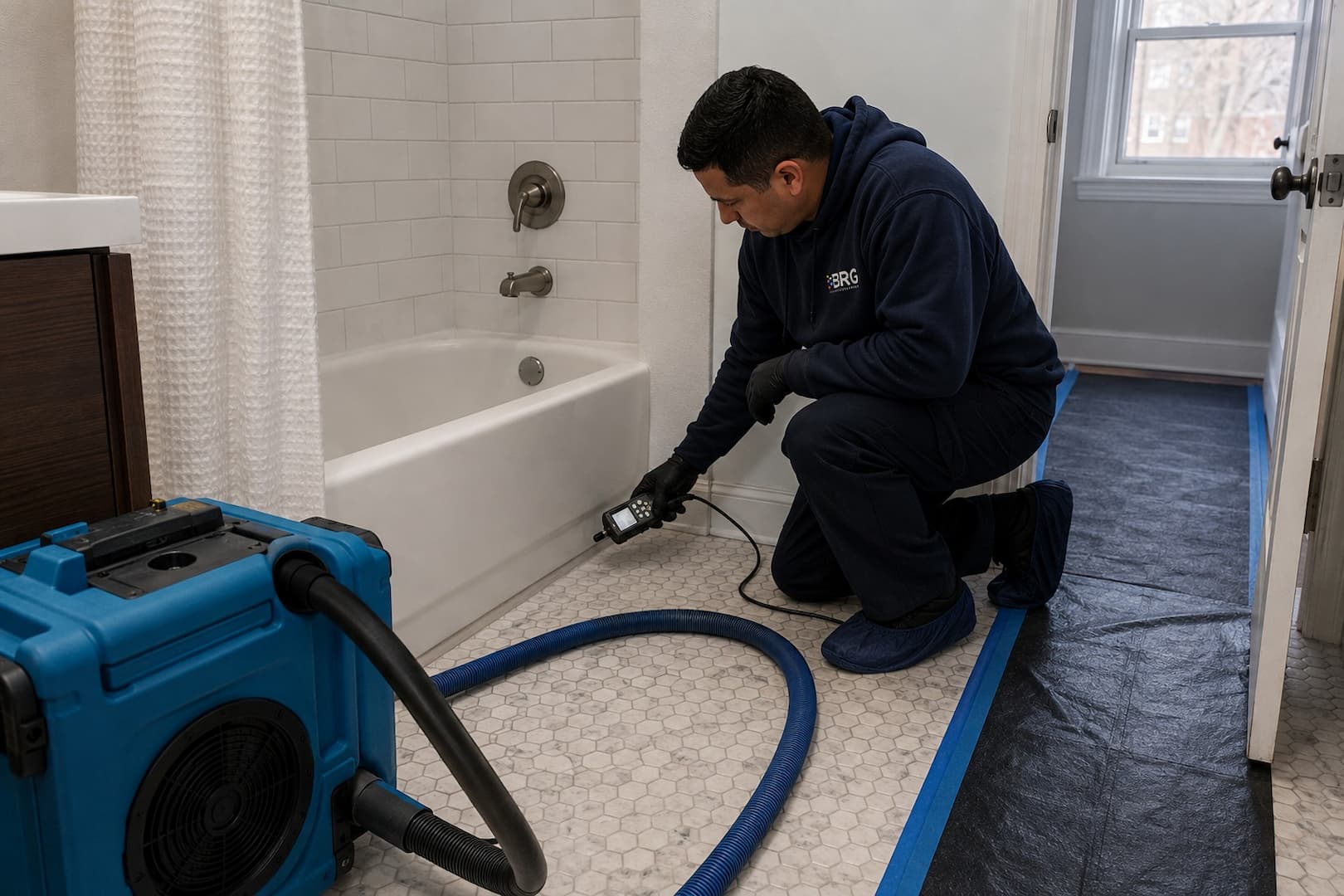
Bathtub Overflow Cleanup in Boston, MA
An unattended tub, failed overflow fitting, blocked drain, loose waste connection, or cracked seal can send water beneath the tub, into flooring, behind walls, and through the ceiling below. BRG removes accessible water, maps the bathroom and connected rooms, and coordinates drying access after a plumber confirms the source.
- Bathroom extraction and moisture mapping
- Tub surround and floor-assembly review
- Ceiling-below inspection
A plumber should test the drain, overflow, trap, and supply without repeatedly wetting the building.
Clean bathwater, drain leakage, and backup conditions require different cleanup decisions.
Tub aprons, penetrations, grout lines, thresholds, and baseboards can route moisture below finishes.
Keep people away from wet, soft, or sagging ceilings and affected light fixtures.
Do not test the tub by creating another overflow
Stop using the tub and any connected drain until a plumber evaluates the overflow plate, waste-and-overflow assembly, trap, drain, supply, and seal interfaces. If water is near electricity or the ceiling below is soft or sagging, keep both rooms closed and contact the responsible emergency or electrical professional.
Unattended clean-water overflow
Report the approximate duration, water temperature, bath products, depth, and rooms reached.
Drain or waste connection
Stop tub use and describe odor, residue, repeated staining, or leakage only when draining.
Backup through the tub
Treat drain or sewage backup as a contaminated-water event and avoid contact or cross-traffic.
Water can bypass a finished tile surface through small construction openings
The visible bathroom floor may shed water while gaps at the tub apron, pipe penetrations, wall base, threshold, or damaged grout allow it into the floor system. A failed overflow gasket or waste connection can release water directly inside the assembly without wetting much of the room.
BRG checks the tub perimeter, access panel when present, floor and threshold, adjacent wall bases, nearby closet or hallway, and the ceiling below. Plumber findings help distinguish surface overflow from plumbing hidden beneath the fixture.
- Photograph the water line and rooms reached
- Check around toilet and vanity bases without assuming they are the source
- Record when leakage appears: filling, bathing, draining, or only at overflow level
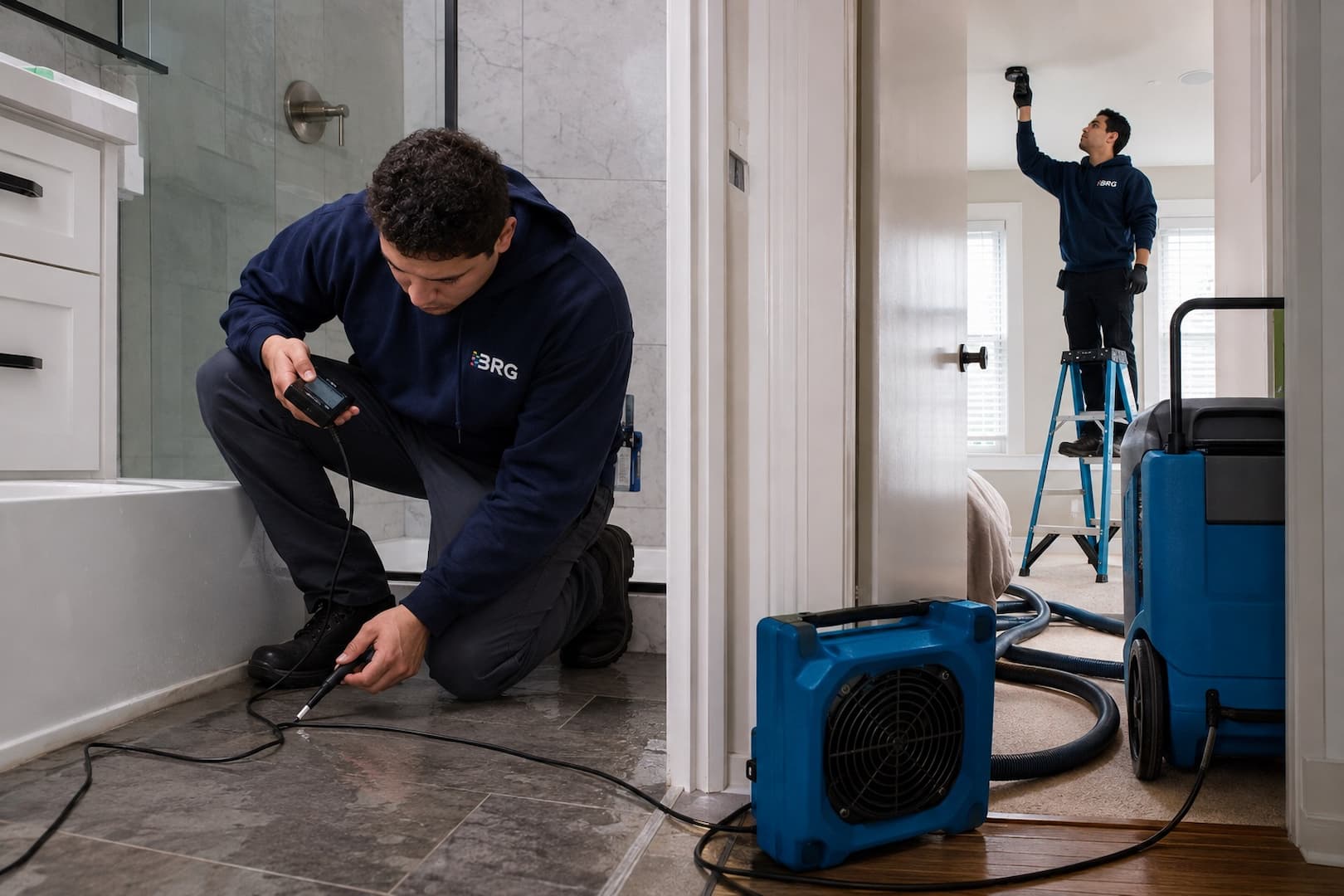
Targeted edge and ceiling access can reveal the floor system
Access is chosen to answer a specific question while preserving sound bathroom finishes whenever practical.
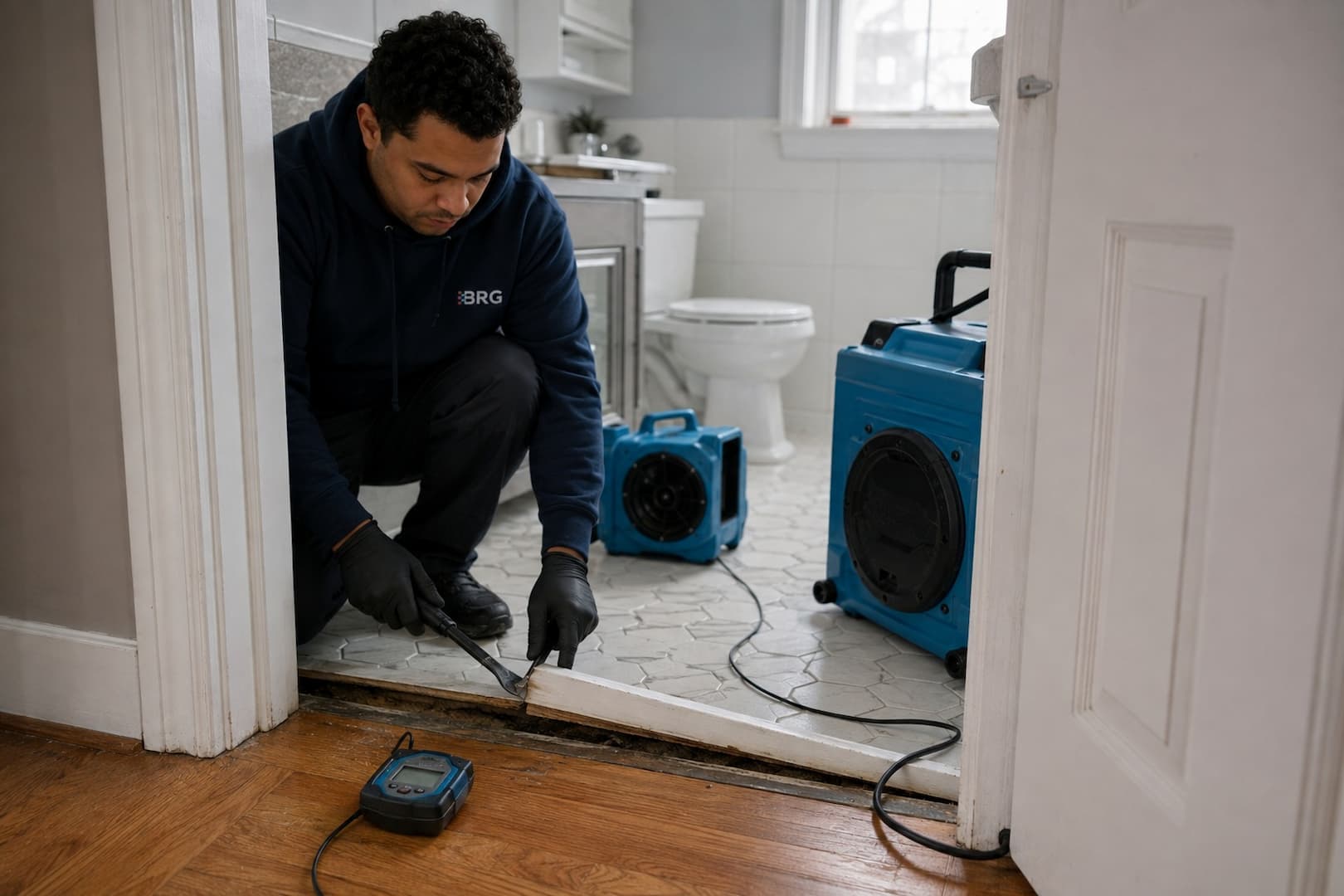
Water condition and access decide what remains
A surface overflow and a leaking waste connection can affect the same materials differently.
Tile and backer
Review
Cracks, loose tile, grout condition, waterproofing, substrate moisture, and perimeter access.
Vinyl or resilient flooring
Review
Seams, perimeter bond, underlayment, trapped moisture, staining, and cleanability.
Wall base and tub surround
Review
Drywall or plaster wicking, insulation, caulk joints, access panels, and concealed plumbing cavities.
Ceiling below
Review
Insulation, gypsum integrity, lights or wiring, stain path, and safe controlled access.
Coordinate plumber testing with restoration access
A plumber may need access below or behind the tub. BRG plans selective removal so the same finish is not opened twice without purpose.
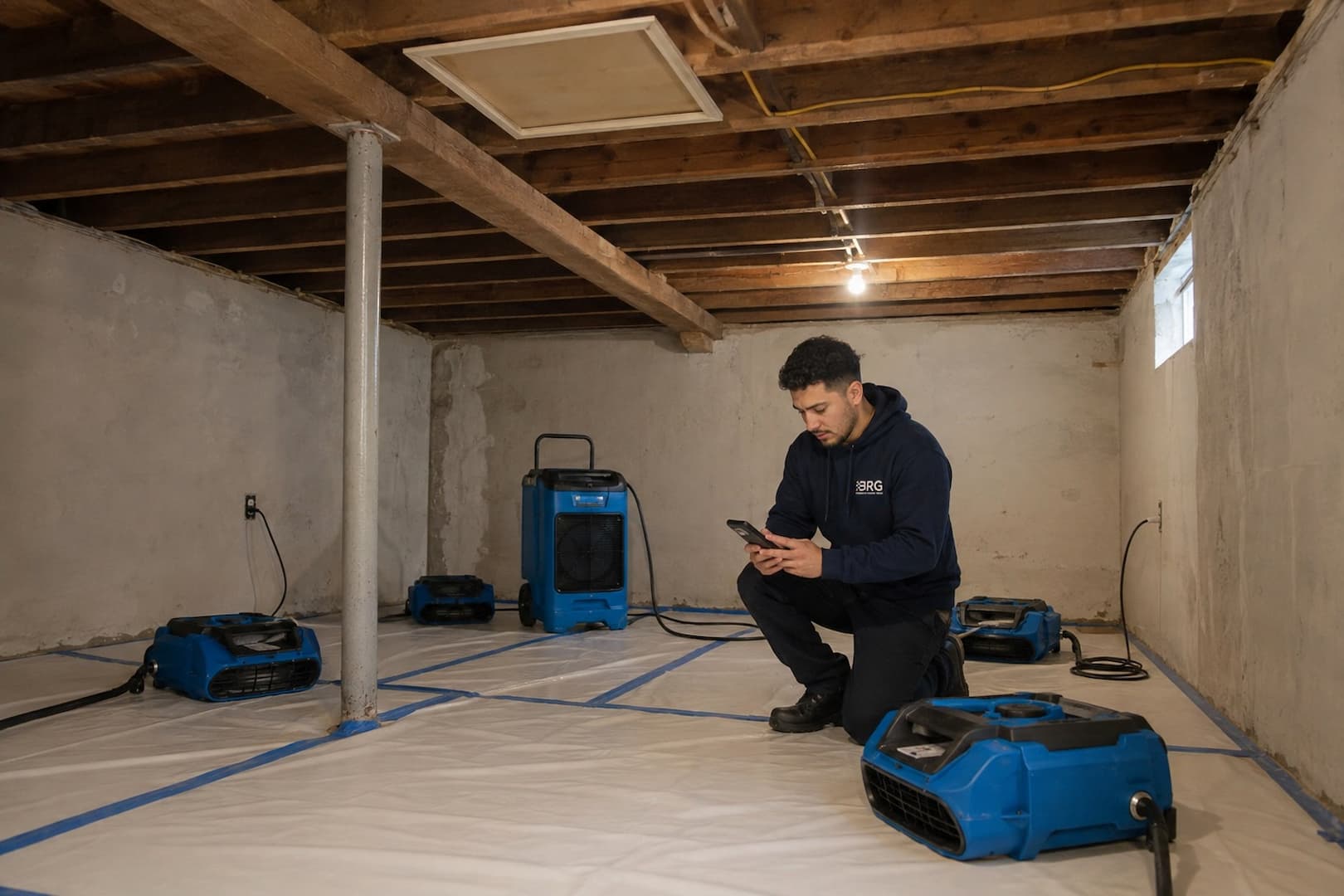
Confirm safe rooms and stop tub use
Protect occupants from wet ceilings, electricity, slippery floors, and possible backup contamination.
Document and repair the source
Record overflow, waste, drain, trap, supply, seal, or user-event findings from the responsible trade.
Extract and map connected spaces
Remove accessible water and inspect bathroom layers, adjacent rooms, and the floor-ceiling system.
Clean, open, and dry as justified
Use water-condition controls, targeted access, and equipment suited to the retained materials.
Verify before closing finishes
Document progress, plumbing status, material retained or removed, and bathroom or ceiling repairs still needed.
A useful file separates bathing event, plumbing source, and building damage
That distinction helps prevent a vague “bathroom leak” from hiding the actual repair route.
How water was released
Overflow duration, filling or draining pattern, products, backup condition, and discovery.
What the plumber found
Overflow gasket, waste assembly, trap, drain, seal, supply, test method, and repair.
What materials were affected
Bathroom floor, walls, adjacent rooms, ceiling below, readings, drying, and repairs.
Do not puncture or press on a wet ceiling
A water-loaded ceiling can release suddenly and may contain wiring, insulation, or contamination. Keep the area below clear and allow the restoration team and appropriate trade to establish controlled access.
- Turn off affected lighting only from a safe dry control
- Move contents from below without entering a hazardous area
- Report bulging, cracking, dripping, or unusual sounds
Bathtub overflow cleanup questions
Where the water came from and how it entered the assembly matter more than the fixture name.
Is bathtub overflow water considered clean?
Fresh tap water may begin clean, but bath products, body soil, drain contact, flooring, or a backup can change the condition. The route and materials contacted are evaluated.
Does the tub have to be removed?
Not usually as a first step. Plumber access, source location, surround construction, floor moisture, and ability to dry determine whether the fixture must move.
Can tile be dried in place?
Sometimes. The substrate, waterproofing, perimeter access, grout or crack condition, exposure, and measured progress determine the plan.
Why is the ceiling stain larger than the bathroom puddle?
Water can spread across the top of ceiling material or insulation before appearing at seams, fixtures, or low points.
Who tests the tub after cleanup?
A qualified plumber should test the repaired waste, overflow, trap, drain, and supply. BRG verifies the building-material restoration within its scope.
Request bathtub overflow cleanup
Share whether the tub overflowed, leaked while draining, backed up, or has an unknown source; which rooms are wet; and whether the ceiling below is stained, dripping, or soft.
617-202-3772- Stop using the tub until plumbing is checked
- Keep people away from wet ceilings and light fixtures
- Mention bath products, residue, odor, and adjacent flooring
Request Tub-Overflow Help
The timing pattern and lower-room condition guide the first response.