
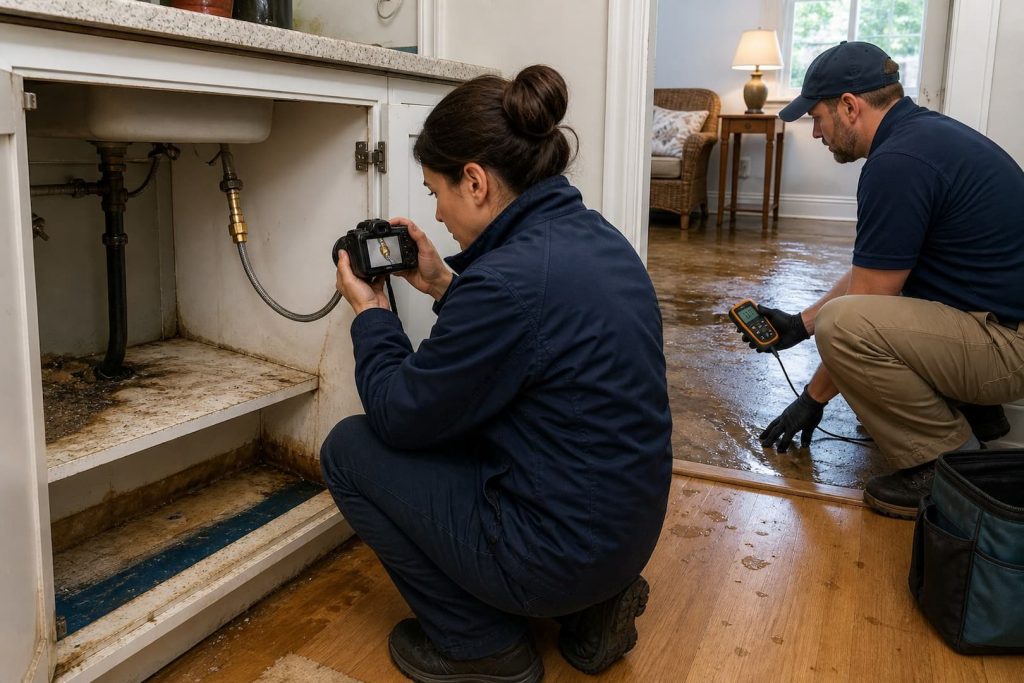
A water-damage claim is not decided by the size of the stain alone. Adjusters examine what released the water, whether the event was sudden or prolonged, which exclusions or endorsements apply, what the policyholder did after discovery, and whether the claimed damage can be connected to the event. Two houses with similar wet drywall can receive different coverage decisions under different policies.
This is general property-restoration information, not legal, public-adjusting, or coverage advice. Read the policy and endorsement language, communicate with the insurer, and seek a licensed insurance or legal professional when a dispute requires one. A restoration contractor documents conditions and mitigation; it does not guarantee payment.
Common denial or limitation reasons
| Issue raised by the insurer | What it usually means | Evidence that may clarify the facts |
|---|---|---|
| Repeated seepage or leakage | Water may have been present over time rather than a sudden event | Discovery photos, prior maintenance, plumber finding, material condition, timeline |
| Wear, deterioration, or maintenance | The failed component may be excluded even if some resulting damage is covered | Cause report, failed part, repair invoice, distinction between source and resulting damage |
| Flood, groundwater, or surface water | Water source may fall outside a standard homeowners policy | Weather timing, entry path, exterior photos, flood policy or endorsement |
| Sewer or sump backup | Coverage often depends on specific endorsement language | Source determination, backup endorsement, plumbing or sump record |
| Late notice or failure to mitigate | Delay may have increased damage or limited inspection | Call logs, emergency invoices, dated drying records, explanation of access or safety constraints |
| Pre-existing damage | Some staining or deterioration may predate the reported event | Move-in records, earlier photos, inspection reports, prior repair history |
| Scope or pricing dispute | Coverage may exist while the quantity, method, or rate is disputed | Room diagrams, measurements, photos, material lists, drying logs, estimates |
| Deductible, sublimit, or depreciation | The claim may be paid below the owner’s expectation | Declarations, endorsements, replacement-cost conditions, payment calculation |
The claim file: cause, timeline, and mitigation
Cause
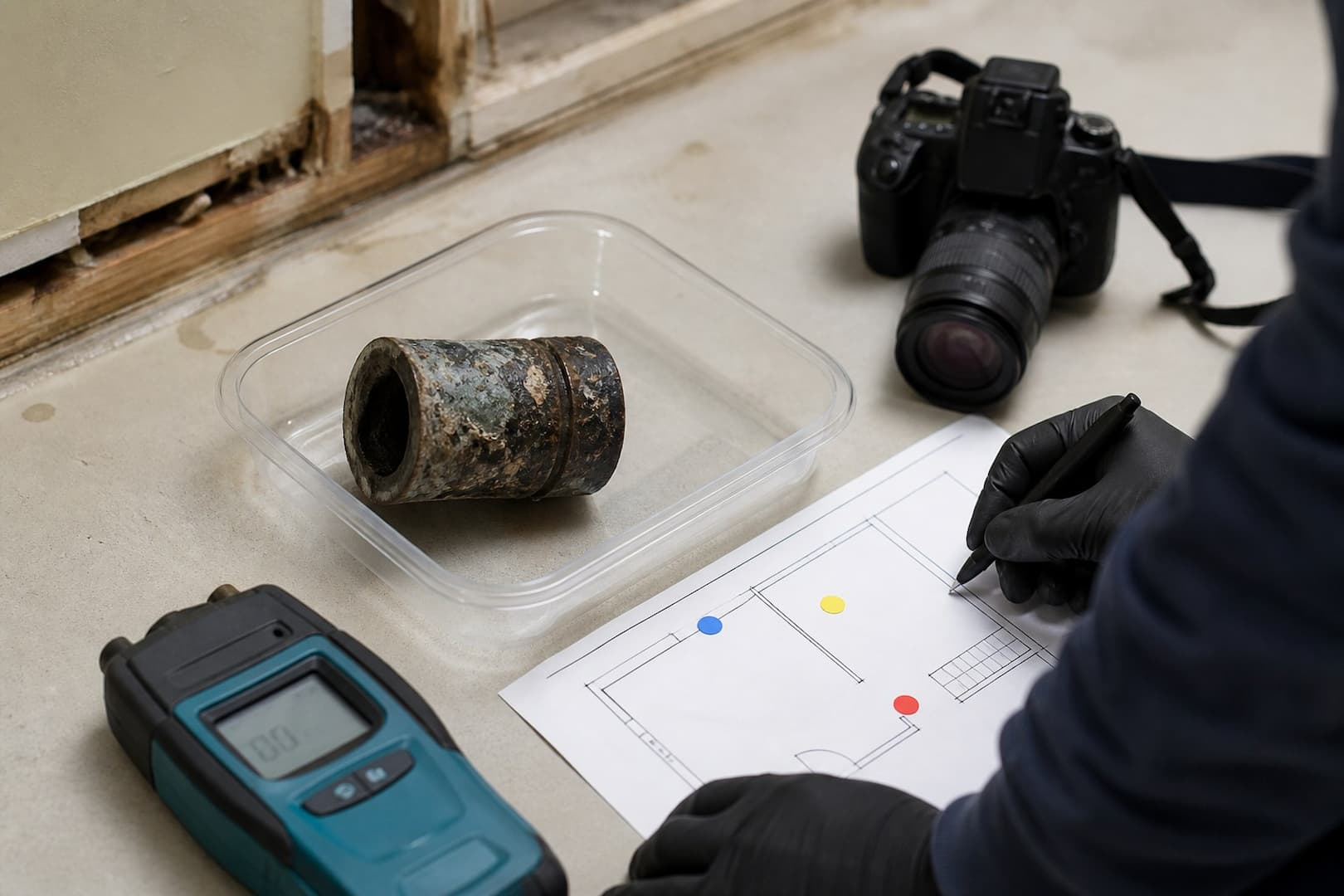
Record observable facts first: water was flowing from a supply line, the sump alarm sounded during rain, staining appeared below a roof penetration, or the drain backed up. Preserve a failed hose, valve, pump, or fitting when safe and when the insurer or vendor may want it. Let the plumber, roofer, appliance technician, engineer, or other qualified trade state the cause within its expertise.
Timeline
Write down when someone last saw the area dry, when the water was discovered, who was notified, and when source control and extraction began. Use phone records, smart-sensor alerts, weather data, maintenance tickets, travel records, and photographs when available. Do not invent precision; “between 7 p.m. and 6 a.m.” is better than an unsupported exact time.
Mitigation
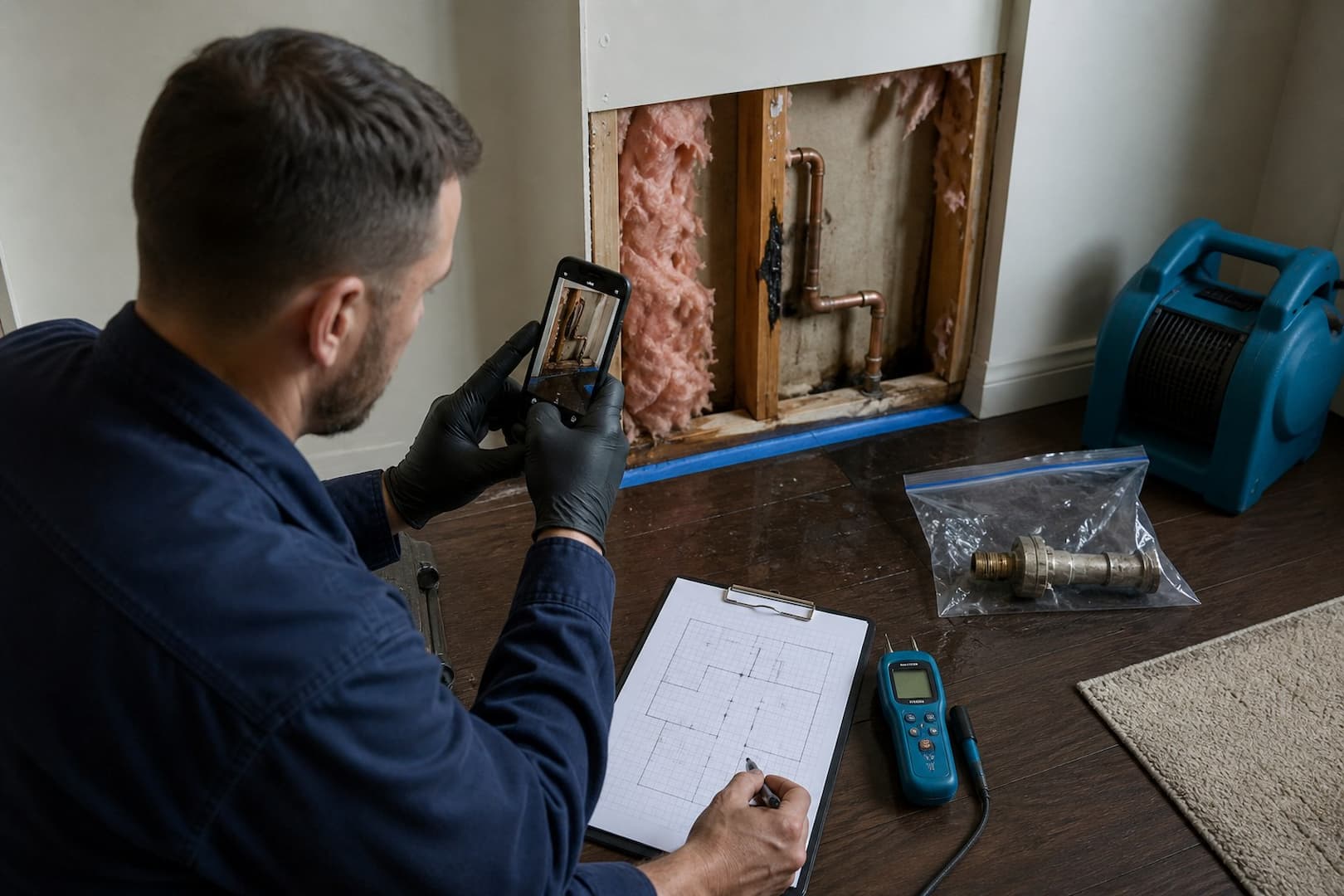
Document shutoff, extraction, protected contents, temporary roof or window measures, equipment placement, moisture readings, material removal, and daily monitoring. The Massachusetts Division of Insurance says reasonable emergency cleanup and temporary repairs can generally proceed to protect property. Save receipts and do not discard items believed to be a total loss before the insurer can examine them unless safety or public-health conditions require otherwise; document any necessary disposal.
What to do in the first day
- Make the property safe. Address electricity, contaminated water, structural hazards, and active leaks.
- Stop or reduce the source. Use the correct shutoff or qualified trade.
- Photograph before major changes when safe. Capture wide room views, close-ups, source path, and contents.
- Notify the insurer promptly. Ask about emergency measures, preferred documentation, inspection, and policy duties.
- Begin reasonable mitigation. Do not let wet materials deteriorate while waiting for a coverage decision.
- Keep a communication log. Record names, dates, questions, requests, and documents sent.
- Separate facts from opinions. Label contractor observations, owner recollection, and specialist conclusions accurately.
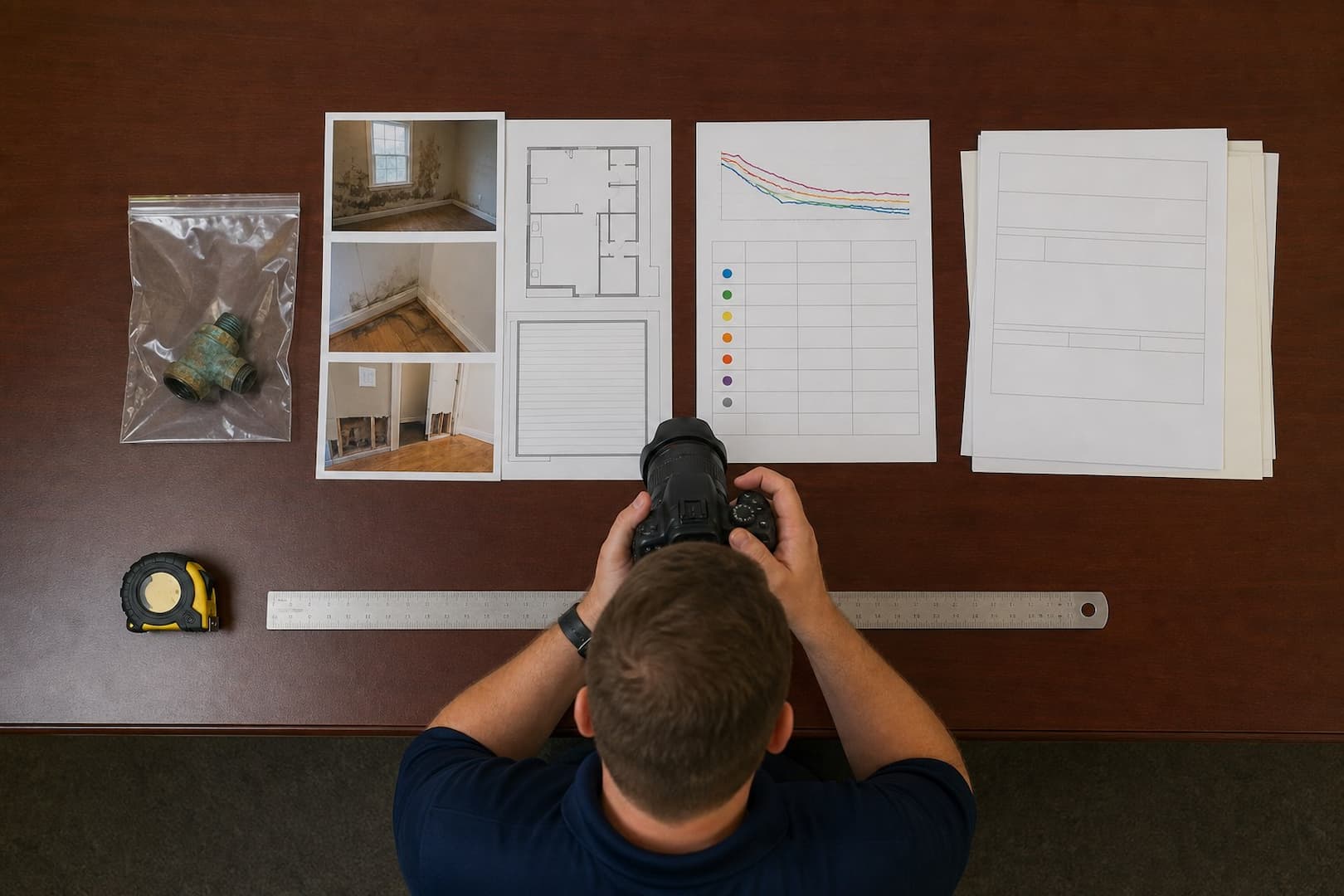
Water damage restoration records should connect moisture to rooms and materials. An invoice that says only “water cleanup” is less useful than a diagram, photographs, source note, readings, equipment log, removed-material record, and dry-standard comparison.
Statements that create avoidable confusion
- Do not call every storm-related basement event a “covered flood” or an “ordinary leak” before the source is established.
- Do not guess how long hidden water existed merely from mold or odor.
- Do not state that a contractor or agent “approved” coverage unless the insurer issued that decision.
- Do not throw away the failed component or all damaged contents without documenting and checking instructions.
- Do not wait for final coverage before taking safe, reasonable measures to prevent additional damage.
- Do not submit altered, duplicate, or misleading photographs.
- Do not sign a broad assignment or representation agreement without understanding the authority it transfers.
If the claim is denied
- Read the letter and policy section it cites. Identify whether the issue is cause, duration, exclusion, duty, amount, or evidence.
- Request the supporting basis. Ask which inspection findings, photographs, reports, and policy language were used.
- Respond to the reason, not the emotion. Provide targeted documents that address the stated basis.
- Correct factual errors in writing. Keep the tone precise and attach source records.
- Use the available review path. The carrier, Massachusetts Division of Insurance, licensed public adjuster, appraisal provision, or attorney may be relevant depending on the dispute.
Water-claim questions
Does homeowners insurance cover a burst pipe?
Many policies cover sudden and accidental resulting water damage, but exclusions, vacancy, heat-maintenance duties, the failed component, and endorsements matter. The Massachusetts Division of Insurance notes that frozen-pipe damage may not be covered when the home was not adequately heated despite the ability to do so.
Should I wait for the adjuster before drying?
Reasonable emergency mitigation usually should not wait when delay will increase damage. Notify the insurer, document conditions, preserve evidence, and avoid permanent reconstruction until the necessary inspection and scope decisions occur.
Can mold cause a denial?
Mold may be excluded, sublimited, or covered only when it follows a covered event. The carrier may also examine whether delayed mitigation allowed additional damage. Policy language controls.
Can BRG negotiate coverage?
BRG can document restoration conditions and answer scope questions. Coverage interpretation and claim representation belong to the insurer and appropriately licensed or legal professionals.
Translate the loss into four separate questions
A water claim becomes easier to discuss when cause, damage, mitigation, and coverage are kept separate. The plumber may identify a failed fitting. The restorer documents where water traveled and what was done to limit further damage. An adjuster applies policy language. A contractor estimates repair. Mixing those roles creates statements that sound contradictory even when each person is describing a different part of the same event.
| Claim question | Evidence that usually helps | Evidence that does not answer it alone |
|---|---|---|
| What caused the water? | Plumber report, failed part, source photos | A photograph of wet carpet |
| When did it occur or become known? | Timeline, alarm, tenant report, first photos | The date mitigation equipment arrived |
| What was damaged? | Room-by-room map, material readings, photos, inventory | A total invoice without locations |
| What was done to prevent more damage? | Extraction log, emergency access, drying records | Waiting for a coverage decision while water remains |
| What does the policy cover? | Policy, endorsements, adjuster position in writing | A contractor’s assurance that “insurance pays” |
Sudden damage and repeated seepage can coexist
A sudden event may expose older conditions. A supply line can split today beside a cabinet already swollen from a slow drip. The insurer may separate the newly resulting damage from wear, corrosion, repeated leakage, or faulty installation. Do not guess which condition began first. Photograph layers as they are opened, retain failed parts when safe, and ask the plumber to describe observed conditions without rewriting the policy.
Language matters, but accuracy matters more. Avoid absolute timelines that the evidence cannot support. “We first noticed water at 7:15 a.m.” is stronger than “the leak started at 7:15” unless an alarm or witness establishes the start. “The wall was wet on arrival” is different from “the wall had been wet for months.” A good record distinguishes what was seen, measured, reported, and inferred.
Mitigate first without authorizing an undefined rebuild
Most policies require reasonable steps to protect property from further damage, but emergency work still needs scope control. Authorize extraction, safety measures, necessary access, and drying documentation in writing. Ask how the contractor handles hidden conditions and change orders. Preserve pre-work photos. If broad demolition is proposed before moisture mapping, ask which evidence makes it necessary; if no access is proposed despite readings in a closed cavity, ask how dryness will be verified.
Water-damage restoration can proceed while coverage is reviewed, yet the property owner remains responsible for contracts. An assignment, direction to pay, work authorization, and repair contract may carry different obligations. Read them. A contractor can help document the building but should not act as coverage counsel.
If the carrier requests more information
Respond with organized records rather than a long emotional narrative. Use filenames with dates and rooms. Provide the source report, mitigation dates, drying log, photos, inventory, temporary-repair receipts, and the specific estimate being considered. If the request is unclear, ask which fact or policy condition the reviewer needs addressed. Keep a call log, but confirm material decisions by email or letter.
- Ask for the coverage position and cited policy language in writing
- Correct factual errors promptly and attach the supporting record
- Separate emergency mitigation invoices from reconstruction estimates
- Request reinspection if newly opened conditions materially change the scope
- Use the Massachusetts Division of Insurance complaint process when appropriate
- Consult a qualified public adjuster or attorney for advice about a disputed claim
The companion guide on Massachusetts homeowners insurance and mold explains how resulting mold may be treated differently from the covered water event. No article or contractor can predict a particular outcome without the actual policy and facts.
Sources and further reading
- Massachusetts Division of Insurance: Frequently Asked Questions Following a Disaster
- Massachusetts Division of Insurance: Winter Weather and Insurance
- CDC: Returning Home After a Natural Disaster
- Massachusetts Cold Snap: Frozen Pipes and Insurance Claims
Document the water loss while mitigation moves forward
BRG can document affected rooms, moisture conditions, emergency extraction, drying equipment, and material decisions. BRG does not decide insurance coverage or represent the policyholder in a coverage dispute.