
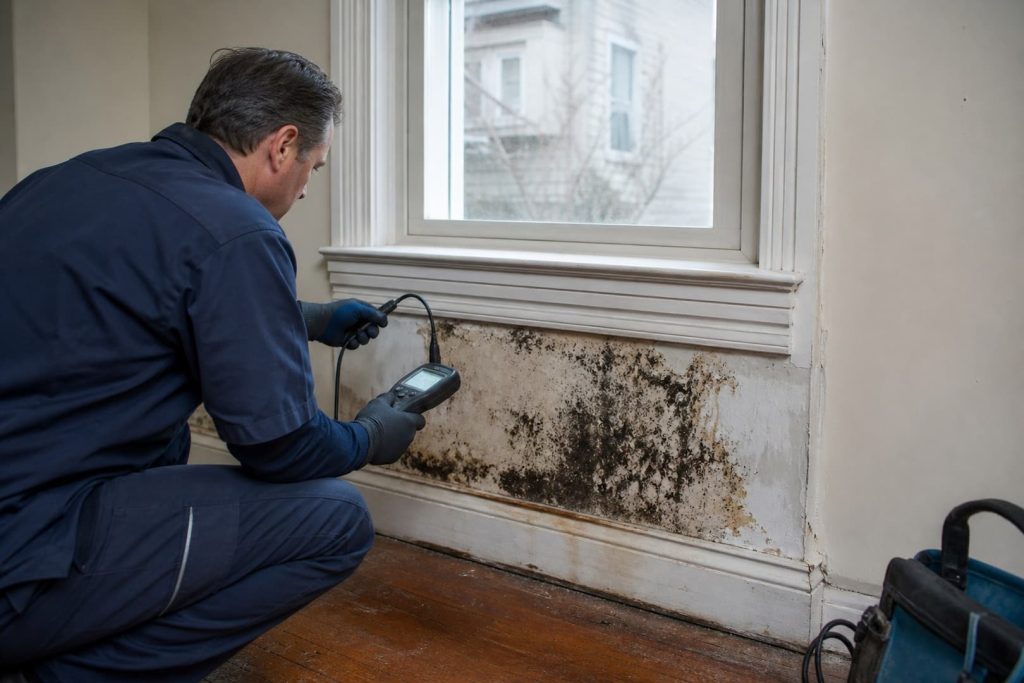
“Black mold” is a visual description, not a reliable diagnosis. Stachybotrys chartarum can appear dark, but so can Cladosporium, Chaetomium, other molds, soot, adhesive, corrosion, and old water staining. Color cannot show species, toxin production, exposure, or the depth of affected material.
Dark growth still deserves attention because it signals a moisture condition or a contaminated surface. The useful response is to protect occupants, stop the water source, determine which materials are affected, and clean or remove them under controls suited to the scope. Waiting for a species name should not leave an active leak or wet drywall in place.
Start by testing the moisture hypothesis
| Pattern | Possible driver | Next inspection area |
|---|---|---|
| Lower wall after a leak | Wet drywall, insulation, base plate or flooring | Wall cavity and floor layers along the migration path |
| Window corner | Condensation, flashing or sealant failure | Sill, trim back, exterior detail and nearby insulation |
| Attic sheathing | Roof leak or indoor air escaping into a cold attic | Penetrations, exhaust ducts, insulation and eaves |
| Basement contents | Humidity, seepage or previous flooding | Masonry, slab edge, finished walls and stored porous goods |
| Supply register or mechanical area | Condensation, dust deposition or HVAC moisture issue | HVAC technician assessment of coil, drain, liner and connected components |
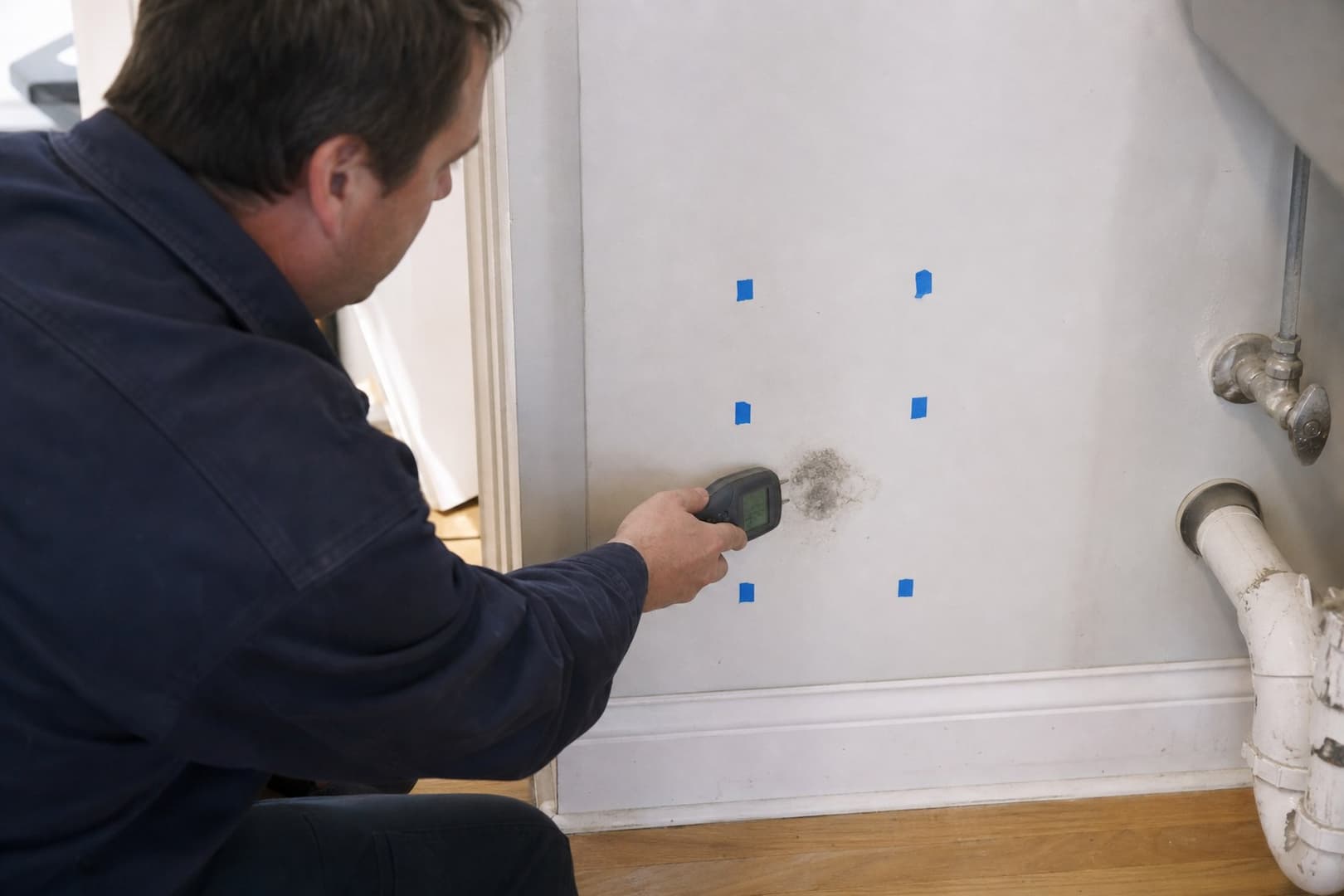
A moisture meter helps compare suspect and dry materials, but it has limits. Different substrates read differently, metal can distort some meters, and a dry surface may cover a wet layer. Thermal imaging can point to temperature patterns; it does not see mold or prove moisture without confirmation.
What health agencies say
CDC advises that damp and moldy environments may cause respiratory or irritation symptoms in some people, with stronger reactions possible for people with asthma or allergies. People with immune suppression or chronic lung disease should take particular precautions and consult their healthcare provider. The color black does not create a separate clinical category.
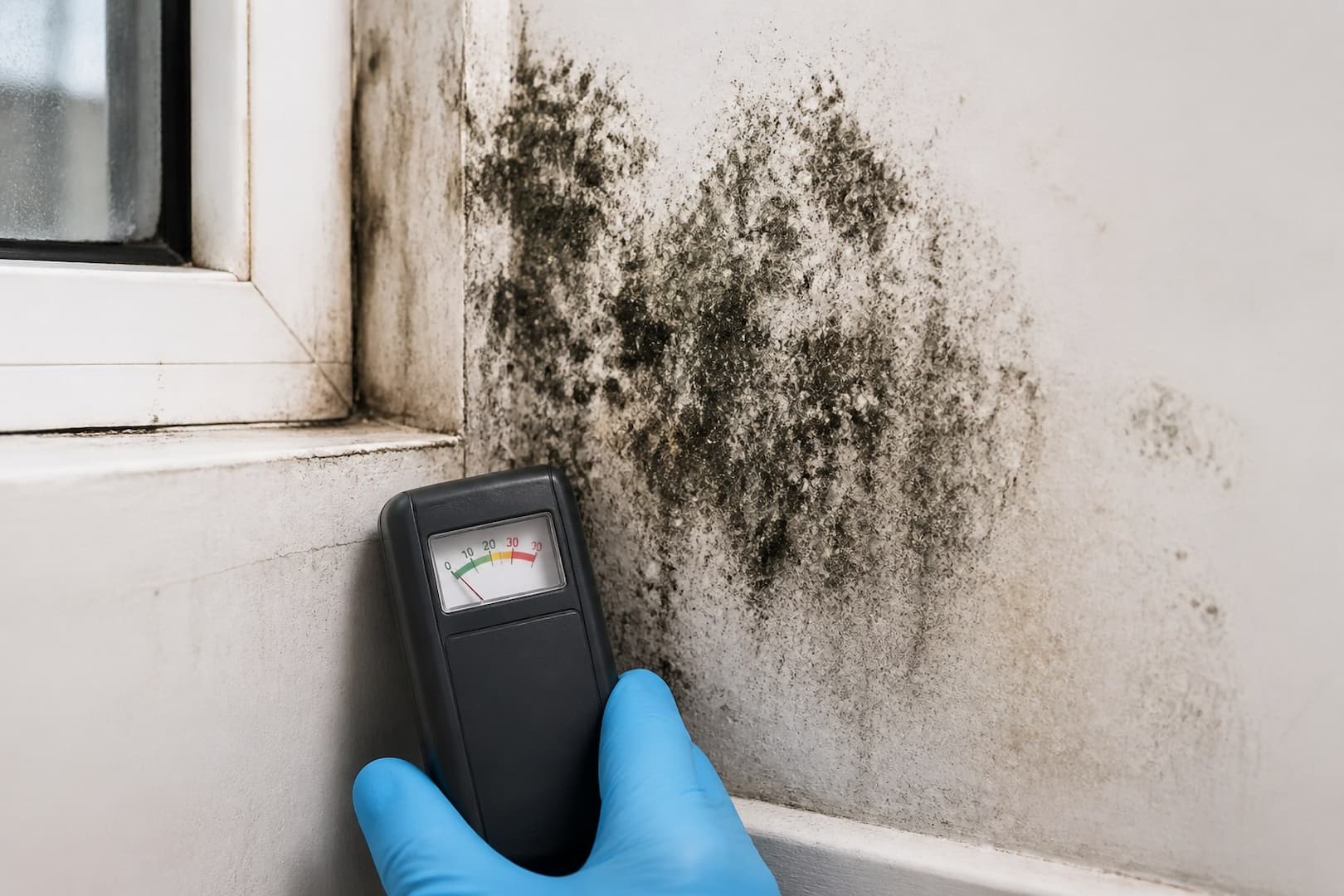
A building sample cannot diagnose a person. If occupants have symptoms, clinicians evaluate health; restoration professionals investigate moisture and materials. Emergency breathing difficulty or a severe reaction requires urgent medical help.
When limited DIY cleanup may fit
EPA’s general homeowner guidance uses about 10 square feet as one practical marker, but the whole situation matters. A small patch on a hard, cleanable surface after brief clean-water exposure may be manageable when the source is fixed, electricity is safe, no vulnerable occupants are exposed, and work will not disturb a wall cavity or HVAC system.
Stop and seek professional help if growth is extensive, returns, involves sewage or floodwater, follows fire suppression, affects several materials or rooms, requires demolition, or may be in HVAC insulation. Do not dry brush, sand, or use an ordinary vacuum on suspect growth. Those actions can spread dust and fragments.
Why bleach and paint do not solve an assembly
A cleaner may remove residue from a suitable hard surface, but liquid bleach does not make colonized drywall paper or insulation restorable. Organic soil can interfere with disinfection, porous materials limit contact, and extra moisture may enter the assembly. Never mix bleach with ammonia, acid, or another cleaner.
Stain-blocking primer and encapsulant are finishes, not substitutes for source correction and physical remediation. Coating over wet or dirty material can conceal continuing damage. Rebuild and finish only after the remaining substrate is sound, clean, and dry.
Professional remediation sequence
- Investigate and scope. Trace the source and affected materials; account for hidden cavities and regulated hazards.
- Correct or coordinate the source. Remediation without leak or humidity control is temporary.
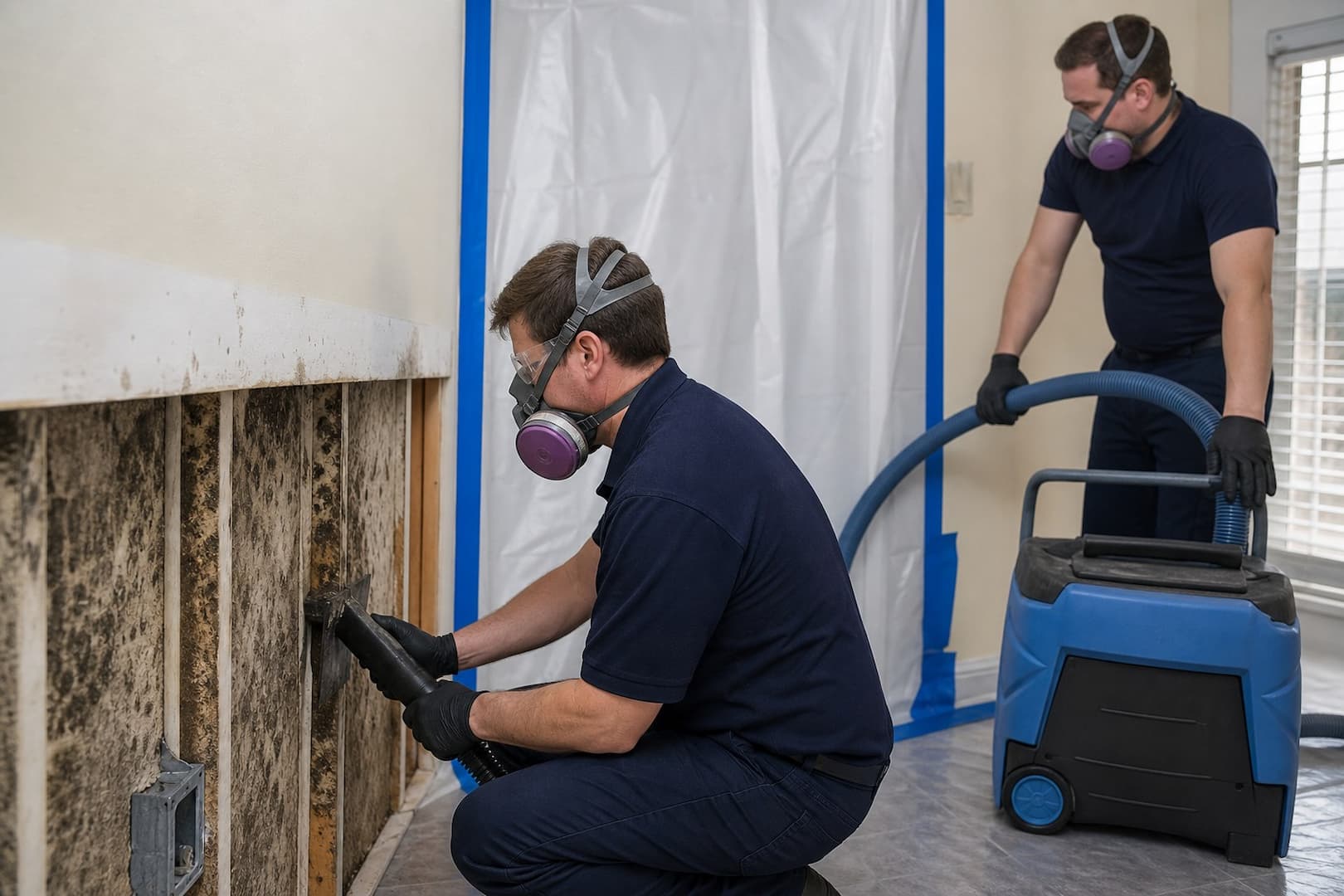
- Establish controls. Isolate the work, protect pathways, and use air management appropriate to disturbance.
- Remove unsalvageable porous material. Bag or wrap debris before transport.
- Clean sound remaining materials. Physical cleaning and HEPA methods are selected for the substrate.
- Dry and monitor. Compare with appropriate dry references and project criteria.
- Verify before reconstruction. Inspect cleanliness, scope completion, moisture, and the source repair.
Mold remediation is successful when the moisture problem and affected material are addressed, not when the colony is renamed or sprayed. A clear scope should distinguish remediation from rebuilding, plumbing, roofing, HVAC work, and independent verification.
Should you test black mold?
Testing is useful when the material is ambiguous, hidden contamination is suspected and the result will guide access, a healthcare or legal process asks for defined data, or an independent protocol specifies post-remediation sampling. It is less useful when visible mold on water-damaged drywall already requires removal regardless of genus.
Home petri-dish kits commonly grow mold because spores are normally present indoors and outdoors. They do not provide a representative exposure assessment or a building-wide pass/fail result. Any sample should come with a question, location, method, comparison, and interpretation.
Black mold questions
Can Stachybotrys be identified by sight?
No. Laboratory analysis is needed to identify a representative sample, and even that result must be connected to moisture and material findings.
Do I have to discard all belongings in the room?
No universal rule applies. Porosity, visible growth, contamination, value, cleaning access, and exposure history drive item-by-item decisions. Some hard goods are cleanable; some porous contents need specialty treatment or disposal.
Can the family stay home during remediation?
It depends on the scope, containment, access route, HVAC relationship, work duration, occupant vulnerability, and whether essential rooms remain available. The work plan should state occupancy controls before disturbance begins.
Why a species label rarely changes the first building decision
A dark patch may be Stachybotrys, another mold, soot, soil, adhesive, or a water stain. Even a laboratory result naming Stachybotrys does not reveal how far moisture traveled, whether the cavity is still wet, or which materials can be cleaned. Those questions control the scope. The first field decisions remain the same: protect occupants, stop the moisture source, define the affected boundary, and avoid disturbing growth before controls are in place.
Color can change as a colony ages or as it grows on a different material. Mixed growth is also common. A single tape lift samples a tiny spot; an air sample represents conditions during a short collection period and can miss hidden growth. Testing becomes useful when it answers a defined question–uncertain material, medical or legal coordination, a disputed boundary, or a verification plan written by an independent professional. “Is any mold present?” is usually too broad to guide construction work.
Exposure decisions belong to people, not color charts
CDC and EPA guidance discusses mold exposure broadly because visible color does not rank individual risk. People with asthma, allergies, chronic lung disease, or immune suppression may need stricter separation from an affected area and should seek advice from their healthcare professional. Children should not participate in cleanup. A restoration contractor can explain the building controls; the contractor should not diagnose symptoms or promise that a particular species caused them.
If someone feels worse in one room, document the location, timing, visible conditions, odors, and moisture history. That record can help both the building investigation and a medical conversation. It still does not prove causation. Emergency breathing trouble or other severe symptoms call for medical care, not an indoor-air test ordered as a substitute.
What containment is meant to accomplish
Containment is a work control, not theater. Its job is to separate dust-generating removal from clean occupied space, maintain a managed airflow direction where specified, and create a route for bagged debris. The design changes with the area, access, HVAC, occupied rooms, and work method. A small isolated wall does not need the same setup as multiple connected rooms, but a zippered sheet loosely taped around an active demolition area may not control much at all.
- Shut down or isolate affected HVAC pathways when the plan requires it
- Protect returns, supplies, stairs, and contents that cross the work route
- Use removal methods that limit breaking and dropping contaminated porous material
- HEPA-vacuum and clean settled dust from retained surfaces
- Dry the assembly and record the result before reconstruction
- Inspect the work area against written visual and moisture criteria
Mold inspection and testing is most valuable when it is tied to these decisions, not sold as a color-identification shortcut. If the growth is on gypsum board, the guide to mold on drywall explains why the paper face and cavity side often matter more than the painted surface.
Questions that expose a weak remediation scope
Ask what moisture source the estimate assumes and who will confirm the repair. Ask how the contractor drew the boundary, what happens if opening the wall reveals a larger area, and how change orders are documented. Find out whether the price includes insulation, contents manipulation, HVAC protection, post-cleaning inspection, drying, and disposal. A proposal centered on antimicrobial application, odor treatment, or white coating–without physical removal or cleaning–leaves the hard questions unanswered.
Finally, separate remediation from reconstruction in both schedule and acceptance. New drywall should not conceal wet framing or unresolved exterior entry. Fresh paint can make a project look complete long before the assembly is ready. Photographs of opened cavities, readings, source repairs, and retained materials create a far stronger record than an after-photo of a uniformly coated wall.
Sources and further reading
- U.S. EPA: A Brief Guide to Mold, Moisture and Your Home
- U.S. EPA: Mold Cleanup in Your Home
- CDC: Mold — overview, health effects, prevention and cleanup
- Massachusetts DPH: Mold Cleanup, Repairs, and Excess Moisture Control
Get a scope based on the building—not the color
Boston Restoration Group can inspect the water pathway, define affected materials and containment, complete controlled remediation, and document moisture and cleaning conditions.